If you’re anything like me right now, you’re frantically searching for clues on a buck that gave you the slip last season.
I watched a buck all last summer that I deemed “The Giant 8” and put together as much of a playbook for him as I could. I had a few close calls and one solid opportunity I wasn’t able to capitalize on. All I was left with were some encounters, a ton of trail camera pictures and videos, and the lingering “What if…” that brings me to present day.
If you’ve also spent the last eight months thinking about a specific buck, this is the article to get you back in the game and ready to match wits.
The Mental Game for Hunting a Specific Buck
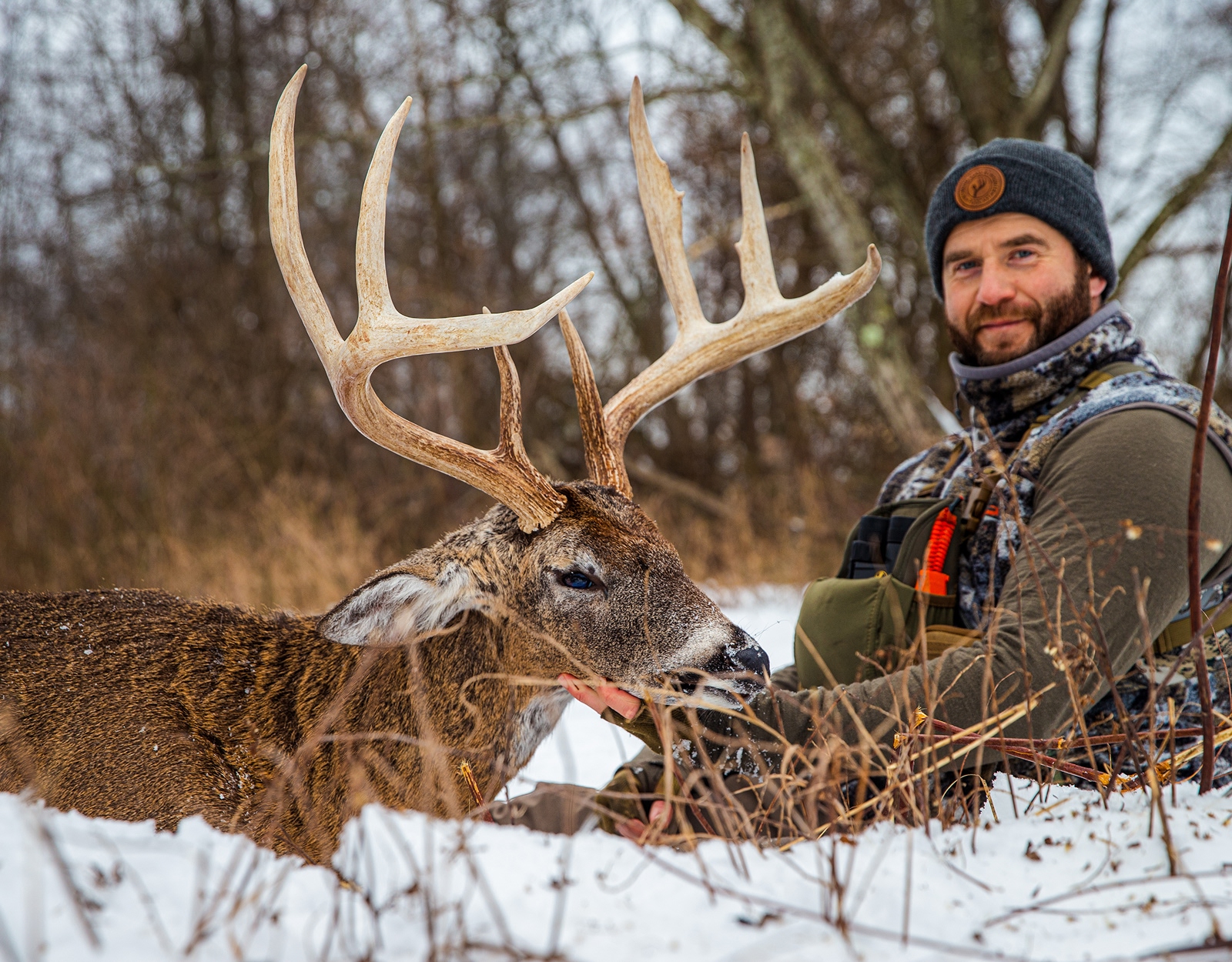
When hunting a specific whitetail buck, being mentally tough and sharp is a requirement. At this stage of the game, you have knowledge about this buck. You know what worked and what didn’t. You know what you were good at and what you weren’t. To progress, you have to be strong enough to look yourself in the mirror and be honest about the work and changes it takes to accomplish the goal of wrapping your tag and your hands around this buck’s antler.
I know, after last year’s battle with a specific buck, this deer is patternable, and I have to lean on that confidence from day one, trusting that I can control my effort, mindset, and willpower. That mental side is the foundation everything else gets built on.
Get prepared for the struggles and the payoff that come with this chess match. In all, your job is to think like the buck.
Think Like a Mature Buck To Predict Whitetail Deer Patterns
Over the last 15 years, I’ve primarily bowhunted a specific buck each year and have found a lot of success doing it. One thing that always holds true: a big, mature buck does things differently than most other deer. They’ll use different trails, bed in different areas, and feed at different times. They’re typically the smartest and oldest deer around, and have developed reliable learned patterns over time.
It’s our job to decode those patterns and tendencies so we can capitalize on them. For instance, wind is a huge factor in why a buck likes, or doesn’t like, an area. A mature buck will favor certain wind directions that let him feel safe bedding, feeding, and hanging out in one spot over another. They live and die by their nose, and if you can decode the pattern the wind creates, you’ve just unlocked a huge key to success.
I use the onX Weather and Wind feature to fine-tune the areas my target buck is using. Once I know the wind he likes, I look at future weather trends and predict how his movement should form around it.
Tip: Use Lidar and 3D Maps to anticipate how his preferred wind direction will move through an area. From there, you can predict likely bedding and staging spots.
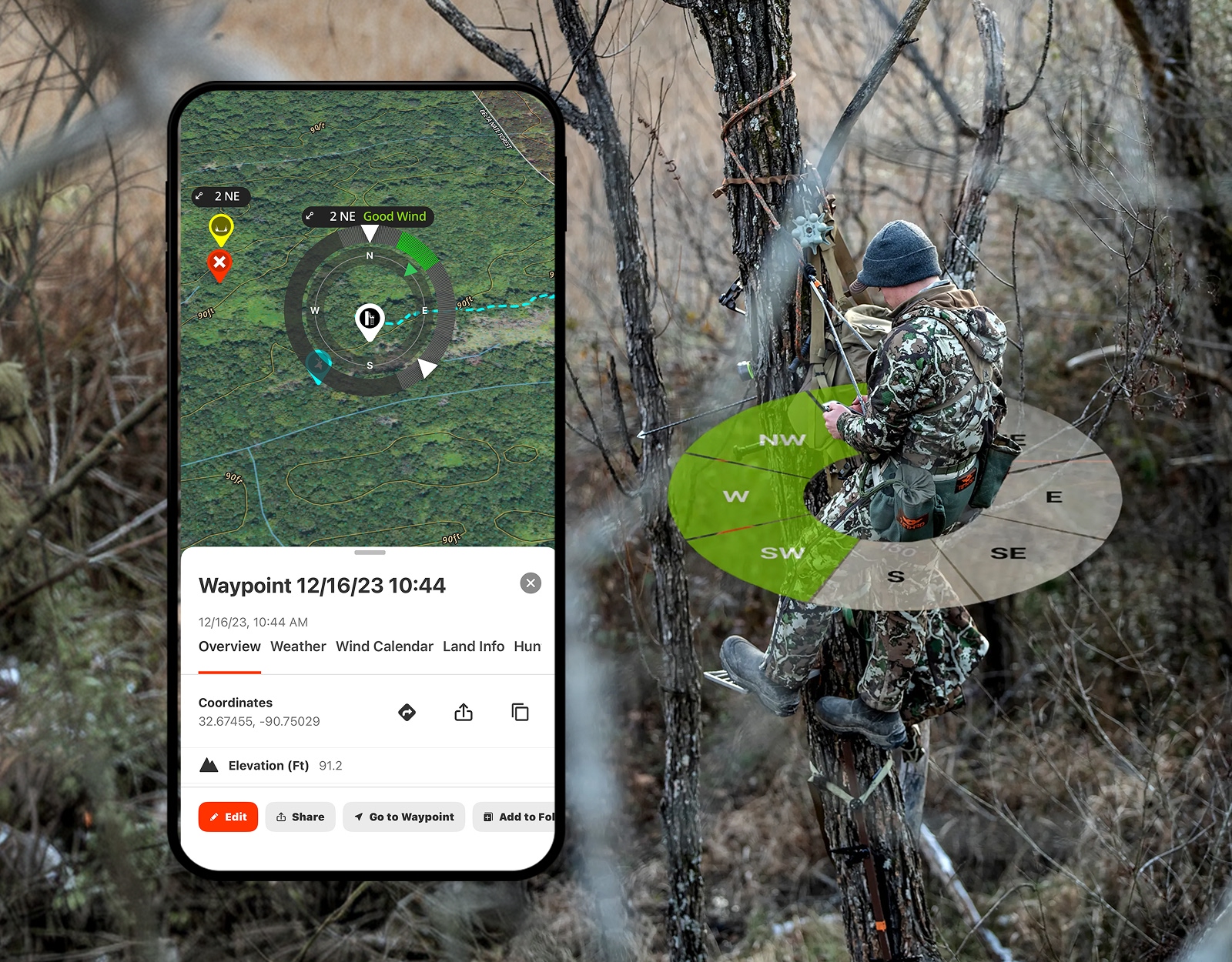
I also place trail cameras in locations I know this buck used last year, so I can start getting pictures and videos of him again. Every time I see him, I document the date, time, weather, and wind direction, especially when he’s in daylight or close to it. I cast a “large net” of cameras, putting as many as I can in areas I know he frequented last year, plus educated guesses on new areas he may be using this summer.
Tip
Let scrapes tell you what areas he considers his. I don’t hunt over scrapes often, since most are worked at night, but your buck will have favorites in whatever area he’s calling home at the moment. Key in on these areas and hunt them as soon as possible.
I also dedicate time to glassing nearby agricultural fields in the mornings and evenings. This lets me cover a lot of ground I’m not actively hunting, in case he’s decided to stay on a neighboring property. I may not be able to run cameras or hunt that ground, but at least I can learn where he’s at and plan for where he might go next.

onX Tools for Keeping Tabs on a Specific Buck
- Wind and Weather: Critical for planning when and where to hunt, and for finding the correlation between a buck’s patterns and the wind.
- Map Layers: Tree and crop data help narrow down where he’s spending his time.
- Tracker: Map entry and exit routes to and from your hunting locations, so you stay as undetected as possible.
- Waypoints: Mark everything: stands, scrapes, rubs, trails, bedding, food. Map it all out to see the big picture.
- Trail Camera Integration: Sync your cameras and add notes so you understand what areas this buck likes and doesn’t like.
- Lidar and 3D Maps: Find hidden funnels and other spots a buck may be using that you haven’t found on foot, all without putting your scent in the area.
How Last Year’s Buck Pattern May Change
Based on what our trail cameras and encounters showed us last year, we already have a plan for what this buck likes and doesn’t like. But beware…things change. Oak trees that dropped hard last year might not drop this year. That bean field he loved last year is probably corn now. We have to anticipate it and plan accordingly.
Each year, I keep notes on what’s happening while I’m hunting. For example, The Giant 8 disappeared mid-October last year, and I found him two farms away chasing does a week later. He left because he knew those does would be in heat soon and probably the earliest in the area. I want to be ready for that this fall: if he disappears again, I’ll already have a plan based on what I saw last year.
I use the onX Tracker feature to map stand locations and entry and exit routes. Have tree stands prepped before season, and cameras placed in areas he may show up next. He might not appear there for weeks or months, but once he leaves one area for another, you want your stands, blinds, and cameras already set for the next move.
Remember what he liked last year and use it as your starting point this year. If he loved beans in late summer, key in on the local bean fields. Don’t overthink what a buck needs. He needs cover, food, water, and to breed. Find where those needs overlap to fine-tune your setups.
What To Do When Your Target Buck Disappears
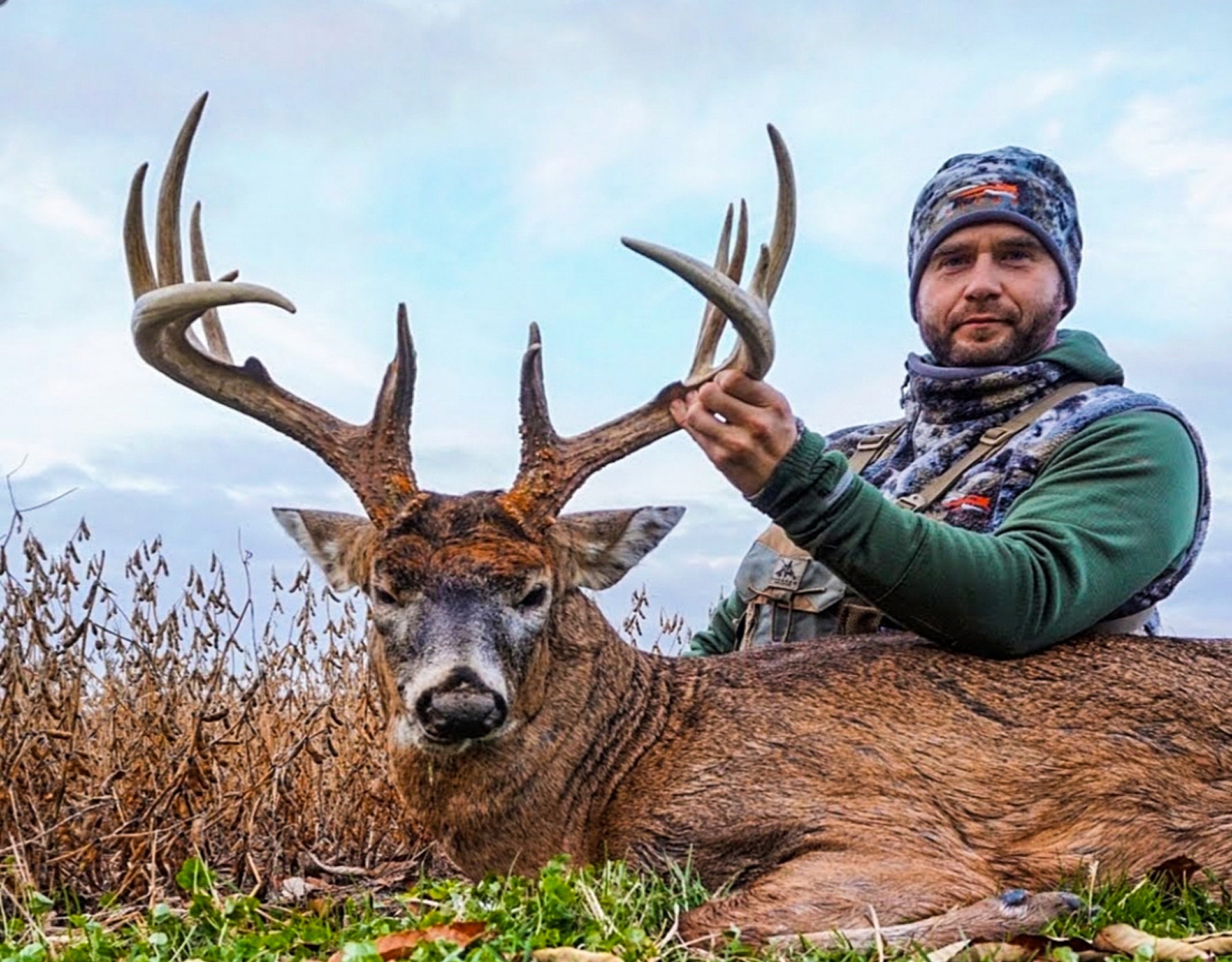
A huge key to success when targeting a specific buck is understanding that you’re matching wits with a smart animal. You’re going into their living room, bedroom, and dining room and trying to stay undetected while they walk past you at 25 yards. This isn’t easy. There will be long stretches, days or weeks, with no pictures or sightings of your buck. You’ll want to quit. Remember that’s part of the process. Even when things aren’t going right, look for what you can learn from it.
For example, last November I lost The Giant 8 for eight days. No sightings, no pictures. I moved farms and kept bouncing around, hoping he’d turn up. Feeling defeated, I almost quit. Instead, I went back to square one and hunted the original farm I knew he liked. He showed up two days later, and I almost arrowed him.
Animals are creatures of habit and patterns. They do everything for a specific reason, and once we key in on those reasons, we can better understand how a big buck uses an area and where our best bet is to intercept him.
Adjust Your Strategy Throughout the Season
One common theme I’ve found myself and other big buck hunters fall into is not staying in the game. We find something that works and only stick to that. For example, if your buck is using a picked cornfield in early October, that spot may be hot for a few weeks at best, then change once the field is picked clean and another one gets cut and becomes the new hot commodity.
Moral of the story: if something is working, hunt it immediately, but don’t expect it to work forever.
You should also have a plan for all three phases of the season—early, rut, and late—based on what this buck showed you last year, then make educated guesses from there.
The Giant 8 loved oak ridges last October; I caught him on several scrape cameras there as the acorns started dropping. I’ll be keying in on those oaks again this year, anticipating that once they drop in late September and early October, he’ll be close by.
Tip: Use the onX Hunt Acorn Producing Oaks Layer to locate all the oak stands.
Key Takeaways
- Think like your buck. Focus on what you know he likes and doesn’t like. Use last year’s patterns to predict this year’s patterns.
- Find his preferred winds, ag fields, and bedding areas.
- Let scrapes help you scout. Run cameras on as many scrapes as possible. He’ll use the scrapes in his current core area often. Hunt those areas immediately.
- Never stop learning. Any new clue is a major win.
- Find the positives in everything, even a missed opportunity.
- Big bucks always have a flaw in their armor. Find it, and you can kill the buck. Could be a hot doe in November, or a freshly cut cornfield in December. Your job is to find his weakness and capitalize.
- Three seasons, three different strategies. Have a strategy for early season, the rut, and late season. What worked in September typically won’t work in December.
As you re-strategize on your target buck from last year, remember to make it fun, accept the challenge in earnest, and don’t give up. I’ll be matching wits with my own big buck, The Giant 8, right along with you, keying in on oaks early, watching for that first wave of does to come into heat, and locating the most recently picked crops for late season if I need to. Those are all educated guesses based on what he showed me last year.
Good luck, and here’s to the hunt!