I’ll never forget the first time I put my rule—“I’ll know he’s a shooter when I see him”—to the test. I was in high school and had watched a group of bachelor bucks all summer long feeding in the bean fields behind my childhood home and farm. From a few hundred yards away, two of them stood out to me, and one seemed like a good-looking 10-point. I couldn’t wait for the season to start and to hopefully cross paths with this buck.
On October 2, on an evening hunt after football practice, I got into my stand, tucked into some white oaks off the edge of a bean field where these bucks frequently hung out. About 30 minutes before dark, I saw antlers coming through the brush. Leading the way was the 10-point.
I grabbed my bow and started getting into shooting position, but I remember looking at the buck as he crunched through the oak leaves and thinking, “This is him, right? It’s the 10-point…but…he doesn’t look as impressive as I was hoping. He’s not as heavy as I was thinking.”
Now, at 30 yards and closing, with light fading fast, I needed to decide whether to draw my bow or not…
What’s a Shooter Buck to You? How To Set Your Own Standard
The simple answer is that a “shooter” buck is a buck big enough to draw the bow back on, or click the safety off on the rifle.
The full answer is more complicated and deals with personal preference, how much time you have to hunt, where you’re hunting, personal goals, and hunting pressure.
A shooter buck is going to mean something different from person to person, and that’s what makes hunting fun and exciting and unique.
In my opinion, there are four key variables to consider before setting a standard for what a shooter buck will be this season:
1. Personal Goals
A deer hunter has to be honest with themselves. “What would make you happy this season?” Maybe that’s just filling a buck tag. Maybe that’s shooting a larger buck than ever before. Or an older buck. It could just be that you want to fill the freezer. Any of these goals are great and will vary from person to person. We need to be happy with our goals and decisions and not worry about anyone else’s opinion, or how our goals compare to someone else’s. We set our own goals based on our beliefs and the variables that we have going on in our life. I can tell you from experience that by establishing your goals from the outset, you’ll have a better experience in the deer woods and be happier with the outcome.
2. Where You Hunt
Out of all four variables discussed here, where you hunt is the most important. You cannot kill a large buck if a large buck doesn’t live there. Now, the term “large” varies from place to place, but, for example, Ohio and Iowa will have more “large” bucks than Arkansas and North Carolina. So, if you’re hunting private land in Ohio, your standards will probably be higher than if you’re hunting public land in North Carolina.
The same can be said for public vs. private. Typically, private means less pressure and more opportunity for a quality hunt than strictly hunting public land, if we’re talking about two properties in the same area, in the same state. This can vary, though. For example, I’d consider a bigger buck a “shooter” in Kansas on public land over private land in Maryland. Why? Kansas as a whole has larger bucks and more of them, so even though I’m on public land in Kansas, I’ll still have larger “shooter” qualifications there than on private land in Maryland, where big bucks are few and far between. Kansas just has way more opportunities for a larger buck to walk by, whether private or public.
A deer hunter must be aware of the area they’re hunting and what it can produce. If you’re in a “big buck state,” then holding out for a large-racked buck is a realistic goal. If you’re in an area that’s not known for producing large bucks, such as a southern state like Florida, you may have to adjust what “big” is and hunt accordingly.
3. Hunting Opportunity
Time is a huge factor when choosing what size buck should be deemed a “shooter.” For example, a guy like myself, who can hunt basically all fall because of being my own boss, has ample time afield. I choose to be picky and strict on what’s a “shooter” in my eyes because I have almost unlimited time to hunt.
Now, let’s say I had a job that only allowed weekend hunting and one week of vacation a year in November; this changes my goals and what a “shooter” buck looks like to me.
If I get to hunt 65 times a year and my buddy gets to hunt 10 times a year, that is a huge difference and will, more times than not, put me at a greater advantage of filling a buck tag. I’ve always said that “time” is usually what gets a buck killed. If a hunter puts in the effort long enough, usually an opportunity presents itself.
Assess how much time you have to hunt and set your goals accordingly. This also applies to how far your hunting spots are from you. Having somewhere to hunt five miles down the road vs. road-tripping for hours is a real difference. The driving factor, especially in today’s world with busy schedules and high gas prices, certainly dictates how much hunting you can fit in.
4. Surrounding Pressure
Pressure from other hunters will happen, and that’s just part of the game we choose to play. Of course, on private land, you’ll typically see less pressure, especially if you own or lease and can control who’s there. But on public lands, we have absolutely no clue who will be there, when they hunt, where they hunt, how often they hunt, or how they hunt.
On public, it’s harder for a hunter to pass a buck that he would love to see grow another year because chances are someone else won’t make that choice. On private ground, you have the ability to roll the dice and pass bucks, in hopes that they make it another year.
What’s Considered a Small Buck?
In the whitetail world, the terms “small” and “big” or “shooter” are relative, and I think people need to understand how that works on both ends of the spectrum. Let’s use two examples.
- Scenario 1: A hunter with an Illinois hunting lease.
- Scenario 2: A hunter hunting public land in New York.
The Illinois hunter has a lot going for them. Illinois is a big buck state. There’s a ton of agriculture, which helps grow big deer, and Illinois has strict rules to try to enhance herds and manage for trophy quality. The Illinois hunter is also hunting a lease, which means they can control some of the pressure and monitor bucks from year to year. Chances are this hunter will be fairly picky. Even if they only hunt this lease two weeks a year, they’re in a great state and on private land.
Our New York hunter is doing something extremely different. New York is not known, on the whole, as a big buck factory. They’re also not known as a state that manages for trophy potential. The New York hunter is also on public grounds, which get hunted pretty hard throughout archery and rifle. He’ll have no control over pressure or which bucks are around, as things change drastically year to year on public lands.
Hunter #1 could easily make it seem logical to pass a 135″ 9-pointer on his lease and not think twice about it. Hunter #2 is probably never passing that same caliber of buck.
“Small” or “shooter” will be relative to many variables from place to place and scenario to scenario. Things like what state, public vs. private, rifle vs. bow season, and how many days available to hunt are all relative to what’s deemed big or small.
How To Tell How Old a Buck Is in the Field
By now, hopefully you have a good idea of what you’re looking for this season, whether that’s a certain rack size or age class. But knowing your goal and recognizing it on the hoof are two different things.
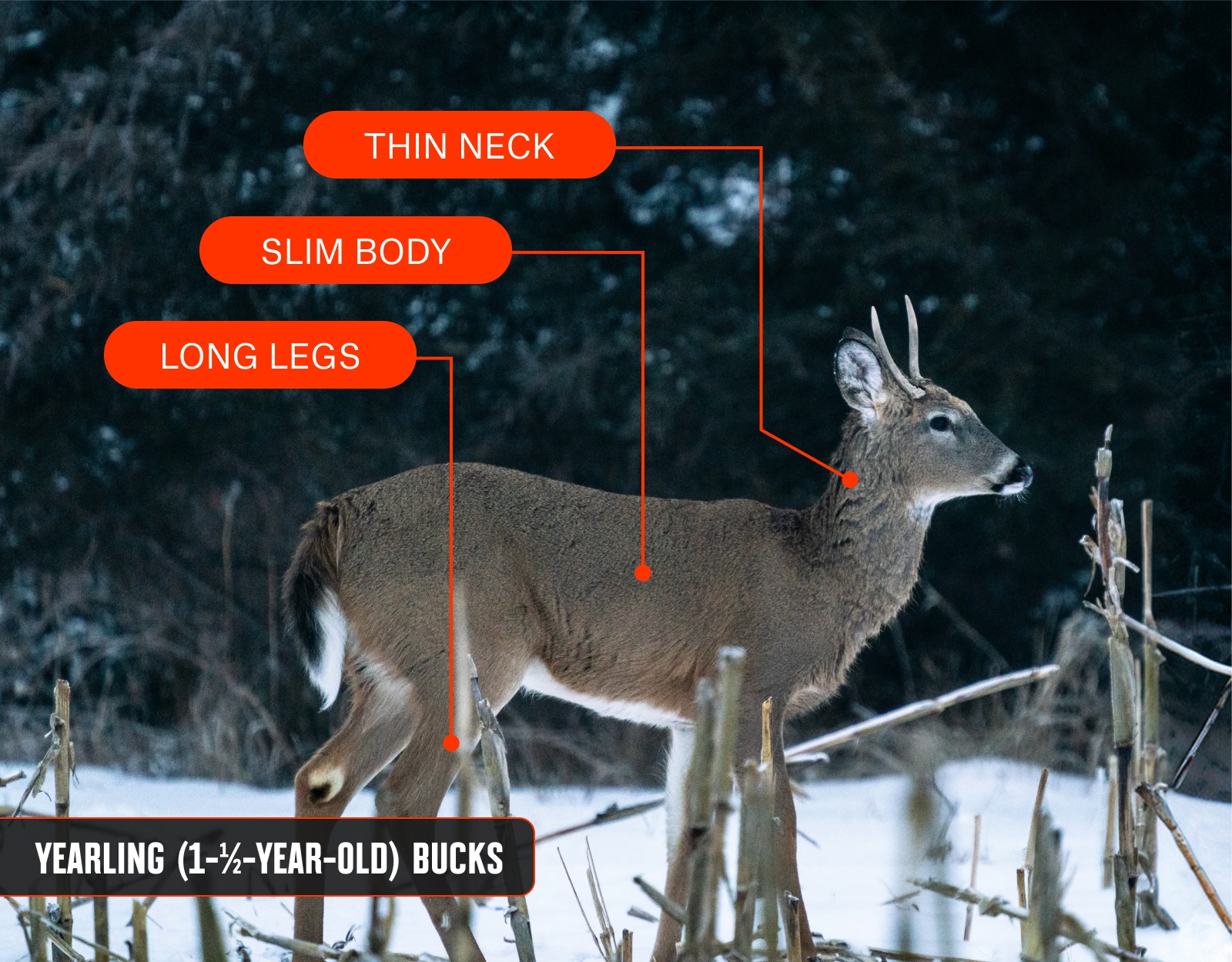
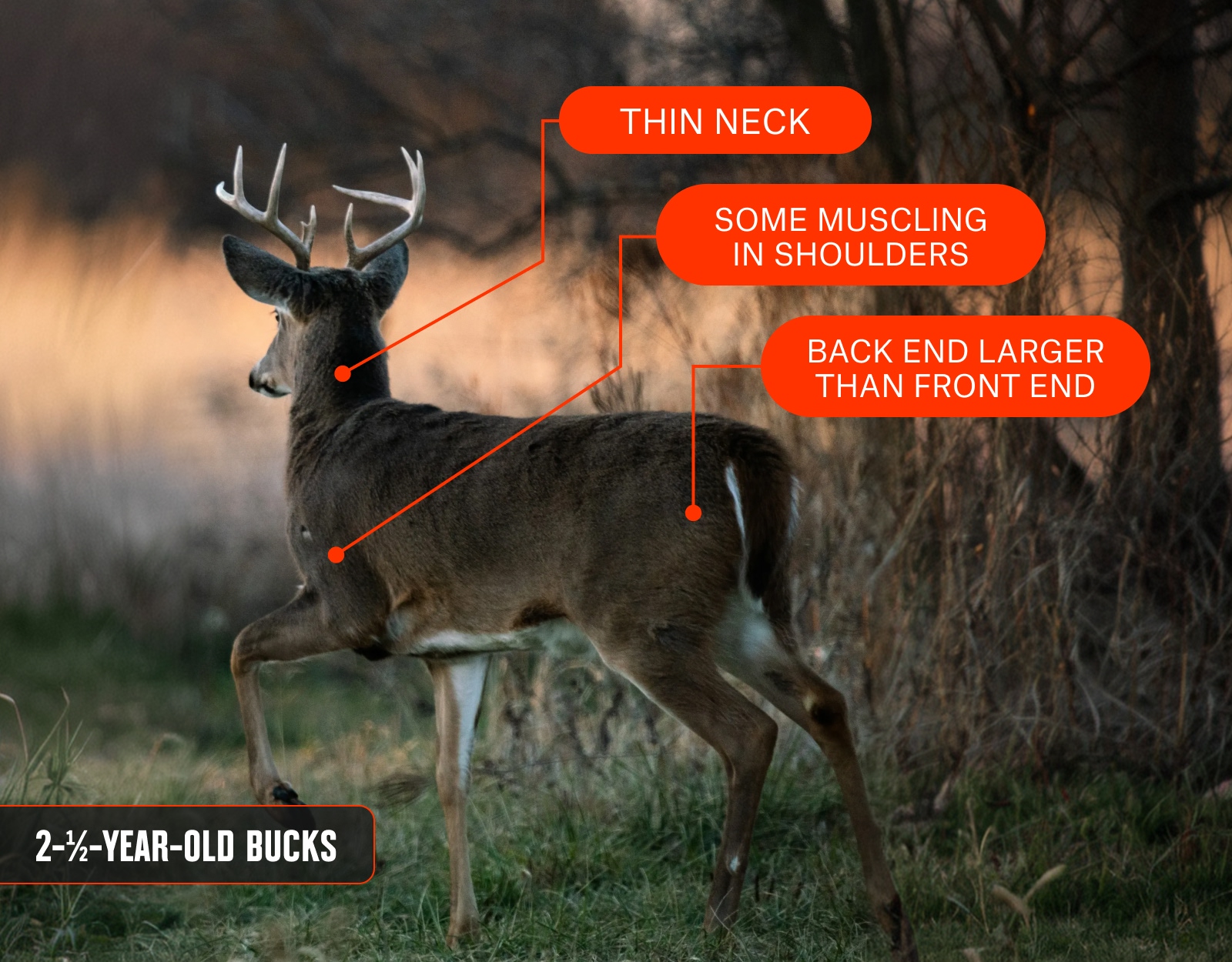
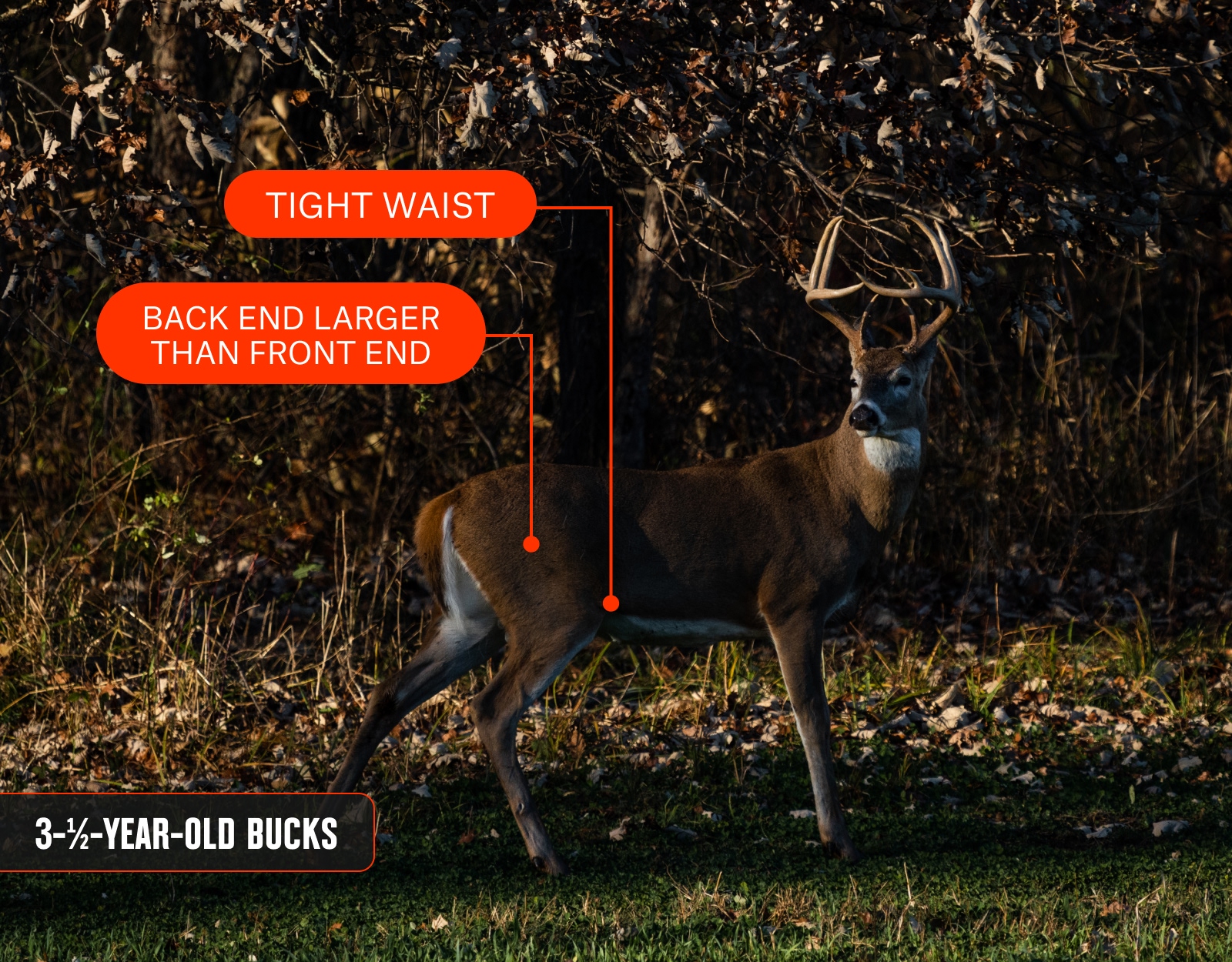
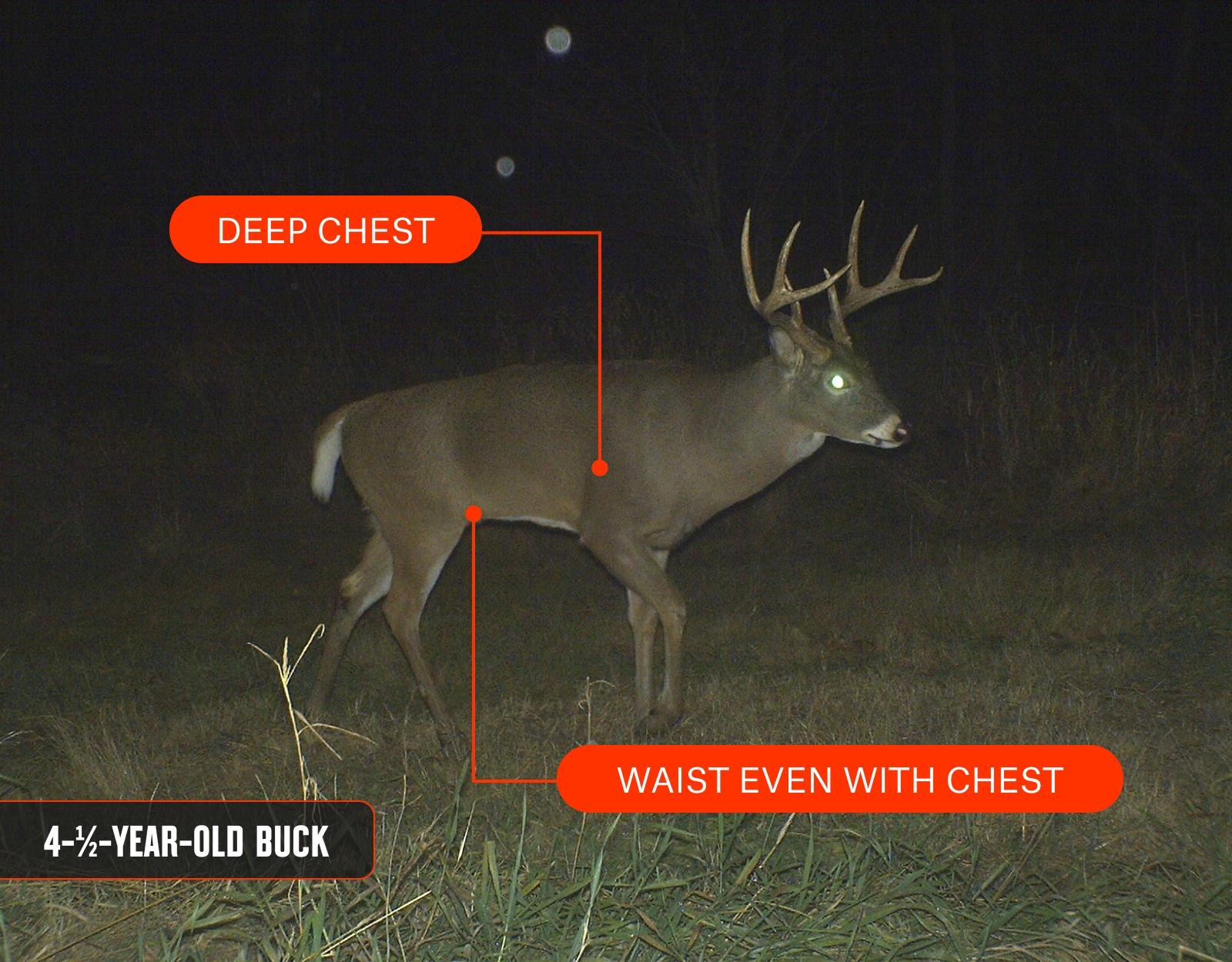
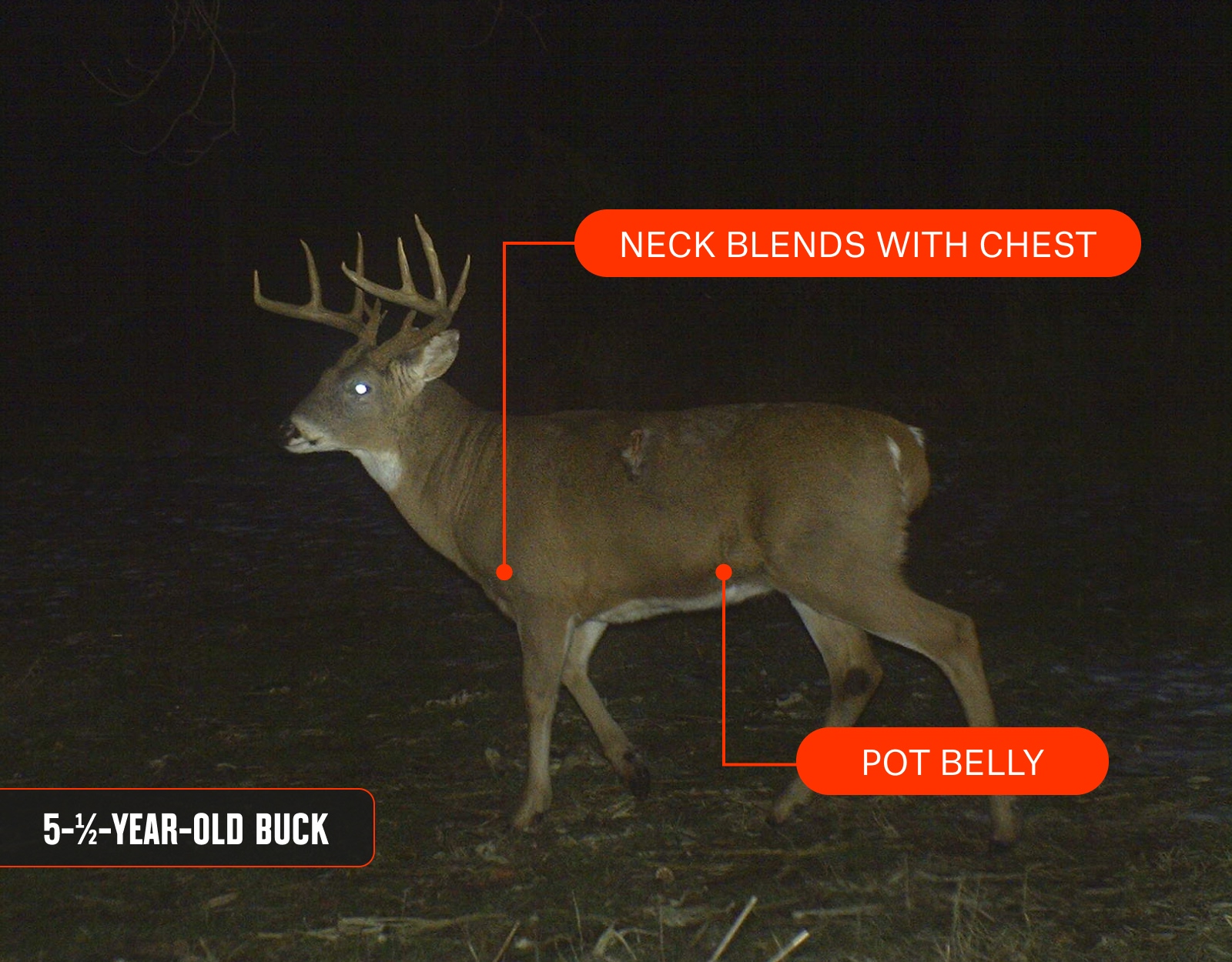
Say your goal is to harvest a mature buck, somewhere in the 4½- to 5½-plus-year-old range. What does a buck that age actually look like standing in front of you? How does his body differ from a 2½- or 3½-year-old buck?
The same goes for antler size. If you’re holding out for a 140-inch buck or better, you need to know which characteristics can help you quickly estimate a rack in the field.
Use the tips and visuals below as a starting point for aging and field judging bucks on the hoof. Like anything else, getting good at it takes repetition. The National Deer Association’s weekly newsletter includes a buck-aging photo quiz that’s a useful way to keep testing your eye throughout the year.
Tips for Judging Mature Bucks
Look for:
- Swayed back
- Broad, heavy-looking shoulders
- Legs that look small compared to the body
- Mass throughout the rack
- Sagging, heavy-looking brisket
- Barrel-like body
- Large, blocky head
Tips for Field Judging Racks
- From ear tip to ear tip usually measures around 16 inches; use this to gauge inside spread.
- A deer’s eye is roughly four inches in circumference; use this to gauge mass.
- If the main beams are close to or extend past the nose, you’re looking at a high-scoring beam.
- The ear is usually about seven inches long. Use this to gauge tine length.
So, Did I Shoot That 10-Pointer?
The buck kept rolling down the trail. 25…23…21…He stopped and ate acorns at 18 yards.
But my bow was now hanging on the hanger. As I watched this buck make his way toward me, I remember thinking, “He’s not as impressive as I thought he’d be,” and that told me all I needed to know. I had a certain caliber of buck in mind, and although this buck was a great buck, I opted to pass. He just didn’t fit my standards, and I opted to hunt another buck and let this one hopefully live and grow another year.

Whitetail Insights
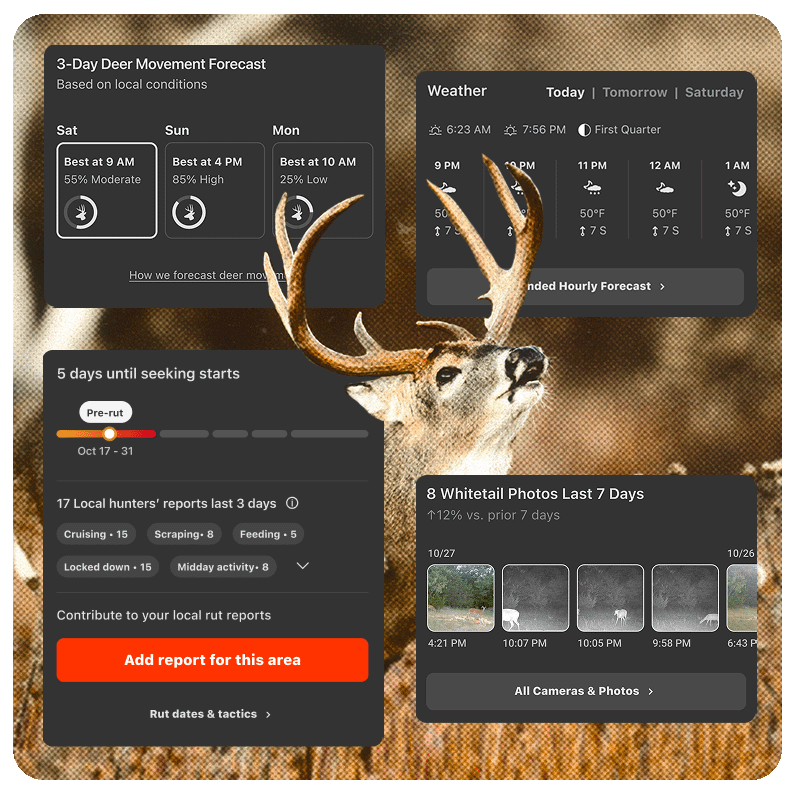
See your Trail Cameras, Deer Movement Forecast, Rut Calendar, and Wind & Weather in one place for the land you hunt. Make a faster, better-informed call on when to hunt.
- Rut Calendar: Know how and when the rut is unfolding.
- Deer Movement Forecast: Predict the odds of increased deer activity on your hunt.
- Trail Cameras: Pattern deer with Trail Camera Analysis.
- Wind & Weather: Get hyper-local conditions and forecasts.
FAQs
Those who want larger bucks to hunt need to understand that bucks don’t hit maturity until about 4.5-5.5+ years of age. So, if you want multiple mature bucks on your property, refrain from shooting your 2.5-3.5-year-old bucks, as these are your future mature bucks. Let them live and grow into mature bucks, if that’s what your goal is.
If the goal is to have larger and more mature bucks to hunt, then yes. But remember this isn’t a one-year fix. You’ll need 2-3+ years of passing smaller bucks to see a major swing. Remember, if a buck is 2.5, that means he needs a minimum of 2 more years to hit maturity.
No. As long as it is a legal harvest, I firmly believe everyone has different goals and standards and should harvest what makes them happy. At the end of the day, hunt how you want to hunt and be happy and proud of what you harvest.