TL;DR: Whitetail bucks regrow their entire antlers every year, a photoperiod-driven cycle that runs from winter casting through rapid velvet growth in June–July (up to a half-inch per day) to velvet shed by mid-September. Antler size comes down to age, nutrition, and genetics—but since genetics can’t be managed in a wild herd, letting bucks age is the biggest lever, with habitat-based nutrition mattering far more than the scientifically unsupported mineral supplements. For trail cameras, set them out early for velvet initiation, focus on travel routes and water in summer, and track bucks year over year to spot real trends.
Every trail camera image from June or July is a snapshot of one of the fastest tissue-growth processes in biology. At peak velocity, antlers can grow more than a half-inch per day. Understanding the science behind these trail camera pictures can give you a clear window into a buck’s health, age, and genetics.
To help us shed fiction from fact, we sought expertise from Jacob Dykes and Eric Michel, researchers at the Mississippi State University (MSU) Deer Lab and co-hosts of Deer University podcast.
Antler Growth: The Full Cycle
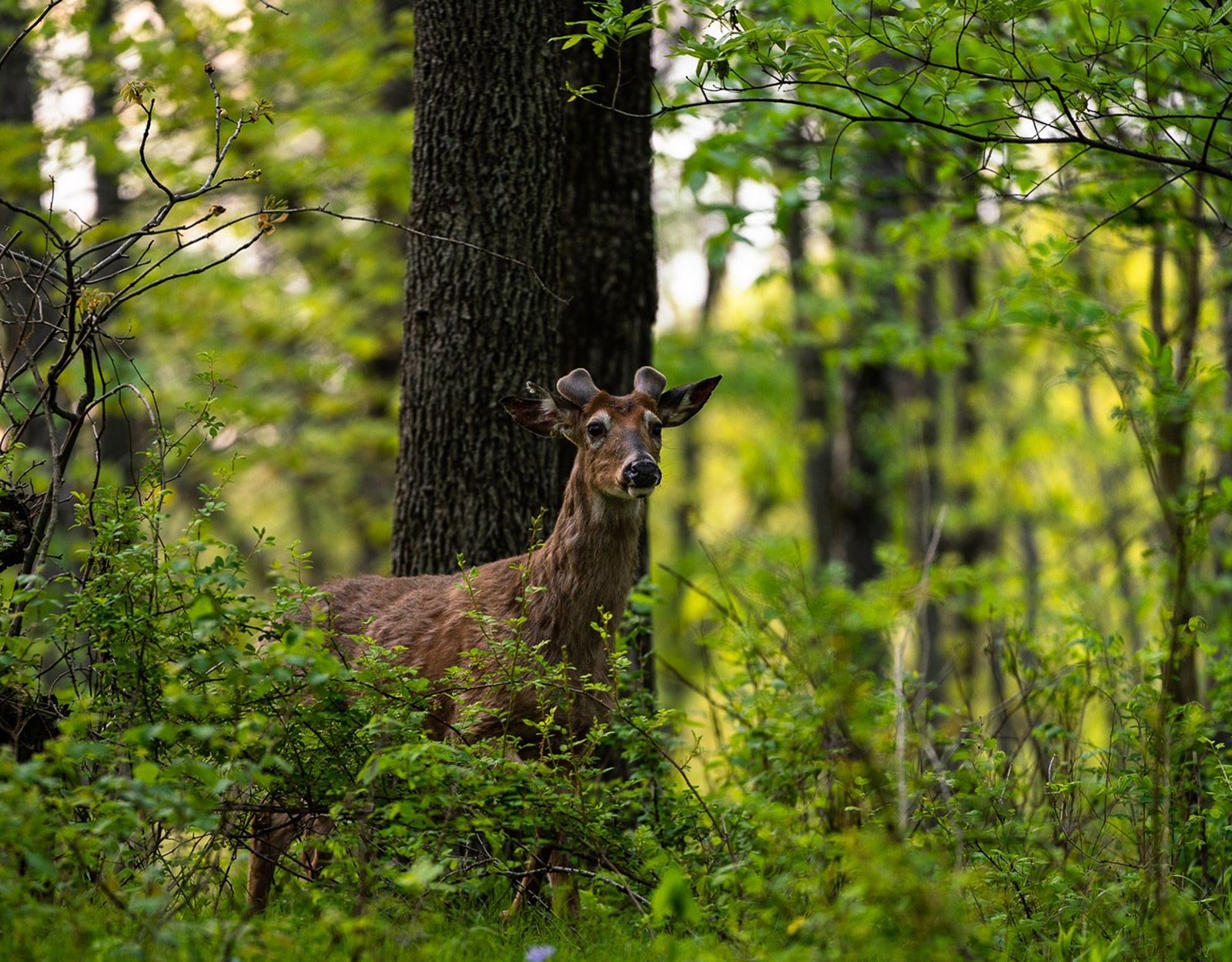
Whitetail deer are unique as the only mammal species capable of completely regenerating a body part.
This annual cycle is an energetically demanding process that requires immense physical resources.
The timeline kicks off with casting (i.e. shedding) in winter. Casting is naturally regulated by the photoperiod (the amount of daylight in a 24-hour period), which interacts with a deer’s pineal gland to control the release of hormones like testosterone. A dramatic decrease in testosterone following the breeding season is what specifically causes the antlers to cast.
Casting is followed by a brief period of pedicle exposure and healing. The exposure is typically healed within a week or two. By March or April, velvet initiation begins, transitioning into a phase of rapid velvet growth through May, June, and July.
“Velvet is often used in cancer research because it is such a fast-growing tissue,” says Dykes, “some say even faster growing than cancer.”
As summer draws to a close, the antlers undergo mineralization and hardening in August, and the velvet is shed in September. Finally, the buck enters the hard antler rut season before casting the antlers and starting the cycle all over again.
Deer Antler Growth Chart by Month
To track what is happening biologically—and what you should be seeing on your trail cameras—here is a month-by-month breakdown of the antler growth cycle:
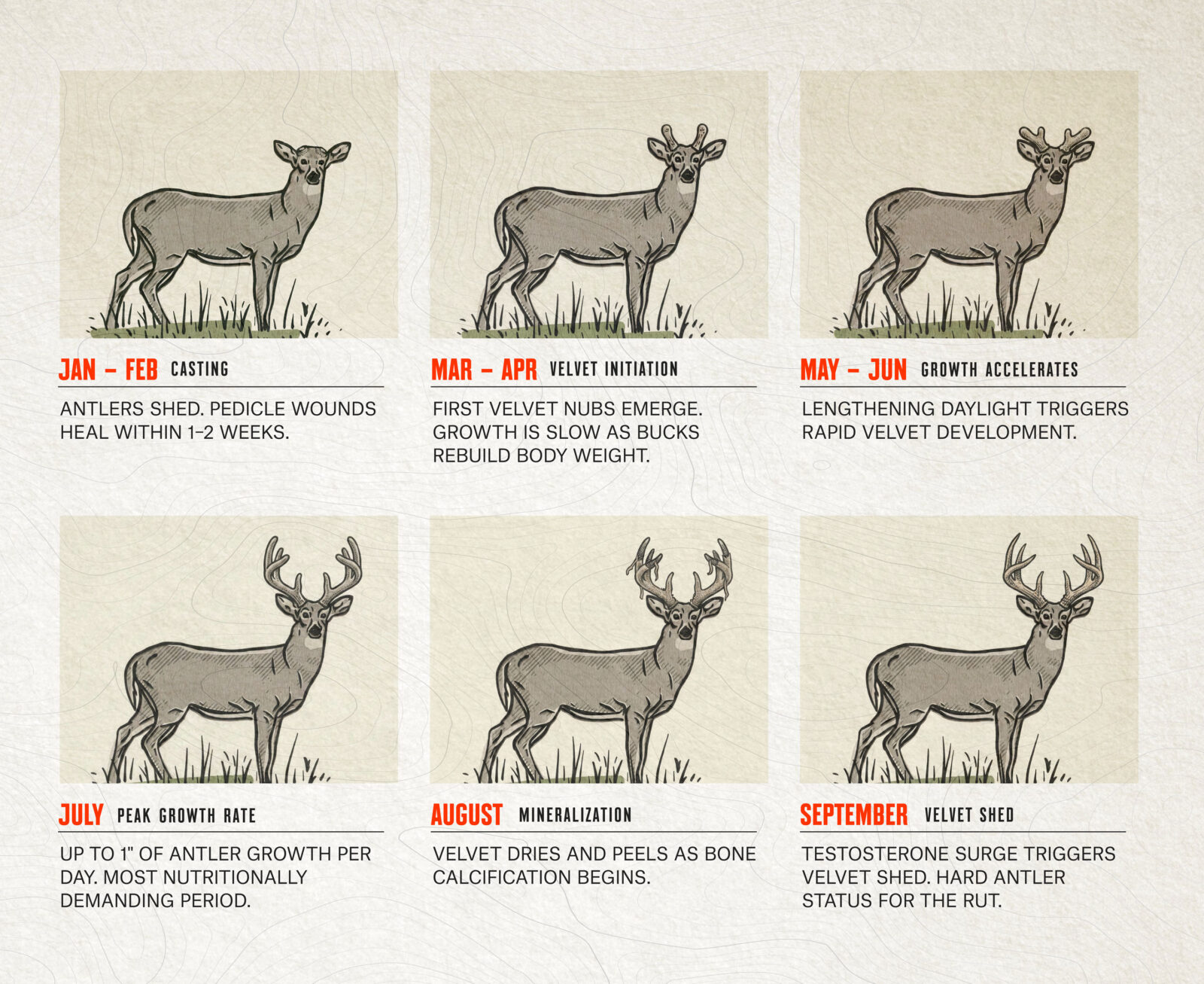
January–February/March (Casting): Bucks begin shedding their antlers. By March, most antlers will be completely cast from the herd. The pedicles become visible, and the open wound typically heals within just a week or two. Shedding timing can vary; some shed early and some late, often depending on severe weather stress or poor body condition.
March–April (Velvet Initiation): The pedicles heal over, and the first velvet nubs become visible. Regrowth begins almost immediately, but this early growth is slow. Following the rut, bucks have lost up to 30% of their body weight, so their bodies prioritize recouping that mass and healing injuries before fully allocating resources to antler growth.
May-June (Growth Accelerates): As the photoperiod (day length) lengthens, the growth rate increases significantly. According to the Mississippi State University Deer Lab, velvet growth becomes exceptionally rapid during the spring and summer. June is considered one of the fastest months of the antler growth period.
July (Peak Growth Rate): Trail cameras will capture dramatic weekly changes during this month.
Because of these extreme physiological demands, coupled with the heat, summer is the most nutritionally stressful period for whitetails.
“At peak growth, it can be something like an inch a day for some bucks,” says Michel, “while the lab often quotes 3/4 inch per week as a general average.”
August (Mineralization): The velvet begins drying out as calcification of the bone takes place. You will start to see individual bucks rubbing their velvet on vegetation to strip it away.
September (Velvet Shed): Velvet shedding is triggered by a testosterone surge resulting from the shortening photoperiod. By mid-September, most bucks will have completely shed their velvet, entering hard antler status for the breeding season.
What Helps Deer Antler Growth?
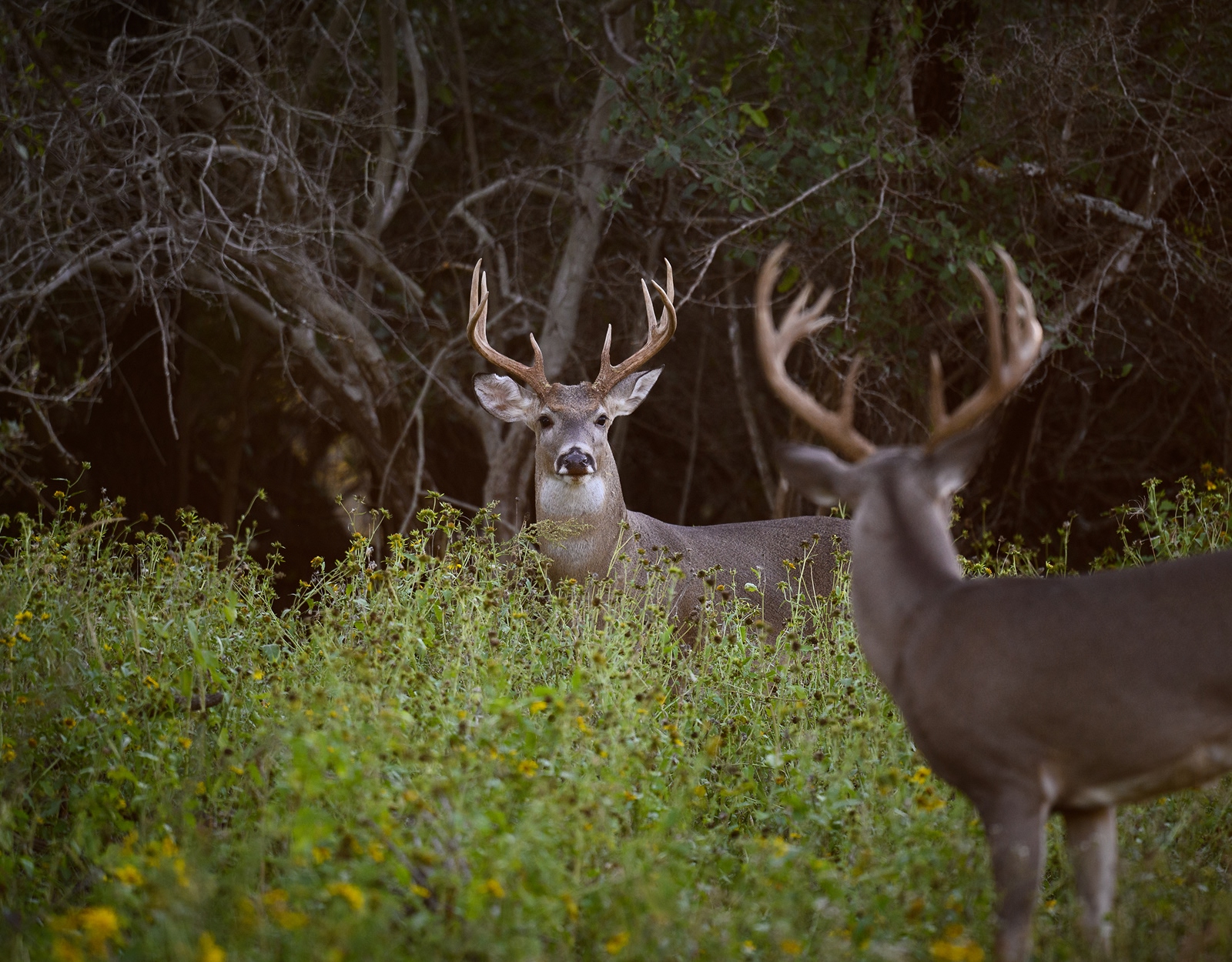
The primary driver of the antler cycle is photoperiod, or day length. Changing daylight interacts with the buck’s pineal gland, triggering a cascade of hormonal responses. Longer days initiate hormonal cascades—such as GnRH leading to testosterone suppression and IGF-1 elevation—that initiate and sustain velvet growth. Conversely, when days begin to shorten, testosterone levels rise, which cuts off blood flow to the velvet, completes the mineralization process, and causes the velvet to dry and shed.
The Role of Nutrition
Hunters frequently want to know the best minerals for deer antler growth, but there is no scientific literature to support mineral supplementation as an effective means to improve antler size. However, we do know that antler growth pulls heavily on a buck’s mineral and food stores, making nutrients like protein, calcium, and phosphorus vital. While genetics and age set the potential for antler size, high-quality nutrition determines whether that potential is expressed. Rather than relying on supplements, managing native habitat to provide abundant, high-quality forage is the most effective way to improve herd nutrition and promote antler growth.
“Deer must recover from losing up to 30% of their body weight during the rut before allocating energy to new antlers,” says Dykes. “Promoting native seed stock, forbs, and managing the timber is the best way to ensure deer have the high-quality diet needed for this recovery.”
Age and Genetics
Age, nutrition, and genetics all significantly impact white-tailed deer antler development. However, because it’s nearly impossible to manage genetics in a free-range population, age is the easiest factor for hunters to control.
“Age is the lowest hanging fruit every time,” says Dykes. “If you’re shooting them at three-and-a-half, they still have 20% of their antlers to grow.” At three-and-a-half years old, a buck is pushing about 80% of its antler potential.
Furthermore, research indicates that larger antlers serve as a signal of age-related dominance, playing a large part in a buck gaining social status.
Because young bucks with “great potential” need time to peak, it’s vital to learn how to age a buck on the hoof by looking at body characteristics rather than just the rack.
“I wish I could encourage more people to adjust their expectations,” says Dykes, “because we have got into this mindset where everybody’s looking for the 180-inch deer. But the mass majority of bucks are going to be eight-point in maturity. That is just what Mother Nature has programmed them to be most of the time. So when you see that 10-point or that 12-point, just remember that’s on the other end of the bell curve. That is not normal. It’s not the average.”
Trail Camera Strategy for the Antler Cycle
To actively monitor this process, put your cameras out early in the spring to capture velvet initiation. During the summer months, a buck’s movement patterns can be completely different from those in autumn, so avoid getting too caught up on specific feeding areas. Instead, focus your camera placements on travel routes, watching where bachelor groups move between cover types and water sources.
Organize your images month-by-month to track the growth progression of specific bucks. Finally, remember that monitoring a single year of growth only tells part of the story. Collecting trail camera history and harvest data year after year is the true key to identifying trends and evaluating the success of your habitat management.
FAQs
The timing of a buck’s velvet shed is primarily driven by testosterone surges caused by shortening daylight, but individual timing can be linked to when the deer was born. A buck’s birth date establishes its lifelong biological calendar, meaning the specific timing of biological events like velvet shedding will remain relatively consistent for that individual year after year.
Currently, there is no scientific literature supporting mineral supplementation as an effective way to improve antler growth. While bucks undoubtedly consume minerals from sites like salt licks, researchers still do not fully understand how these supplements actually impact antler size. Instead of buying supplements, biologists recommend managing native habitat to provide abundant, high-quality forage, which is the most economically and nutritionally effective way to improve deer herd health and support antler development.
The three main building blocks of antler growth are age, nutrition, and genetics. Because hunters cannot control genetics in a wild, free-ranging herd, allowing bucks to age is the easiest and most effective factor to manage. Most bucks do not reach their full antler potential until they are at least 4.5 to 5.5 years old. Alongside age, providing year-round access to high-quality native forage gives bucks the necessary nutritional building blocks to fully express their genetic potential.
Bucks begin growing new antlers almost immediately after casting (shedding) their previous set in the late winter or early spring. The pedicles (the open wounds left on the skull after shedding) typically heal over within just a week or two, and velvet initiation starts in March or April.
Antler velvet is one of the fastest-growing tissues in the animal kingdom, sometimes even compared to cancer in medical research. Growth rates accelerate as the days get longer, with June and July experiencing the most rapid development. During these peak summer growth periods, adult bucks can grow antlers at an average rate of 1 ½ inches per week, or up to a half-inch per day.
During the spring and summer growth phases, antlers are a living, vascular tissue rather than hard bone. The velvet covering acts as this vascular delivery system, supplying the immense blood flow and nutrients required to support the antler’s incredibly rapid growth.
As daylight hours begin to shorten in late summer, a surge in testosterone cuts off blood flow to the velvet, causing it to dry out as the antler completes its mineralization into hard bone. You may see some individual bucks begin to rub and shed their velvet in August, but most bucks will have completely shed their velvet by mid-September in preparation for the hard-antler breeding season.