In archery deer hunting, finding a whitetail is only part of the job. You still have to get within 40 yards, draw your bow without being seen, and make an accurate shot.
That changes how you scout and hunt. A location that works with a rifle may leave a bowhunter watching deer pass just out of range. Your access route, stand placement, shooting lanes, and ability to read wind and deer sign have to work together.
Here’s how I prepare, find the freshest deer activity, and turn that information into a bow-range opportunity.
What Makes Bowhunting Deer Different
In my opinion, bowhunting is the hardest challenge in the whitetail woods. Compared to gun hunting, bowhunting requires a hunter to get much closer. The farther the shot, the more small errors matter and the more time the deer has to move before the arrow arrives.
To get close, your skills must beat a deer’s keen senses of sight, sound, and especially smell. Deer live and die by their nose, so a huge factor in bowhunting deer is understanding wind and thermals and how deer use them to their advantage.
And, while these next skills certainly apply to gun hunting, they’re paramount when you’re trying to get a buck to stand 30 yards from you broadside: reading topography, e-scouting, scouting on foot, and woodsmanship.
How To Prepare for Archery Deer Hunting
To prepare for bowhunting deer, understand that this is a game of inches and patience. To get within striking distance undetected, you must figure out how, when, where, and why deer are doing what they’re doing. You then must make an accurate shot while under intense pressure.
Improve Your Shooting
Two inches one way or the other can be the difference between a double-lung or a single-lung hit, and that’s the difference between a dead deer within seconds and a deer that may not die. Being confident and proficient with your archery setup is critical. I recommend shooting year-round. At a minimum, start shooting several months before the season.
Practice like you play. Shoot with your gear on, from a blind chair (if you plan to shoot and hunt from a blind), or from an elevated platform if tree stands or saddles are more of your flavor.
Stands vs. Blinds: Choose Your Style
Another archery deer hunting decision is how you want to hunt. For most, there are two main methods: treestands and bowhunting from the ground in a blind. Both have pros and cons, and factors to consider include price, ease of use, mobility, how much ground you have to hunt, access, entry and exit, and how often you plan to hunt an area.
Treestands
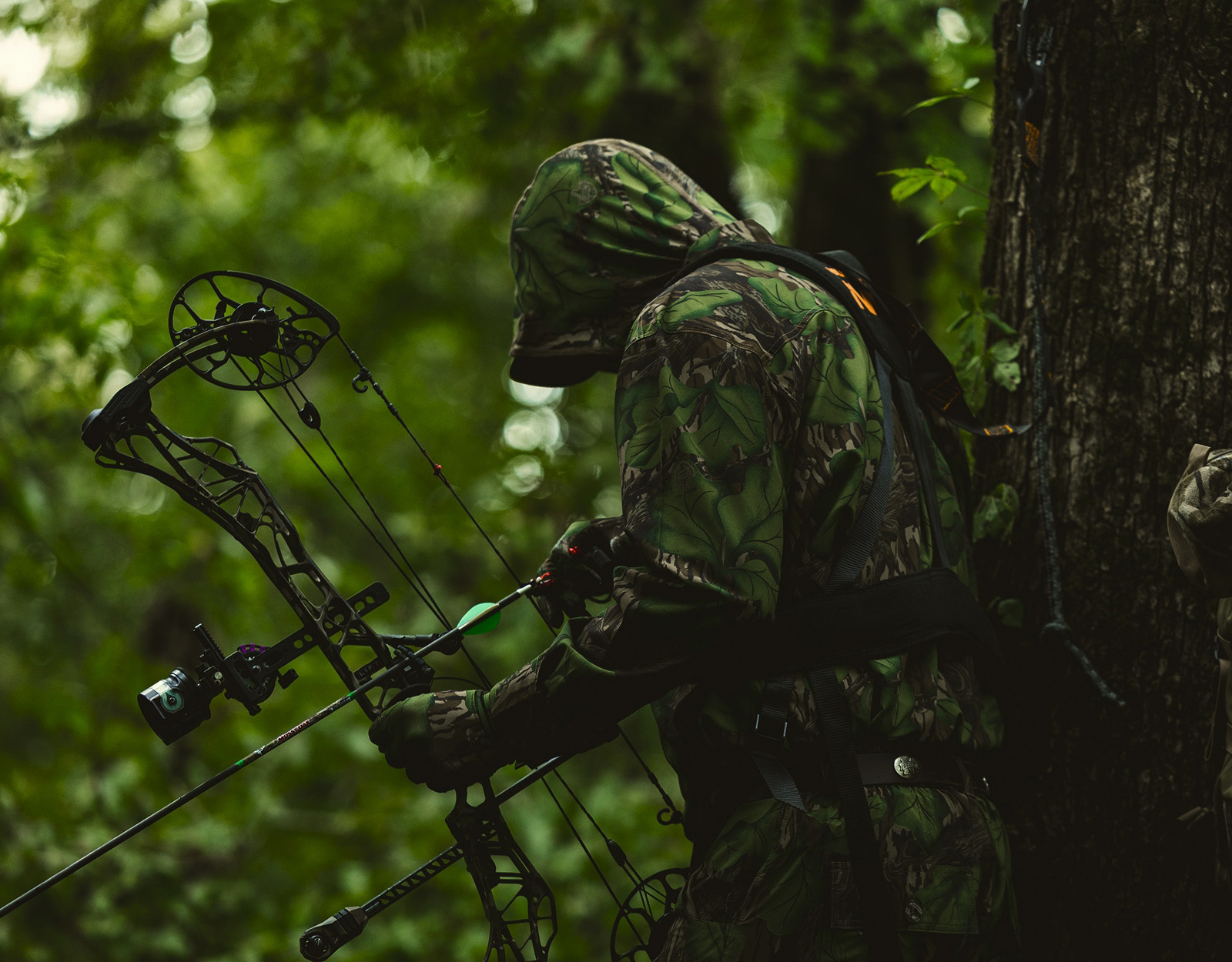
Pros:
- Good visibility.
- Can keep you hidden due to being elevated and camouflaged among tree limbs and leaves.
- Being elevated can help you beat a deer’s nose.
- Easier to hear animals approaching.
Cons:
- Can be difficult and dangerous to hang (if not properly done).
- Can be expensive to buy a full setup (stand, sticks/ladder, bow rope, bow holder, etc.), and you may need multiple setups (unless you tear the setup down and move every time).
- Takes awhile to tear down and re-hang elsewhere.
- Can be hard to hunt if wind isn’t perfect.
- Requires a good entry and exit route.
- Creates steep shot angles.
- No protection from the elements.
- Must cut shooting lanes and areas for shot (can be time-consuming and dangerous).
Blinds
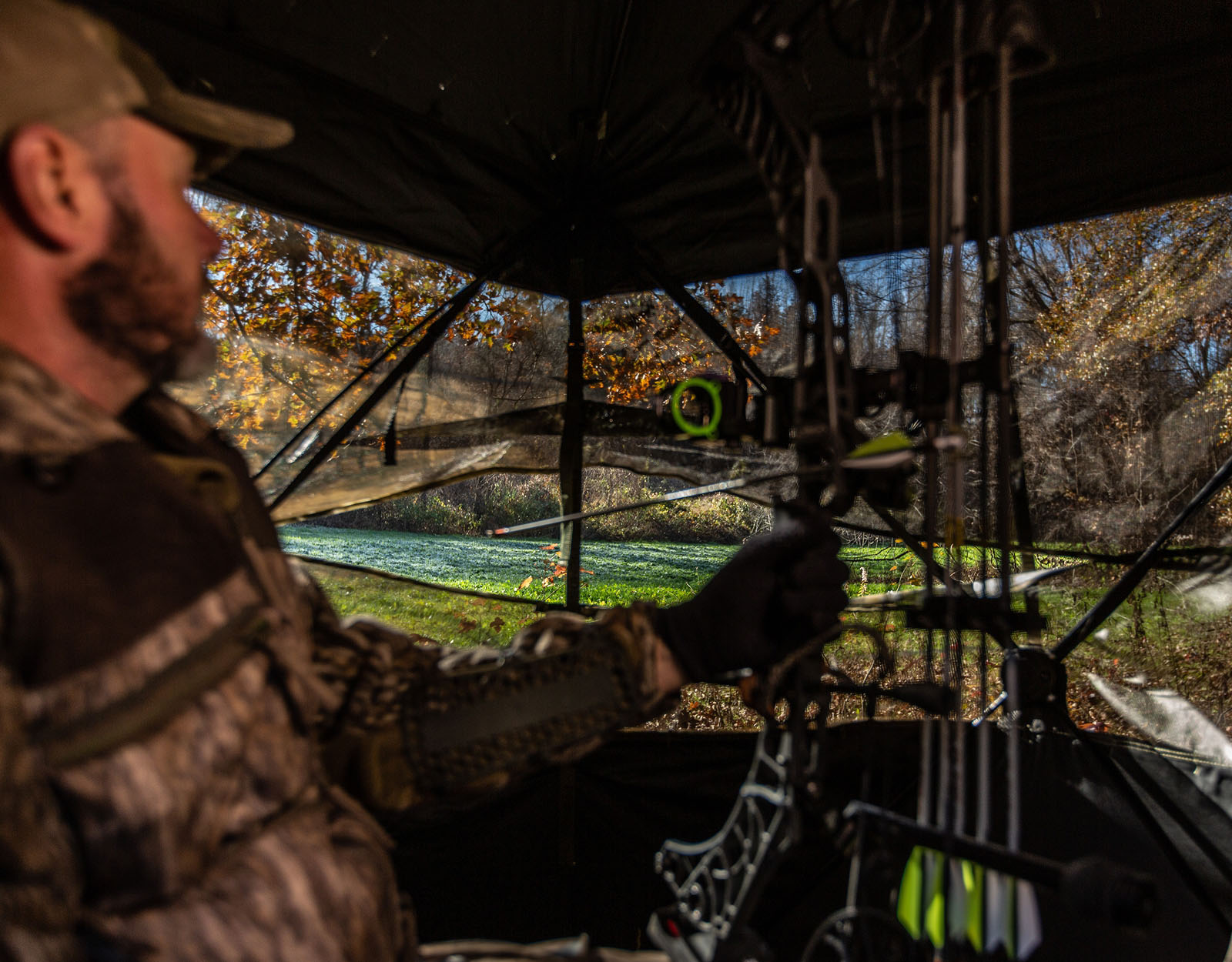
Pros:
- Can be moved easily.
- Can contain your scent well (some better than others).
- Hides movement well.
- More comfortable scenario than a treestand.
- Protects you from the elements.
- Shooting at eye-level offers easier shot angles.
Cons:
- Hard to see 360 degrees.
- Hard to hear the environment around you.
- Harder to conceal and hide from deer. Mature deer, in particular, often do not react well to new objects in their environment.
- Can be super hot in early season.
- Can be hard to shoot from (small windows).
- Need multiple blinds for multiple sets.
Whichever option you choose, the setup has to place a deer’s likely travel route inside your effective range. Comfort and visibility matter, but they can’t make up for a stand or blind that’s on the wrong side of the wind or 20 yards too far from where the deer actually move.
Where To Hunt Whitetails During Archery Season
Bowhunting deer requires you to be where the deer are. This always sounds super elementary, but it’s the truth. Find where the deer are currently bedding and feeding, and you will find the deer. My best method for this is the “MRI” theory, which stands for most recent information. You’re looking for the hottest and freshest deer sign that you can find, and you’ll figure out how to hunt it—and fast.
If there’s one thing that’s constant about whitetails, it’s that they’re constantly changing patterns based on the most readily available secure bedding and feeding around. That’s why I rely on two methods for finding the most recent information: e-scouting and on-foot scouting.
E-Scouting
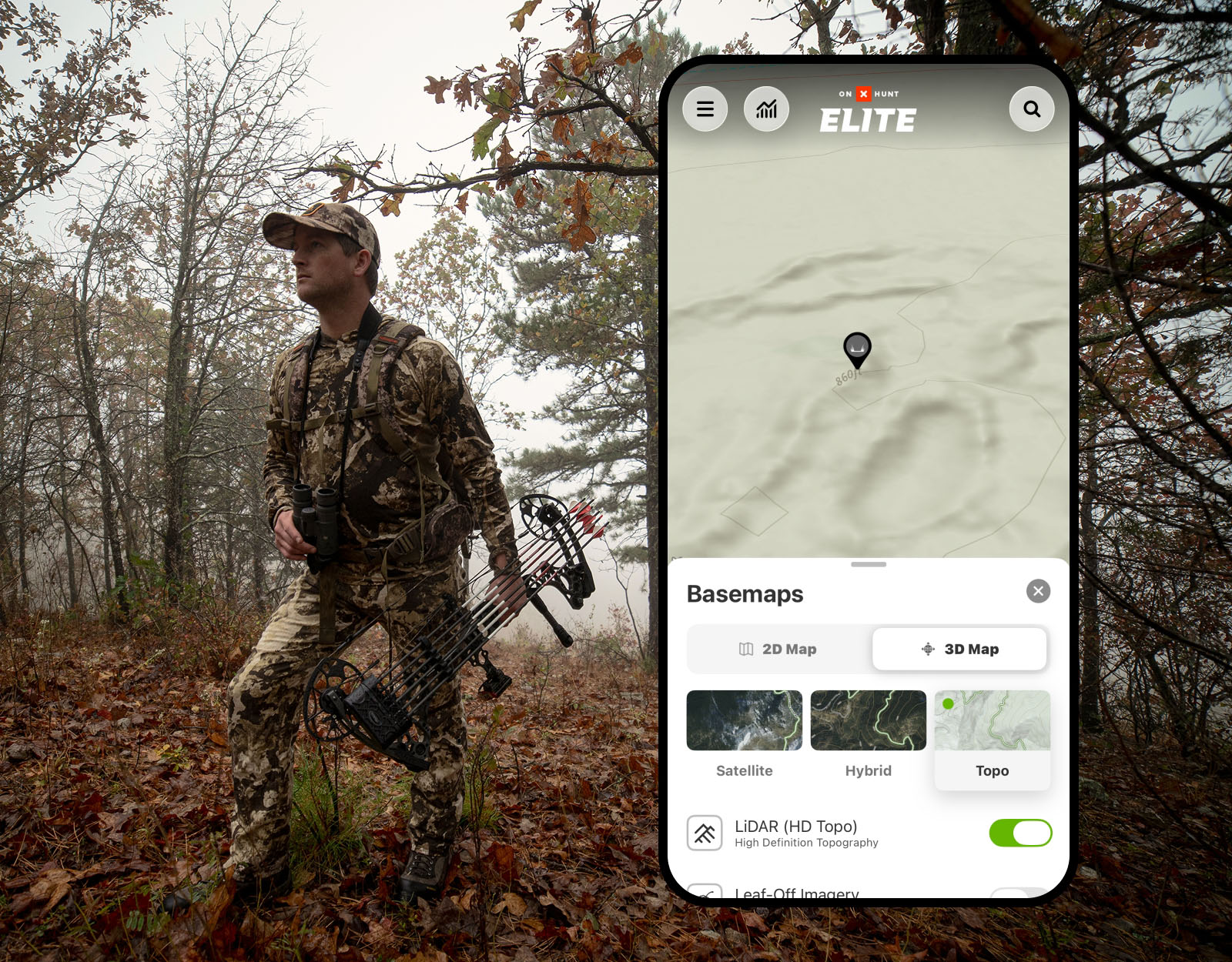
When e-scouting, I want to quickly pinpoint areas worth investigating on foot. If I don’t have the luxury of scouting on foot ahead of time, I will pick an area apart with onX Hunt. I use a few specific features:
- 3D Maps: See topographical features in real time to find funnels, draws, and hidden pockets of timber.
- Hybrid Maps: See topo lines, so I know what’s steep and what isn’t. Also great for looking at land features like saddles, ridgelines, and spur ridges.
- Lidar Maps: View an even more in-depth look at topo features. Great for planning wind and thermal strategies.
- Private and Public Map Layers: Understand property boundaries.
- Acorn-Producing Oaks Map Layer: Find likely food sources.
- U.S. Crop Distribution Map Layer: See where agricultural crops are and pinpoint feeding areas.
Using these features, I’m focused on two things: bedding and feeding areas.
I want to find these areas and then analyze the intricacies around them. Deer are where the feed is and will bed close by. Figure out these two details, and you’re unlocking a huge key to success. I scour onX Hunt looking for:
- South-facing bedding areas and areas of cover with timber (deer prefer south-facing slopes because the most sunlight hits these sides in the fall and winter).
- Oak ridges and mast crop areas (deer love acorns as a great source of protein).
- Agricultural fields, as this is a prime whitetail food source.
The map gives me a theory. Fresh sign and firsthand observation tell me whether that theory is right.
On-Foot Scouting
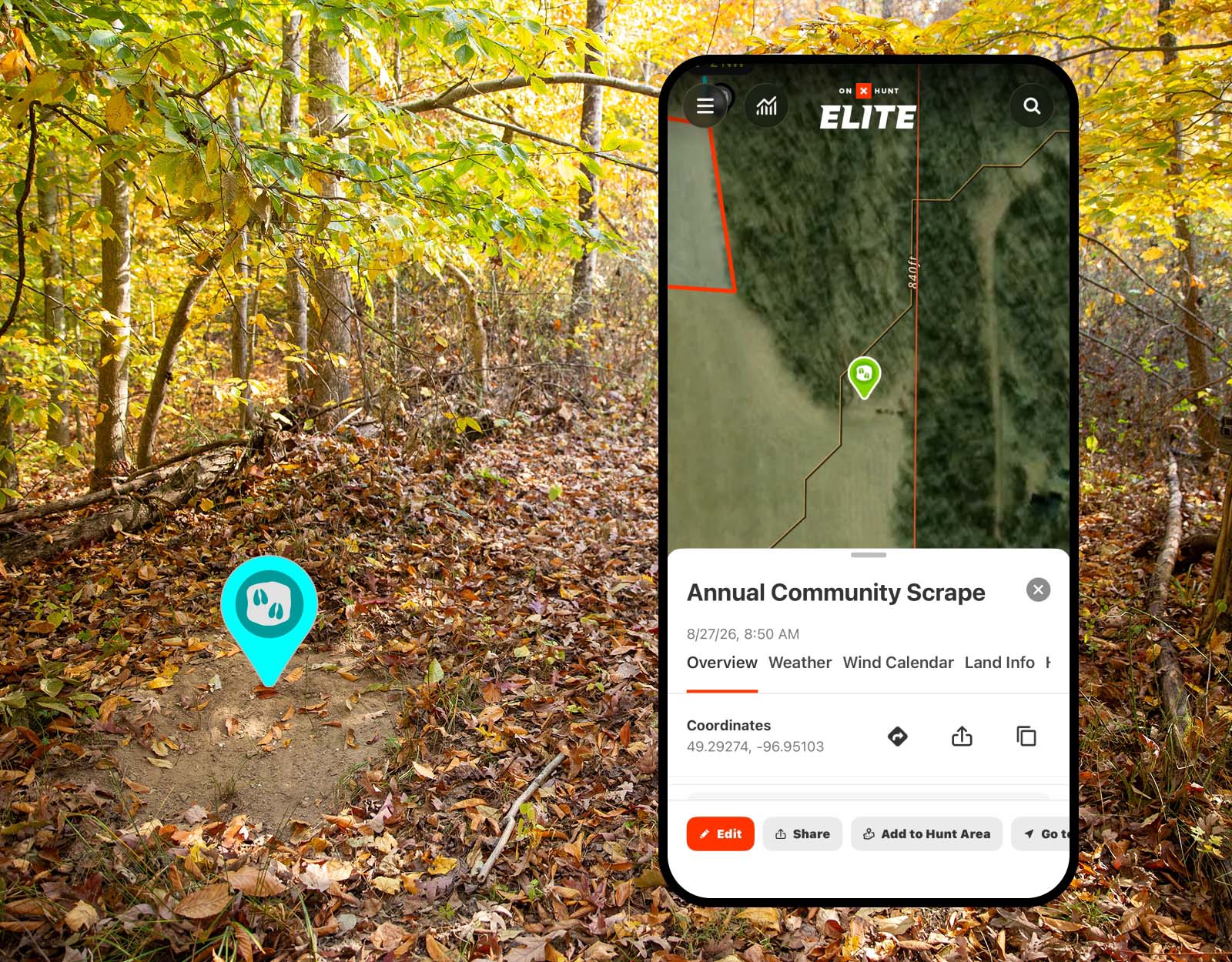
Even with the ability to e-scout, I still love to scout the old-fashioned way: on foot. Nothing beats actually seeing and confirming what I’m hoping to find in person. Scat, trails, rubs, and scrapes can all be seen in person, on foot. In-person scouting allows me to look at possible entry and exit routes, treestand and blind locations, and confirm whether or not the deer are using these areas.
My golden rule is to hunt the hottest sign I can find. I mark sign in the Hunt App with custom Waypoints, including:
- Rubs, scrapes, trails, scat, etc.
- Bedding areas
- Feeding areas
- Potential entry and exit strategies
- Stand and blind locations
- Water
How To Get Deer Within Bow Range
Once you’ve discovered where deer are spending a lot of their time, look for areas that naturally compress their movement into your effective range. Good bow setups often include:
- Feeding areas like ag fields, acorn-filled ridges, and apple trees.
- Transition zones between where deer feed and bed.
- Bedding areas (hunting the fringes can be effective, but risky).
- Natural funnels like saddles, beaver/pond dams, and shallow creek crossings.
- Water sources, especially in dry years.
These areas can help put deer in front of you, and then you need to figure out how to hunt the area effectively by using the wind and your entry and exit routes to your favor.
How Wind Affects Bowhunting Whitetails
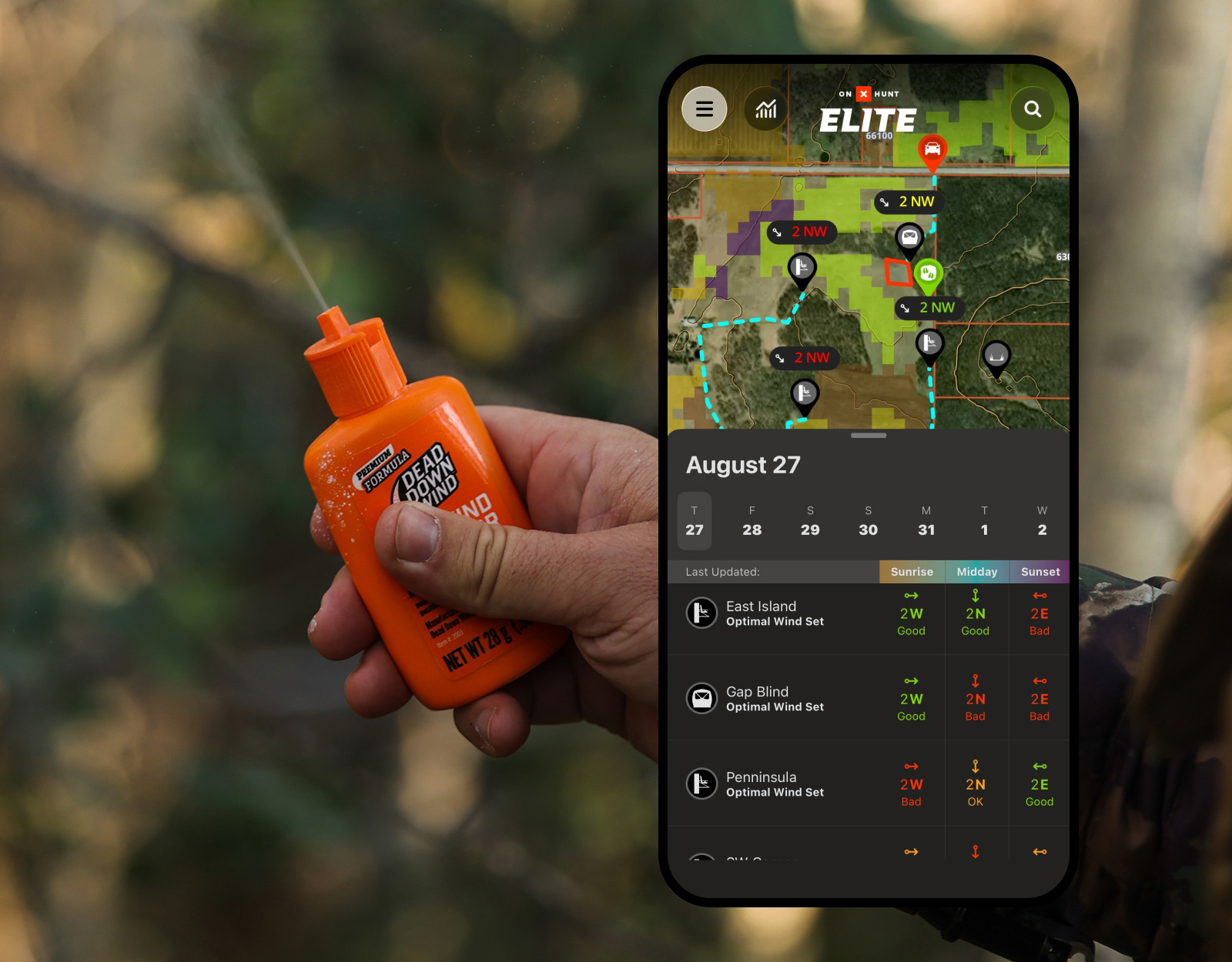
Deer live and die by their nose. You may fool their eyes and ears; rarely will you fool their nose. A smart bowhunter must understand wind and thermals.
Directional Winds
These are your winds from the north, south, east, and west. Typically, an area will have a predominant, seasonal directional wind. Storms and weather fronts will dictate how the directional blows in and out. A strong directional wind is easy to predict and read (onX Hunt’s Wind Calendar shows you hourly directional wind forecasts).
Deer will use certain areas based on the directional winds. For example, on my home farm, the main directional is from the west, so a lot of the deer use areas where that west wind is in their face as they approach bedding and feeding areas. Knowing this helps me predict their approach and choose my ambush location.
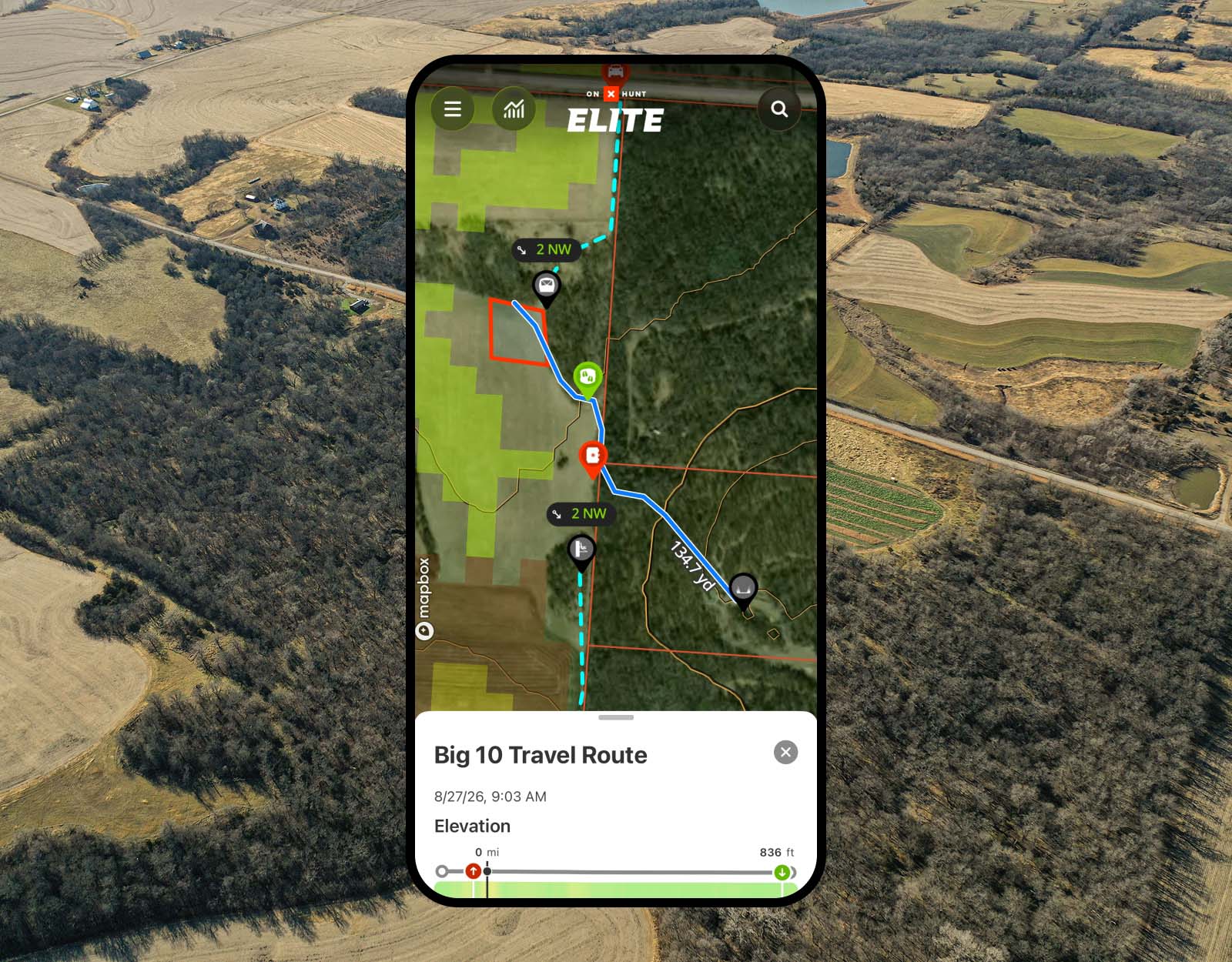
Remember: always hunt the winds that are good for the deer. Make them work for you.
Hunt a wind the deer is comfortable using, but position yourself so your scent doesn’t cross its approach. That may require creative entry routes and treestand locations.
Thermals
Unlike directionals, thermals are air currents created by the relationship between temperature and topography. These finicky winds have one main rule: They rise as the temperature rises and fall as the temperature falls. So, in the mornings, they’re falling, but as the sun comes up and temps come up, they rise. Come late afternoon, as temperatures fall, they’ll start to fall again.
For as simple as they sound, thermals trip a lot of people up. Read more about how thermals work
Also, topographical features affect thermals. Draws and valleys will funnel rising and falling thermals. Water sources will pull thermals towards them. Ridgelines and spur ridges can be tricky spots to hunt because you have a high point with two low points on each side. onX Hunt’s 3D, Topo, and Lidar Maps can help you look at these areas and come up with good game plans for the thermals.
I must note: Strong directionals can override thermals, but they will not get rid of them. Thermals happen no matter what.
The Mental Game
Bowhunting deer is a chess match. You make a move, the deer make a move, and this repeats until you get close enough. Sometimes that means you have to change areas and move spots numerous times. Other times it means you have to be patient and wait for the right wind direction or weather conditions.
Patience kills the deer, and without the discipline to wait for the right opportunity, you likely won’t find success. Bowhunters have to realize that the grind is something you must fall in love with. Quick success is not the norm in the deer woods with a bow in hand.
Common Archery Deer Hunting Mistakes
- Not playing the wind on what’s best for the deer.
- Not hunting fresh sign.
- Hunting the same spot(s) over and over.
- Not being overly particular in your entry and exit routes to and from your hunting location.
- Not being patient and trying to force things to happen.
- Not scouting on foot in season.
- Not using e-scouting to your advantage.
- Not shooting your bow and checking your accuracy during season.
- Not cutting shooting lanes.
- Ignoring what you see deer doing or not doing because you don’t want to risk making a new move.
- Being too aggressive with your tactics.
- Not being aggressive enough with your tactics.
Archery Gear Checklist
In no specific order, here’s a list of items I consider a bowhunter’s essential kit:
- Bow
- Arrows
- Broadheads
- Fieldpoints
- Target
- Rangefinder (plus extra battery)
- Release
- Optics (bino harness, binoculars, spotter and tripod inside truck)
- Camouflage/hunting clothing (I keep mine in a scent-free container filled with leaves and acorns to help mask my scent)
- Boots (I store these with my clothes, or another scent-free bag/box filled with leaves and acorns)
- Extra trail cameras and batteries
- Extra treestand/sticks/treesteps/blind
- Tags/hunter ID
- Zip ties and gorilla tape
- Kill kit
- Pack
- Harness for stands
- Chair for blinds
- Scent killer spray (optional)
- Scents (where legal)
- Calls
Archery deer hunting comes down to stacking small decisions in your favor. Find the freshest information, choose a place that brings deer inside your effective range, protect the setup with smart access, and keep checking the wind once you are there.