The shot connects, the bull goes down, and it’s euphoria. Then the adrenaline wears off and reality sets in because he’s down in a drainage two-and-a-half miles from the truck, and every pound of the 700 he’s carried around all summer is now your problem. That’s the trade with elk hunting. A mature bull can hand you well over 200 pounds of boneless meat, which is great news for your freezer and tough news for your back.
Here’s how much meat you’re really working with, how many trips it takes to get it out, and how to plan a route with the Hunt App instead of finding one out the hard way, mid-carry, with a heavy pack digging into your shoulders.
How Much Does an Elk Weigh?
Search around for “elk weight” and you’ll find plenty of jaw-dropping numbers, most of them pulled from managed, high-fence operations where genetics and feed programs push bulls well past anything you’ll find on public land. A mountain bull is a different animal.
On free-range ground, the Rocky Mountain Elk Foundation puts an average bull at around 700 pounds live weight, with cows averaging closer to 500 pounds. Subspecies matters, too: a Tule bull in California might only push 400 pounds, while a Roosevelt bull working the old growth of the Pacific Northwest can top 900. Colorado Parks and Wildlife’s numbers land in a similar range: Rocky Mountain elk subspecies bulls weigh up to 900 pounds and cows between 400 and 600.
Those are averages, not guarantees. A 2025 U.S. Forest Service study tracking female elk body condition over 20 years in northeastern Oregon found that drought years, especially when paired with high elk density, measurably reduce body fat going into fall. Wet summers with an early green-up do the opposite. The bull you tag this year might carry noticeably less muscle and fat than the one you shot two seasons ago simply because of the summer that came before it. Plan around a range, not a single magic number.
How Much Meat Can You Get From an Elk?
Once a bull hits the ground, live weight stops mattering much. What you bring home depends on two decisions: whether you bone out the meat or haul quarters home bone-in, and how much of the carcass you’re willing to, or can legally, leave behind. Note that most states have laws governing wanton waste for game animals.
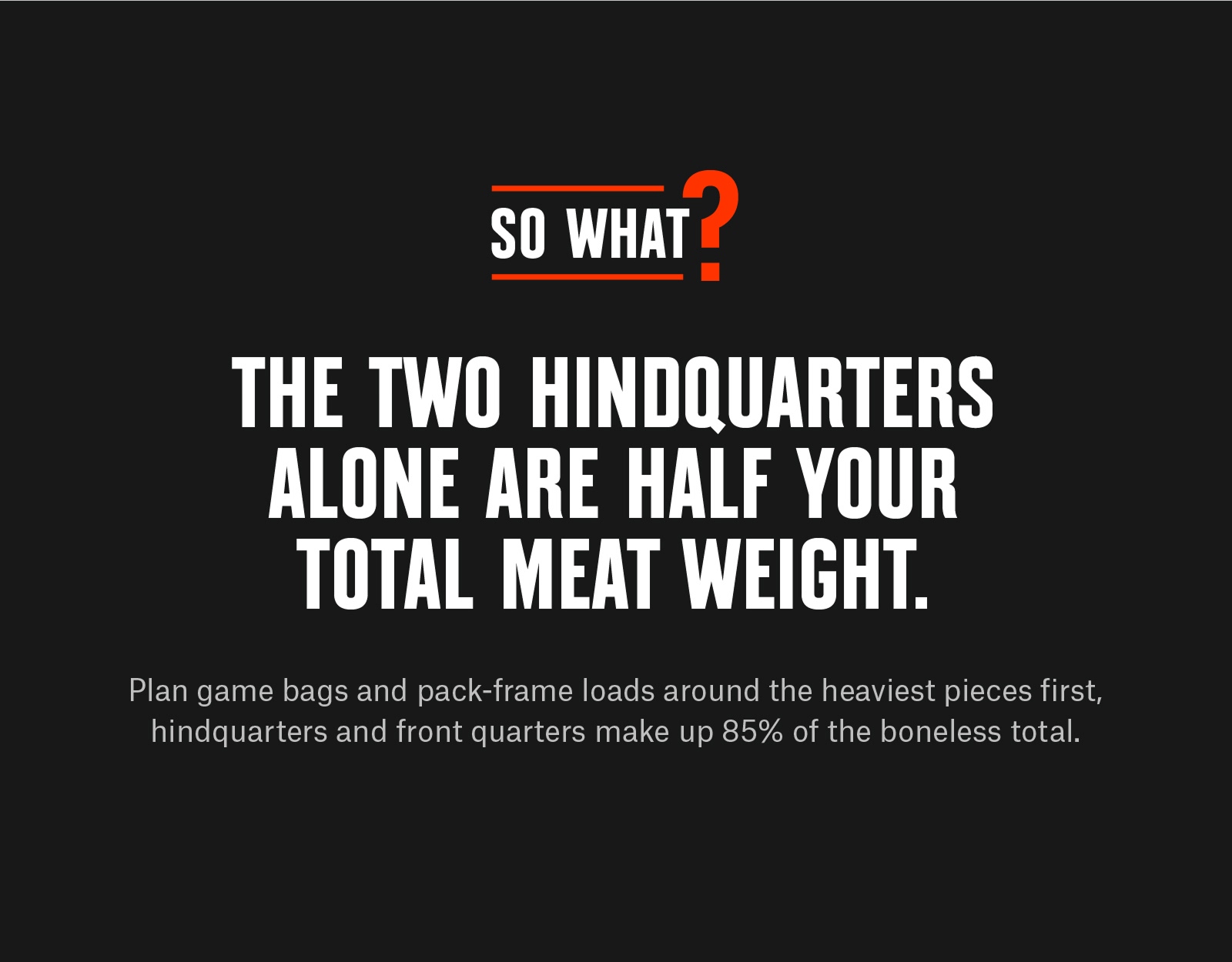
A University of Wyoming carcass study found that field dressing (defined as viscera and feet removed) drops an elk to roughly 70% of its live weight.
| Class | Avg. Live Weight | Avg. Field-Dressed Weight |
| Bull | 700 lbs. | About 490 lbs. |
| Cow | 500 lbs. | About 350 lbs. |
The same study showed boneless yield running from up to 270 pounds depending on the animal’s age class. An average mature bull nets out to about 218 pounds of boneless meat. An average cow comes in lighter, around 169 pounds.
Bone-in cuts weigh more leaving the woods, but you’re carrying bone and connective tissue you’ll trim away at home anyway. Boning out in the field means fewer pounds on your back and fewer trips, full stop.
How Much Does an Elk Quarter Weigh?
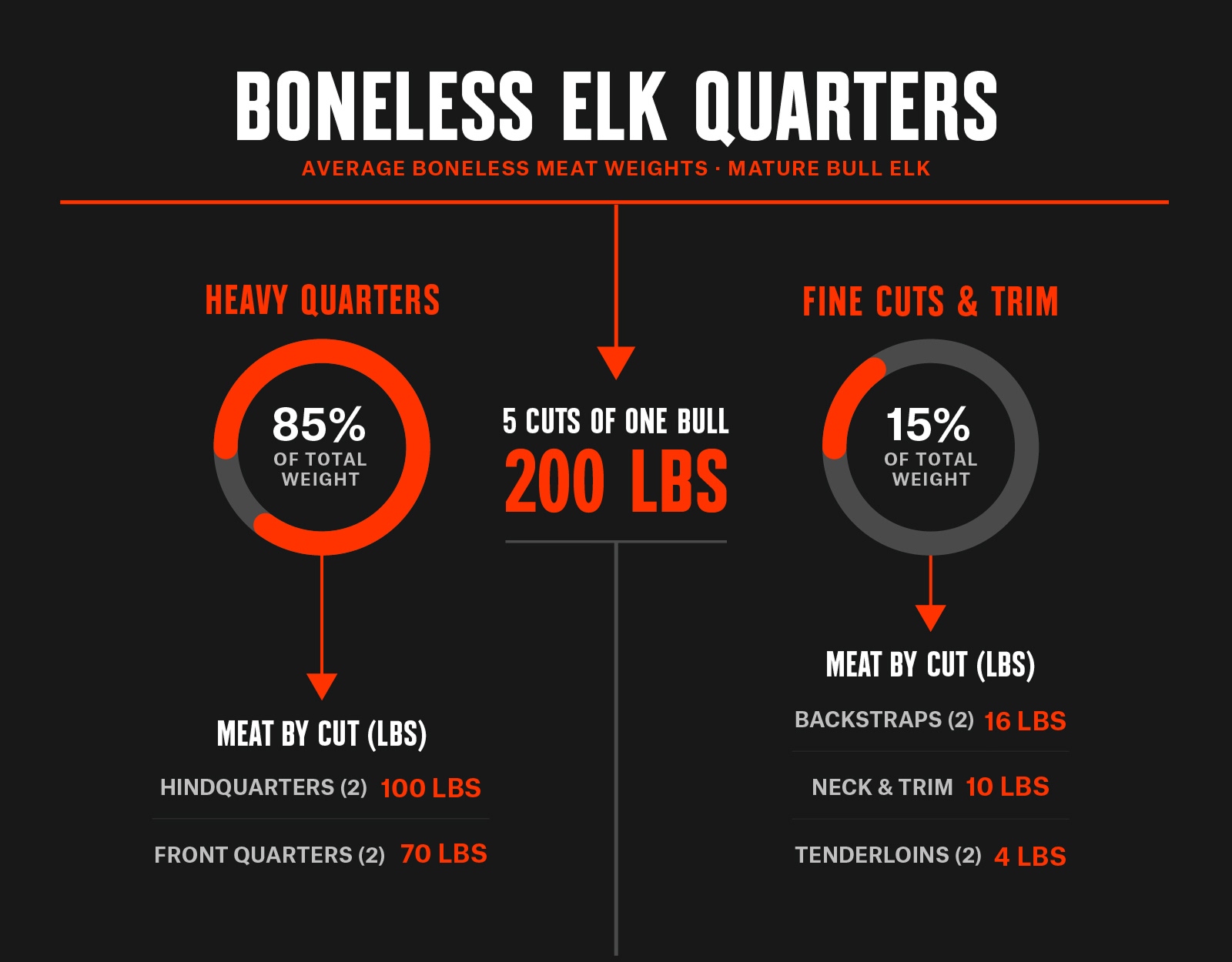
Total yield tells you how much freezer space to plan for. Quarter weight tells you how heavy each individual load will feel on your back, which matters more when you’re deciding how to split the work.
On average, for field-weighed cow elk, each hindquarter runs about 65 pounds bone-in, or 51.5 pounds deboned. Each shoulder runs 38 to 44 pounds bone-in, about 34 pounds deboned. The backstraps together weighed about 16 pounds, and the rib, neck, and loin trim added another 10 pounds. Scale those numbers up for a bull: front shoulders can run 50 to 90 pounds bone-in, hindquarters 60 to 100 pounds bone-in, and backstraps 15 to 30 pounds, depending on the animal’s size.
Tips on Packing Out an Elk: How Many Trips to Expect
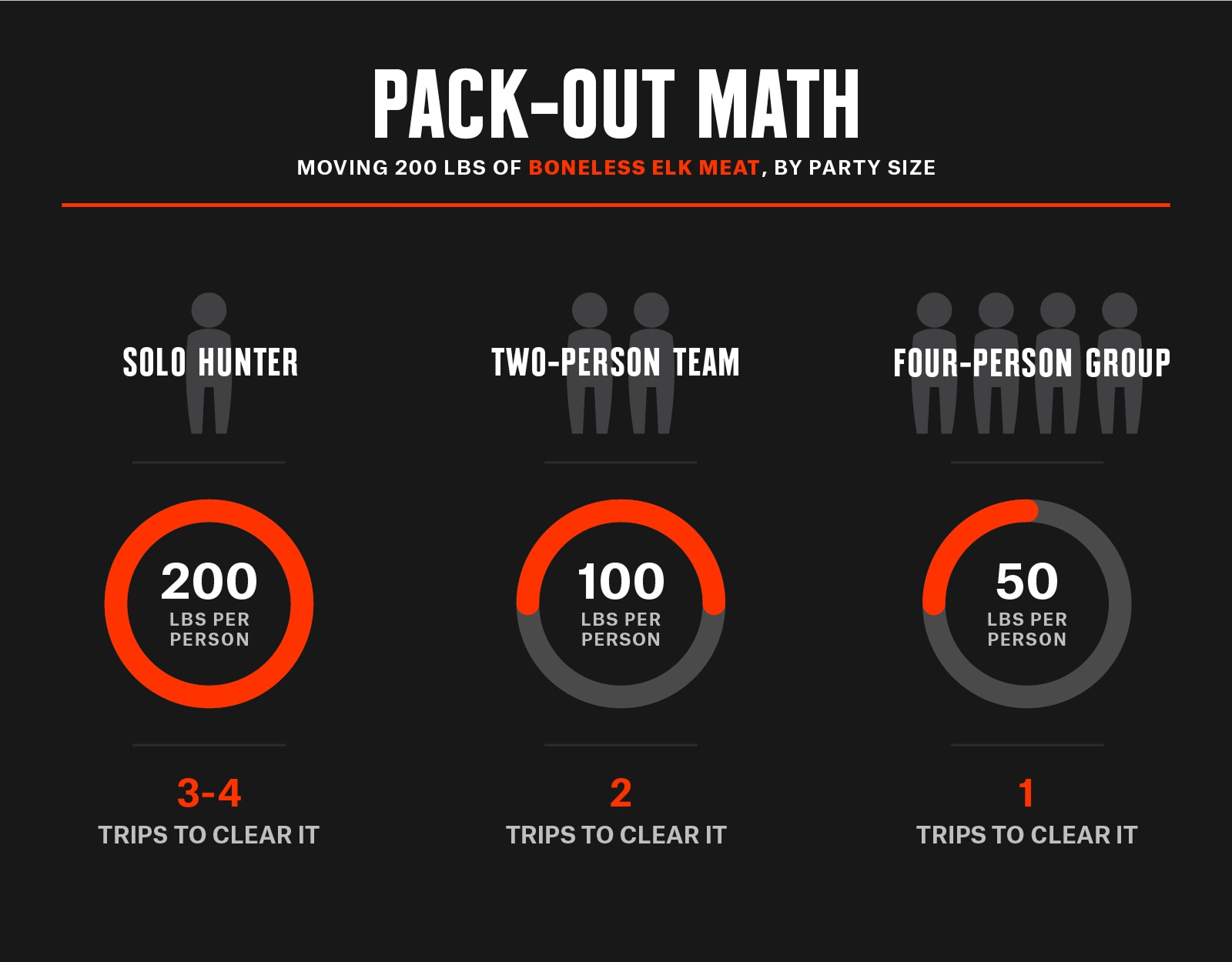
This is the number every first-timer wants: how many trips am I in for? The answer depends on party size and animal size. Let’s use an example on the far end of the weight spectrum to anchor your planning. A 500-pound field-dressed bull yields 250 pounds of meat plus a 40-pound head (or, if you want a shoulder mount and bring the cape, expect even more), 290 pounds in all, and it breaks down like this.
| Party Size | Avg. Load per Trip | Trips Needed |
| Solo hunter | 97 lbs. | 3 |
| Solo hunter | 73 lbs. | 4 |
| Solo hunter | 58 lbs. | 5 |
| Two hunters | 100 to 145 lbs. each* | 1-2 |
| Four hunters | 70 to 75 lbs. each | 1 |
Heavier loads mean fewer trips. Lighter loads mean more trips. There’s no wrong answer here as long as you’ve planned for it instead of finding out on the mountain—and remember, you’re not just carrying an animal, but also your other gear.
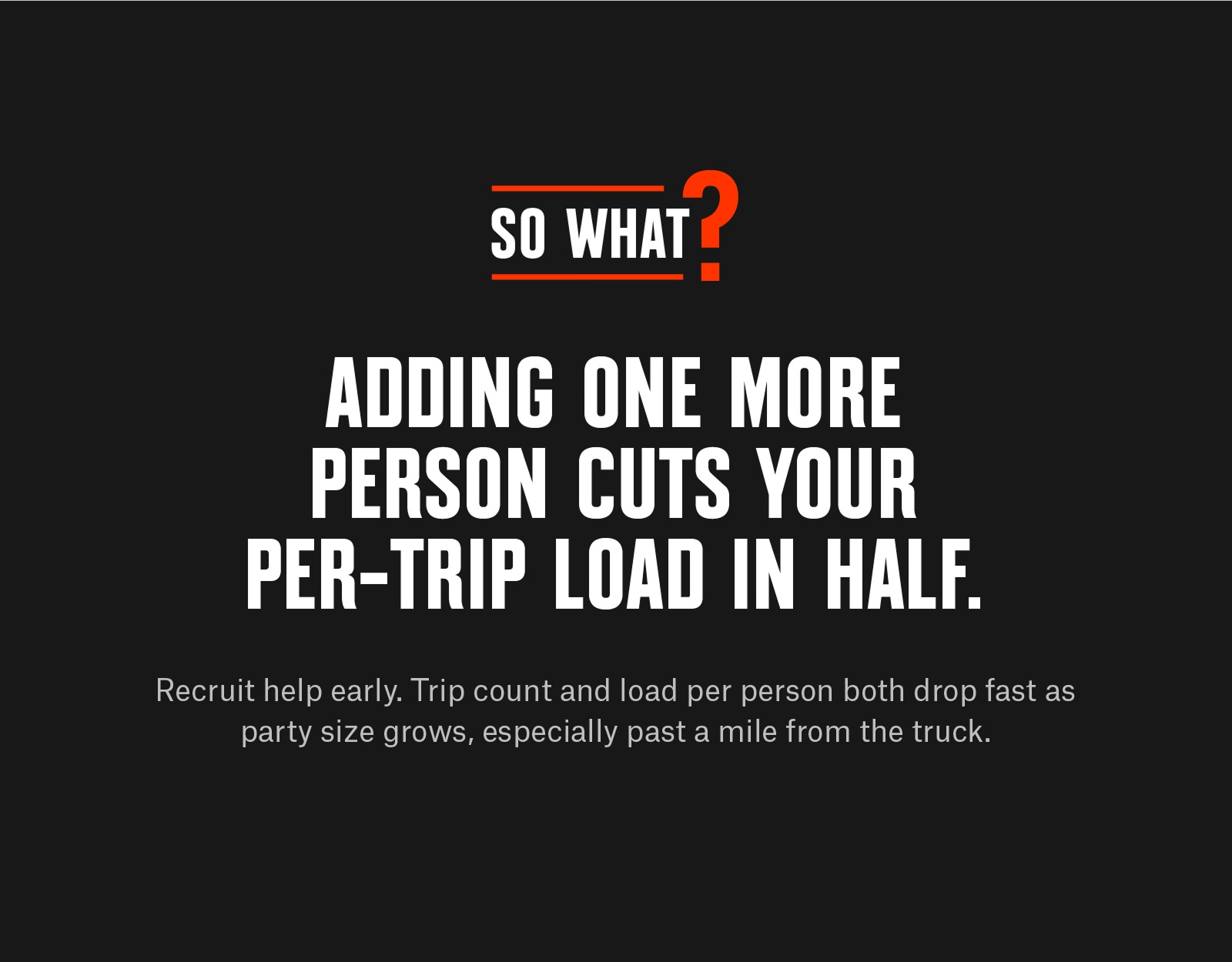
Multiple hunters change the math fast. It’s possible to “half” between a pair of hunters, but still a tall task. One person can carry both boned hindquarters plus the backstraps and tenderloins, while the other takes both shoulders, the remaining trim, and the cape and antlers. Add a third and fourth hunter and you’re usually looking at one trip apiece, each person carrying roughly a third to a quarter of the total load.
*How much should each person carry? A 2022 review of backpack load-carriage research found injury risk climbs sharply on heavy-carry jobs and recommended not exceeding 40% of your body weight per load. For a 180-pound hunter, that’s a ceiling of about 72 pounds a trip.
Terrain Changes Everything During an Elk Pack Out
Everything above assumes flat ground and a short walk. Elk country rarely offers either, and the same bull can turn into two very different jobs depending on where he drops.
Distance on a map can mislead you. A kill site that reads one mile from the truck is two miles round trip once you’re walking it, and those two miles get covered three to five times depending on your party size. A short hike on the screen adds up fast once you’re the one carrying the load back and forth.
Elevation compounds that math. A study out of the U.S. Army Research Institute of Environmental Medicine built a new model for predicting the metabolic cost of heavy backpacking and found that energy expenditure rises non-linearly as load increases. Each additional pound costs more than the pound before it, and steep grades, especially downhill, pile an independent cost on top of that. The last 20 pounds you strap on to avoid a fifth trip is far more expensive, physically, than the first 20 pounds were.
Deadfall turns a straight line into a maze. Downed timber forces you to detour around it or climb over it, and climbing over a log with a loaded pack is exactly when injuries happen. Load-carriage research found lower-back and lower-extremity injuries are the most common outcome of heavy-carry work, and uneven footing under a heavy pack is where a lot of those injuries start.
Heat and weather add their own pressure, and not just on your body. A warm early-season hunt means meat starts working against you the moment it hits the ground, so every hour you burn rerouting around bad terrain is an hour that quarter sits in the sun. Rain or snow can turn a firm trail into ankle-deep mud and a dry crossing into a slick one, changing the route entirely from the one you scouted back in August.
Water crossings look simple on a map and rarely are in person. A creek that’s a quick step-over in September can run high and cold a month later, and a wet boot two miles from the truck with a heavy pack on is a miserable way to end a long day.
Put it together and the lesson is simple: the same bull, the same 700 pounds, the same yield, can be a straightforward carry or a brutal one depending entirely on where he falls.
That’s not a reason to hunt easier ground. A six-year Oregon study tracking 416 archery and rifle hunters found that scouting beforehand increased the odds of a successful harvest by 418%, and every additional hour spent actively hunting away from camp added another 18% on top of that. Harvest density in roadless, hard-to-reach country runs roughly 10 times higher than in heavily roaded terrain. The ground that produces bulls is often the same ground that makes for a brutal pack out. That’s not bad luck. It’s the trade you’re making by hunting where the elk are.
The fix isn’t hunting worse ground. It’s knowing exactly what that ground looks like before you ever pull the trigger, and that’s exactly where the Hunt App comes in.
Plan the Best Elk Pack Out Route
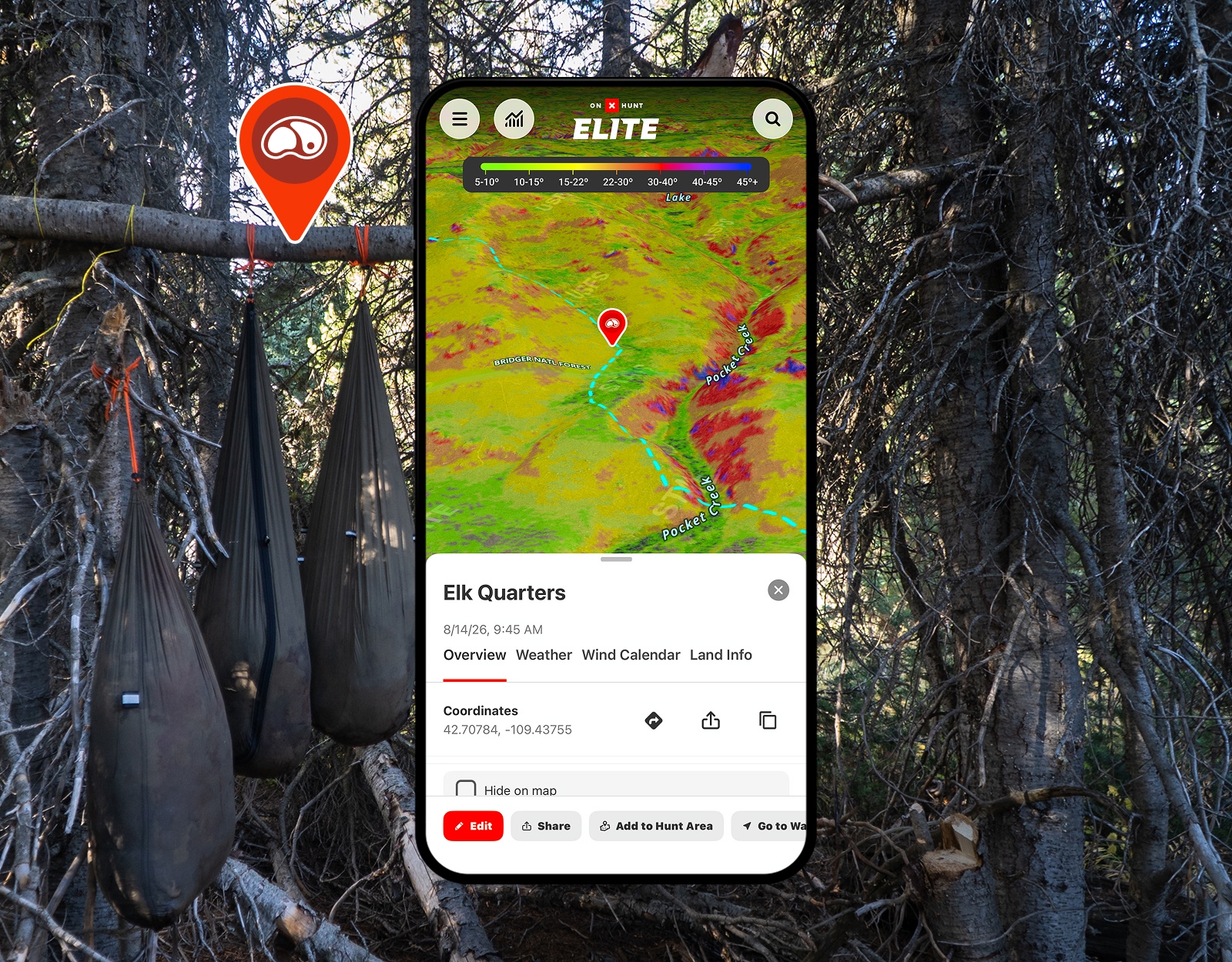
This is where the Hunt App earns its keep, and where a few minutes of map work saves you miles of hard walking later.
Start before the season even opens. Drop a radius around your access point to keep your hunt scoped to a pack-out distance you can handle. It’s an easy habit that keeps you from falling in love with a basin that’s gorgeous to glass and brutal to pack out of.
Use the Line Distance tool to measure a straight-line number from a likely kill zone back to your truck or camp. It’s a fast sanity check, but a straight line isn’t the trail you’ll walk. Switch to Route Builder to lay out the real path, snapped to roads and trails or drawn by hand, and see the true walking distance and elevation profile instead of the map’s optimistic guess. Build two or three route options before opening day so you’re choosing a path in advance instead of discovering one mid-carry.
Turn on the Slope Layer to see grade at a glance, shaded from gentle to steep, so you can route around the kind of pitch that turns a manageable load into a miserable one. Switch to 3D, now available offline, or pull up Lidar, to spot cliff bands, benches, and drainages before you’re standing on top of one with 70 pounds on your back. This is the layer that catches a nasty surprise on the map instead of on the mountain.
Check the Public and Private layer before you start hiking a load out. The last thing you want is to find out, heavy pack and all, that your shortest route crosses a boundary you didn’t know was there.
Drop a Waypoint the moment you field dress the animal, and another at your truck or trailhead. Mark a meat cache separately if you’re staging loads. One hunting writer described burning nearly an hour in the dark hunting for a stashed meat pile because his GPS pin was off by 60 meters, exactly the kind of mistake a precise Waypoint prevents.
Save your route in Tracker on the way out and follow that same track on every trip after. Once you’ve found the smart path, there’s no reason to test a new one with a heavy pack and a tired back. Turn on Offline Maps before you leave cell service, too. The information matters most exactly when you have no signal to get it.
A Few Last Things
Have a plan to keep the meat cool. Know the expected temperatures in the area (or at least check before you go offline if you’ll be without service so you have an idea of how concerned to be). Once you’ve field dressed your elk and gotten the meat in game bags, find the coolest spot you can to hang it between trips. A creek bottom is ideal. At a minimum, get it into shade (and be mindful that the spot that was shaded when you hung the meat might not be a shaded spot by the time you get back). Whether you debone or not has pros and cons. Deboning will help keep the meat cool (and lighten the load), but if it takes you a long time to debone and you’re fighting rising outside temperatures, that’s a consideration. If you’re dealing with warm temps, your turnaround time between trips matters; get back to that meat quickly to prevent spoilage.
Also, pack trekking poles if you don’t already run them. They’ll save your knees on the downhill with a loaded pack. Split loads evenly across your crew rather than by seniority. And if you’re staging meat overnight, hang it or stash it well off your trail, mark the spot with a Waypoint, and make sure you have a good line of sight to the area on re-approach so you can look for bears.
A little planning up front turns a pack out from a dreaded chore into just another part of the hunt. Open the Hunt App, scope your route before you scope your bull, and go get after it.
FAQs
A mature bull elk averages around 700 pounds live weight, though Roosevelt bulls can top 900 pounds and Tule bulls often run closer to 400. Drought years and high elk density can push weights toward the lower end of that range.
An average bull yields about 218 pounds of boneless meat; an average cow yields about 169 pounds. Total yield can range up to 270 pounds depending on the animal’s age class.
A bone-in front quarter runs 50 to 90 pounds, a bone-in hindquarter runs 60 to 100 pounds, and backstraps combined weigh 15 to 30 pounds, depending on the size of the animal.
A solo hunter can expect three to five trips depending on load size. Two hunters can often clear an average elk in two trips, and four hunters can usually get it done in one.
Yes, though it takes more trips and more time. A solo hunter breaking down a 500-pound field-dressed bull into 250 pounds of meat plus the head and cape can expect three trips just for meat at around 97 pounds each, four trips at 73 pounds, or five trips at 58 pounds. The rest of your gear will affect these calculations.