The West is dry. Even for a region that experiences periods of drought, this year has been notable. Dust storms ripped across eastern Montana in May. Wyoming meteorologists reported the state’s driest winter in recorded history; drier even than the Dust Bowl.
Wildfires have already engulfed hundreds of thousands of acres in states like Colorado, Utah, Oregon and Washington. The U.S. Drought Monitor as of late July showed much of the Intermountain West in severe or extreme drought with pockets of exceptional drought. Wildlife biologists across the West say if these conditions persist, big game like elk, mule deer, pronghorn, moose and bighorn sheep will suffer. Some species already are.
“There are places where I think habitat quality is making it very difficult for us to grow deer, and drought will impact those areas more immediately,” said Eric Freeman, Idaho’s Upper Snake Region wildlife manager. “On some timeframe, drought and mild winters help us grow deer and elk, but depending on how many years that lasts, even the best habitat breaks eventually.”
As bad as it all sounds, wildlife managers want hunters prepping for fall to know the hunting forecast could certainly be worse. Some areas of Idaho, in fact, will have better deer hunting than it’s had in past years, Freeman said. Eastern Montana tells a similar story. Enough rain came in May and June that animals went into summer in fairly good shape, said Scott Thompson, wildlife manager for Montana Fish, Wildlife and Parks’ northeast region. He expects to see better recruitment of young than they feared after such a mild winter on the heels of several dry years.
“We were bracing for a wreck,” he said in late July. “It was really timely moisture, and our native vegetation and grasses look decent now. As those early invasive grasses were senescing, the native grasses got moisture, so things were decent. It is a bit surprising.”
And while the West’s historically warm and dry winter contributed to brown prairies and parched streams, it was a bit of a saving grace for big game. Elk, deer and pronghorn came into spring and summer fatter and in better body condition than most years. They spent more of the winter browsing dried shrubs and flowers and less time burning precious calories struggling through deep, crusted snow.
And biologists say in many regions species like elk will need the harvest.
“We have animals coming into poor quality winter range with low forage,” said Andy Holland, big game manager for Colorado Parks and Wildlife. “Get it done because we want to reduce the stocking rate on winter range.”
Antlers, Drought, and Genetic Potential
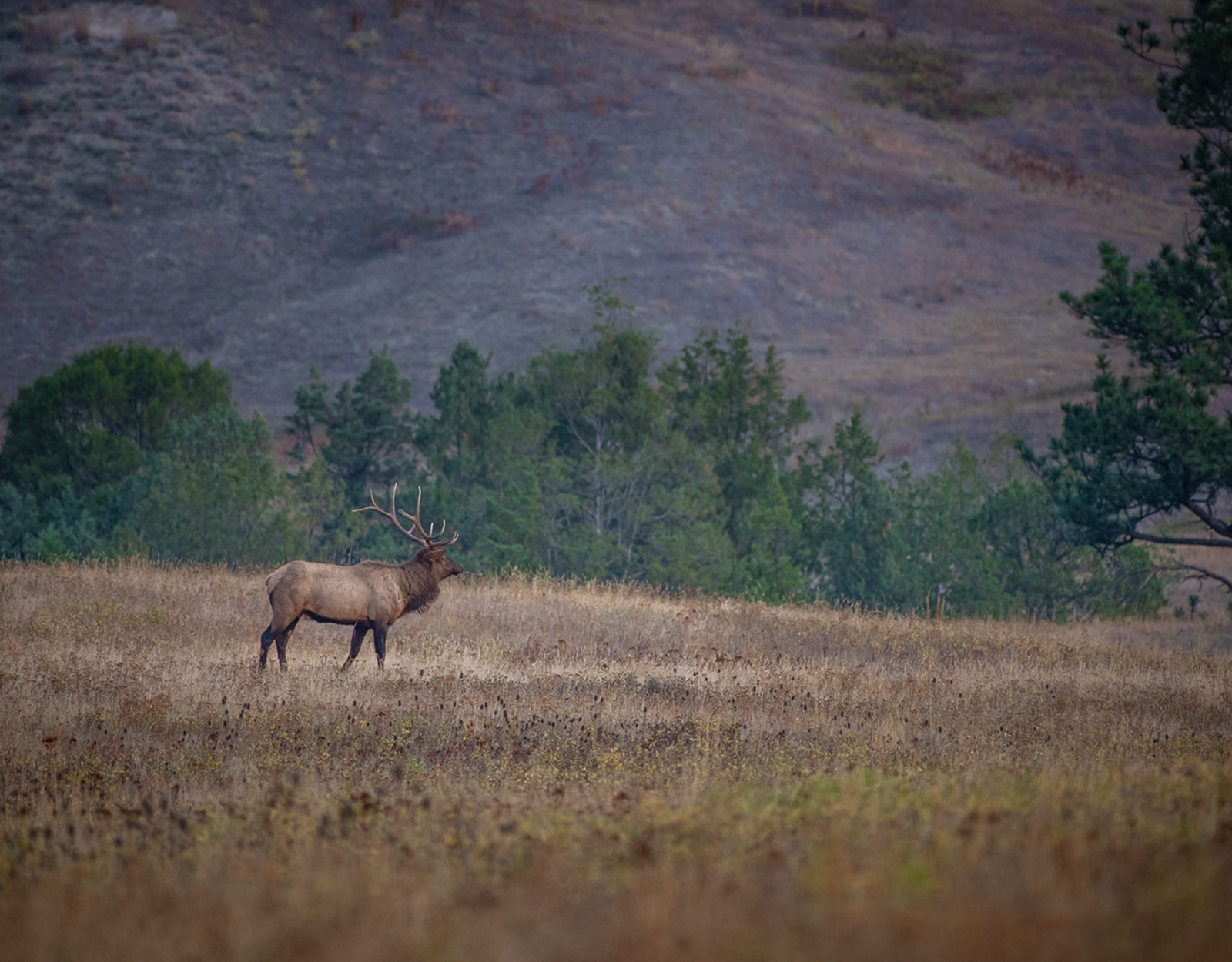
Most biologists agree severe drought can impact antler growth. Exactly how much, though, depends heavily on species and conditions on the ground.
“It’s called a secondary sex characteristic,” said Jim Heffelfinger, wildlife science coordinator with the Arizona Game and Fish Department. “Their body is satisfied first, and then antlers get the nutrition that can be spared. Antlers are the first ones to really suffer from nutritional shortages.”
Prolonged dry conditions causing poor nutrition can lead to stunted moose antlers and smaller ring growth on bighorn sheep horns, said Rusty Robinson, Utah Division of Wildlife Resources’ once-in-a-lifetime species coordinator.
“In times of poor nutrition, in the winter or rut where they’re running themselves ragged, the growth compresses or they stop growing altogether,” he said. “You can see it on desert sheep when we do captures and age them. Those gaps are thinner on poor years, and we can trace that back.”
Severe dry conditions can also lead to smaller and weaker antlers, said Thompson. The 2022-23 drought was so bad in eastern Montana that hunters reported they couldn’t find any big mule deer bucks on the landscape. Follow-up data showed smaller antlers than normal on mature bucks.
“But I don’t expect to see that this year,” he added. “We are in a more normal pattern, so we will see animals express their genetics.”
Bulls and bucks require steady vegetation throughout mid to late spring and summer to grow their largest antlers, but in order to see an impact, a drought needs to persist for at least four to five months, said Heffelfinger. Any hunters concerned about a particular hunt area can look at the Drought Monitor for the first six months of the year. If it’s been extreme, antlers may well be smaller than some past years.
And while many parts of the West are historically dry, portions of states like Montana and Utah received frequent enough storms to provide animals with the food they need to keep growing.
Utah’s Department of Wildlife and Natural Resources recently started its preseason classification of elk herds, and found normal antler growth on most animals, said Mike Wardle, the department’s big game coordinator.
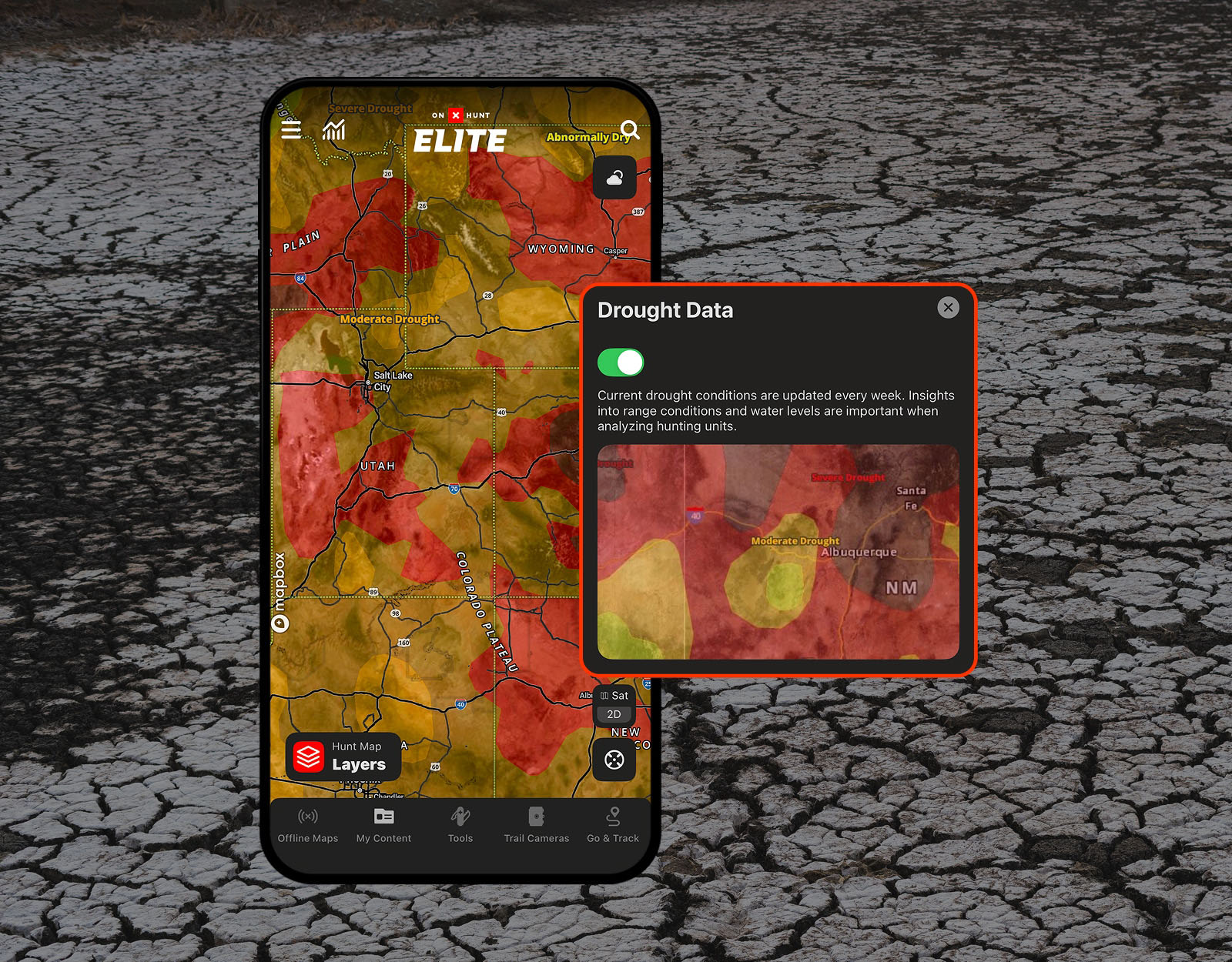
Unless your unit sat in extreme or worse drought for the first half of the year, expect antlers to look normal this fall.
Antler size is the visible effect of drought. A less immediately noticeable one is disease.
Drought’s Impact on Disease
Nearly 40 moose laid down to die this spring in the backyards and nearby fields of the Upper Snake region of Idaho, said Freeman. “And what died on the hill we didn’t hear about,” he added. “Moose are made to deal with snow. Heat and no snow increases stress. Say they have a carotid artery worm burden and a bunch of winter ticks, and then they are stressed because of heat. They’re less capable of dealing with it.”
Increased spread of disease is a secondary, insidious, and often overlooked side effect of drought, he said. And disease doesn’t impact each species in the same way. Diseases like adenovirus hemorrhagic disease hit moose and mule deer in larger numbers. Epizootic hemorrhagic disease (EHD) infects whitetail deer and pronghorn more as they gather around watering holes. Drought can even lead to an increase in the spread of chronic wasting disease.
Location matters, too. In Wyoming, wildlife experience higher loads of EHD and also bluetongue, another deadly virus spread by biting midges often called no-see-ums, said Justin Binfet, the Wyoming Game and Fish Department’s deputy chief of wildlife.
How badly the diseases will hit wildlife across the West this year is yet to be seen and depends on whether the drought persists into late summer and fall.
While licenses and quotas won’t change for this season, most biologists, including Freeman, said they will monitor the severity of die-offs for future years’ tags.
Tag numbers aren’t changing this year, but a bad disease year now could shape next year’s quotas.
Disease risk climbs where animals cluster. That clustering is its own story.
Animals on the Move
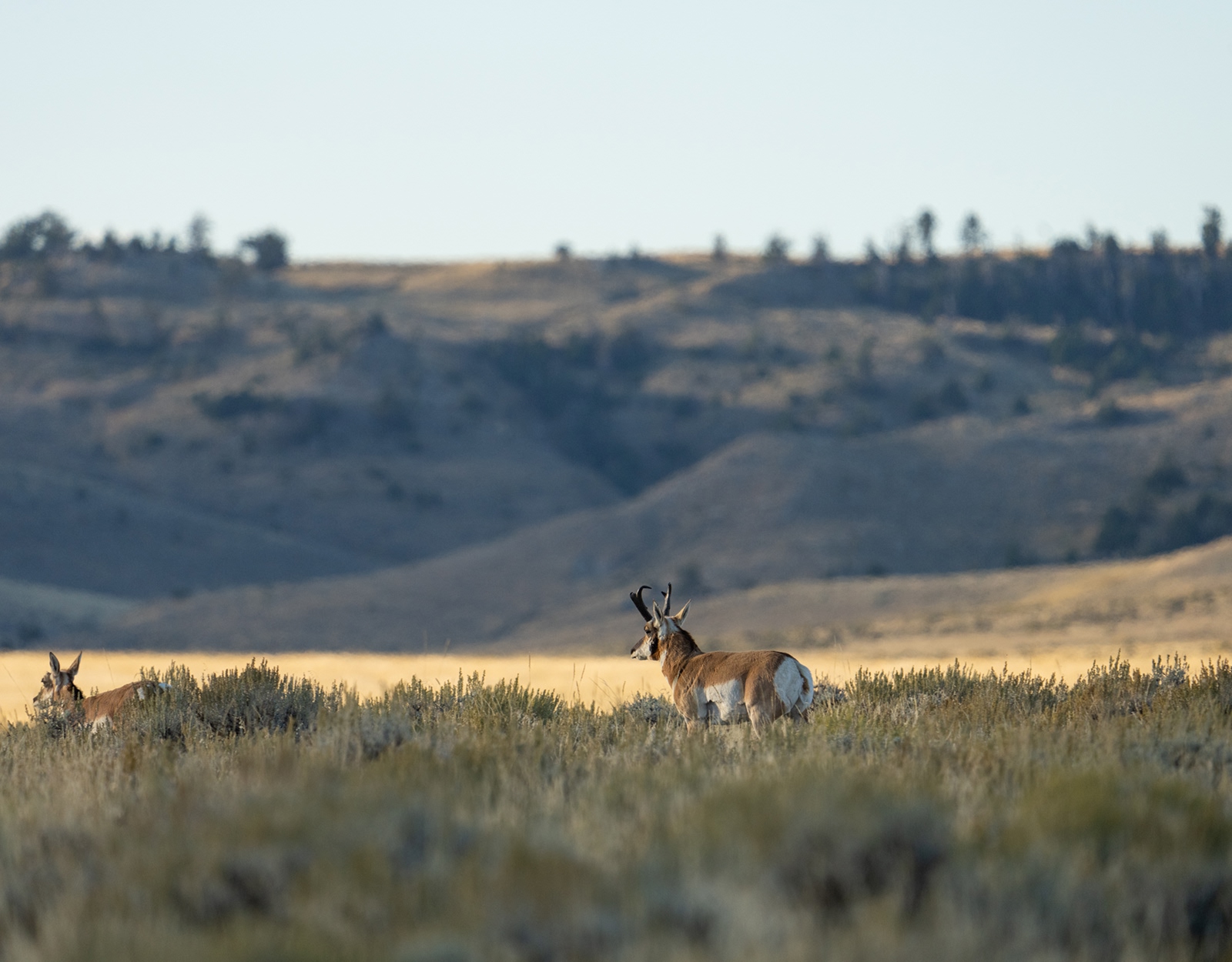
Most seasoned hunters know pronghorn tend to gather near water in late summer and early fall. The high desert species evolved with drought and dry conditions, but they still need water to survive. So as water becomes scarcer on the landscape, pronghorn tend to gather even more. Mule deer do as well. While the creatures tend to remain the most faithful to the core of their range, they will also concentrate around water in dry enough regions.
“The vast majority of animals have to be within about a mile and a half of water, and drought concentrates them in local areas,” Heffelfinger said.
Species like elk and pronghorn can survive for months on dry, crispy leaves or grasses, the vestiges of a short spring. They chew the food, which, as long as they find water to drink, will rehydrate in their rumens. Then they regurgitate the plants back up and chew their cud. Heffelfinger likened the process during dry years to humans eating freeze-dried food. We can sustain ourselves on it, but not unless we have water.
That’s why states like Arizona have invested millions of dollars in habitat connectivity and water catchments. The guzzlers offer wildlife somewhere to slurp precious water, making otherwise dry and brittle food digestible.
Drought also disperses species like elk as they wander looking for food. And in the process, they’re more likely to move onto irrigated fields where they cause damage and conflict with private landowners. Hunters may need to show up to their areas flexible and willing to change locations depending on conditions on the ground, said Holland.
“Animals might be more difficult to find,” he added. “But when you find them, they will be more concentrated.”
His and others’ advice about distribution comes with a big caveat. If monsoon rains arrive in August, wildlife will quickly fan back out across a landscape. For example, Heffelfinger said, a desert mule deer herd radio-collared in Arizona spent June gathered in dry washes and riverbeds looking for water. But just a few days after a monsoon rain doused the landscape, the animals scattered, feeding on the little forbs that had been waiting for moisture to grow.
He encourages hunters to monitor the forecast before they head into the field.
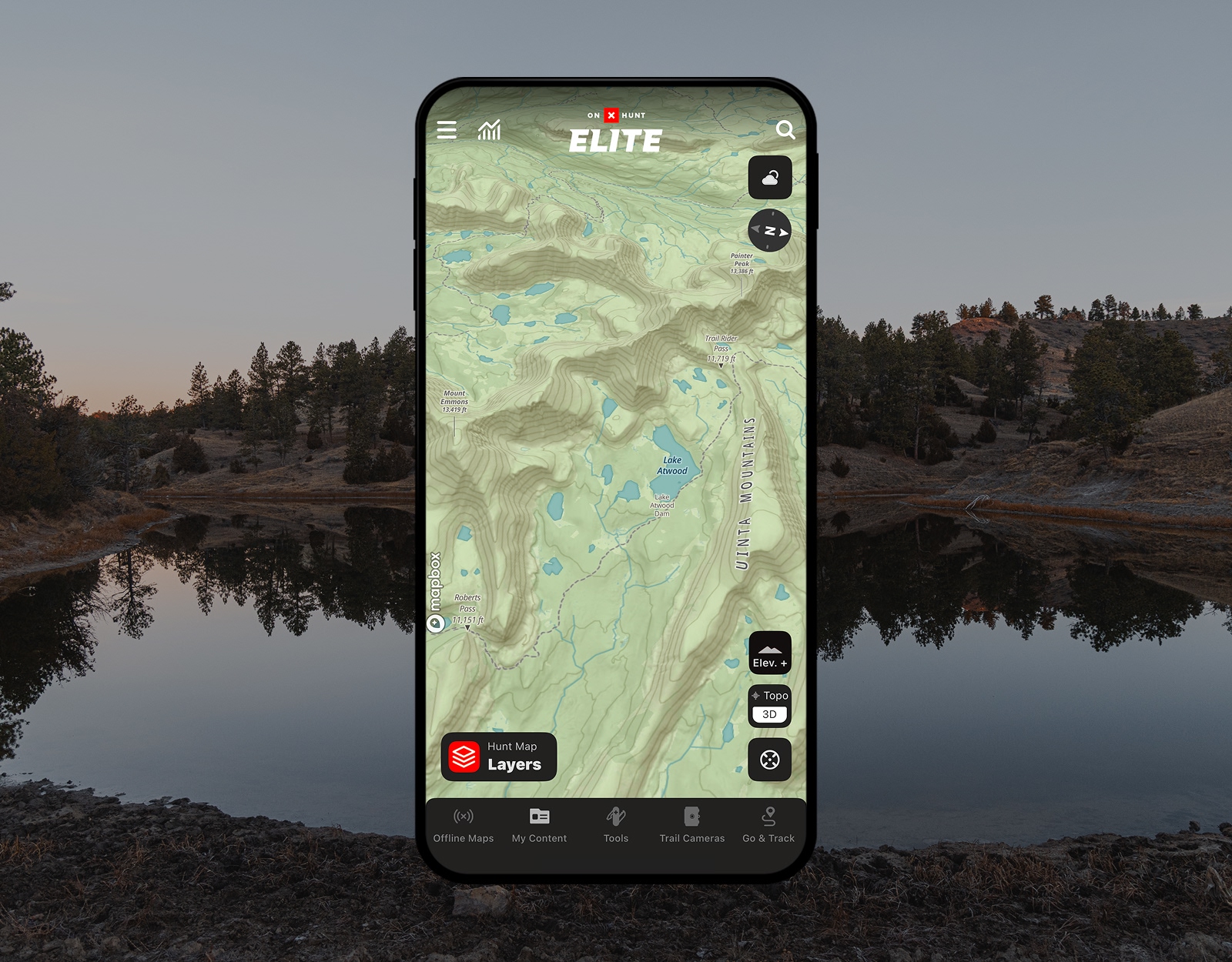
Faced with drought, mule deer, elk, and pronghorn concentrate near water. But: a single August monsoon can change this, dispersing populations back across the landscape.
Water isn’t the only variable on the landscape; there’s fire, too.
Advantages and Disadvantages of Fire
Wardle, the Utah biologist, continues to field calls about wildfires and what they might mean for hunting in the state.
“The answer is it varies wildly by the fire, the size, and intensity,” he said. But hunters should first be aware of public land closures. The U.S. Forest Service historically closes large swaths of land while firefighters work to subdue blazes and keep people out of harm’s way. If an area is closed, hunters will need to go somewhere else or wait for the possibility that it reopens.
Outside of necessary closures, wildlife managers agree that fire remains a net positive for big game species in most scenarios.
Fires burning through conifer stands, for example, will reset mountain plant succession, ushering in fields of high-protein forbs and stands of aspens. Studies on elk show they will sometimes return to areas that burned mere days after fires are extinguished, especially when the fire scorches a mosaic pattern on the landscape, Wardle said. And that’s if they even leave in the first place. Many will scoot out of the way a few miles, then shuffle back.
“On the San Juan Unit, the Babylon Fire burned over 100,000 acres,” Wardle said. “We have 24 GPS collared deer in the area and none of them have died or burned up. They find riparian areas or meadows and seem to escape it.” Though he noted the department has documented lower fawn/doe ratios in mule deer after severe fires, implying fawn survival can drop.
While big game in mountain areas tend to do just fine, prairie dwellers face bigger risks. Prairie fires move through grass instead of dense mountain vegetation, so fires burn faster and lack the patchy mosaic pattern that lets animals dodge the worst of it. That speed, combined with endless miles of fencing crisscrossing a landscape, can make prairie fires deadly. About 50 pronghorn died in a 170,000-acre fire in northeast Wyoming in 2024.
The one true exception to wildfires generally being a net positive for habitat is when fires rip through areas with invasive annual grasses like cheatgrass. The invasive grass thrives in hot conditions, and then germinates in winter, allowing it to suck up available moisture early in the spring and outcompete native grasses. Once it dries, cheatgrass offers little to no nutritional value. That cycle makes it difficult, if not impossible, for the land to fully rehabilitate, leading to more serious long-term habitat degradation.
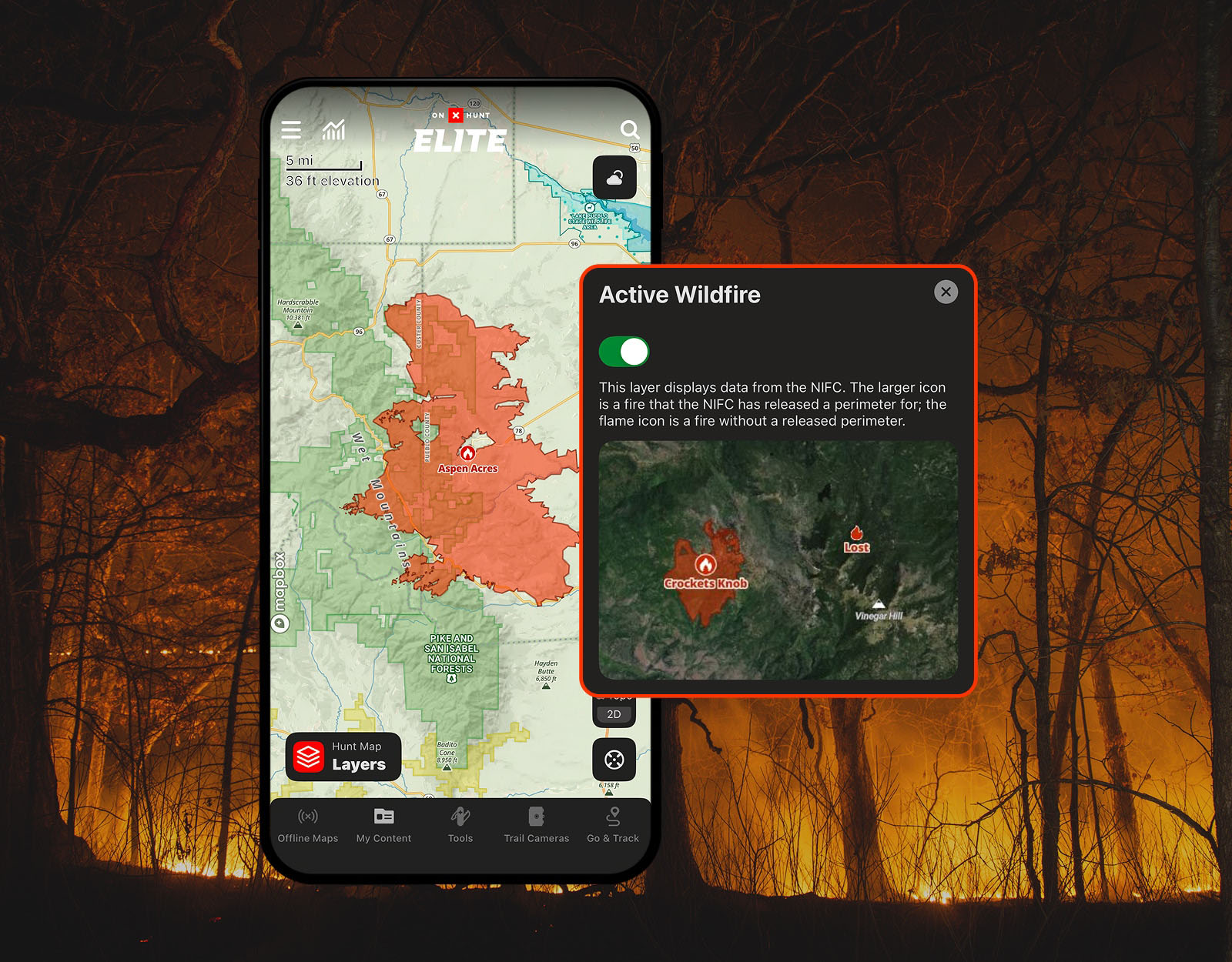
Fire is usually a net positive for big game. Check for closures before you head out the door, and don’t rule out a recently burned unit.
Fire closures or scarred land represent immediate drought impacts hunters could face this season, but there’s a bigger consideration ahead.
Worries About Winter
Beyond this year’s drought, biologists and wildlife managers are bracing themselves for cold and snow.
“If we have a bad winter, I have big concerns. Our winter range is in really bad shape right now,” said Holland. “The worst-case scenario is drought on winter range, bad forage production and then a big snow year.”
Hard winters often lead to the largest big game die-offs. The winter of 2022-23 killed 30-40% of Colorado’s two largest elk herds and almost entire fawn crops in southwest Wyoming.
Research shows the fatter an animal enters winter, the longer it can survive deep snow with little access to forage. That means fawns born this spring, which are smaller and likely packed on little fat compared to the herd’s adults, will struggle the most in harsh winter conditions. But, Heffelfinger said, herds also evolved to absorb fawn losses.
“Hooved animals are built to throw out a big flush of fawns knowing half of them will die every year no matter what, and in really wet years fewer of them die,” he said. “That’s the strategy: dump a bunch on the landscape.”
That strategy fails, he added, when winters are harsh enough to also kill reproducing females.
A drought on its own isn’t the biggest risk. A hard winter stacked on top of a drought year is.
Beyond this season, biologists also have an eye toward how this drought season could leave its mark for years to come.
Future Consequences: Why Bucks and Bulls Could Be Smaller in 2030
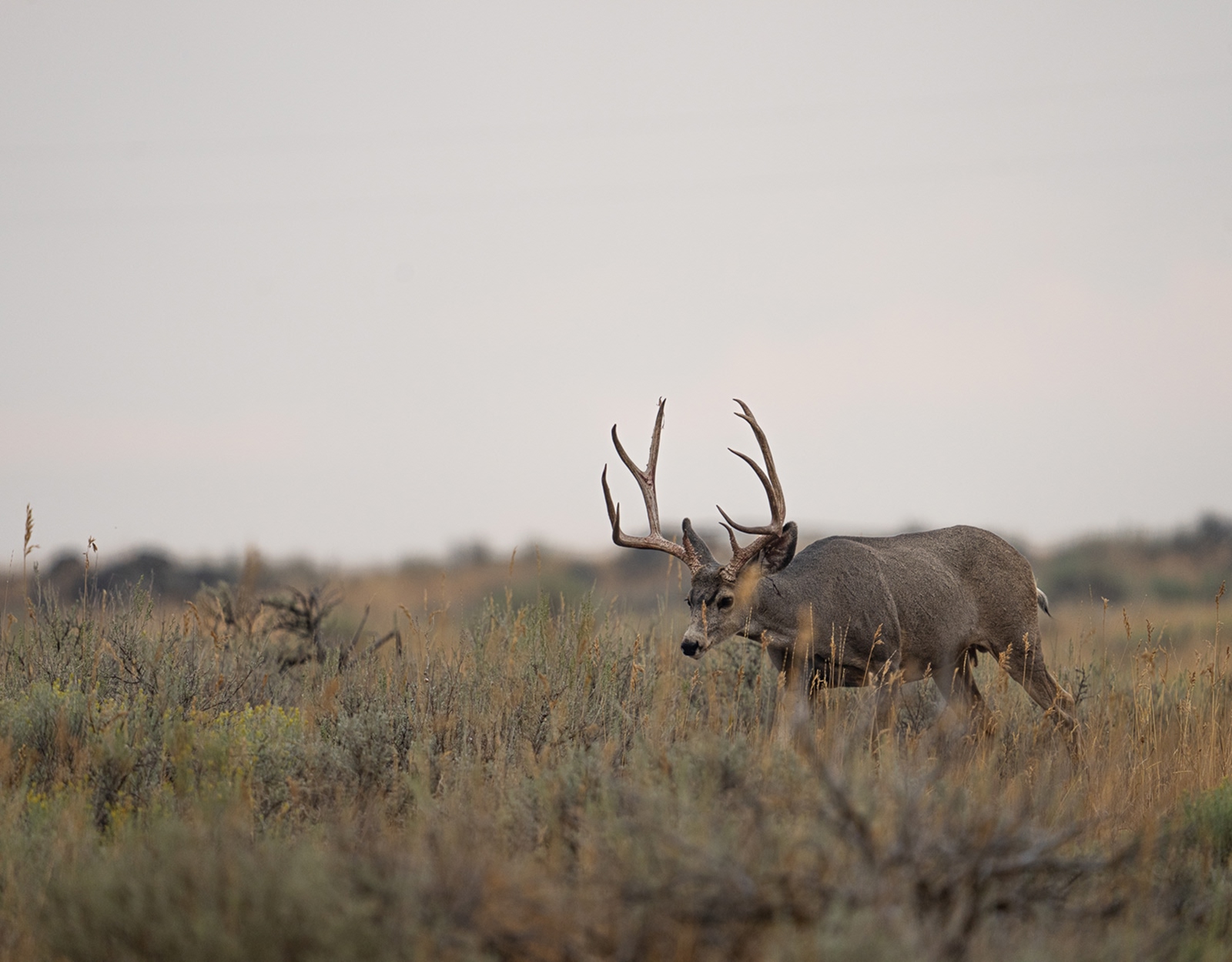
Moving past this summer and pending winter, biologists worry about the hidden long-term impacts of drought—the way it slowly diminishes habitat and carrying capacity.
While fawns born this year may go into winter smaller than normal, they can rebound to their full genetic potential in the right conditions.
Next year’s fawns, however, may not be so lucky. Even if this year’s winter proves relatively mild and the following spring and summer green up, fawns born next year will likely bear the mark of this year’s drought, said Kevin Monteith, a University of Wyoming zoology and physiology professor who has overseen one of the longest-running mule deer studies in the West.
He and now Utah State University professor and researcher Tayler LaSharr published a 2022 paper detailing how mule deer does deliver smaller fawns after a dry spring and summer, and how those fawns will never grow to their full genetic potential.
It’s called an epigenetic signature, he said, one a mother in poor body condition infuses in her offspring in utero.
“On the surface it seems maladaptive. Mom is in bad shape and passed along the signal of poor condition to her offspring,” Monteith said. “That doesn’t seem like a good thing.” But because a doe’s goal is to produce offspring that survive, fawns born with lower nutritional needs will likely live longer on a nutrient-poor landscape.
“The flip side of that is if mom is fat and robust and is able to provision the offspring accordingly, she’s passing on the silver spoon to her young and the young end up with that nutritional signature,” he said. “They will carry that through with them and fully express their genetic potential for life and antler size as well.”
For example, a doe may deliver a fawn next year with the genetic potential to grow a set of 250-inch antlers. But if she’s nutritionally stressed as that fawn develops in her womb, she will also pass on a signature within the fawn’s genes that prevents it from ever reaching 250 inches. Even if the habitat improves, bucks born next year may stay relatively small for life.
“We’re not likely to see these drought-related consequences until summer 2027 offspring, which means we won’t see it in adult animals until 2030 or 2031,” he said. “We have, in the past, failed to recognize the full impact of drought because so much of it didn’t show up until years down the road.”
If hunters in four or five years wonder why bucks or bulls aren’t as big as they remember, they can blame this year’s drought and epigenetics.
“When we look at animal size, it’s rarely the here and now,” he said, “but often the what was.”

Hunting Regs Without the Hassle
Compliance shouldn’t be the hard part. FieldRegs is a free app from the team behind onX Hunt that helps you quickly find hunting regulations, seasons, and legal requirements without digging through agency websites and PDFs. No credit card required.