A surprising number of elk go unrecovered because a shot was made in the wrong spot. The hunter didn’t know exactly where to shoot an elk. Let’s not repeat those mistakes.
Colorado Parks and Wildlife’s working estimates for elk wounded but never recovered each year run around 25% for cows and 15% for bulls and calves. Those numbers come from decades of survey and radio collar data. Some elk guides who work primarily with archery hunters put the number even higher, closer to 50%. According to those same guides, the non-recovery rate is 20-25% for rifle hunters.
Maybe you’ve hunted deer your whole life; some of that knowledge transfers straight over to elk, but it’s not a one-to-one correlation. The heart and lungs sit in roughly the same place in the chest cavity, true, but elk are not deer scaled up. The differences are exactly what gets careful, experienced deer hunters in trouble on their first shot at an elk.
This guide will walk through all of it: anatomy, the four angles you’ll face, and where bow and rifle hunters might need to aim differently.
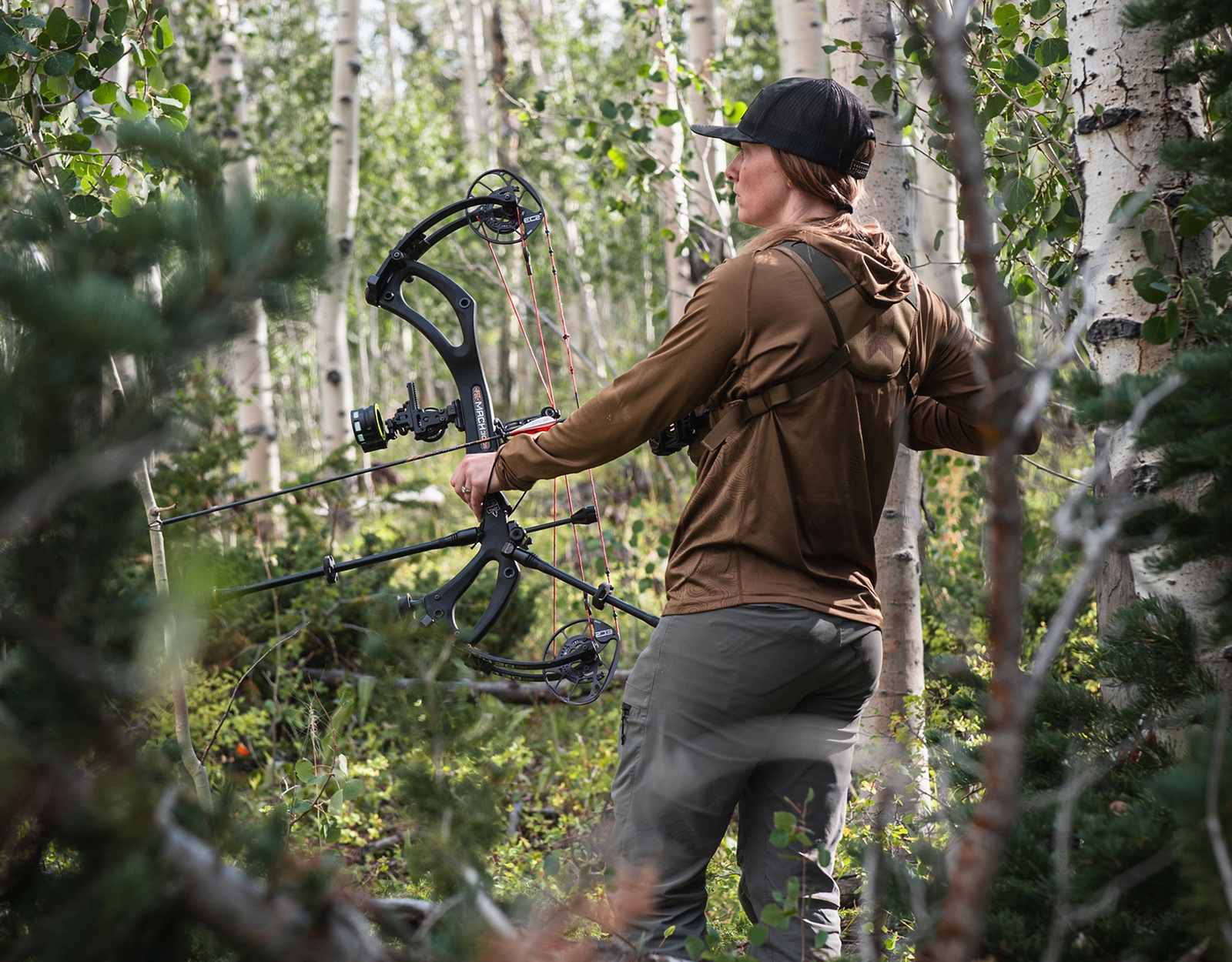
Elk Anatomy: Understanding Elk Vitals
If you’ve spent years hunting whitetails, you already know the basic map: heart low in the chest, centered under the front leg, lungs filling the cavity behind and above it. That part of the picture doesn’t change on an elk. What changes is everything around it.
The shoulder blade of an elk sits further back, and it’s much thicker. On a whitetail, the scapula points forward and down, and it’s roughly ¾-inch thick. On a bull elk, the scapula sits further back on the body, covering more of the chest cavity from most angles, and it can measure up to 2.5 inches thick. A compound bow at 70 pounds cannot reliably punch through 2.5 inches of dense bone, and even a well-tuned rifle needs adequate caliber (.270 Winchester at minimum, .30 caliber or larger preferred) to drive through it and still reach the vitals.
The vital zone for an elk is bigger, but it shrinks fast at certain angles. A mature bull’s heart and lung area spans roughly 18-24 inches when he’s standing broadside, noticeably larger than a whitetail’s 8-10 inches. That sounds forgiving, but it isn’t once the angle changes. At a moderate quartering angle, the exposed window narrows to 10-14 inches. At a severe quartering-toward angle, you’re down to a handful of inches. The broadside number is real, but it’s not the number you can count on in the field.
Also, elk don’t duck the string. Whitetails react to the sound of a released bowstring with an instinctive drop-and-run reflex, which is why a lot of whitetail bowhunters aim a few inches low to compensate at distance. Elk don’t show that reflex. Aim for the center of the vital zone, not low. Compensating for string jump on an elk puts your arrow in the brisket.
A double-lung hit is about as close to a guarantee as a hunt can offer. Bulls hit through both lungs go down within 100 yards almost without exception, and they go downhill doing it. A single-lung hit is a different scenario entirely. Without the second lung’s blood loss, a bull can cover ground for hundreds of yards, and the mountain terrain most of us hunt gives him a lot of directions to disappear into.
For a size reference: a broadside bull’s vital zone is roughly the size of a large trash can lid. That’s a forgiving target as long as you’re aiming at the lungs and not the shoulder blade sitting in front of them.
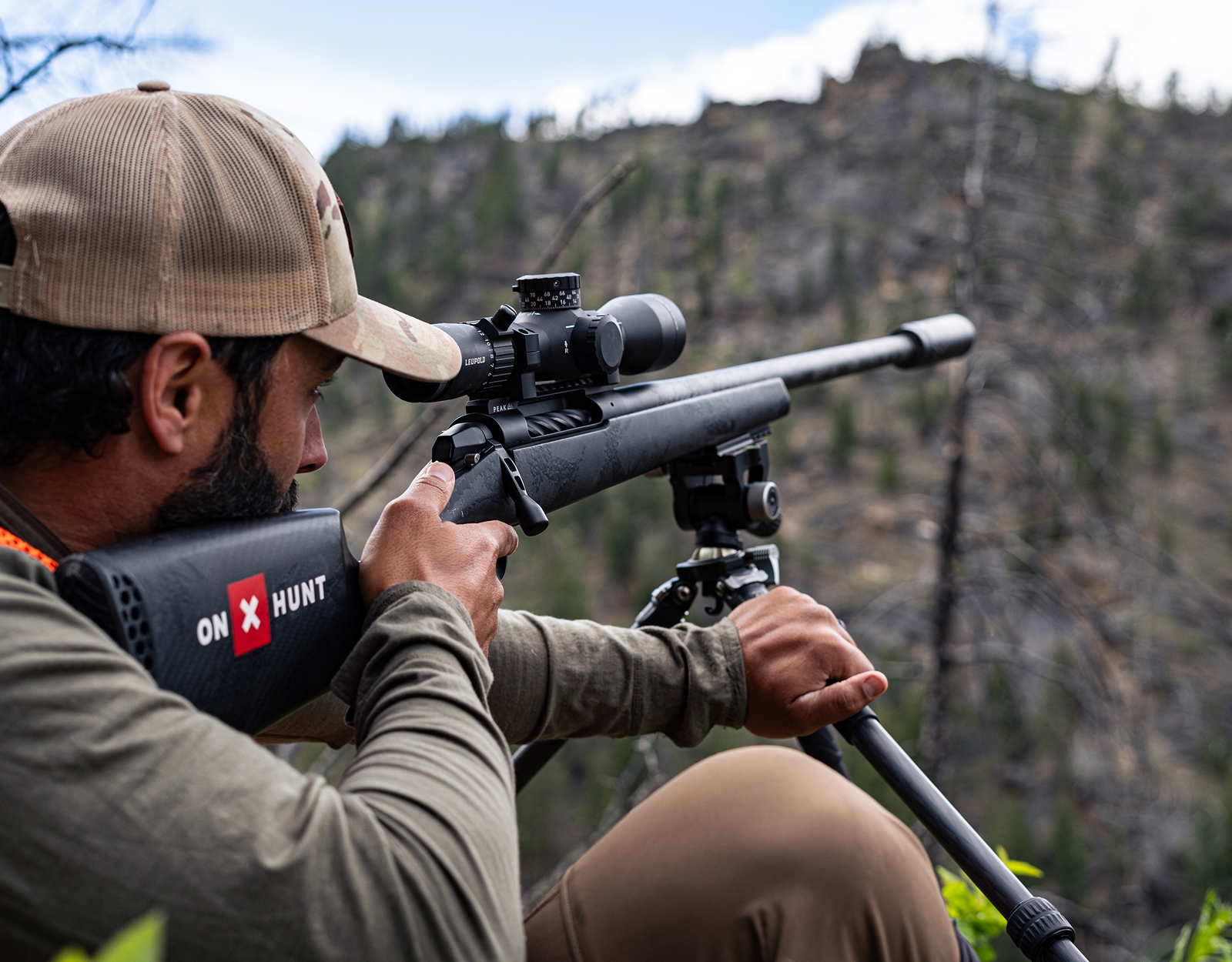
Where To Shoot an Elk
Four angles commonly show up in the field: broadside, quartering away, quartering toward, and frontal. Each one calls for a different aim point, and bow and rifle hunters need slightly different answers on two of them.
Keep one thing in mind through all four: bulls are almost never broadside (elk guide Cliff Gray illustrates this point well in a video breakdown), which is exactly why the quartering angles below carry more weight than most hunters expect.
Shot Angle Animations
Broadside
The aim point: front half of the lung mass, one-third to one-half up the chest from the bottom. That’s slightly forward of where most hunters’ instincts pull them.
Here’s the most common mistake: Hunters are afraid of the shoulder joint since an arrow that thuds into that softball-sized joint deflects and goes nowhere, so they instinctively aim a little farther back to avoid it. On a broadside bull, that overcorrection lands you behind the vitals entirely, in the liver or worse. The heart itself is a small target, tucked low and slightly hidden behind the front shoulder, and chasing it exposes you to that same risk. Aim for the lungs, not the heart, and aim closer to the front of the chest cavity than feels natural.
The other problem is figuring out what counts as broadside. The test is simple: look at the far side of the bull. Can you see the roundness of his far hip and tail? Can you see the cream-colored patch of his far shoulder? If either answer is yes, he’s not broadside. He’s quartering, even if he looks broadside in the moment. Elk guide Cliff Gray believes as many as 95% of shots archers call “broadside” in the field are a slight quartering-to angle, which changes your aim point.
For rifle hunters, the broadside shot opens an option bowhunters don’t have, which is aiming into the shoulder itself. A well-constructed, controlled-expansion bullet of adequate caliber breaks the shoulder and still penetrates the chest cavity, and a bull with a shattered front shoulder isn’t running anywhere. Don’t try this with a light or frangible bullet built for smaller game.
Quartering Away
The aim point: the opposite-side shoulder as your exit point. If the bull is quartering away to your left, aim for his right shoulder.
This angle rotates the near-side shoulder blade out of the way, which is exactly why a lot of bowhunters prefer it over broadside. Without that shoulder blocking the lane, you get a clean run through both lungs. The catch is judging how severe the angle is. The greater the angle, the closer your exit point drifts toward the paunch and hindquarter. The smaller the angle, the closer you are to a broadside shot with both lungs available.
Miss too far forward and you risk a single-lung hit, the one outcome you want to avoid most on this angle. Without that second lung, blood loss slows down, the bull keeps one functioning lung to work with, and mountain terrain gives him too many directions to disappear into. For rifle hunters, the margin is more forgiving. A well-placed bullet still travels the length of the chest cavity and does enough damage to drop the bull, even without a perfect double-lung pass-through.
Quartering Toward
This is the angle that trips up more hunters than any other, and it’s also the angle you’ll see most often if you’re calling bulls into archery range. The broadside rule above holds here more than anywhere else: bulls are almost never broadside, and a bull walking in to your call is almost always presenting some version of this angle.
There are two versions of it, and they call for different decisions.
Slight Quartering-To
Slight quartering-to is the angle most hunters mistake for broadside. The instinct here is to aim at or just in front of the crease, the visible fold between the front leg and the body. That instinct is wrong, and it’s the reason bulls that look double-lunged on video never get recovered. Aiming at the crease on even a slightly quartering bull clips only the near lung, misses the heart, and sails out through the guts or liver on the far side. It looks like a perfect pass-through shot. It’s often a slow, unrecoverable wound instead.
The actual aim point sits further forward than feels comfortable: hug tight against the front edge of the near-side shoulder blade, closer to the point of the shoulder than most bowhunters want to get. It feels like you’re aiming into the shoulder itself. You’re not. You’re using the narrow lane in front of the bone to reach both lungs. Simulated shot paths back this up: aiming at or behind the crease misses the far lung by a wide margin, while aiming tight to the front of the shoulder threads both lungs cleanly.
For rifle hunters, this angle is far more forgiving. Aim at the point of the shoulder and let the bullet do what an arrow can’t: crush through bone and still carry enough energy to destroy both lungs. A bull hit this way with adequate caliber usually goes down within 10-20 yards.
Steep Quartering-To
Steep quartering-to is a different problem entirely, and for bowhunters, it’s close to unshootable. As the angle steepens, the gap between the shoulder blade and the far lung closes until there’s no clean lane left for an arrow. If a bull is quartering hard toward you, wait him out. You’re often better off holding for a full frontal shot than forcing a severe quartering-to shot with archery equipment. Rifle hunters retain more options here. Adequate caliber and a controlled-expansion bullet can still break through both shoulders and reach the vitals, dropping the bull in a short distance.
Frontal
The most debated angle in elk hunting, and for good reason: it’s genuinely difficult and most hunters, especially beginners, should pass on it.
The anatomy explains why. On a bull facing you dead on, the sternum bisects the chest cavity, and the front legs and shoulder muscles flank it on either side. The workable window between them, the only path to both lungs, is roughly the size of a volleyball. To reach the vitals, your arrow or bullet must travel the full depth of the chest cavity without deflecting off a rib or the sternum along the way.
Miss low and you hit the sternum or brisket, and the shot deflects. Miss high and you’re in the neck or throat, well above anything vital. And even a well-placed frontal shot often produces no exit wound and little visible blood trail, which makes tracking difficult even when the shot was lethal.
Distance changes everything on this angle. A frontal shot at 15 yards with a bull square to you is a different proposition than the same shot at 40 yards, where a trajectory error of just a few inches misses the window entirely. Most frontal opportunities happen during calling scenarios, when a bull closes the last stretch of distance and stops to look for the source of the sound. If you’re a first-year elk hunter, or the range stretches past 20 yards, wait for a better angle.
Everything above gets you the knowledge. Getting it done in the field is a different skill, and it only comes from repetition. Bowhunters should find a 3D archery range and practice from realistic hunting positions (kneeling, seated, on a slope), not just square to a target in the backyard.
USA Archery’s club finder is a good place to start. Rifle hunters can build the same confidence through onX Hunt’s Western Shooting Course. Either way, the goal is the same: by the time a bull is standing in front of you, quartering, moving, and closer than you expected, you shouldn’t have to think about where to aim. You should already know and have practiced, practiced, practiced.
FAQs
The best shot on an elk with a bow is broadside or quartering away, aiming just behind the front shoulder, one-third up from the bottom of the chest. Many experienced bowhunters prefer the quartering-away angle because it lets the arrow avoid the shoulder and bisect the chest cavity for a double-lung hit.
An elk’s heart sits low in the chest, roughly centered under the front leg. The lungs fill the chest cavity behind and above the heart. On a mature bull, the combined heart and lung vital zone spans roughly 18 to 24 inches, larger than a deer’s, but the shoulder blade also covers more of it.
Elk are significantly larger, and their shoulder blade sits further back, covering more of the vital zone than a deer’s. Elk also don’t react to string jump the way deer do, so archers don’t need to compensate by aiming low. Penetration matters more on elk, so make sure your arrow setup is heavy enough, or that you’re choosing the appropriate caliber for your rifle.
Broadside offers the largest margin for error and is the most forgiving angle for both bow and rifle hunters. Many bowhunters specifically prefer the quartering-away shot on elk because the shoulder is rotated out of the way, opening a clear path to both lungs.