The May duck count came in lower than last year, and the biologist who studies that country for a living says not to read too much into it.
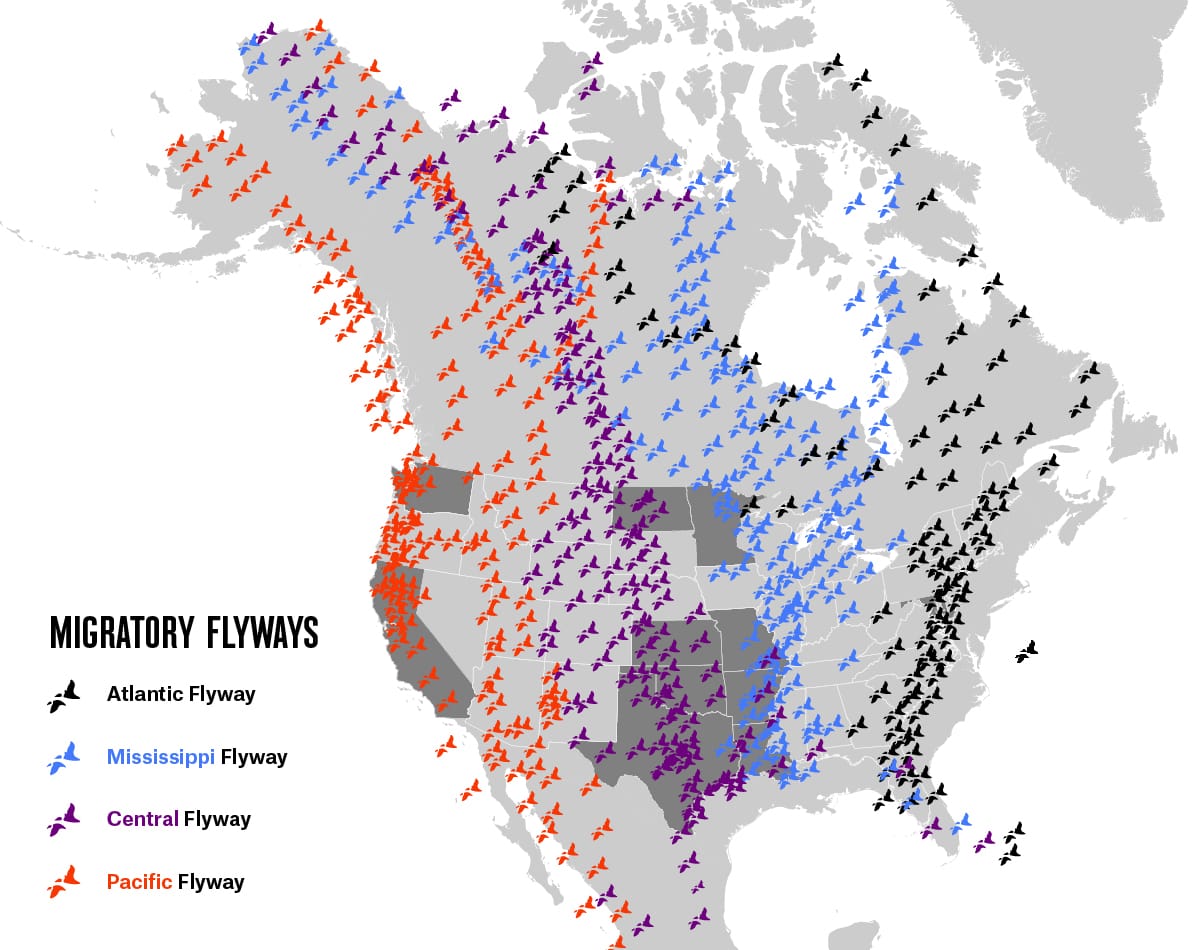
Every fall, millions of waterfowl migrate south toward food and protective habitat. Navigating by some mix of sun, moon, stars, and landmarks, ducks and geese follow four flyways down the continent: the Atlantic, Mississippi, Central, and Pacific.
This year’s picture is mixed. One belt of Saskatchewan flooded while the rest of the prairies stayed dry, the boreal got its best water in years, and after two seasons of hunters swearing the birds never came south, nobody is heading into October confident about timing. To sort out what the data means for your flyway, we spoke with Dr. Scott Stephens, Senior Director of Prairie and Boreal Conservation Strategy at Ducks Unlimited.
Migratory Bird Flyways Map
What Hunters Should Expect in 2026-27
- Fewer breeding ducks, a bigger fall flight: The May count is down. Production was better. Both are true.
- More young birds, which means friendlier birds: The best news for this coming season.
- Canada gained water; the U.S. prairies lost it: The wettest ground is a belt in central Saskatchewan.
- Mallards are the worry: 5.9 million, the lowest count since 1993.
- Watch the freeze-up north of you, not the calendar: Dr. Stephens tells you exactly what to look for below.
2026 Duck Migration Report
Seasons are opening for roughly 1.2 million active duck hunters in the U.S. According to the Migratory Bird Hunting Activity and Harvest Report released in September, hunters took about 14.9 million ducks and 3.7 million geese in the 2025-26 season, both up around 4% over the year before.
The 2026 Waterfowl Breeding Population and Habitat Survey puts total breeding ducks at 33.4 million, about 6% below the long-term average and close to last year’s 33.9 million. Mallards came in at 5.9 million, down 11% and the lowest since 1993. May ponds rose 14%, but every bit of that gain was Canadian: prairie Canada up 29%, the U.S. prairies down 10%. On the regs side, a three-pintail bag is expected for 2027-28 under the interim pintail harvest strategy, and Atlantic Flyway hunters move to a three-mallard bag.
A down count is not a down season. The May survey counts the birds that came back, not the ducklings they are about to produce, and Stephens starts there. “The May numbers are down, but because we saw some of that increase in the Canadian prairies primarily, we expect production to probably be better than it was last year,” he says. “I would say it’s not going to be phenomenal, because even though things improved in Canada, there’s still a bunch of areas that are dry.”
The wettest ground he named is worth circling on a map. “There’s especially an area between Saskatoon and Yorkton, Saskatchewan—we would call that Parkland region—that got really wet,” Stephens says. “There were roads flooded this spring when the snow ran off. And so that belt is going to have good production.”
That production shows up as juveniles, which is the part hunters feel. “They’re less experienced. They’ve not played the game before. They’re a little more naive,” he says. “So they’re more susceptible to decoys and those kind of things.” Last year ran the other way, and Stephens says you could hear it from hunters: “Oh, the birds were stale and they just didn’t work well and they weren’t cooperative and they were a pain.”
And if you’ve spent a few seasons convinced there aren’t as many ducks as there used to be, the data agrees. “If you anchor to when we had the last peaks in populations, it was about a decade ago, 2015 or ’16 depending on the species that you pick, but for mallards it was like we had twice the birds that we have now,” Stephens says. Recovery takes more than one wet spring, and a strong El Niño forecast means drier prairies ahead.
That volatility is the prairie’s signature. Boreal and tundra numbers grind along with far less variation, which is why a wet prairie spring is the only thing that produces a genuine boom.
“If we lost the prairies, the variation in duck populations would be a lot smaller,” Stephens says. “The question about what are things going to be like this year, the answer would be easy. It’s pretty similar to last year because it just doesn’t change that much.”
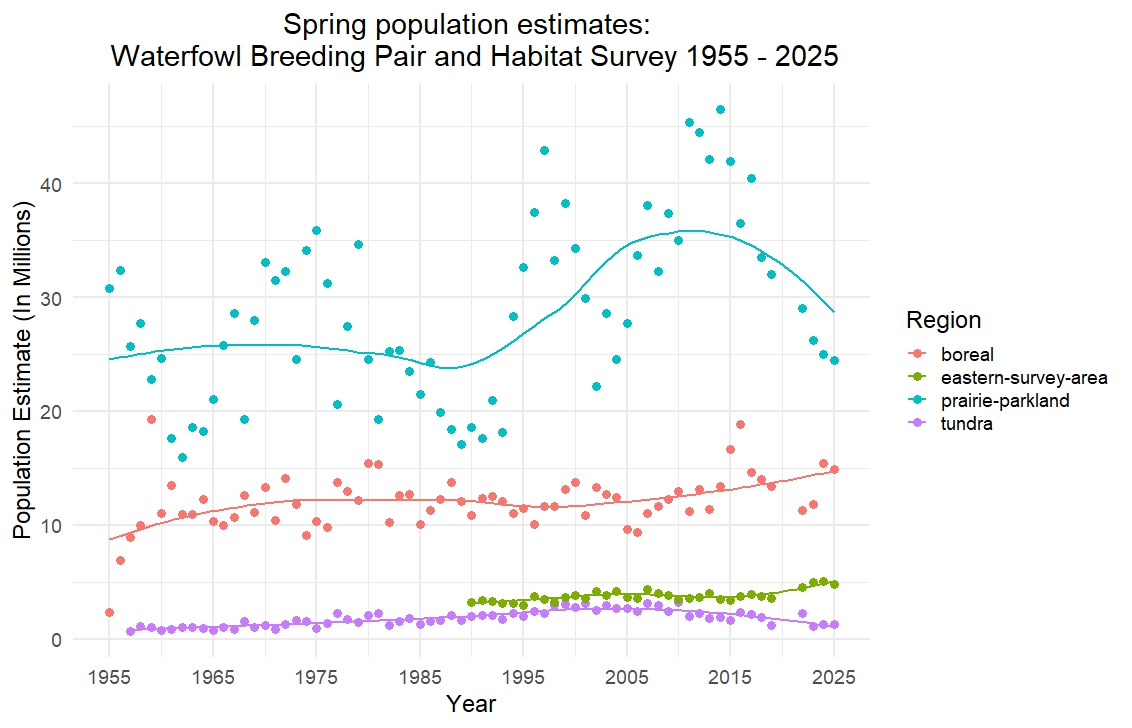
Spring breeding population estimates by region, 1955 to 2025, from the Waterfowl Breeding Population and Habitat Survey. The prairie-parkland line shows the boom-and-bust cycle that drives the continental duck count, peaking above 45 million in the early 2010s and falling to roughly 25 million by 2025. The eastern survey area begins in 1990, when that region was first surveyed. Graphic courtesy of Ducks Unlimited.
Your Flyway in 2026-27
National numbers don’t tell you what’s happening in your corridor. Habitat details below come from the USFWS field reports written by the pilot-biologists who flew this country in May and June.
Central Flyway
The best water and the driest ground in one flyway. “Central Flyway, I think we’ll see most of the benefit of that wetness in Saskatchewan,” Stephens says, and that flooded Parkland belt feeds this corridor. South of the border, crews flying Montana and the western Dakotas logged the eighth-driest winter on record.
Stephens lives in Rapid City and didn’t soften it. “I can tell you in eastern South Dakota it is super dry,” he says. “You’re going to be finding kind of permanent water to hunt. Birds are not likely to stop and spend a bunch of time there, because resources are going to be hard to come by.”
Mississippi Flyway
A step behind Central. “Because it was somewhat drier in Manitoba and in the Dakotas, the Mississippi Flyway may not see as much benefit as Central,” Stephens says. Crews in the eastern Dakotas found below-average water from Lake Andes through Aberdeen, with the Missouri Coteau good and the Drift Prairie fair. Serviceable rather than strong.
Pacific Flyway
Good water up north, thinner production. The wetness landed in central Saskatchewan, not the western prairies feeding the Pacific Flyway, so Stephens expects production there to be lower. Farther north, Alaska and the Yukon saw spring melt fill lowland wetlands, and the Northwest Territories came in markedly improved after two poor years.
Atlantic Flyway
The quiet winner. Crews flying southern Ontario and Quebec found beaver-dam wetlands full or nearly full and reservoirs near capacity, with northern Quebec rated excellent. Pair that with the new three-mallard bag, and the Atlantic Flyway looks better than the national headline suggests.
Scouting Ahead for Ducks and Good Spots
In a year when conditions flip in 48 hours, preseason homework still pays, and Stephens names the play that matters most in a dry fall. “A foot of water in a wetland that’s been dry all summer but is loaded with those natural foods is going to be a great spot come fall,” he says.
Dry basin, weed growth, then water. Our Ambassadors have hunted that sequence for years without the science attached.
“As someone who hunts reservoirs, I always keep an eye on water levels,” says Josh Peck. “Lakes that drop in the summer often grow smartweed and other moist soil vegetation that ducks love to feed on. If there are rain events, that food will flood, leaving a buffet for the ducks.”
“I’m constantly scouting,” says photographer and duck expert Wade Shoemaker. “Not physically, but always reading river gauges to keep up with the water levels. As for boots on the ground, the week before season is probably the norm. Feel like there’s too many variables to make an assessment any earlier.”
In-Season Scouting and Duck Migration
Just because the season has started doesn’t mean the scouting stops. In a year this dynamic, in-season intel may be the most valuable you’ll get.
“During the season, scouting is the most important thing you can do to be successful hunting birds,” says Midwest Flyways’ Cal Ness. “At home, checking out local hunting grounds is nearly an everyday activity. Some days it’s simply taking a longer route home and putting your eyes on fields and water that could be holding birds.”
Jordan Fromer of Duck Gun Chronicles waits, with one exception. “I don’t do a ton of preseason scouting, because so much can change once the season starts. One thing I do focus on before the season is knocking on doors to get permission.”
If Canada is on your calendar, Stephens has fresh intel. “Across all three provinces—Alberta, Saskatchewan, Manitoba—they’ve got a lot of rain recently, which has slowed [crop] harvest. I saw a person post on social media that they had gone to Saskatchewan and there was like 80% of the crop was still in the field, hadn’t been harvested.” Standing grain concentrates birds onto the few cut fields out there. Fewer options, but the ones you find will be loaded.
Favorite Duck Hunting Set-Ups
Everyone has a favorite place to post up. “My favorite hunt location setups are prairie marshes, moist soil marshes, and small shallow water sloughs,” says Elliott Snider. “Flooded timber mallards have never not been my favorite,” says Shoemaker. “Usually muddy, sloppy snow if I’m being honest.” One adjustment this season: across the dry stretches of the Central Flyway, that small shallow stuff may not be there at all.
Best Weather for Hunting Ducks?
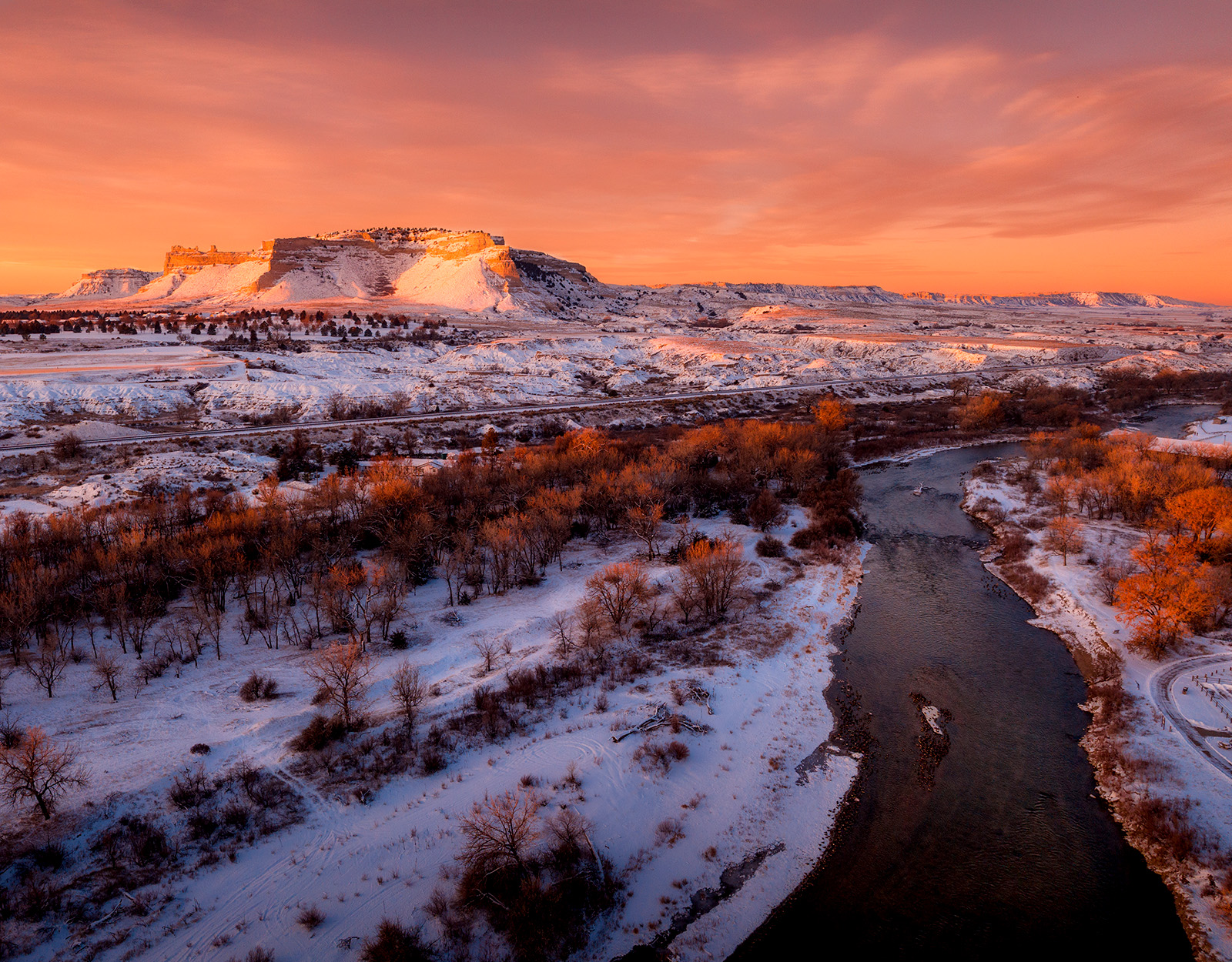
You can scout the perfect spot and build the perfect blind, and winter weather still gets the last word. Hint: the chillier the better.
“Clear skies and a SW wind right after a big cold front,” says Rolling Thunder Game Calls’ Spence Halford.
“We always seem to get two solid pushes during our duck season,” says Peck. “Usually the first push of mallards arrives around Thanksgiving, and the second comes right around the middle of December.” Those land almost exactly where the GPS data says they should.
“The push I look for is from the freezing temps and snow,” says Dr. Duck. “I think the snow has to cover up the food sources, and that’s what motivates the ducks to move south.” That’s Stephens’ roost-and-groceries mechanism described from a blind.
“For geese, watch for north wind patterns in early to mid-September in the latitudes above you,” says Shawn Stahl of RNT. “Second, watch the September and October full moons. Both tend to produce goose photoperiod pushes.”
Watch the fronts, not the calendar
Two seasons running, hunters were convinced the birds never showed. The research says migration is running earlier than most of us would guess. A 2025 study in Movement Ecology tracked 414 GPS-tagged mallards and found half of all southward movement finished by about November 17, and 92% by the end of December.
So why does it feel like they never came? Mallards are efficient about it. “If they have open water and there’s no snow cover, they will only migrate as far south as they have to,” Stephens says. “Whereas blue-winged teal, they’re going regardless of the weather.” Which makes the calendar the wrong thing to watch. Stephens watches the weather forecast.
The Freeze-Up Rule
“When I’m trying to time things for when should most of the birds show up in South Dakota, I look at the weather in places that I used to hunt, like Saskatchewan, like Manitoba, and when they’re freezing up,” Stephens says. “When highs are either right at freezing or below freezing and lows are in the 20s or something. That’s when you will see, especially mallards and those hardy birds, get pushed out of there. They’ve got to leave because they’re going to be left with no roost sites.”
Though, there is one failure mode with the freeze-up rule, and it cost him last season. “When we got cold temperatures, the cold came all the way into South Dakota too. So we locked up about the same time.” Watch whether that same front runs straight past you.
The Best Times To Hunt Ducks on the Flyway
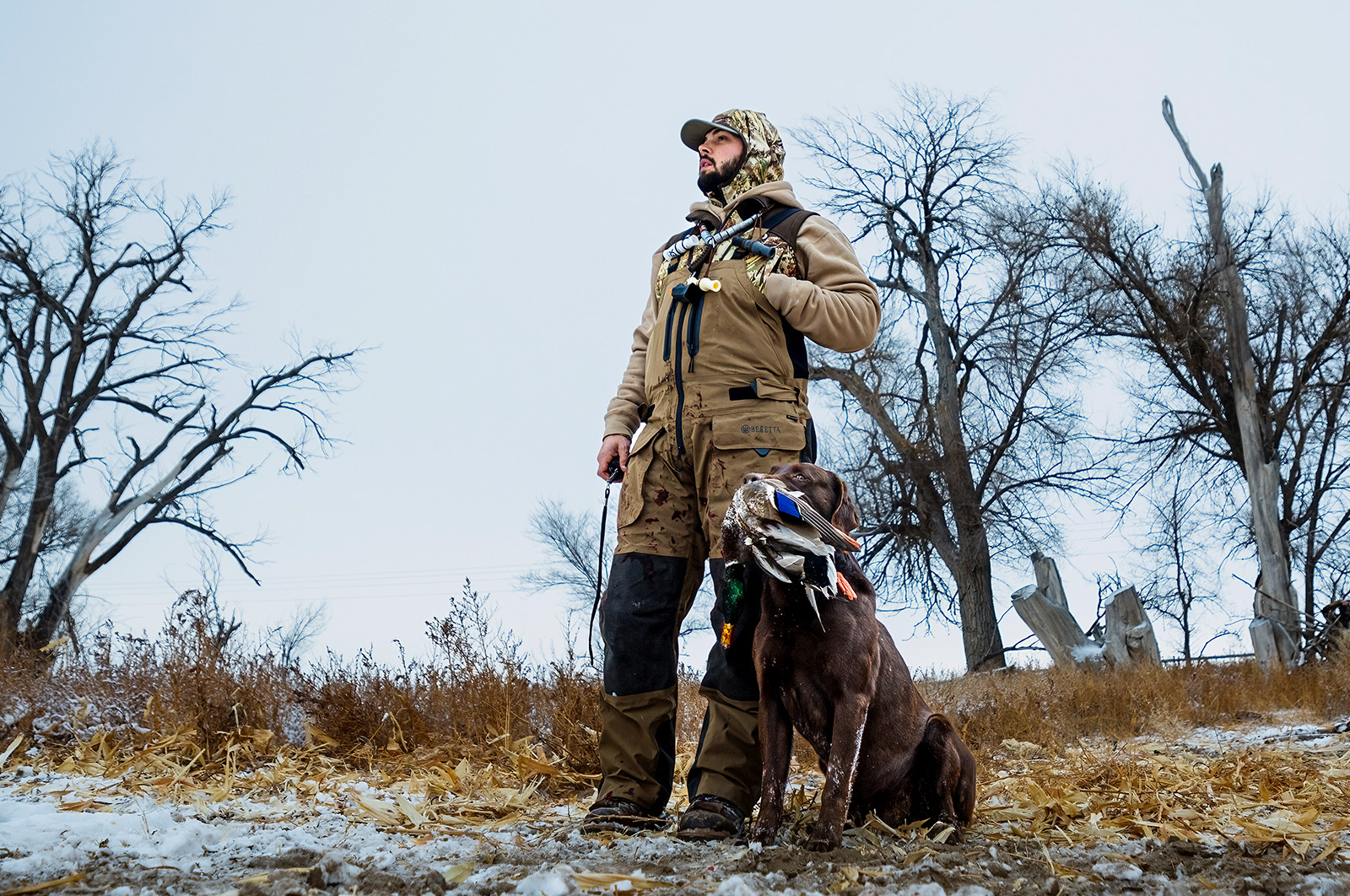
Now the good stuff: knowing when to post up and get those calls calling.
“The third week of January,” says Snider. “The reverse migration is in full swing, and this is when we consistently see the largest groups of mallards.”
“It would be the second week of January,” says Shoemaker. “I love late season birds and the idea of getting that next push.”
That cluster is interesting, because telemetry says 92% of southward movement is done by New Year’s. So what are they seeing? Stephens doesn’t dispute it, but does add a wrinkle.
“We know birds move from more southern latitudes north as you have systems that put water on the landscape and change food availability,” he says. “I suspect there could be more movement sort of east and west too, even crossing flyways. Let’s say there’s a bunch of birds in the playa lakes of the Texas panhandle, mallards or pintails, and let’s say we get a big rain in the delta of Arkansas or Mississippi. I wouldn’t be surprised for birds to pick up from those western areas.”
So when a buddy swears a fresh wad of mallards showed up the third week of January, he’s probably right. They may have come from Texas.
Get the Most Out of onX Hunt for Duck Hunting
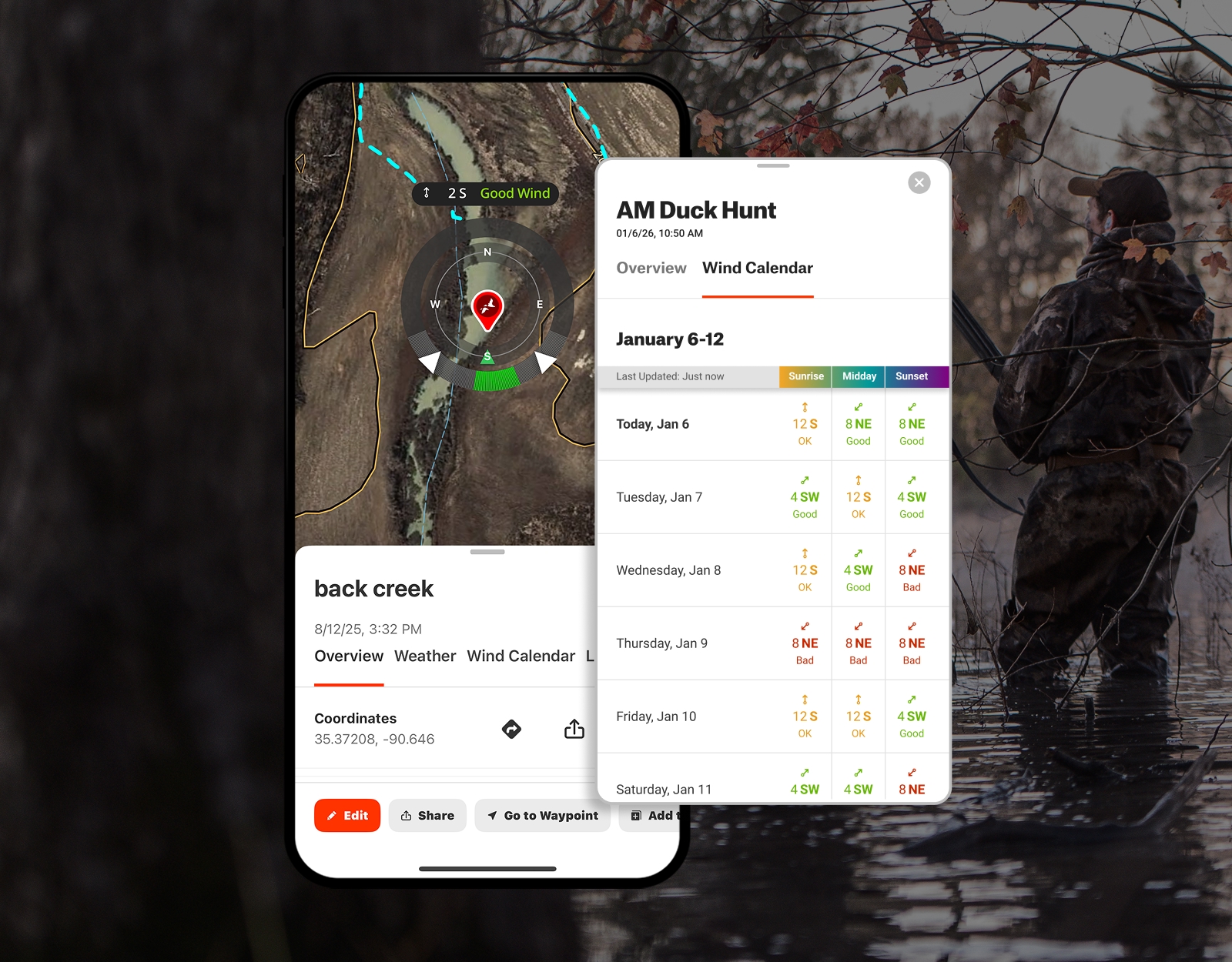
You know where. You know when. Now fine-tune the Hunt App to make it your second-best hunting companion (next to your dog, of course). Two tools do the heavy lifting this season.
Start with Weather Forecasts and the Wind Calendar. Everything Stephens describes comes down to tracking systems before they arrive: falling temperatures north of you, wind on the day, pressure dropping ahead of rain. The Wind Calendar shows forecast wind for a specific Waypoint across upcoming days, so you can pick the spot that sets up right instead of driving to your favorite one and hoping. Run his freeze-up rule on southern Saskatchewan and Manitoba, not just your county.
“We love to use the Wind Tool to help us set the decoy spreads. We check it before we pick the spot we are going to hunt. This allows us to pick the right duck hole according to wind direction for that day,” says the Daybreak Outdoors crew. Optimal Wind is a Shoemaker favorite for the same reason.
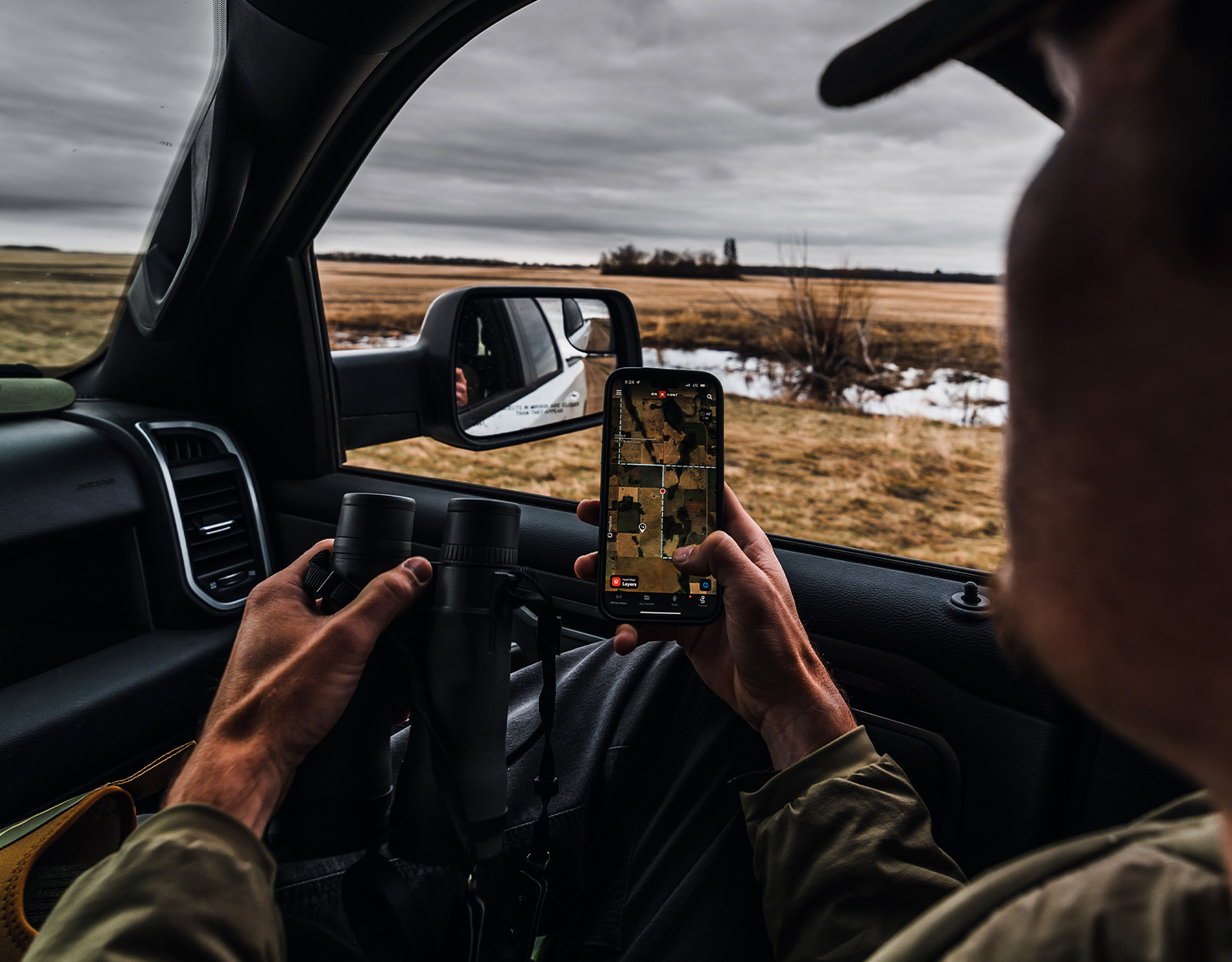
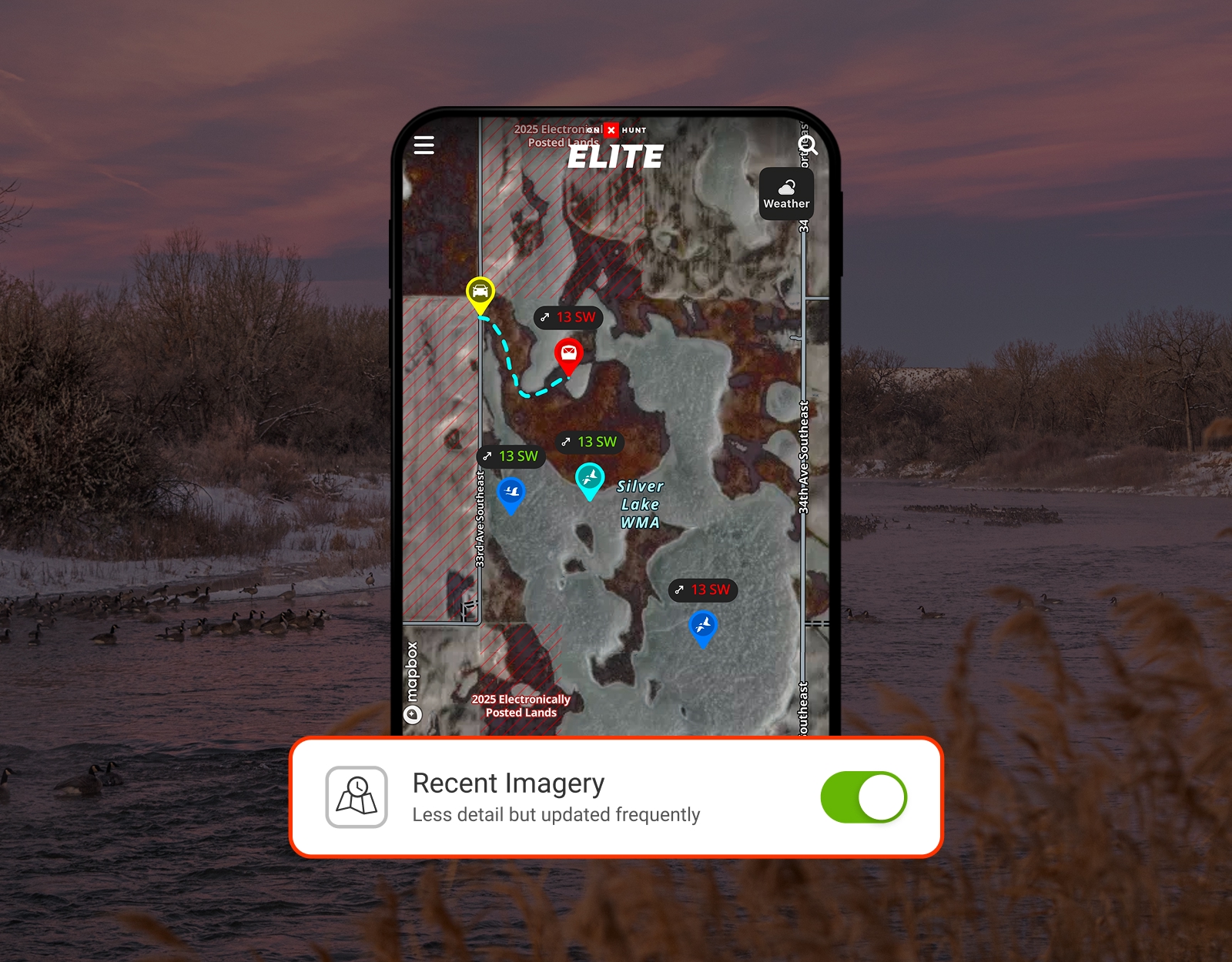
Then lean on Recent Imagery. With U.S. prairie ponds down 10%, the question isn’t where water usually sits. It’s which basins are holding water right now, and which of those dry summer bottoms Peck and Stephens describe have actually reflooded.
“If you’re hunting public land, Recent Imagery is incredibly helpful for identifying which holes are holding water,” says Fromer. “If you’re freelancing in a place like Nodak, having the tax address info to knock on doors and get permission is invaluable.” That landowner information is what Ness calls the most valuable part of the App.
The Final Word
It would be easy to read a 33.4 million duck count and leave the waders in the garage. Stephens would like a word.
“There’s always that nuance of the count happens in May and then last year we were trying to tell people, well, probably not great production conditions. So even though the count was okay, may be a tough season,” he says. “This year is kind of the opposite. The count was down. We expect there to be some production. So I think there’s reason for optimism.”
Fewer birds on the board, more young ones in the air, and a landscape that rewards whoever keeps looking. Now dust off those duck calls and get practicing.
Duck Migration FAQs
Earlier than most assume. Blue-winged teal move in September, ahead of any cold front. For mallards, GPS data from 414 tagged birds found half of all southward movement done by about November 17 and 92% by the end of December. The catch is that mallards travel only as far as they have to, so the birds nearest you may not move until their water freezes.
The 2026 breeding survey put total breeding ducks at 33.4 million, about 6% below the long-term average. Mallards came in at 5.9 million, down 11%. The May count does not include this year’s hatch, and production improved, so the fall flight should be larger than last season’s.
For breeding-ground water, the Central Flyway got the best of it, since the wettest ground was a belt in central Saskatchewan. On habitat alone, the Atlantic is the quiet winner. That said, the flyway that hunts best is usually the one with the freshest water in front of the birds when they arrive.
Watch for any freeze-up north of you instead of the calendar. Look for highs at or below freezing and lows in the 20s in Saskatchewan and Manitoba, because that’s when mallards lose their roost sites. Use Weather Forecasts and the Wind Calendar to track fronts and wind, and Recent Imagery to see which basins hold water. Ducks also adapt fast to pressure, so your window tightens as the season wears on.