For the last 70 years, wildlife managers have segmented North America into four distinct flyways. As we set out to find the best waterfowl hunting states, we considered what wingshooters wanted most: access, diversity, and strong populations of migratory birds.
TL;DR: Waterfowl hunting in North America is shaped by four major migratory flyways—Atlantic, Mississippi, Central, and Pacific—that guide ducks and geese each season. The best states for hunting vary by species and experience: Arkansas for flooded timber mallards, Kansas for mixed-bag hunts, Maryland for sea ducks, Texas for sandhill cranes, North Dakota for DIY hunts, California for pintails, Washington for scenic hunts, Oklahoma as an up-and-coming destination, Missouri for mid-migration action, Minnesota for diver ducks, and Louisiana for cast-and-blast opportunities. Hunters across these states enjoy strong populations, accessible public land, and unique traditions.
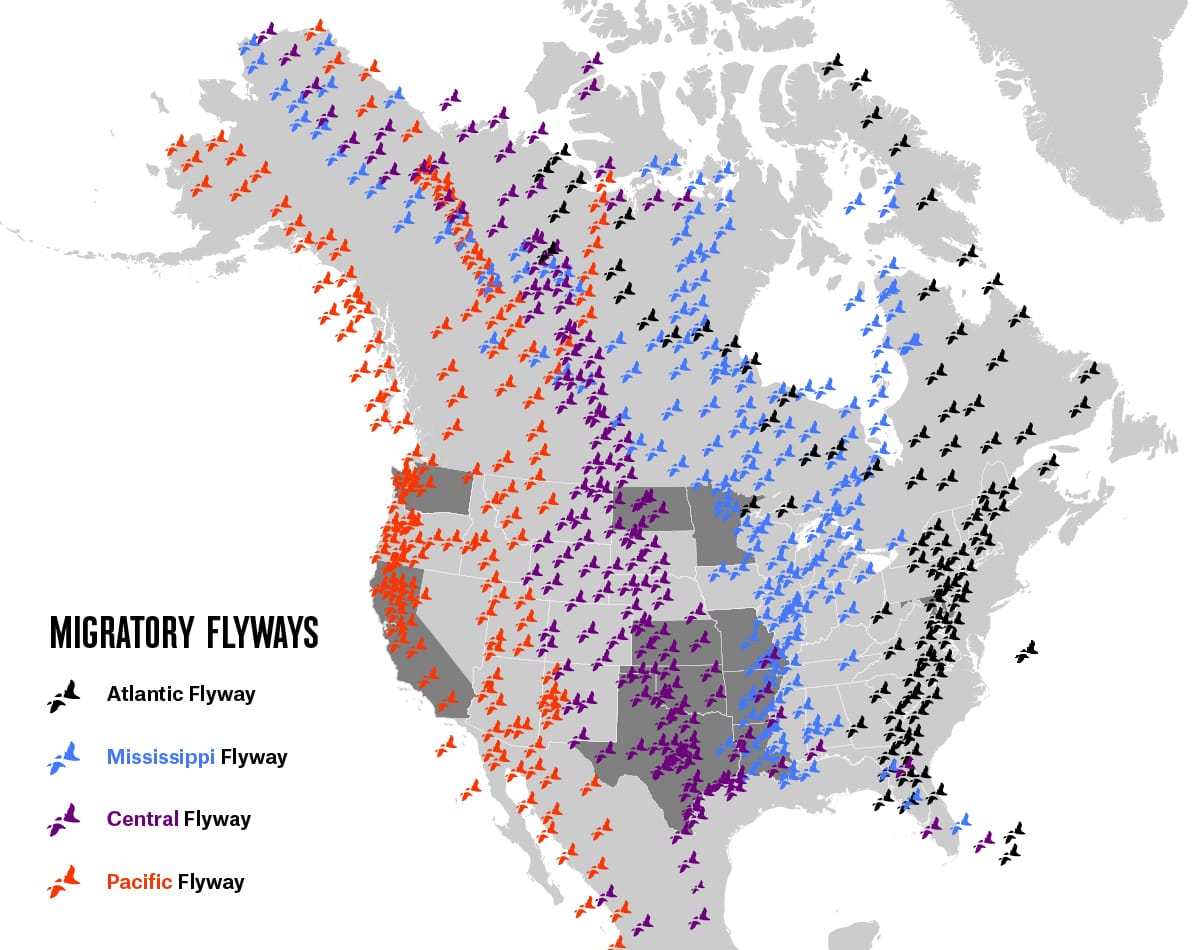
Migratory Flyways
Part of waterfowl hunting is having a network of flyways that breaks up the country into four distinct sections. Understanding the purpose and description of these four flyways gives us a pattern for knowing what kinds of birds can be expected (and hunted) and knowing where they are going and when. Ducks and geese follow these pathways from their breeding grounds to wintering areas each year.
Here’s a rundown of the migratory flyways:
Atlantic Flyway
This flyway stretches more than 3,000 miles from the coast of Maine to the Gulf of Mexico and has exceptional public hunting opportunities for divers, dabblers, and geese. Though it is the most densely populated of the four flyways, there are still great spots to find birds in flight on cool mornings.
Mississippi Flyway
Covering every mile between northern Minnesota and the wetlands of Louisiana, the Mississippi flyway is a storied corridor through which most migratory and other birds fly in the U.S. At 2,300 miles long, covering 1.5 million square miles, and anchored by the mighty Mississippi River itself, you’ll find plenty of opportunities to hit bag limits hunting states along this flyway.
Central Flyway
This flyway follows the Great Plains from the Canadian prairies to the Gulf of Mexico. It’s the flyway that some stellar states fall under, such as Kansas, Montana, Oklahoma, and Texas. If you’re looking for diversity of species, this is their highway of a flyway.
Pacific Flyway
At least a billion birds from 350 different species fly along the Pacific flyway each year, which stretches from Alaska to Patagonia. Hunting anywhere along here will give you access to a lot of different waterfowl and hunting conditions, from Washington state widgeons to California pintails.
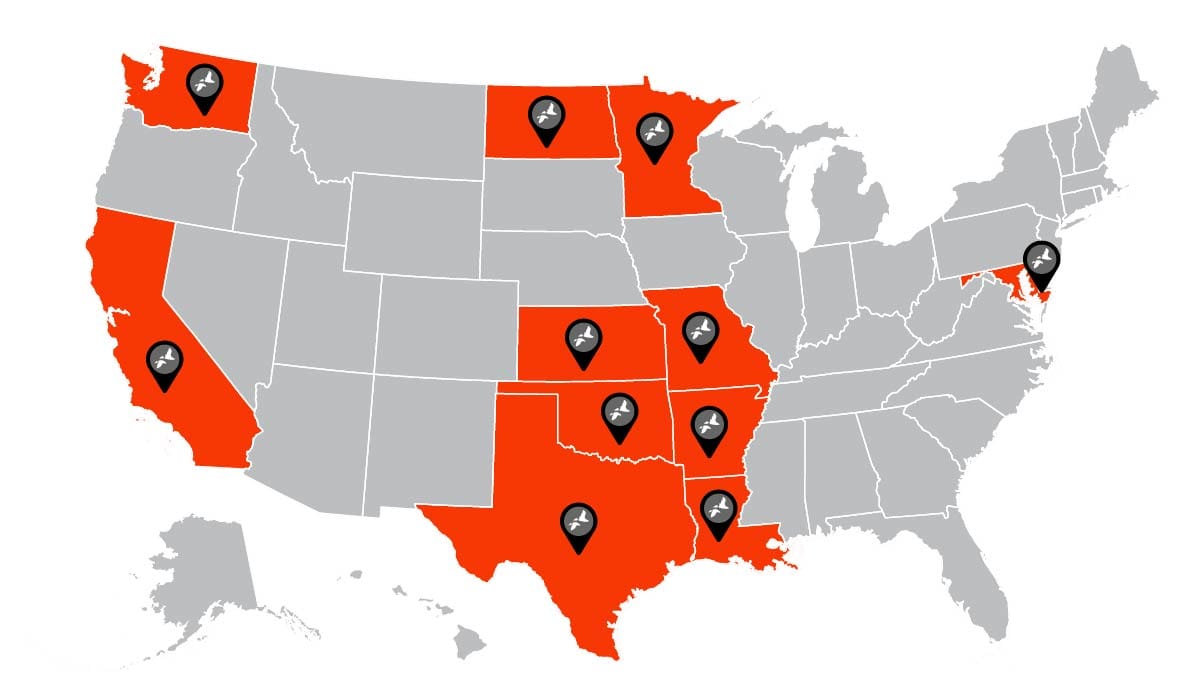
The Best States for Waterfowl Hunting
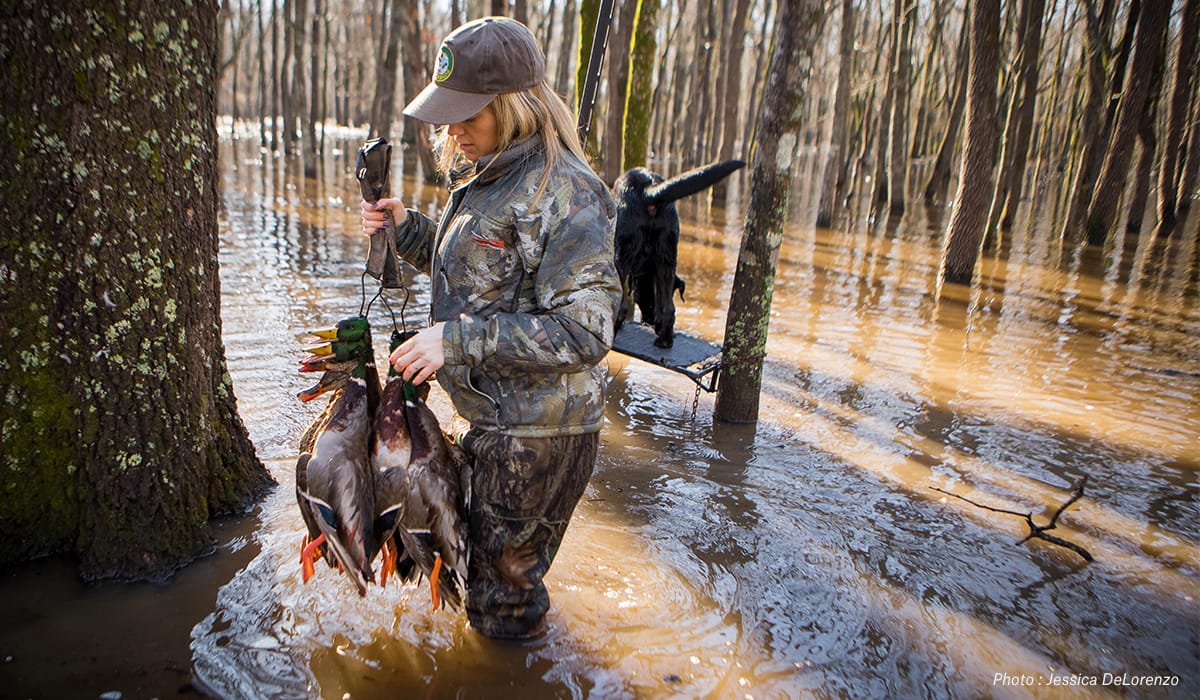
Arkansas: Best State for Hunting Flooded Timber Duck
About 55 miles east of Little Rock is a town called Stuttgart, Arkansas. Stuttgart is affectionately defended as the “Duck Capital of the World.” Millions of duck hunters, from rocker Ted Nugent to Nash Buckingham, who carried “Bo Whoop” by his side, have hunted waterfowl in the state.
To back up the claim that the Natural State is a waterfowl mecca, it has one of the highest duck hunting success rates. Arkansas duck hunters, according to the 2025 Annual Migratory Bird Hunting Activity Report, harvested an estimated 1.1 million ducks (2023) and 1.4 million ducks (2024), with up to 75,000 active duck hunters and harvesting an average of 17–19 ducks per hunter across those seasons. Many of these ducks and hunters find themselves in flooded timberlands in the early mornings of the season. The thrill of finding backwaters or a good hole with a break in the canopy puts Arkansas on our must-hunt list for waterfowl.
“It’s all about the big groups of mallards coming into the timber. It’s one of the most unique scenes in waterfowling and no place offers that opportunity like Arkansas. We have tons of public land scattered all over the state, and lots of guide services, so there is something for everybody who wants to chase mallards in the timber.”
– Jake Maxwell, Chasing Green
Take a closer look at Arkansas:
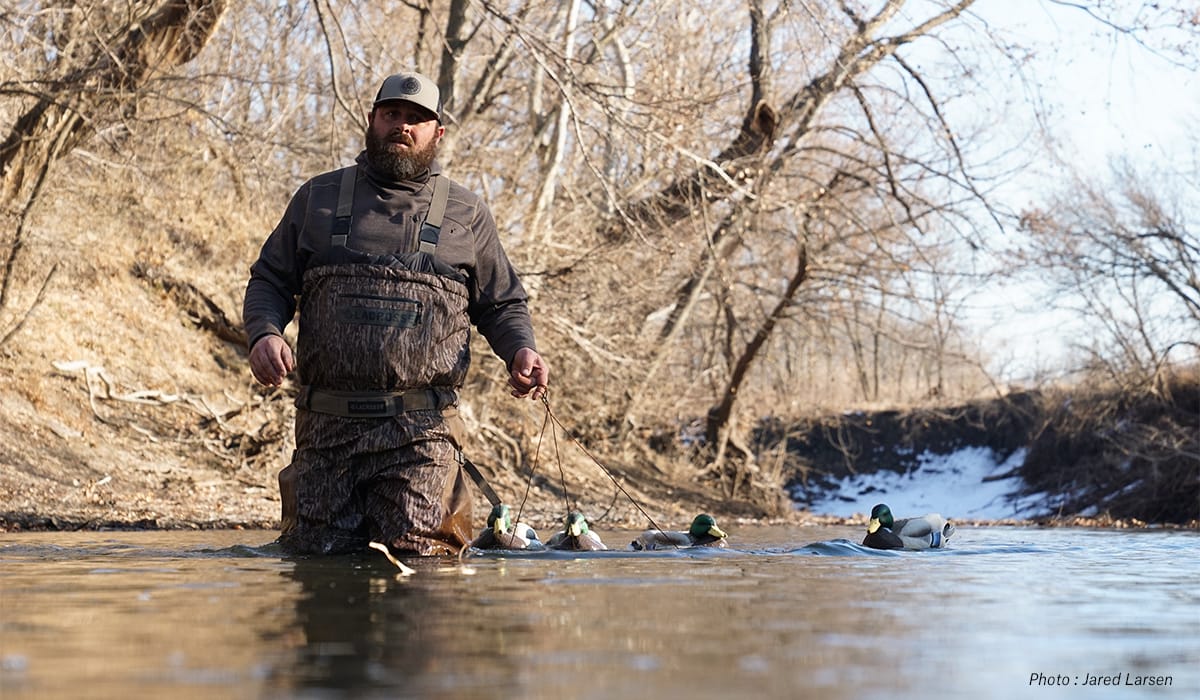
Kansas: Best State for Hunting Ducks and Geese
Ready for a mixed-bag hunt of epic proportions? The Sunflower State is a prime destination for finding ducks and geese moving south. It’s especially noted for hunting mallards on private and public lands, most of which are specifically managed to attract them.
Kansas hunters took about 343,400 ducks (2023) and 387,000 ducks (2024), averaging 13–14 ducks per hunter.
Central in the Central flyway, this state has healthy populations of different geese, including cackling, Canada, small Canada, snow, white-fronted, specklebelly, and others. So for fancy-feathered geese or speedy canvasbacks, get ready to go big before going home here.
“Kansas is a phenomenal waterfowl state for two reasons. The first is that we have a ton of agriculture and are able to hold birds here all winter long. The second is the fact we are in the middle of the country so we get cold enough for birds to push down to us, but not cold enough for them to head further south. These two pieces line up to create the perfect storm for waterfowlers.”
– Ben Webster, Big Kansas Outdoors
Take a closer look at Kansas:
Maryland: Best State for Hunting Sea Ducks
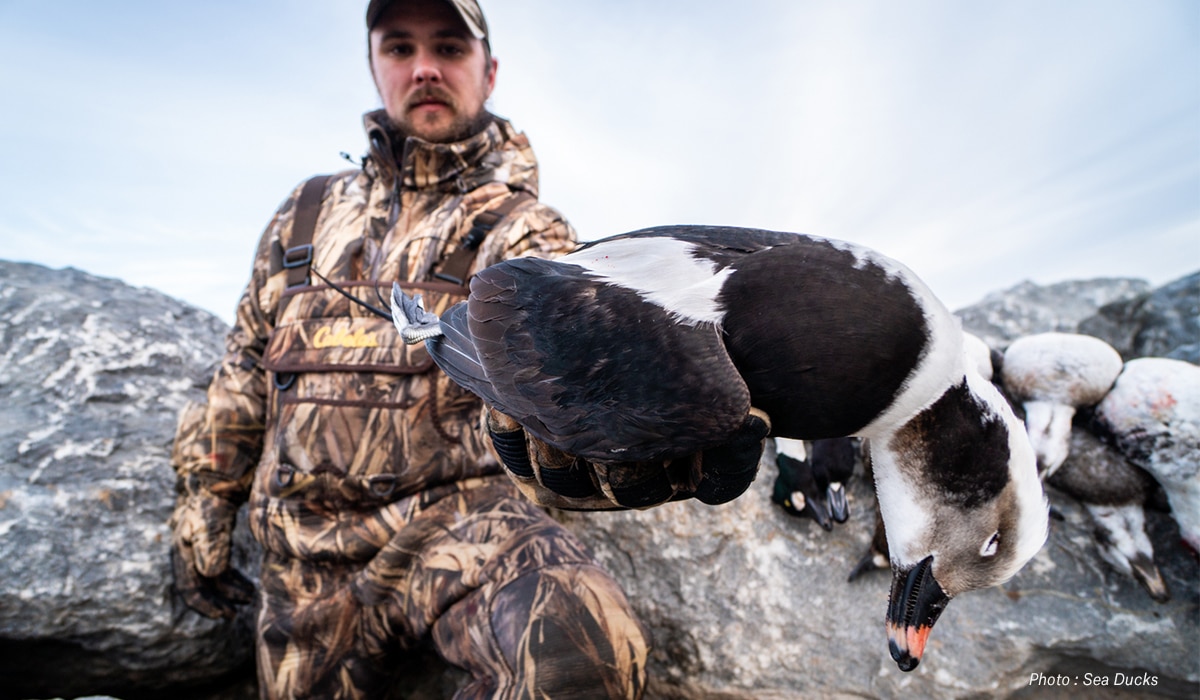
Receiving an “A” from Realtree’s Duck Hunting Nation, Maryland is the best state for hunting sea ducks. The Free State’s rich and long history with waterfowl hunting is not lost on the modern shotgunner. From the fabled Chesapeake region and the Susquehanna Flats, Maryland passed its first laws governing waterfowl back in 1833.
Many come to Maryland because the Canada goose hunting can be unparalleled, but going after sea ducks is what draws a sizable contingent of almost 20,000 waterfowlers to Maryland annually. Although there’s no waterfowl hunting on Sundays here, you’ll still have six days to go after eiders, scoters, and long-tailed ducks.
Maryland waterfowlers harvested 144,500 ducks (2023) and 198,200 ducks (2024). Each hunter took home nearly nine ducks each in the 2024 season.
Take a closer look at Maryland:
Texas: Best State for Hunting Sandhill Crane
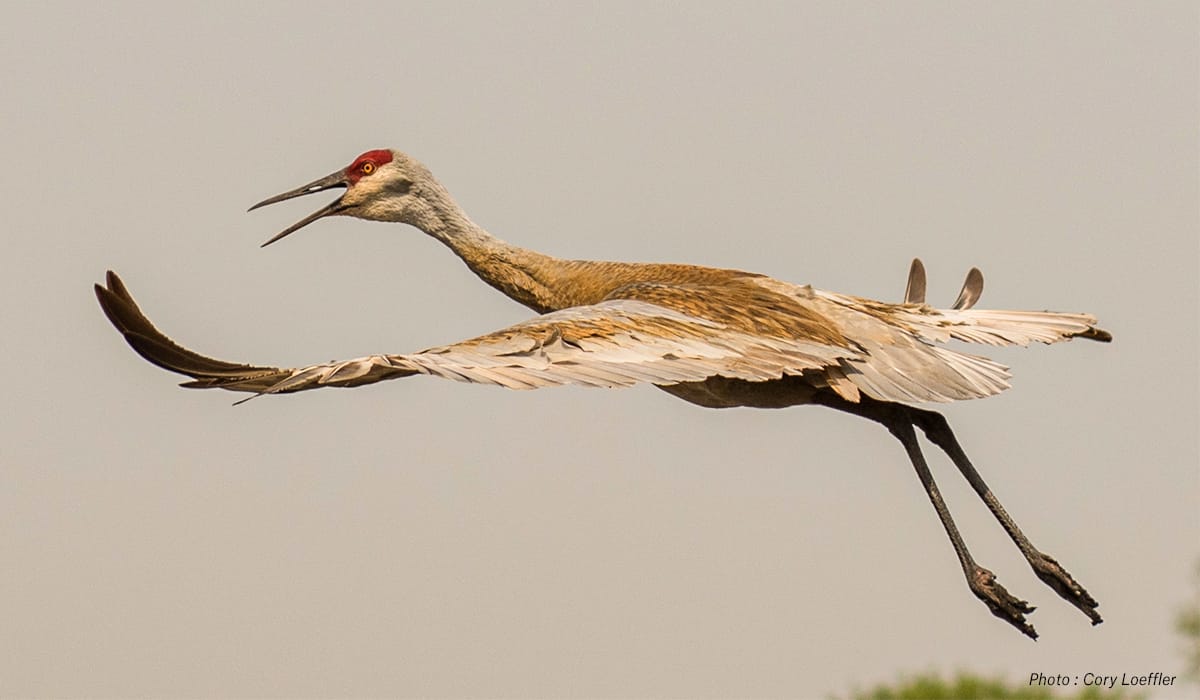
And now for something completely different, we turn to Texas. Yes, everything is bigger in Texas, and it’s true for the waterfowl hunter, too. Texas has been a go-to for sandhill cranes, even as it’s often overshadowed by the excellent duck and dove hunting in the Lone Star State. But many argue that sandhill cranes are a better-tasting alternative, and weighing 18 pounds each, there’s more meat to go around.
Most of the state is open to hunting sandhill cranes, except for eastern Texas and a small parcel along the Gulf of Mexico. Of course, Texas is about 96% private land, so you’ll likely need to knock on some doors to get permission to hunt, but there’s no shortage of opportunities to call in your first crane or two (bag limits are between two and three a day).
Note: a Federal Sandhill Crane Hunting Permit (issued by TPWD), HIP certification, and a Texas Migratory Game Bird Endorsement are required.
Take a closer look at Texas:
North Dakota: Best State for a DIY Hunt
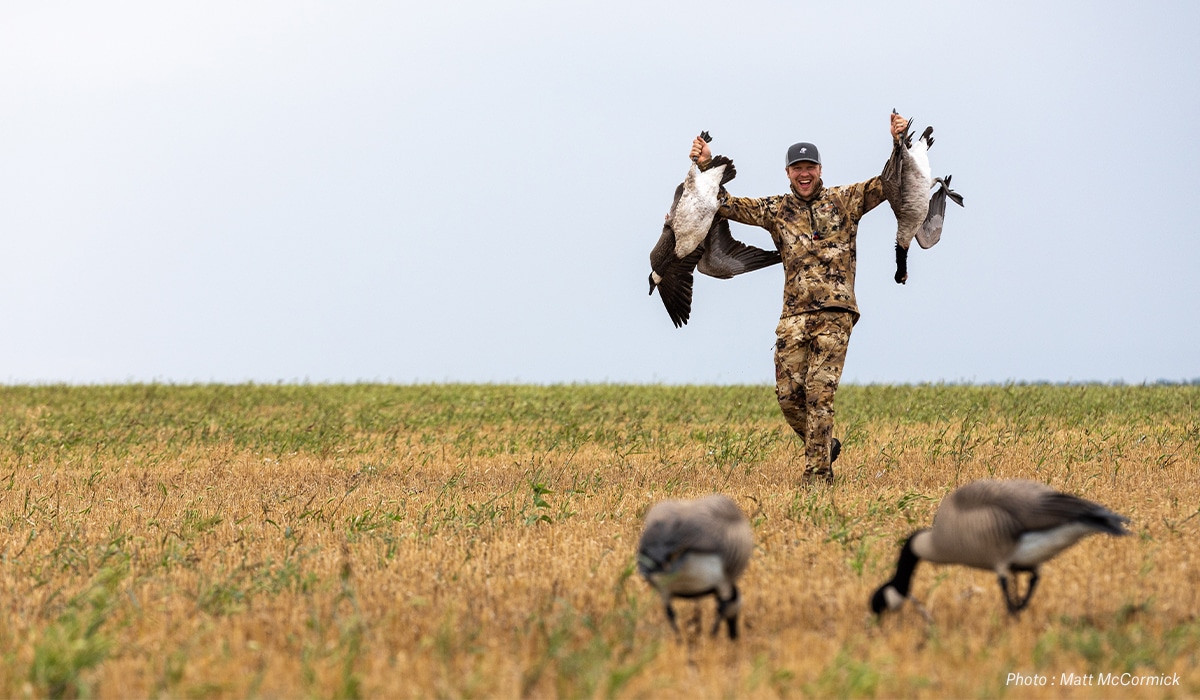
North Dakota remains a real “North Star” that deservedly guides hunters to their duck hunting destiny. It’s our pick for the best state for a DIY hunt simply because out-of-state hunters can buy over-the-counter licenses, the state’s great access through the PLOTS program (Private Land Open To Sportsmen), and the grass, water, and grain that ducks and geese love.
If you hunt the Sioux State once, you’ll want to go back. Hunters in North Dakota harvested approximately 582,800 ducks in 2023 and 620,800 ducks in 2024. The state hosts between 41,700–41,300 active duck hunters every year, with harvest rates of 14–15 ducks per hunter on average. We like those odds.
“North Dakota is a great state to freelance waterfowl hunt in because of the unposted land law. Use onX Hunt when scouting waterfowl to find landowner names of posted or electronically posted land. Get permission that way, or if it isn’t posted, you can legally hunt. North Dakota is part of the duck factory, and it’s located just south of other prime waterfowl nesting habitats. So if it wasn’t made in North Dakota, there’s a good chance it’ll fly through sometime in its migration.”
– Cory Loeffler, DRC Call Co
Take a closer look at North Dakota:
California: Best State for Hunting Pintails
California has a rich heritage related to waterfowl. In 1908, President Roosevelt established the first waterfowl refuge in North America, naming it the Lower Klamath NWR. Since then the Golden State has played an integral role in the migration of billions of birds along the Pacific Flyway.
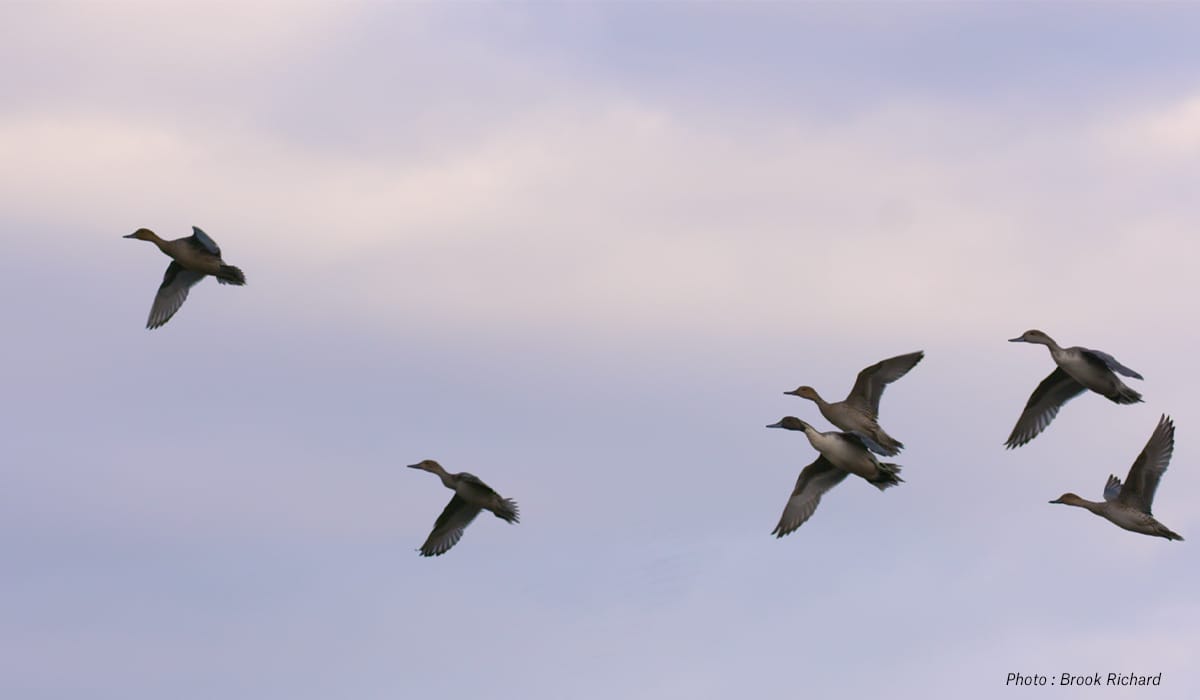
For hunters, who harvest about a million ducks a year at an average success rate of 20 ducks per hunter, California is for dreamin’ big about the elusive pintails. These elegant, long-necked ducks continue to have storied ups and downs in their recovery in California, but for now, there are healthy, huntable populations and hunters have harvested an average of about 80,000 pintails annually over the last few years. If you want to pursue pintails, California is the place.
“California is an understated waterfowl destination. As far as ducks and geese go, it really is a not-so-hidden gem. California winters a huge population of geese and ducks, and through the season a variety of waterfowl visit the Pacific flyway’s wetlands, rivers, and agricultural fields. With a long hunting season, a diverse and robust bird population, as well as a number of different types of hunts available across the state, California should be on any waterfowlers destination list.”
– Corey Mulhair, Split Reed
Take a closer look at California:
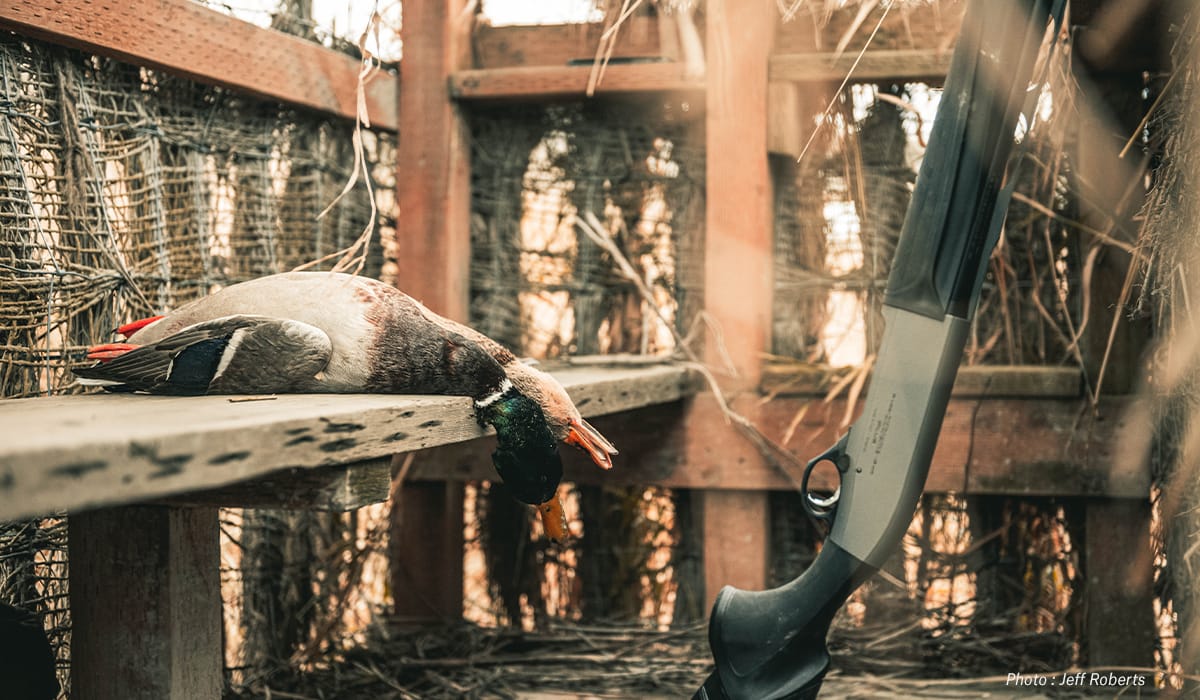
Washington: Best State for a Scenic Hunt
The Evergreen State has a lot to please the eye. Washington has seven distinct physiographic regions, from the rocky Pacific coastline and volcanic peaks of the Cascades to the green fields of the Columbia Basin, and equal to these gorgeous landscapes is an abundance of ducks and geese to complement the skyline.
We pick Washington state as the best state for a scenic waterfowl hunt, and that can be based on geography alone. But one other beautiful fact that sets this state apart from the rest is it’s the only state in the lower 48 where a hunter can harvest a harlequin duck (with special permitting), arguably the most spectacular species of waterfowl in North America.
For success rates, Washington hunters harvested 474,000 ducks (2023) and 336,700 ducks (2024), averaging 17.6–13.8 ducks per hunter, respectively. Hard to argue against Washington when it comes to waterfowl hunting.
“I’ve been fortunate to hunt all over North America, and as quality waterfowling states go Washington definitely sits close to the top of my list. From big groups of itty-bitty, football-sized cacklers to some of the best mallard hunting in the lower 48, Washington state holds its own as a destination for duck and goose hunters from all over. The variety of hunting scenarios makes Washington a very exciting place to be a waterfowler. Whether it’s hunting over habitat, cropland, or off the coast, Washington is absolutely worth a visit if you’re a duck and goose hunter.
– Nick Costas, Split Reed
Take a closer look at Washington:
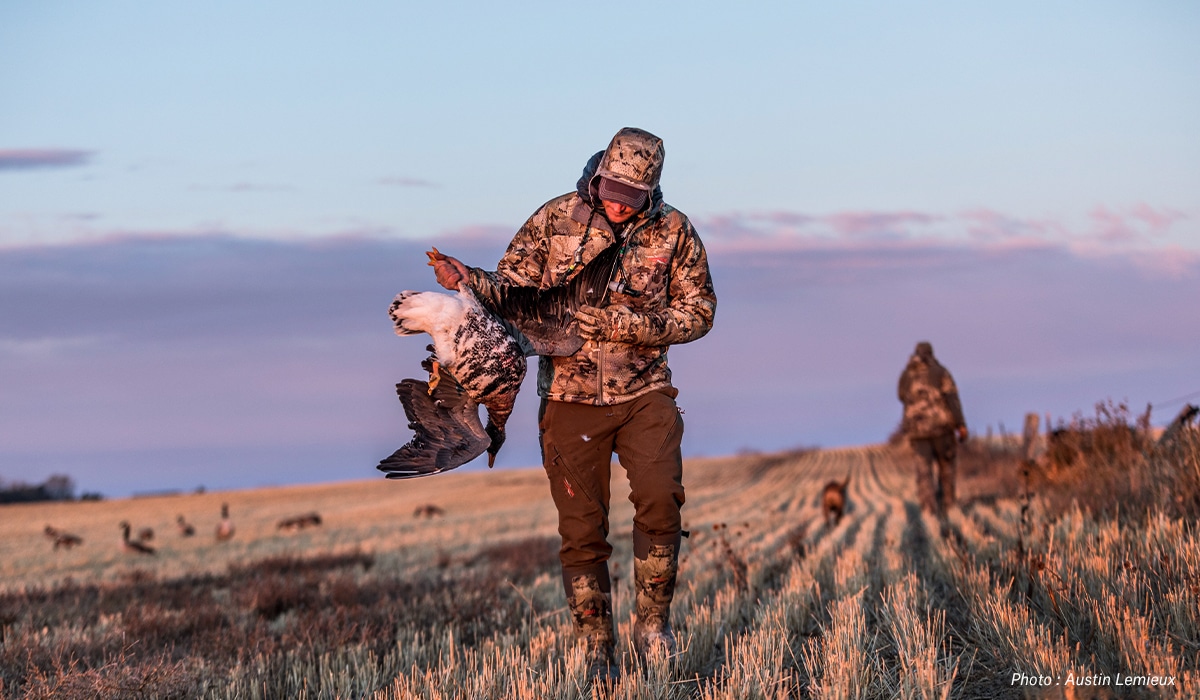
Oklahoma: Best Up-and-Coming Waterfowl Hunting State
Everyone wants to know the sleeper hit of the season, and we’re all in on Oklahoma as the best up-and-coming state for waterfowl hunting. The Sooner State should be on your bucket list sooner than later because a lot of ducks are being retrieved, especially on public lands.
Oklahoma waterfowl hunters harvested 490,700 ducks (2023) and 517,400 ducks (2024). Annually, there are over 30,000 active duck hunters in the state, and each hunter bags over 15 ducks per season on average.
Oklahoma offers more than a million publicly accessible acres to explore. Spread that over WMAs, wetland developmental areas, and 24 properties under the U.S. Army Corps of Engineers Tulsa District, and you start painting a picture of a great duck hunting destination.
Take a closer look at Oklahoma:
Michigan: Best Waterfowl Stopover State
Michigan is prominently positioned along major flyways and a key stopover point for migrating waterfowl coming from breeding areas in the Prairie Pothole and Great Lakes regions. Ducks and geese have access to the Great Lakes and thousands of inland lakes, with diverse habitats that support a variety of species. Another great reason to try waterfowl hunting in Michigan? The amount of water and shoreline that’s accessible to the public for hunting.
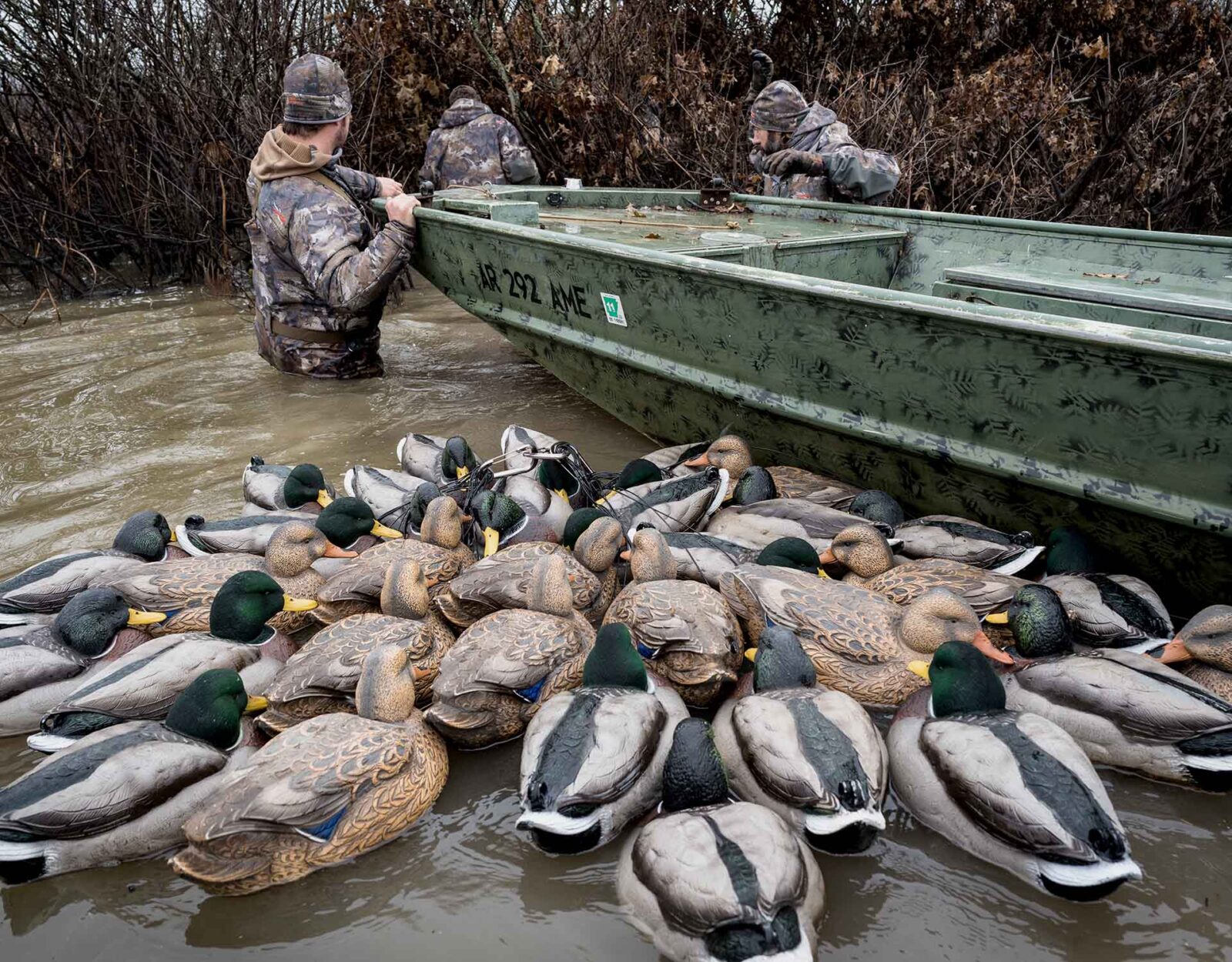
If you plan on targeting different species, decoys matter. As Shawn Stahl, producer at Rich-N-Tone Calls, puts it, “When hunting ducks and geese, I’ve found that I’ve had better success focusing on geese by using mostly goose decoys. Ducks will readily decoy to goose decoys, but geese won’t readily decoy to duck decoys. This makes setup much easier and less gear to haul around.”
Take a closer look at Michigan:
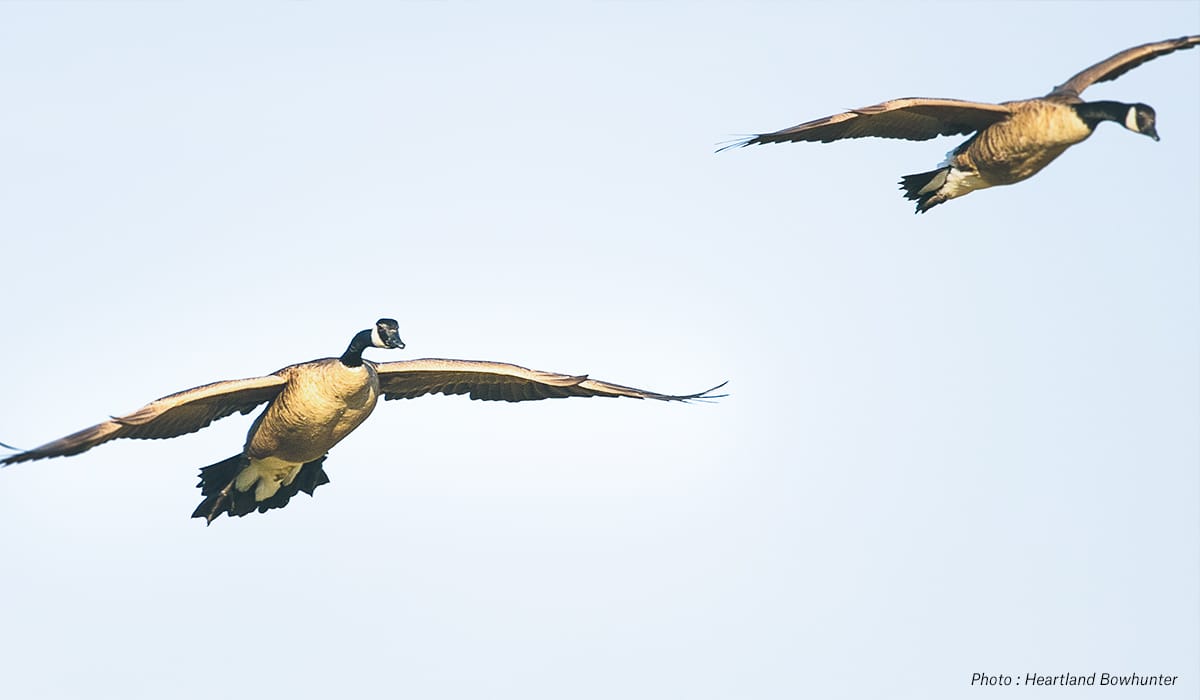
Missouri: Best Mid-Migration State
The Show-Me State has something to show you. It lands as the best place to hunt waterfowl mid-migration. Why? Because two major river systems—the Mississippi and the Missouri—bring ducks and geese into the state right when waterfowl season can get a little wonky.
Mid-season can be tough hunting at times because ducks and geese are starting to get savvy to decoys and calls, or they have simply moved on from where you had seen them days earlier. While Missouri is good for waterfowl all season long, it’s definitely the state you want to be in when other places just aren’t producing. Missouri is so good, in fact, the state’s estimated harvest was 625,700 ducks (2023) and 394,700 ducks (2024), with a harvest rate of over 10 ducks per hunter last year. Access is also good in Missouri, especially with the state’s “Managed Hunts” program.
Take a closer look at Missouri:
Minnesota: Best State for Divers
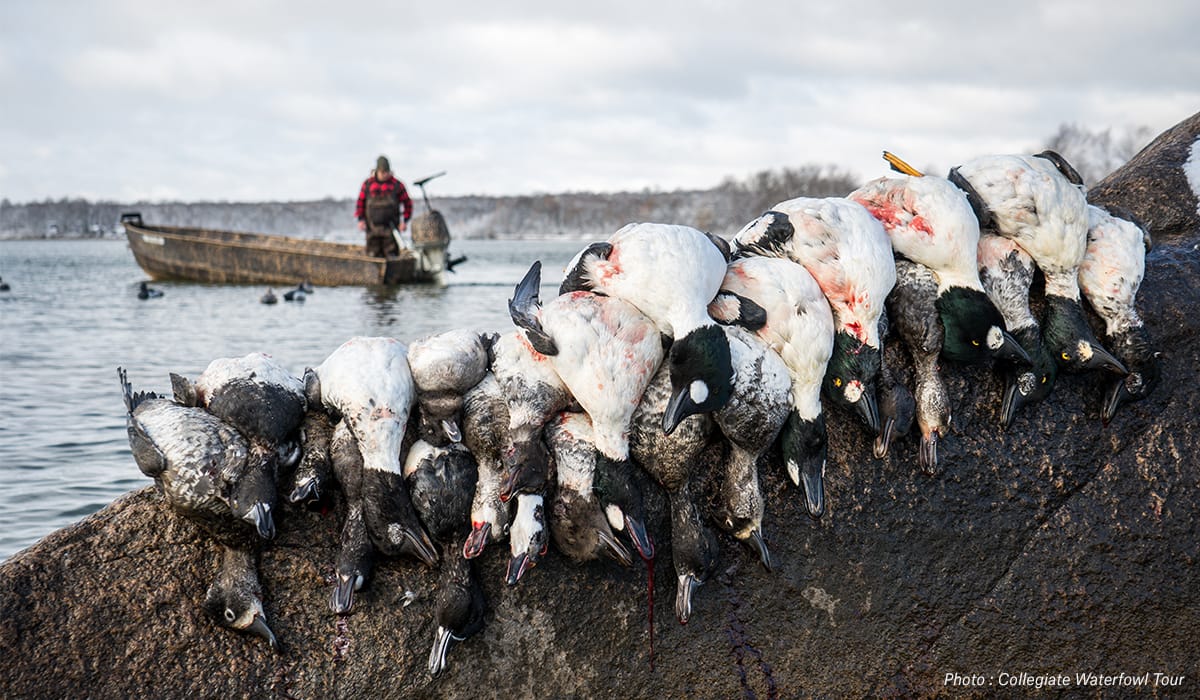
Let’s dive right in and say it: Minnesota is the best state to hunt diver ducks. That’s an easy fact to back up in the Land of 10,000 Lakes. Minnesota’s long list of diving ducks includes the canvasback, redhead, ringneck (or ringbill), scaup (or bluebill), goldeneye, bufflehead, merganser, and the ruddy duck. There is an abundance of publicly accessible water to get into a diver shoot, from the thousands of lakes dotting Northern Minnesota to the famed Mississippi River. If that’s not an ample list of feathered targets and places to hunt them, what else is?
We like Minnesota because it offers excellent hunting opportunities, but we also applaud the state’s historical role in helping bring back the giant Canada goose from extinction. Rochester, Minnesota, was famed for its goose hunting and was considered the last stronghold for the species on the brink of extinction. Today, there’s viable populations all around.
Minnesota harvested about 627,000 ducks (2023) and 655,700 ducks (2024), with each duck hunter bagging just over 11 ducks in the season in 2024.
Take a closer look at Minnesota:
(BONUS) Louisiana: Best Cast and Blast State
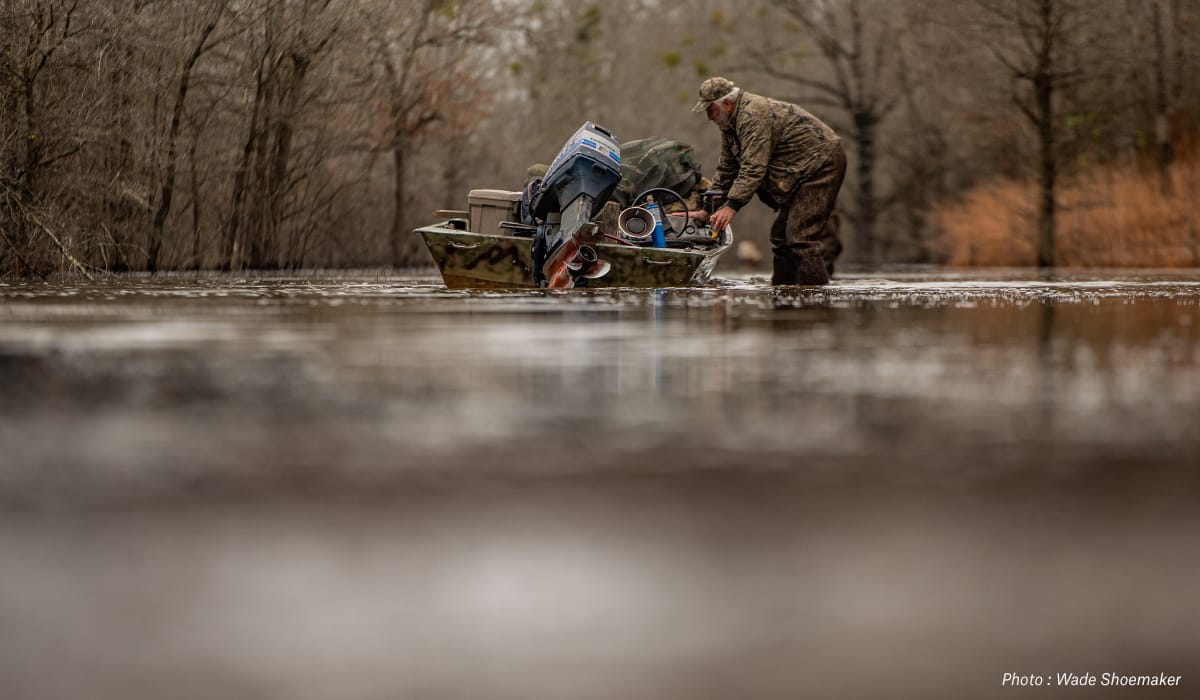
We couldn’t let one state get away without an honorable mention. The Pelican State has 8,000 square miles of water. Many believe the state was essentially designed for ducks. That’s why it stands out for us as the best state for a cast-and-blast adventure. From coastal marshes to flooded grain fields and flooded timber, you can hunt a hundred different ways and catch fish along the way.
2024 was a banner year for Louisiana duck hunters, bagging over 1.2 million ducks and each hunter averaging over 21 ducks for the season. There’s no shortage of public lands available, so access isn’t going to be the challenge. Deciding whether you want to fish more or shoot more might be the only hard decision you’ll have to make down here.
Take a closer look at Louisiana:
~~~
Making the Most of Duck Hunting Anywhere
If you love waterfowl hunting but either don’t live in one of these top states or don’t have time in the season to travel to one, why not make the best of what you’ve got at home? onX Hunt’s Lake Pickle, a skilled waterfowler, shares his complete duck season from start to finish, highlighting the land management practices he and his friends put in place to make their home area a better habitat for ducks on the flyway. Watch the story below:
~~~
The Federal Duck Stamp
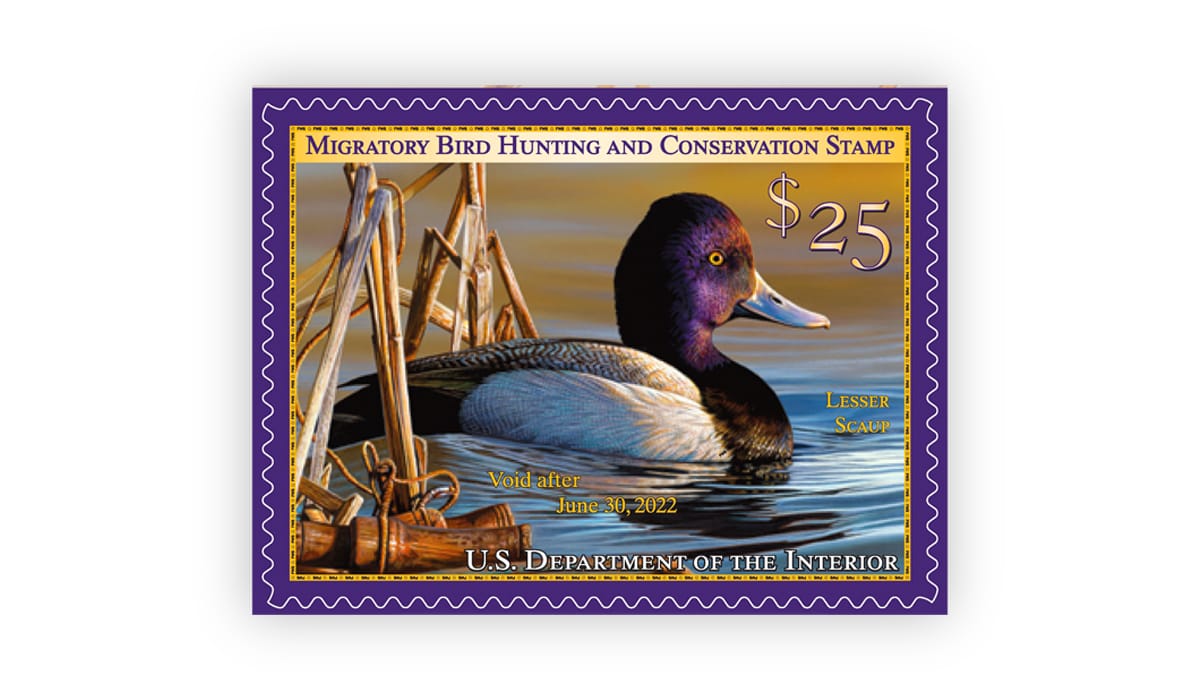
Waterfowl hunters participate in a unique program monitored and managed through the Federal Waterfowl Stamp (i.e. Duck Stamp). This program funds bird habitat conservation and protects the sport for future generations. Every waterfowl hunter 16 and older must purchase a Duck Stamp, but anyone can buy these and support conservation efforts. 98% of the purchase price goes directly to help acquire and protect wetland habitats and purchase conservation easements for the National Wildlife Refuge System. The stamp costs $25 and is available for purchase at many places, including your local post office, sporting goods store, some National Wildlife Refuges, and at https://www.duckstamp.com.

Hunting Regs Without the Hassle
Compliance shouldn’t be the hard part. FieldRegs is a free app from the team behind onX Hunt that helps you quickly find hunting regulations, seasons, and legal requirements without digging through agency websites and PDFs. No credit card required.


The Atlantic, Mississippi, Central, and Pacific flyways guide migratory birds across the continent. Each offers distinct hunting opportunities depending on geography and species.
Arkansas is considered the top state for flooded timber hunts, with Stuttgart known as the “Duck Capital of the World.”
North Dakota offers over-the-counter licenses, generous public access through the PLOTS program, and excellent success rates, making it ideal for DIY hunters.
Yes, each state has its own waterfowl hunting regulations, seasons, and bag limits. Always check state-specific rules before hunting.