How to Read Trail Difficulty Ratings and Choose the Right Route
The difficulty rating systems used to mark off-road trails are an essential service administered in the United States by the U.S. Forest Service (USFS), Bureau of Land Management (BLM), off-road clubs, and many other groups. Known collectively as Trail Difficulty Ratings, these designations are the universal language of off-roading, whether one drives a stock 4×4, custom crawler, UTV, or rides an ATV or dirt bike. Knowing each trail’s difficulty in advance helps match a vehicle’s capabilities and a driver’s experience and skill with an appropriate route.
What Are Off-Road Trail Difficulty Ratings?
Trail difficulty ratings help off-roaders come prepared. Think of them as early warning systems that tell drivers and riders what to expect, like switchbacks, technical climbs, and obstacles that require high vehicle clearance, a winch, and a spotter. Without these ratings, drivers can quickly get in over their heads and risk damage to their vehicle, themselves, and others. Instead, pre-scouting a trail’s difficulty in advance with a tool like the onX Offroad App prepares one for a more confident, safe, and fun experience.
Off-Road Trail Rating Systems Explained
Currently, there are two primary off-road trail difficulty rating systems used in the United States: the “Color/Symbol” and “Numeric (1-10).” In this section, we’ll provide some details about each.

Color/Symbol Trail Rating System
Used by the USFS, BLM, and many state OHV and SVRA programs, this off-road trail difficulty rating system uses color-coded symbols similar to those in the snow skiing world: a green circle (Easiest), a blue square (More Difficult/Moderate), and a black diamond (Most Difficult).
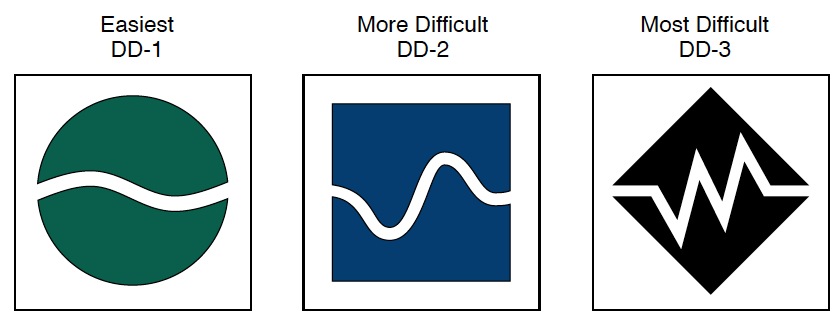
Green Circle (Easiest) – These trails offer wide, relatively smooth gravel and fire roads with gentle grades, suitable for beginners and showroom-stock 4x4s.
Blue Square (More Difficult/Moderate) – Narrower trails but still wide enough for ATVs and UTVs, with some climbs and moderate obstacles. Best for intermediate-level riders and drivers.
Black Diamond (Most Difficult) – Steep and narrow, often singletrack, with technical climbs, sharp turns, major obstacles, and rocky sections. Expert driving and spotting skills are a must.
Off-roaders should note that these symbols provide a basic degree of trail difficulty but are not site-specific. Users can find these trail difficulty ratings on trailhead information boards (usually near trailhead parking), on marker posts along the route, or in a mapping tool like the onX Offroad App.
Numeric Trail Rating System (1-10)
Used primarily by the rock-crawling segment of the off-roading world, the Numeric Trail Rating System assigns each trail a rating from 1 (Easy) to 10 (Extremely Difficult). Groups like Jeep Jamboree USA, Red Rock 4-Wheelers (promoters of the Easter Jeep Safari in Moab), and many clubs and event organizers use the system to better prepare trail users and participants.
The Numeric System estimates the difficulty level for a full-size 4×4 vehicle to navigate a given trail under dry conditions. By default, the system assumes a vehicle’s off-road capabilities and its driver’s skills and experience increase as the trail’s difficulty rating increases. The following is a more detailed, albeit still condensed, explanation of numeric trail difficulty ratings.
Pro Tip: Quickly access Numeric Trail Difficulty Ratings with the onX Offroad App.
Easy (1-2 Technical Rating)
Trails assigned a technical rating of 1-2 include maintained gravel and dirt roads with the possibility of mild ruts, washboard bumps, small rocks, and shallow water crossings. Suitable for showroom stock 4x4s and SUVs with improved ground clearance, with minimal risk to drivers with average skills and experience. Think scenic drives on dusty dirt roads instead of pavement. Examples:

Bulldog Loop
- Technical Rating: 1 (Easy)
- Trail Type: Full-Width Road
- State: Idaho
- Total Miles: 35.8

Double Camp
- Technical Rating: 2 (Easy)
- Trail Type: Full-Width Road
- State: Tennessee
- Total Miles: 14.5
For those new to off-roading, see our “Beginner Offroad Trails Near Me” to find trails near you with an easier rating.
Moderate (3-4 Technical Rating)
Trails with a 3-4 difficulty rating may include more varied terrain with steeper grades, mild ledges up to 12 inches high, larger-diameter rocks, and mild water crossings. Stock 4x4s are passable with all-terrain tires, with level 4 trails leaning more towards high-clearance 4x4s with vehicle protection like skid plates. Things start to get real on trails in the 3-4 range. Examples of trails in this difficulty category:

Caledonia Road
- Technical Rating: 3 (Moderate)
- Trail Type: Full-Width Road
- State: Michigan
- Total Miles: 4.9

Camp 5
- Technical Rating: 4 (Moderate)
- Trail Type: High-Clearance 4×4 Trail
- State: South Dakota
- Total Miles: 5.5
Difficult (5-6 Technical Rating)
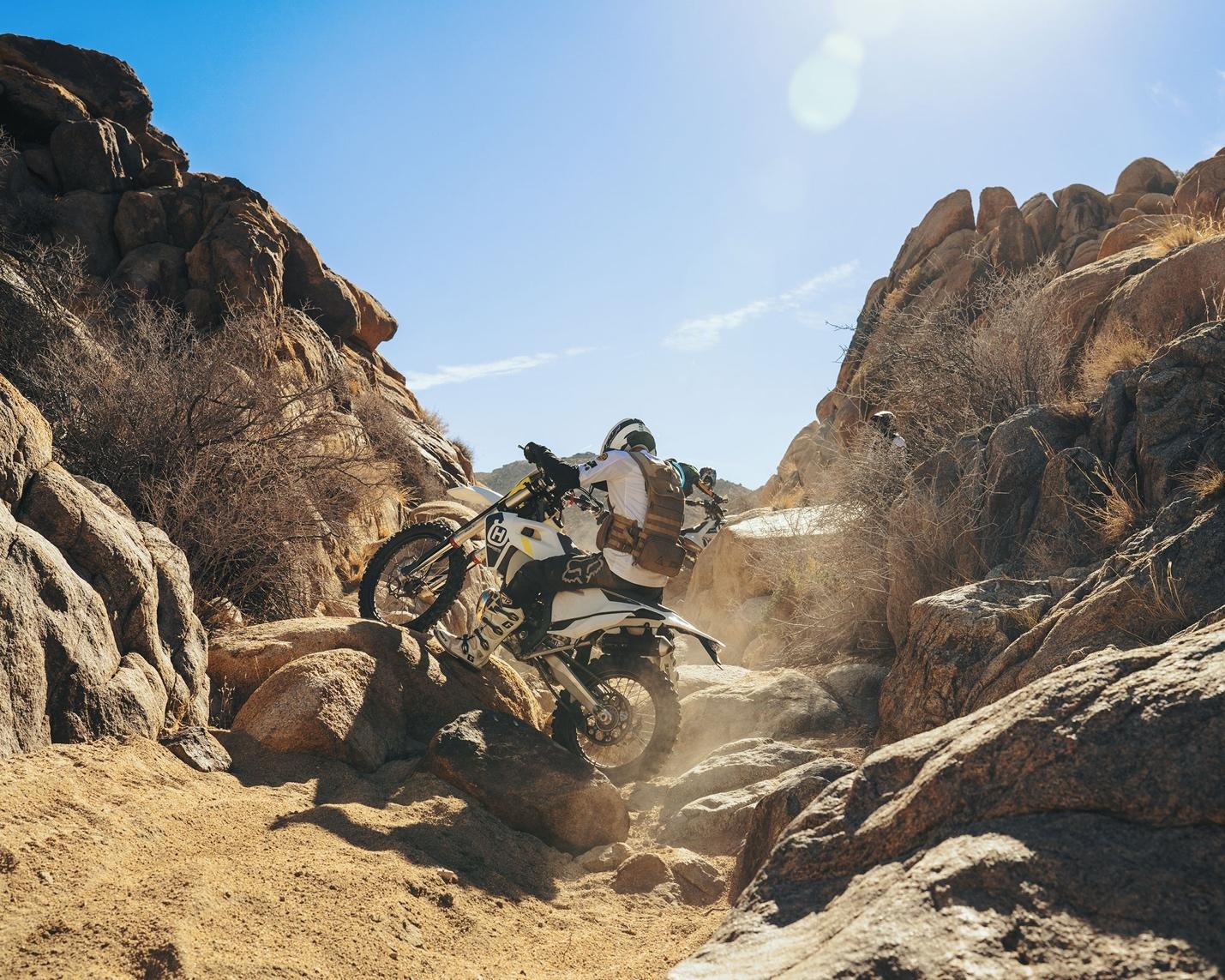
Things really start to get serious with 5-6 difficulty rating trails, with some too narrow for 4x4s and SxS machines, but passable on most ATVs and dirt bikes. Users may encounter narrower trail widths, deep ruts, rocks and ledges up to 24 inches high, and steep off-camber climbs. Bigger tires (33 to 35 inches) are recommended, along with lockers, vehicle armor, and a winch. Be sure to bring a companion for spotting lines. ATV and dirt bike riders will revel in the many two-track and singletrack trails that make up this difficulty category.

Pistol Creek
- Technical Rating: 5 (Difficult)
- Trail Type: High-Clearance 4×4 Trail
- State: Kentucky
- Total Miles: 17.8

The Good, the Bad and the Ugly
- Technical Rating: 6 (Difficult)
- Trail Type: High-Clearance 4×4 Trail
- State: Montana
- Total Miles: 7.5
Extreme (7-10 Technical Rating)
Extreme is the category for experienced drivers and riders with custom-modified or specialty machines and the skills to navigate the terrain one will experience on these trails. Not for the faint-hearted, these trails range from steep rock ledges and waterfalls that require a spotter (7) to routes reserved for professional-level drivers and dirt bike riders (10). These are the trails where pros showcase their skills and experience by navigating the seemingly impossible.

Jack Rabbit
- Technical Rating: 7 (Extreme)
- Trail Type: High-Clearance 4×4 Trail
- State: California
- Total Miles: 3.2

Highway to Hell
- Technical Rating: 8 (Extreme)
- State: Arizona
- Total Miles: 2.9
- Trail Type: High-Clearance 4×4 Trail

Pritchett Canyon
- Technical Rating: 9 (Extreme)
- State: Utah
- Total Miles: 9.0
- Trail Type: High-Clearance 4×4 Trail

Boulder Canyon
- Technical Rating: 10 (Extreme)
- State: Colorado
- Total Miles: 0.5
- Trail Type: High-Clearance 4×4 Trail
How Are Trail Ratings Determined?
Trails marked using the Color/Symbol Trail Rating System are administered through the USFS and BLM, with the local ranger district or BLM field office providing the official difficulty rating, often with help from local volunteer clubs.
Conversely, the Numeric Trail Rating System is not federally administered, but instead is an off-road community–based system run by local 4×4 clubs and event organizers. The ratings are based on an agreed-upon, informal set of standards, with local clubs and mapping platforms like onX Offroad helping to assign and update trail ratings.
Users should keep in mind that environmental factors can affect a trail’s rating. Factors such as elevation, annual rainfall, heat and humidity levels, soil and terrain types, and trail maintenance frequency can all affect a trail’s difficulty. In other words, a trail’s difficulty isn’t static, but an ever-evolving, fluid situation.
How to Choose the Right Off-Road Route for You
Research and doing homework in advance are key, with the end goal of avoiding on-trail surprises, choosing a trail that matches the driver’s skill level, and ensuring one has the appropriate vehicle and equipment for the task at hand.
Drivers should look to match their vehicle type (e.g, ATV, UTV, dirt bike, 4×4) and skill level with an appropriately rated trail. Factor in weather and time of year and plan accordingly.
Using onX Offroad to Plan by Trail Difficulty
Finding a trail’s difficulty rating is a snap with the onX Offroad App. Simply search by state and numeric trail rating to zero in on trails that match one’s vehicle type and skill level. Each trail on onX includes other helpful details, such as user-generated photos and ride reports, local weather conditions, and current trail status (open or closed).
New to the onX Offroad App? Start here: How to Use onX Offroad
Find the Right Trail Difficulty for your next adventure
FAQs About Off-Road Trail Ratings
A full-width gravel or dirt road passable by stock AWD or 4WD vehicles with stock tires. Often not maintained in the winter or after rain. Some washboard bumps, small rocks, mild ruts, and shallow water crossings may be encountered.
No. The trail rating system used in the U.S. can vary by region and state.
Trail ratings are updated when something changes, there’s a safety concern, or from direct user feedback. Factors like trail reroutes due to storm erosion can also prompt rating changes.
Although possible, it’s best to stick to Moderate (3) trails with a stock Jeep, with Moderate (4) trails better suited for lightly modified Jeeps with larger tires and added vehicle protection.
Trails for experienced drivers and riders with advanced skills. Not pro-level, but not a walk in the park either. Both the vehicle and driver should be prepared for the unexpected.