The gobbler appears at the far edge of the field, a black slash against the green wash of early spring. He is a ghost in the hardwood forests of the East, a phantom in the western forests and mesas, a bird pulled back from the edge of extinction by one of the most ambitious conservation efforts in American history. For the hunter, hidden motionless against the trunk of an ancient oak, the sight is magic. The bird struts, closes the distance, and unleashes a thunderous gobble that seems to shake the ground.
But when the hunt is over and the old bird is still, a new kind of examination begins. The hunter observes the tips of the fanned tail feathers. Are they a rich, chocolate brown, the classic mark of an Eastern? Or are they a lighter tan, suggesting the Rio Grande of the plains? Are they a confusing blend of something in between? This bird, the product of two distinct lineages, is a hybrid. It is not an anomaly, but an increasingly common result of the very programs that saved the species. The story of the hybrid wild turkey is that of a messy, continent-spanning success, and it forces hunters and conservationists alike to ask a complicated question: what does it mean to save a species, and what gets lost or created in the process?
A Continent of Turkeys
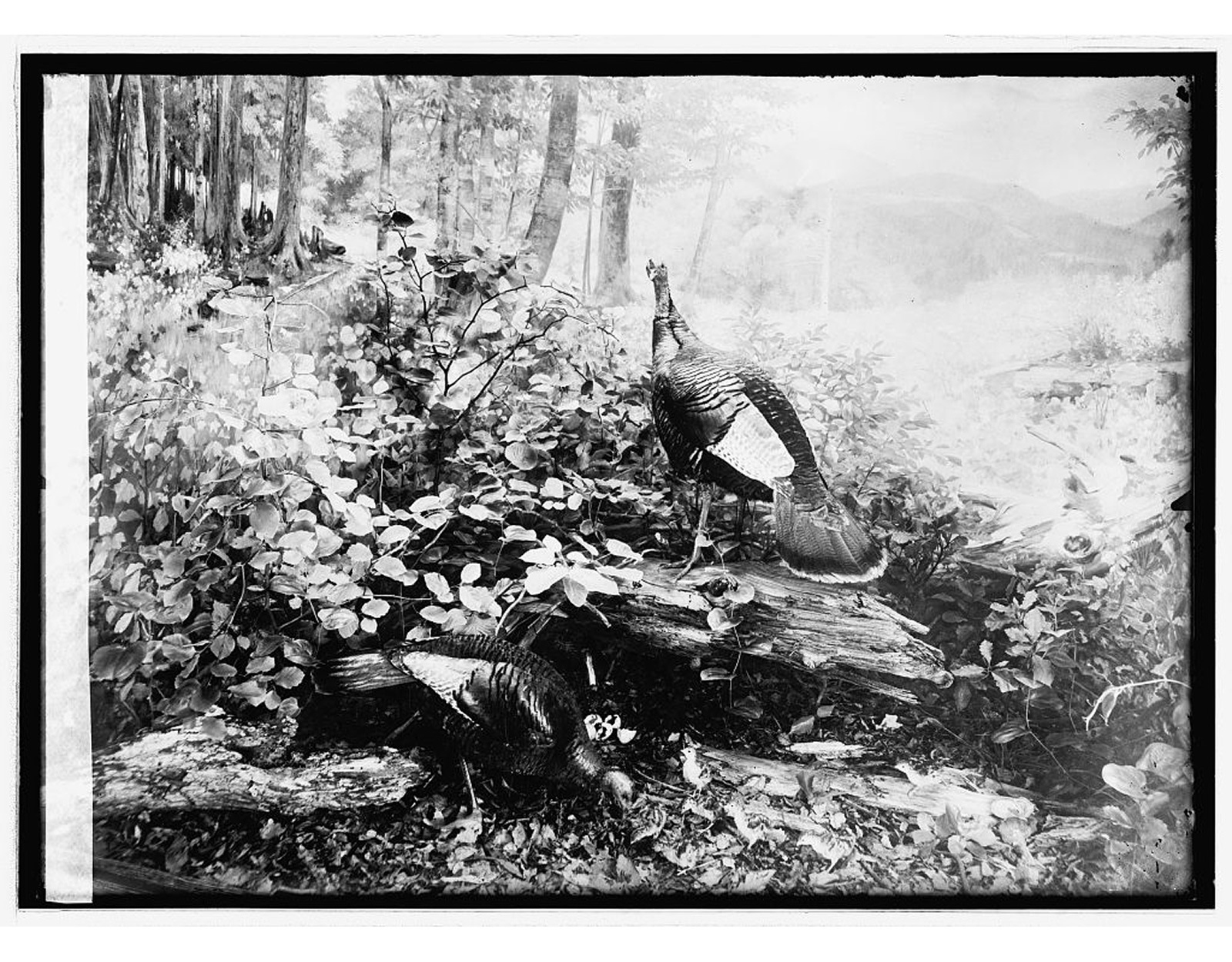
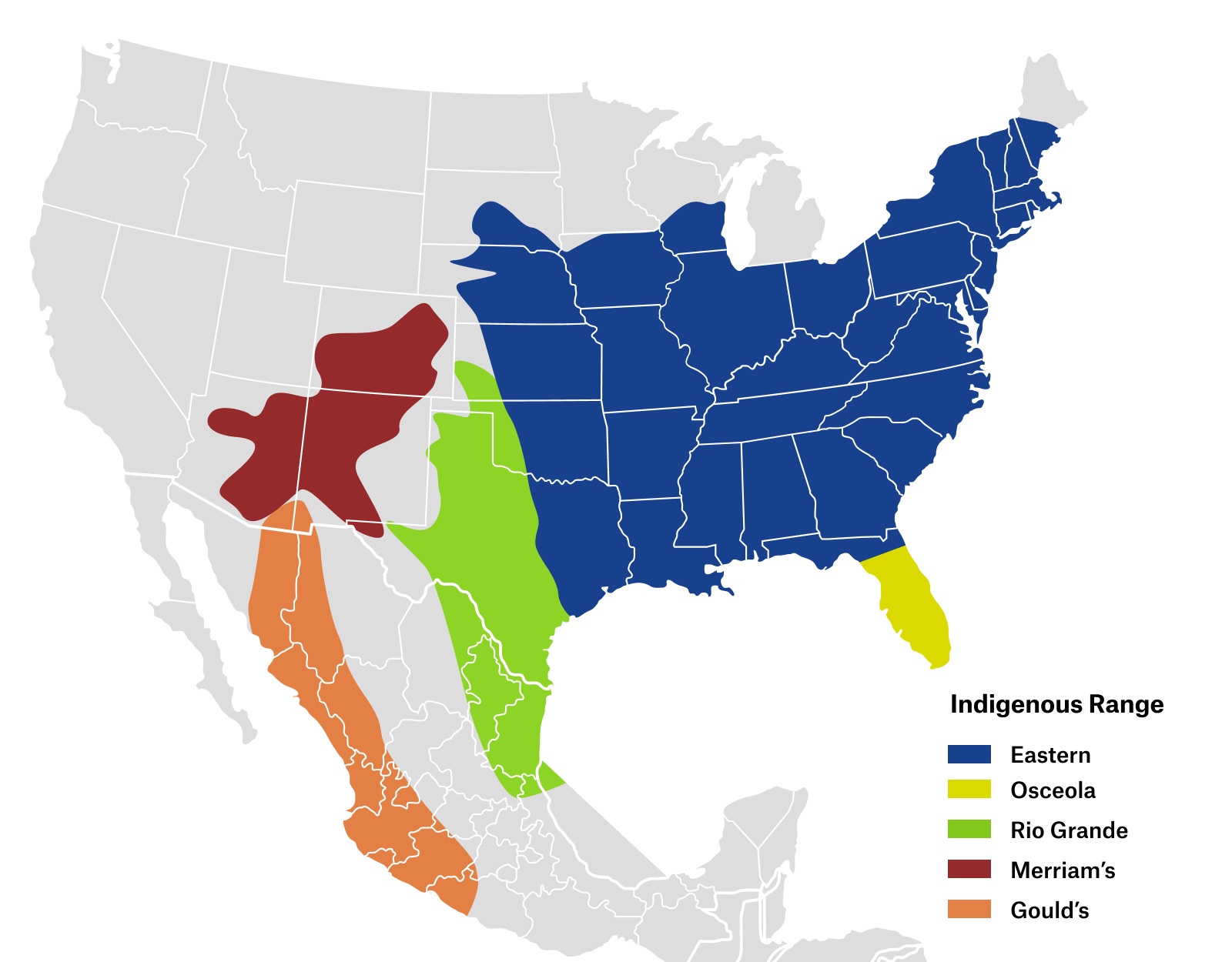
Before the arrival of European settlers, the wild turkey was a bird of staggering abundance, with an estimated 10 million individuals spread across the continent.1 They were a vital food source for Native American cultures and a symbol of the untamed wilderness. They were, however, not one homogenous population. They were five distinct subspecies, each uniquely adapted to its region of North America.2
- The Eastern wild turkey (Meleagris gallopavo silvestris): The most numerous and widespread, this bird ranged from New England to the Mississippi River. Known for its deep, resonant gobble and the chestnut-brown tail feather tips, it is the largest and heaviest of the subspecies.
- The Osceola or Florida wild turkey (M. g. osceola): Found only on the Florida peninsula, this bird is leaner and has longer legs to navigate swamps and prairies. Its plumage is darker with less white barring on the wings, and it is considered by many to be the most difficult subspecies to hunt.
- The Rio Grande wild turkey (M. g. intermedia): Native to the arid plains of Texas, Oklahoma, and northeastern Mexico, the Rio is distinguished by tan-colored tail feather tips. It is adaptable and resilient, and it can be found in the brushlands and river corridors of the region.
- The Merriam’s wild turkey (M. g. merriami): A creature of the mountains, the Merriam’s inhabits the ponderosa forests of the West. Its tail feathers have snow-white tips, and its gobble is considered the weakest of the subspecies.
- The Gould’s wild turkey (M. g. mexicana): A large bird with a limited range in the mountainous regions of northern Mexico and southern Arizona and New Mexico.
Historically, these subspecies were found in what are now 39 states.3 The explosive growth of a young United States spelled disaster, and unregulated market hunting and deforestation for agriculture and timber eviscerated turkey populations.4 By the arrival of the 20th century, the turkey had disappeared from 18 of its original states. By the 1930s, the population had crashed to 200,000 birds remaining in the most remote and inaccessible pockets of habitat.5 The wild turkey had become a ghost.
An Incredible Recovery
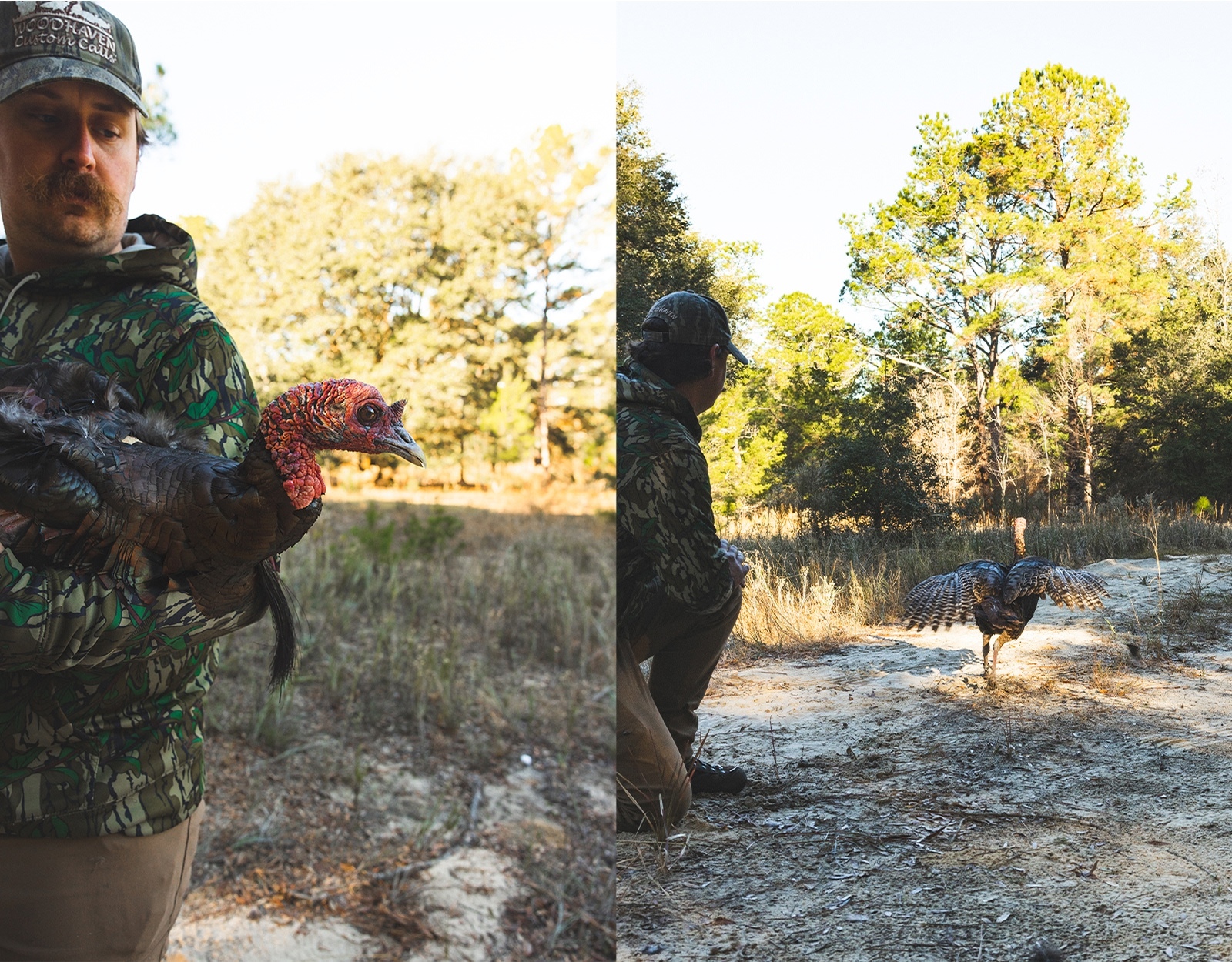
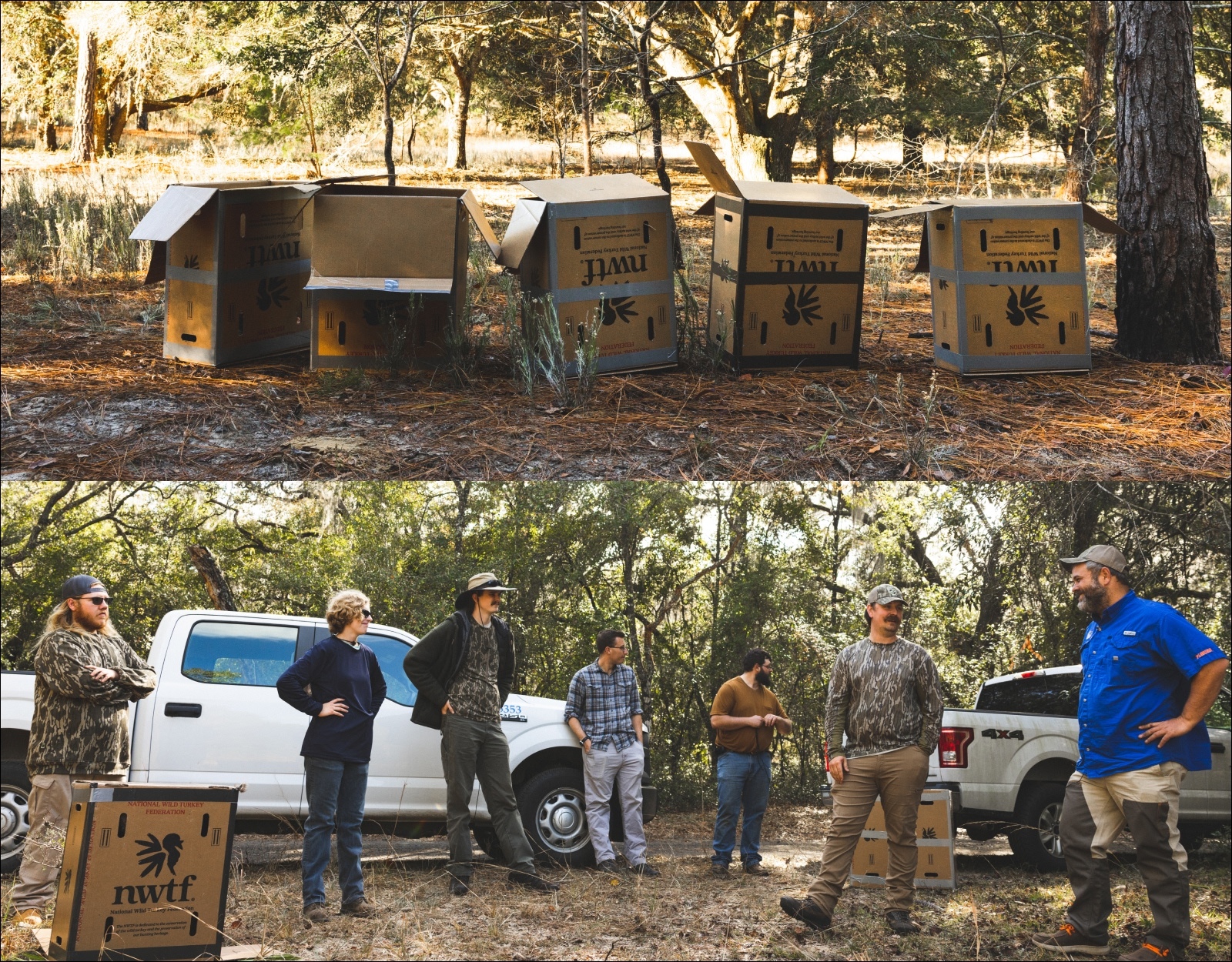
The return of the wild turkey is a landmark in wildlife management and was driven by state agencies and the National Wild Turkey Federation (NWTF), which was founded in 1973. Today, the NWTF is the leading voice in wild turkey conservation, and the organization maintains an interest in the subject of hybridization and contributes funding to wild turkey research of all types.6 Early attempts at restoration, however, were disastrous failures. For decades, state agencies supplemented wild populations with pen-raised birds.7 These birds lacked the instincts to survive. They were oblivious to predators, could not effectively forage for food, and often hosted diseases that threatened both their own ability to survive and the existing wild populations.
The breakthrough came in the 1950s with the introduction of the cannon net, a tool that allowed biologists to safely and efficiently capture wild birds, thus launching the Trap and Transfer Era.8 The strategy was simple: capture wild, genetically sound birds from a healthy population and relocate them to areas of suitable but empty habitat. It worked. States where turkeys had been absent for a century echoed with gobbles once again.
This success, however, sparked the process of hybridization. The individuals and agencies working on relocation were simply focused on restoring turkey populations. They weren’t concerned with maintaining the genetic purity of any particular subspecies. While the hand of man played a dominant role in this process, hybridization can also occur naturally where ranges overlap.9 As populations grew and territories met, interbreeding became inevitable.
The Hybrid Zone and Its Impacts
Hybridization is a natural occurrence in areas where the geographic ranges of subspecies meet.10 However, the large-scale, man-made relocation of the wild turkey has dramatically expanded these areas. Today, states like Kansas and Nebraska are well-known for their huntable populations of Eastern-Rio Grande and Eastern-Merriam hybrids, respectively. In the West, Merriam’s and Rio Grandes frequently interbreed. Research on wild turkey hybridization is taking place in university research labs and state agencies throughout the country, and Dr. Mike Chamberlain’s Wild Turkey Lab at the University of Georgia’s Warnell School of Forestry and Natural Resources might be the most prominent voice on the subject.
The question of whether this is good or bad is simply a matter of perspective. From a purely ecological perspective, the main risk is the dilution of genetic traits. Each subspecies is the product of millennias-long adaptation to specific environments. The long legs of the Osceola are an advantage in Florida’s wetlands, for example. Blurring these genetic lines could, in theory, reduce the fitness of a population in a distinct habitat. However, hybridization might also introduce hybrid vigor, creating a more resilient bird.
Mixing birds from different subspecies would produce hybrid vigor, which is a positive thing. Hybrid vigor can increase genetic diversity, which makes populations more rigorous and less susceptible to environmental factors such as habitat alterations or loss.
Dr. Mike Chamberlain, UGA’s Wild Turkey Lab
From a management perspective, hybrid birds are not a problem. A turkey is managed as a turkey, regardless of its genetic makeup.11 The main goal of ensuring a healthy, sustainable, and huntable population is met whether the bird is a pure strain or a hybrid. In fact, a 2002 genetic study found that while most subspecies are distinct, the Eastern and Osceola subspecies are so similar that they form a single genetic unit.12 Maybe the lines we draw aren’t as clear as we think.
We typically don’t set up regulations differently at the subspecies level. Exceptions here include the Gould’s subspecies in Arizona and New Mexico and the Easterns and Rio Grandes in Texas, where harvest regulations are subspecies-specific.
Dr. Bret Collier, Louisiana State University
Why Hunters Care
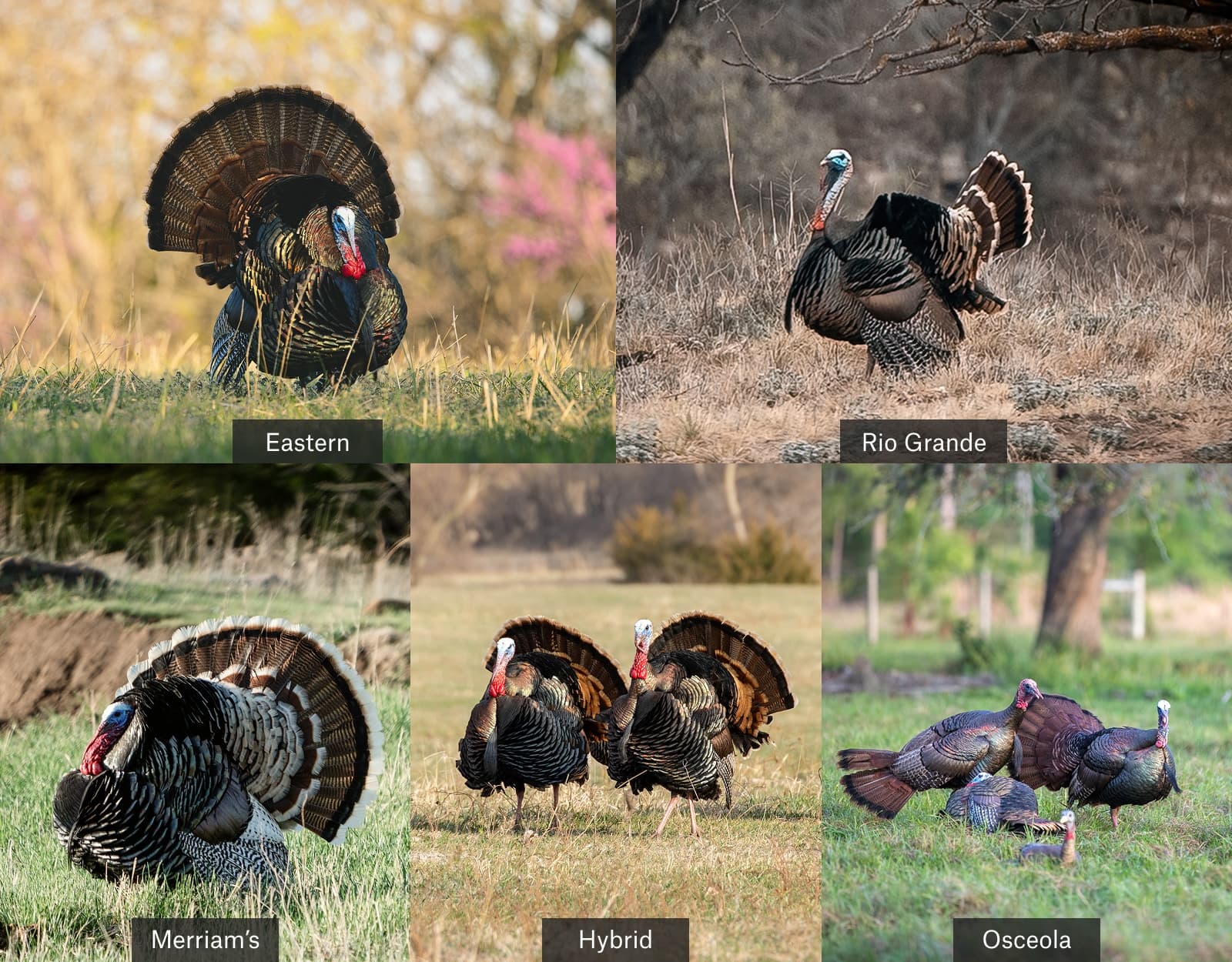
For many hunters, the issue of hybridization boils down to one thing: the Grand Slam. This coveted achievement, recognized by the NWTF, requires that a hunter harvest one of each of the four main U.S. subspecies (Eastern, Osceola, Rio Grande, and Merriam’s). Hybrids complicate this quest.13
So, how can a hunter identify a hybrid? The answer lies in identifying a combination of mismatched traits:
- Tail Fans: This is the most common indicator. A hybrid might carry a tail fan with feather-tip colors that do not match the region or look unusual. This alone would not indicate hybridization, however, as variations in plumage do exist naturally.
- Wing Barring: The ratio of black-to-white barring on the primary wing feathers differs between subspecies. The Osceola has dark wings with very little white, while the Merriam’s displays more white.14 A hybrid might show a pattern that doesn’t match the bird’s location.
- Gobble: This is the most subjective distinction. The Eastern has the strongest gobble, but the Rio and Merriam’s are higher-pitched and more “warbly.”15 A bird that looks like an Eastern but gobbles like a Rio might be a hybrid.
Ultimately, it can be nearly impossible to identify a hybrid without a genetic test, and hunters can participate in this research through wildturkeyDNA, a project conducting genetic research on the wild turkey. Variations occur within a single subspecies, so what appears to be a hybrid may not be.16 But for a hunter who doesn’t have the Slam on the mind, the question is far less important. A hybrid turkey is every bit as wary, challenging, and wild as its pure-strain ancestors. It is still a product of the wild and always a worthy prize.
Folks traveling to areas in pursuit of a particular subspecies must understand that, depending on the area you’re hunting, you may have a high likelihood of encountering hybrid birds because of the sources used during restoration. Does that matter? I would offer that it shouldn’t at all. A wild turkey is a wild turkey, and they’re all to be cherished. The opportunity to hunt them, be amongst them in the spring woods, and, if you’re lucky enough, to win the game and harvest one—well, this turkey hunter says that’s all that matters. What subspecies it is or whether it’s a hybrid of multiple subspecies seems largely irrelevant to me.
Dr. Mike Chamberlain, UGA’s Wild Turkey Lab
A Living Legacy
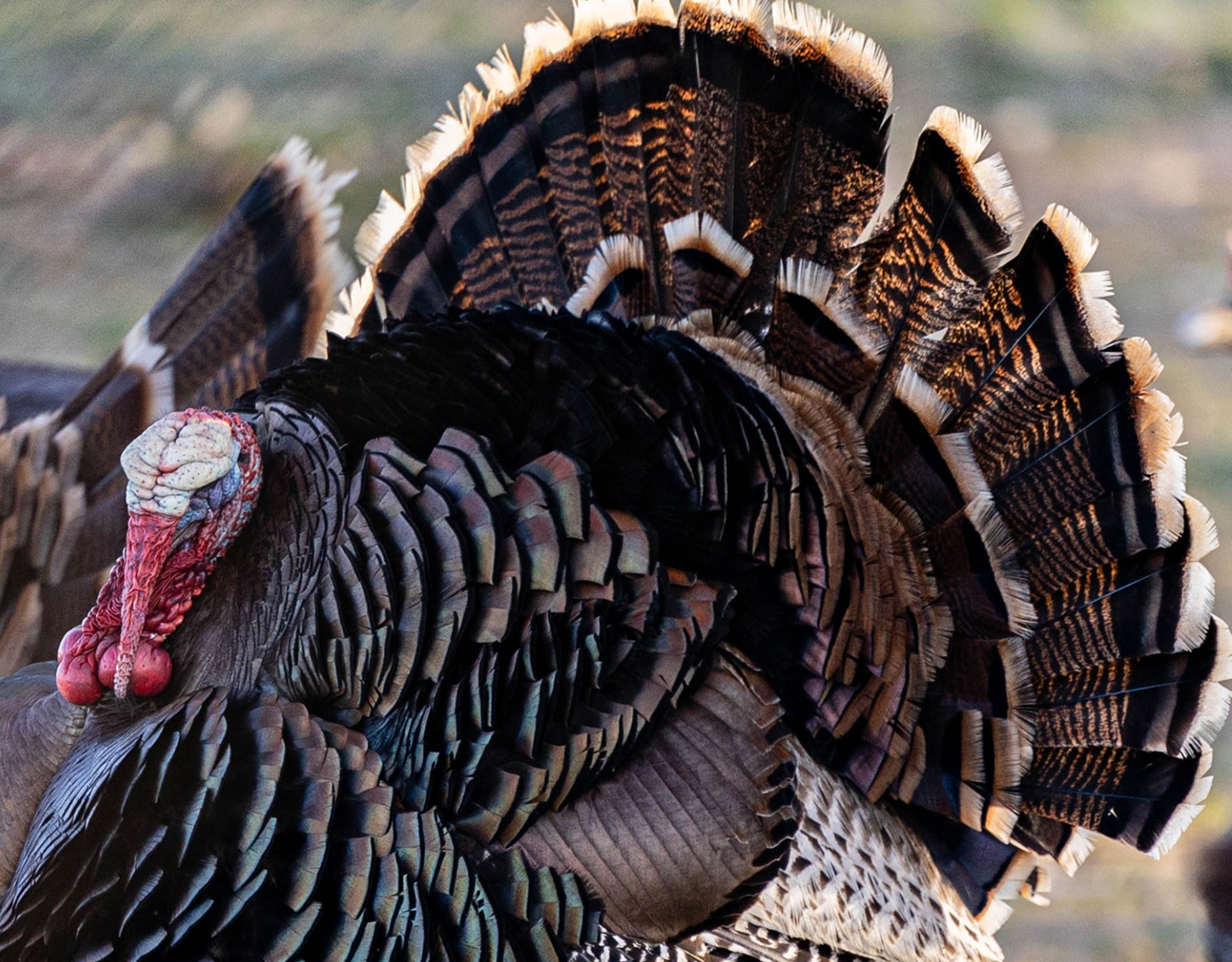
The wild turkey that roams the continent today is a living testament to the power of conservation. The hybrid turkey is simply a symbol of the complicated nature of recovery, and it reminds us that when we intervene in nature, even with the best of intentions, the results can be complex and unexpected.
For today’s turkey hunter, though, that bird at the edge of the field isn’t a problem to be solved or a genetic puzzle to unravel. Whether its tail is tipped with the brown of the deep woods of the South, the white of the western mountains, or an odd mix of both, it is a wild turkey. It is a ghost that has returned from the precipice, and its gobble, roaring across a spring landscape, is the sound of a success story.
Frequently Asked Questions
Wild turkey hybridization occurs when a bird from one subspecies interbreeds with an individual from another. The resulting offspring, a hybrid, can display unique plumage and other characteristics from both subspecies.
Hybridization occurs where the geographic ranges of subspecies overlap. This occurs naturally and where relocated birds from one subspecies interbreed with those from the native population.
To an extent, yes. Through examination of the tips of the tail feathers and barring on the primary wing feathers, identification is possible. Additionally, the tone and strength of the gobble can be an indicator. However, certainty can only be obtained through genetic testing.
This is a question you can only answer for yourself. For the most particular hunter, a hybrid bird might not count. For others, it is only the pursuit that matters. Either way, success is nothing more than our individual definitions.
Our favorite resource is Dr. Mike Chamberlain’s Wild Turkey Lab. For any questions about the species, this is the place to start your research.
Citations
1 https://conservationfrontlines.org/2025/07/how-conservation-brought-wild-turkeys-back-across-america
2 https://www.nwtf.org/content-hub/know-your-wild-turkey-subspecies
3 https://enfilade18thc.com/wp-content/uploads/2012/11/bulletin_14.pdf
4 https://www.iowadnr.gov/media/6998/download?inline
5 https://conservationfrontlines.org/2025/07/how-conservation-brought-wild-turkeys-back-across-america
6 https://www.nwtf.org/our-impact/research
7 https://www.iowadnr.gov/media/6998/download?inline
8 https://portal.ct.gov/-/media/DEEP/wildlife/pdf_files/150thAnniversary/SCOPE125thAnniversarypdf.pdf
9 https://mossyoakgamekeeper.com/wildlife-conservation/wild-turkey-subspecies-differences-between-each
10 https://wildturkeylab.com/what-subspecies-did-you-just-harvest
11 https://wildturkeylab.com/what-subspecies-did-you-just-harvest
12 https://pubmed.ncbi.nlm.nih.gov/11972754
13 https://www.onxmaps.com/hunt/blog/hybrid-turkey-hunting
14 https://www.nwtf.org/content-hub/know-your-wild-turkey-subspecies
15 https://mossyoakgamekeeper.com/wildlife-conservation/wild-turkey-subspecies-differences-between-each
16 https://wildturkeylab.com/what-subspecies-did-you-just-harvest