While Merriam’s may not have the longest beards or the loudest gobbles, they’re the least wary of the wild turkey subspecies and make their home in some of the most mountainous states. This makes hunting them, at times, a physical challenge. Merriam’s can grow nearly as tall as the eastern, but they don’t typically weigh as much, topping out around 20-25 pounds.
Current population estimates suggest there are roughly 335,000 Merriam’s wild turkeys across their combined range in western states, reflecting a relatively robust but not uniformly dense population.
Merriam’s Wild Turkey (Meleagris gallopavo merriami)
Merriam’s turkeys are birds of the Mountain West, most commonly found in ponderosa pine forests and higher-elevation terrain across the Rockies and Black Hills. They’re known for striking white or cream-colored feather tips on the tail and lower back, giving them a lighter appearance than other subspecies. Gobblers typically weigh around 18–25 pounds, with most adults in the 20–22 lb range. Merriam’s rely on mature pine stands for roosting and adjacent meadows or burns for feeding and strutting. Seasonal elevation shifts are common, with birds moving downslope as snow recedes in spring. Their range overlaps with vast tracts of public land.
Quick Facts
- Range: Rocky Mountains, Black Hills, portions of the Southwest.
- Habitat: Ponderosa pine forests, mixed conifer, mountain meadows.
- Weight: 18–25 lbs.
- Key Traits: Bright white tail feather tips.
- Access: Strong public land opportunity in many states.
Top States for Merriam’s Wild Turkeys
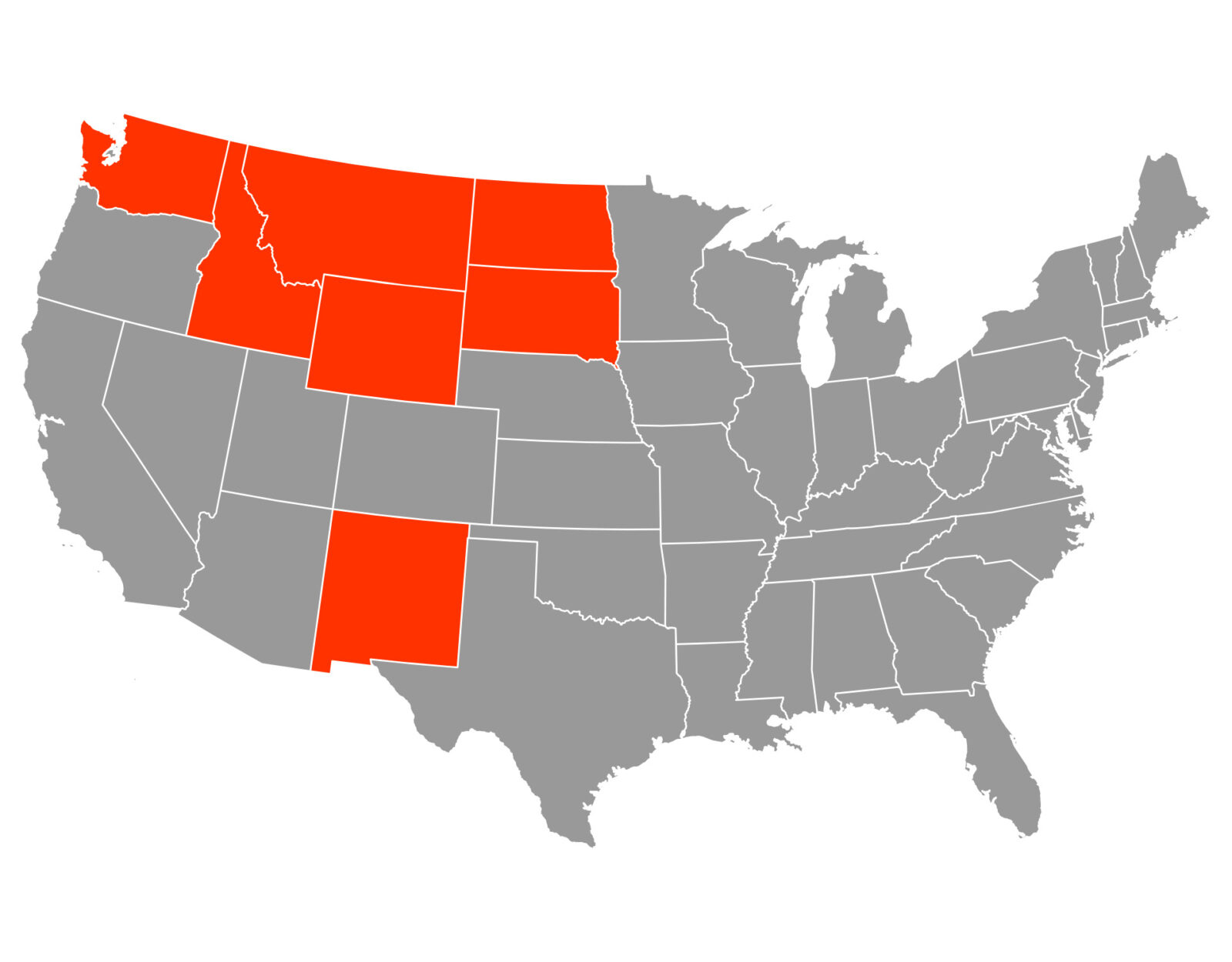
Idaho
High Hunter Success Rates
Hunters find turkeys in Idaho, boasting an approximate 50% success rate every season. Hunters can also bag up to two turkeys through a general tag and one extra tag. But, Idaho’s turkey country is no walk in the park. Steep and rugged terrain serves up a challenge. And while Merriam’s rule the roost in terms of population (about 90% of all the turkeys in the Gem State), there are some huntable populations of Rio Grandes in the Idaho Falls and Boise regions. In all. Idaho has about 50,000 turkeys.
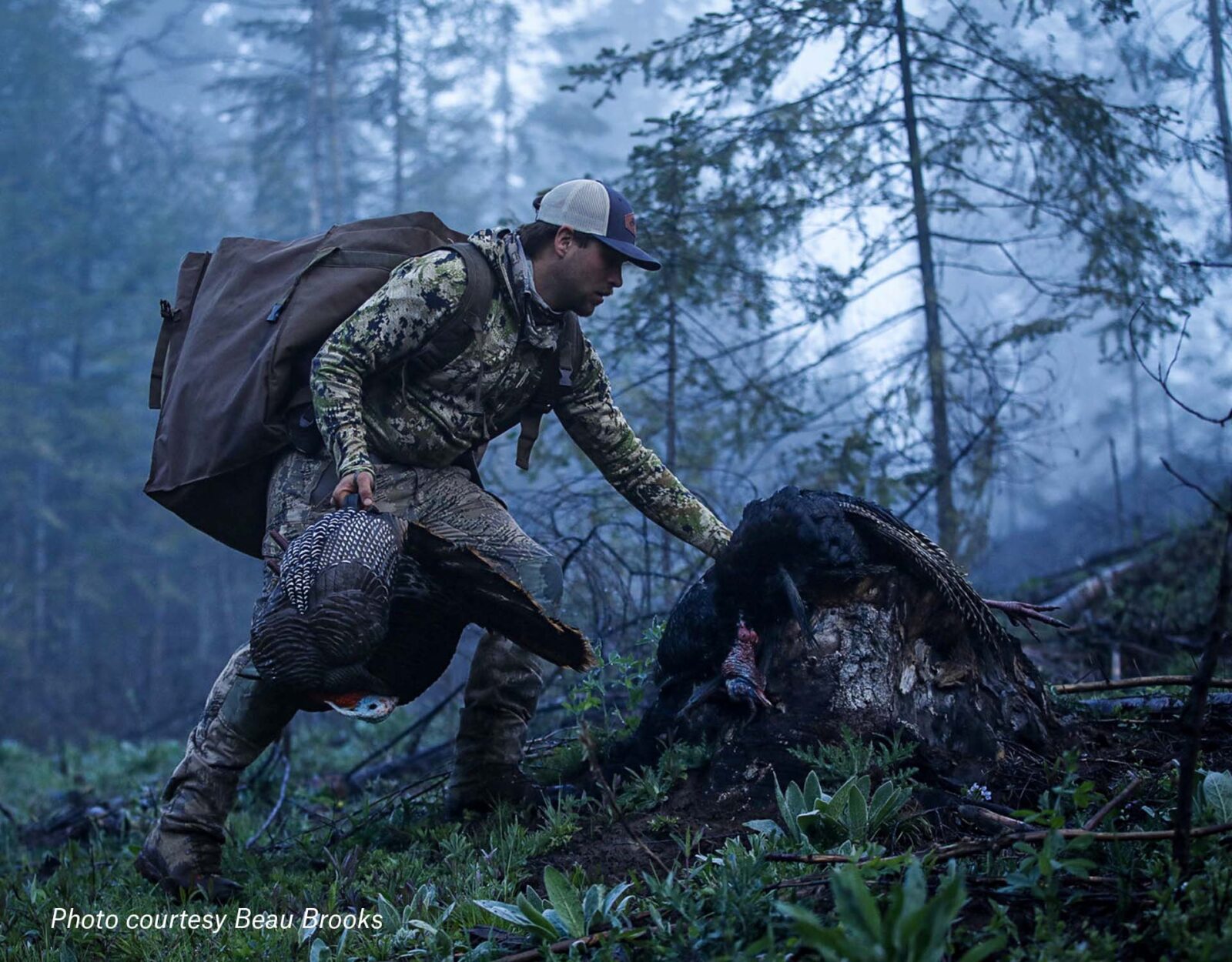
Local Intel: Higdon Outdoors’ Beau Brooks
“When I think of turkey hunting in Idaho, I think of the panhandle of northern Idaho. It is a beautiful, thick forest, and turkeys use the logging roads as their highways to navigate the landscape. There are turkeys across the whole state of Idaho, but there are some draw areas in the south and definitely a smaller population. If you’re planning a trip to Idaho, look into getting a permit to hunt the various logging companies’ lands. It will unlock a lot of great turkey habitat. Many of the areas I have hunted turkeys in Idaho, I didn’t expect there to be birds in because they were so thick. But they are there and very vocal. Plan to navigate the public land that borders private land because the majority of the birds stick close to those borders.
“Idaho, weather-wise, can change like the flip of a switch. One day it could be snowing, and the next day it could be 70º and sunny. Plan to walk a lot because the logging companies gate most of their roads, and keep the box call close to locate birds across the expansive valleys. Plan for setups on logging roads to find success calling in a gobbler. Idaho is one of the most beautiful places to hunt turkeys in the country, and keep an eye out for morel mushrooms, they’re everywhere.”
Take a closer look at Idaho:
ID Turkey Regs

10% Off Turkey Chokes
Save 10% on Rob Roberts services and chokes as an onX Hunt Elite Member.
Montana
A Place for Public Land Hunts
Montana has an abundance of habitat types in which you can find turkeys. They stretch from true mountain birds in the central and western portions of the state to craggy, canyon country filled with sage further east, and what locals refer to as ‘yardbirds’ in many of the state’s small-acre farm parcels throughout the state’s river bottoms. With fewer than 30,000 turkey hunters in the state and tens of millions of public acres accessible to the public, finding solitude is certainly doable. That said, like most of the western states, particular pockets of the state have the best turkey habitat, hold the most turkeys, and still draw plenty of hunting pressure.
Merriam’s are the predominant subspecies throughout the state, but there are pockets of true easterns in the northwest part of Montana, and some hybrids bleed throughout the western quarter of Montana. Opening on April 15, the first couple weeks of the season are a weather battle. Birds are gobbling, but to see temperatures in the teens and even single digits is not uncommon.
Local Intel: Skull Bound’s Jana Waller
“Montana is not only a state that provides great public land hunting opportunities for elk, deer, bear, antelope, and other big game species but it has bountiful turkey hunting as well. I’ve been very fortunate to hunt turkeys in a number of different states and ecosystems, even notching a Texas Rio tag to complete my turkey grand slam in 2019, but I’d have to say that run-and-gun turkey hunting in the Missouri River Breaks of Montana is really hard to beat.
“There are different areas of Montana that provide vastly different experiences when it comes to turkey hunting on public lands. I live in the Bitterroot Valley just outside of Missoula, where the birds tend to flock up on the river bottoms in the winter and early spring. They are often referred to as “yard birds” since they are often seen loitering in people’s yards and milling around horse pastures and backyard campfire pits. As the snow melts and the temperatures rise, the flocks often move off the river bottoms and into the mountains, making for a more exciting typical ‘cat and mouse’ style of turkey hunt where calling and decoys actually work.
“I’ve headed to the central part of Montana for the past decade to partake in an annual backcountry turkey hunt with Jason Matzinger and friends. We set up tents, disconnect from the world, and spend a few days running and gunning birds, looking for sheds, and just enjoying the company of good friends in the Missouri River Breaks. The rolling hills and pockets of timber hold elk, mule deer, whitetails, and antelope, and as the coulees turn green with fresh grass, we typically find birds moving off the river bottoms and up into the valleys and mountains. It’s the only place I’ve ever turkey hunted where GLASSING plays a big role. If there aren’t any birds answering in the morning, we’ll sit high on a ridge and use our binoculars. We often refer to these birds as ‘cliff divers’ because they pitch from one canyon to another. It’s not uncommon to chase the faint echoes of gobbles only to find him strutting on the opposing ridge with a giant gorge in between you and the taunting tom.
“In Montana, turkey tags are over the counter, and depending on which part of the state you’d like to hunt, there are often multiple opportunities. You can get a general license good for any part of the state in both spring and fall seasons, and there are often additional tags available for either sex with any weapon in the fall. Of course, always check with the current Fish, Wildlife & Parks regulations.
“There’s no better way to break that ‘cabin fever’ than to get into the beautiful mountains of Montana in the spring for bear and turkey hunts. There’s plenty of public land opportunities, and the odds of stumbling across an elk or deer shed make it all the more exciting. Make sure to download your Offline Maps within the Hunt App before heading out, since many areas have limited cell service.”
Take a closer look at Montana:
MT Turkey Regs
New Mexico
Home to Three Subspecies
New Mexico is home to at least four subspecies: Merriam’s, Rios, hybrids, and Gould’s. This is made possible by the varied habitats found throughout the state. Much of the state is mountainous, which is where the Merriam’s will be found. However, several areas of the state are river valleys with open landscapes. This is where the Rio Grandes call home. The Gould’s are only located in one isolated area in the southwest corner of the state and are under strict management after several translocation projects, which involved moving Gould’s turkeys from the larger populations in Arizona.
Hunting Gould’s in New Mexico only takes place through tags issued by raffle and auction. This leaves the most viable option being Merriam’s or Rios. There’s a vast amount of public land in New Mexico, but if you plan on coming here to hunt for the first time, be sure to bring your hiking boots and have your Offline Maps downloaded, because whether you choose mountains or valleys, you’re likely going to cover some ground.
Local Intel: onX’s Lake Pickle
“I can remember very clearly the first time I broke day in New Mexico in the spring. The thin mountain air made it seem like I should be able to hear every gobbling Merriam’s within a 50-mile radius. To this day, I consider it one of the most beautiful places to go and hunt in the spring. One of the biggest pieces of advice I would give to someone heading there to hunt for the first time is: don’t show up expecting an easy hunt. The birds of the mountain can be finicky. They like to travel. You would be amazed at how much ground one Merriam’s gobbler will willingly cover in one day. They also, in my experience, are often spread out over a very large expanse of ground. Success out there for me usually required a whole lot of walking and prospecting with calls that could reach high volumes, like the pot call and box call.”
Take a closer look at New Mexico:
NM Turkey Regs
North Dakota
A Gem—for Residents
Turkey hunting in North Dakota offers a rugged, low-pressure experience centered in the scenic Badlands and Little Missouri River breaks, where Merriam’s turkeys roam pine-covered ridges, cottonwood bottoms, and wide-open draws. Limited-entry licensing helps manage pressure, so hunters often enjoy quieter woods compared to more heavily hunted Midwestern states.
The spring turkey season is generally reserved for residents only, though non-residents can hunt on tribal land, such as the Standing Rock Sioux Tribe reservation, which offers specific licenses for non-members.
The landscape allows for classic western-style hunting—covering ground, glassing ridge lines, and working vocal gobblers across big country—while maintaining strong spring gobbling action. With dramatic terrain, expanding turkey populations in the southwest, and the chance to pursue a true Merriam’s bird, North Dakota delivers a blend of solitude, scenery, and high-quality opportunity that appeals to both resident and traveling hunters.
Local Intel: Legends of the Wild Host Sam Soholt
“I’ve chased turkeys in several areas in North Dakota, and the range of landscapes that wild birds exist in could not be more vast.
“On the eastern side of the state, you’ll find birds where you think they would live. Riparian areas along creeks and rivers, for the most part, but you’ll also find them roosting in a small patch of trees in a farmyard. Birds can be ‘pockety’ but with so much open ground, you can typically scout by covering miles in the truck and trying to put eyes on birds strutting or scratching in ag fields along shelter belts and other cover.
“Out west, you might end up chasing turkeys in big clay river breaks country, which is incredibly fun.
“But the resource is well-protected. Other than some reservation tags, non-residents cannot hunt turkeys in North Dakota. And even as a resident of the state, it is a lottery, and many of the units take a point or two to draw. However, that limitation has done a great job in creating a quality experience when in the field.
“The population of birds seems to be growing, and with mild winters and limited snow cover the last two years, birds had a great chance to survive and thrive.
“Springs this far north in the country can either be beautiful and warm, or you might be hunting in snow as the season ends in mid-May, so it’s important to not get too frustrated if you’re not calling a bird in through blooming wildflowers or dandelions on opening day.”
Take a closer look at North Dakota:
South Dakota
Get Ready to Walk
Sharing the Black Hills region with Wyoming, turkey hunting in South Dakota is all about public land opportunities. Three-quarters of the 2.3 million acres described as the Black Hills are public lands mostly managed by the U.S. Forest Service. However, the state did recently reduce the number of non-resident turkey tags for the 2025 and 2026 seasons, so it may be harder to grab a tag if you don’t live here.
Of course, anytime you can gain access to the private lands along the river bottoms, you’ll find dense turkey populations. The Merriam’s found here were introduced to the state from New Mexico in 1948, 1950, and 1951, with the introduction of a grand total of 29 birds. These birds clearly found the habitat suitable for success as South Dakota now has well-established turkey populations across much of the state.
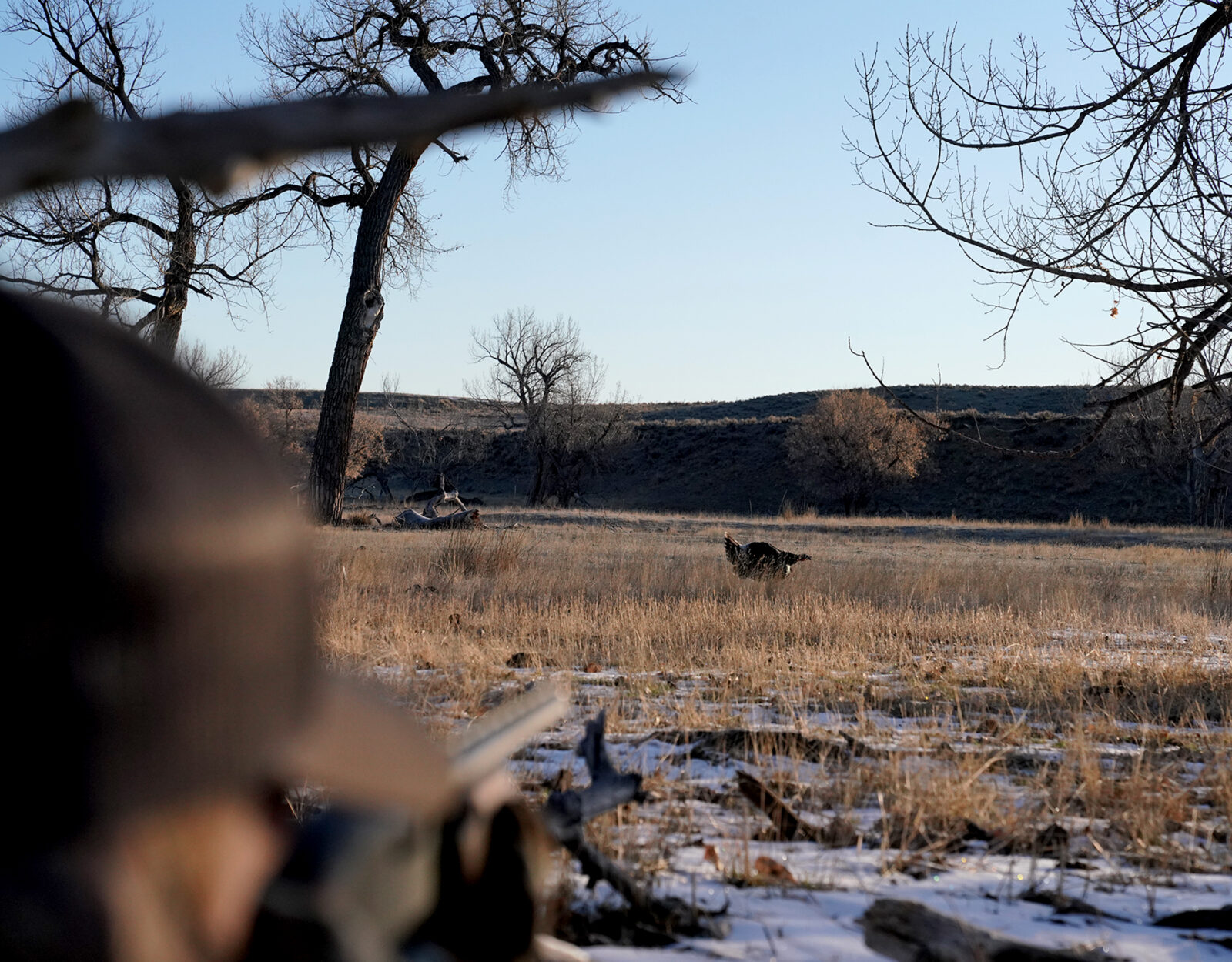
Local Intel: Bartholow Brothers Shooting’s Foster Bartholow
“Being born and raised in the Black Hills of South Dakota, I’ve been fortunate to guide others on their quest for the prestigious Black Hills Merriam’s turkey, as well as personally chase after birds in the Hills and several units throughout the state.
“One thing most hunters don’t know, is South Dakota offers opportunities to hunt several species of turkeys, including Merriam’s, easterns, and Rios. Hunting these birds all come with their own challenges, so if you’re new to the area, I suggest you fill up your truck with a full tank of gas, grab the binos, and get ready to put on the miles.
“Hunting the eastern side of the state, you’ll typically find these birds in areas with tall cottonwood trees surrounded by tree belts, cornfields, and water sources. If you have a day to scout, watch these birds as typically they have a recognizable pattern they follow.
“In my experience, the public land Black Hills Merriam’s is a dream hunt come true. With the beautiful scenery of endless pine trees and hidden meadows, hunting the 1.2 million acres of public national forest lands can test even the greatest turkey hunters the woods have seen, but getting off the beaten trail and on foot is going to give you the best opportunity for success.
“Be sure to bring your favorite turkey calls as our birds are typically wildly vocal, and try to stay at the top of the ridges when making a move on that wise gobbler. The con: with lower reported turkey numbers in the Hills and later start date, I expect these birds to see more pressure and wise up quickly.
“If you’ve hunted South Dakota before, you know the weather shifts can go from t-shirt weather one day to late-season elk gear the next. My advice: bring extra layers, gloves, and two pairs of boots. If you get a snowstorm, don’t give up… we’ve seen some of the most insane gobbling and strutting action with a half-foot of snow on the ground.”
Take a closer look at South Dakota:
SD Turkey Regs
Washington
Beauty and the Birds
Washington is an underrated but highly productive turkey state with strong populations, generous spring seasons, and abundant public land access. The state holds mostly Merriam’s turkeys in eastern Washington, especially in the pine forests and foothills of the Selkirk Mountains, Huckleberry Range, and around the Colville National Forest. There are also Rio Grande birds in parts of the southeast near the Snake River breaks.
Decades of successful trap-and-transfer efforts have established stable, huntable populations, and harvest success rates in some northeastern counties routinely rank among the highest in the West. Washington’s spring season typically opens in April and runs through May, with multiple tag opportunities in some units. The combination of accessible timbered habitat, agricultural edges, and public ground—including state lands and national forest—makes Washington a strong choice for over-the-counter opportunity and do-it-yourself western turkey hunts.
Local Intel: Higdon Outdoors’ Beau Brooks
“Washington holds a plethora of turkey hunting opportunities. From ponderosa forests and wide-open wheat fields to scrub oak mountains, Washington has incredible habitat. I’ve hunted turkeys in about every county that holds them in this beautiful state. Some areas are very thin, and some areas are very rich with turkey population.
“If you’re planning to hunt turkeys here, strap on your hiking boots and download Offline Maps because some days they can be 100 yards off the road and others they can be six miles. The largest and most condensed turkey population can be found in the northeast corner of the state on the Idaho line. This area has towering ponderosa pines mixed with agriculture and some of the most beautiful hills in the state. If you’re trying to finish a slam, you couldn’t choose a prettier place to finish it.
“Washington is also home to Rios in the southeast corner and eastern in the western half of the state. Warning to the people trying to shoot an eastern in Washington: they’re virtually nonexistent. I’ve spent my whole career looking and have never heard or seen one. WDFW has a lot of awesome turkey guides to getting started in this state, so go check out their basics to turkey hunt.”
Take a closer look at Washington:
WA Turkey Regs
Wyoming
Outfitter or Not, Give This State a Go
Known for its Black Hills region in the northeast corner of the state, Wyoming has more opportunity than most realize. With two different season start dates for different regions, you can hunt as early as April 1 in parts of the state and all the way through the end of May. As another state with multiple draw opportunities, including the Black Hills, you need to apply in January for certain tags, but over-the-counter tags are also offered in parts of the state.
Turkey densities seem to dwindle the further west you go in Wyoming, with the entire western fifth of the state not even open to turkey hunting. You’ll want to focus your efforts near major river systems throughout the state that have an abundance of mature cottonwoods for roost sites with proximity to agriculture. Though rich with public lands, much of the turkey habitat along river systems is private. Given Merriam’s are known to reside in larger groups later into the spring, this can pose a challenge if you are unable to gain access.
Local Intel: Hunt Club TV’s Phillip Culpepper
“Wyoming is the place to go with undoubtedly one of the most beautiful turkey subspecies: the Merriam’s. Years ago, I filmed deer hunts there before I ever turkey hunted it. When the day finally came to turkey hunt Wyoming, it was a dream come true. Like every state, it can have its ups and downs in terms of population, but traditionally, in places where turkeys live, it has pretty solid numbers.
“I have hunted in the Black Hills area with Seven J Outfitters, and regardless of weather conditions, you are on birds. The most frustrating thing can be nasty weather, but behind bad weather is always sunshine, and more often than not, if the sun is out, a turkey is gobbling somewhere. Be ready to walk and cover some miles, prepare for literally every weather condition, and don’t be afraid to yelp. Merriam’s have a high pitch to them, so I always love to use a slate or glass pot call or box call. Also, the higher pitch will carry further, and you will be amazed at how far you will strike a gobble on a calm day.”
Take a closer look at Wyoming:
WY Turkey Regs
Be a Better Merriam’s Turkey Hunter
onX Hunt and Mossy Oak teamed up to deliver the Turkey Academy, a series of videos that will help you become a more well-rounded turkey hunter. Check out the Turkey Academy today.
FAQs
Merriam’s wild turkeys are a Western subspecies most often found in mountainous and forested terrain, especially within ponderosa pine and mixed conifer habitats. They are known for their light, white-tipped tail feathers and generally leaner build compared to Easterns. Merriam’s have adapted to rugged landscapes—often at higher elevations—where they rely on pines and open understories for roosting and meadows or burns for feeding. Their vocal behavior and movement patterns can differ from other subspecies, which means successful hunts hinge on understanding how these birds use terrain and elevation throughout the spring.
The best Merriam’s turkey hunting typically falls in the Mountain West and High Plains, where suitable habitat spans large tracts of public land. States like Montana, Wyoming, Idaho, South Dakota, and parts of Colorado and New Mexico are consistently noted for strong Merriam’s populations. These birds favor areas with ponderosa stands adjacent to open ridges, meadows, and burns. The landscape’s complexity and elevation changes reward diligent scouting and strategic positioning, especially on less-pressured forest service lands.
Partial to ponderosas and higher elevations, you’ll find Merriam’s in western states, often concentrated around the Rocky Mountains. Montana, Idaho, Wyoming, South Dakota, and New Mexico are key states.
Merriam’s turkeys are strongly associated with ponderosa pine forests, mixed conifer stands, and mountainous terrain. Research from western state agencies shows they prefer areas with mature roost trees (often large pines), adjacent meadows for strutting, and open understories that allow visibility and predator detection.
They often inhabit elevations from 4,000 to over 8,000 feet, depending on season. In spring, birds may move downslope as snow recedes and green-up begins. Public land opportunity is often strong in Merriam’s country due to the presence of USFS and BLM lands.
Successful Merriam’s turkey hunting combines smart scouting, terrain awareness, and adaptive calling. Because these birds often range widely across rugged country, pre-season research should focus on identifying key habitat breaks—such as where timber meets meadow or open ridges—using topographic and habitat layers in onX Hunt. During the hunt, positioning yourself near travel corridors and calling sparingly from natural funnels often produces the best results, as Merriam’s can be more terrain-oriented and less vocal than Eastern birds. Watching wind, sun angles, and bedding areas can also help you get ahead of these highly mobile turkeys.