Want to plan a turkey trip? Here is your definitive guide.
Turkey hunting is enjoyed by around two million hunters every spring across 49 U.S. states. Today, thanks in large part to the National Wild Turkey Federation (NWTF), committed state biologists, and independent researchers, we have over 6.7 million wild turkeys. It’s true we’re still witnessing declining turkey populations in some states, but there are notable optimistic trends in many other states around the country.
This means there are still birds to go after, no matter where you live, including pursuing the Turkey Grand Slam, which is made up of the four main wild turkey subspecies (easterns, Rio Grandes, Merriam’s, and Osceolas). Whether you want to complete a turkey slam or just bag a big eastern, this comprehensive guide helps you plan your next and best turkey hunting adventure.
We put together this list to highlight the best turkey hunting states for each subspecies with on-the-ground support from our onX Ambassadors who pursue longbeards with fervor.
How To Use This Guide To Plan a Turkey Hunt
To get the most out of this guide, we recommend starting with the turkey subspecies you plan to target, then narrow down the region and state(s) that are feasible for you to hunt.
With this turkey hunting guide, you can compare top states, learn tried-and-true tactics from our Ambassadors, and review key regulations for the upcoming season. It’s the perfect jumping-off point for your next turkey hunt.
Where To Hunt Turkey
This guide covers 34 states across the U.S. to help you plan your spring turkey hunts. From Alabama to Oregon, all six subspecies, including Gould’s and hybrids, are profiled to help you weigh all available turkey hunting options. Click on a region below to view that subspecies, or find our full list of best turkey hunting states further down.
Wild Turkey Subspecies
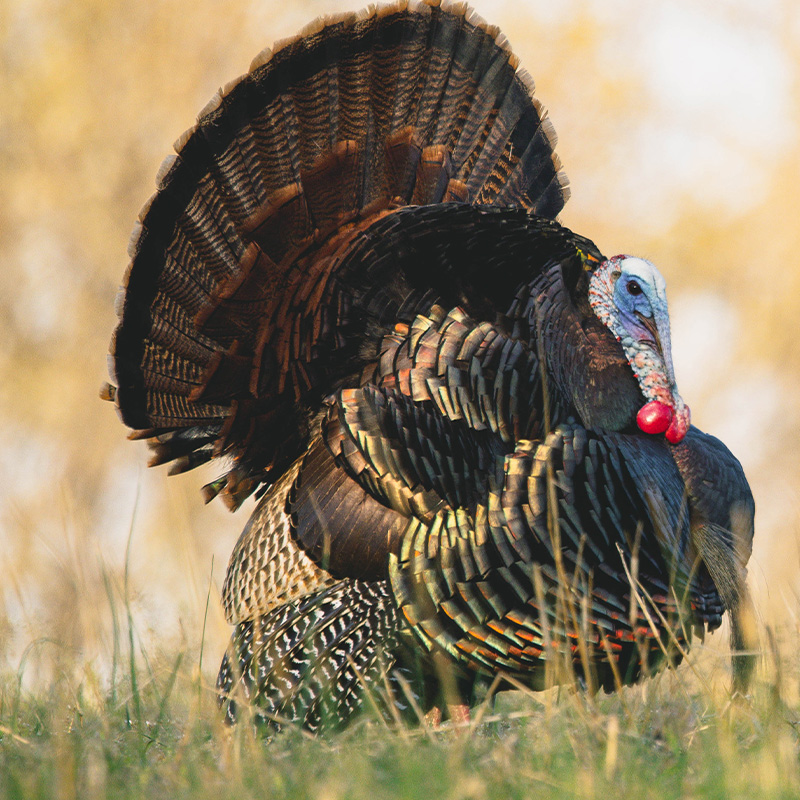
Eastern
The eastern subspecies of wild turkey is the largest, most widespread of all the turkeys found in North America. Toms can measure up to four feet tall at the top of their fanned tails and weigh up to 30 pounds.
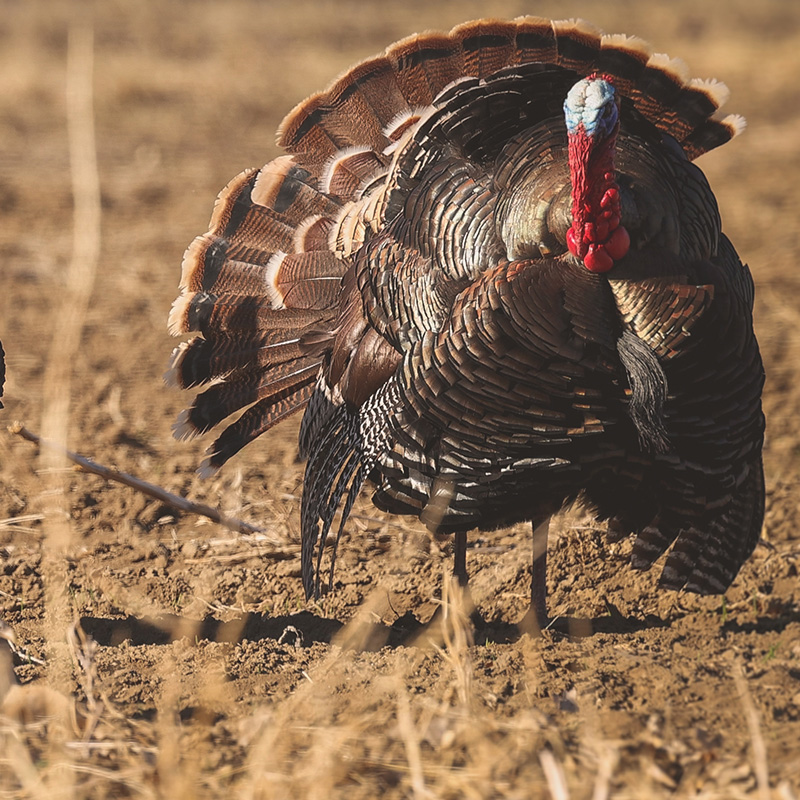
Rio Grande
The Rio Grande wild turkeys are primarily found in the desert regions of Texas, Oklahoma, and Kansas. Some have been transplanted to California, Oregon, and Hawaii.
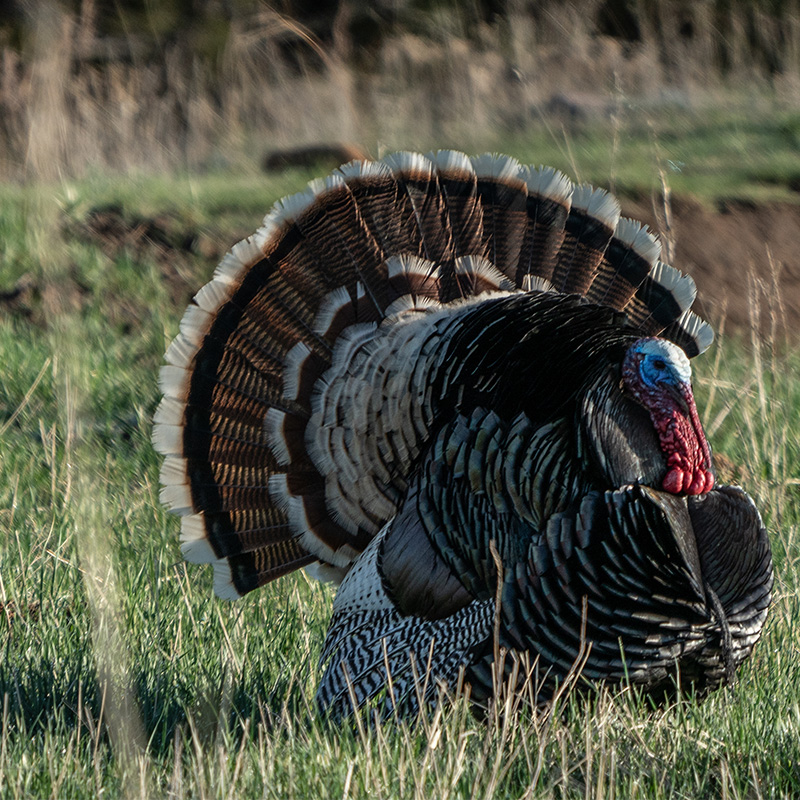
Merriam’s
Making its home in mountainous western states, the Merriam’s subspecies of the wild turkey is easy to distinguish by its white-tipped tail feathers. It can grow to be nearly as tall as the eastern, up to four feet, but toms don’t get quite as big, weighing in around 20-25 pounds on average. Merriam’s tends to have the weakest gobble, shortest beard, and is the least wary of the turkeys.
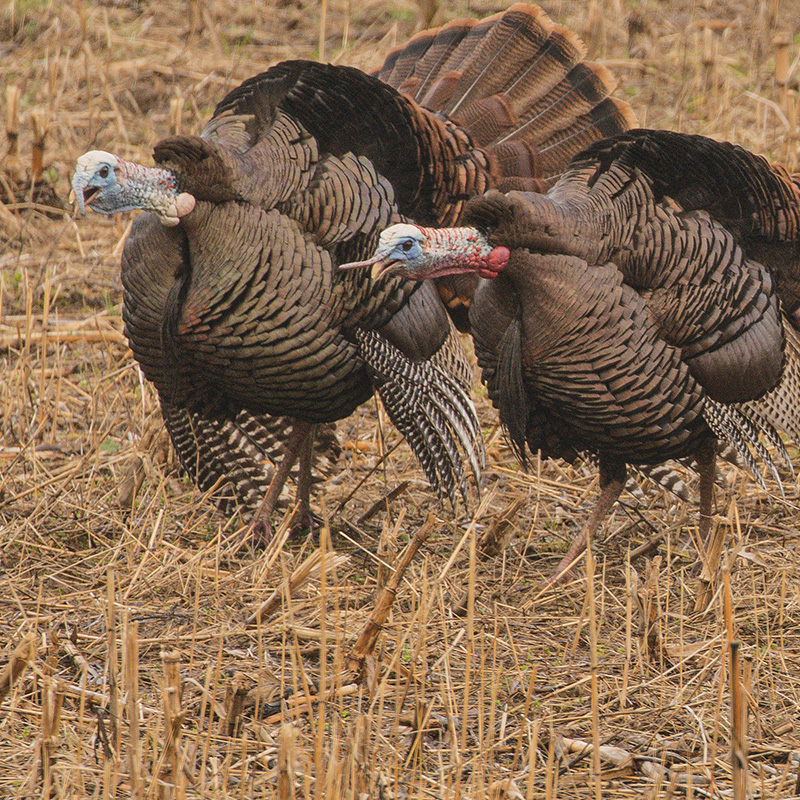
Hybrid
The hybrid wild turkey occurs when two other subspecies (i.e. eastern, Merriam’s, Rio Grande, etc.) interbreed. The most common place to find hybrids is where two or more home ranges for different turkeys intersect. As noted below, Kansas and Nebraska are states home to multiple subspecies, so hybrid populations are common. Hybrids are not written about or studied as much compared to the five subspecies, but their numbers are increasing, so why not understand them better so you can hunt them better.
Osceola
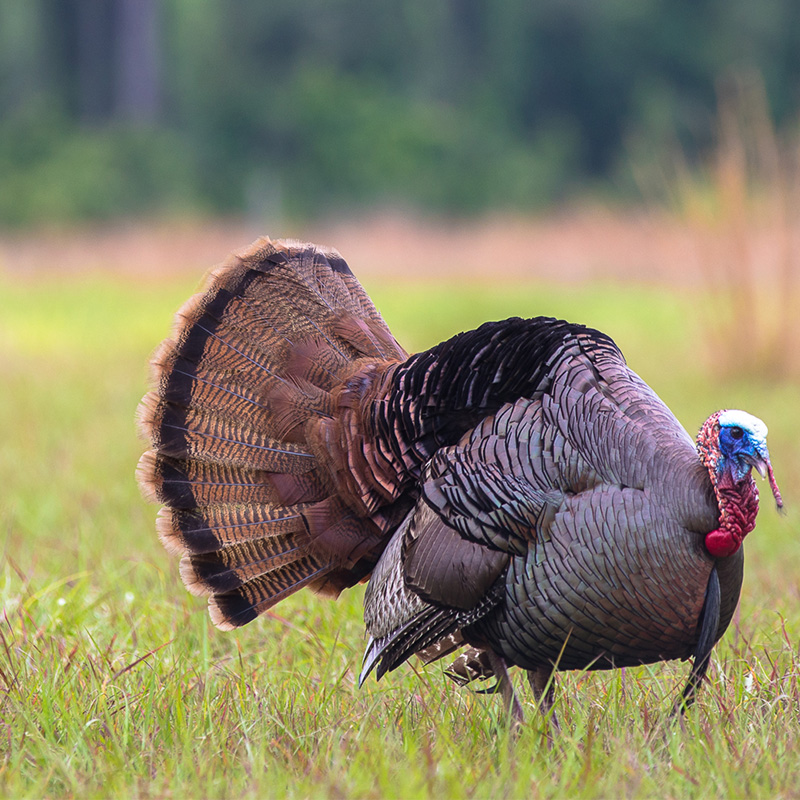
The Osceola makes its home in one place: Florida. This turkey subspecies is the most aggressive and the longest-spurred of all North American turkey. Though similar in appearance to eastern, the Osceola wild turkey (named after the famous Seminole chief) is smaller and darker colored.
Gould’s
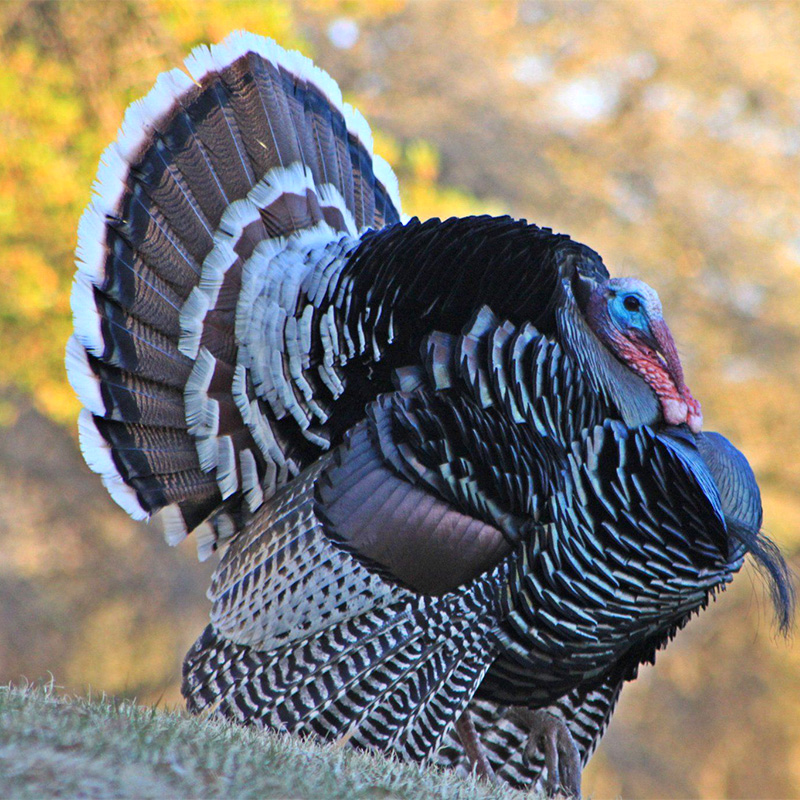
The Gould’s wild turkey has a limited range and has been the least studied of all the North American turkeys. Appearing in parts of Arizona and New Mexico (but primarily living in Mexico), the Gould’s is a large subspecies, nearly as big as the eastern.
Best Turkey Hunting States
Eastern Wild Turkey
Rio Grande Wild Turkey
Merriam’s Wild Turkey
Hybrid Wild Turkey
FAQ
The best place to hunt turkeys depends on the subspecies you want to pursue. This list isn’t comprehensive, but will get you started in your planning:
- Eastern turkeys: Missouri, Tennessee, Kentucky, Pennsylvania.
- Rio Grande turkeys: California, Oklahoma, Oregon.
- Merriam’s turkeys: Montana, New Mexico, North Dakota (Residents Only), South Dakota, Washington
- Osceola turkeys: Florida (only place they exist).
- Gould’s turkeys: Arizona and New Mexico (only place they exist outside of Mexico).
- Hybrid: Kansas and Nebraska.
States with strong populations, long seasons, and public land access tend to offer the best overall opportunities.
According to the National Wild Turkey Federation (NWTF) and state wildlife agencies, turkeys thrive where nesting cover, brood habitat, mast production, and winter roosting areas overlap.
- Easterns favor large hardwood forests interspersed with openings, logging cuts, and agricultural edges. States in the Midwest and Appalachia often offer a strong mix of habitat and public land.
- Rio Grandes are closely tied to riparian corridors, creek bottoms, and agricultural fields in more open country.
- Merriam’s inhabit ponderosa pine forests and mountainous terrain, often at higher elevations.
- Osceolas prefer Florida’s flatwoods, palmetto prairies, and cypress systems.
- Gould’s occupy mountainous, oak-pine habitats in the Southwest.
The United States is home to five distinct types of wild turkeys: the eastern, Rio Grande, Merriam’s, Osceola, and Gould’s. North America’s sixth turkey subspecies, the ocellated turkey, lives in Mexico and parts of Central America. There’s also the hybrid wild turkey, which is a catch-all name for turkeys resulting from different subspecies reproducing.
Technically, the five U.S. types are subspecies of the wild turkey (Meleagris gallopavo). They are genetically distinct regional variants that evolved based on geography and habitat.
Roosting birds, setting up near roosts, using calls (mouth, box, slate), and employing decoys all have their place in your turkey strategy. Head to onX Hunt’s and Mossy Oak’s Turkey Academy to learn when to use which techniques.
Florida’s spring turkey hunting season typically runs in March and April, with dates varying by zone. Florida is the only state where Osceola wild turkeys are found, and many hunts require permits, limited-entry draws, or private land access. Always check current Florida Fish and Wildlife Conservation Commission regulations before hunting.
Florida divides the state into zones with staggered openers to distribute pressure and protect breeding chronology. South Florida seasons typically open earlier than northern zones because breeding activity begins earlier in the peninsula’s subtropical climate.
Each wild turkey subspecies is known for certain characteristics, including specific coloring or barring on their tail fans and wings, their size, their behavior, and their gobbles. In certain areas, hybridization is increasingly common, resulting in less certainty over which subspecies a hunter has harvested. In these cases, a genetic test may be the only true way to discern the subspecies. A few common physical characteristics include:
- Easterns: Chestnut tips on their tail fans and white and black bars on their wings.
- Rios: Tan tips on their tail fans with equal amounts of white and black barring on their wings.
- Merriam’s: White tips on their tail fans with more white barring on their wings.
- Osceolas: Dark brown tips on their tail fans and predominantly black wings.
- Gould’s: Similar to Merriam’s in appearance, Gould’s also have white tail fan tips, but they’re a larger bird with longer legs and have more of an iridescent body.