Every duck camp, or at least every group of duck hunting buddies, seems to have or know at least one guy who can spin just about every weather condition possible into the narrative that he wants.
I remember duck hunting in my mid- to late-teens, crossing paths with an old-timer hunting on the same piece of public as me, and that guy could come up with the most off-the-wall reasons why whatever current weather conditions we had were going to make the ducks come our way.
He would say things like, “I’ve seen rain like this really make them fly,” or “ya know, I’ve seen it dry like this before, and I think those ducks really like to get out and search for more water. It can be really good.” Or, probably my personal favorite: “Heat don’t bother ’em. Heck, they’re in the water all the time.”
Now whether or not that man meant what he was saying, or if he just knew he could mess with a couple of young and green duck hunters, I’ll never know.
What I do know is, more often than not, that man was carrying a stringer of ducks when I saw him, and that what specific types of weather make ducks fly or move about has been an ongoing debate for years.
TL;DR: Rain doesn’t move ducks; falling barometric pressure, dropping temperatures, and north to northwest wind at eight to 15 mph do. The best duck hunting follows major cold fronts and winter storms, which force whole populations off freezing water and snow-covered fields, with the heaviest new arrivals typically showing up 12–24 hours after a front passes. Calm, stable high-pressure stretches can look pleasant but give ducks no reason to move, which is why a nice-looking day can still be a slow one.
Is Rain Good or Bad for Duck Hunting?
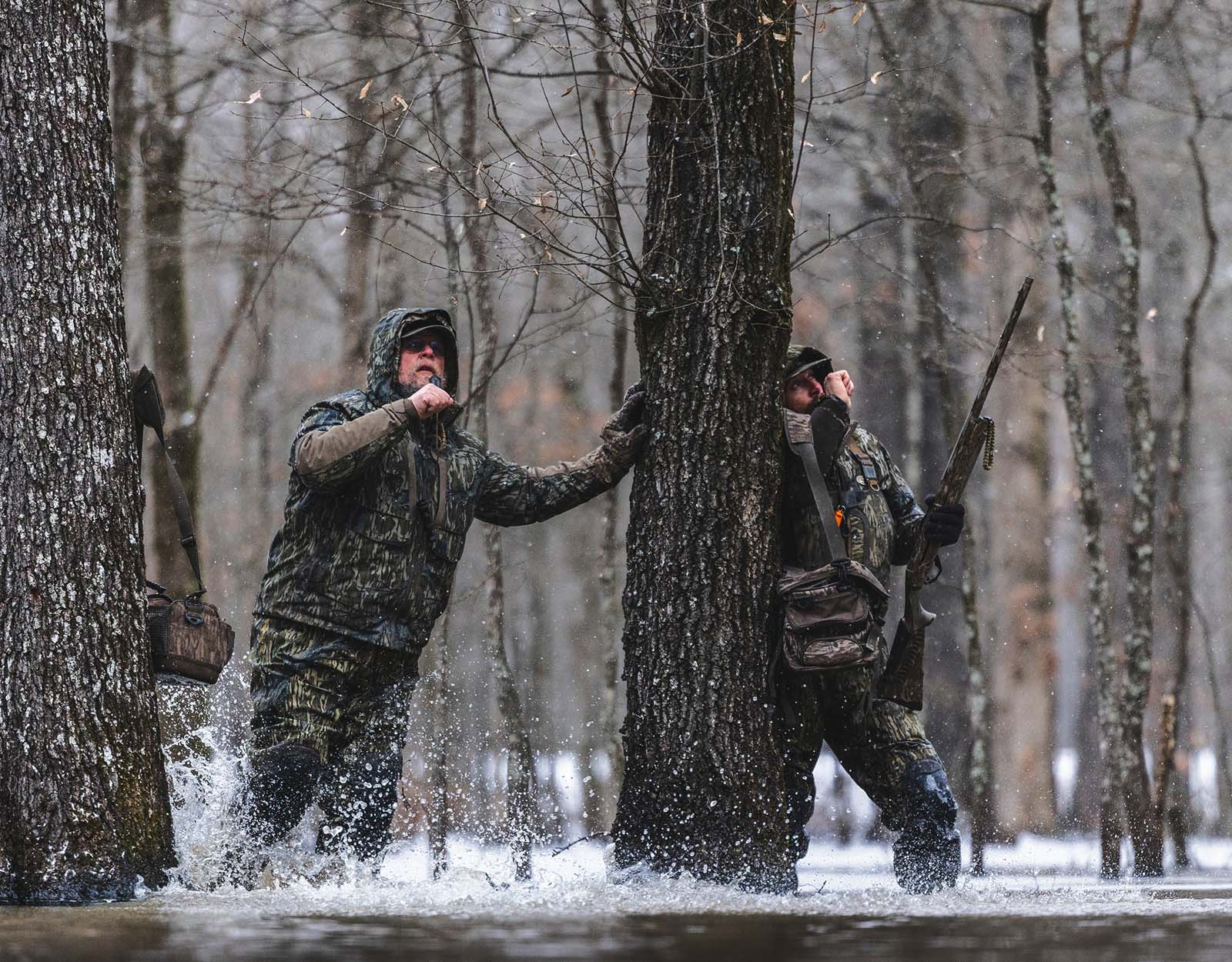
Duck hunters have been blaming and also crediting the weather for as long as there have been duck calls and folks that blow them too loud, and I doubt that will ever change. However, we can all do ourselves a big favor and get a better understanding of what different weather conditions do to ducks.
So, let’s get the rain question out of the way, because it’s the easy one. Ducks don’t mind rain. They never have. They’re built for it, all the way down to the oil they work into their feathers with their bill. That’s not a mystery worth chasing. The real mystery is what actually gets a duck up off the water in the first place. What should make a duck hunter look at the weather forecast and decide a morning is worth taking off of work to hunt? Countless hunters and biologists have spent years chasing that answer.
Rain Doesn’t Move Ducks. Weather Systems Do.
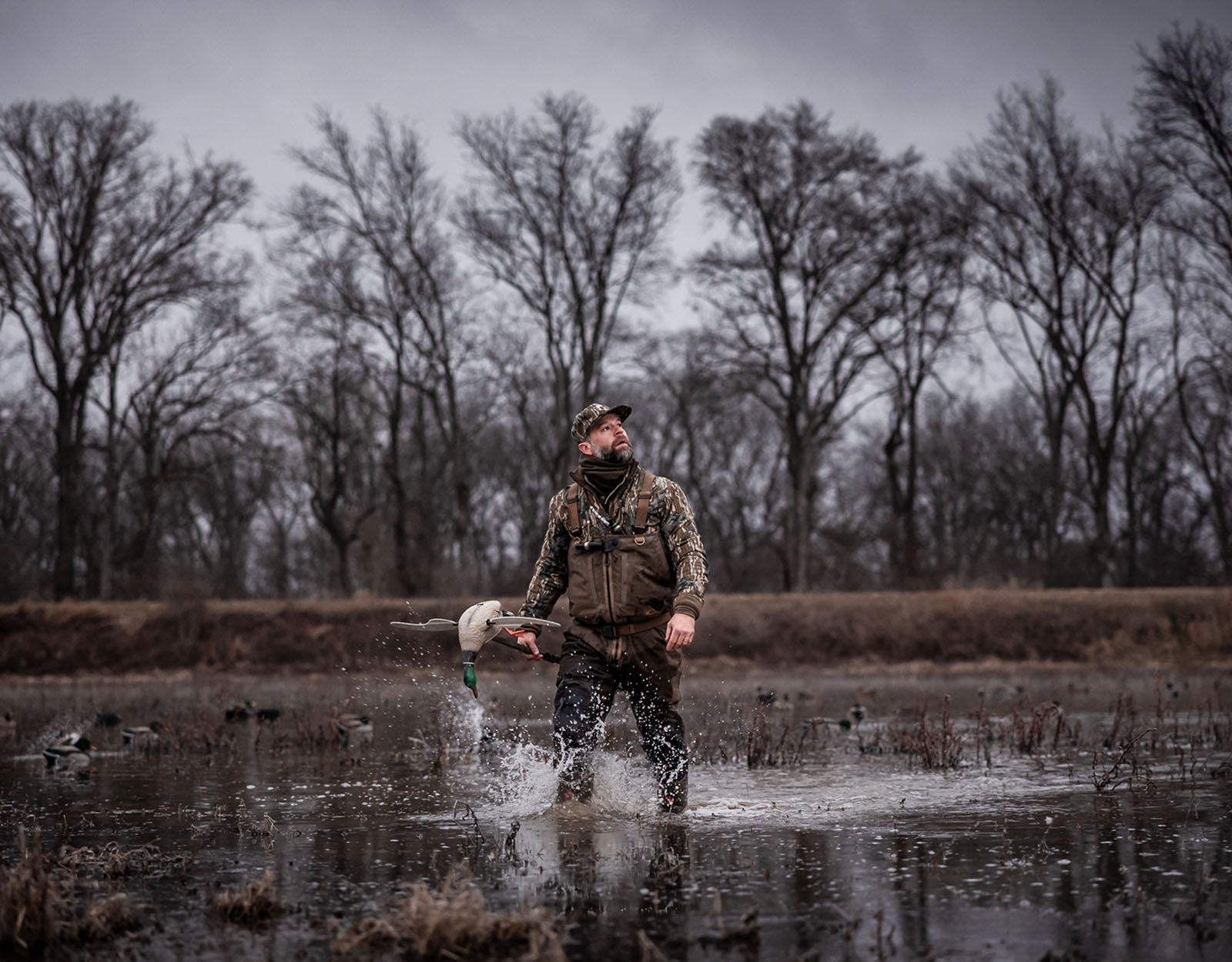
Duck movement comes down to four things working together: pressure, temperature, wind, and the big system-level events, winter storms and major cold fronts, that stack those three things on top of each other at once. Any one of the first three on its own tells you something useful. But when a genuine weather event rolls through and drags pressure, temperature, and wind along with it, that’s about as close to a sweet spot as waterfowl hunting gets.
Take last January, for example. I know several folks, myself included, who were having a subpar season in the lower portion of the Mississippi Flyway. However, a late winter storm rolled through just north of us, and it was like a switch had been flipped; the last 10 days of duck season for us were what dreams are made of. The right weather can make all the difference, plain and simple.
When a genuine weather event rolls through and drags pressure, temperature, and wind along with it, that’s about as close to a sweet spot as waterfowl hunting gets.
Barometric Pressure
Start with pressure, because old-timers have sworn by the barometer since before anybody carried a smartphone into the duck woods. Down in southwest Louisiana, a USGS researcher tracked wintering pintails and found something that surprised him. Those birds would sometimes fly north, back toward an approaching cold front, and the trigger appeared to be a sharp drop in barometric pressure, likely because that’s when the heavy rain shows up behind it. Now, that’s one study on one species in one region, and it’s not gospel for every duck on every flyway. But it tells you birds are wired to react to a falling barometer, not just to whatever the sky happens to look like that day.
As a front approaches, the pressure starts sliding down, and hunters and biologists alike have long noticed a burst of feeding activity in local birds right around that time, like they’re topping off the tank before conditions turn. Once the front’s through and the pressure starts climbing back, that’s usually the signal that cold air has taken over behind it.
Temperature
If pressure is the trigger, temperature might be the hammer, and this is where the science gets specific enough to make a biologist nod along. A wildlife researcher out of Mississippi State built something called a Weather Severity Index. It’s essentially a running scorecard of how much cold, snow, and ice are stacking up in an area, which translates directly to how hard it is for ducks to find open water and food. And it’s not one-size-fits-all. Mallards are tough, and it typically takes a real, sustained cold snap before they’re forced to move. Pintails crack sooner, needing less severe conditions before they head south. Wigeon are tougher still, willing to sit through some genuinely brutal weather before packing up. That’s not folklore, that’s a peer-reviewed index biologists actually use to predict duck abundance shifts across the Mississippi and Atlantic Flyways.
In practical terms, it means a mild fall can feel like watching paint dry even with birds sitting comfortably just north of the state line, because nothing’s forced them to move yet.
Wind
Moving on to wind. It is likely argued about in every duck hole in America, right alongside what call to blow and which camo pattern works best. Direction matters first, and this part’s just physics. Ducks land into the wind, same as an airplane, because it lets them slow down and control where they set their feet. That tells you which way birds will be coming from and where they’ll want to put down, which ought to shape where you build your blind and how you place your decoys. Most hunters want that wind at their back or cutting across, so incoming birds are facing them the whole way in.
Beyond the basics, fall duck migration in most of the country tends to run on north to northwest winds, paired with falling temperatures and the high pressure that settles in behind a front. And, that’s the pattern Ducks Unlimited’s own research has documented for decades.
There’s a reason those winds matter so much, too. Most waterfowl arrive just behind a front rather than ahead of it. This is a key point. I can remember several times going out duck hunting the day a big front or winter storm hits, and more often than not, the hunts on the days right after are much better.
Wind speed is a factor as well, and this next part leans more on what guides and hunters have learned in the field than on any published study. A moderate wind, somewhere around eight to 15 miles an hour, tends to work in your favor. It ripples the water so decoys look alive instead of sitting motionless on the water like a plastic decoy, and it covers the little mistakes in a setup that would otherwise stick out. Push much past the mid-20s for any length of time, and ducks start looking for shelter, tucking into timber, sheltered sloughs, and the backs of big lakes, and staying there.
Dead calm and overcast days bring their own set of headaches, since flat water makes decoys look about as convincing as lawn ornaments, and birds can pick apart anything that looks the least bit off.
The Best Weather for Duck Hunting: What To Look For
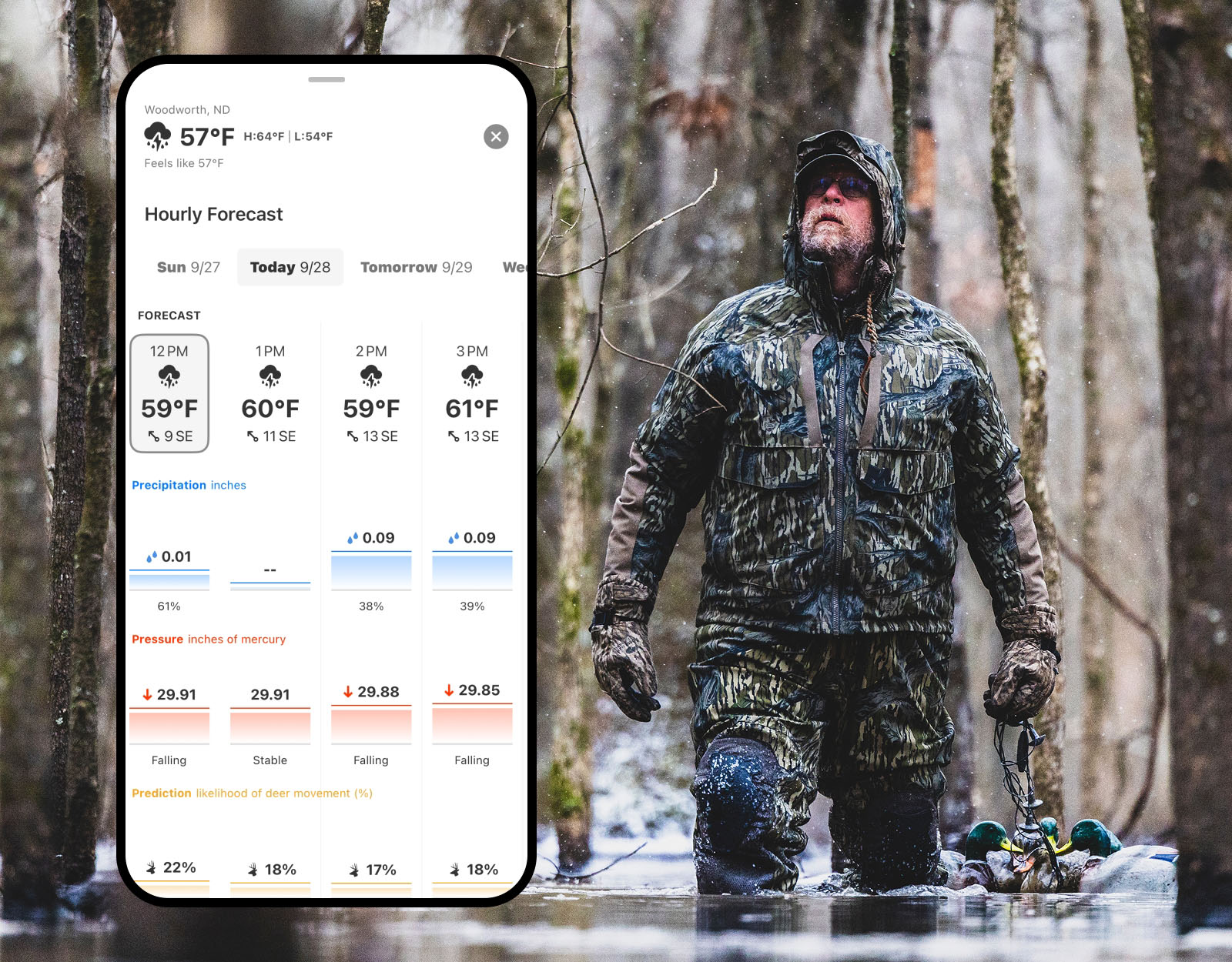
This brings us to our fourth and final factor in duck movement, and it’s the one that separates an ordinary good hunt from the kind of hunt duck camps talk about for years afterward: the significant weather event.
A standard winter front might nudge the barometer, drop the temperature a few degrees, and swing the wind around for a day or two. However, a genuine winter storm or a major cold front, the kind that plows down out of Canada and buries half the upper Midwest in ice and snow, does all three at once. Pressure craters, temperatures fall off a cliff, and wind swings around to the north and holds there, sometimes for days on end.
Those are the events that don’t just nudge local birds into feeding harder, they force whole populations off water that’s freezing solid and out of fields that just went under snow. That’s when you hear about hunters a state or two south suddenly having more ducks than they know what to do with, almost overnight.
Those big events are also the ones that show up clearly on a long-range forecast, which is exactly why they’re worth tracking a few days out instead of just checking the weather the morning of. A strong system a thousand miles north of you today can be the reason your decoys are covered up in birds by the weekend, and that’s a fact worth remembering.
Put all four together, pressure, temperature, wind, and the size of the system driving them, and you’ve got the recipe for a genuinely good day in the duck hunting woods.
A barometer on the move. A temperature drop severe enough to actually push birds. A wind that’s swung around to the north or northwest, in that perfect eight to 15mph range. And somewhere behind all of it, a real weather event, not just a passing sprinkle, doing the heavy lifting. None of it requires the sky to look a certain way. It’s a transition, and the hunters who consistently fill straps are the ones reading the transition instead of waiting on a day that just looks nice.
Which brings up the part that’ll drive any duck hunter half crazy. Plenty of mornings check every box, right wind, right cold, forecast reading like a textbook, and the sky stays empty anyway. Usually there’s a reason, even when the forecast can’t show it to you.
Sometimes there just aren’t new birds around yet. Weather can only move ducks that already exist somewhere within reach, and if this year’s migration hasn’t gotten to your neck of the woods yet, no local forecast conjures birds out of thin air. Other times, nothing has actually pushed them, and a long stretch of mild, stable weather gives birds no reason to leave a spot where they’re comfortable and have plenty of cover and food.
The best weather for duck hunting is never about one single factor. It’s about multiple factors lining up to create one chaotic but perfect symphony of duck migrating conditions. It’s about pressure, temperature, wind, and the big systems that push all three at once, all of it working together, telling a story if you know how to read it. Learn that combination instead of just glancing out the window every morning, and you’ll find yourself out there on the mornings that actually matter, every single time.
FAQs
Yes. Rain itself rarely grounds ducks. Wind direction and speed, along with the pressure trend around a front, matter more than precipitation.
Some push ahead of a front as pressure drops, but the heaviest new arrivals and best hunting typically follow 12–24 hours after it passes.
North to northwest winds behind a front typically signal the strongest fall movement.
A stable high-pressure stretch with no front nearby can look pleasant but give birds no reason to move.