You either didn’t get out for bow season or haven’t yet filled the elk tag in your pocket. Now it’s late season, and for weeks other hunters have laid down their boot tracks and smothered their scent on some of your favorite public hunting land. With the rut being over and some of the rifle season behind you, it’s come down to now-or-tag-soup. What do you do?
The advice to get you within 40 yards of a screaming bull in September won’t help you find pressured, post-rut bulls. You need a new game plan, and onX Ambassador Randy Newberg has the best one.
“In September, elk are going to be very vocal. They’re going to be wherever the best feed is, because that’s where the cows are,” says Randy Newberg. “Well, come November, the cows and the bulls have dispersed again. And now the bulls are in what I call sanctuary mode.”
Here is how Newberg finds them.
Meet the Expert: Randy Newberg
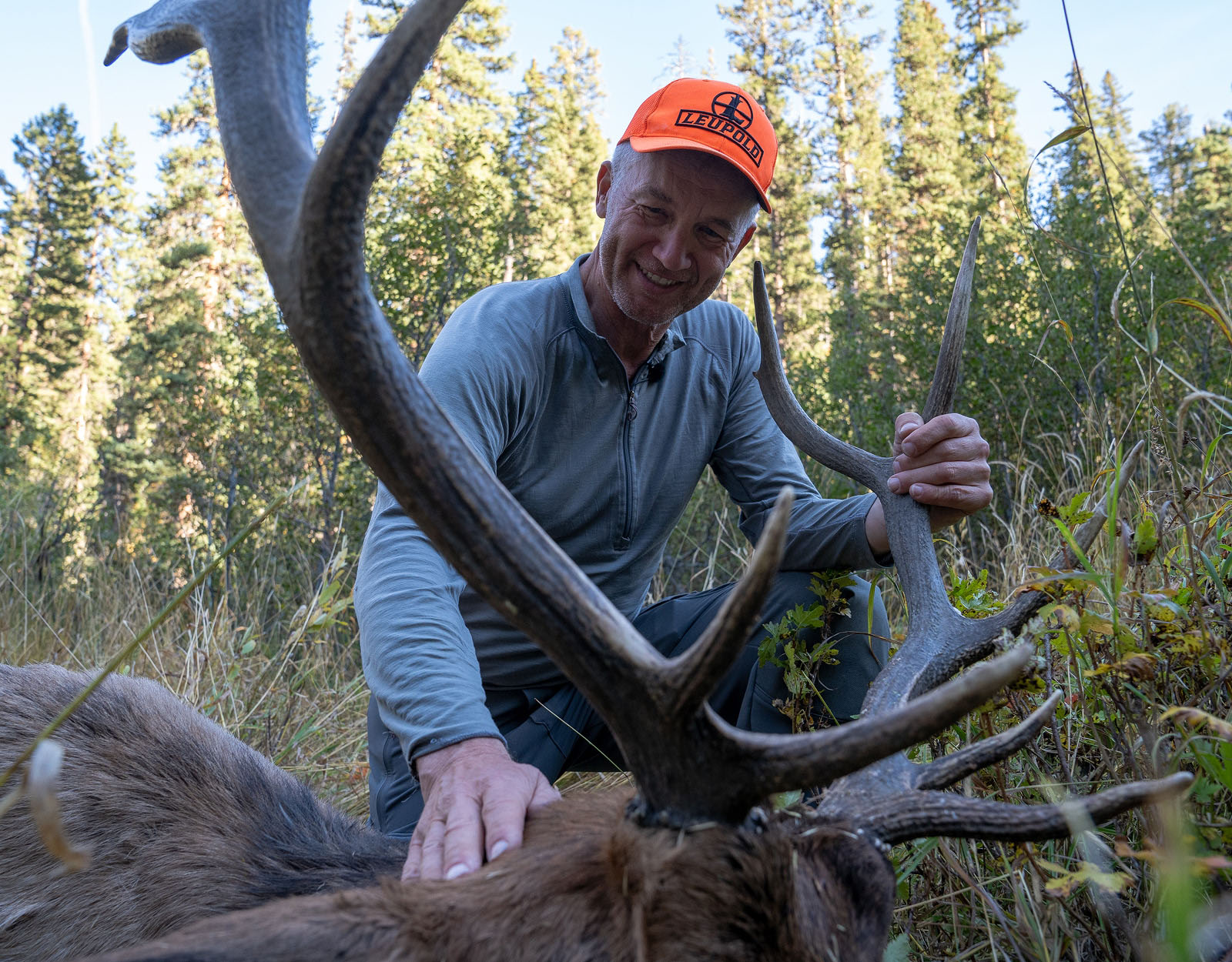
Randy Newberg built a career hunting on public lands that anyone can buy a tag for. He hunts over 100 days a year, films most of it, and has been sharing his secrets since 2009. In short, he’s been turning do-it-yourself Western hunting into something a working person can plan on a laptop. You can catch all his latest hunting adventures on his Fresh Tracks YouTube channel.
“If I have any place of elk hunting where I feel comfortable, it’s hunting public land late season elk,” he says.
Why Does Late-Season Rifle Elk Hunting Require a Different Strategy?
Because the animal’s priorities flip, and everything follows from that.
“Food and breeding become the lowest priority in November,” Newberg says. “Getting through hunting season is the primary goal for an elk.” Bulls know what time of year it is. “They’ve heard gunshots go off. They’ve had the whiff of people.”
The Herd Comes Apart
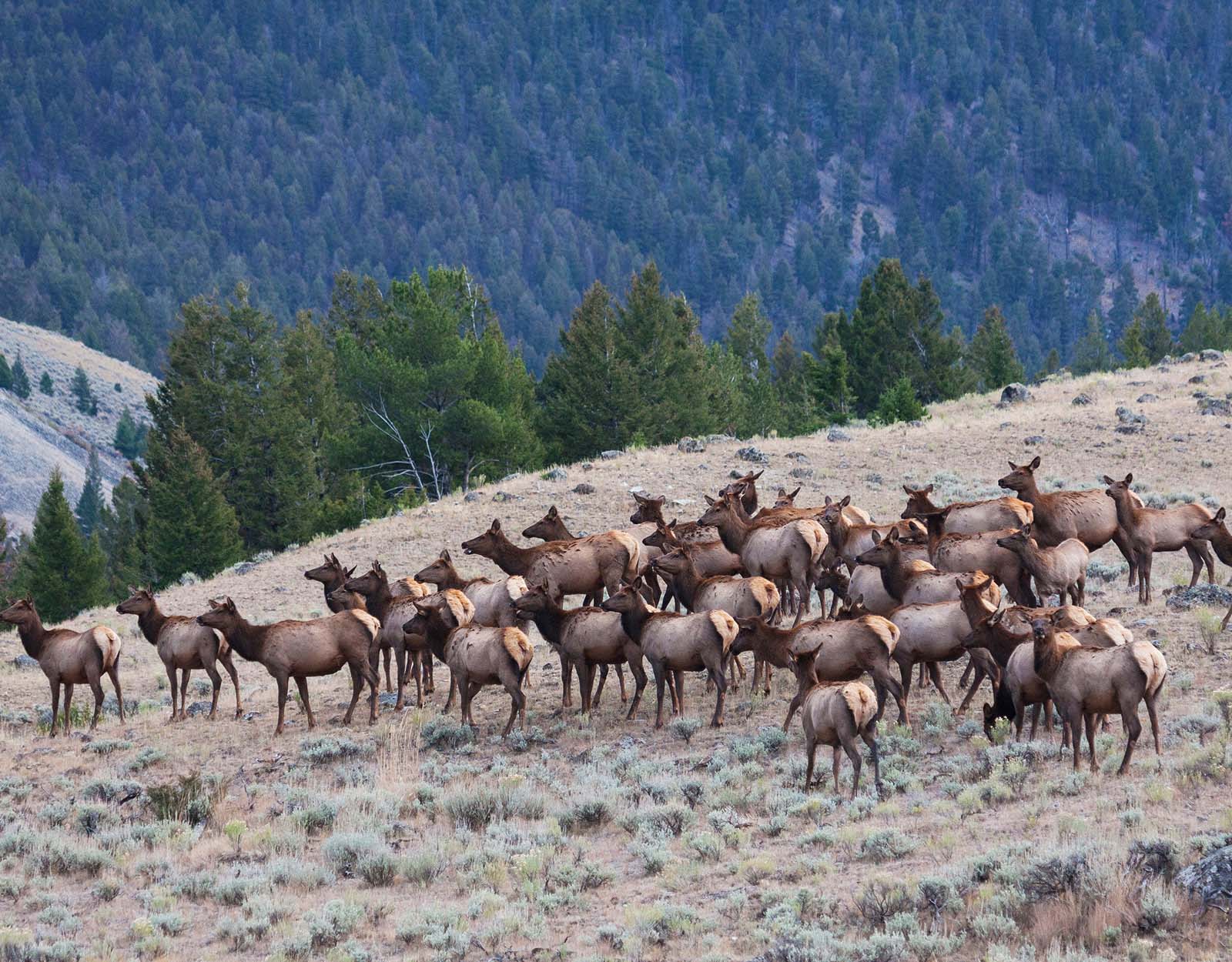
Cow herds get bigger in November, not smaller. “It’s not unusual to see a herd of 100 cows, sometimes 200 cows in some places,” Newberg says. The logic is safety in numbers: more eyes and noses to catch danger, and longer odds that any one animal is the one picked out.
Bulls go the other way, and they leave in order of their age.
“Most of the older bulls are like, I’m hearing a lot of vehicles, I’m smelling people in the woods. I think rifle season is coming, I’m out of here,” Newberg says. “But the younger bulls are like, whoa, can you believe this? Big old Hank, he just left all these ladies for me.”
But then two-and-a-half and three-and-a-half-year-olds start to peel off, too, by mid-November. “For the most part, the bulls you see with cows in November are going to be the spikes.”
Which leads to what most hunters have backwards: a big herd of cows is bad news if you’re after a mature bull.
“It usually tells me I’m in the wrong spot,” Newberg says. In migratory country, meaning Montana, Idaho, Wyoming, and alpine Colorado, there is a rule behind that. “The cows sort of lead the migration and the bulls trail the migration. So if you’re looking for bulls, look higher up in elevation.” Cows will nearly always be lower than bulls on a mountainside come November.
And the Woods Go Quiet
Well, mostly quiet. Newberg will not give you an absolute ruling on the matter because he watched his own rule break last year.
“As quick as I say they don’t bugle in November, I have to think back to last November 10. I’m sitting there deer hunting,” he says. “And I look across, and there must have been a cow that missed the first cycle and missed the second cycle, because she has attracted, I think, four bulls. Decent-sized bulls, and they’re tearing it up.”
That is the exception. “There’s really no corresponding value for them to be vocal in November. It’s mostly risk.” A group of cows on a snowy hillside with one loudmouth whining is an advertisement, and wolves and mountain lions hear it.
What you will hear is cows, and only certain cows. “It’s cows that are on the move, or it’s cows that are concerned. If it’s cows just bedded, you’re not going to hear much.”
Hunting Pressured Elk
How Small a Bull’s World Gets
Smaller than almost anyone maps for. Elk hunters too often dismiss a piece of public land because it does not look like enough country.
“You drive right by that spot; there might be a little 80-acre section that that bull has found a place to make a living,” Newberg says. “I think people would be surprised if they knew how tight a bull elk will hold on to on public land if he finds a sanctuary where he is undisturbed.”
Eighty acres is one-eighth of a square mile. October is tighter still, because bulls go solo for about two weeks after the rut breaks. “Come about the first week in November, they start gathering back up into bachelor herds,” Newberg says. “Then they’re a little more comfortable, they need a little more space.”
What Bull Elk Country Looks Like
Often dark timber, but the geometry can matter even more than the cover type.
“A lot of times it is dark timber. They’re just 200, 300 yards inside the edge,” Newberg says. “But if they get up and move a couple hundred yards just before the end of shooting light, they’re right on the edge of that dark timber, and they can now feed.”
The short commute is the design. Imagine a bull stands up around 4:30 in the afternoon, travels a short distance to feed, but can easily pop back into the timber, which “reduces the likelihood of them ending up in front of the crosshairs of a rifle hunter.”
The bed itself you can find on a map before you leave home.
“About every study on it shows that elk prefer to bed down a flatter spot, just about always on less than a 20-degree slope,” Newberg says. “That’s why on onX Hunt I can see what the slope angle is. And then I see a little interruption to that slope angle where it flattens out a bit. Like that is the kind of place where an elk beds.”
Look for steep topo lines that suddenly relax. A bench inside steep timber is nearly impossible to approach, which is why they’re on it. “If you’re coming up from below them, half the day you’re going to have thermals blowing into them. If you’re coming in from above them, you can’t see down through all that timber.”
Carry Newberg’s question up the mountain: “If you were an elk, where’s the place that through wind, noise, or line of sight, they’re going to detect you before you detect them?”
Security Picks the Neighborhood, Food Ranks the Houses
There’s a long-running argument about whether to hunt food or hunt cover late season. Newberg explains it’s not a choice, it’s a sequence.
“It is hunting pressure primarily that pushes them to sanctuaries,” he says, “but their selection of sanctuaries is what gives them the greatest ability to detect human predators, the greatest ability to escape, and meet their need of, I got to get some groceries. And so, the more food or forage is somewhat nearby, the higher that sanctuary ranks on their list.”
Hunting pressure decides which pockets are in play. Forage decides which of those a bull prefers. Water, in the northern Rockies, is not a factor. “There’s water in every drainage, but eventually food becomes an issue.”
A bull is also working down roughly 3,000 feet between a 9,000-foot summer range and a 6,000-foot winter range, and not in a straight line. The sanctuaries are the pauses along that path.
Scouting It on the Map First
Newberg starts by throwing away the obvious ground.
“There are these great big blocks of forest. I don’t even look at those this time of year, because those have had so much intense pressure there aren’t many elk left,” he says. He hunts the leftovers: “Where are the smaller one, two, four-square-mile pieces that maybe are out there a little ways?”
Two filters make those pockets work.
- Don’t avoid steep terrain. “Sometimes it only takes 400 feet of elevation gain, that’s really steep, to thin out a lot of people.” Boundaries do the same work: a public knob you can only reach by walking a mile-and-a-half around private “thins out most of the people.”
- Neighboring pressure pointed your way. “I love hunting by private land that is outfitted because those elk aren’t going to just stand there on private and be unmolested.”
Mixed ownership is a feature. “That’s a sanctuary, just because a lot of people aren’t comfortable walking around.” Hunt those edges and your shot discipline has to be better than average. “You got to make sure you take good shots so that elk is anchored right there. You don’t want them running a half mile, and now they’re on private.”
Our guide on where to shoot an elk covers which angles to take and which to pass. For the broader seasonal picture, you can also start with our elk hunting guide.
Then Newberg builds in redundancy, camping where he can reach four separate Waypoint clusters he’s mapped ahead of time e-scouting. Each hedges a different November bet: a drought year with no forage, a hard winter with elk pushed low, 70 degrees with elk still high. Plus, a “maybe I show up and there’s two wall tents there already,” Newberg adds.
How much screen time does this take? “I would bet I spend as much time looking at maps on onX as I do hunting,” Newberg says.
Late Season Rifle Tactics
Glass First, Cover Ground Second
September rewards miles hiked. November punishes them.
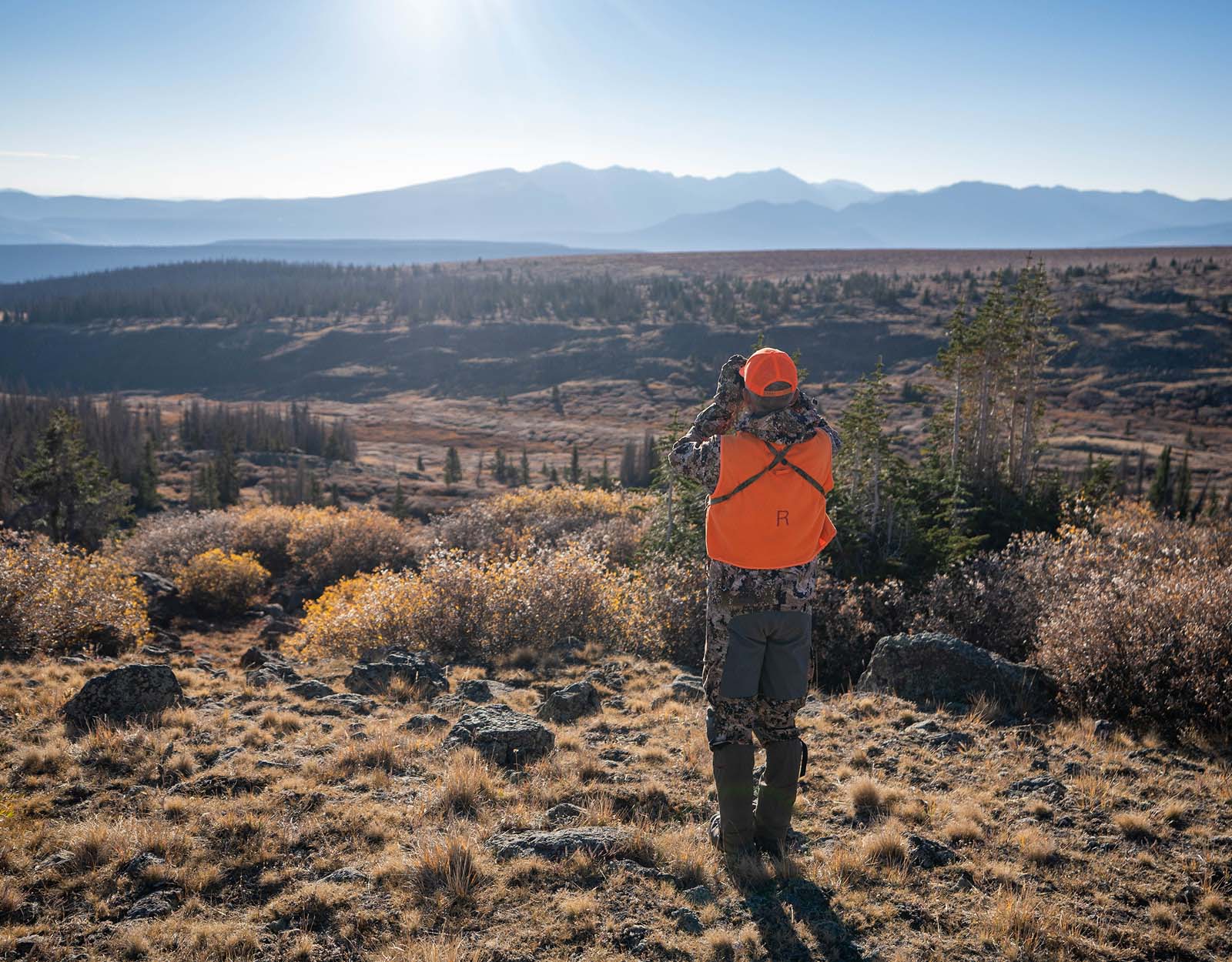
“In September, if the elk are covering miles, you should be covering miles,” Newberg says. “In November, when elk are hunkered down, you should be hunkered down, visually scouring that hillside to find where they’re at.”
Every Waypoint cluster Newberg builds also carries two glassing spots, a morning sit and an afternoon sit, and the difference between them is the sun.
“The sun rising from the southeast means those slopes that are northwest of me are going to get the sun first. And so the elk are going to disappear off there first,” Newberg says. “I try to orient myself facing mostly north, where the first slopes I’m going to glass are those ones that get lit up first. And then those slopes to my northeast, they’re going to stay shaded the longest.”
Afternoon runs the mirror image. “The sun’s starting to set over here in the southwest. Well, the slopes that face to the east are going to be shaded first. The slopes that face to the west are going to be the last to get shaded. So where are they all going to come out first? They’re going to come out over on these slopes that get the first shade.”
Either way, he’s watching the ground where the light is about to change, and either way, he’s facing the same direction. “I want that sun mostly up my back, whether it’s in the morning or whether it’s in the evening.”
That logic also settles the north-slope-versus-south-slope argument you have heard a hundred times. Both camps are describing different hours of the same day. Bulls bed in the dark north-facing timber, but they do not feed there.
“In November, these elk aren’t bashful about coming around to a south, southwest, southeast, or an east or west slope, because that’s where most of the food is at that time of year,” Newberg says. “The really steep north-facing stuff, there’s no food there. So in the twilight hours of morning and evening, I’m going to see them along those edges where this food is located.”
Give a glassing sit three or four hours before you quit on it, and skip the midday trip back to the truck. “If I’m going to take a nap, I want to be napping on that hillside just in case,” Newberg says.
Reading Late Season Elk Sign
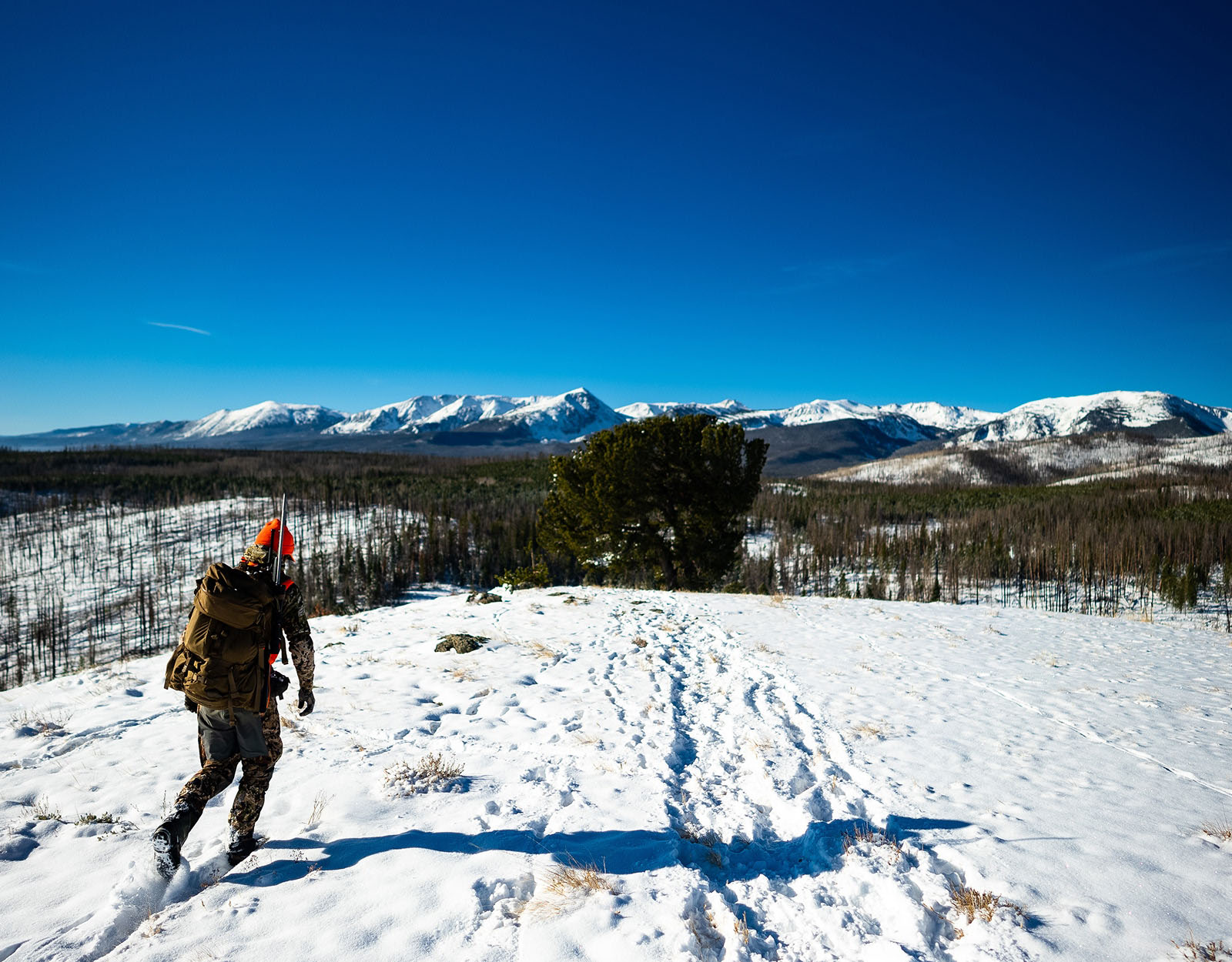
November snow can turn your binoculars into a research tool. Newberg reads tracks from a mile out and decides whether to move without having to walk alongside them.
Two patterns tell him nearly everything:
- A long line of 40 tracks. “That’s a group of cows and young bulls, and they’re on their way to the winter range. First of all, those aren’t the elk I want. Second of all, they’re already miles away.”
- Three tracks, zigzagging. “That’s probably a bachelor herd of bulls. The fact that they’re meandering tells me they’re in feeding mode, and they might not be that far away.”
Of course, “I can’t tell how fresh those tracks are unless I know it had just snowed last night,” he adds.
Tracks also correct your elevation. “If every track I see is headed downhill, it’s like, you know what, I’m up too high.” Cut cow tracks and the bulls are above you, so everything below is eliminated.
And rubs? Rubs are nearly worthless in late season. “They rubbed the velvet in August. Sometimes it’s a territorial rub, that’ll be September. They’re probably not here.”
Beds are the opposite: “I put a lot of faith in beds.” So is a hunter’s nose. “I’m smelling really strong elk smell in rifle season. They’re either bedded not too far away, or they were bedded not too far away.” Scent works in November precisely because it fails in September, when a bull who marked that tree three days ago is likely two drainages gone.
The last sign is not elk sign at all. Boot tracks govern how long you stay. “If I’m not seeing a lot of human activity, that usually will give me the incentive to tough it out a little longer.”
What Most Hunters Get Wrong
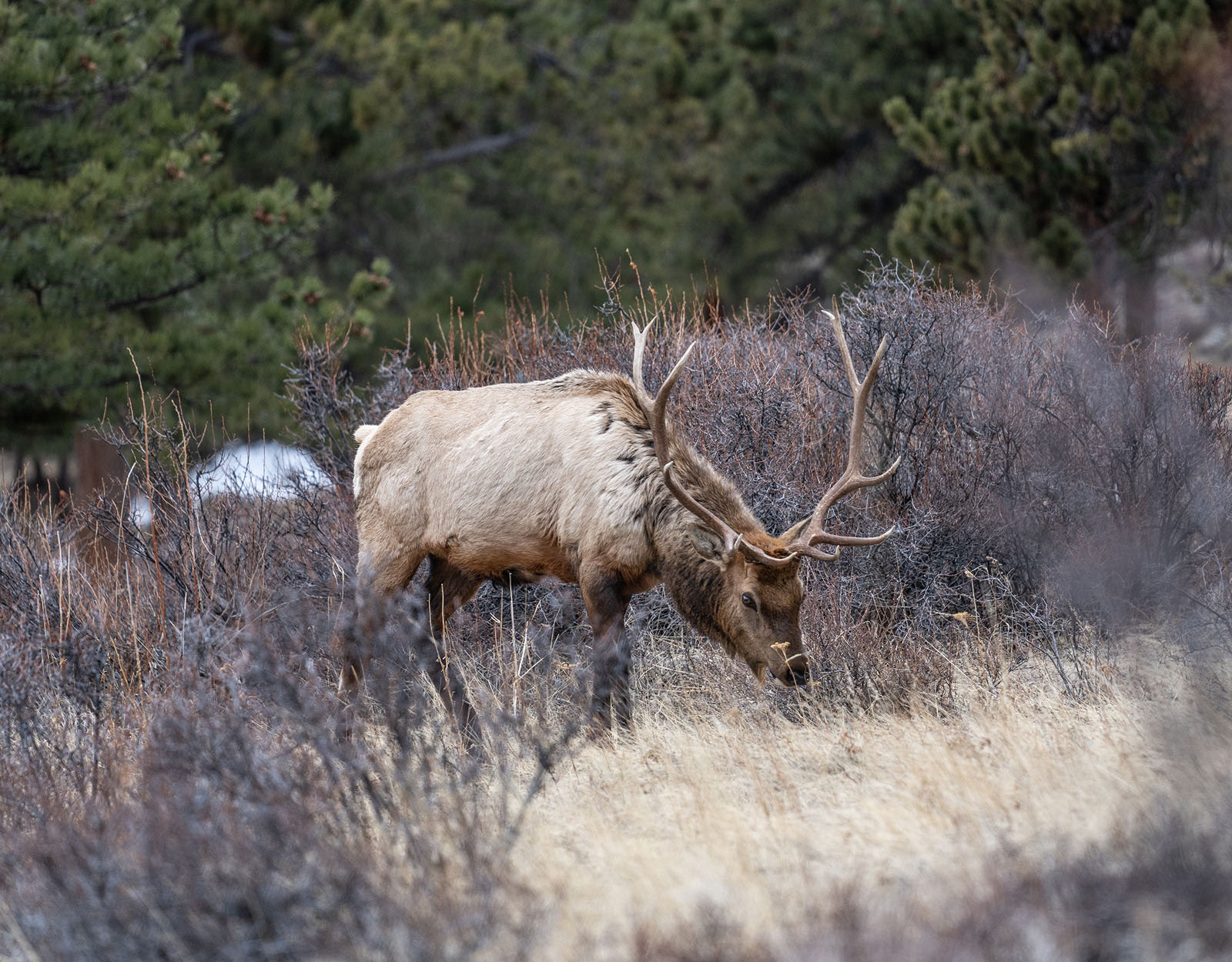
Two things, repeatedly, and Newberg will open nearly every rifle elk seminar he gives talking about them.
The first is failing to ask what an elk needs on that landscape on that day. “Whatever their primary need is, they’re satisfying it somewhere on that landscape. And if you identify what it is, now you know where to go to look for it.”
The second is treating a map as a place to find elk instead of a place to erase country. “Eliminate where they aren’t so you can focus where they are.” Done well, one can eliminate most of the unit: “You’ve eliminated about 80%. Now you’re just looking at that other 20%.”
That 20% might be some of the toughest to climb, or the longest to get to, but it’s likely where they are. But keep in mind, the terrain that keeps a bull alive is also the terrain you pack him out of. Know what you are committing to with our breakdown of elk weight and learn to quarter him with the gutless method.
By way of encouragement for your next November, Newberg offers: “By November, elk are actually easier to find than any time of the year. You just have to know what their need is and you will find the elk.”

See the Strategies In Action
Watch how Dylan Dowson uses Randy’s techniques to chase pressured bulls on Wyoming public land in Episode 1 of onX Hunt Gameday.
Late Season Elk Hunting FAQs
Calling costs them and buys them nothing. “It’s mostly risk,” Randy Newberg says. What you will sometimes still hear are cows, usually ones moving or nervous.
Carry a diaphragm, but treat it as a brake, not a magnet. Randy Newberg uses a hands-free cow call to stop a bull walking off or to try to turn him for a better angle.
Into pockets of low pressure surrounded by high pressure, sometimes as small as 80 acres: dark timber with a feeding edge inside about 100 vertical feet, a bench flatter than 20 degrees, and an escape route on the far side.
Yes, but not all at once. Elk work down roughly 3,000 feet over the fall. Cows lead and bulls trail, so if you are seeing cow herds, climb.
Start on the map and subtract. Skip the big, pressured forest blocks, find small public pockets that are awkward to reach, then glass them with the sun at your back.
Find the animal’s needs that day. Take a glassing sit at first light and stay out through midday.