TL;DR: How far deer travel depends on age, season, and habitat. Early-season bucks may move only a few hundred yards between bed and food, while adult bucks in Mississippi covered about four miles a day at peak rut yet kept a daily range near 200 acres. A buck spends about half his time in a core area that makes up 10% to 15% of his home range, and that core area shifts. When a target buck goes quiet on camera, he’s more likely to have moved within his range or taken an excursion of a mile or two than to have died or left for good.
A target buck was on camera every other night all August. Then October arrived, and the camera went quiet. A few days turn into a couple of weeks, and by then, most hunters mentally write the same obituary: a truck got him, a neighbor shot him, or he packed up and left for good.
Odds are none of those things happened. More likely, he’s still in the neighborhood and just moved to a part of it your camera doesn’t cover. So how far do deer travel? It depends on age, season, and habitat. In the early season, a mature buck with food and cover close together might move only a few hundred yards between his bed and his food. During the rut, a buck’s daily travel can stretch to several miles, and an excursion can carry him even farther before he circles back to familiar ground.
Mississippi State University Deer Lab researchers tracked adult bucks with GPS collars and found something that runs against the “rut bucks roam everywhere” idea. Even at peak rut, a buck’s daily home range came to only a little over 200 acres. The catch is that those 200 acres shift: 74% of bucks changed the spots they revisit every six to 10 hours. Your one stand location didn’t stop working. That buck just spent the week somewhere else in the same neighborhood.
Sorting out where he went starts with understanding three terms hunters tend to blur together: home range, core area, and excursion.
Watch: How Buck Movement Shifts With the Season
Understand the difference between a buck’s home range (where he lives) and his core area (where he spends most of his time), and how a buck’s movements shift from early season through the rut.
What’s a Deer Home Range?
A deer’s home range is the ground where he spends roughly 95% of his time. It holds everything he needs all year, including food, water, cover, and the routes that tie them together.
You’ve probably heard that a home range is about a square mile, or 640 acres. National Deer Association Director (NDA) of Conservation Matt Ross says in an onX Hunt Masterclass that the old square-mile saying is true but varies with the landscape, with studies finding ranges from 173 acres in Louisiana to 7,000 acres in South Texas.
In that Mississippi State study, the median annual home range for an adult buck was about 860 acres, but 27% of the bucks used fewer than 500 acres and roughly a quarter used more than 2,000. In the fragmented farm country of southwest Wisconsin, seasonal ranges averaged about 427 acres for males and 215 acres for does.
But a big home range doesn’t automatically mean a buck moves more each day. Ross says in 10 Things We Know About Mature Buck Movements that the studies he reviewed found home range size varied widely from buck to buck and wasn’t strongly tied to age or daily movement. Some bucks were homebodies, and some were travelers, and those traits tended to stay with the individual.
What’s a Buck Core Area?
Inside the home range sits a much smaller zone where a buck spends about half his time. That’s his core area, and studies put it at 10% to 15% of the home range. The core area runs much smaller in summer and can reach a couple hundred acres in fall.
Core areas aren’t permanent fixtures. Food sources ripen and fade, does come into estrus, and hunting pressure rearranges the furniture. A buck can shift his core area to a different part of his home range. The core area points to where daylight sightings are most likely, and it explains why a stand that produced in September can go cold by November.
How Far Do Mature Bucks Travel From Their Core Area?
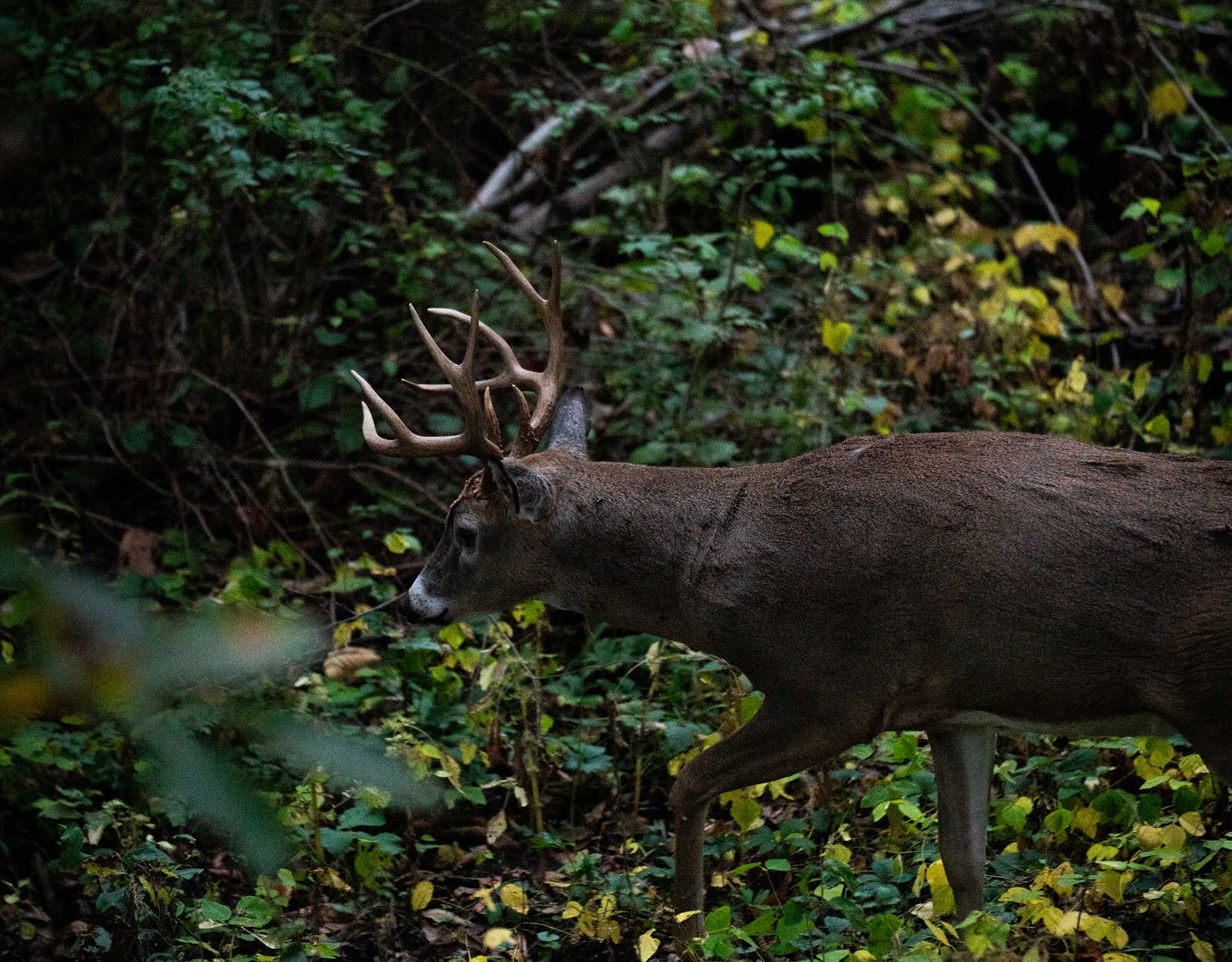
The answer changes with the calendar. Rut dates vary widely, with peak breeding in late December and early January in Mississippi and early November in Wisconsin. Read the phases below by what the buck is doing, then match them to your local dates.
Early Season: Mature Bucks Keep Things Tight
Summer and early fall ranges are the smallest of the year, and mature bucks don’t have much reason to go far. University of Georgia Deer Lab researchers followed a 3½-year-old buck collared in June beside a 100-acre clearcut. In June, the buck spent almost all of his time inside the clearcut. In July, he made several trips to a clump of trees about 140 yards away, and only between midnight and 3:00 a.m. By September, he rarely went beyond the clearcut’s edge, and only before sunrise or after sunset.
A buck with food and cover in the same place has no reason to wander, which is why summer camera surveys feel reliable.
Pre-Rut: Movement Increases
By early October in much of the country, a buck’s priorities change. He starts rubbing, scraping, and sorting out where he stands in the local pecking order, and he begins checking more does. In Mississippi, where breeding peaks in late December, pre-rut bucks covered about 4,800 yards a day, or 2.7 miles, up from about 4,000 yards in October and November.
His core area gets fluid. Texas research found bucks revisiting the same focal spots about every 20 to 28 hours, apparently spacing out their visits to check whether does are ready to breed, Ross says in the Masterclass. The same body of research shows mature bucks using only about 30% of their home range during the rut. Wisconsin researchers scored how much a buck’s range overlapped from one season to the next, where 1.0 means identical. From late summer to the breeding season, the average was 0.63, a moderate overlap and the largest seasonal shift for males.
For hunters, that points to the travel corridors linking bedding cover to food.
Peak Rut: Why Mature Bucks Often Travel Less Than Young Bucks
Peak rut is when bucks move the most. In Mississippi, adult bucks covered more than 7,500 yards a day at peak, or about four miles. By the end of a peak-rut day, a buck sat about 1,600 yards, or 0.9 miles, from where he started. Even so, his daily home range stayed close to 200 acres.
University of Wisconsin-Madison and Wisconsin DNR researchers collared 188 bucks and tracked them across four falls, from 2017 to 2020. Movement peaked from November 4 to 8 nearly every year, whatever the weather. Wisconsin DNR Deer Research Scientist and study co-author Dan Storm says in an NDA write-up of the study, “The day of the year is just overwhelming in terms of predicting buck movements.”
The most active bucks were 2½ years old. Yearlings and bucks 3½ and older moved at similar rates, while 2½-year-olds moved more and covered more ground than either group. Storm suspects 2½-year-olds move more because they’re less successful at breeding, so they spend less time tending does. The write-up’s author, NDA’s Lindsay Thomas Jr., says mature bucks have less ground to cover because they’re experienced enough to find receptive does and dominant enough to bump younger bucks off them. They also spend part of the rut tending does, and hunters may see more 2½-year-olds simply because they’re on their feet more.
Tending doesn’t mean a mature buck vanishes for days. Storm says a buck rarely holds a doe without competition for long, so even a tending buck can keep a fairly high movement rate. Following a doe instead of his usual routine can make sightings feel sporadic.
Dawn and dusk still lead, but mid-day movement rose for every age class from October 29 to November 11 in Wisconsin. If any stretch calls for an all-day sit, this is it.
But … Every Buck Has a “Personality”
No single buck is average. Bucks fall into a few recognizable types, and the traits tend to stick with the individual.
– Sedentary bucks: Small range, limited movement. About two-thirds of the Mississippi bucks held a single home range averaging 786 acres.
– Busy homebodies: Small range, with a lot of movement inside it.
– Wide-ranging bucks: Large range, frequent travel. One Mississippi buck traveled 18 miles and crossed the Mississippi River to reach his other home range.
– Seasonal movers: Separate summer and fall ranges. About a third of the Mississippi bucks fit here, with home ranges averaging 4.4 miles apart. Ross points to a Louisiana buck that left his home range on March 18, spent the spring and summer 6.5 miles away, and came back in August. The next year he left on the same date.
– Wanderers: Periodic excursions outside an established range.
Home range size and movement rate measure different things. A buck with a small range may be on his feet constantly. A buck with a large range may use only a small piece of it during daylight. Marking trail camera locations and sightings as Waypoints in the onX Hunt App season after season is one way to figure out which type lives on your ground.
Post-Rut: Patterns Shift Back to Food
Once the last does are bred, bucks turn to recovery. In Mississippi, daily travel fell back to about 5,000 yards, and bucks spent more time bedded and feeding. The Mississippi researchers say adult bucks visit food plots mostly at night, so the travel corridors between bedding cover and food beat sitting over the plot itself.
Do Bucks Ever Leave Their Home Range?
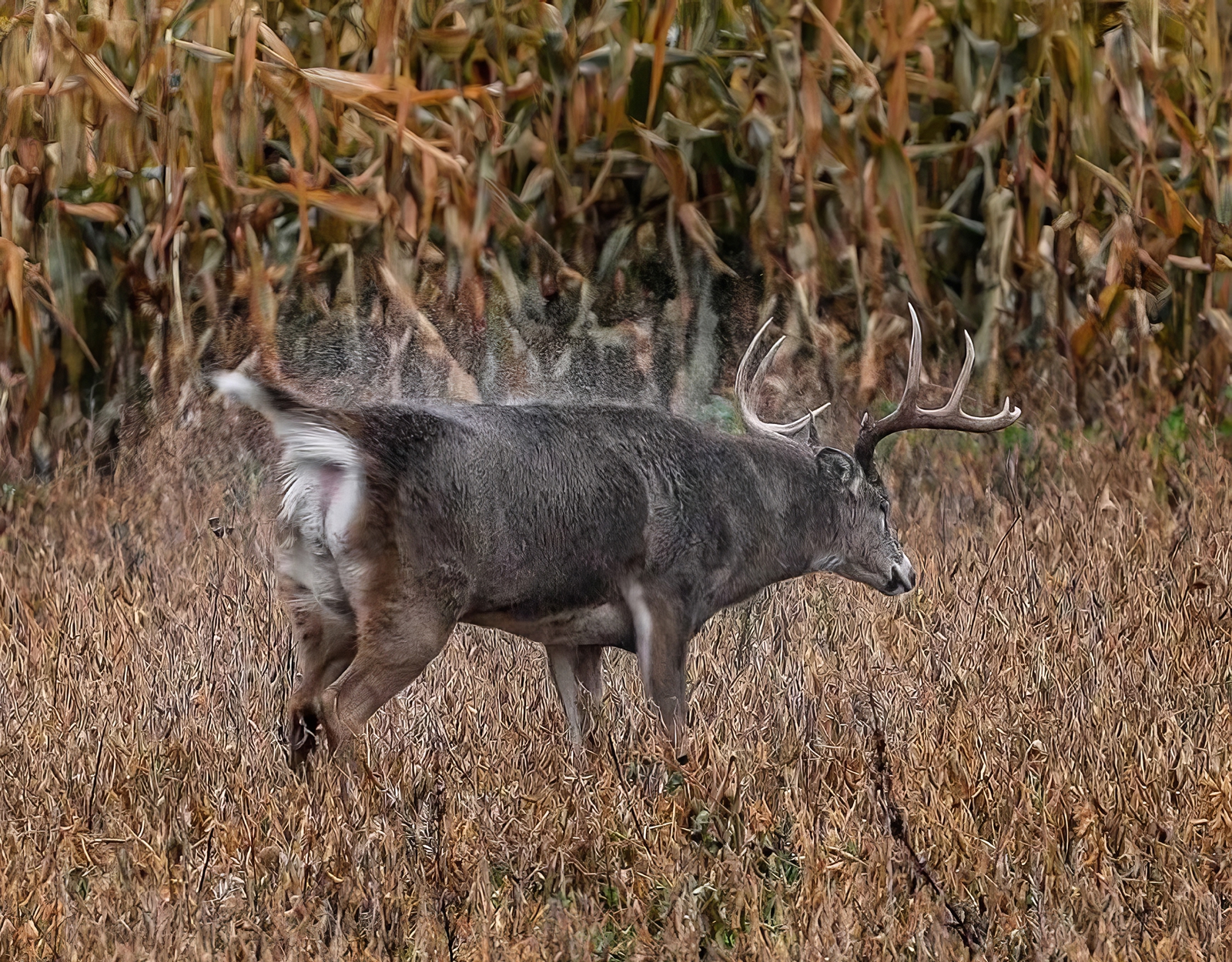
They do, in two different ways. One is temporary and the other is permanent.
Excursions: Temporary Trips
An excursion is a mature deer’s trip outside his home range, followed by a return. Researchers didn’t know these existed until GPS collars came along more than a decade ago, Ross says in the Masterclass. They show up in all age classes and landscapes, and cluster in the rut.
About half of adult bucks go on an excursion, and about half of those do it more than once. The average trip reaches about 1.5 miles and lasts just under a day. In the Mississippi study, sedentary bucks averaged six excursions a year, lasting about 12 hours. Excursions peaked from December through February, which the researchers tie to the search for does, and again in March.
About half of adult bucks go on an excursion, and about half of those do it more than once. The average trip reaches about 1.5 miles and lasts just under a day.
A typical excursion keeps a buck off your camera for a full night and your stand for the next morning, and some trips run much farther. Ross describes a buck that covered three miles in eight hours and tells viewers to “think about where your hunting property is and what three miles away is.” That’s how a buck photographed for weeks can turn up on someone else’s wall the next day.
Dispersal: Young Bucks Moving Out
Dispersal is a permanent one-way trip, and mostly young bucks make it. Ross says in the Masterclass that half to three-quarters of bucks leave the area where they were born, usually 5 to 7 miles away and farther in open country with less cover. Mississippi State puts the range at 2 to 20 miles. Among bucks that disperse, roughly a quarter leave in spring around their first birthday, when their mothers push them out ahead of fawning. The remaining three-quarters leave that fall, at about 18 months old.
So the yearling you photographed all summer may have moved on. Ross calls it an even swap, since other people’s young bucks show up on yours.
Know When To Stay Patient and When To Move On
Back to your missing buck. When the camera goes quiet, one of three things is likely happening. He shifted his core area to another part of his home range, he’s moving normally somewhere else inside it, or he’s on an excursion and will be back. Dispersal and death are the permanent options, and dispersal mostly involves yearlings, not the mature deer you’re hunting. Deer in the Wisconsin study — mostly does — returned to the same seasonal ranges year after year, with overlap averaging 0.87.
A few clues help you sort out a quiet camera. Fresh rubs, scrapes, and tracks near your stand say he’s still around. A buck that shows up only after dark may not be nocturnal at all. NDA’s Cole Gander points out in There Is No Such Thing as a Nocturnal Buck that cameras capture a small part of what a buck does, and pressure and changing food can pull his daylight movement away from your setup.
Your own pressure matters, too. In a video on what moves bucks, NDA’s Lindsay Thomas Jr. says that after a stand is hunted once, nearby bucks skirt it, and movement doesn’t return to normal for two to four days.
Cole Gander killed his “nocturnal” Missouri seven-pointer at 3:00 p.m. after moving to a stand about 250 yards away, along the edge of a bedding area.
If the buck is a “seasonal mover,” the pattern repeats, so write down the date he first appears on your ground. The Mississippi researchers say he’ll likely show up around the same date next year. If a few days pass, stay patient. If the sign dries up and the food has changed, it’s time to move closer to where he’s headed.
For more on how deer move, browse our Deer Movement hub. A buck lives on a landscape, not a parcel. The better you understand how his range overlaps the ground you can hunt, the better your calls on where to sit, when to hold steady, and when to go somewhere else.
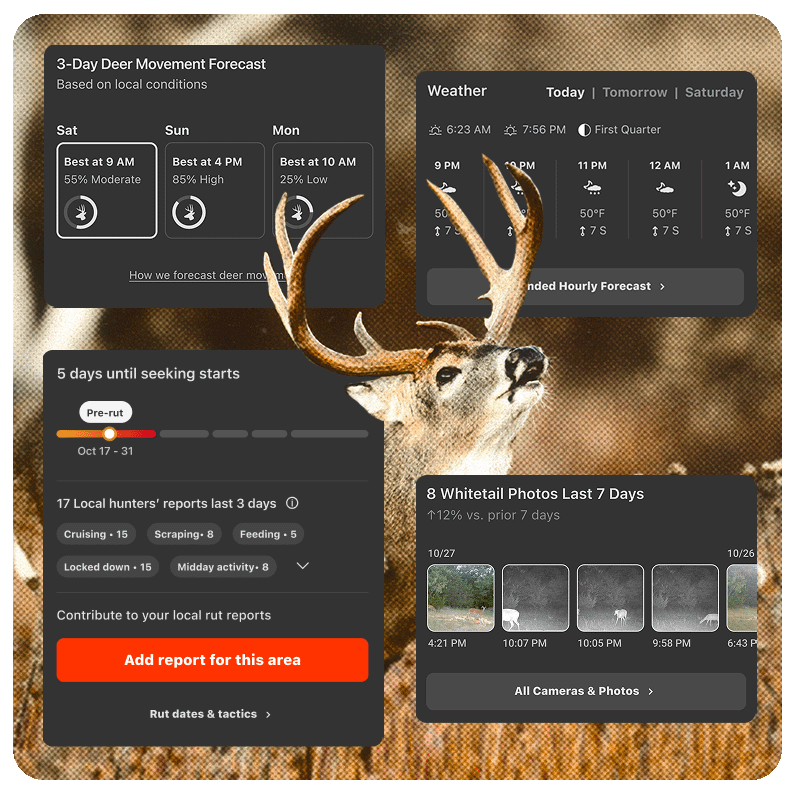

Whitetail Insights
See your Trail Cameras, Deer Movement Forecast, Rut Calendar, and Wind & Weather in one place for the land you hunt. Make a faster, better-informed call on when to hunt.
- Rut Calendar: Know how and when the rut is unfolding.
- Deer Movement Forecast: Predict the odds of increased deer activity on your hunt.
- Trail Cameras: Pattern deer with Trail Camera Analysis.
- Wind & Weather: Get hyper-local conditions and forecasts.
FAQs
Adult bucks in the Mississippi State study covered about 4,000 yards, or 2.3 miles, on a typical fall day and more than 7,500 yards, or 4 miles, at peak rut.
A home range is where a deer spends roughly 95% of its time. The core area is the smaller zone inside it where the deer spends about half its time, usually where it beds.
The median annual home range for adult bucks in the Mississippi study was about 860 acres, and studies elsewhere run from 173 acres in Louisiana to 7,000 acres in South Texas.
A buck’s core area is generally about 10% to 15% of the home range, small in summer and up to a couple hundred acres in fall.
Adult bucks in Mississippi covered more than 7,500 yards, or four miles, per day at peak rut.
It can. Mississippi researchers found 74% of bucks changed focal areas every six to 10 hours, and Ross says Texas bucks revisited rut hot spots every 20 to 28 hours.
After an excursion, yes. The average trip lasts just under a day, and the buck returns home. After dispersal, no. Young bucks that disperse settle into a new home range.