Every year when Montana’s draw results come out, I check mine first. For elk, I put in for an archery tag that’s pretty easy to get as a resident, so it’s really just confirming I got it. After that, I log in to check my wife Cami’s, not expecting a successful draw because we put her in for a more coveted elk tag. I scrolled down, expecting “Unsuccessful” like every year before.
It read “Successful.” The rush of excitement was immediately followed by a bit of an ‘oh man, this wasn’t planned’ feeling. The first thing I did was make sure we’d applied for the right unit, that I hadn’t made a mistake and put her in for a cow tag instead of a bull tag, even though I’m thorough on applications.
Sure enough, she had drawn the rare tag. Here’s how we went to work to make the most of it.
Low Draw Odds
The rifle elk tag Cami drew is one of the hardest rifle elk tags to get in Montana. It’s one of those where a lot of folks who put in for it just plan on hunting general season elk anyway, and they’re swinging for the fence by applying for one of the hardest tags to draw in the state. Statistically, odds are you’re not going to draw it, so you go in with the mindset that if you do draw it, it’s going to be a wild, once-in-a-lifetime type hunt, and if you don’t, you either don’t hunt elk that year or just fall back on general season. The odds were low, honestly single-digit odds, and if you pay attention to the trends, you flat-out don’t expect success.
We’d been applying my wife for this tag for six years, so she’d built up six bonus points. In Montana, those points are squared. Every year you don’t draw and you’re part of the bonus point pool, you get an added point, and then they square it. Think of it like names in a hat: if I have zero points, I go in with one name in the hat. If I have three points, that’s squared, so nine names, plus one more for the current year. Points are valuable, but they don’t guarantee you a tag the way preference points do in a state like Colorado. Even with six years of points run through onX Hunt Research Tools for this exact unit, the numbers still said she shouldn’t draw it. Again, single digits, even with six points.
The Strategy Behind Chasing a Tag We Weren’t Supposed to Draw
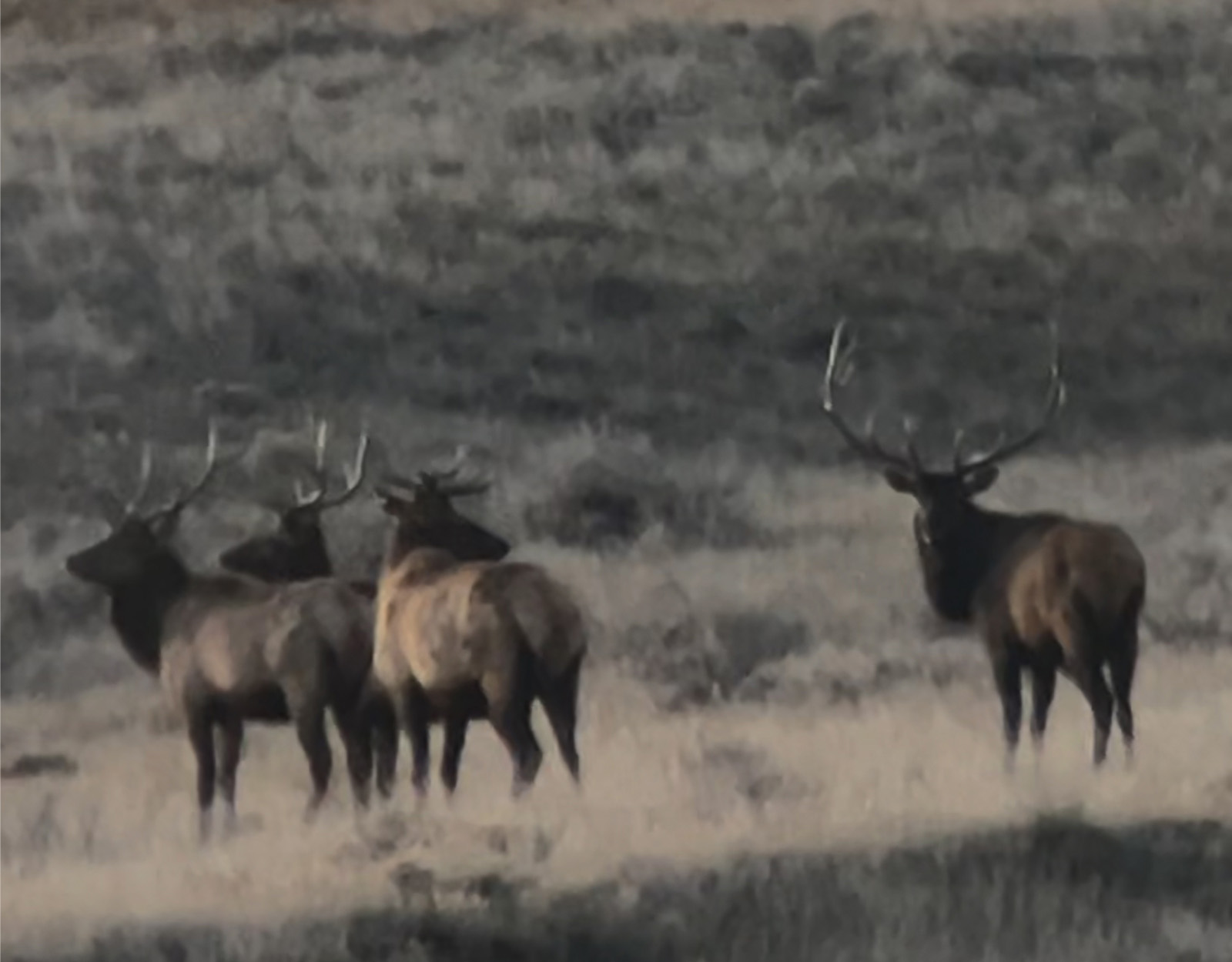
Every year for seven years, I asked Cami the same two questions: Is this the year you really want to hunt elk, and do you want to try for your first bull with a draw unit? Because there were much easier tags to get if the answer was ‘yes.’ If she’d said yes, we’d have applied her for something with maybe 20, 30, 40, even 50 percent draw odds with her points instead. But with a 3- and 5-year-old at home and me gone a lot in the fall, her thinking was maybe we just get out and elk hunt locally a few days; this isn’t the year to spend 10 days chasing a big bull on a special unit tag.
With that in mind, I applied her for a swing-the-fence tag instead: If she drew it, it’d be worth setting everything else aside and making the time for it. If not, maybe we’d get out a day or two on a general tag and get lucky finding her first bull.
Knowing that, I used Hunt Research Tools backwards. Instead of looking for units we could draw, I looked at units I was somewhat familiar with, units with a good track record of holding big, mature bulls that also happened to be hard to draw. I wasn’t asking what can we draw, I was asking what shouldn’t we draw that would be worth it if we did.
I narrowed it down to three, maybe five units, and picked the one where I knew somebody who’d hunted it in the last couple years. Having that kind of insider knowledge, even secondhand, felt too valuable to pass up.
I’d only been in that unit once before, hunting deer, so my knowledge of it was pretty vague, and my elk-specific knowledge was even more vague. All I really knew was it’s known for big bulls, known for a lot of elk, and known for a small number of applicants pulling a successful tag.
Where Hunting Etiquette Flips Upside Down
The second I found out she drew, I started calling people who’d hunted the area, and anybody else I thought could help. I’ve still got a notebook with probably 20 pages of handwritten notes: landowner names, phone numbers, notes like call this guy, he’ll get back to you on Tuesdays. Real specific stuff.
One thing I found out fast when talking to folks was that everybody kept telling me the same thing: you need to find access. That’s something I wish I’d done more homework on before applying. There’s a good number of public acres in this unit, but most of the good bulls, or most bulls in general, get killed on private ground, block management, or land you’ve paid for or gotten access to. Just because there’s elk habitat on public land doesn’t mean that’s where the elk are hanging out in October and November.
Normally, asking another hunter where they hunt is close to the last thing you’re supposed to do. If you asked me every year where I hunt, I’m just going to be honest with you: I’m not telling you — go figure it out. But a tag like this tends to flip that. When people draw a tag they don’t expect to draw again for 10, 15, 20 years, maybe ever, they’re a lot more willing to tell you exactly where they hunted, who they called, who said no but whose neighbor said yes. You get way more out of people on a coveted tag like this than you ever would asking around about a general one.
It’s the same idea as a sheep, moose, or goat tag. If I’ve already drawn a sheep tag and you call me for tips, I’ll tell you every single thing I know, because I want you to be successful and I’m probably not hunting sheep again anytime soon, maybe ever.
A lot of it was paper notes, but I’d also have onX pulled up while I was on the phone, and people would be naming off drainages, so I’d search them and drop a pin right then. I talked to so many people that it got hard to remember what all the Waypoints even meant. So if a landowner mentioned a drainage or an access road, I’d drop a Waypoint and type his name, his phone number, and the date right into the notes so I wouldn’t lose track of who told me what. I didn’t do that the first couple of calls, and I ended up with a bunch of random Waypoints I couldn’t make sense of anymore.
We ended up getting access to a piece of private property American Prairie had recently purchased, and they gave us permission to film there. We hunted a mix of that property and the public land around it, and that’s pretty much where we spent most of our time. American Prairie manages more than 600,000 acres of ground in Montana, with over 82,000 acres enrolled in the state’s Block Management program, providing opportunity for hunters.
We ended up getting access to a piece of private property American Prairie had recently purchased. American Prairie manages more than 600,000 acres of ground in Montana, with over 82,000 acres enrolled in the state’s Block Management program.
Turning Phone Calls Into a Hunt Plan
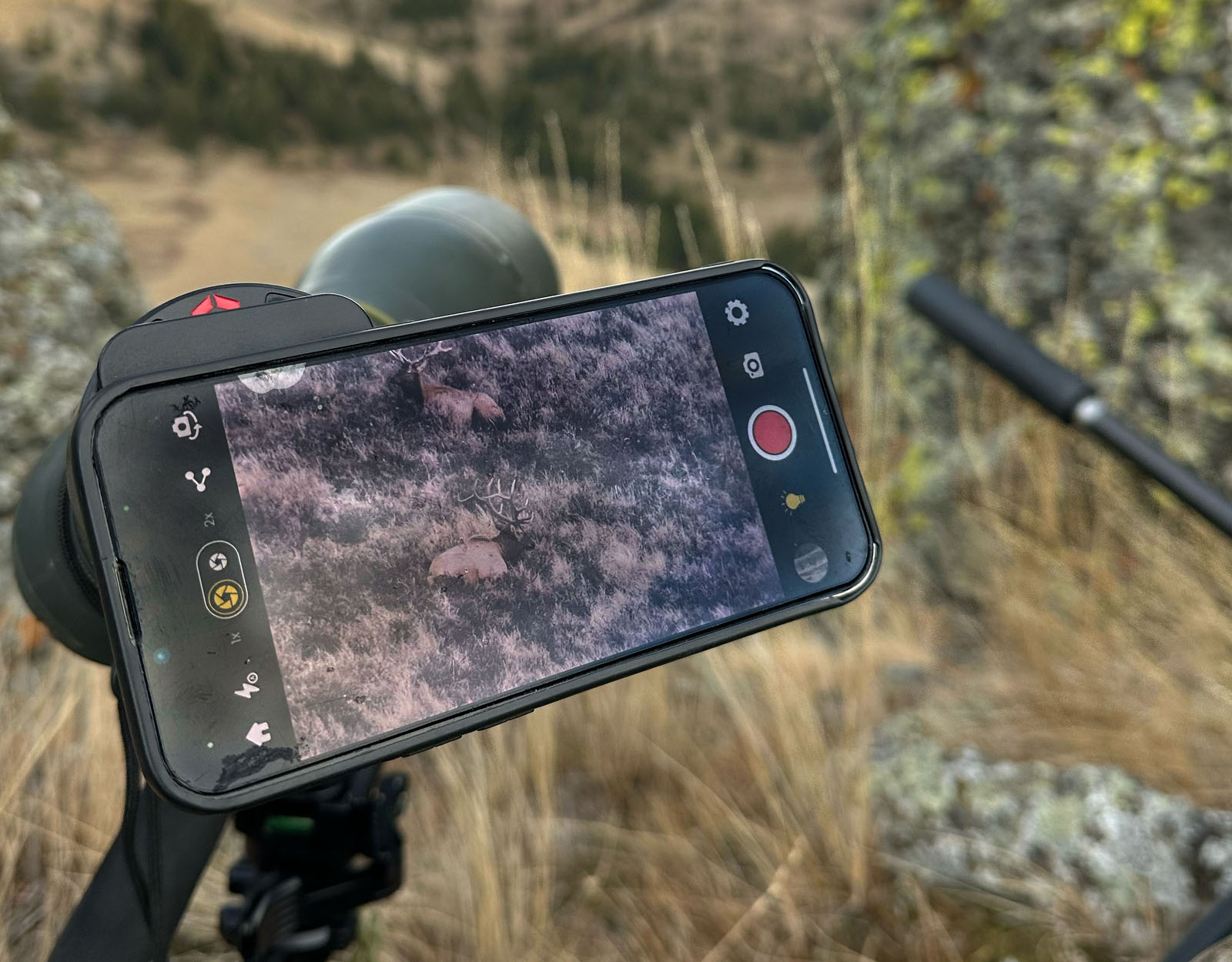
A buddy of mine and I went out there in August and drove every road in the unit and shook hands with some of the landowners I’d been talking to. We also had access to a couple other properties from really good people, but there just wasn’t much for elk on it at that time. While we were out there, my buddy helped confirm all the scouting I’d already done off those phone calls: this road’s public, this one’s not, this is a good spot to glass from. I had dozens, probably hundreds, of Waypoints in a unit I’d never actually hunted myself.
What I’d done was mark every road I’d talked about with a landowner or a hunter, then change the color as we confirmed each one. Solid gravel county roads went green. Two-tracks that were still public but turned to gumbo when it rained went blue. Anything that wasn’t actually public, even if it looked like a road on the map, I switched to black. That way I could look at the whole unit and know at a glance where the main roads were, where the secondary roads were, and where we flat out couldn’t drive, since it’s easy for something to look like public access until you get out there and it’s somebody’s driveway.
Making It a Family Affair
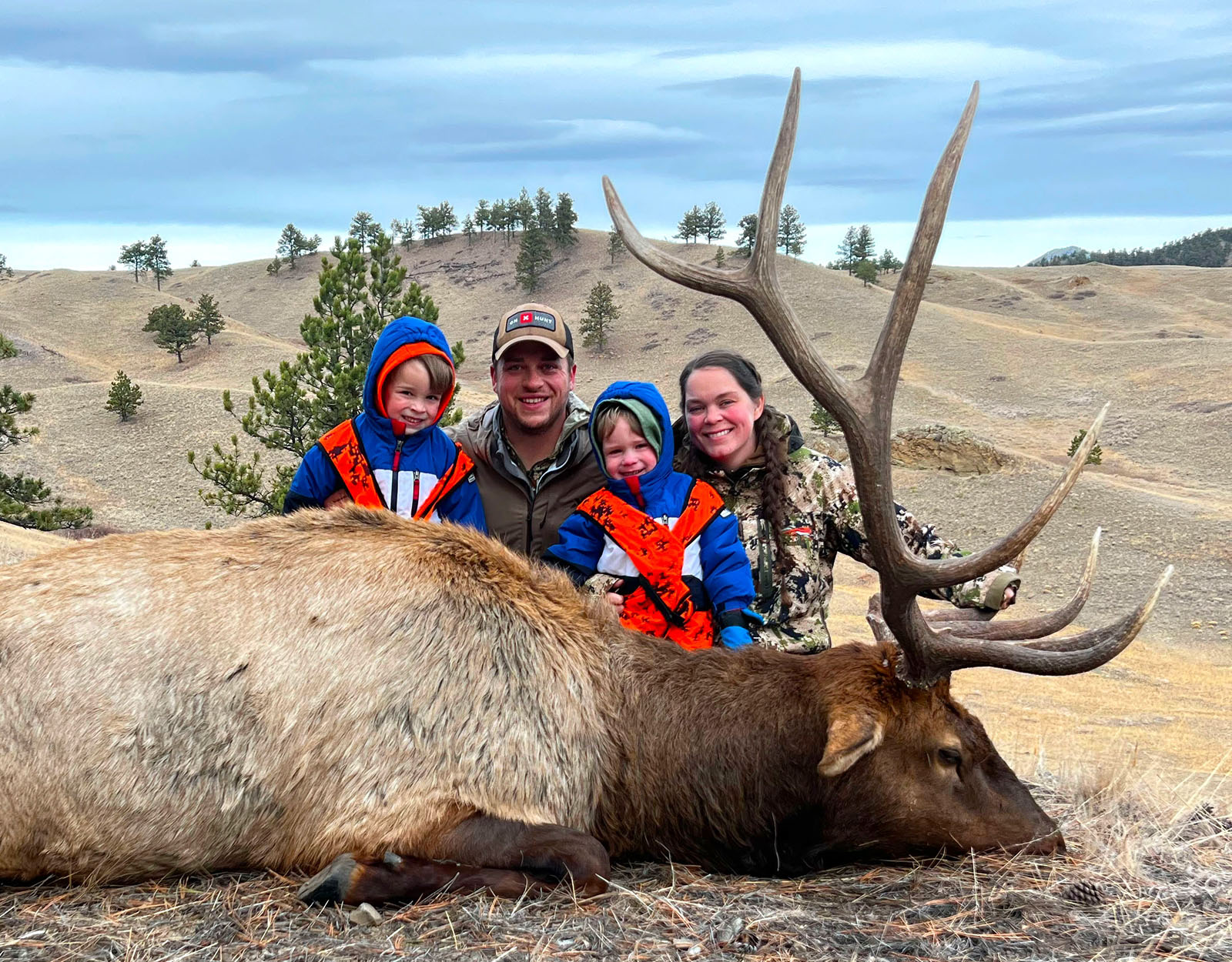
When the season was about to begin, my dad, who taught me how to hunt, drove across the state, and I pulled our camper into the area. He stayed back with our two boys, 3 and 5 at the time, while Cami and I went out hunting mornings and evenings. That let the boys be part of it while we still got out and hunted hard.
It had its challenges. If Cami and I didn’t sneak out of the camper quietly before our oldest woke up, he’d get pretty upset that he couldn’t come with us.
Every time we headed out, we’d tell him we know where a bull is, we think we’re going to get on him. By day two or three he just looked at us and said we were lying. He didn’t buy that we really knew where the elk were.
That let the boys be part of it while we still got out and hunted hard.
Expectations vs. Reality
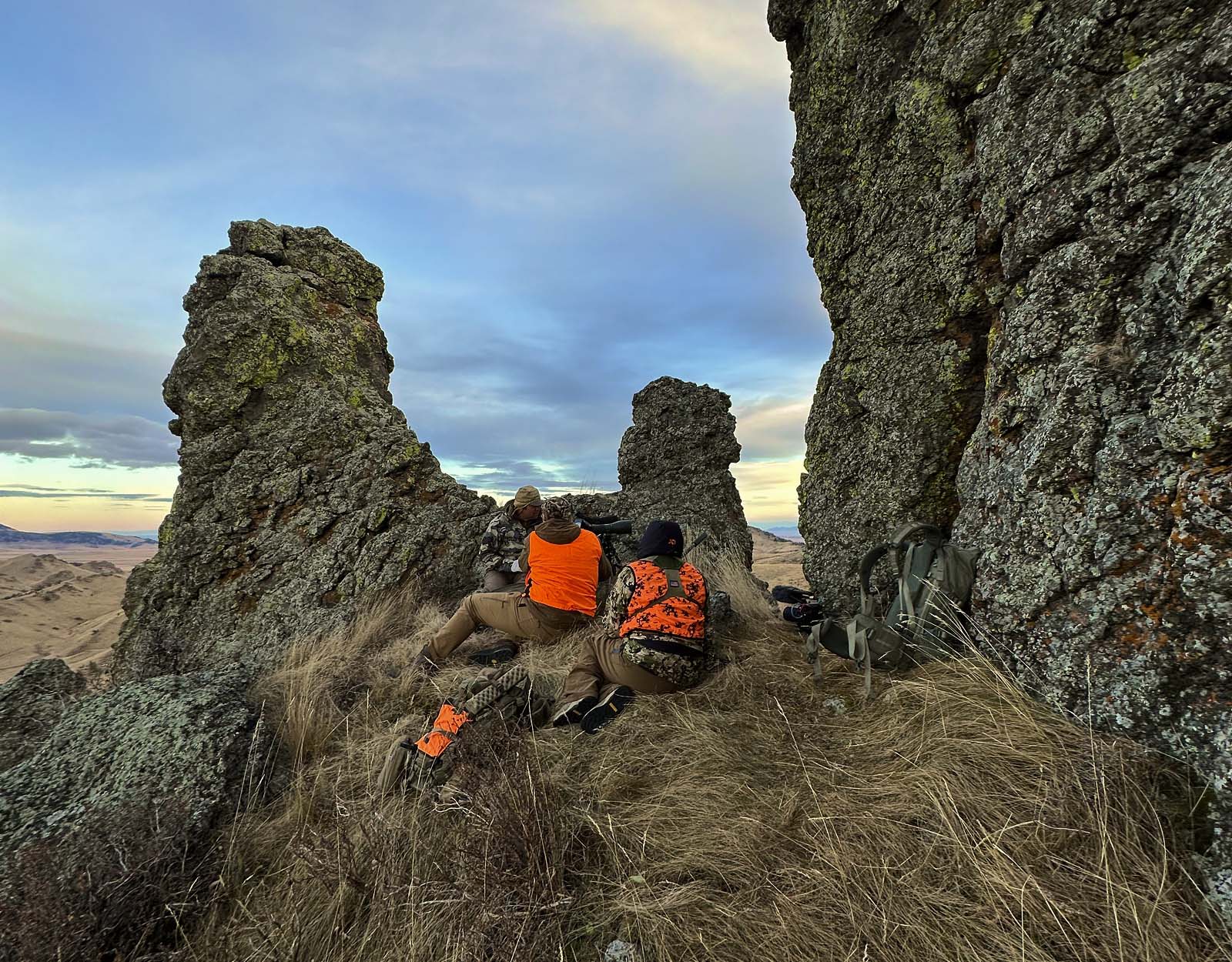
When you draw a tag like this, expectations and reality need to meet somewhere in the middle. If it had been my tag, I’d have been thinking I want a 370-inch bull, or even the biggest elk I’d ever seen in my life. It’s easy to get unrealistic about what you’re going to find in a unit like this. Since it was Cami’s tag, and she’d never shot a bull before, her expectations on antler size were a lot lower than mine would have been, but she still wanted to make good on the opportunity and turned to me to help.
The first morning, we had a bull in range that would have gone somewhere around 320 inches. A beautiful six-point, a great bull anywhere else in the state. If it had been the first minute of the hunt anywhere but this unit, I’d have been trying to figure out how to close the distance right then. She asked what I thought, and my advice was to pass, since it was the first bull we’d seen on day one and I figured we could find bigger. That’s not how I’d normally play it, but it’s not a normal tag.
Just because you draw one of the hardest tags in the state doesn’t mean it turns into inches at the end of the hunt. What a tag like this really buys you is opportunity, more elk in front of you, and usually a better age class since they’re managed harder. We saw somewhere between 50 and 55 different bulls that week, not counting spikes, and at least 15 of those were mature five- and six-points. We also had elk bugling and fighting each other in November, which you’re usually not going to see in a unit that gets more pressure.
I reached out to a couple of local outfitters to see what a guided hunt would cost and learn what to expect from the area, including the type of bulls they typically target. Ultimately, it was more than we were willing to spend, and with my elk hunting experience, I didn’t think hiring an outfitter was a must.
We saw somewhere between 50 and 55 different bulls that week, not counting spikes, and at least 15 of those were mature five- and six-points.
Watch It Happen
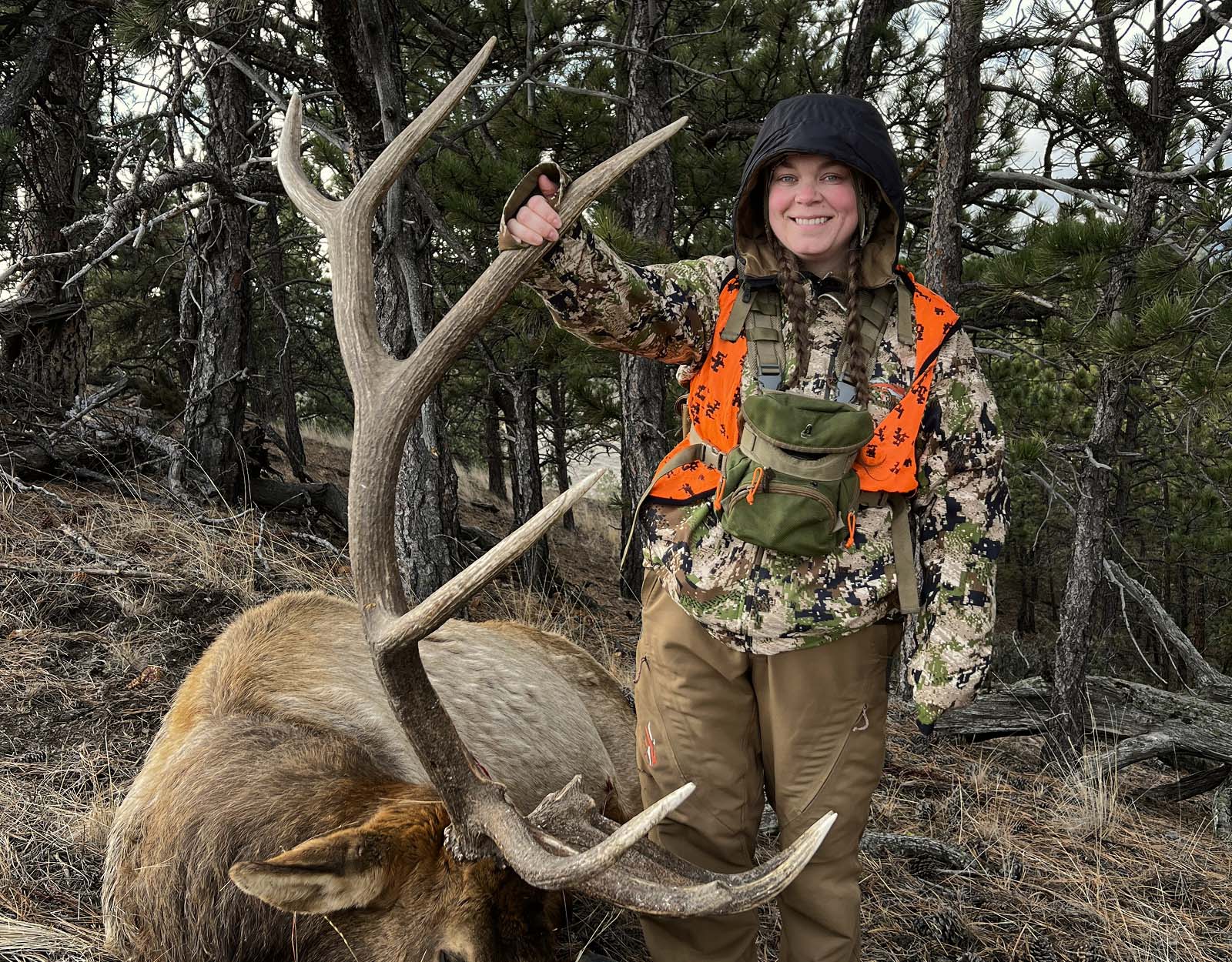
What sticks with me most from that week isn’t a score. It’s the first morning, about 30 minutes after first light, seeing that 320-inch bull we ended up passing on, watching two bulls fight each other, hearing bugles all around us. That’s when I saw it click for Cami. It wasn’t so much that she thought she was going to shoot a great bull, it was more that we’ve got a full week of this. That’s when I think she really got what the tag meant.
Six days, a camper full of kids, a lot of bull elk, and a tag that might not come around again for years, if ever.
Watch the hunt unfold in Gameday Episode 6: All in the Family.