Seasonal Planning Guide: Early Ice vs. Midwinter vs. Late Ice
The winter hardwater season can vary in length depending on where you reside in the Ice Belt. Farther south means a shorter season than far north, obviously. But the one thing all locations have in common are three distinct periods of fishing: Early Ice, that period of first ice through about the following 30 days; Midwinter; and Late Ice, which is that time when the days start getting longer, temperatures rise, right up to the last fishable ice before it becomes too dangerous and the ice eventually disappears.
TL;DR: Ice season breaks into early ice, midwinter, and late ice, and each phase changes where fish hold and how you should approach them. Early ice is short but can be the hottest bite, with fish shallow around green weeds and edges, so drill and move until you connect. Midwinter often pushes fish deeper (think basin crappies and offshore humps for walleyes), where a slower, more precise approach and smart positioning pays off. Late ice usually brings fish shallower and more aggressive again, but it’s also when safety risks spike—so plan routes, monitor conditions, and use tools like Recent Imagery and Tracker to stay safe and efficient.
Early Ice Tips
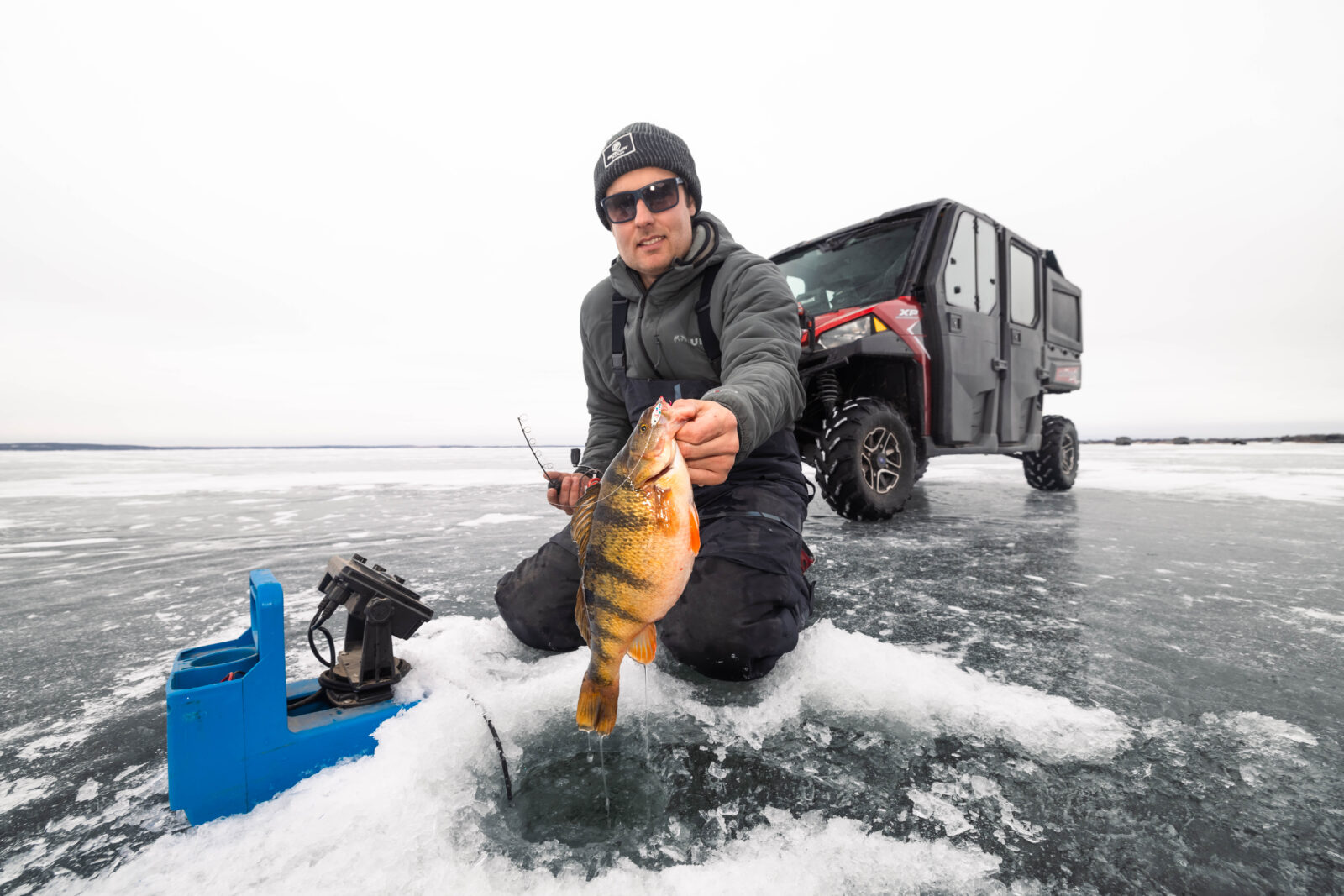
First ice is a very short window of days after lakes freeze and become fishable, typically with 3- to 5-inches to support walking. The OnX Fish Midwest app can help you check access points and avoid only recently formed or un-frozen sections of the lake with the Recent Imagery layer.
Beyond help from the app, use of a spud bar is standard procedure to check for safe ice thickness, and it’s a good idea to fish with a buddy, carry a throw rope, and wear a float suit with ice picks around your neck in case you or a friend does break through.
But find good, fishable ice and these first ice days can be epic – as well as the weeks ahead of Early Ice – with fish still located close to their fall haunts and feeding actively for what they know will be a long season of relative dormancy.
Of all three ice fishing periods, early ice provides the most aggressive fish and best action. As mentioned, starting where fish were in fall is the best plan, with many species roaming shallow near still oxygen-rich, green weeds. In many waters you will find panfish right in the weeds, with cruising pike, bass, and walleyes patrolling weed edges.
Don’t be scared to drill too many holes. Once the din of the auger subsides, quietly move from hole to hole over shallow water to find active biters. Jigging small spoons with live bait like a minnow head or tail, or a chandelier of waxworms or maggots, typically yields multi-species dividends. That’s not to say you must use live bait, though. More anglers are turning to micro-plastics—especially for panfish—and catching loads of fish. If you want a deeper breakdown of when to lean on minnows vs. waxworms/maggots vs. micro-plastics (and which options shine for walleye, perch, pike, and panfish), check out our Best Bait for Ice Fishing guide.
Fish with confidence this winter
Start using onX Fish Midwest today.
Midwinter Ice Fishing
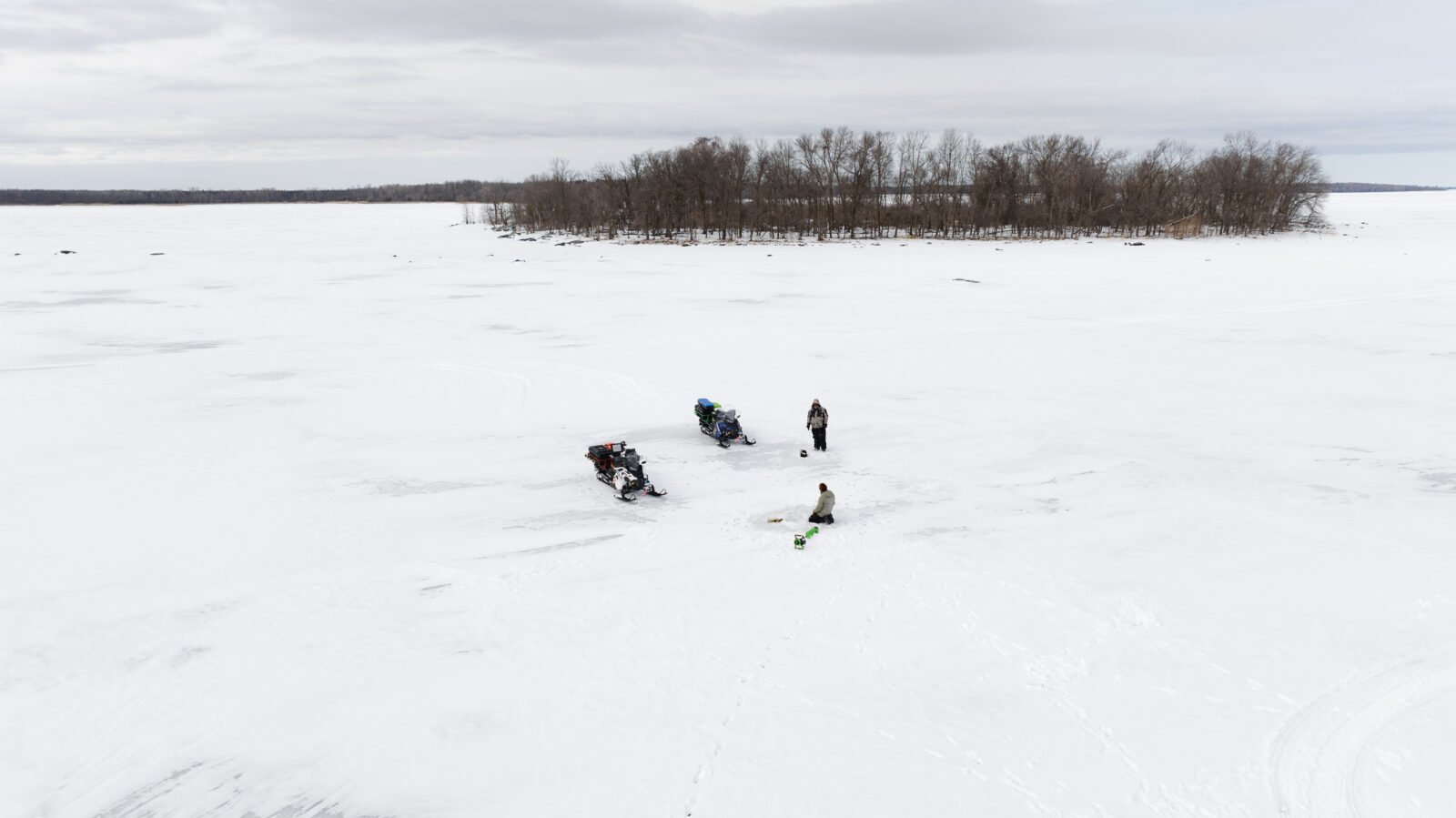
Roughly a month into the ice fishing season things begin to change. Many nights of subzero, ice-forming temperatures, snowfall obscuring sunlight below, and the death of shallow weeds and decrease in oxygen force fish deeper. In northern states, Midwinter is typically January 1 through about the end of February.
Midwinter Means Crappies
Crappies will head toward the nearest deep basin areas from where they located during First Ice, hovering throughout the water column in large schools where they’’ll feed opportunistically off bottom bug hatches and roaming minnows.
Locating basin crappies has become much easier with the advent of forward-facing technology. Now the steps are as simple as locating a basin on the OnX Fish Midwest app, travel to the site, and drilling one initial hole to scan or “scope” circles of water 100-feet in every direction. What used to take drilling dozens and dozens of holes to “stay on” schools of crappies can be accomplished by using FF sonar on the ice to track fish movement and stay on the bite.
But one caveat. In waters deeper than 25 feet – for crappies positioned deeper than 25 feet down over 30-, 40-, even 50-feet of water, consider the health of the fish. Due to changes in pressure, crappies can develop barotrauma, making a prolonged catch and release impossible. The recommendation? Catch your crappie limit to take home and then move to fish for another species. But don’t sit there all day and release fish. Chances are they won’t make it minutes to hours after the release.
Midwinter Walleye
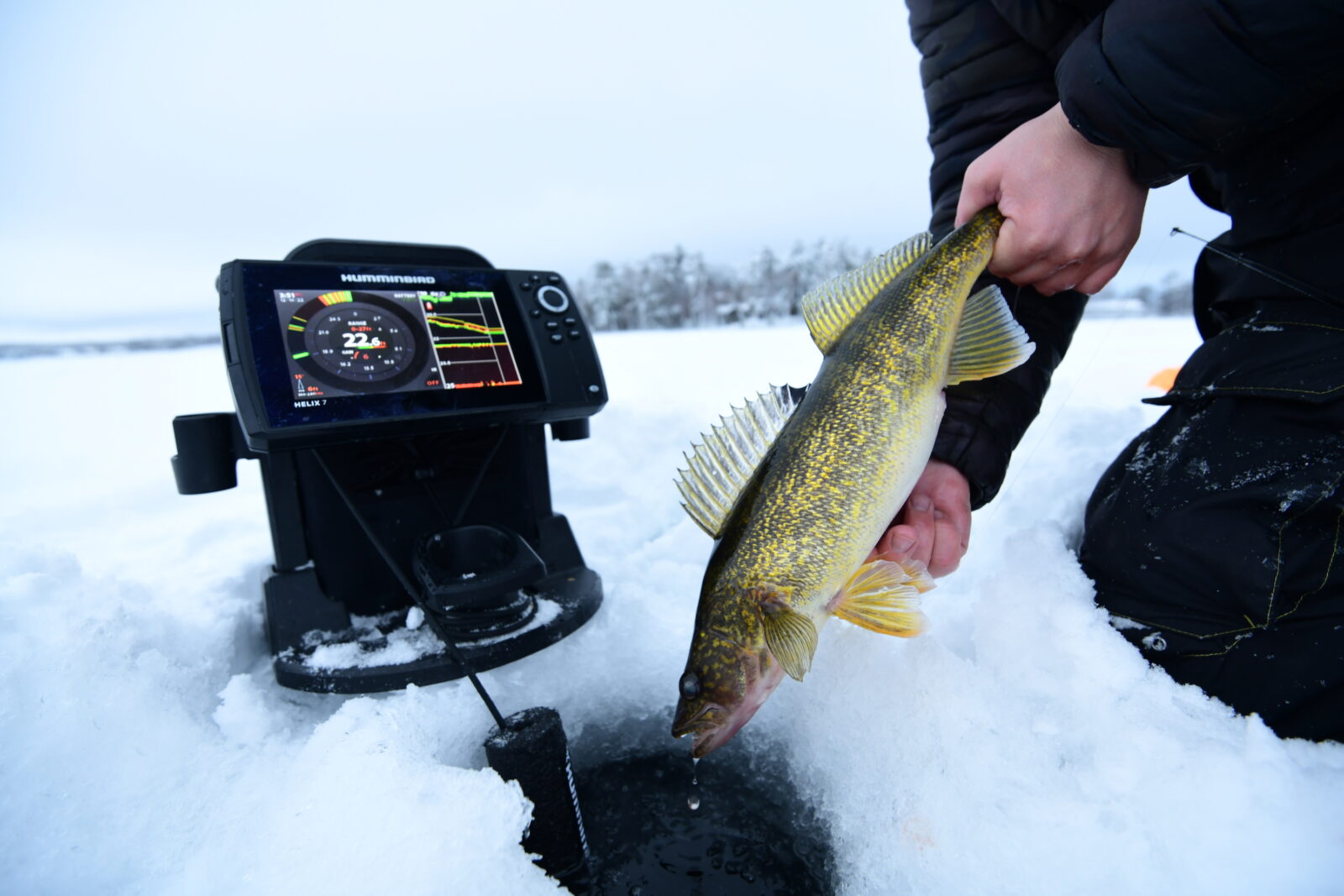
When it comes to ol’ marble-eyes, Midwinter means looking for deeper humps where fish will suspend off the side during the day and move up on top during low-light conditions to feed. The OnX Fish Midwest app can help you find these offshore humps and features where it’s smart to set-up for the prime time of dusk, nighttime, and early morning.
That’s not to say you can’t catch walleyes during the day but you’ll need to fish deeper, maybe employ technology like FF sonar, and slow down with subtle jigging and deadsticks or automatic hook setting devices strategically placed where you see fish moving through. Precise location can be key. Just like deer trails, walleyes will use the same routes to move from deep up shallower. Intercept them and it can be game on.
Late Ice
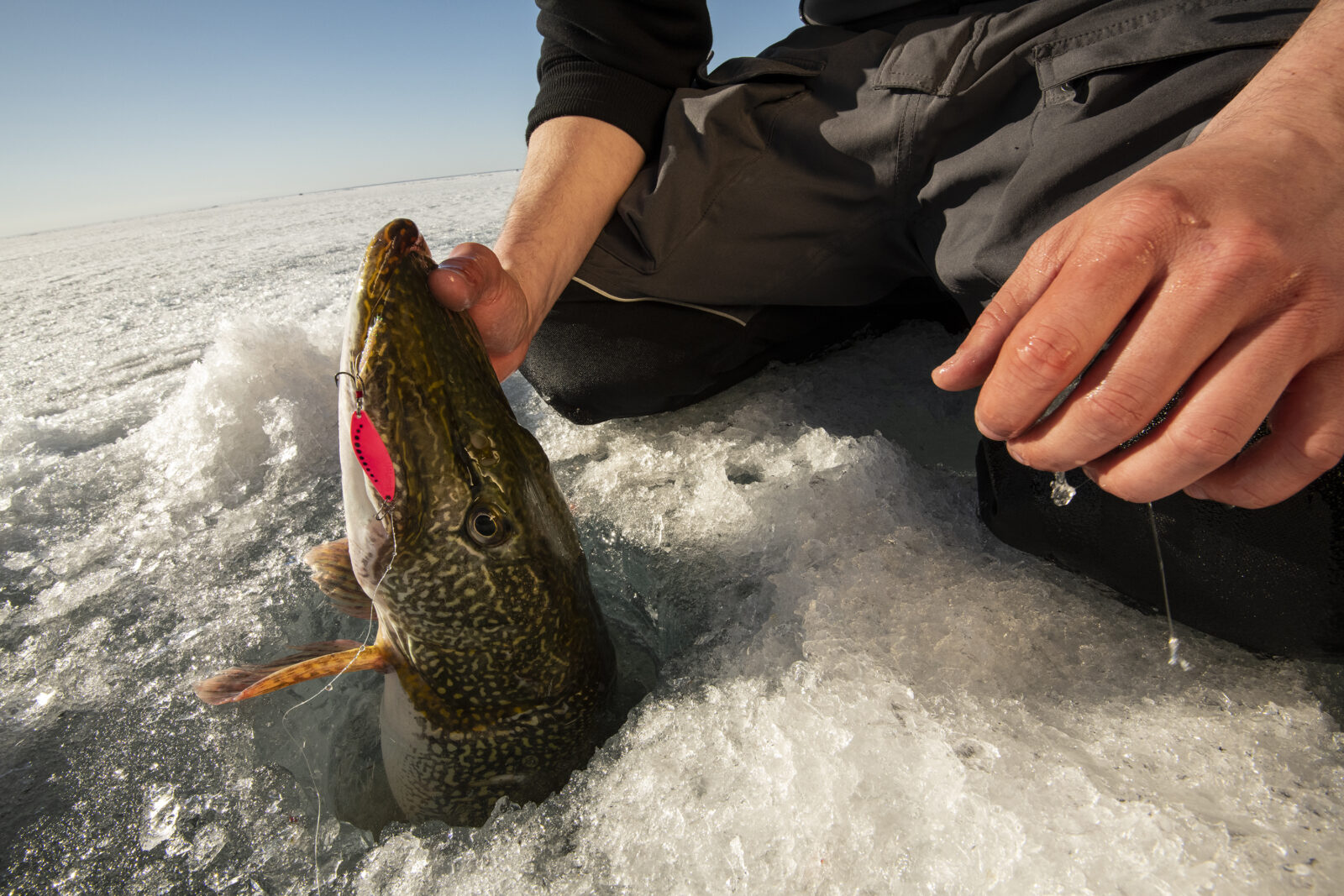
In the northern states, late ice is typically late February until the end of March. You’ll notice fish become more active as snowfall melts allowing increased daylight through the hardwater surface. As oxygen and daylight increase, fish become more active, many fish moving shallower ahead of the spawn—like walleye, pike, and perch. That said, it’s a great time to target big fish in the states that don’t close certain seasons. Aggressive tactics and big baits on tip-ups are a great way to target big specimens.
And don’t forget about species like burbot – also known as eelpout or ‘ling. They spawn in midwinter from about Valentine’s Day through St. Patrick’s Day, making for great fight potential and good eating.
But like First Ice, Late Ice means keeping your head on a swivel for countless safety concerns. Thawing ice, slush, pressure ridge openings, and limited vehicle access mean it’s time to exercise caution. To make sure you get on and off the ice safely, use the onX Fish Tracker function to follow a clearly GPS-routed map of exactly where you’re at – and need to be safely – at all times – especially if you plan on fishing in low-light conditions during this period.
Planning Your Ice Fishing Season with onX Fish
No matter what period of the year you’re fishing, “just winging it” is a thing of the past. Proactive mapping with onX Fish means safer trips and a strategy to catch more fish. Plan your entire day on one body of water, way-pointing structure as well as the best routes to get from spot to spot.
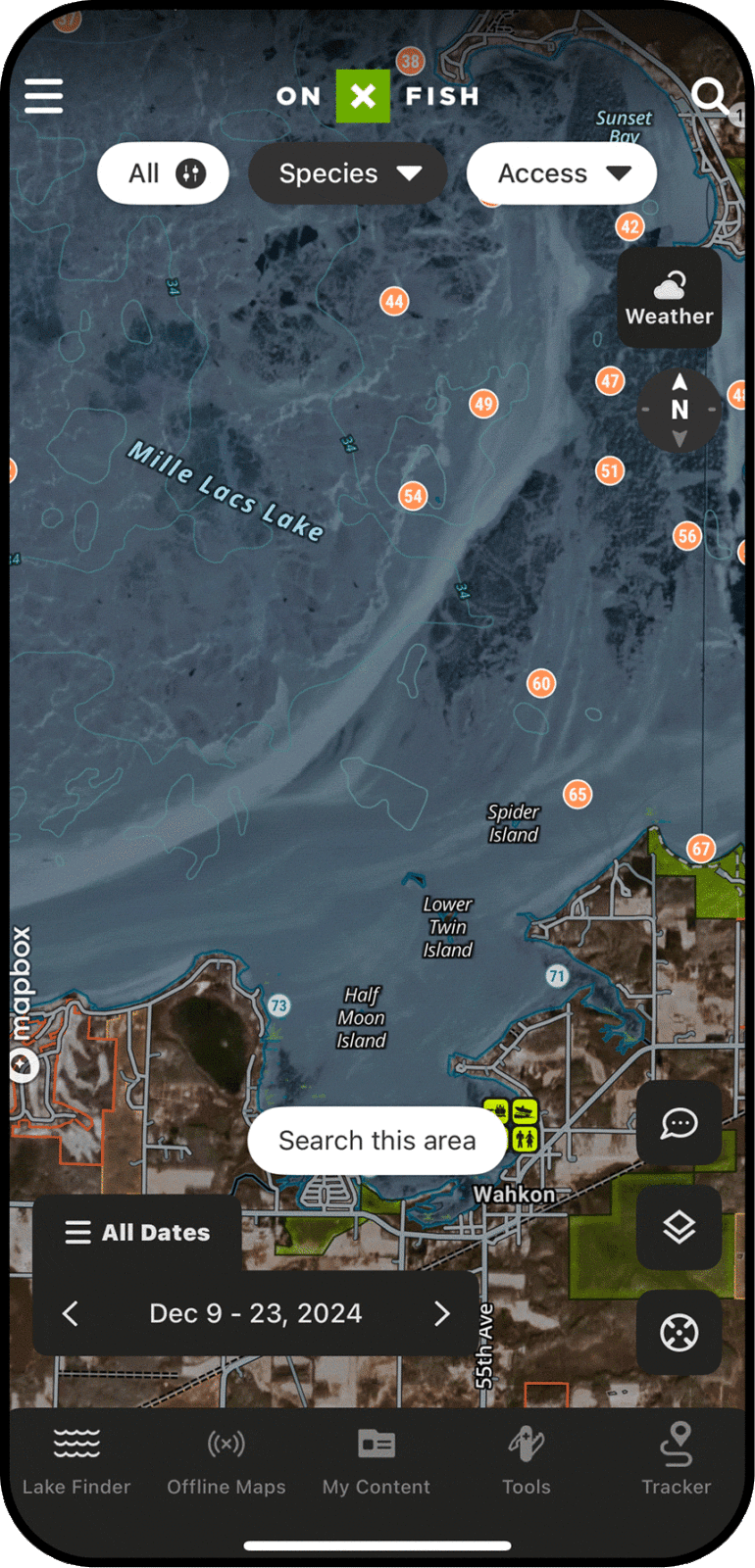
How to use onX Fish in the ice fishing season:
- Recent Imagery: monitor ice and snow coverage
- Fishing Weather Forecast: Keep an eye on wind and pressure swings, feeding windows, and day-by-day changes so you can time your trips around better conditions.
- CarPlay navigation: Mark seasonal access points and safe driving routes once Midwinter has been established and there’s suitable ice and clear travel for a motor vehicle. Always carry a tow strap, shovels, and sand or kitty litter to help you work your vehicle out if you do get stuck.
- Lake & Species Filtering: Narrow down where to go by filtering lakes for your target species, plus factors like trophy/keeper potential, abundance, and access needs so you’re not guessing when you’re scouting your next ice fishing lake.
FAQs About Seasonal Ice Fishing
There’s really no wrong time to fish for walleye, unless your state closes the season. Make sure to abide by all seasons, size slot limits, and other rules in effect.
Some anglers would answer the question that the shallow bite in and around First Ice is their favorite, while others prefer sitting in the warmth of a permanent fish house placed on a hump during midwinter with lines soaking overnight.
Still others, like anglers in North Dakota (where the walleye season remains open during late ice) prefer that period as the fish begin to move toward shallow spawn habitat again. Walleyes will bite throughout the winter although your location and presentations might change. Looking for a bunch of eaters or a personal best? The best recommendation is to go when you can, paying optimum attention to barometric pressure (stable or slightly falling is best) as well as key full (or nearly full) periods in the moon phase. Fish just before sunrise through sunrise, again at dusk, and nighttime for the best walleye fishing no matter what time of winter you fish.
The progression is pretty basic — shallow – deep – shallow over the course of Early Ice, Midwinter, and Late Ice. Early in the season fish will hold close to where they were found during late fall, feeding up for the winter. During midwinter you will find fish holding steady over basins (crappies) or around mid-lake structure (walleyes/pike), and late ice will see fish migrate shallower again following food sources and the increase in oxygen from water flow and increased sunlight/longer days.
Both Early Ice and Late Ice fishing takes place in moderately shallow areas around good, green weeds and/or areas of water flow. When dealing with areas around in-flowing or exiting water like creeks and rivers or pinch-points between bays and the main lake or points, make sure to check the ice thoroughly for safe travel. During both period fish tend to feed aggressively – in the fall to supplement their stores for winter and in the spring to bulk up for the caloric drain of the spawn.
Use OnX Fish Midwest to help you do everything from find the route from your home to the lake access to high probability spots suitable for each season period depending on the species you choose in the app. It will not only direct you to access points but Recent Imagery real-time satellite imaging will give you a good idea of whether those access points are safe. Farther into the season, you will notice ice roads and be able to navigate resort or public roads plowed to certain sections of the lake(s) you’re fishing. From there, look for basins, underwater humps, and other key structure depending on the species you’re targeting. You can essentially pre-fish destinations long before you ever get there with several areas highlighted to try once you get there, eliminating any guess work. Going even further, you can look at moon phase, barometric, and other weather data to determine the best plan for any given period of time.