What Are the Best Baits for Ice Fishing?
Ice fishing is different from open-water fishing in important ways: fish are colder, metabolism is slower, light is reduced, and presentations often need to be more subtle. This is why the right bait, and the right presentation of that bait, can mean the difference between a productive outing and a long, quiet day.
In the following article, we’ll look at the best baits for ice fishing, divided into live options and artificial lures, and then show how to match those baits to common target species.
Key Takeaways:
–Live bait (minnows, waxworms, maggots) remains highly effective under the ice because of its natural movement, scent, and realism.
–Artificial lures (jigging spoons, soft plastics) offer versatility, convenience, and strong results when matched to conditions and species.
–Matching the correct bait (type and size) to the target species and conditions is critical for success.
Live Bait for Ice Fishing
Minnows
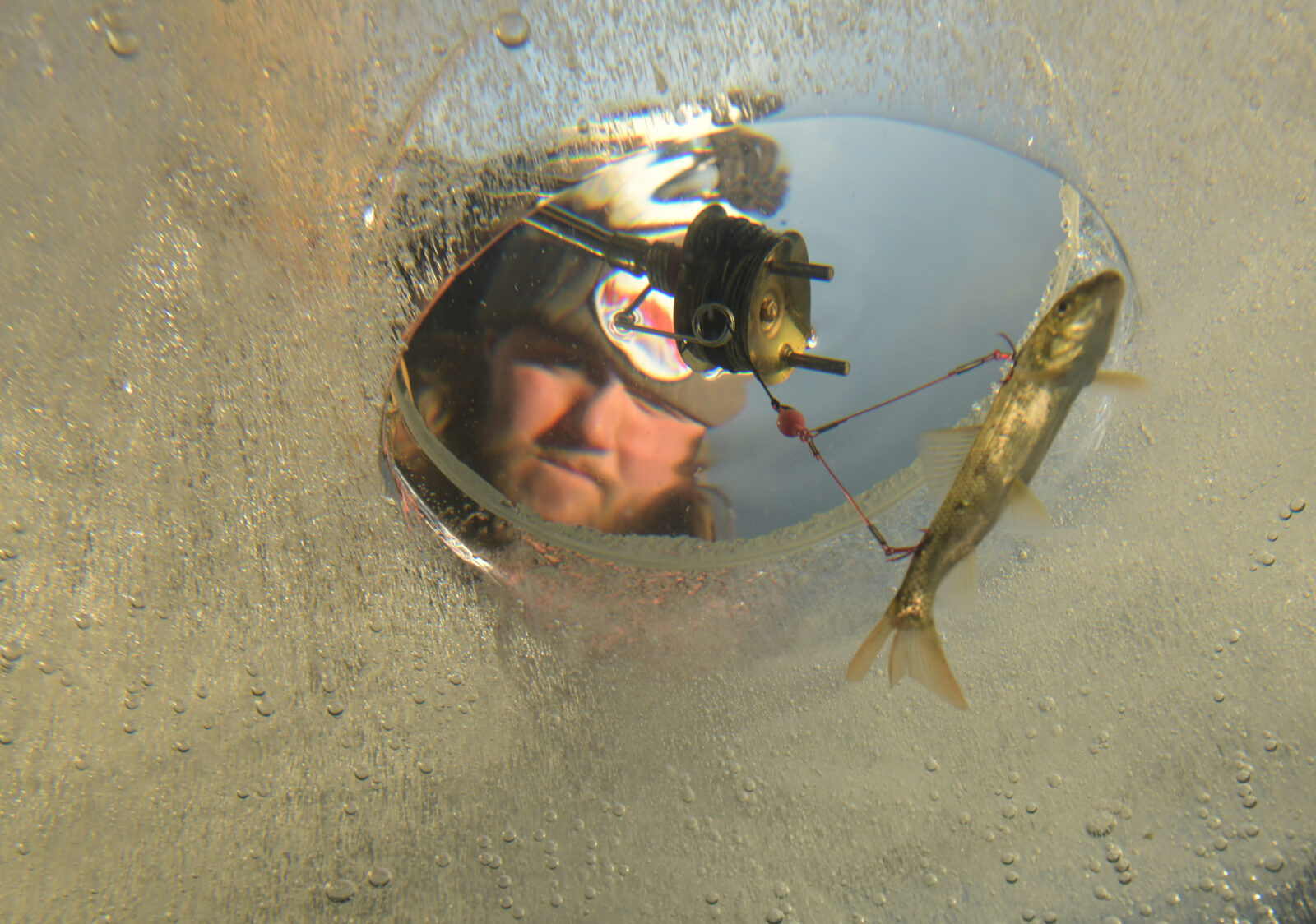
Among live-bait options, live minnows remain one of the most reliable choices under the ice. However, live minnows are not legal everywhere for ice fishing. Regulations regarding the use of live bait, especially minnows, vary by state, region within a state, and even specific bodies of water. These rules are primarily in place to prevent the spread of aquatic invasive species (AIS) and fish diseases like viral hemorrhagic septicemia (VHS).
Fish with confidence this winter
Start using onX Fish Midwest today.
Why minnows work:
They mimic the natural prey of predatory fish such as walleye, pike, perch, and crappie, giving a realistic look, motion, and scent.
They are hardy in cold conditions—cold is less dangerous than heat for many live minnows.
How to use minnows:
They can be used on tip-ups (especially for pike or large walleye) or on jigging lines where the minnow is hooked through the back or lips and allowed to flutter. They can also be used by removing the head or tail and using that portion on a jigging spoon or small jig to still benefit from the minnow profile and movement.
Target species: walleye, pike, perch.
The combination is especially effective for walleye and perch when presented with subtle movement or suspended under the ice.
Waxworms and Mealworms
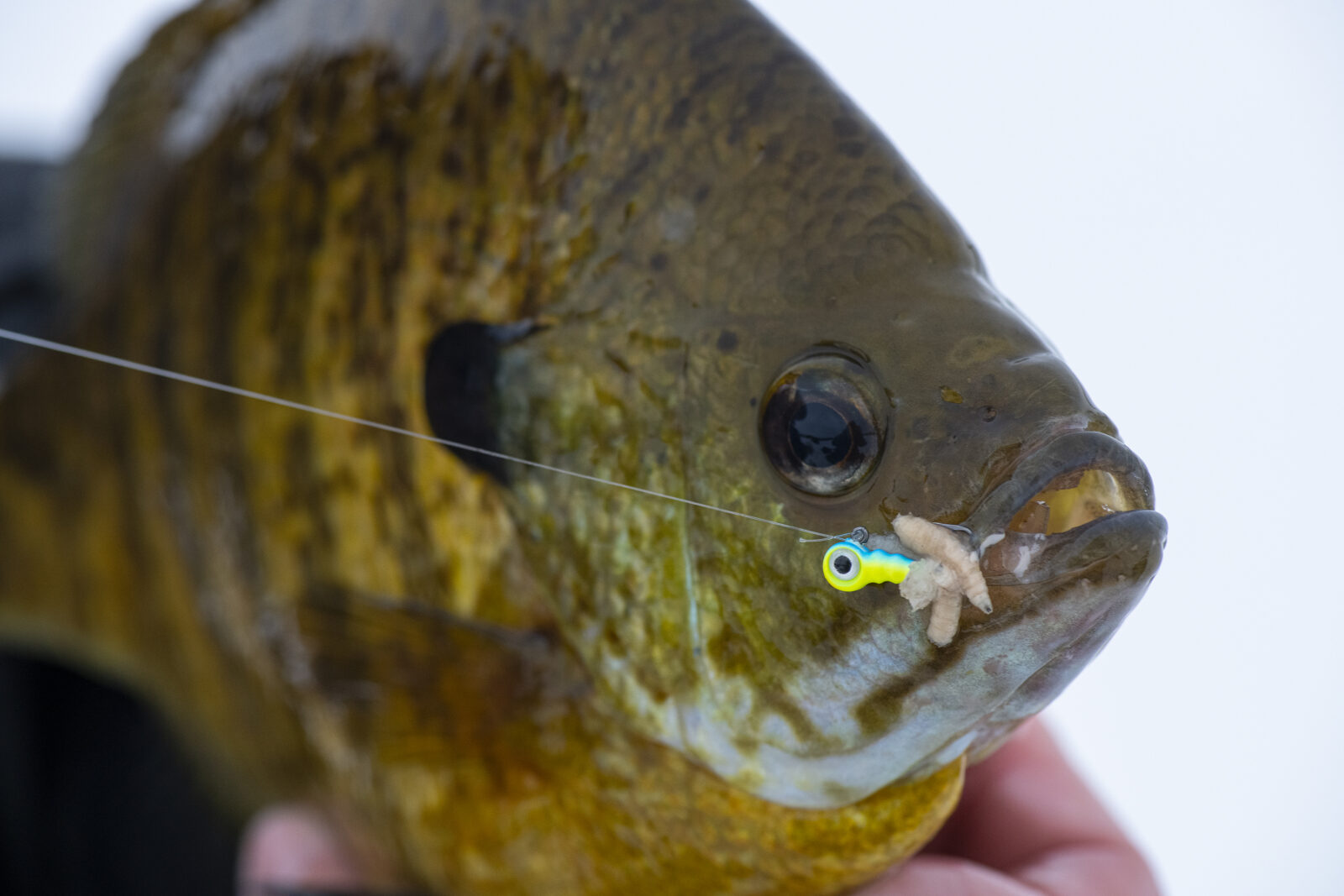
Waxworms (the larval stage of wax moths) and mealworms (larval beetles) are go-to live baits for panfish, such as crappie and bluegill.
Why waxworms and mealworms work:
Their small size and natural appearance appeal to finicky panfish under the ice, which may be lethargic and unwilling to chase larger prey. They also hold up well in cold conditions, and their presentation can be subtle—important when fish are slow to react.
How to use waxworms and mealworms:
Hook a waxworm or mealworm on a light jig or small hook and present it near the bottom or just off the bottom where crappie/bluegill may be suspended or holding.
Use a slight twitch or gentle jigging motion to bring the worm into view and encourage a bite.
Target species: crappie, bluegill.
Spikes (Maggots)
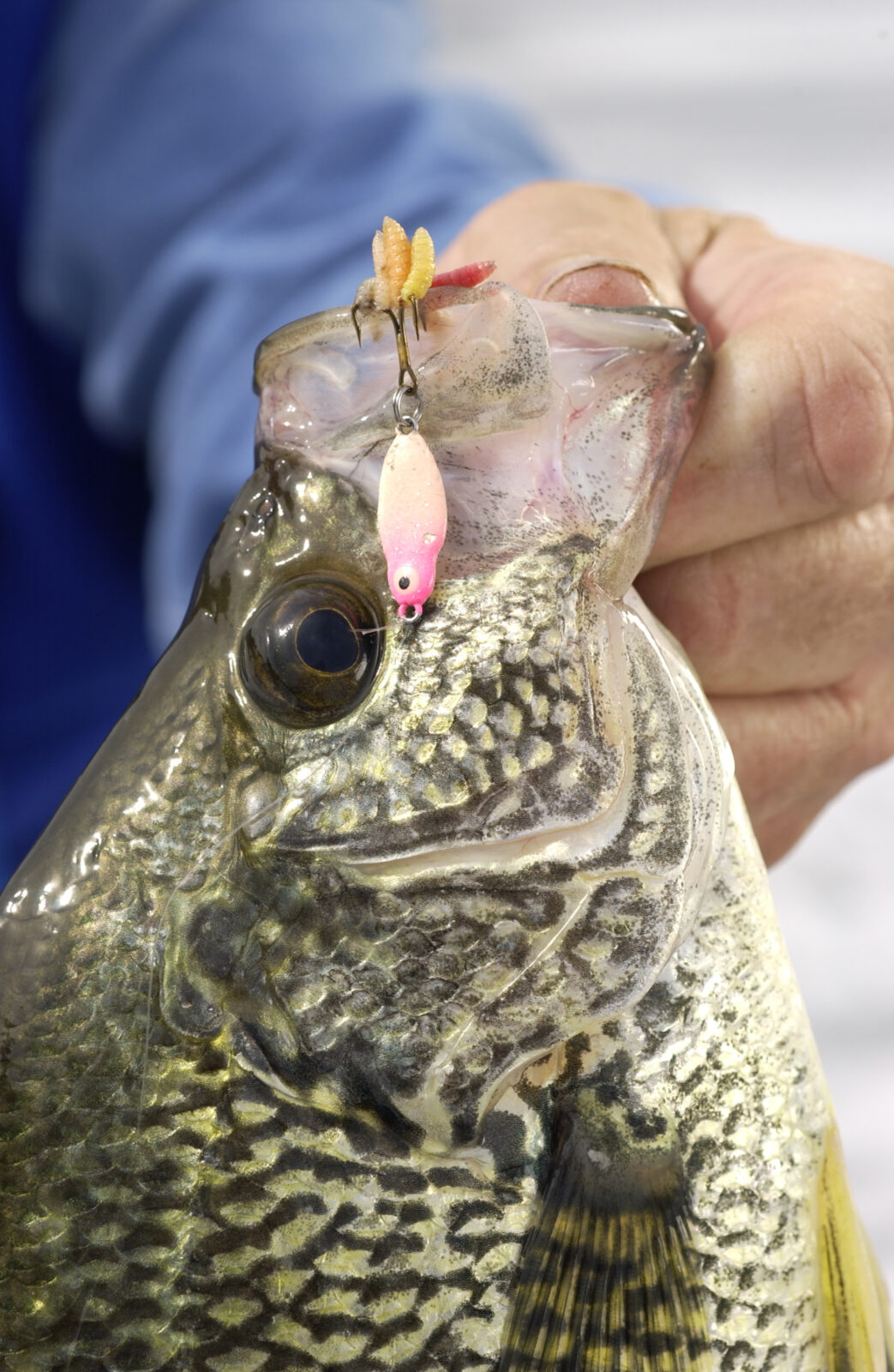
In many parts of the ice-fishing world, “spikes” refers to live maggots (sometimes called fly larvae) and are used for small species like perch and bluegill.
Why spikes work:
For perch and bluegill, especially in clear water or when fish are slow, small natural offerings like maggots present a realistic, low-key option. Because the profile is very small, fish that are cautious or pressured may accept them more readily than larger, more dramatic bait.
How to use spikes:
Pair them with small jigs (ex. in the 1/64 oz to 3/32 oz size range) for minimal disturbance and natural presentation. Present near the bottom or just off the bottom where small schooling perch or bluegill may concentrate.
Target species: perch, bluegill.
Artificial Lures for Ice Fishing
Jigging Spoons
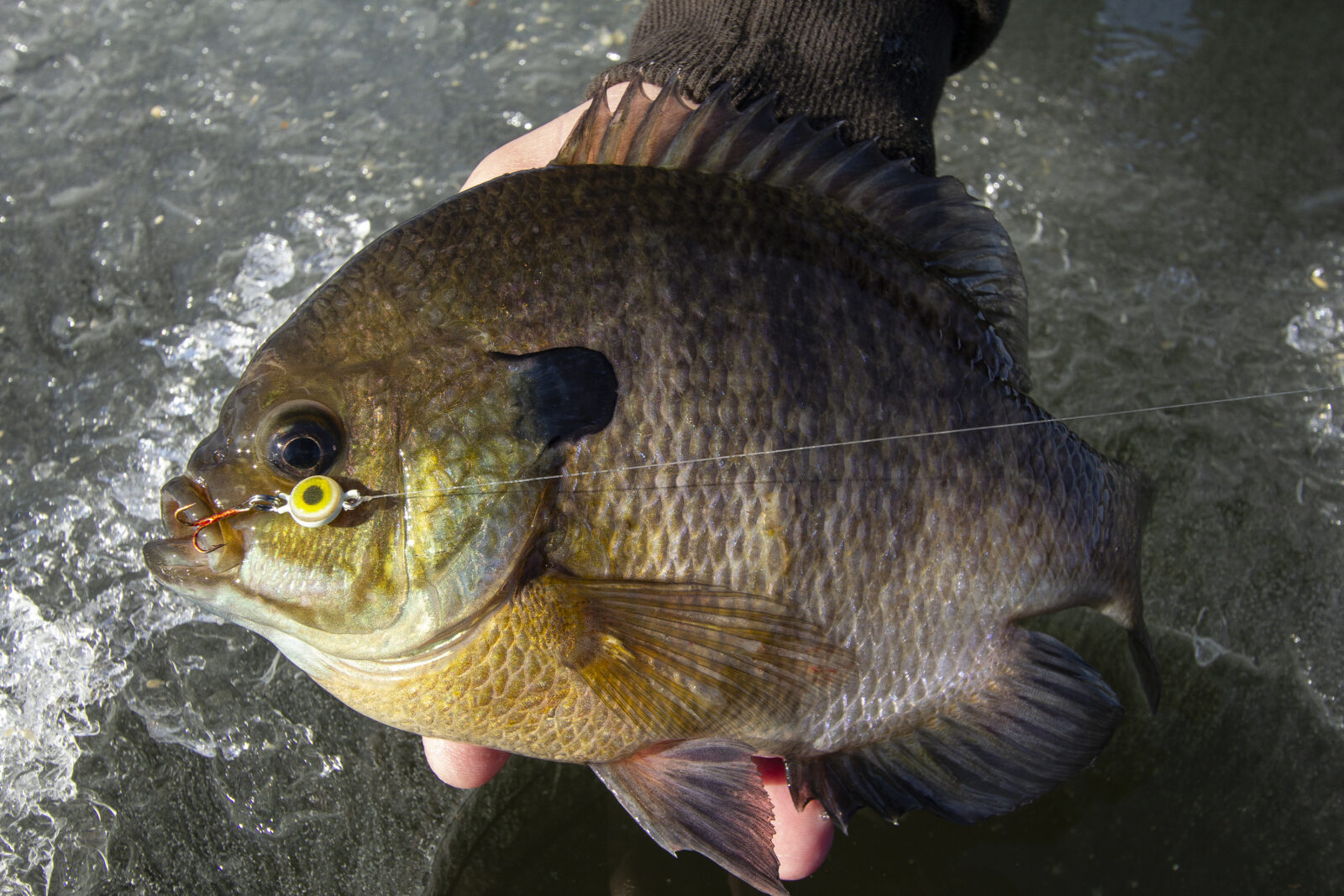
Jigging spoons are metal, often flat or slightly curved, lures that flutter, flash, and sometimes rattle when jigged under the ice. They are excellent for predatory species like walleye and perch.
Why jigging spoons work:
The combination of flash (reflective surfaces), vibration, and movement under the ice triggers predatory instincts. They can be tipped with a small piece of live bait (such as a minnow head or tail) to add scent and extra realism.
How to use jigging spoons:
Drop the spoon to the desired depth (often near a structure or schooling fish), then jig it with a lift-and-fall motion, pause, jig again. Vary the speed of the jig to match fish activity—slower on cold or sluggish days, more aggressive when fish are feeding.
Target species: walleye, perch.
Soft Plastics
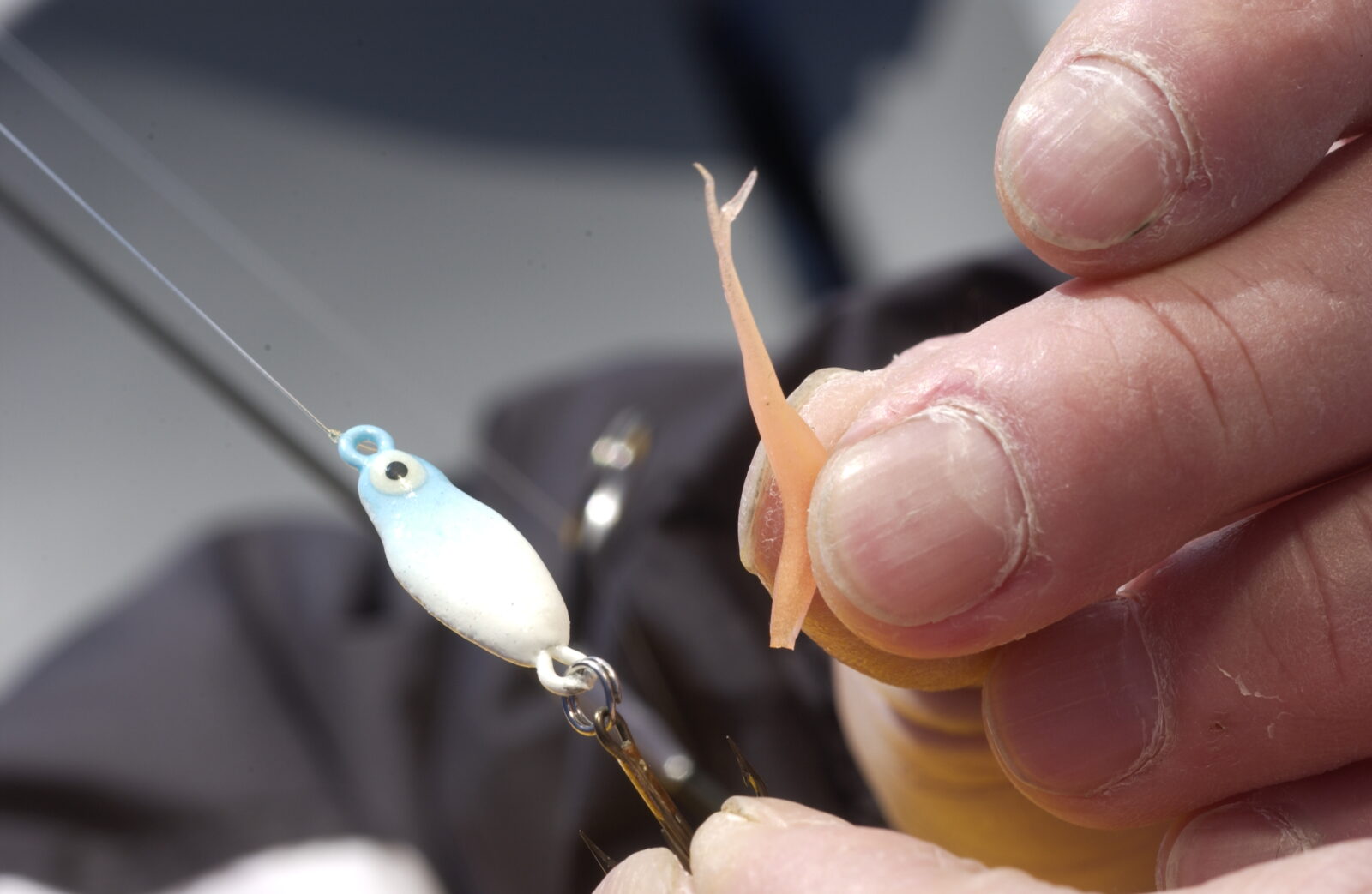
Soft plastic lures (mini grubs, micro shads, insect-imitating plastics) have become extremely popular for ice fishing, especially for panfish and perch.
Why soft plastics work:
They mimic worms, larvae, small minnows, or insect forms, which are often what fish feed on under the ice.
They offer advantages of durability, variety (shapes, sizes, colors), and cost-effectiveness compared to live bait.
How to use soft plastics:
Use small plastics (typically in the 0.5″ to 2″ range) on light jig heads or micro jig heads for panfish and perch.
Present with a subtle motion: a small twitch or vertical lift and let it settle, then repeat – fish are often less aggressive in cold water, so finesse is key. Match color to water clarity: natural hues in clear water, brighter/glow colors in stained or deep water.
Target species: panfish (crappie, bluegill), perch.
Matching Bait to Species
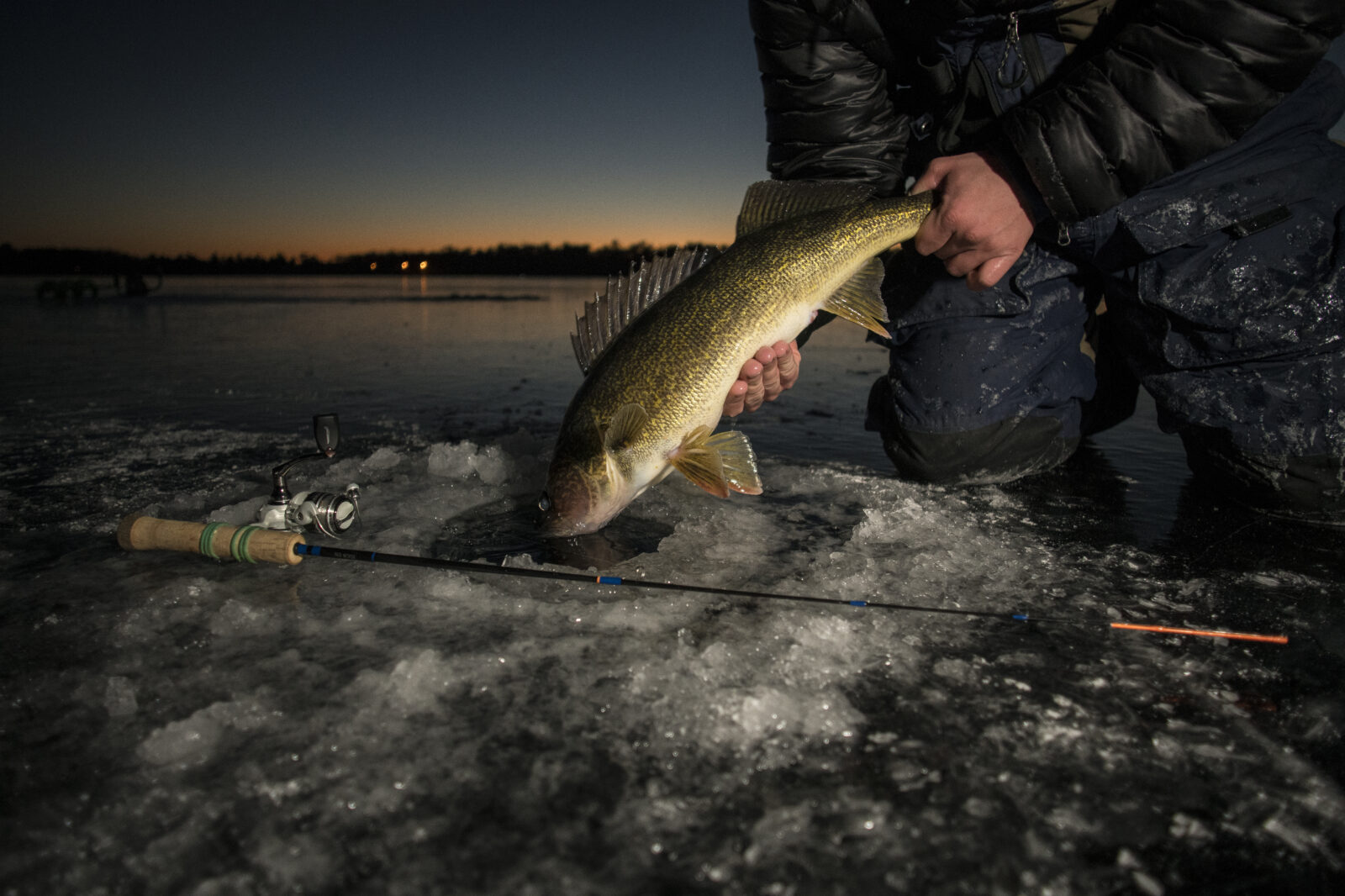
Here is how the baits and lures for ice fishing discussed above align with specific target species:
Walleye: If allowed, use minnows (especially in deeper structure or near drop-offs), or jigging spoons tipped with a minnow head/tail, or small soft plastic trailer. Some anglers also use rattle-type spoons or jigs for walleye when fish are aggressively feeding.
Northern Pike: Deploy large live minnows on tip-up rigs or large jigging presentations; the motion and size provoke strikes from this ambush predator.
Crappie: Target these with waxworms and small soft plastics (in small sizes) presented in crappie hideouts or near wood/structures under the ice.
Bluegill: Use maggots (AKA “spikes”) and waxworms, or micro soft plastics, presented gently near bottoms or shallow flats where bluegill hold under the ice.
Perch: A versatile species—live minnows for larger perch, jigging spoons for mid-sized perch, spikes or small plastics for smaller or finicky perch. The flexibility of presentation is key with perch.
Closing Thoughts
Remember that early ice often offers the best shot at active walleye. Pair natural baits—live minnows where legal, or jigging spoons tipped with a minnow head—with short lift-and-pause cadences near shallow structure. For a deeper breakdown of timing and presentation, see Unlocking Early Ice Walleye Opportunities with onX Fish. As you plan and travel, verify access and pressure ridges with Recent Imagery, save approach routes and waypoints, and use CarPlay/Android Auto GPS to follow breadcrumbs back to shore; details are in Safe Travel on the Ice: Using CarPlay & GPS Navigation for Driving on Ice.
FAQs About Ice Fishing Baits
Not strictly, and they are not legal to use in all areas—but live bait has distinct advantages. Live bait offers natural movement, scent, and realism that artificial baits often cannot match.
For example, live bait produces a natural scent and is preferred when ice fishing in shallows or other areas where baitfish are likely to be schooling in large numbers.
On the other hand, artificial baits (such as spoons and soft plastics) are more convenient, reusable, and often easier to transport and store. They are also the most widely accepted baits in the ice fishing community. They can be most effective when fish are pressured or in deeper water where a “flash/vibration” presentation attracts fish.
At night, or in low light conditions, fish rely more on visual contrast, flash, and vibration than fine detail. Therefore: Jigging spoons with reflective surfaces or rattles can work well. Soft plastics with glow features or bright colors may also be a difference-maker when ambient light is extremely low. Live bait still works, but your presentation may need to be slower, and placement near active feeding zones is more critical.
Sometimes—like with live minnows, regulations vary by state, specific fishing district, and even individual bodies of water. Even when allowed, in many under-ice conditions, many anglers prefer smaller larvae or maggot-type baits rather than full-sized nightcrawlers because fish under the ice tend to be less willing to chase large prey, and conspicuous offerings can spook them. If you do use larger worms, you’ll want to use slower movement and place them near structures where fish may locate their prey opportunistically.
Yes—soft plastics are highly effective under ice when used properly. They are considered an excellent alternative or complement to live bait because they allow controlled presentations, versatility of color/size, and can mimic prey forms that fish expect under cold conditions. The key is to slow your action: fish are less active in cold water, so subtle jigging or small vertical motions are often more successful than aggressive movements.
For panfish (crappie, bluegill): small baits (waxworms, maggots, micro plastics) and small jigs in the 1/64 oz to 3/32 oz range tend to work best.
For perch: moderate size—small minnows, small to medium spoons, small plastics. The choice depends on the size and behavior of the perch in your waterbody.
For walleye: larger minnows, larger spoons or plastics sized for predatory fish, and presentations near structure or deeper water. Because walleye are ambush predators, your bait size and motion should reflect the prey they naturally encounter.