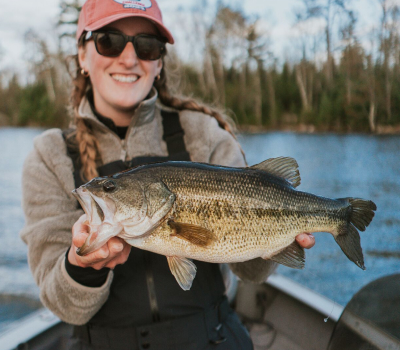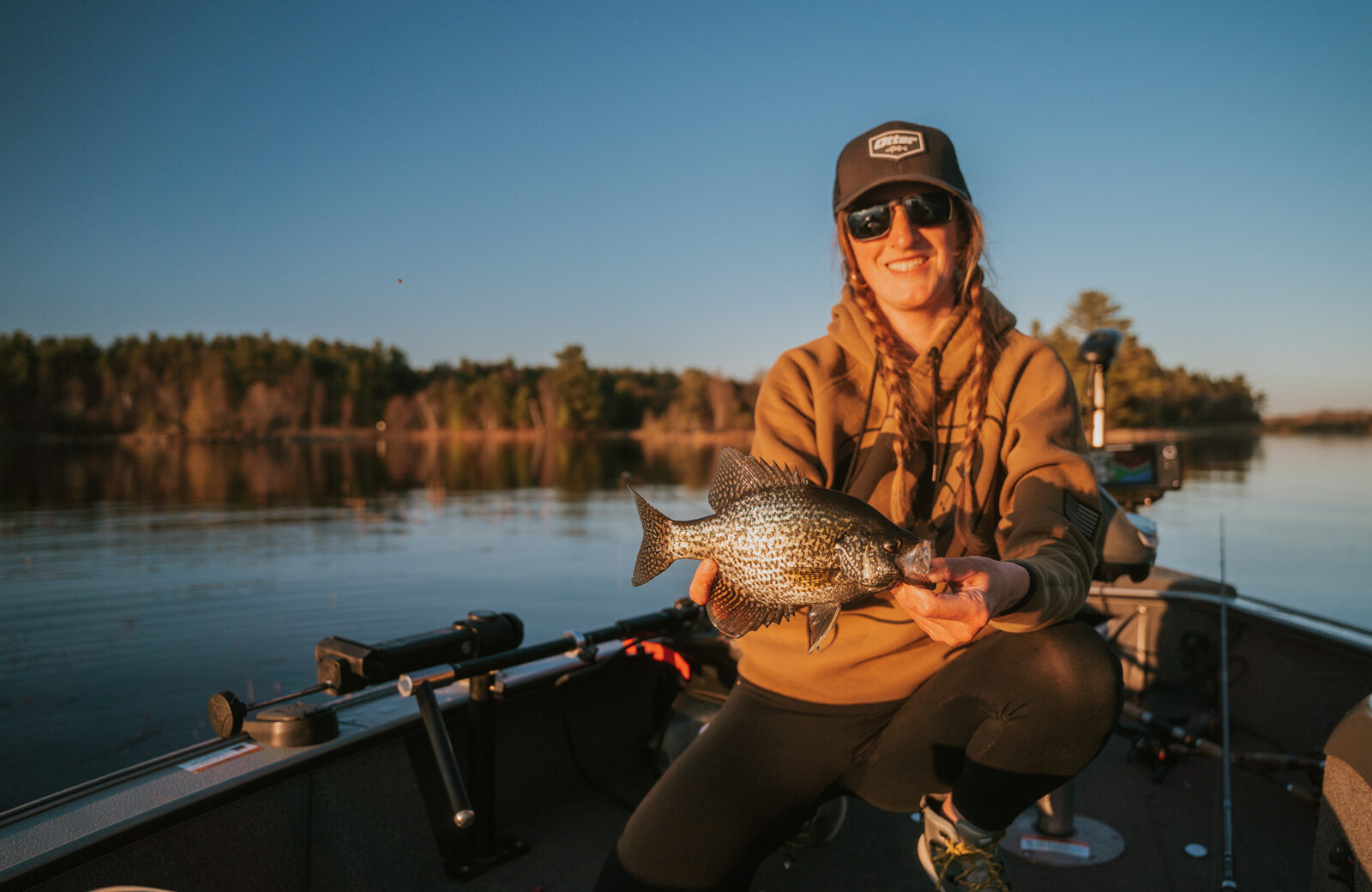

A female angler holds up a crappie she caught.


Crappie

Also known as slabs, papermouths, specks.

Crappie icon

Crappies are the most popular panfish species across North America. They’re a fan favorite, pursued for their abundance and availability. Touted as quality table fare, crappies are among the most consumed freshwater fish in the United States.

While they’re a great target for beginners, they’re also a worthy adversary for advanced anglers. Those who have spent any time chasing them are familiar with that distinctive crappie “thump.”

Finding Crappie Fishing Lakes

Crappies—both black (Poxomis nigromaculatus) and white (Poxomis annularis)—are found across North America in everything from lakes and ponds to reservoirs and rivers. Native to the eastern and central portions of the United States, crappie have expanded their range to most of the United States, as well as Canada and Mexico.

The greatest challenge in crappie fishing is locating the fish. Once found, they tend to cooperate more than most. To help you locate more crappies, here is guidance on finding new lakes.

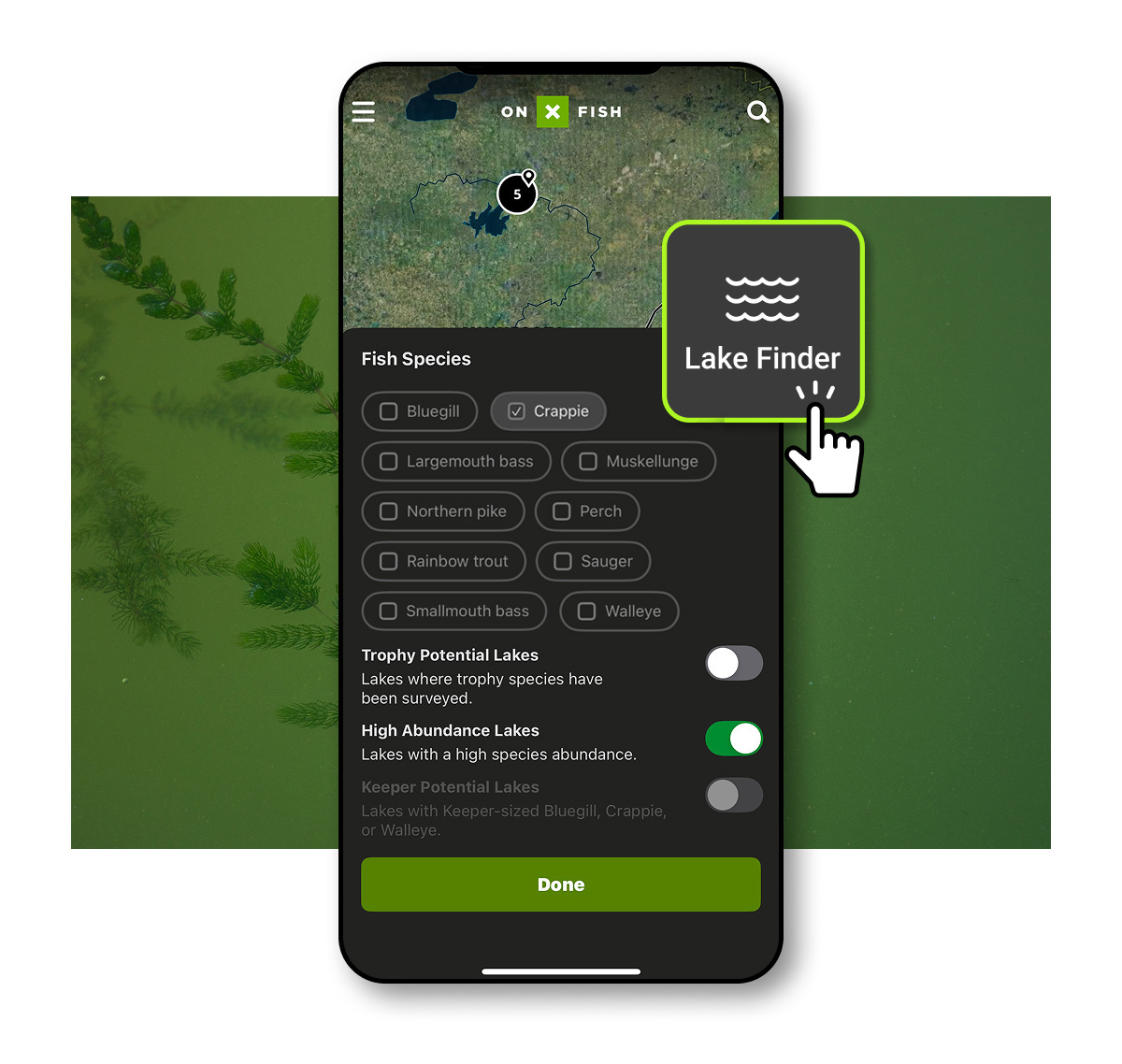
Crappie Lake Finder functionality in the Fish App.

Crappie Habitat

Crappies are found across a range of waterbodies, including lakes, ponds, rivers, and reservoirs. Everything from shallower, stained environments to deeper, clearer haunts offers equal opportunity when it comes to crappies.

Top locales include:

  • Basin areas, like expansive, soft-bottom areas.
  • Vegetation, like cabbage, coontail, and lily pads.
  • Wood, like downed trees, brush piles, and fish cribs.
  • Transition areas, like hard-to-soft bottom areas.

Water Temperature

Water temperature has a direct correlation with crappie activity levels. Similar to bluegills, crappie are active throughout the entire year, but optimal temperatures are found in the 50°F to 70°F range.

Spawning activity generally occurs in the 60°F to 70°F range.

How To Catch Crappie

Crappies are a popular target for panfish anglers across the United States. They’re highly abundant in a number of waterbodies. By and large, they are relatively easy to catch and offer fast-paced action.

With a moniker like papermouths, one can only assume that a finesse approach is best. However, expert anglers employ a variety of techniques to coax slab crappies into biting.

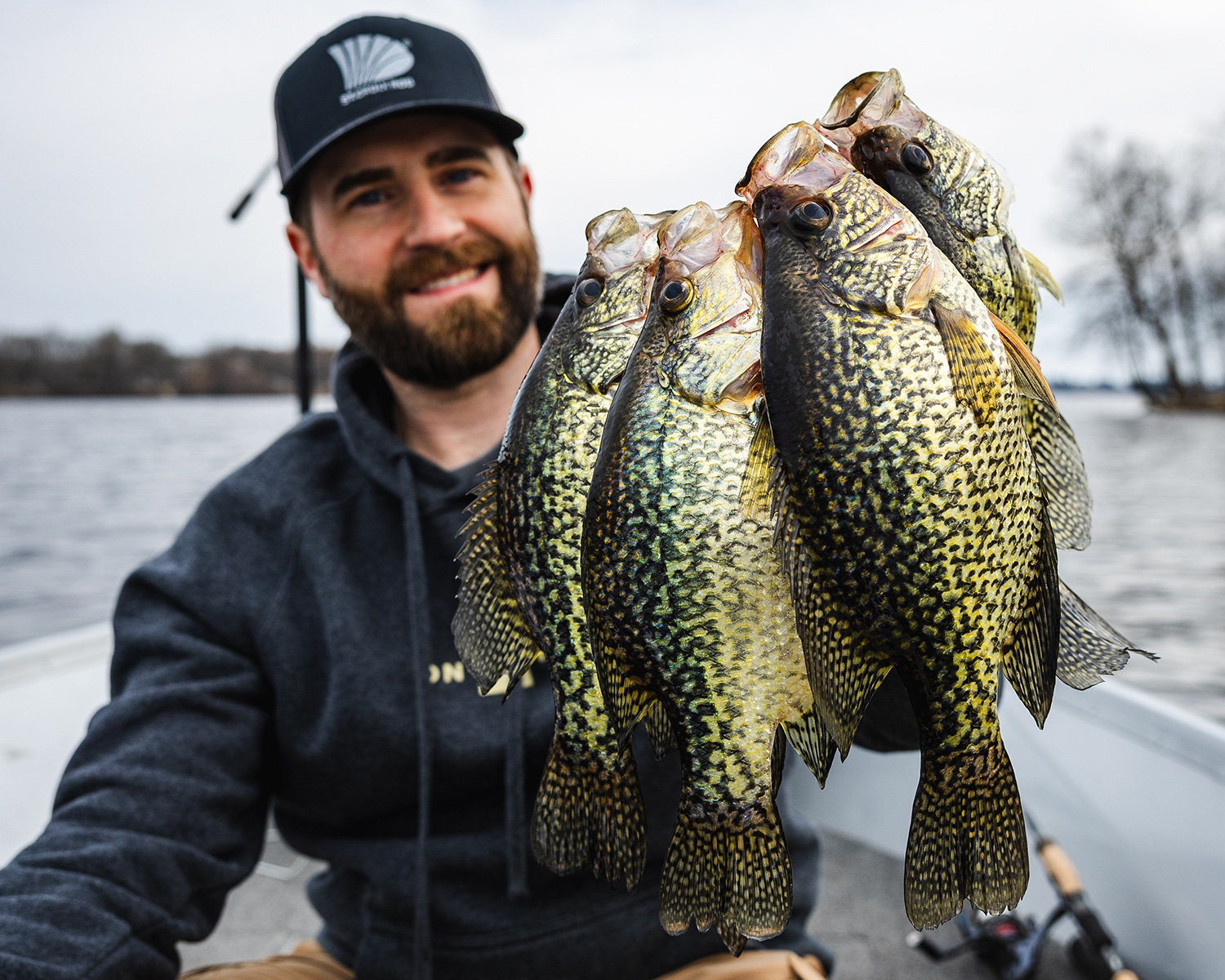
A man holds a string of crappie he caught.
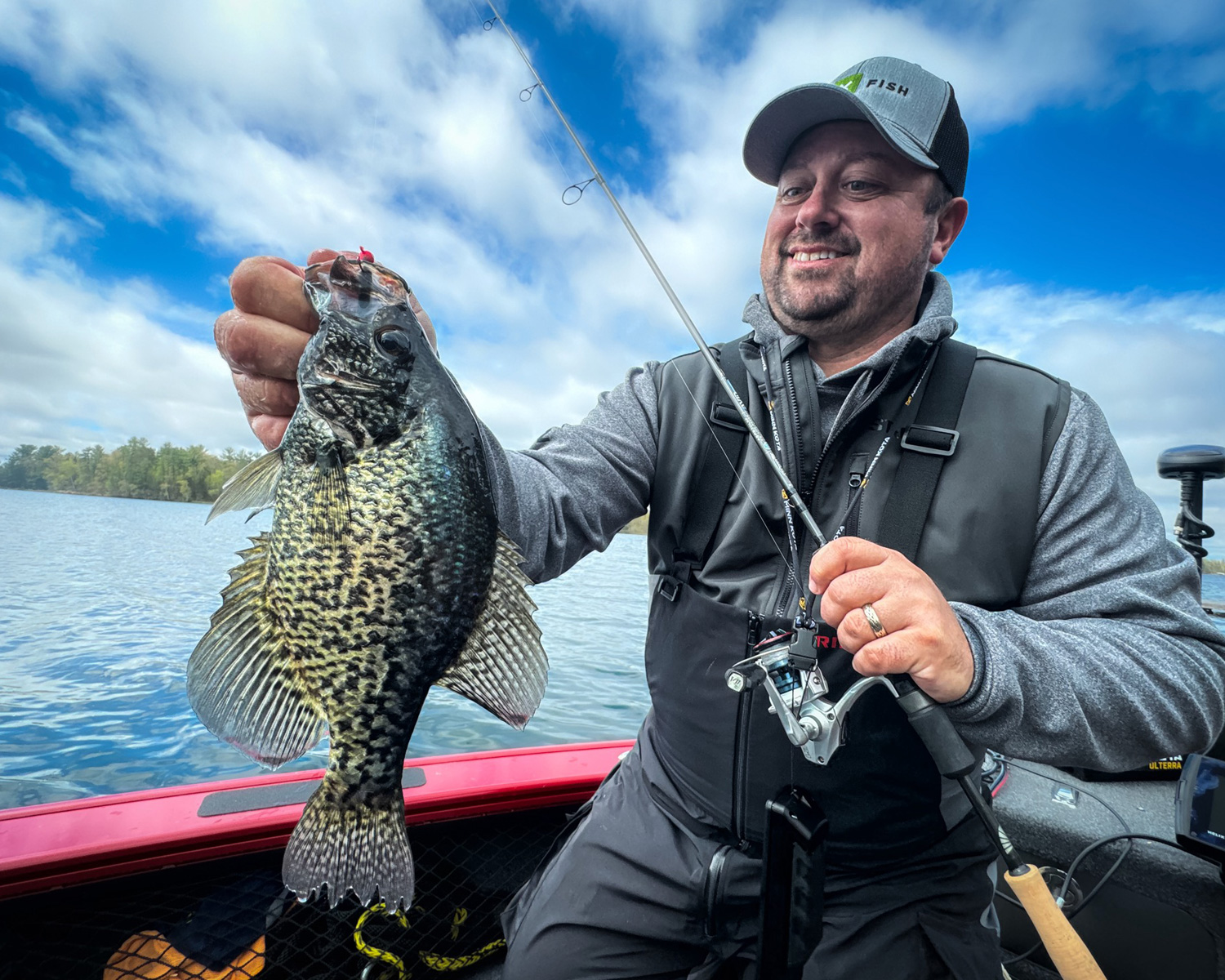
An angler holds a crappie they caught.

Crappie Behavior

Black crappies and white crappies are members of the sunfish family. Like most members of this family, they’re a schooling fish. If you find one, you’re likely to find more nearby. Crappies use this schooling behavior for protection and feeding.

Crappies are roamers and constantly on the move. While they might be in a specific area today, they could be in an entirely different one tomorrow. Seasoned crappie anglers are all too familiar with the phrase “here today, gone tomorrow.”

There’s no better example of boom or bust fishing than crappies. When they’re hot, they’re hot, but when they’re not, things are downright frustrating.

Crappie Diet: What Do Crappies Eat?

Common forage preferences for crappies are similar to other panfish species, with a mix of aquatic invertebrates, insects, and baitfish. In many waterbodies, baitfish and minnows make up the bulk of a crappie’s diet.

Crappie Fishing Techniques

The best fishing techniques for targeting crappie vary and depend on several factors, including seasonal dynamics, forage preferences, and waterbody type.

Top tactics generally involve small jigs and plastics, whether fished by themselves or under a float. Advanced anglers employ a range of techniques tailored to specific situations, like working jerkbaits for pre-spawn fish or trolling crankbaits over expansive summer weed flats. 

Crappie Lure Recommendations

– Jig and plastic combinations, including paddle tails, minnow imitations, and bug imitations.
– Hair jigs, like marabou, bucktail, or synthetic options.
– Small hardbaits, like crankbaits and jerkbaits.
– Small minnows.
– Waxworms and spikes (commonly used in winter).

Crappie Knot Recommendations

– Attachment knots are ideal for securing lures. Options include the improved clinch knot, Palomar knot, and loop knot.
– Connection knots are designed to connect leader lines to main lines. Options include the FG knot, Alberto knot, blood knot, and uni knot.

Best Time To Catch Crappie

The best time to catch crappies is anytime you can be on the water. Jokes aside, it’s a topic of great debate. If you polled a number of anglers, you’re likely to get a number of varying answers. Crappies can be targeted year-round, and every season offers its mix of challenges and opportunities.

Seasonal Tips

  • Spring: Spring is typically characterized by variability. As the stages of spawn progress, crappies make predictable movements from deep to shallow. During the early spring, crappies are often found in or close to deep basins. Warming water temperatures will drive fish into shallower water. Crappies generally seek out protected areas with adequate cover for spawning. The top tactics for the spring include micro jerkbaits and floats paired with plastics or live bait.
  • Summer: Vegetation is a key factor throughout summer. Crappies typically make the move to healthy weeds, where they will reside for much of the season. Ideal vegetation types include cabbage and coontail beds. As the season progresses, crappies will generally move to deeper water. Jig and plastic combinations are arguably the best option for this timeframe.
  • Fall: Mid-depth to deep water basin areas typically come into play during the fall. Submerged wood, like brush and fish cribs, especially those in the right depths, can be great options. Crappies tend to congregate more heavily throughout the fall period. Faster, more vertical presentations, like lipless crankbaits, darting baits, and straight tail plastics, are popular choices.
  • Winter: Winter crappie fishing is often associated with deep water. Many crappies move to the deepest basins where they will reside throughout most of the winter. Ice fishing lures, like spoons and small jigs tipped with plastics or live bait, are some of the best options. Crappies are particularly susceptible to barotrauma during this period, so remain cognizant of the depths in which you’re targeting fish.

While crappies often make the move to deeper water during different times of the year, healthy, standing vegetation can hold fish at any time. With mapped vegetation types like weed beds, submerged grass, lily pads, and more, the onX Fish App Area Insights feature can help anglers understand where to fish for crappie based on where they like to live and feed.

Time of Day and Weather

Crappies tend to be cooperative throughout the majority of the day. Though, dawn and dusk can kick things into high gear, particularly in deeper, clearer lakes (versus shallower, stained lakes).

In terms of the best weather for fishing crappie, stable patterns often result in the most consistent bites. Drastic weather changes can definitely have an impact on a bite. Cold fronts often shut down a bite and drive fish to deeper water. A rising barometer often leads to stubborn fish, while a falling barometer can kick things into high gear.

Catching Crappie With the onX Fish App

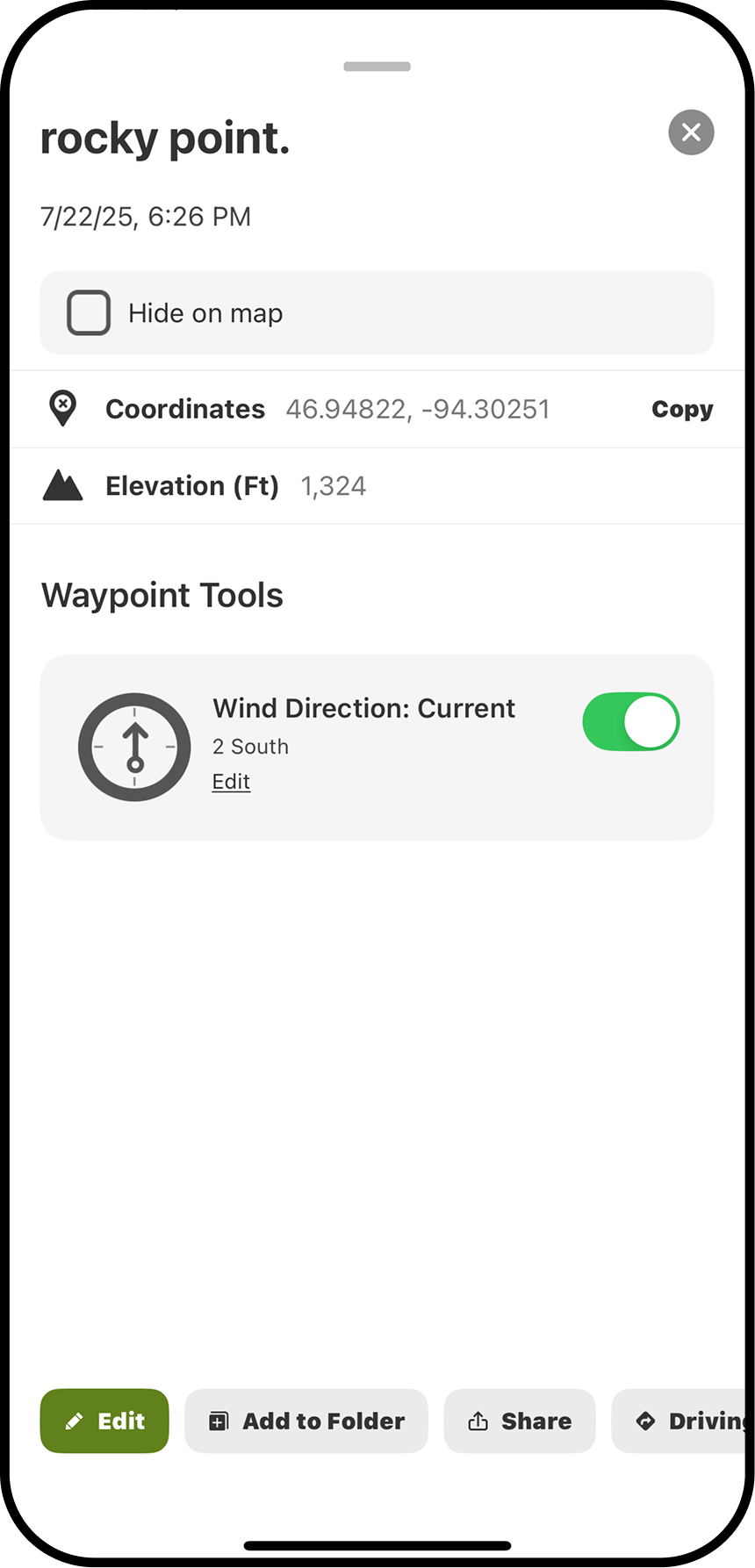
onX Fish's Wind on a Waypoint functionality.

See Where Wind Is Piling Warm Water

The Fish App uses local, real-time weather data to provide accurate predictions. Springtime crappie bites are driven by weather and water temperature. Knowing how quickly things are warming up or where the wind is piling up the warmest water is immensely helpful when searching for spring crappies. Customize your Waypoints to display wind direction and speed.

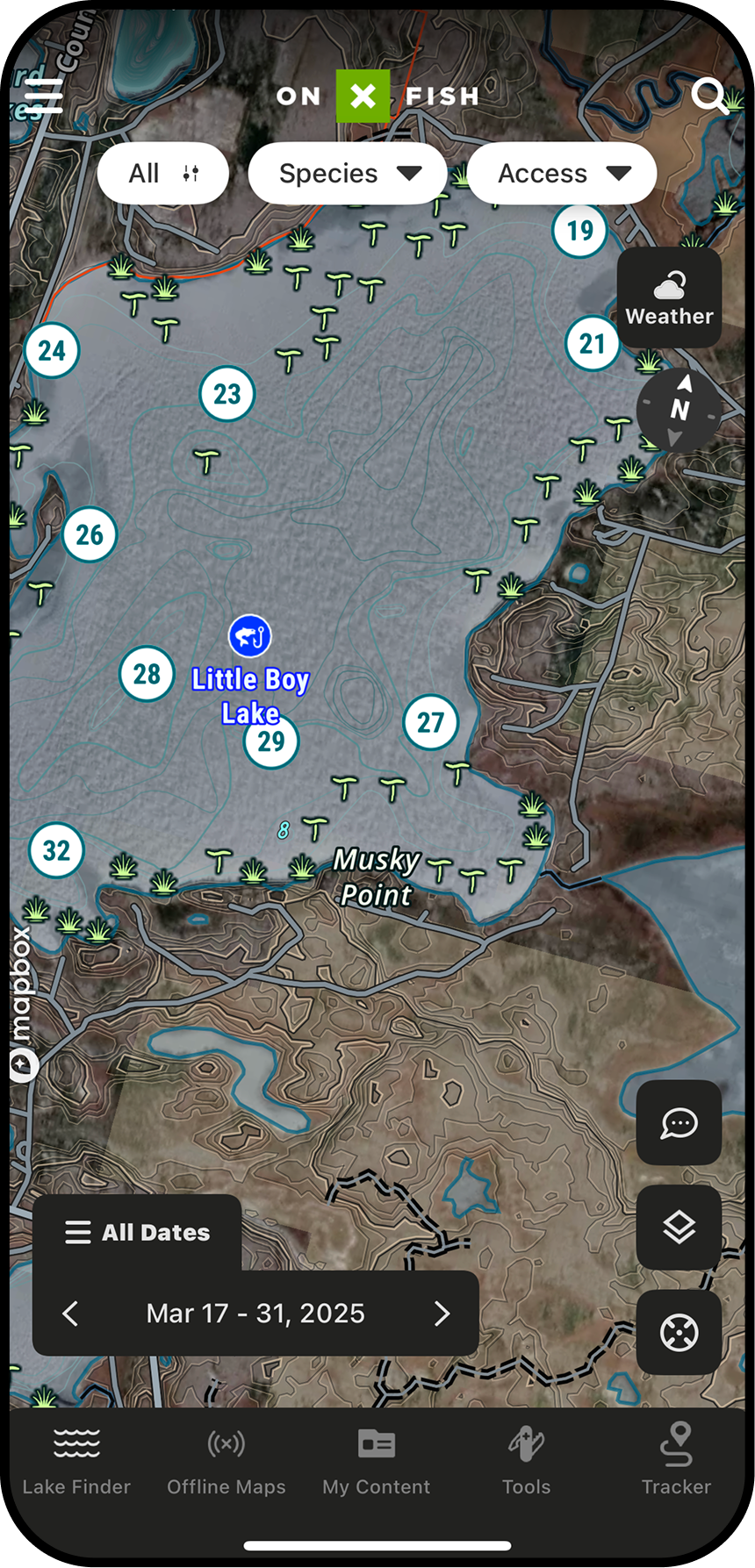
onX Fish Recent Imagery functionality.

Monitor Ice Formation as Temps Drop

Crappies are a common target during the winter months. With Recent Imagery, you can build a game plan before you hit the ice. The Fish App’s Recent Imagery updates every two weeks, and maintains a record of past weeks, so you can look back to plan ahead. Compare satellite imagery across time to figure out how ice is forming, and see where people are—and aren’t— fishing.

Find More Crappie Lakes

Open the map. Find the structure. Time it right.

Crappie FAQs

When do crappie spawn?

Like many freshwater species, crappies spawn during the spring. Ideal water temperatures for spawning are in the 60°F to 70°F range.

How big is the world record crappie?

The world record black crappie is 5 pounds, 7 ounces. The world record white crappie is 5 pounds, 3 ounces. 

Black crappies vs. white crappies: What’s the difference?

There are two species of crappies: black and white. While they inhabit many of the same waterbodies, black crappies generally prefer clearer water and vegetation, while white crappies are found in more turbid water and are less dependent on vegetation. 

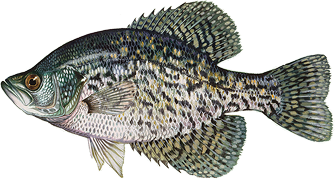
Black crappies have a darker complexion with black spots, and white crappies have a lighter complexion with vertical barring. In terms of dorsal spines, black crappies have seven or more, while white crappies have six or fewer. 

Black and white crappies can reproduce in systems where they both exist, resulting in hybrid crappie.