
Largemouth Bass

Also known as largies, green bass, bigmouth bass, and bucketmouths.

Largemouth bass icon

The largemouth bass is defined by aggressive behavior, adrenaline-inducing fights, availability, and accessibility. It’s easy to understand why they’ve become one of the most sought-after game fish species across North America (and the world). One could argue that no other single species has driven as much economic impact and innovation within the fishing realm as the largemouth bass.

Facts and tips provided by Blake Tollefson, onX Fish Ambassador.

Finding Largemouth Bass Fishing Lakes

As a perennial popularity contest winner, largemouth bass (Micropterus salmoides) are a fan favorite among fishermen. Their widespread availability has them firmly planted at the top of many anglers’ hit lists. Lucky for anglers, largemouth bass seem to be found everywhere, including 49 of 50 states.

Few fish have a cult following as prevalent as the largemouth. Bass anglers across the country hit the water daily with intentions of landing a five-fish bag for the record books. To help achieve that goal, here is guidance on finding places likely to hold largemouth bass and how to catch them.

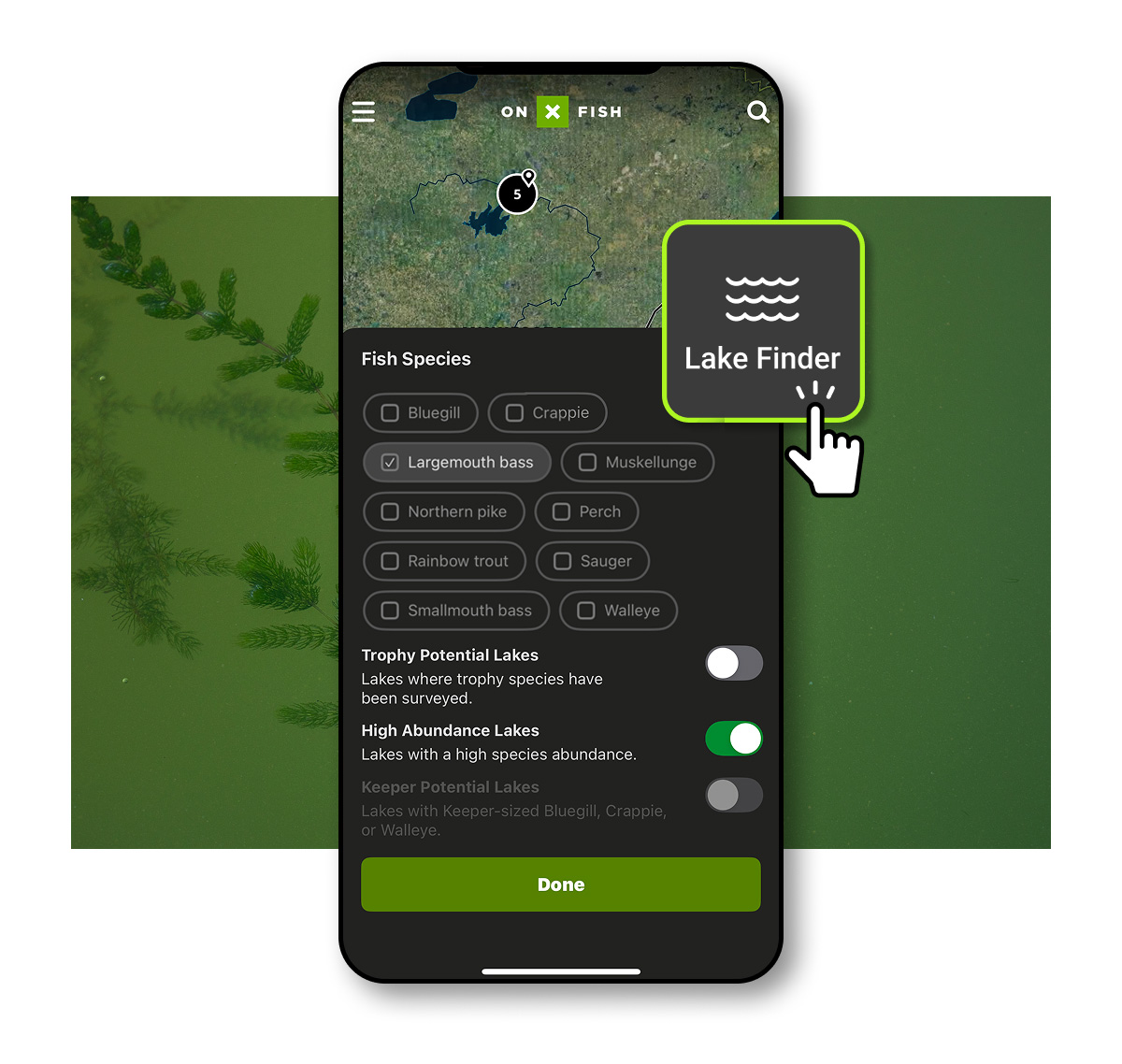
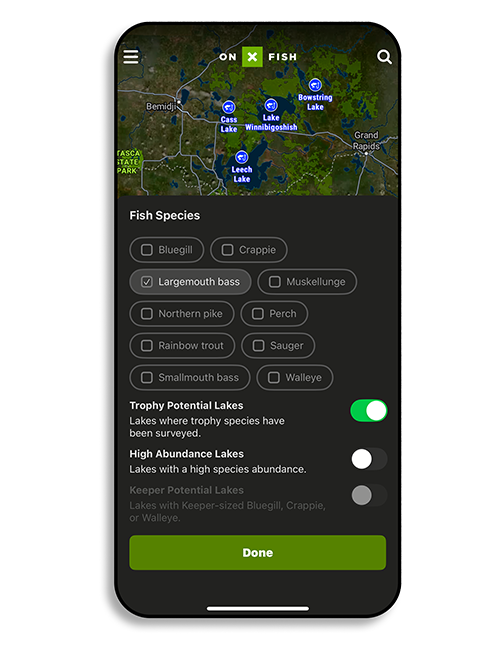
onX Fish Lake Finder functionality shown on a mobile device.

Largemouth Bass Habitat

Largemouth bass are found virtually everywhere, inhabiting a variety of water bodies including lakes, reservoirs, and rivers. They tend to thrive in warmer, shallower, and weedier environments.

Largemouth relate heavily to structure and cover of both the natural and manmade variety. Top locations include:

  • Vegetation, like weed lines and lily pads.
  • Wood, like downed trees, brush piles, fish cribs, and docks.
  • Rock bars, points, and more.

Areas that combine more than one of the above-described features will often yield more promising results.

Water Temperature

Water temperature has a direct correlation with bass behavior, including metabolism, food consumption, and growth. As a general rule of thumb, as water temperatures rise, so does the activity level of bass—at least to a point. Temperatures in the 65°F to 80°F range provide optimal results.

How To Fish for Bass

Although they’re often considered “easy to catch”, aquatic IQ tests have shown that largemouth rank high on the list in terms of judgment, discernment, and visual perception, making them one of the more wary freshwater species.

One of the appeals of bass fishing is the variety of techniques used to catch them. The list is seemingly endless, with new options being developed every year.

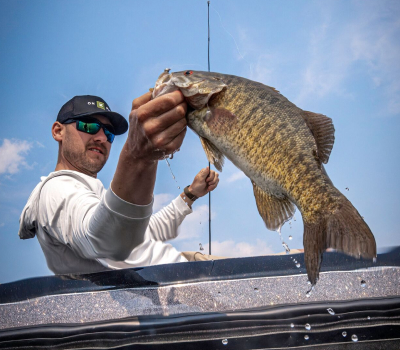
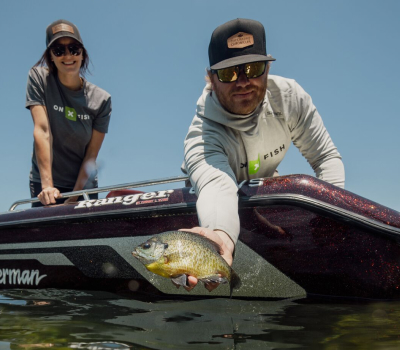
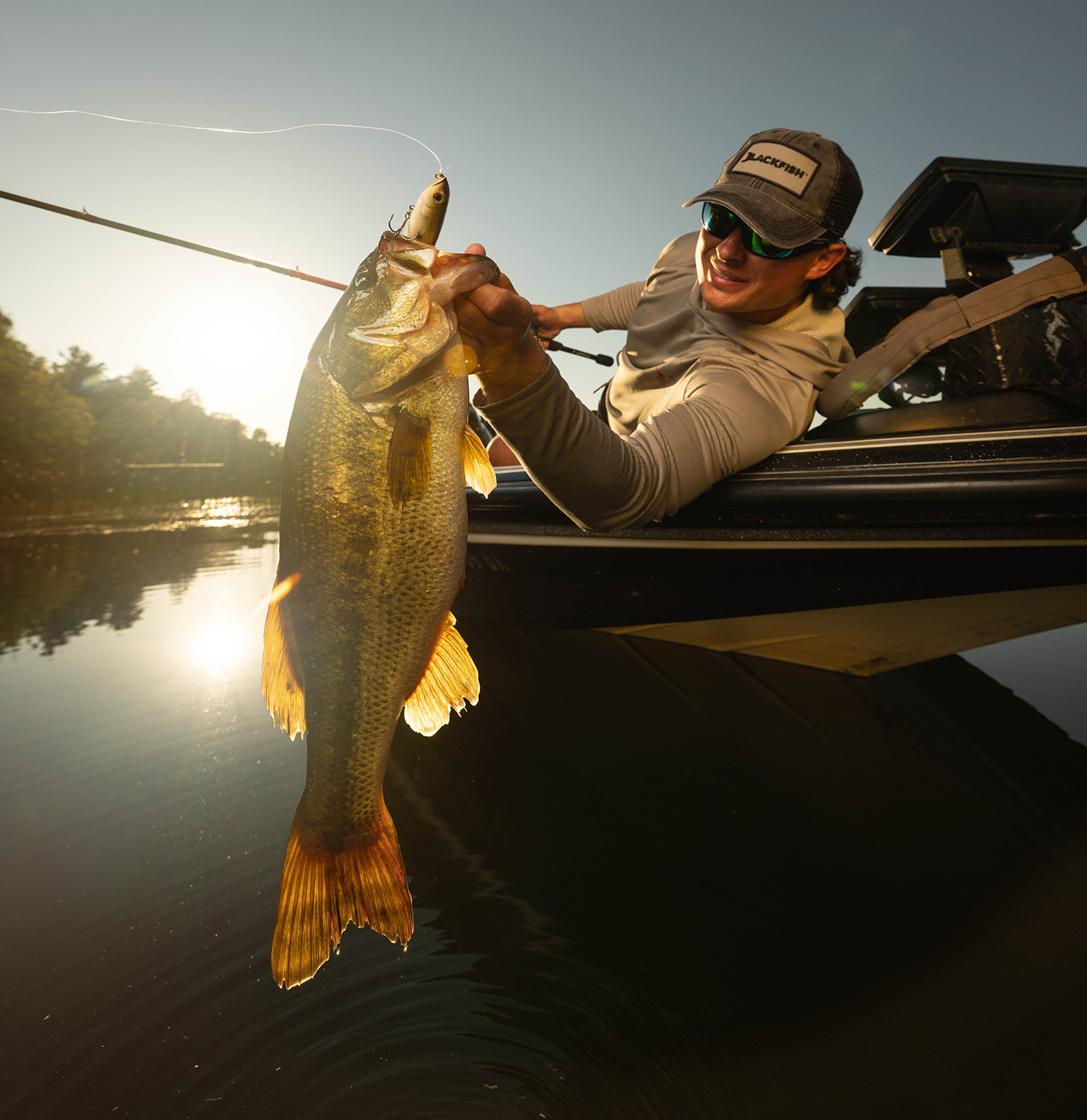
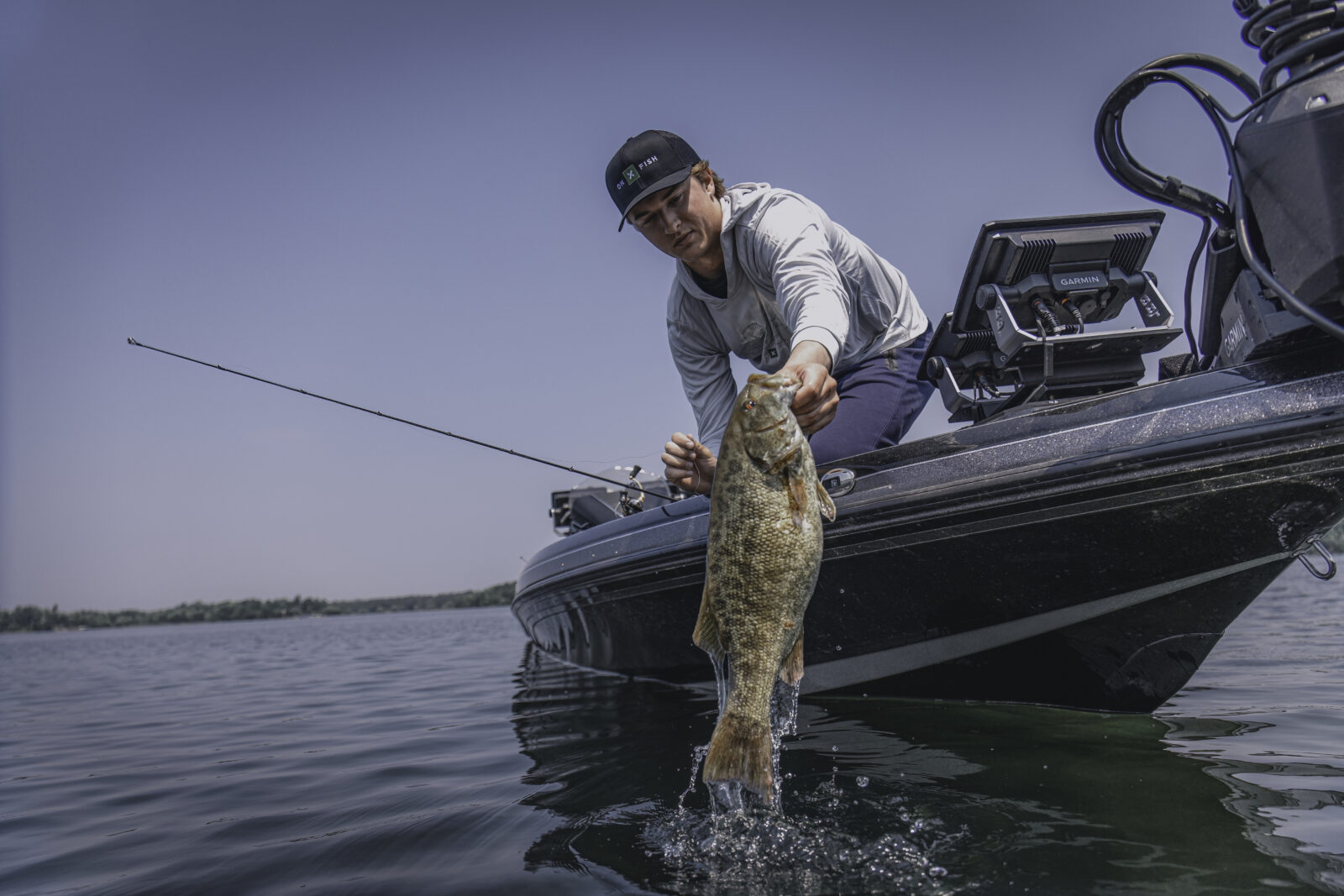
An angler holds a largemouth bass off the side of a boat.
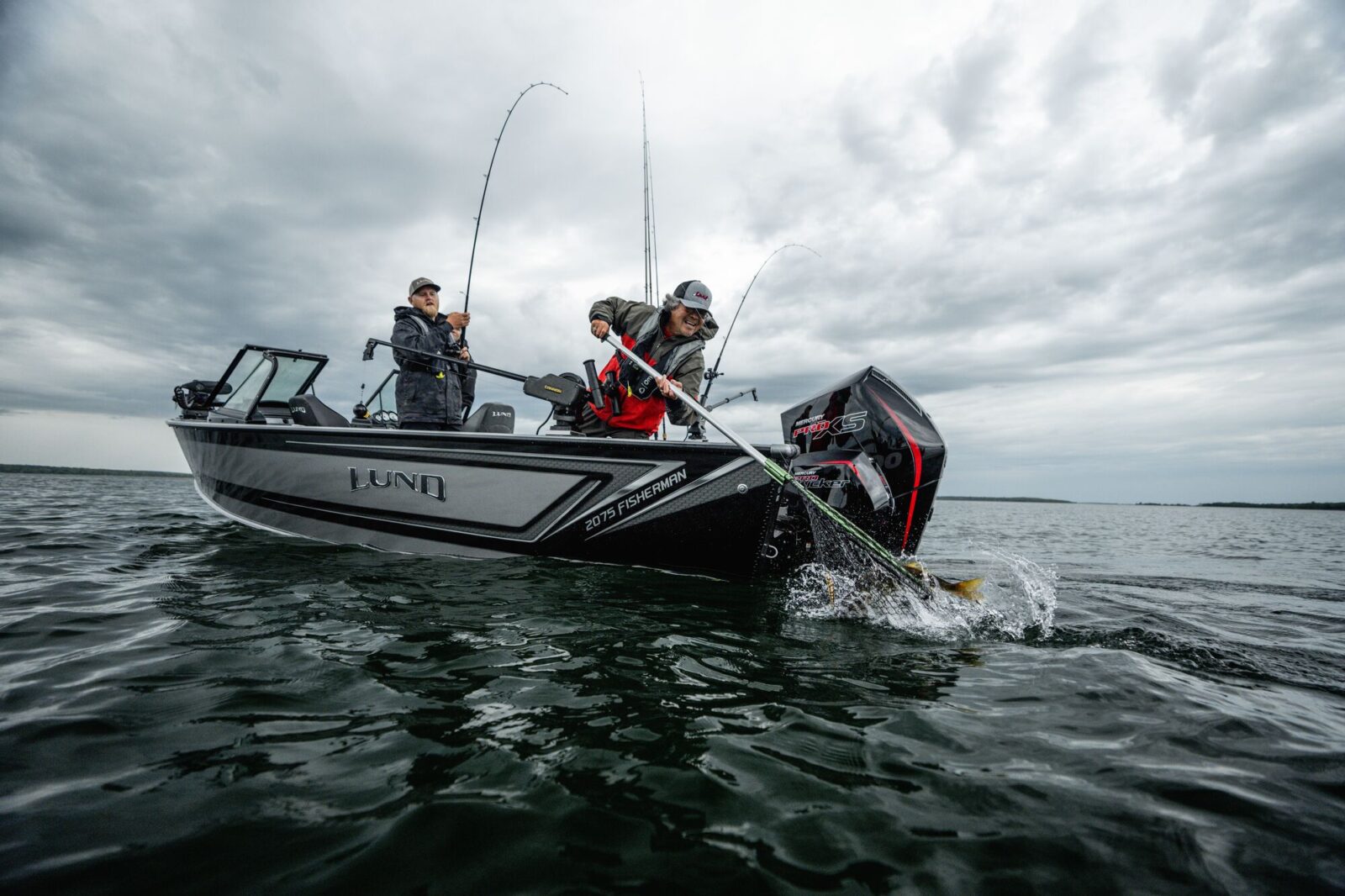
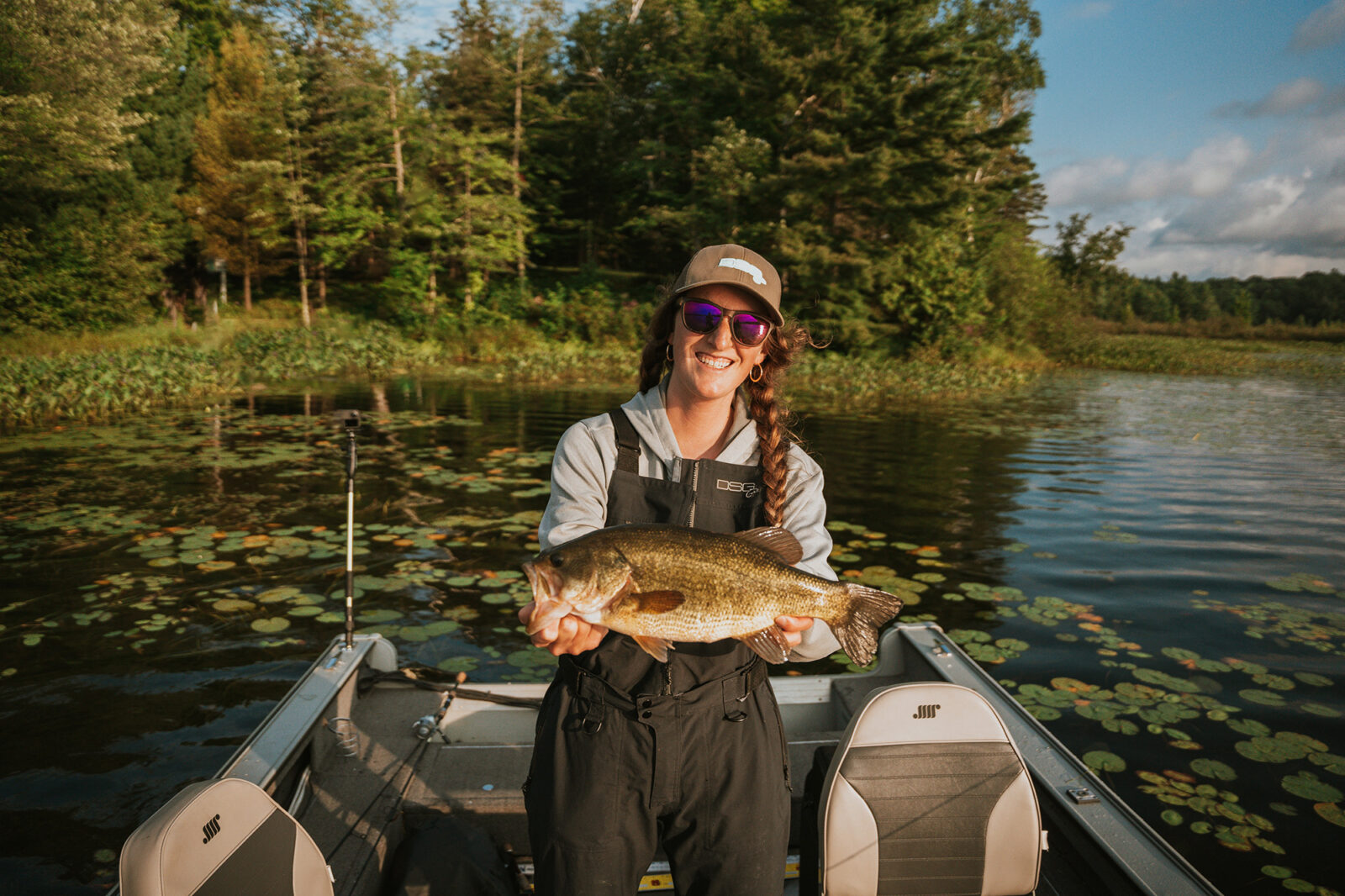
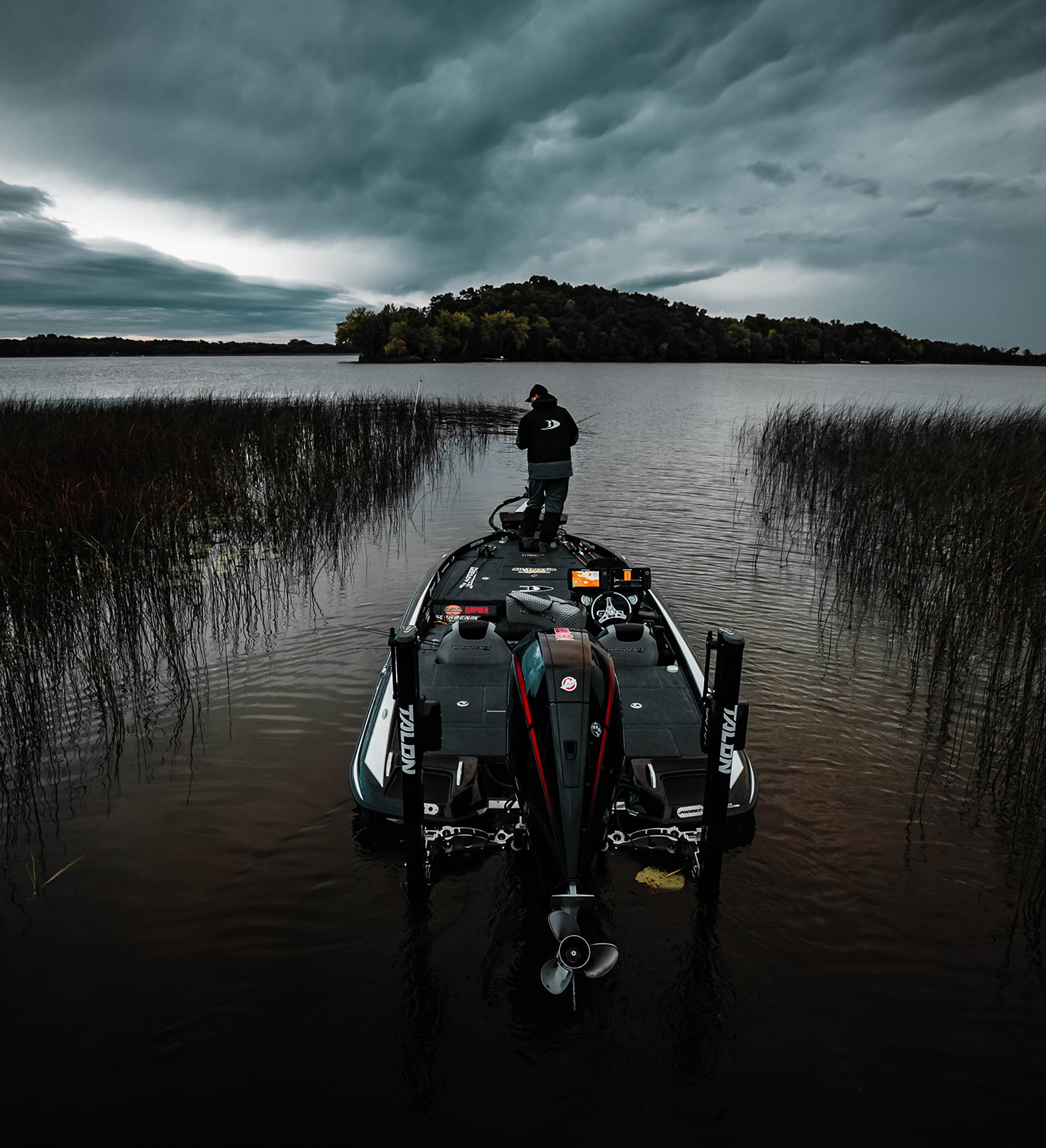
A fisherman in a bass boat on a weedy lake.

Largemouth Bass Behavior

Compared to many other freshwater species, largemouth bass are aggressive in nature. They rely heavily on stealth, using cover and structure, to track down their prey. Their ability to fight is rivaled by few other freshwater species.

Feeding Habits: What Do Largemouth Bass Eat?

Common forage preferences for largemouth include minnows, frogs, crayfish, and other fish species like bluegills and perch. Individual feeding habits vary greatly by location, as not all lakes are created equal. Bass are opportunistic feeders that will eat a variety of seasonal forage.

In some bodies of water, bass diet is made up almost exclusively of forage like bluegills and perch, while in others, crayfish may be the top menu item. Developing an understanding of these specific details can help influence lure decisions and, in turn, result in more bass catches.

Largemouth Fishing Techniques

The number of places where largemouth bass are found is only exceeded by the number of ways to catch them. As the top category in freshwater fishing, it’s easy to understand how so many bass lure and technique options came to be. With every passing season, even more hit the market.

Prime bass tactics depend on several factors, including waterbody type, seasonal patterns, and forage base. What works well in one area might not work in another.

Focus on high percentage areas, particularly spots that provide the necessary ingredients—think cover, structure, food sources, etc. Specific locations are subject to seasonal variations, so keep that in mind. Proper timing is crucial: You might be in the right place with the right presentation, just not at the right time.

When it comes to specific techniques, a good rule of thumb is to start fast and move slow—power fishing first, finesse fishing second.

Largemouth Bass Lures and Knots

Lure Recommendations
1. Soft plastics, including swimbaits, craws, creature baits, worms, minnow style baits, tubes, soft jerkbaits, and grubs.
2. Moving baits, including jerkbaits, crankbaits, bladed jigs (chatterbaits), and spinnerbaits.
3. Jigs, including swim jigs, flipping jigs, finesse jigs, football jigs, and hair jigs.
4. Topwater baits, including poppers, walkers, prop baits, wake baits, and frogs.
 
Knot Recommendations
1. Attachment knots are ideal for securing lures. Common options include the improved clinch knot, Palomar knot, loop knot, and San Diego jam knot.
2. Connection knots are designed to connect leader lines to main lines. Common options include the FG knot, Alberto knot, blood knot, and uni knot.

Best Time To Catch Largemouth Bass

While largemouth bass can be caught year-round, the best opportunities in the Midwest exist during the open water season from spring through fall.

Seasonal variability applies to most freshwater species, but it is of particular importance when targeting largemouth bass.

Seasonal Tips

  • Spring: Largemouth tend to reside in shallower water. Focus on areas with the warmest water. As temperatures increase, so should your fishing style. Earlier in the season, slower techniques are necessary—think jerkbaits and long pauses. Other good options include bladed jigs and lipless crankbaits.
  • Summer: This is the most popular timeframe for largemouth. Look to cover and deeper structure throughout the warmest months. A wide variety of techniques come into play throughout summer, including crankbaits, drop shots, Ned rigs, and topwater. 
  • Fall: Bass are feeding heavily in preparation for winter. Autumn months are typically your best shot for quality and quantity. If you’re looking for a trophy, then don’t forgo the fall. Top lure options include jerkbaits, spinnerbaits, top water, and jigs.
  • Winter: Generally, Midwest anglers don’t target largemouth bass in the winter or through the ice. Those who do generally use small spoons and jigs, often designed for panfish and walleye.

Some waters have special regulations that may differ from the statewide date; always check the specific regulations for the area you plan to fish.

Time of Day and Weather

Like most other species, feeding windows at dusk and dawn are generally primetime. That being said, largemouth tend to be fairly cooperative throughout the daytime period. The behavior of most fish species is impacted by weather conditions, and largies are no different. Cold fronts can wreak havoc on fishing plans, so be prepared to start slower and smaller. Prevailing wind will have an impact on bait fish location, and as a result, bass location. Sunny days typically keep bass closer to cover, while overcast days allow them to move more freely.

How To Catch Largemouth Bass
Using the onX Fish App

Identify Structure and Cover

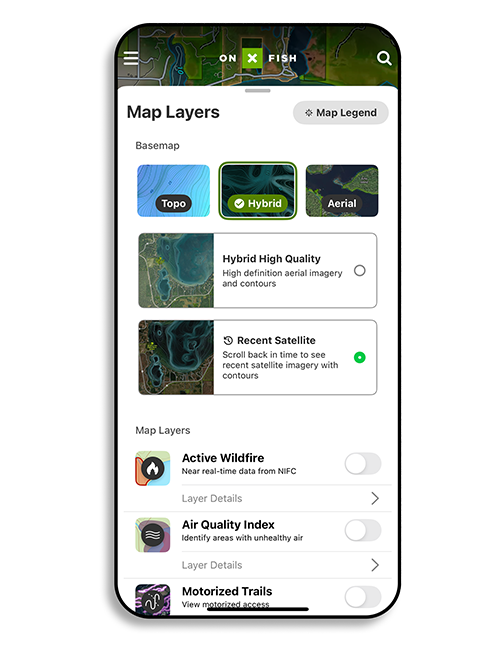
With recent satellite imagery, anglers can quickly identify which areas have vegetation and which don’t. Think of it as an up-to-date snapshot of how vegetation, like lily pads, is growing throughout an area.

In addition to vegetation, anglers can also identify cover like submerged wood, rock piles, fallen trees, and so forth.

Find Bass Lakes With Trophy Potential

There’s no better way to find trophy waters than by using the actual data. The onX Fish App is driven by lake-specific information, tailored to anglers. Using dedicated filters for trophy potential, anglers can determine which lakes hold largemouth and if there’s potential for trophies.

CHASING Largemouth bass?

Open the map. Find the structure. Time it right.

Largemouth Bass FAQs

Largemouth vs smallmouth bass: What’s the difference?

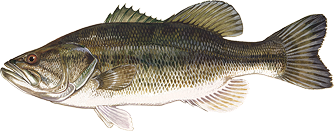
While they’re both a part of the black bass family, largemouth and smallmouth bass differ in many ways. Largemouth, or green bass, feature a greener complexion often with black horizontal barring, while smallmouth, or brown bass, feature a browner complexion often with vertical barring. Largemouth bass tend to thrive in warmer, weedier environments, while smallmouth bass do better in cooler, rockier environments. Additionally, the upper jaw of the largemouth extends beyond its eye, whereas the upper jaw of a smallmouth does not.

When do bass spawn?

Like many freshwater species, largemouth bass spawn during the spring and early summer period. Ideal water temperatures for bass spawning are in the 60°F to 65°F range.

How big do largemouth bass get?

Maximum size for largemouth is largely dependent on specific environmental factors. In northern states, bass can reach six to eight pounds, whereas in southern states, fish in the 10-to-12-pound category (or even more) are attainable. The long-standing world record largemouth exceeds 22 pounds.

See more fish species, like Muskie, on our Species page.