Smallmouth Bass Behavior
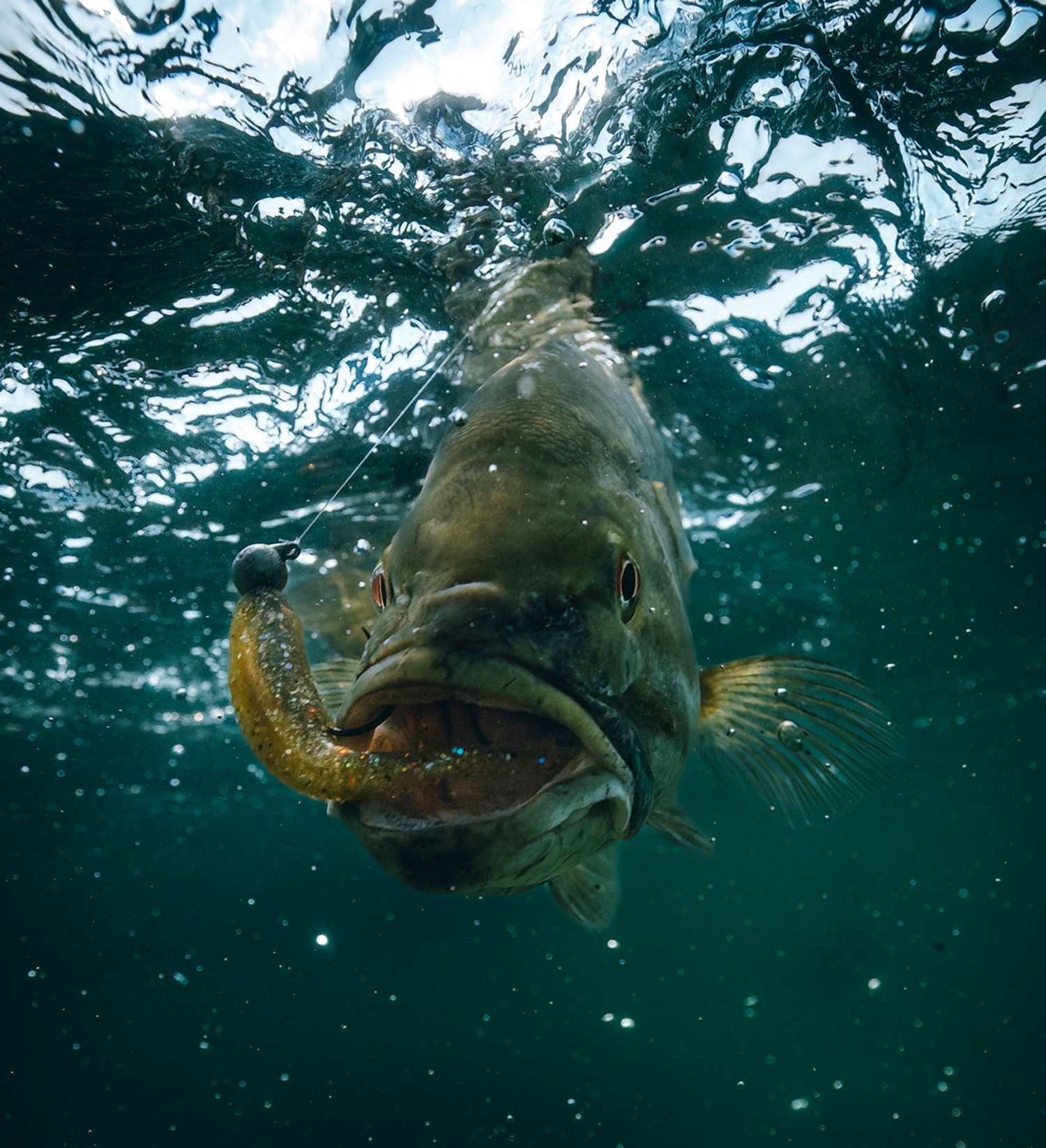
In terms of curiosity and aggression, smallmouth bass are at the top of the class. They have a knack for inspecting, chasing, and attacking baits. They don’t always eat, but when they do, it’s often explosive.
Smallmouth are known to travel in packs, so where you find one, you’re likely to find a few.
They also tend to be more transient than most fish species. They’re in one area today and in another tomorrow. Telemetry studies, focusing on movements throughout a season, have documented smallmouth moving more than 70 miles per year.
Feeding Habits: What Do Smallmouth Bass Eat?
In many smallmouth-infested waters, crayfish are the dominant forage species. Other common forage preferences for brown bass include insects and baitfish.
Specific waterbodies, as well as time of year, impact smallmouth prey preferences. As a result, it’s crucial to understand how each forage base plays into a system. Such details can help anglers make more educated decisions on bait selection and location.
Fishing Techniques
Specific tactics and techniques are entirely dependent on the situation. Factors like water clarity, primary forage, and seasonal dynamics all play a role in what works and what doesn’t. Every scenario is different.
Remember, timing and location are critical to success. Employ the right presentations, at the right times, in the right locations.
Guidelines say to start with more aggressive, power fishing techniques and move to slower, more finesse techniques, as needed. In general, smallmouth tend to require more finesse setups than largemouth. Many smallmouth-centric techniques are employed more effectively with a spinning rod instead of a casting rod. Take dropshots, Ned rigs, and hair jigs, for example, which are some of the more commonly used options.
Smallmouth Bass Lures and Knots
Lure Recommendations
1. Dropshots paired with a variety of soft plastic options.
2. Soft plastics, including Ned rigs, swimbaits, craws, worms, minnow-style baits, and tubes.
3. Moving baits, including jerkbaits, crankbaits, bladed jigs (chatterbaits), and spybaits.
4. Jigs, including flipping jigs, finesse jigs, football jigs, and hair jigs.
5. Topwater baits, including poppers, walkers, and prop baits.
Knot Recommendations
1. Attachment knots are ideal for securing lures. Common options include the improved clinch knot, Palomar knot, and loop knot.
2. Connection knots are designed to connect leader lines to main lines. Common options include the FG knot, Alberto knot, blood knot, and uni knot.