Midwest Ice Fishing Guide: Tactics, Lakes and Planning
The coldest time of the winter is upon us making ice fishing a great pastime throughout much of the Upper Midwest. The onX Fish App is the best place to start when venturing out on the ice in any of the nine states that it covers: Minnesota, Wisconsin, Michigan, North Dakota, South Dakota, Indiana, Ohio, Illinois, and Ohio.
This guide dives into most of what you need to know about ice fishing throughout the Midwest and how the onX Fish App can transform your experience into a seamless and productive adventure.
Targeting Trophy Fish Through the Ice: Walleye, Pike, and Panfish Strategies
There’s something to be said for catching a lot of fish, but today’s ice anglers are also interested in size—personal best and trophy potential. Whether you’re targeting walleye, northern pike, yellow perch, crappie or bluegill, putting together a trip to hit hardwater where lunkers dwell is made easy with onX Fish filters. Discover lakes with “Trophy Potential” by species derived from fisheries data so you know you’re in the game from the start instead of looking for fish that aren’t there.
Start Scouting With onX Fish
Use onX Fish to compare lakes by species data, scout access and travel routes with Recent Imagery, save your best spots as Waypoints, download Offline Maps, and hit the ice with confidence.
Lures: What are the Best Baits for Ice Fishing?
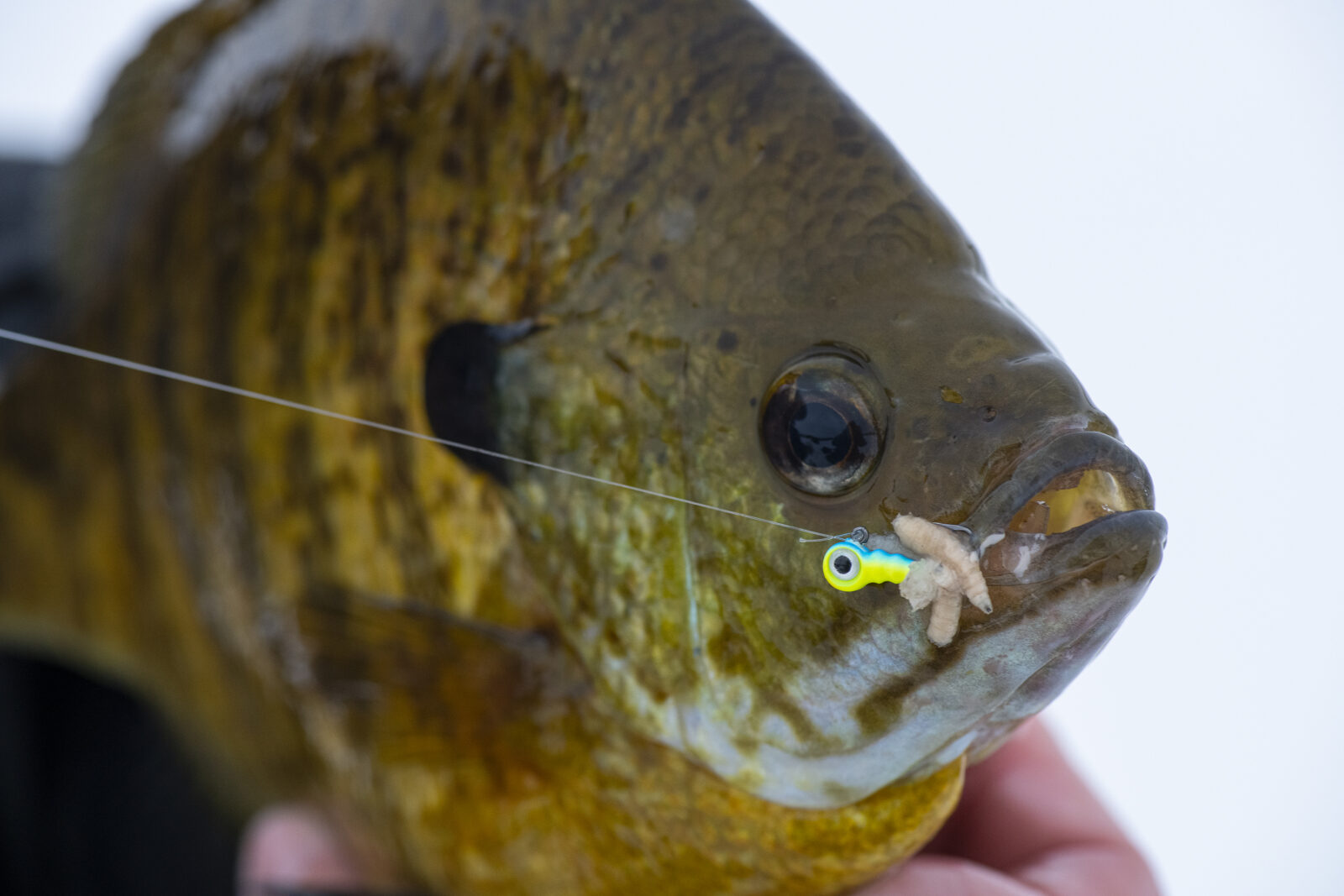
The best baits for ice fishing fall into the following categories: spoons, jigs, glide baits, rattlebaits, microplastics, live bait rigs, and the addition of live or preserved natural bait (see your local restrictions for using the latter). Unlike fishing open water, you don’t need tons of tackle for proper ice fishing outfitting. A few key baits in every category should provide the versatility needed for chasing numerous species. It should be noted that when fish are neutral to negative, nothing beats fresh, lively minnows pinned to a simple hook or jig head with little movement, hence the term “deadsticking.”
Proven Ice Fishing Techniques That Catch Fish
Dialing in your presentation is what separates a slow day from a steady bite on the ice. The techniques below cover proven ice fishing techniques and how to use each one based on fish mood, location, and the conditions you’re facing. Start with these proven fundamentals, then adjust cadence, depth, and spread to keep fish coming through your holes.
All about jigging
Jigging is a sure-fire way to present your bait to active fish. You can jig from the bottom up or the top down depending on where fish are oriented in the water column and their level of activity. A lift followed by a quiver or shake repeated at certain intervals is what we’re talking about—basically physical movements of the rod tip to get the bait to “dance” and appear live to the fish whether you have it tipped with a minnow head, tail, body, or chandelier of maggots or waxworms. Or just plain—no meat whatsoever.
Along with the multitude of jigging variations you can employ when the basics don’t yield results is snap-jigging. Let a glide bait (Jigging Rap, Tikka Minnow, Puppet Minnow, etc.) fall from the hole to the bottom, all the while zig-zagging due to the lures’ design, and following a thud on bottom, jerking it furtively with rod sweeps and turns of the reel handle back to the surface. This kind of aggressive jigging can draw reaction strikes when standard jigging fails—and it works with walleye, lake trout, perch, crappies, and more.
You can also snap jig with a rattle spoon, which will also draw fish in from afar without having to move holes. Fish like walleyes will not only hear the sound but feel it in their lateral line, drawing them in to investigate.
Snap-jigging is a great technique to use when outside a fishhouse moving from hole to hole looking for active biters. You can cover a lot of water fast and find willing fish rather than sitting in your chair. When fish are active due to moon phase, barometer, and all other variables, snap jigging is a great bet—or, at the very least, jigging with more fervor with a standard approach. You’ll be able to tell from your electronics if fish are neutral, negative, or active. Neutral and negative fish require a subtle jigging approach, while active fish will often chase your lure all the way up the water column.
Deadsticking and Tip-ups
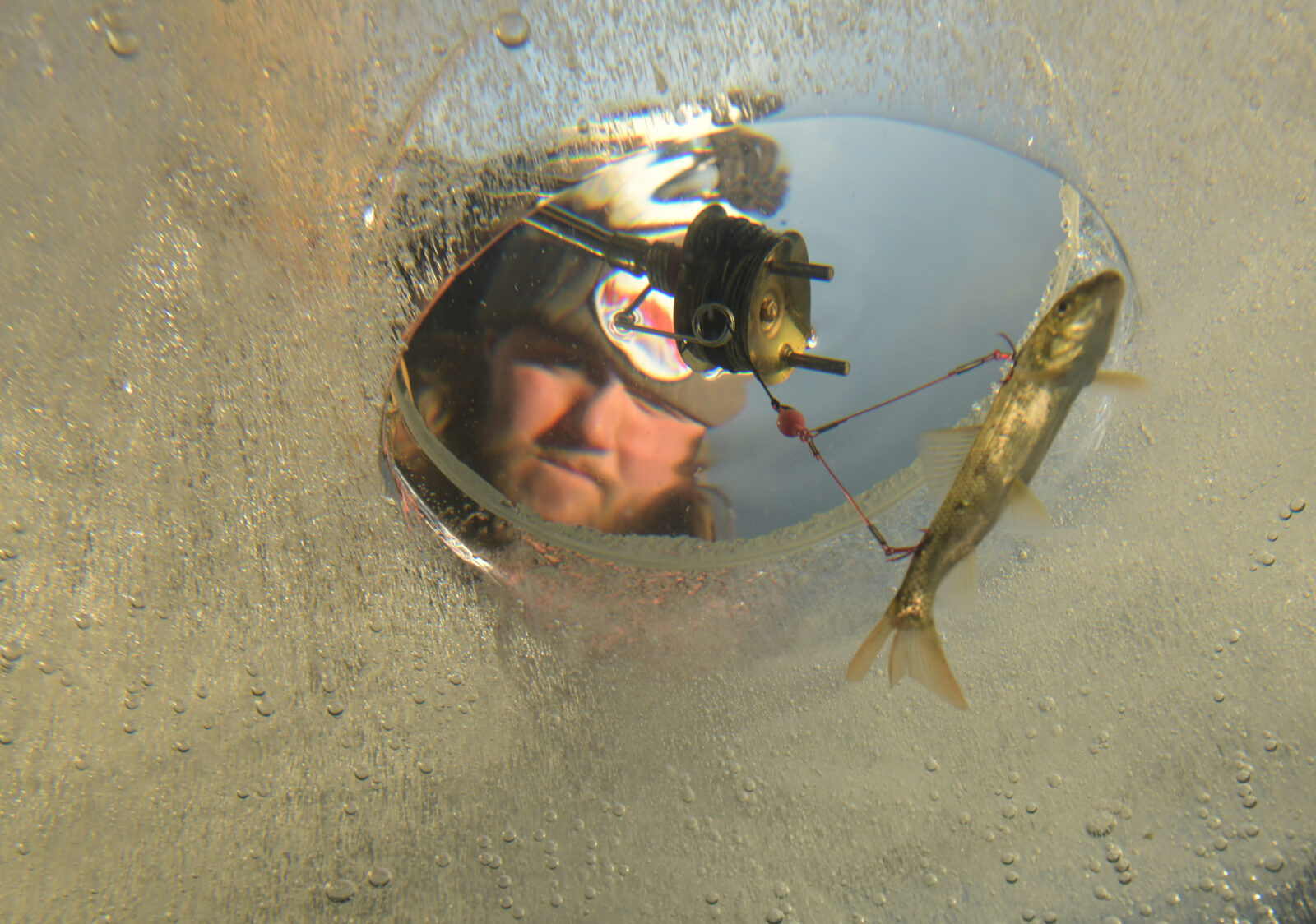
Besides jigging, deadsticking is a great way to present bait to fish in winter. Ideal for neutral- to negative-biters, it involves a deadstick rod (typically with a fast to extra-fast tip, often colored) with spinning reel (baitfeeder reels are great), and a stand, holder, or five-gallon bucket to set the rod combo in. For newbies, a small float with a slip bobber stop to precisely present your bait at the desired depth is a good idea. Bait your jig or plain hook with lively minnow and simply wait for the bobber to move, then giving the fish plenty of time to submerge the float before setting the hook.
In most states, ice anglers are allowed two or more lines each, so the combo of jigging in one hole and a deadstick in another is a great way to capitalize on more bites.
Another great way to complement a jigging rod is with a tip-up or set line for trophy fish. You might be jigging in a portable ice house but could have a tip-up (or more where legal) placed outside the house in another hole. If you can locate areas where fish are moving through at low-light periods, tip-ups are great ways to maximize real estate, especially when fishing in groups and you might have several placed around the perimeter of an underwater point or hump.
Tip-ups typically have their own spool of line on a spindle contained underneath a round top or rail with a flag that goes off when a fish takes your bait. What kind of bait? For walleye, pike, and bass, try shiners, chubs, redtails, suckers, or any larger minnow.
The great thing about using tip-ups or set lines (automatic hook-setting devices you set a rod and reel in) is you can spread them out shallow to deep, even targeting different depths in the water column depending on what you might see if you’re using forward-facing sonar. Walleyes might be coming in from deeper water in the evening to feed shallow, but that doesn’t mean you can’t hang bait out deeper in the mid-column during the day, for example.
Active Run and Gun Fishing with Today’s Electronics
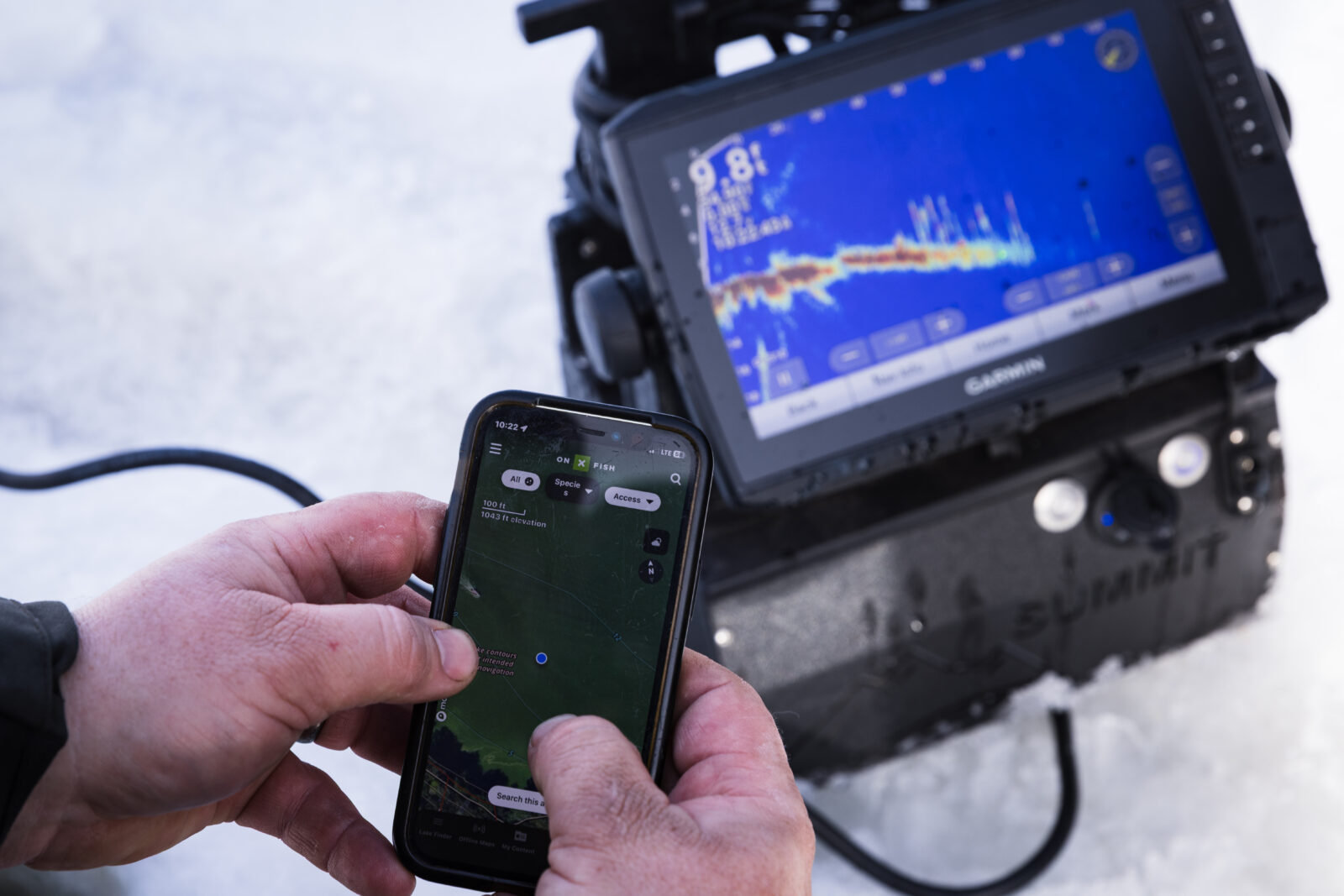
More anglers are using forward-facing sonar units like Garmin Livescope, Panoptix, Humminbird MEGA Live 1 or 2, or Lowrance Active Target 1 or 2 on the ice to increase their efficiency for finding fish. A popular system is to use the onX Fish App for pre-planning a given lake, setting Waypoints on areas that look promising. Once there, with FF sonar units it only takes one hole and a drop of the transducer to start looking 100 feet-plus in every direction for the presence of fish. Then it’s simply a matter of directing your buddies to drill where the fish are located, for example 50 feet to the east or west. Following fish in this manner is a far cry from the old days when anglers would drill expansive grids of holes, hopping from one to the next in the hope that active fish were below. With FF sonar, you can pinpoint schools of crappies, perch, and larger predators like walleyes, pike, and trout.
Many anglers like to use FF sonar as a scouting tool in tandem with onX Fish, fishing with a mechanical flasher unit once fish are located. However, you can also use FF sonar as your main electronics and will notice in greater detail what kind of jigging cadences actually get fish to bite, often watching fish chase a bait up on the screen until the eventual hookset. This allows a level of learning about fish behavior that is hard to do with other electronics. You might discover that the fish want furtive movements followed by a dead stock or vice versa. You will learn what jigging cadences get bit and which ones don’t.
Seasonal Planning: Early Ice, Midwinter, and Late Ice
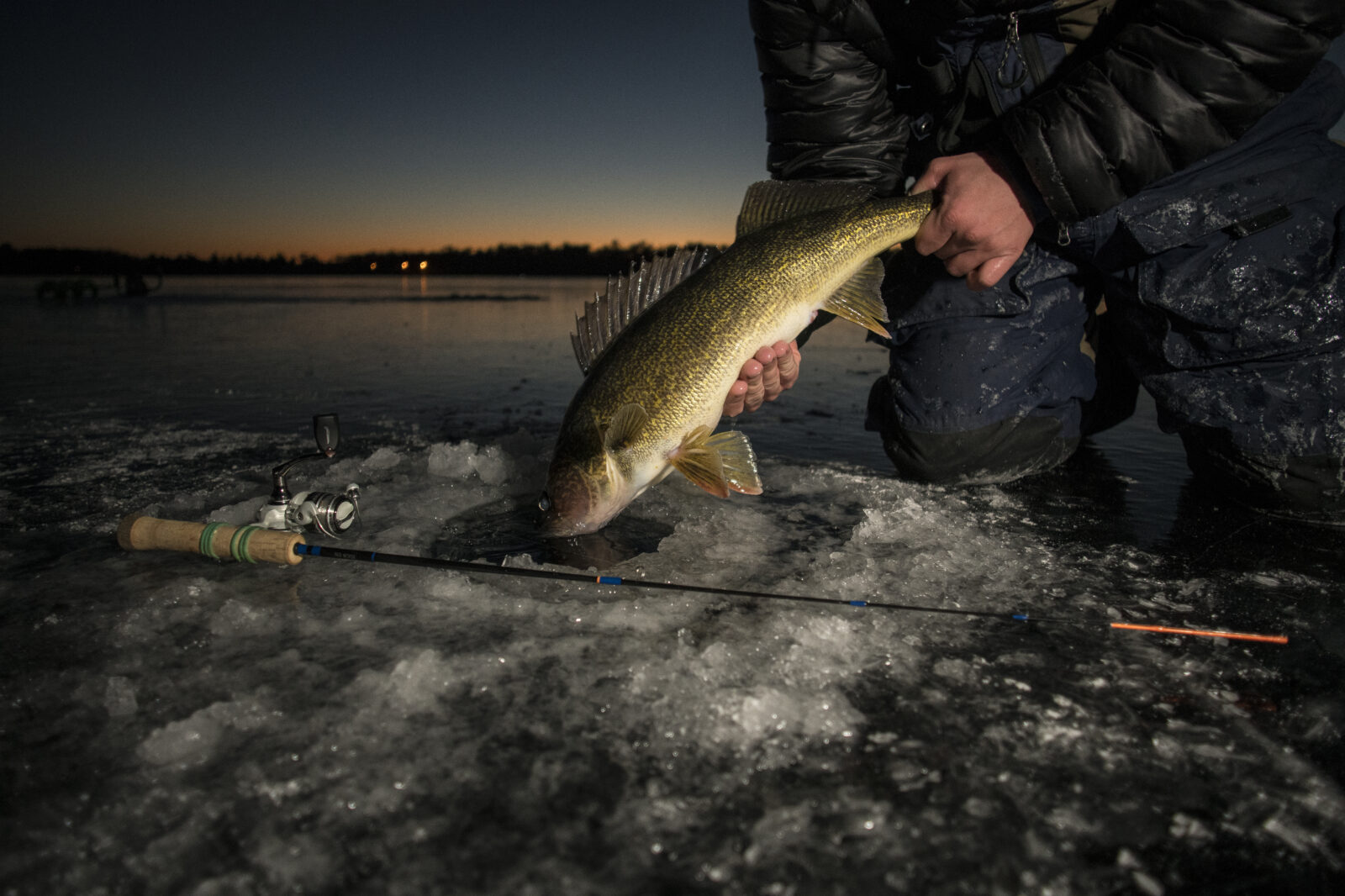
Whether you’re jigging, deadsticking, or running tip-ups/setlines, seasonal planning for each ice period generally dictates where you should start depth-wise for success. During early ice, attention should be to those areas in shallow- to mid-depth with still-green weeds; midwinter will see fish move deeper for stability in terms of oxygenation and temperature. For example, crappies will gather over deeper basins and walleyes will stay pretty close to humps and off-shore structure. Late ice sees fish begin to push shallower again as higher oxygen from meltwater, longer days, and increased activity push them closer to transitional areas off of spawning habitat.
The onX Fish App can help you locate these general areas depending on when you plan to fish, but keep safety in mind. Four inches is recommended as the bare minimum of ice thickness for fishing on foot; five to seven inches for use of a snowmobile; seven to eight inches for use of a UTV/ATV; nine to 12 inches for a small car; 13 to 17 inches for use of a standard-size truck; and lastly, 20 inches or more for pulling a wheelhouse shelter with a heavy-duty truck.
How to Scout the Best Ice Fishing Lakes Before You Go
Scouting ice fishing lakes ahead of time is the key to success and the onX Fish App helps anglers scout more effectively. Do your research at home by comparing fisheries data from various lakes. Are you fishing for abundance of fish or trophy potential? Once a lake is identified, move on to looking at recommended hotspots and contours/structure gleaned from the contour (bathymetric) maps. Set potential Waypoints based on the bathymetric data that identifies basins, steep breaks, humps, drop-offs, points, inside and outside turns, etc., then find the best access point to get on the lake and to these spots. From there, use the GPS in the App to provide the best way to get to and from your spots at the end of the trip.
Fish Early & Late
Whenever possible, plan to be on the ice at sunrise and sunset, optimal times for many species’ feeding habits, like walleyes and crappies. If ice camping with portables or fishing from a permanent shelter, also fish throughout the night. You might be surprised by the flurry of activity that comes from fishing in the dark; many trophy walleyes have been caught after sunset and crappies are known to feed off and on through the blackness, too.
Driving on Ice: Navigating and Traveling Safely
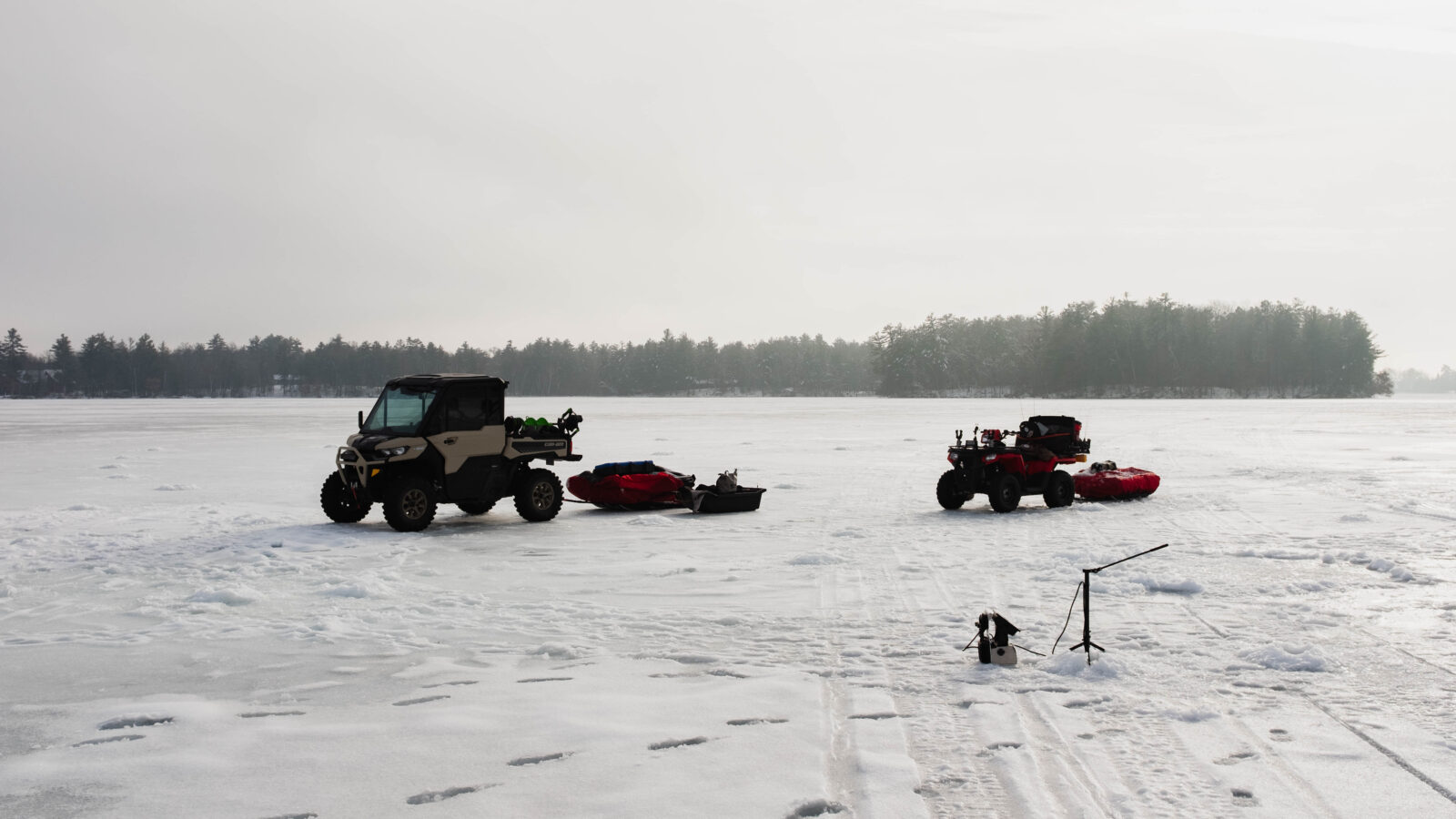
There is no such thing as 100% safe ice—knowing and understanding that can help navigate and travel safe on iced over lakes. Anomalies like pressure ridges, cracks, and decreased ice thickness due to moving water (springs, rivers, creeks) create risk and need to be respected. However, when using state- or resort-maintained access points, you can greatly minimize risk.
A key feature to a good fishing app, like onX Fish, is Car-Play so you can plan and stay on a safe route to and from fishing Waypoints. Pay attention to road markers, deep snow where you could get stuck, and stay away from areas off the beaten path if fishing lakes where there are maintained and plowed road systems.
If fishing by snowmobile, ATV, or UTV, GPS trail tracking is a must have fishing app feature that will come in handy, especially during times of low light like early morning, evening, and night or when unexpected weather rolls in.the The Tracker feature in the onX Fish App will help you to get to your researched spots safely and back home at the end of the day.
Plan Smarter. Fish Harder.
Scout ice, find structure, and navigate to Waypoints with onX Fish.
Fishing App Features to Improve Your Ice Fishing Season
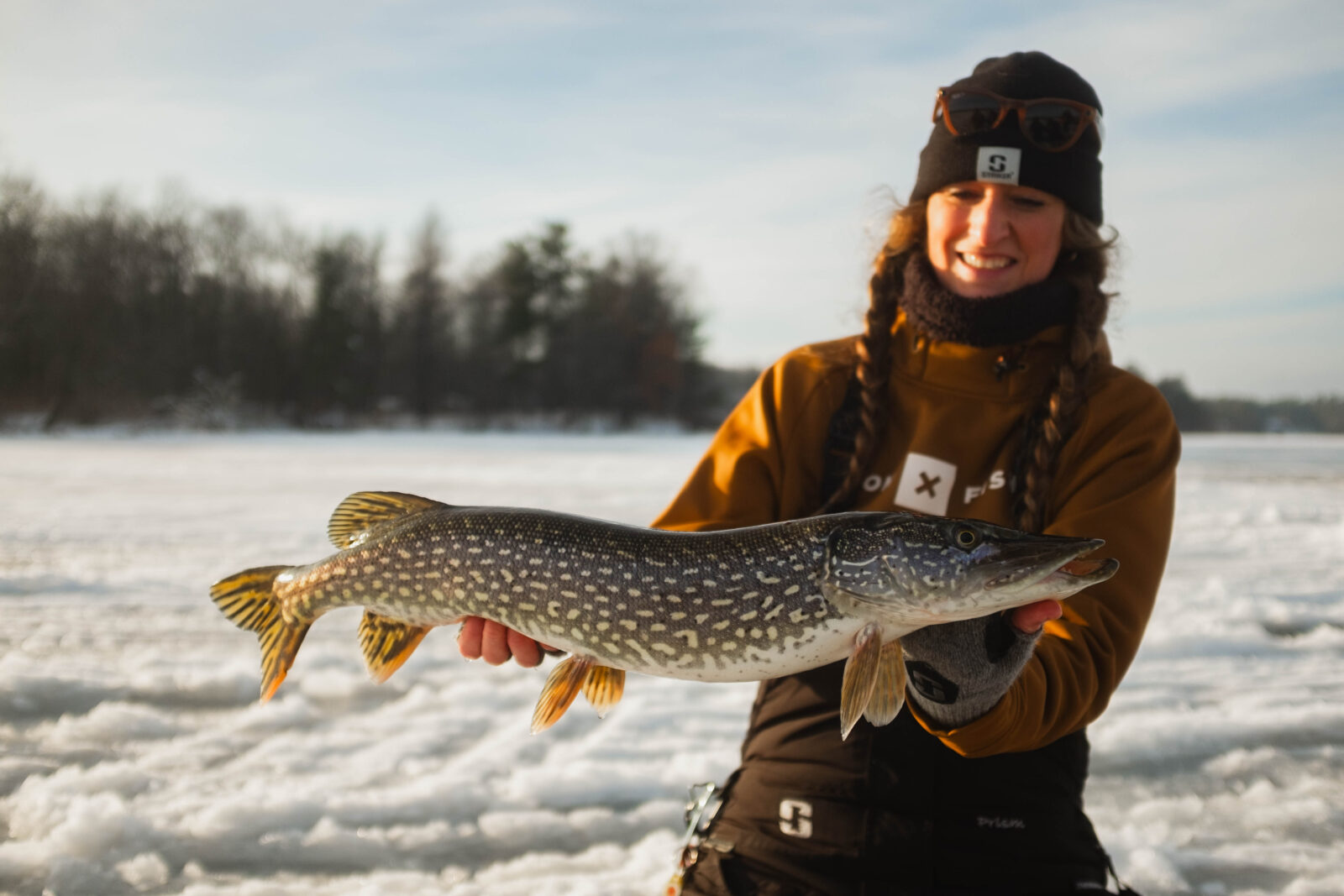
With onX Fish, you can turn guesswork into a repeatable ice-fishing plan, starting at home and paying off once you’re on hardwater. The onX Fish App has features to scout smarter, drill with purpose, and navigate confidently from first access to last light.
- Recent Imagery: Preview ice coverage, access points, and likely travel routes before you go with aerial imagery updated about every two weeks so you can start in the right area instead of searching from scratch.
- Waypoints and Offline Maps: Mark your primary spots and backups at home, then download maps for reliable navigation on the ice even with poor cell service, perfect for run-and-gun days, group coordination, and returning to proven areas at sunrise/sunset.
- In-Dash CarPlay: Keep navigation in view while you drive so you can follow your planned route and reach Waypoints without constantly looking at your phone—especially helpful in low light or changing conditions.
FAQs About Ice Fishing
Rather than word of mouth or “fishing on a memory,” use onX Fish to research lakes that are a reasonable distance for what you’re willing to travel and drill into fisheries data for “Abundance” for numbers or “Trophy Potential” if looking for a new personal best. The App will literally light up with icons showing you high-probability lakes.
The safest way to travel on ice is to adhere to state guidelines (mentioned above) for recommended ice thickness depending on the mode of travel. If driving a car or truck, stay on resort-, local-, or state-managed road systems when fishing. And no matter what mode of transportation you’re using—even fishing on foot with a spud bar to check ice thickness—keep an eye out for pressure ridges, areas of water current, and cracks. And be careful not to drive into deep snow without another truck in your group that can potentially pull you out with a tow strap. Always carry shovels and a bag of sand or kitty litter to save you from a ruined day of ice fishing.
Recent Imagery helps you see the lake in question from above as recently as two weeks ago, which gives you an idea if it’s iced up or not. Ice traffic areas (like roads in northern regions) also show up via satellite imagery and indicate where anglers are accessing lakes. These roads often lead to heavily trafficked areas, which can mean pressured fish. Look for clusters of vehicles, shelters, and other signs of human activity. Avoiding high traffic zones can often increase your chances of finding less pressured, more aggressive fish of all species. Lastly, Recent Imagery can highlight untouched sections of a lake where fish may be easier to catch.
Walleye can be caught from ice-up until ice-off, it’s just a matter of finding them and fishing for them in a manner that produces. Many anglers love the first-ice to early-ice period when walleyes are still feeding on almost a fall pattern before the cold months that await. Other anglers like late-ice (where legal) to target walleyes as they push shallower and become more active. Still, walleye can be caught mid-winter, especially during low-light periods of early morning and evening, as well as overnight.
With onX Fish, it couldn’t be easier. Research species and fish size (Abundance vs. Trophy Potential), then look at the Fishing HotSpots data for a starting point of where to target. From there, look at the aerial view of the lake and Recent Imagery to see where fishing traffic is localized while comparing to structure on the bathymetric maps. From there, set Waypoints and explore!
If on a longer fishing trip, you can view and research several lakes and plan outings to investigate more than one lake, upping your odds even more.