Proven Ice Fishing Techniques
How Just a Few Tactics can yield multi-species success this winter
Although the angler has the same goal in mind, ice fishing and open-water fishing are worlds apart. First, when ice fishing, you’re limited to the space directly below a hole (or holes) drilled in the ice. No casting, no lateral movement with a trolling motor, or trolling (although you can “hole-hop” a grid of holes, spending a few minutes at each). For the most part, you’re left to precise real estate that you need to work efficiently vertically, once you’ve determined high-probability spots to drill your holes. For example, along weed lines, over drop-offs, sunken humps, along underwater points, on top of deep basins (for crappies), or bug-addled mid-depth flats (for perch), etc.
TL;DR: Ice fishing is all about working vertically under the hole—so success starts by drilling over high-percentage structure like weed edges, drop-offs, humps, points, and basins. Use jigging to call fish in and trigger bites, then add a deadstick (a still, live-bait presentation) for neutral or finicky fish. For bigger predators and more coverage, run tip-ups/set lines to spread baits across multiple depths—especially during low-light windows. Adjust your depth and approach by season: early ice tends to be shallower with green weeds, midwinter pushes fish deeper, and late ice often slides them shallower again as oxygen and activity increase.
Here, we discuss the best way to present your bait(s) when ice fishing, helping break down the basics of jigging, dead-sticking, and tip-up fishing.
Jigging 101
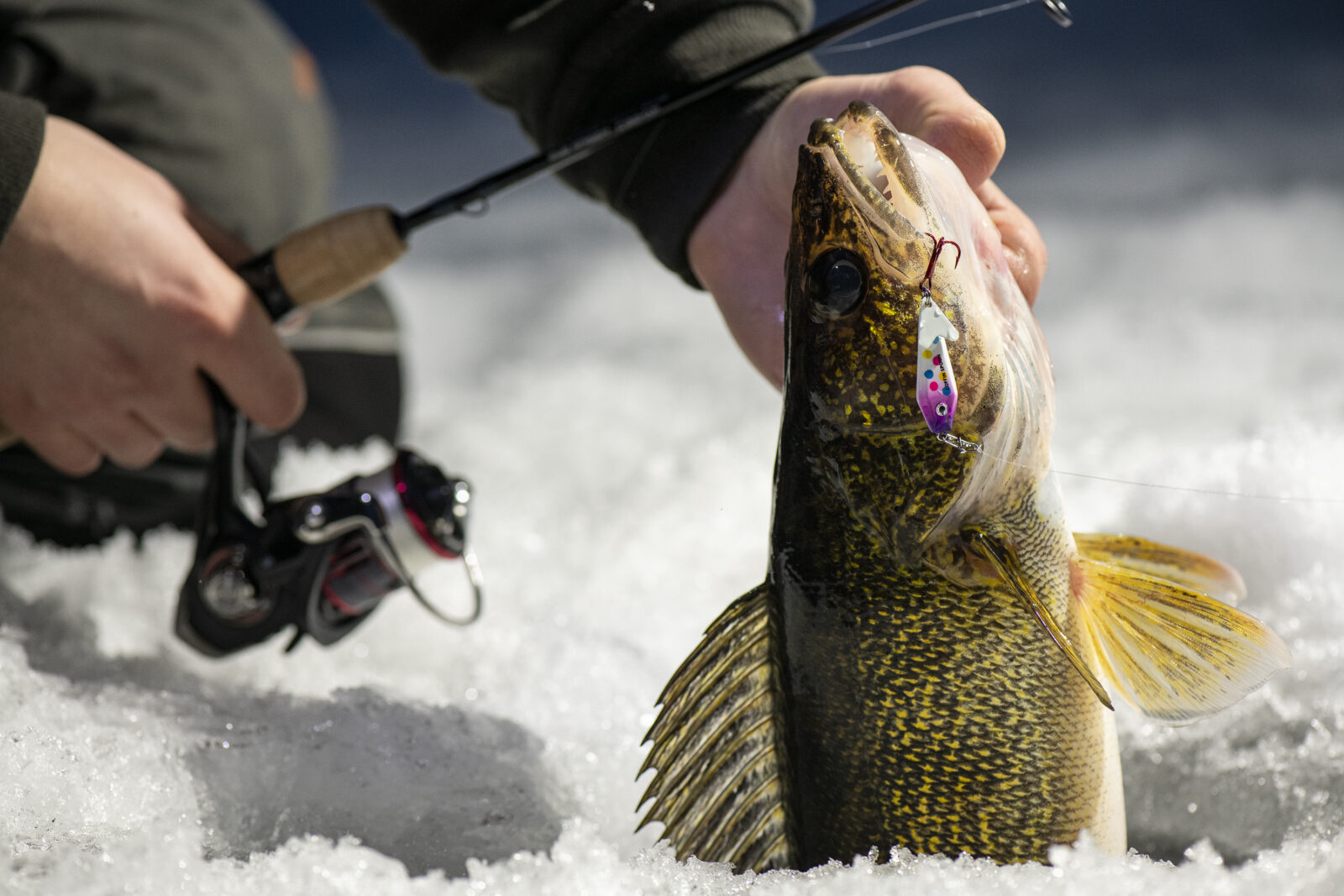
Chances are you’re already familiar with jigging from open-water fishing. The vertical jigging technique is used for everything from panfish to large pelagics offshore in the ocean. At its most basic, jigging is dropping your ice fishing bait to the bottom, followed by a lift, pause, drop, and quiver/shake of the lure. When ice fishing for walleyes, jigging is pretty standard, especially keeping the bait on the bottom and stirring up contents like a minnow would.
Basic ice walleye jigging uses a spoon of some kind—either with a rattle or silent—typically tipped with a minnow head, tail, or smaller full minnow just under the dorsal fin. This approach almost always catches fish if you work it long enough, especially if you have an ice fishing flasher or more advanced ice fishing electronics to watch your bait and watch the fish respond to your jigging cadence. That may require small changes in the jigging motions to get the fish to commit, which is perfectly normal. There is no set way to jig. It’s all up to the fish to tell you how they want the bait presented.
Jigging “Down” for Panfish
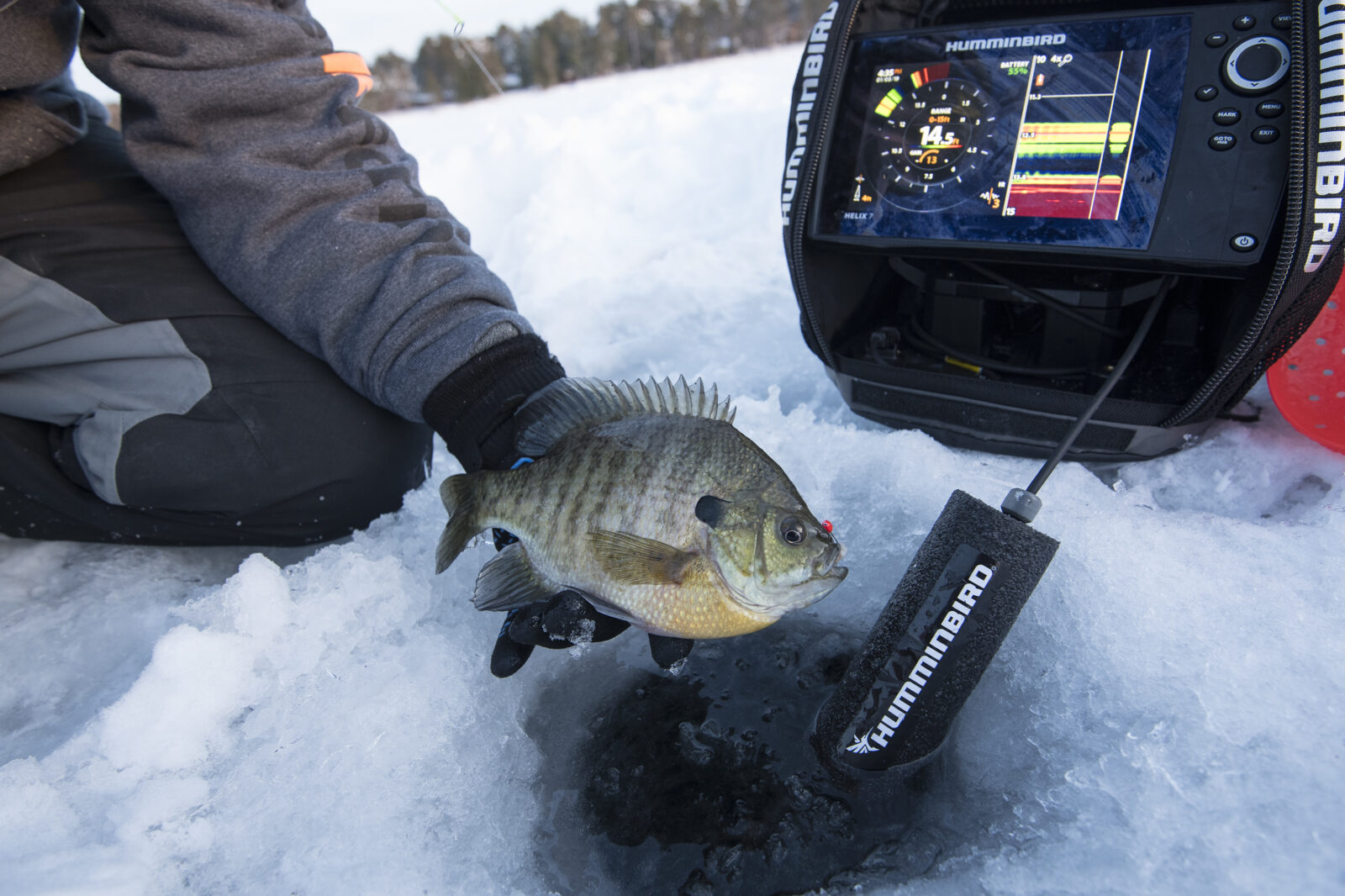
Jigging down is starting at the top of the hole, releasing only a little bit of line out at a time with a jigging motion all the way to the bottom. You don’t let your jig hit bottom and work up; you work in reverse. When pursuing panfish in shallow water, especially around green weeds during the early- or late-period of ice fishing, jigging down can produce a lot of fish, especially when combined with lighter lead jigs and microplastics or fly-style jigs.
Pairing Jigs to Fish Species
Not sure what type of jig to use for the species you’re chasing? It’s pretty simple: walleye, pike, and perch all prefer rattle spoons or glide baits; finesse jigs are perfect for crappies; and even smaller jigs tipped with a waxworm or Eurolarvae do the job for sunfish. Bass? They’ll eat all of the above if presented and they’re hungry.
Deadsticking for Finicky Fish
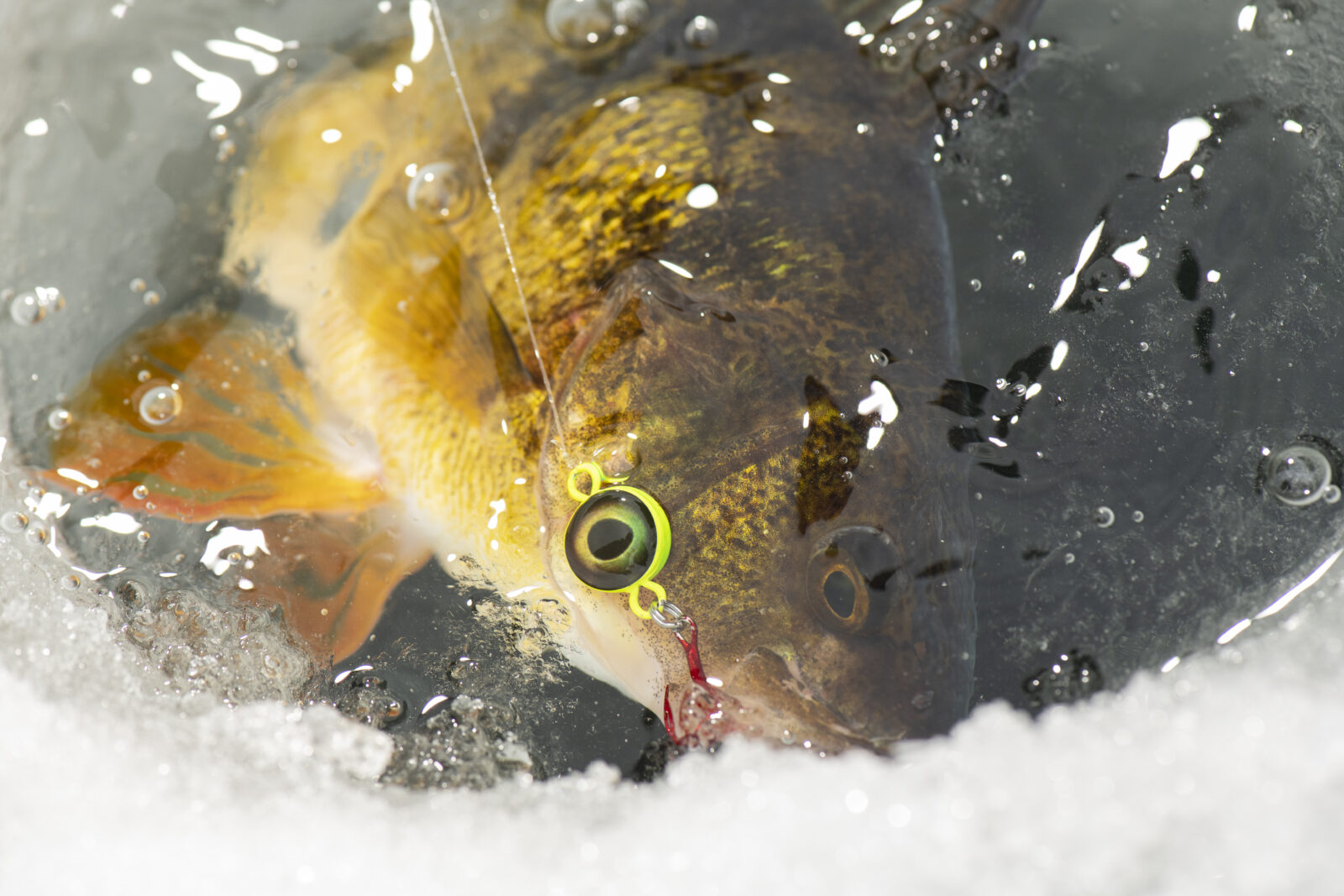
Besides jigging, deadsticking is a great way to present bait to fish in winter. Ideal for neutral- to negative-biters, it involves a deadstick rod (typically with a fast to extra-fast tip, often colored) with spinning reel (baitfeeder reels are great), and a stand, holder, or five-gallon bucket to set the rod combo in. For newbies, a small float with a slip bobber stop to precisely present your bait at the desired depth is a good idea. Bait your jig or plain hook with lively minnow and simply wait for the bobber to move, then give the fish plenty of time to submerge the float before setting the hook.
In most states, ice anglers are allowed two or more lines each, so the combo of jigging in one hole and a deadstick in another is a great way to capitalize on more bites.
Tip-Ups and Set Lines for Trophy Fish
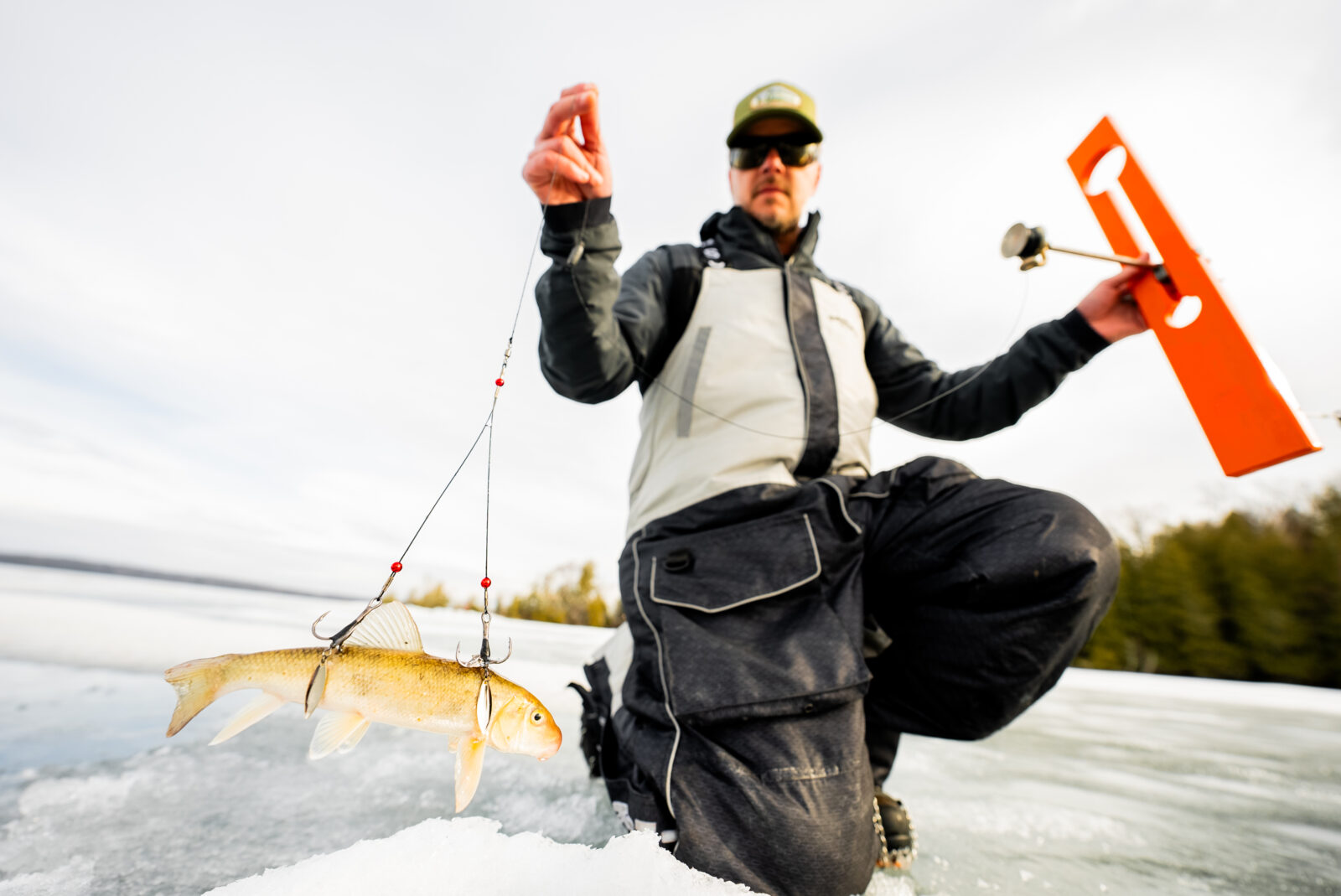
Another way to complement a jigging rod is with a tip-up or set line for trophy fish. You might be jigging in a portable ice house, but could have a tip-up (or more where legal) placed outside the house in another hole. If you can locate areas where fish are moving through at low-light periods, tip-ups help maximize real estate, especially when fishing in groups, and you might have several placed around the perimeter of an underwater point, hump, etc.
Tip-ups typically have their own spool of line on a spindle contained underneath a round top or rail with a flag that goes off when a fish takes your bait. What kind of bait? For walleye, pike, and bass, try shiners, chubs, redtails, suckers, or any larger minnow.
Using tip-ups or set lines (automatic hook-setting devices you set a rod and reel in) allows you to spread them out shallow to deep, even targeting different depths in the water column, depending on what you might see if you’re using forward-facing sonar. Walleyes might be coming in from deeper water at evening to feed shallow, but that doesn’t mean you can’t hang bait out deeper in the mid-column during the day, for example. Learn how to scout the best ice fishing lakes in our guide.
Adjusting Techniques by Season
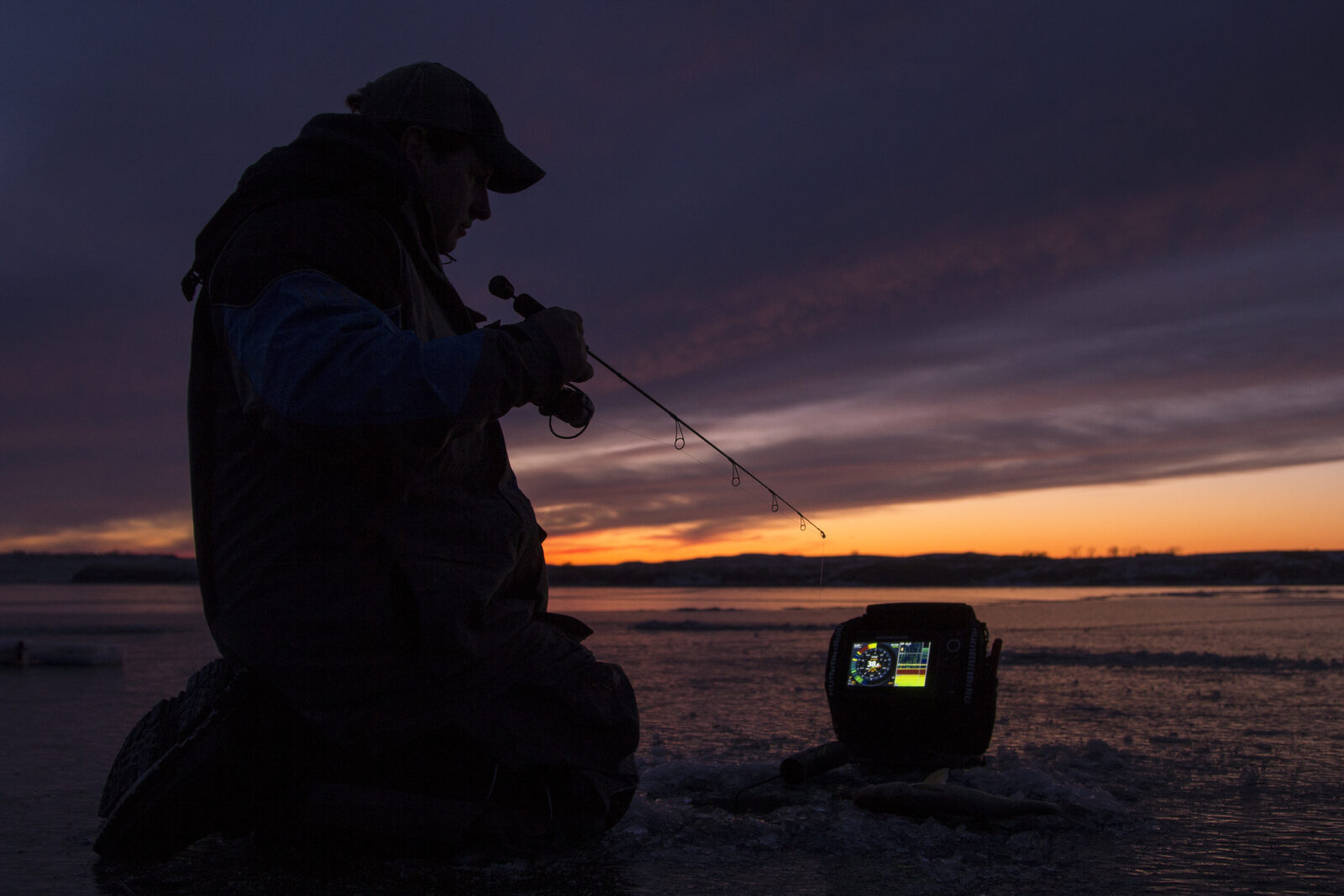
Whether you’re jigging, deadsticking, or running tip-ups/setlines, the ice period generally dictates where you should start depth-wise for success. During early ice, attention should be paid to areas in shallow- to mid-depth with still green weeds; midwinter will see fish move deeper for stability in terms of oxygenation and temperature. For example, crappies will gather over deeper basins and walleyes will stay pretty close to humps and offshore structure. Late ice sees fish begin to push shallower again as higher oxygen from meltwater, longer days, and increased activity push them closer to transitional areas off of spawning habitat. See our Seasonal Ice Planning Guide: Tips for Early Ice vs. Midwinter vs. Late Ice.
Fish with confidence this winter
Start using onX Fish Midwest today.
FAQs About Ice Fishing Techniques
The easiest technique for beginners is jigging. Pretty much everyone can drop a lure into the hole, let it fall until the line goes slack, reel up a bit, and start a lift-drop-quiver motion to entice fish of all species.
While you don’t necessarily need electronics to ice fish, it makes determining depth, the presence of fish, and bites easier. For the investment of a couple hundred dollars, you can find a mechanical style flasher that will make ice fishing easier. In the very least, let onX Fish Midwest guide you to probable spots and go from there.
While jigging can definitely catch fish at night, angler experience shows that deadsticks, tip-ups, and set-lines are champions for producing bigger fish that might shy away from too much motion during the day. The best combination for fishing at night is a jigging set-up and deadstick, tip-up, or set-line (like a rattle reel in a permanent fishhouse).
There is no better or best in the world of the finicky walleye. It depends on the activity of the fish, whether they’re feeding aggressively or are in a neutral to negative mood. This can vary depending on numerous factors: forage availability, time of day, general weather trends, lunar phase, and barometric pressure—all factors you can research using the onX Fish Midwest App.
Absolutely. And the most successful anglers are those who let the fish decide how they want bait presented, whether it’s via an actively-worked jig or on a stationary deadstick, tip-up, or set line. A lot of times, fish that scoff at jigging will move over to a deadstick and eat a stationary minnow. Happens all the time. And vice versa.