Best Fishing Lakes in Iowa: Where to Fish, What to Catch, and Local Favorites
From the clear natural lakes of the Iowa Great Lakes region to sprawling reservoirs and quiet farm ponds tucked into rolling farmland, Iowa offers diverse fishing opportunities in every season. Whether you’re chasing spring crappie in shallow brush, targeting walleye on windy points, or setting up over a midwinter perch school through the ice, having the right plan makes all the difference. With onX Fish, you can scout structure, locate public access, check recent conditions, and map out a strategy before you ever leave home—so when you arrive at the ramp or step onto the ice, you’re ready to fish with confidence.
Best Fishing Lakes in Iowa
Iowa’s best fishing lakes offer something for every angler, from natural glacial waters to sprawling river reservoirs. Clear Lake is a longtime favorite for walleye, yellow bass, and panfish, while East and West Okoboji anchor the Iowa Great Lakes region with standout opportunities for walleye, perch, smallmouth bass, and bluegill. West Okoboji’s clear water is especially known for trophy smallmouth and deep-water structure fishing. In central Iowa, Saylorville Lake provides reliable action for walleye, white bass, and channel catfish, particularly during spring and fall runs. Farther south, Lake Red Rock—the state’s largest reservoir—delivers big-water opportunities for crappie, white bass, walleye, and catfish, especially around creek channels and river structure. Together, these lakes highlight the diversity of Iowa fishing across every season.
Clear Lake
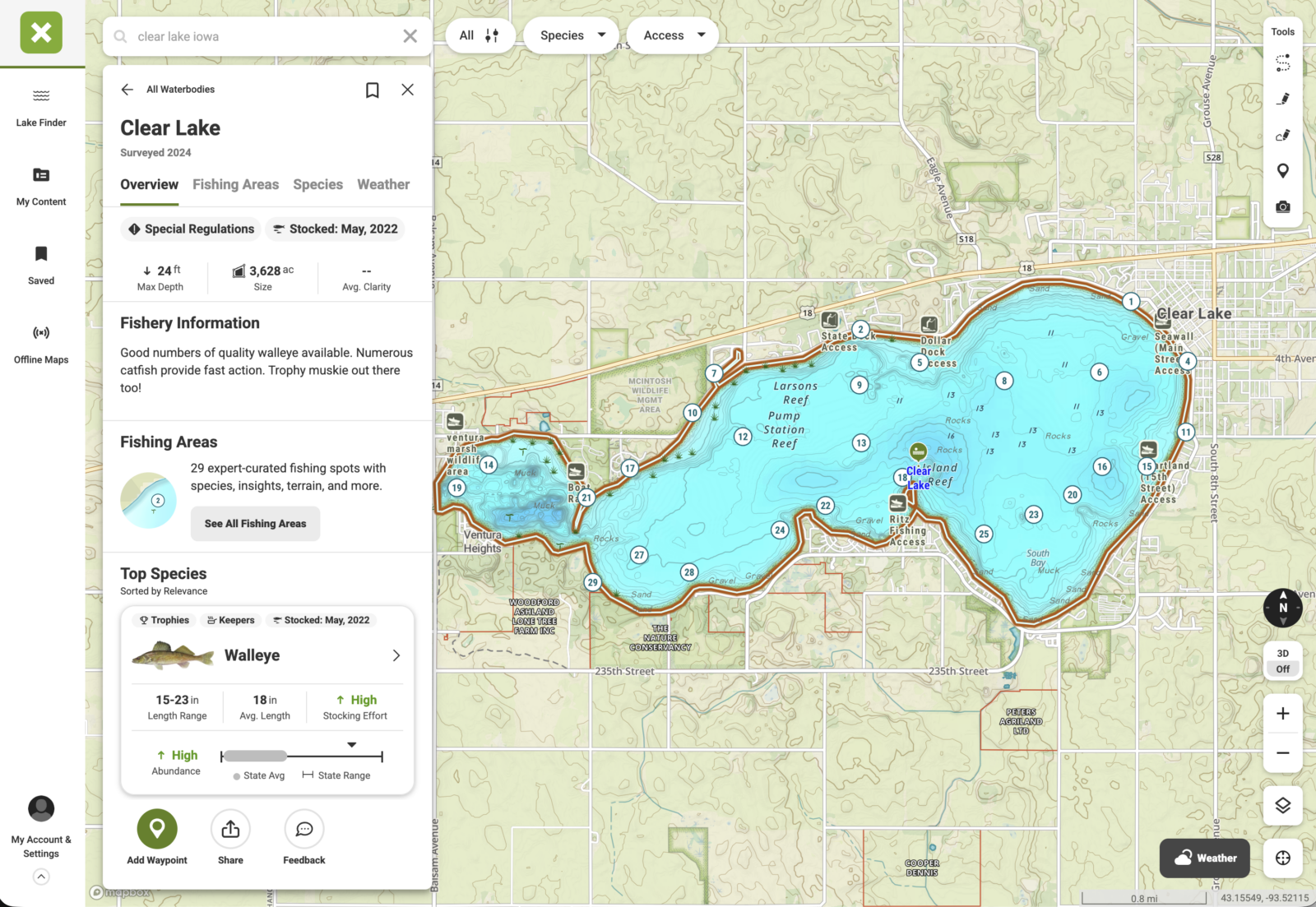
Key Species:
Clear Lake is best known for its walleye fishery, along with strong populations of yellow bass, white bass, black crappie, and bluegill. The lake also holds channel catfish and muskellunge, giving anglers a chance at both steady action and trophy potential.
Why It’s Famous:
Located in north-central Iowa, Clear Lake has long been considered one of the state’s premier fishing destinations. Its reputation is built on consistent walleye production and a uniquely strong yellow bass fishery that provides fast-paced action. The lake’s relatively shallow basin, combined with vegetation and rock structure, creates ideal habitat for multiple species and supports year-round angling opportunities.
Ice Fishing:
Clear Lake is a popular ice fishing destination during typical Iowa winters. When safe ice forms, anglers target walleye, yellow bass, crappie, and bluegill. Early ice and late ice periods are especially productive, with anglers focusing on weed edges, rock reefs, and basin areas. As always, ice conditions vary, so checking thickness and local reports is essential before heading out.
Open Water Fishing:
Spring brings strong walleye action, particularly during low-light periods along rocky shorelines and wind-blown points. Yellow bass and crappie move into shallower areas as water warms. In summer, anglers often target deeper weed edges and mid-lake structure for walleye and panfish, while early mornings and evenings can produce excellent topwater bass action. Fall provides another consistent walleye bite as fish feed aggressively ahead of winter.
Pro Tip: On windy days, focus on wind-blown shorelines and rock structure. Wind pushes baitfish shallow and positions active walleye within casting range—slow-rolling a jig-and-minnow or working a crankbait parallel to the rocks can be especially effective during low light.
East Okoboji Lake
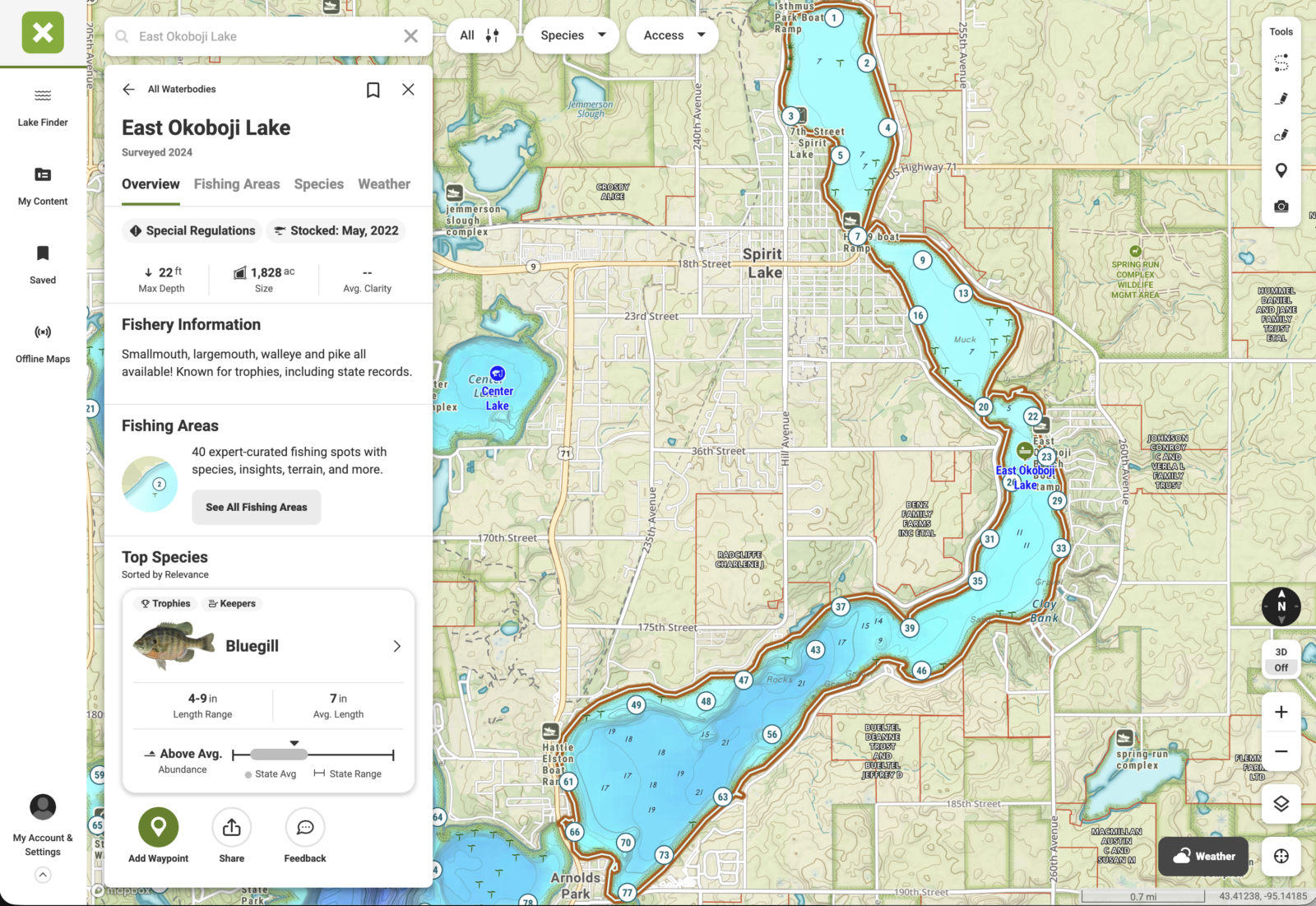
Key Species:
East Okoboji Lake is known for walleye, yellow perch, black crappie, bluegill, and largemouth bass. It also offers northern pike and channel catfish, giving anglers a wide mix of popular Midwest species to target throughout the year.
Why It’s Famous:
As part of Iowa’s Great Lakes chain, East Okoboji has built a reputation as a highly productive and accessible fishery. Its shallower, more fertile water compared to West Okoboji supports strong panfish and perch populations, while consistent walleye stocking helps maintain a reliable bite. The lake’s combination of vegetation, docks, and basin structure makes it a go-to destination for both open-water and ice anglers.
Ice Fishing:
East Okoboji is a popular ice fishing lake during typical Iowa winters. Anglers target perch, bluegill, crappie, and walleye through the ice, especially during early and late ice periods. Weed edges, mid-lake basins, and subtle depth changes are key areas. As always, ice thickness varies year to year, so safety checks are essential before heading out.
Open Water Fishing:
Spring brings walleye shallow during low-light periods, along with crappie and bluegill moving into emerging vegetation and docks. Summer fishing often centers around weed lines and deeper basin edges, where perch and walleye relate to schools of baitfish. Early mornings and evenings can produce strong bass action around shoreline cover. In fall, cooling water temperatures trigger another aggressive feeding window for walleye and perch as they prepare for winter.
Pro Tip: On East Okoboji, don’t overlook healthy weed edges. Use your map to identify inside turns and irregular weed lines—these subtle changes often concentrate perch and walleye. Drifting or slowly working jigs along these edges can help you stay in the strike zone longer and dial in productive stretches.
West Okoboji Lake
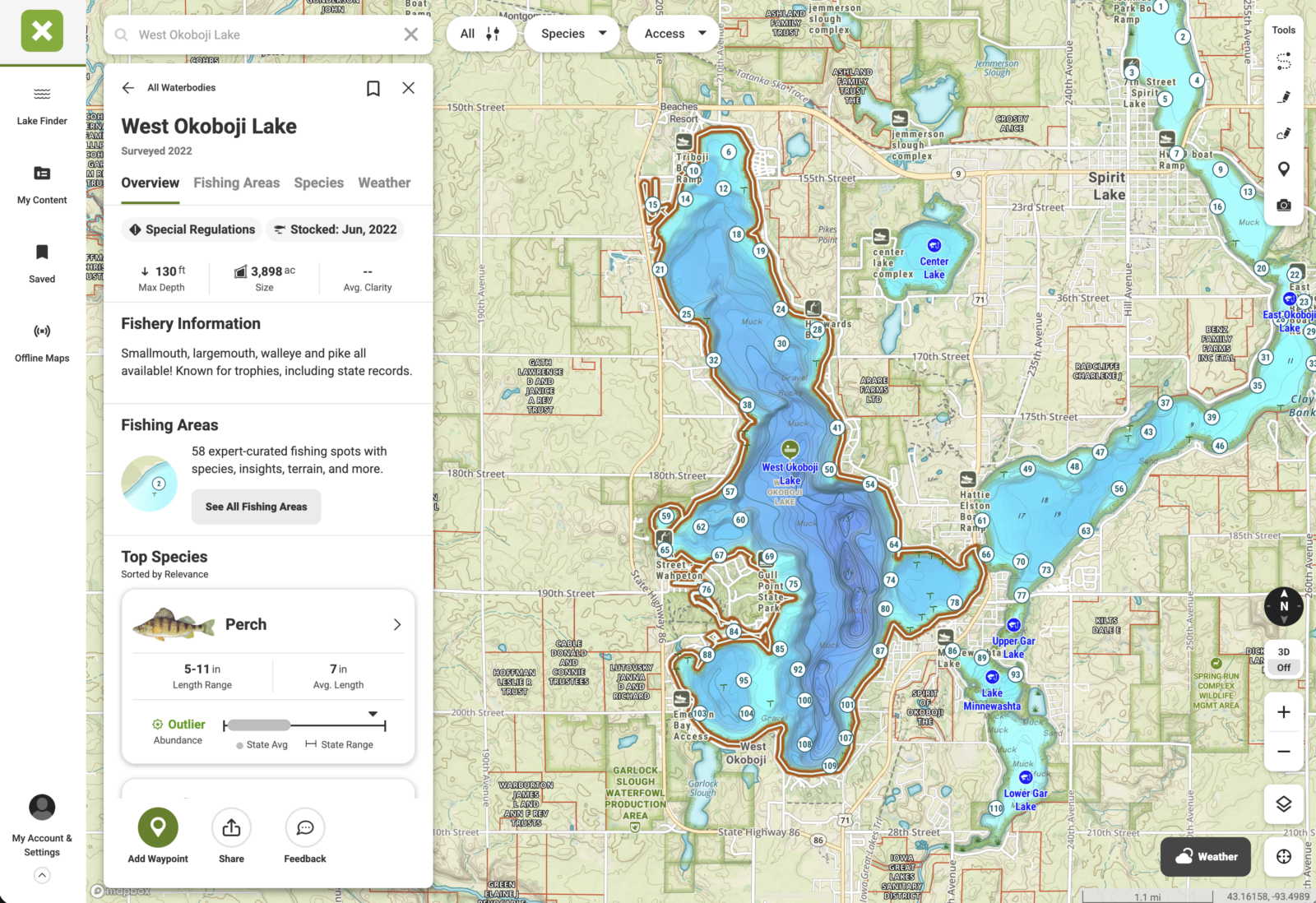
Key Species:
West Okoboji Lake is best known for walleye and smallmouth bass, along with strong populations of yellow perch, bluegill, black crappie, and largemouth bass. The lake also supports northern pike and muskellunge, offering opportunities for anglers targeting larger predator species.
Why It’s Famous:
West Okoboji stands out as one of Iowa’s premier natural lakes, known for its exceptionally clear water and deep structure. As the deepest natural lake in the state, it offers classic glacial-lake habitat with rock reefs, steep drop-offs, and offshore humps. Its smallmouth bass fishery in particular has earned a strong reputation, while consistent walleye production keeps anglers coming back year after year.
Ice Fishing:
West Okoboji is a popular ice fishing destination during solid Iowa winters. Anglers commonly target yellow perch, bluegill, crappie, and walleye through the ice. Because of the lake’s depth and clarity, fish often relate to deeper structure and basin areas midwinter, while early and late ice can concentrate fish closer to reefs and weed edges. Always check ice conditions carefully, as depth variations can impact ice formation.
Open Water Fishing:
Spring brings excellent walleye fishing along rocky shorelines and wind-blown points, especially during low-light periods. Smallmouth bass become active around rock reefs and gravel areas as water temperatures rise. In summer, anglers often target deeper structure—offshore humps, ledges, and reefs—for walleye and smallmouth, while panfish relate to weed edges and docks. Fall provides another strong bite as cooling water temperatures push baitfish shallow and trigger aggressive feeding behavior.
Pro Tip: On clear-water lakes like West Okoboji, stealth matters. Use lighter line, natural-colored presentations, and long casts when targeting shallow smallmouth or walleye. Focus on offshore reefs and rock piles identified on your map—these isolated structures often hold fish that see far less pressure than shoreline spots.
Saylorville Lake
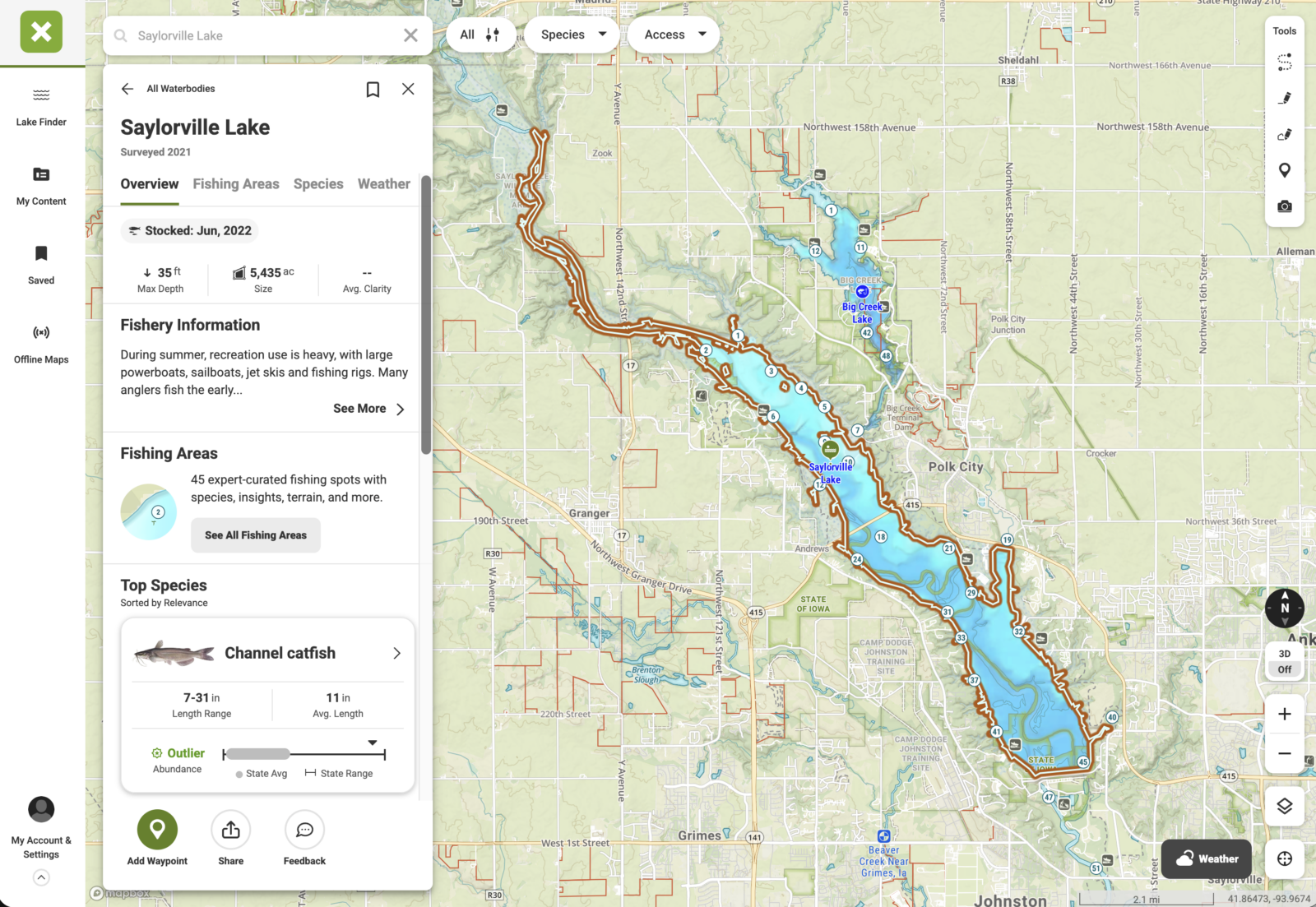
Key Species:
Saylorville Lake is known for walleye, white bass, hybrid striped bass, largemouth bass, crappie, and channel catfish. The lake’s connection to the Des Moines River system also supports flathead catfish and seasonal runs of river-oriented species.
Why It’s Famous:
Located just north of Des Moines, Saylorville is a popular and easily accessible central Iowa fishery. It’s especially well known for spring and fall white bass runs, strong hybrid striped bass action, and consistent walleye opportunities. As a flood-control reservoir, water levels fluctuate throughout the year, creating changing habitat that can concentrate fish in predictable areas.
Ice Fishing:
Ice fishing opportunities vary depending on winter conditions and water levels. In colder winters, protected coves and upper sections of the lake may develop fishable ice, with anglers primarily targeting crappie and panfish. However, fluctuating water levels and river current can impact ice formation, so checking local conditions and prioritizing safety is critical.
Open Water Fishing:
Spring is one of the best times to fish Saylorville, with white bass and hybrids making upstream runs and walleye staging along rocky shorelines, points, and dam areas. Crappie move into brush and shallow cover as water warms. During summer, anglers often target main-lake points, submerged timber, and river-channel edges, especially early and late in the day. Fall brings another strong white bass and hybrid bite as fish chase shad in open water, along with active walleye feeding ahead of winter.
Pro Tip: Pay close attention to current and wind. On reservoirs like Saylorville, moving water positions baitfish and predator species along channel edges and wind-blown points. Use your map to locate bends in the old river channel or submerged roadbeds—these subtle structural changes often concentrate fish when water is moving.
Lake Red Rock
Key Species:
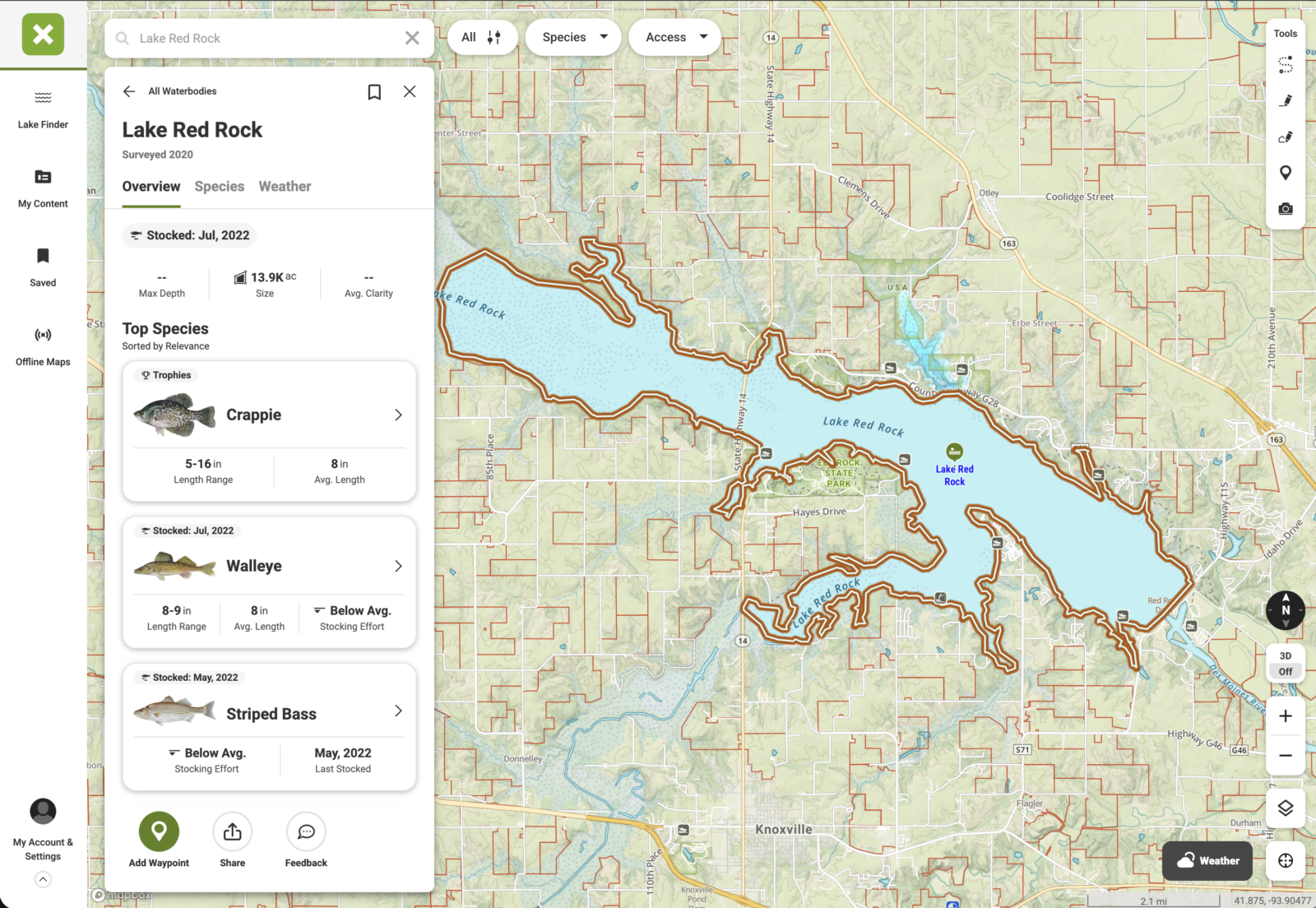
Lake Red Rock supports strong populations of crappie (black and white), white bass, walleye, largemouth bass, channel catfish, and flathead catfish. The lake’s connection to the Des Moines River system also creates opportunities for river-oriented species and seasonal runs.
Why It’s Famous:
As Iowa’s largest reservoir, Lake Red Rock is known for its big-water opportunities and diverse fishery. It’s especially popular for crappie and white bass, with spring and fall runs drawing anglers from across the region. The lake’s flooded timber, creek channels, mud flats, and river structure create a wide range of habitat, giving anglers multiple ways to pattern fish throughout the year.
Ice Fishing:
Ice fishing opportunities vary significantly depending on winter conditions and water levels. During colder winters, protected coves and upper lake areas may develop fishable ice, with anglers targeting crappie and panfish. However, fluctuating water levels and river current can affect ice formation, so checking local reports and exercising caution is essential.
Open Water Fishing:
Spring is a prime time at Red Rock, with crappie moving into shallow timber and brush, and white bass making upstream runs. Walleye often stage along rocky areas and channel edges during low-light periods. In summer, anglers focus on submerged timber, main-lake points, and river-channel structure, while catfish bite well along deeper flats and current edges. Fall brings aggressive white bass schooling action and another strong crappie bite as fish feed heavily ahead of winter.
Pro Tip: On big reservoirs like Red Rock, use contour maps to identify creek-channel swings and submerged timber near deeper water. These transition zones act as travel routes for crappie, walleye, and white bass—especially when water levels fluctuate—and can help you narrow down productive areas faster.
Using onX Fish App for Iowa Lake Fishing
- Check Regulations With onX Fish: Each lake can have specific fishing regulations, including slot limits, size restrictions, and season closures. Always verify the rules before heading out.
- Let onX Be Your Guide: If you’re new to a lake or targeting a specific species, let the onX Fish App get you up to speed on your species of interest through abundance, keeper, and trophy opportunities. Find information about where to launch, forage in the lake, and recent aerial imagery to help winter and summer anglers alike. In ten minutes, we aim to give you the equivalent of 10 years’ experience on the ground.
- Gear Up for the Season: Summer anglers should pack trolling setups, casting rods, and live bait rigs, while ice anglers need sturdy augers, warm gear, and sonar.
- Be Prepared for Weather: Midwestern weather can change rapidly, especially in winter, so keep onX Fish handy to see exact weather forecasts for your exact location. Dress in layers, and always check forecasts before heading onto the ice or water.
- Scout Structure Faster: Use detailed lake maps to quickly identify points, creek channels, submerged timber, brush piles, and drop-offs on lakes. Instead of idling aimlessly, start with high-percentage structure and spend more time fishing.
- Find Access Quickly: From major boat ramps to lesser-known public access sites, knowing exactly where you can launch or bank fish saves time.
- Recent Imagery: Water levels fluctuate across Missouri’s reservoirs. Recent satellite imagery helps you spot exposed brush, shoreline changes, shallow flats, and backwater areas before you even leave the driveway.
- Waypoints + Notes: Mark productive docks, brush piles, windy points, or muskie follows so you can build a reliable milk run throughout the season. Adding notes about water temp, depth, and lure choice helps dial in patterns year after year.
- Offline Maps: Cell service can be spotty in the plains and on big water. Download maps before your trip so you can navigate, mark fish, and find your way back to the ramp with confidence.
- Big-Water Safety: Large reservoirs can get rough fast with wind or boat traffic. Use mapping features to plan safe routes, identify main-lake hazards, and locate nearby ramps or protected coves if conditions change.
Iowa is home to many sportsmen and sportswomen who appreciate the state’s fisheries and open prairie spaces. With onX Fish in your pocket, feel empowered to explore every body of water in the Hawkeye State. You’ll know impending weather conditions, be able to form a fishing plan from the comfort of your own home, and arrive at the boat ramp with the knowledge you need to make the most of every day in the water.
Start Scouting With onX Fish
Use onX Fish to compare lakes by species data, scout access and travel routes with Recent Imagery, save your best spots as Waypoints, download Offline Maps, and hit the ice with confidence.
FAQs
Some of the top walleye lakes in Iowa include Spirit Lake, West Okoboji Lake, Clear Lake, Storm Lake, and Big Creek Lake. The Iowa Great Lakes region is especially well known for consistent walleye action, while Clear Lake has long been a destination for anglers targeting both numbers and quality fish. Many of Iowa’s larger reservoirs and natural lakes are managed specifically with walleye stocking programs, making them reliable options year after year.
For panfish and yellow perch, anglers often head to the Iowa Great Lakes (including Spirit Lake and East and West Okoboji), Clear Lake, Silver Lake (Worth County), and Black Hawk Lake. These waters are known for strong bluegill, crappie, and perch populations. Natural lakes in northern Iowa are particularly productive for jumbo perch and gill fishing, especially during late ice and early open-water seasons.
The best crappie bite typically occurs in spring, from late April through May, when fish move shallow into coves, flooded brush, and shoreline cover to spawn. A strong secondary bite often develops in fall as crappie feed heavily before winter. During summer and winter, crappie usually relate to deeper structure, submerged timber, and basin edges, requiring more vertical presentations.
Yes—ice fishing is a major part of Iowa’s fishing culture. Many of the state’s natural lakes and reservoirs develop safe ice during typical winters, especially in northern Iowa. Anglers target walleye, perch, crappie, and bluegill through the ice, with the Iowa Great Lakes region being a premier destination. As always, ice thickness and safety conditions should be checked before heading out.
Public boat ramps and lake access points are widely available across Iowa’s state-managed lakes and reservoirs. The Iowa DNR provides access information, and mapping tools like onX Fish make it easy to locate boat ramps, parking areas, and shore fishing access points before you leave home, saving time and helping you plan efficient launch options.
Start by identifying structure: points, drop-offs, creek channels, weed edges, and submerged humps. Fish often relate to depth changes combined with cover or vegetation. Study contour lines to find sharp breaks or gradual flats, then narrow your focus based on season—shallow cover in spring, deeper structure in summer and winter. Mark likely spots before your trip so you can spend more time fishing and less time searching once you’re on the water.