Best Fishing Lakes in Montana: Where to Fish, What to Catch, & Local Favorites
Montana’s fishing opportunities go far beyond its legendary rivers—its lakes offer some of the most diverse and rewarding angling in the West. From the vast waters of Fort Peck Reservoir to the crystal-clear depths of Flathead Lake and the productive basins of Canyon Ferry, anglers can target everything from walleye and lake trout to perch and panfish. Whether you’re chasing trophy fish on big water or looking for steady action closer to town, Montana’s lakes deliver year-round opportunity. In this guide, we’ll break down the best fishing lakes in Montana, what you can catch, and how to find fish faster with the right tools in hand.
Best Fishing Lakes in Montana
Big water, big skies, and even bigger opportunities—that’s what fishing Montana’s lakes is all about. Whether you’re jigging for walleye on windswept reservoirs, trolling deep for lake trout, or chasing perch and panfish in productive bays, the state offers a wide range of fisheries to explore. Each lake has its own personality, from remote and rugged to easily accessible, giving anglers plenty of ways to tailor their experience. No matter your target species or skill level, Montana’s best lakes offer the kind of variety and adventure that keep you coming back season after season.
Fort Peck Lake
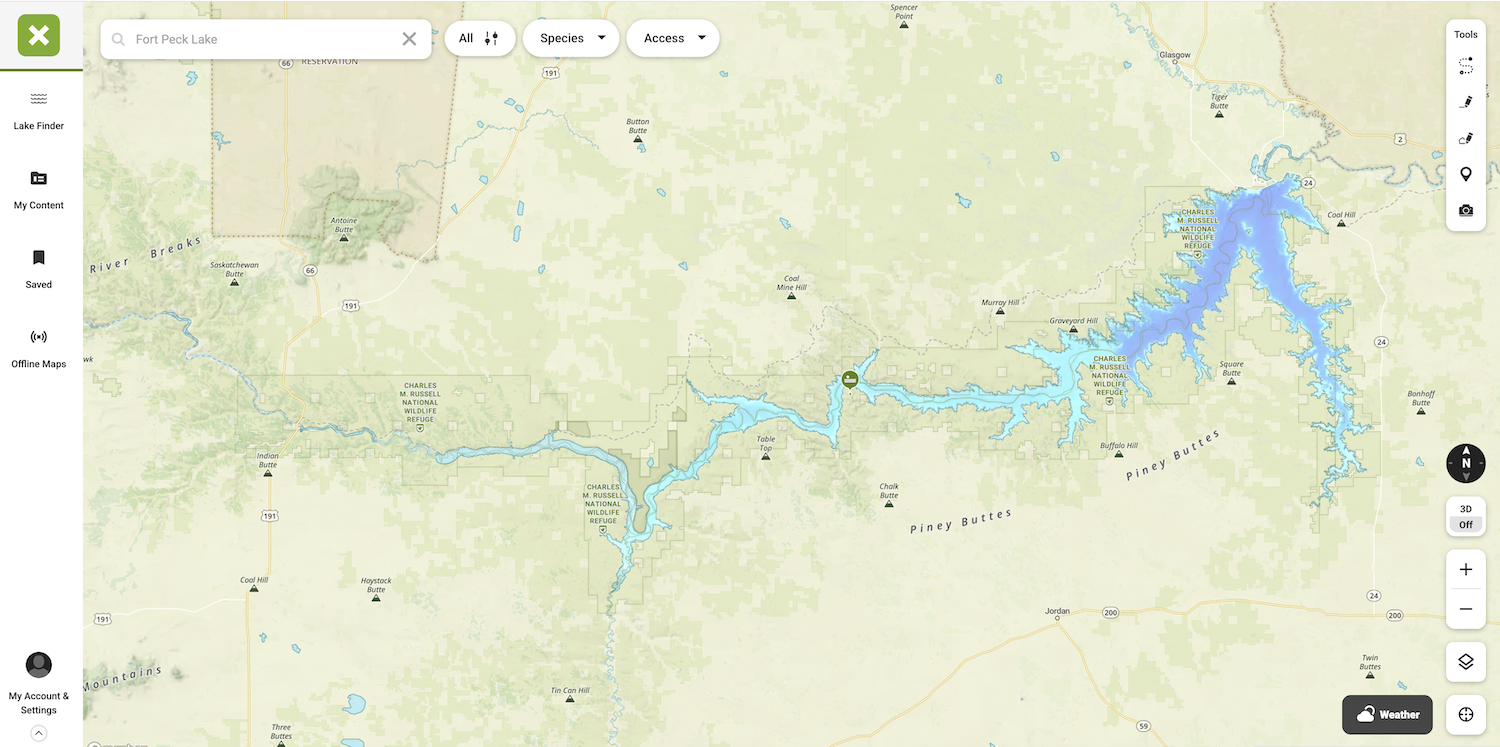
Key Species: Fort Peck Reservoir is one of Montana’s most diverse fisheries, with walleye, northern pike, smallmouth bass, lake trout, Chinook salmon, and yellow perch all available. It’s especially well known for trophy-class walleye and pike, along with a unique inland salmon fishery.
Why It’s Famous: As one of the largest reservoirs in the United States, Fort Peck is legendary for its size, remote setting, and big fish potential. Anglers travel from across the country for a shot at trophy walleye, massive northern pike, and hard-fighting Chinook salmon. Its vast shoreline, countless bays, and submerged structure create nearly endless water to explore… and plenty of opportunity to find unpressured fish.
Ice Fishing: Fort Peck is a premier ice fishing destination during Montana winters, particularly for walleye, northern pike, and perch. Popular areas like Hell Creek and Fort Peck Marina offer access to productive waters. Ice conditions can vary widely due to the lake’s size and wind exposure, so checking local reports and using caution is critical. When conditions line up, anglers can experience some of the best hardwater fishing in the state.
Open Water Fishing: Spring and early summer are prime for walleye, especially along points, rocky shorelines, and spawning areas. Northern pike move shallow in bays and flooded vegetation early in the season. As summer progresses, anglers target deeper structure, main-lake points, and submerged humps for walleye and lake trout, while trolling becomes effective for salmon. Fall brings aggressive feeding as fish prepare for winter, offering excellent opportunities across multiple species.
Pro Tip: Fort Peck is massive, so don’t try to fish it all. Use onX Fish to narrow your focus by identifying key structures like points, channel edges, and submerged humps near access points. Mark Waypoints as you go and build a repeatable pattern, covering less water more thoroughly is often the key to finding consistent success on big reservoirs like this.
Flathead Lake
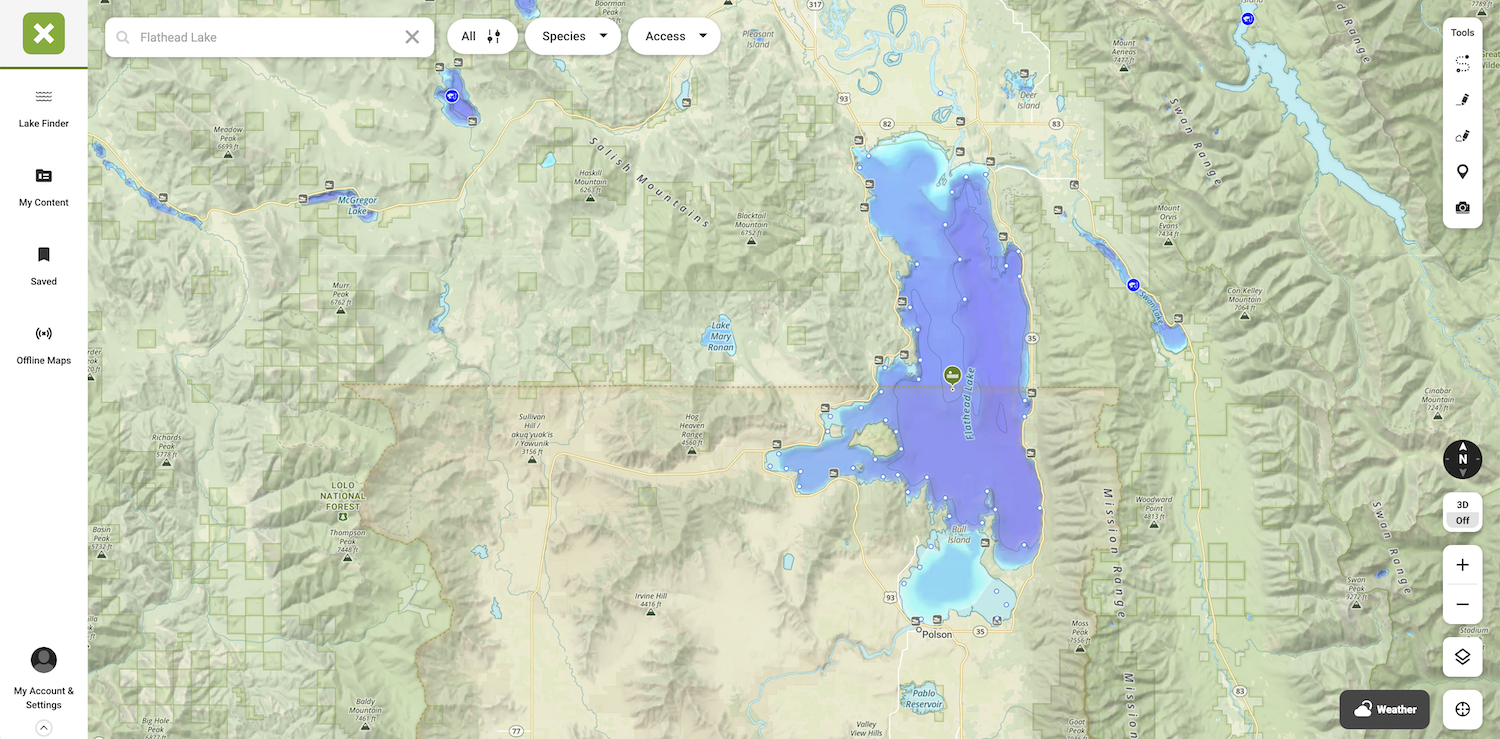
Why It’s Famous: As the largest natural freshwater lake west of the Mississippi, Flathead Lake is iconic for its size, clarity, and stunning mountain backdrop. Its deep, cold waters create ideal habitat for lake trout, and the lake has gained a reputation for both high numbers and trophy potential. The combination of scenic beauty and productive fishing makes it one of Montana’s most well-known destinations.
Key Species: Flathead Lake is best known for lake trout (mackinaw), along with lake whitefish, yellow perch, and northern pike in certain areas. Anglers may also encounter cutthroat and rainbow trout, especially in connected waters and tributaries.
Ice Fishing: Ice fishing on Flathead Lake is extremely limited and uncommon due to its depth, size, and wind exposure. The main lake rarely freezes safely, though smaller bays or nearby lakes in the region may offer better ice fishing opportunities during cold winters.
Open Water Fishing: Lake trout fishing is the main draw, with anglers targeting deep water structure like drop-offs, ledges, and submerged humps. Spring and fall can bring fish into more accessible depths, while summer often requires trolling or jigging in deeper water. Yellow perch and whitefish can be found in shallower bays and flats, especially during warmer months. The lake’s clarity often calls for precise presentations and attention to depth.
Pro Tip: Use onX Fish to locate steep breaklines and offshore structure where lake trout stack up. Because Flathead is so deep and clear, focus on depth transitions rather than shoreline features—and don’t be afraid to fish deep. Mark productive zones and repeat passes to dial in suspended fish.
Canyon Ferry Reservoir
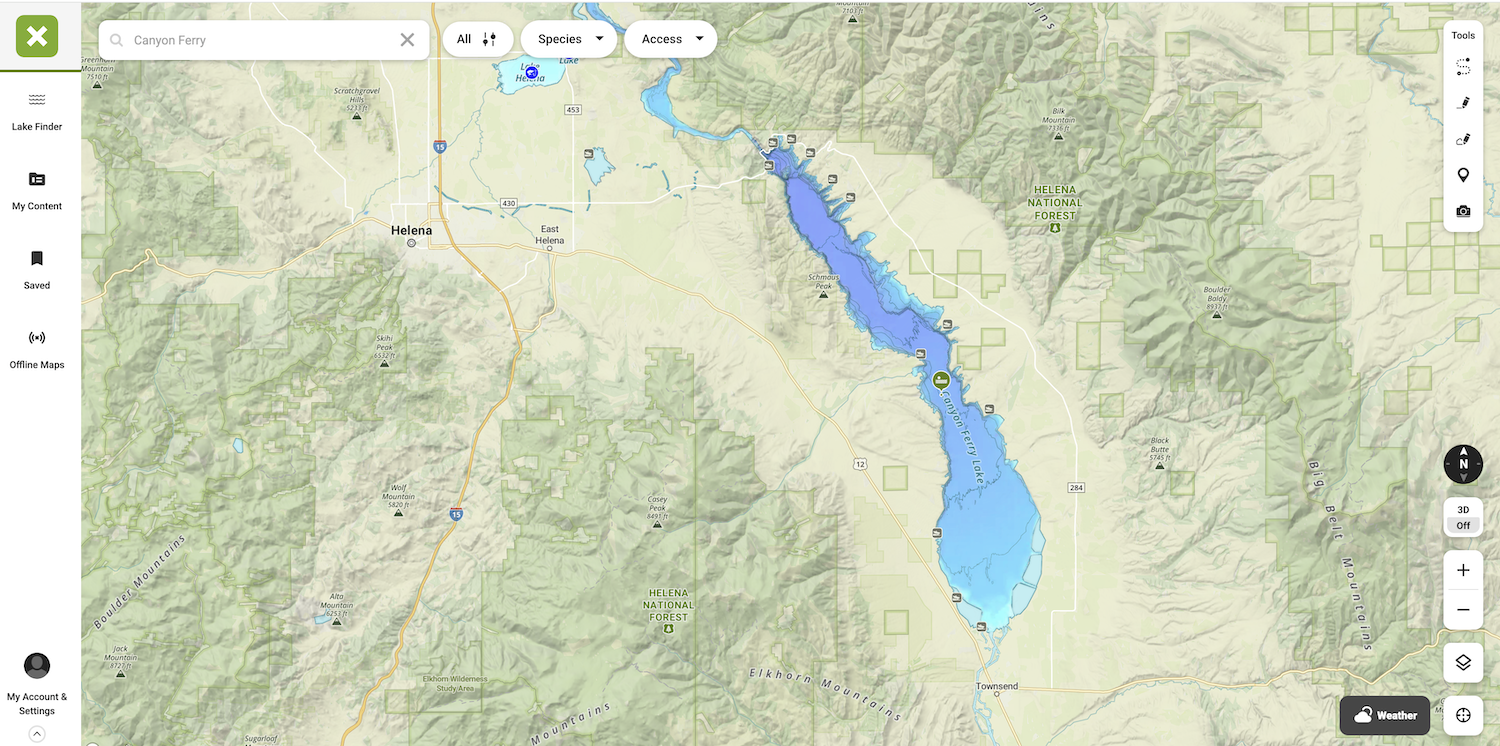
Key Species: Canyon Ferry Reservoir is known for its walleye fishery, along with yellow perch, rainbow trout, and burbot (ling). It also holds smallmouth bass and carp, offering a well-rounded, multi-species experience for anglers.
Why It’s Famous: Located near Helena, Canyon Ferry is one of Montana’s most popular and accessible fisheries. It’s especially well known for consistent walleye action and strong perch numbers, making it a go-to destination for both open water and ice anglers. Its size, productivity, and proximity to town make it a reliable choice year-round.
Ice Fishing: Canyon Ferry is a top ice fishing destination in Montana. When conditions allow, anglers target walleye, perch, and burbot through the ice, with midwinter often producing steady action. Popular areas include sheltered bays and mid-lake flats. As always, ice thickness can vary, so checking local conditions is essential before heading out.
Open Water Fishing: Spring is prime time for walleye, especially along rocky shorelines, points, and dam areas during low-light periods. Perch and trout become more active as water warms. In summer, anglers often focus on deeper structure, humps, and basin edges, with early mornings and evenings producing the best bite. Fall brings another strong feeding window for walleye and perch as fish prepare for winter.
Pro Tip: Wind is your friend on Canyon Ferry. Use onX Fish to identify wind-blown points and flats—these areas often concentrate baitfish and actively feeding walleye. Drifting or slowly trolling along these zones can help you cover water efficiently and stay on fish.
Hauser Lake
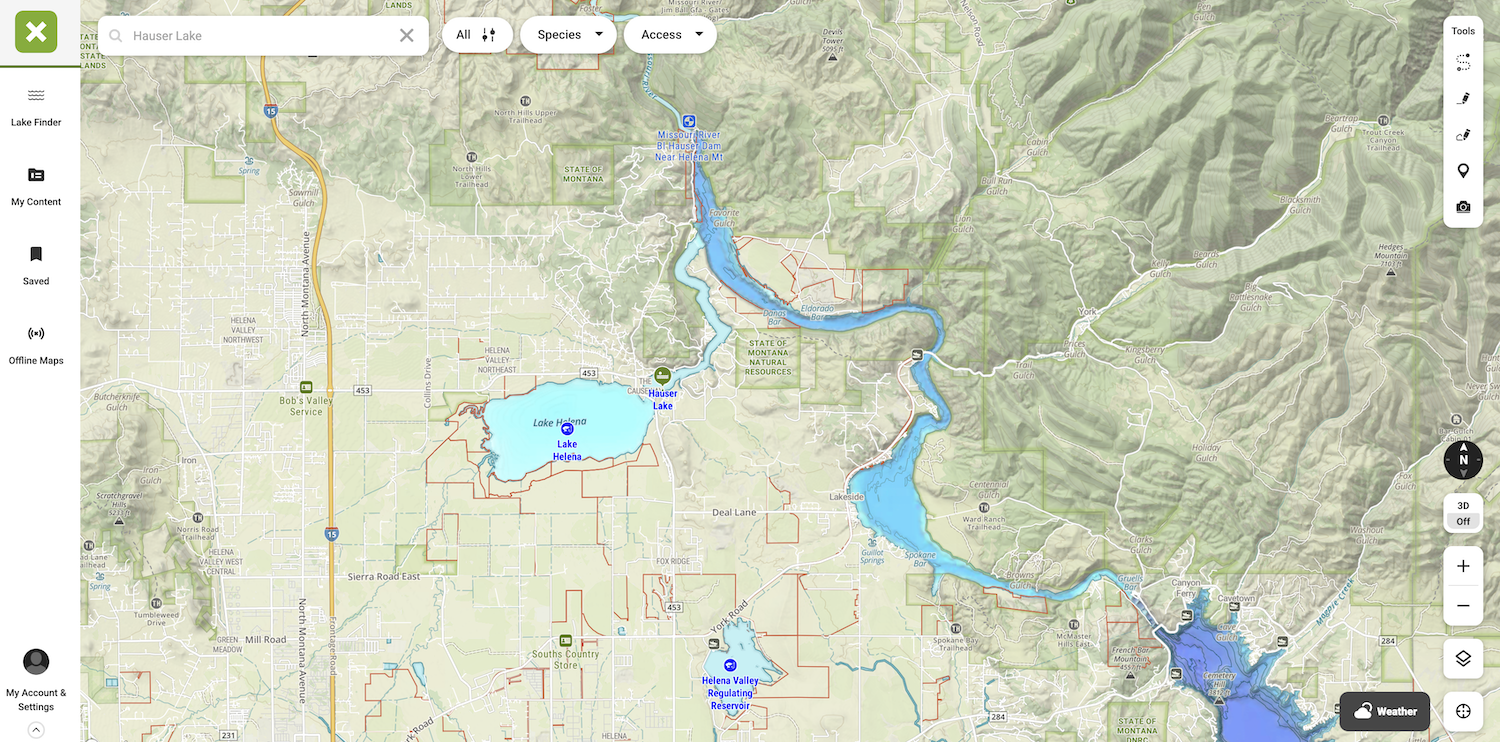
Key Species: Hauser Lake offers a mix of walleye, rainbow trout, brown trout, kokanee salmon, yellow perch, and channel catfish. It’s a well-rounded fishery with both warmwater and coldwater opportunities in a relatively compact system.
Why It’s Famous: Located just outside Helena, Hauser Lake is known for its accessibility and consistent fishing close to town. It’s especially popular for walleye and trout, and its smaller size compared to nearby Canyon Ferry makes it easier to break down and pattern fish. The lake’s mix of open basins, points, and shoreline structure creates reliable opportunities throughout the year.
Ice Fishing: Hauser Lake can offer solid ice fishing during typical Montana winters, particularly in protected bays. Anglers often target perch, walleye, and trout through the ice. Ice conditions vary depending on weather and location, so checking thickness and local reports is important before heading out.
Open Water Fishing: Spring is a great time to target walleye along points, rocky shorelines, and shallow flats, especially during low-light periods. Trout fishing is also productive in cooler months, with fish cruising shorelines and drop-offs. In summer, anglers often shift deeper, focusing on ledges, humps, and basin areas, while early mornings and evenings produce the best bite. Fall brings another strong opportunity for both walleye and trout as fish feed actively before winter.
Pro Tip: On smaller lakes like Hauser, efficiency matters. Use onX Fish to look into species details such as size structure and how to attack smaller, eater-sized fish with different patterns as compared to targeting trophies.
Hebgen Lake
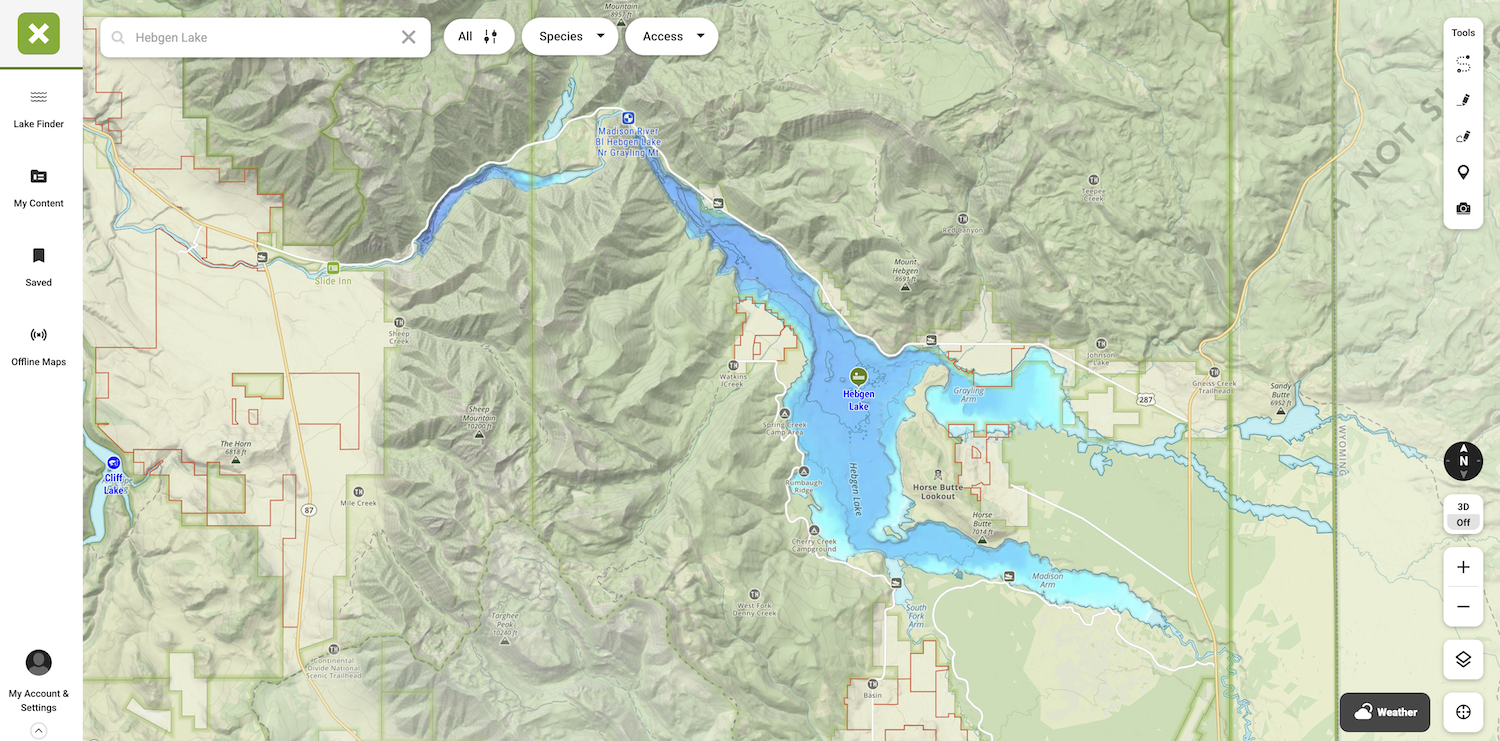
Key Species: Hebgen Lake is a premier trout fishery, known for rainbow trout, brown trout, and cutthroat trout, along with mountain whitefish. These coldwater species thrive in the lake’s clear, nutrient-rich waters and support both numbers and trophy potential.
Why It’s Famous: Located just outside West Yellowstone, Hebgen Lake is widely regarded as one of the best stillwater trout fisheries in Montana. Strong populations of rainbow and brown trout, along with consistent water conditions, make it a reliable destination for anglers targeting quality fish. The lake’s shallow flats, weed beds, and drop-offs create ideal feeding zones where trout cruise and ambush baitfish, especially during low-light periods. Hebgen is also known for producing solid numbers of fish, not just trophies, and its mix of structure and open water gives conventional anglers plenty of opportunities to troll, cast, or jig effectively throughout the season.
Ice Fishing: Hebgen Lake offers solid ice fishing opportunities during Montana winters when conditions allow. Anglers primarily target trout through the ice, especially in shallower bays and along structure. Ice formation can vary depending on weather, so checking conditions before heading out is essential.
Open Water Fishing: Open water fishing on Hebgen Lake is focused on trout, with spring and early summer providing excellent action as fish move shallow after ice-off. Anglers find success trolling crankbaits, spoons, or spinners along shorelines, weed edges, and drop-offs, as well as casting from shore during low-light periods. As summer progresses, trout often move deeper during the day, making trolling and jigging effective for covering water and locating fish. In fall, trout feed aggressively ahead of winter, and anglers can target them along transition zones and structure with a variety of lures and bait presentations. Adjusting depth and speed is key to staying on active fish throughout the season.
Pro Tip: Timing is everything on Hebgen. Use onX Fish to locate shallow flats, weed beds, and transition zones where trout cruise. Mark productive areas and return during peak feeding windows—especially early morning and evening—when fish are most active on the surface.
Tips for Fishing Montana’s Top Lakes
- Check Regulations With onX Fish: Each lake can have specific fishing regulations, including slot limits, size restrictions, and season closures. Always verify the rules before heading out.
- Scout Structure Faster: Montana’s lakes range from deep, clear glacial waters to sprawling reservoirs with subtle structure. With onX Fish, you can quickly identify drop-offs, points, submerged humps, and weed edges on lakes like Flathead, Fort Peck, and Canyon Ferry. Instead of searching blindly, use detailed map layers to zero in on high-percentage areas where trout, walleye, and bass are most likely to hold.
- Find Access Quickly: Public access can be limited or spread out across Montana’s vast landscape. onX Fish helps you locate boat ramps, shore access, and public land boundaries so you can plan your entry points ahead of time. Whether you’re launching on a large reservoir or sneaking into a quieter lake, knowing exactly where to go saves time and avoids private land issues.
- Use Recent Imagery: Water levels can fluctuate significantly on Montana reservoirs, especially on systems like Fort Peck. Recent satellite imagery on Montana lakes lets you see current shorelines, exposed structure, and backwater areas before your trip. This is especially useful for spotting flats, points, and newly accessible areas that may not show on older maps.
- Download Offline Maps: Cell service is often nonexistent around many of Montana’s best fishing destinations. With onX Fish, you can download lake maps ahead of time so you always have access to navigation, waypoints, and lake data—even miles from the nearest signal. It’s a must-have for remote lakes and long days on big water.
- Be Ready for Big-Water Weather Conditions: Montana’s lakes can change quickly with wind and weather, especially on large bodies of water like Flathead Lake and Fort Peck Reservoir. Use onX Fish to plan safe routes, identify protected bays, and locate nearby access points in case conditions shift. Being prepared helps you fish smarter—and get off the water safely when needed. Dress in layers, and always check forecasts before heading onto the ice or water.
- Let onX Be Your Guide: If you’re new to a lake or targeting a specific species, let the onX Fish App get you up to speed on your species of interest through abundance, keeper, and trophy opportunities. Find information about where to launch, forage in the lake, and recent aerial imagery to help winter and summer anglers alike. In ten minutes, we aim to give you the equivalent of 10 years’ experience on the ground.
- Gear Up for the Season: Summer anglers should pack trolling setups, casting rods, and live bait rigs, while ice anglers need sturdy augers, warm gear, and sonar.
Montana is a big state, home to many sportsmen and sportswomen who appreciate the state’s fisheries and open prairie spaces. With onX Fish in your pocket, feel empowered to explore every body of water in the Big Sky State. You’ll know impending weather conditions, be able to form a fishing plan from the comfort of your own home, and arrive at the boat ramp with the knowledge you need to make the most of every day in the water.
FAQs
Fort Peck Reservoir, Canyon Ferry Lake, and Tiber Reservoir are among the top walleye destinations in Montana. Fort Peck is famous for its size and trophy potential, while Canyon Ferry offers consistent action and easy access near Helena. Tiber is a bit more off the radar but produces quality fish with less pressure. With onX Fish, you can quickly locate main-lake points, submerged structure, and channel edges where walleye tend to hold—helping you narrow down productive water on these massive systems.
Canyon Ferry Lake stands out as one of the best multi-species fisheries in the state, offering walleye, perch, rainbow trout, and ling (burbot). Flathead Lake is another great option, with lake trout, lake whitefish, and yellow perch. onX Fish makes it easy to plan for multiple species by helping you identify different types of structure—like deep drop-offs for lake trout or weed edges and flats for perch—all in one trip.
Absolutely. While Montana is known for its rivers, lakes like Flathead Lake, Hebgen Lake, Georgetown Lake, and Hauser Lake offer excellent trout fishing. Anglers can target rainbow, brown, lake trout, and cutthroat depending on the water. With onX Fish, you can scout depth contours, locate submerged structure, and mark productive areas ahead of time—key for targeting trout in larger, deeper lakes.
Montana lakes offer year-round fishing, but timing depends on your target species. Spring and early summer are prime for walleye, perch, and trout as fish move shallow. Summer can be productive early and late in the day, especially on deeper lakes. Fall brings aggressive feeding activity across many species, while winter offers solid ice fishing opportunities on lakes like Canyon Ferry and Fort Peck. Using onX Fish, you can adjust your strategy by scouting seasonal structure and downloading maps to stay prepared no matter when you go.
Montana offers strong public access across both natural lakes and reservoirs. The easiest way to locate ramps, shore fishing areas, and access sites is by using detailed digital maps. With onX Fish, you can quickly identify public land boundaries, marked boat launches, and navigation routes before you ever leave home.
Start by looking for structural changes: points, breaklines, humps, and channel swings. Fish relate to depth transitions, especially areas near deeper water. Use contour lines to identify sharp breaks or subtle inside turns, then factor in wind direction to locate likely feeding zones. With tools like onX Fish, you can preview structure, measure distances, and build a plan so your first cast on a new lake is already informed.