Every elk hunter talks about “getting away from the crowds.”
Few are willing to do what it actually takes.
This hunt started the way most real backcountry hunts do, not with bugles echoing across a basin, but with a springtime decision: Do we commit to another wilderness elk hunt, or take the year off?
Two of our usual hunting partners had other plans for the fall. That left my friend Sean and me with a choice: repeat what we knew, invite new hunters into the fold, or sit this season out. Before long, interest came from two directions: Brandon, a coworker of Sean’s who was brand new to elk hunting, and Matt, my coworker at onX and the first employee ever hired here.
Four hunters. Mixed experience. One wilderness elk hunt.
From the beginning, we knew the real challenge wouldn’t just be finding elk, it would be planning a hunt that worked for all four of us, from draw odds to terrain to logistics, deep in a Colorado wilderness area with no motorized access.
First Things First: Can Everyone Even Get a Tag?
Group hunts live or die before the season ever starts.
If everyone can’t draw, the plan falls apart. Add in different point totals, a non-resident hunter, and a wilderness-only unit, and suddenly the margin for error disappears.
This is where onX Hunt’s Hunt Research Tools became indispensable.
We started with unit research, looking for the right balance of:
- Manageable hunting pressure.
- High public land percentages.
- Strong elk success rates.
- Realistic draw odds for four people, including one non-resident.
Hunt Research Tools allowed me to plug in everyone’s point totals and evaluate draw odds as a group, not just individually. That level of clarity made it possible to commit early and plan confidently. When the results came in, and all four of us drew, the hard part officially began.
Planning a Wilderness Elk Hunt for Four (and Eight Llamas)
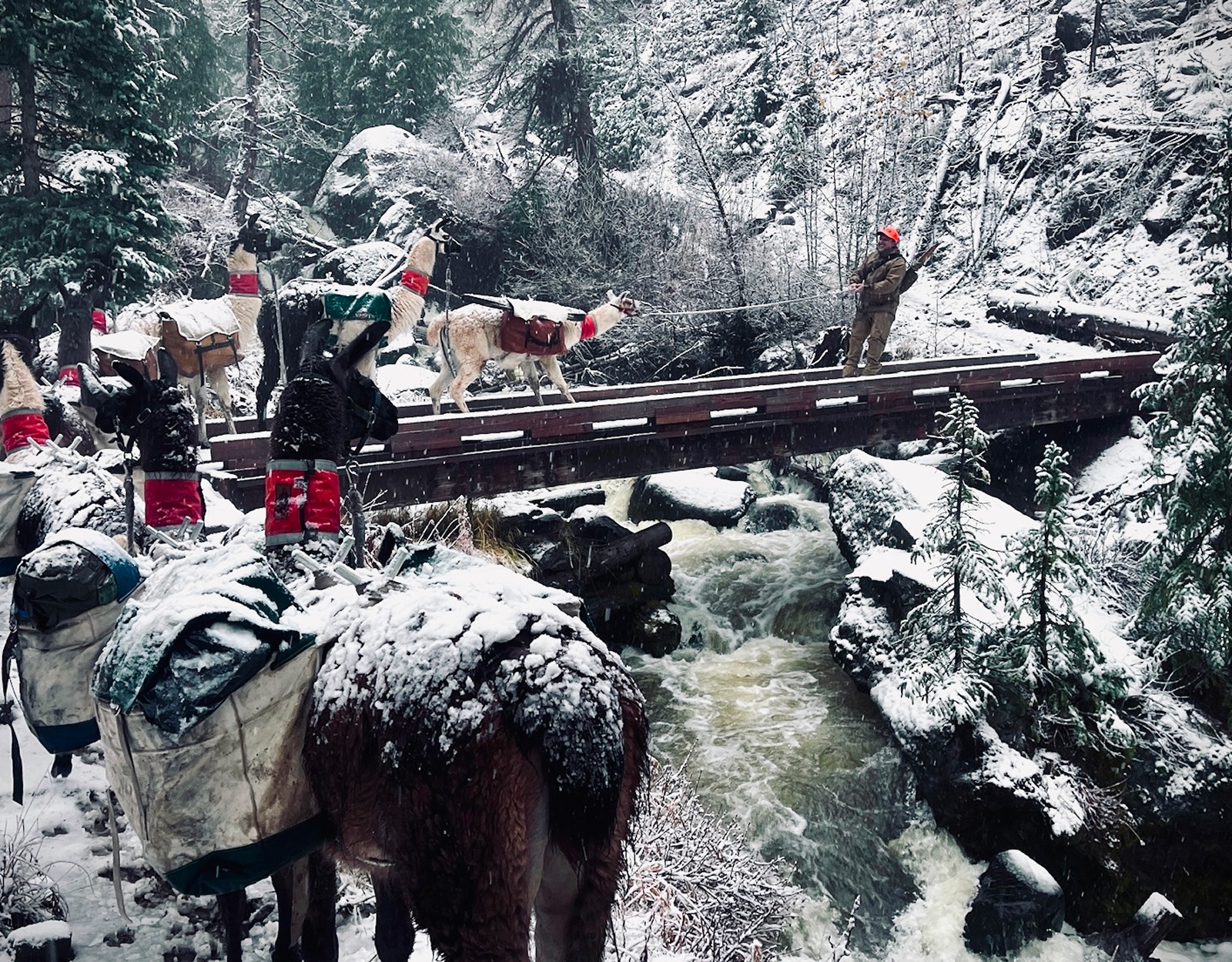
This unit was designated wilderness. That meant:
- No trucks.
- No side-by-sides.
- No e-bikes.
- No game carts.
Everything goes in, and comes out, on foot or with stock.
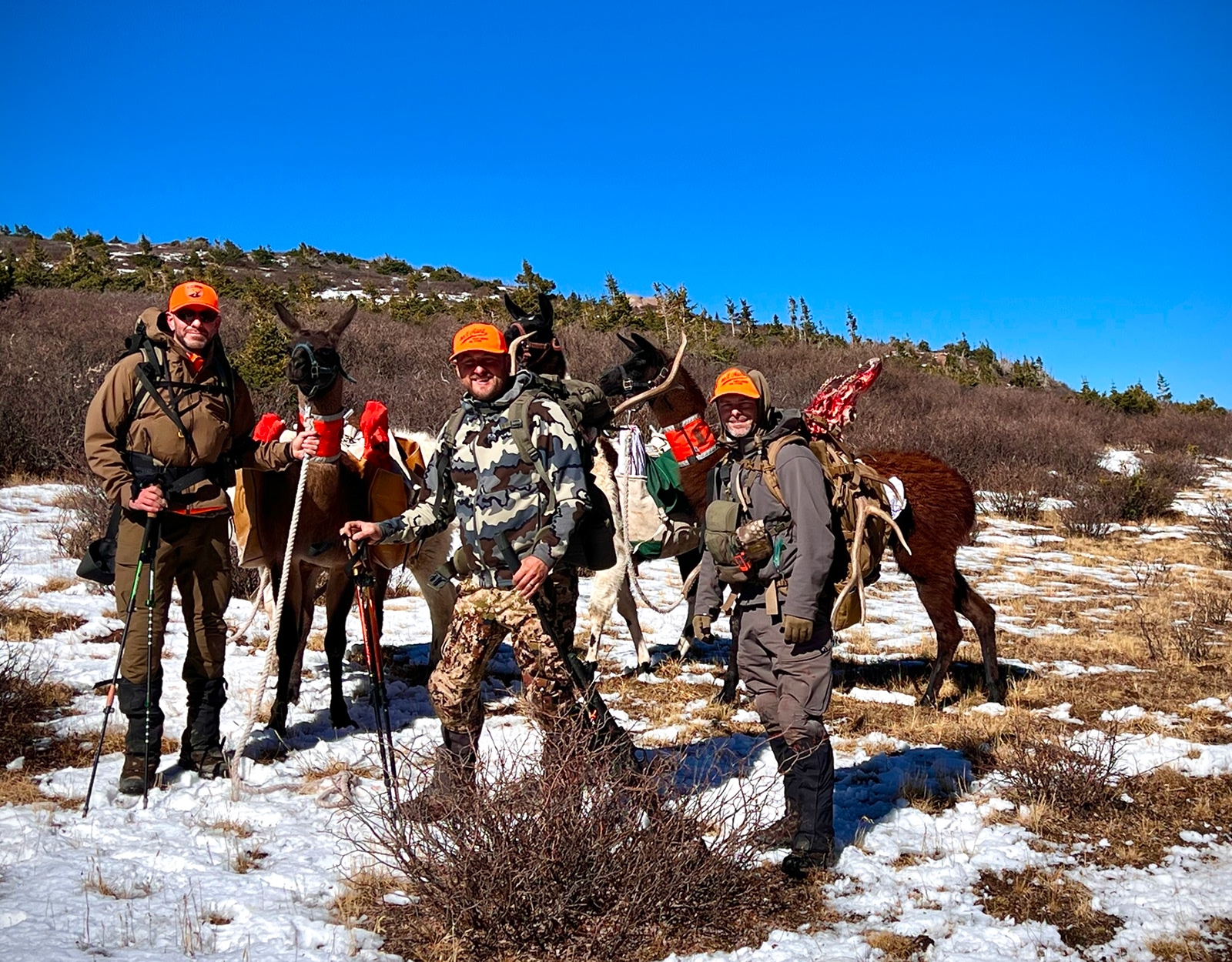
For us, that stock was eight pack llamas. Two per hunter was the math, assuming we kept gear weights under control and harvested four bulls. That assumption, of course, was optimistic at best.
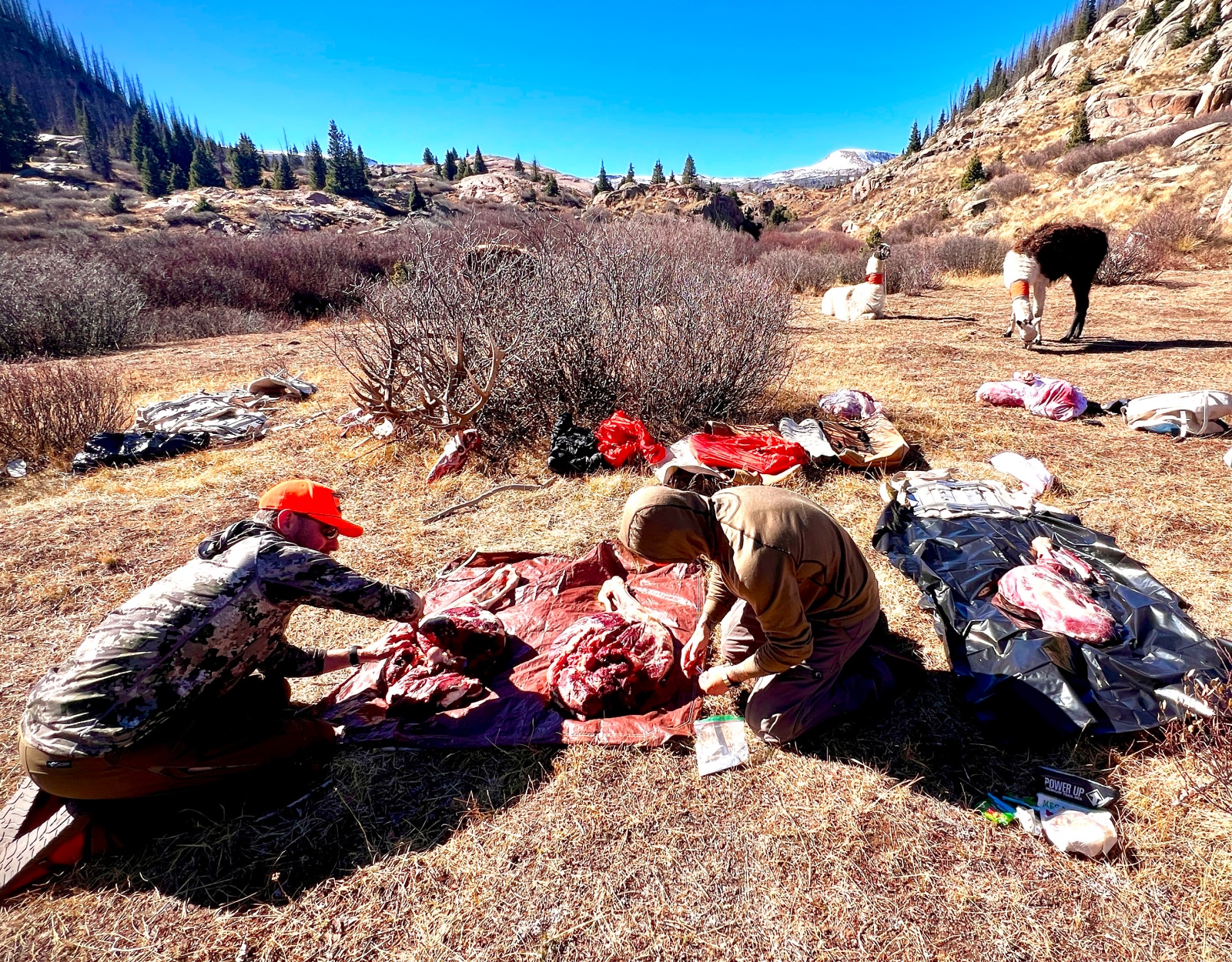
Llamas are the ultimate backcountry hack, in my opinion. They can carry 60–80 pounds, need minimal feed, and go places horses simply can’t. I’ll say this clearly: I hate horses. I used to guide with them in college, and they are a pain. Llamas are…less of a pain.
Once tags were secured, onX Hunt became the backbone of our planning. We used it to:
- Identify trailheads and access points.
- Locate camp spots near timber and reliable water.
- Mark benches, north-facing timber, and feeding areas.
- Understand cover, terrain steepness, and potential meat retrieval problems (with 3D maps).
When boots-on-the-ground scouting isn’t realistic, this kind of e-scouting is critical. The ability to visualize terrain, especially in a wilderness where mistakes are costly, gave us confidence that our plan fit all four hunters.
Llamas are the ultimate backcountry hack, in my opinion. They can carry 60–80 pounds, need minimal feed, and go places horses simply can’t.
Weather, Llamas, and a Rough Start
We arrived at the trailhead three days before the opener with eight llamas and a lot of optimism.
That optimism lasted about 20 minutes.
While unloading, two llamas broke free, thanks to my lack of patience and some well-timed elbows and hip checks. What followed was four grown men chasing llamas around an empty campground for hours. Not exactly the calm start we envisioned.
The next morning, things got worse.
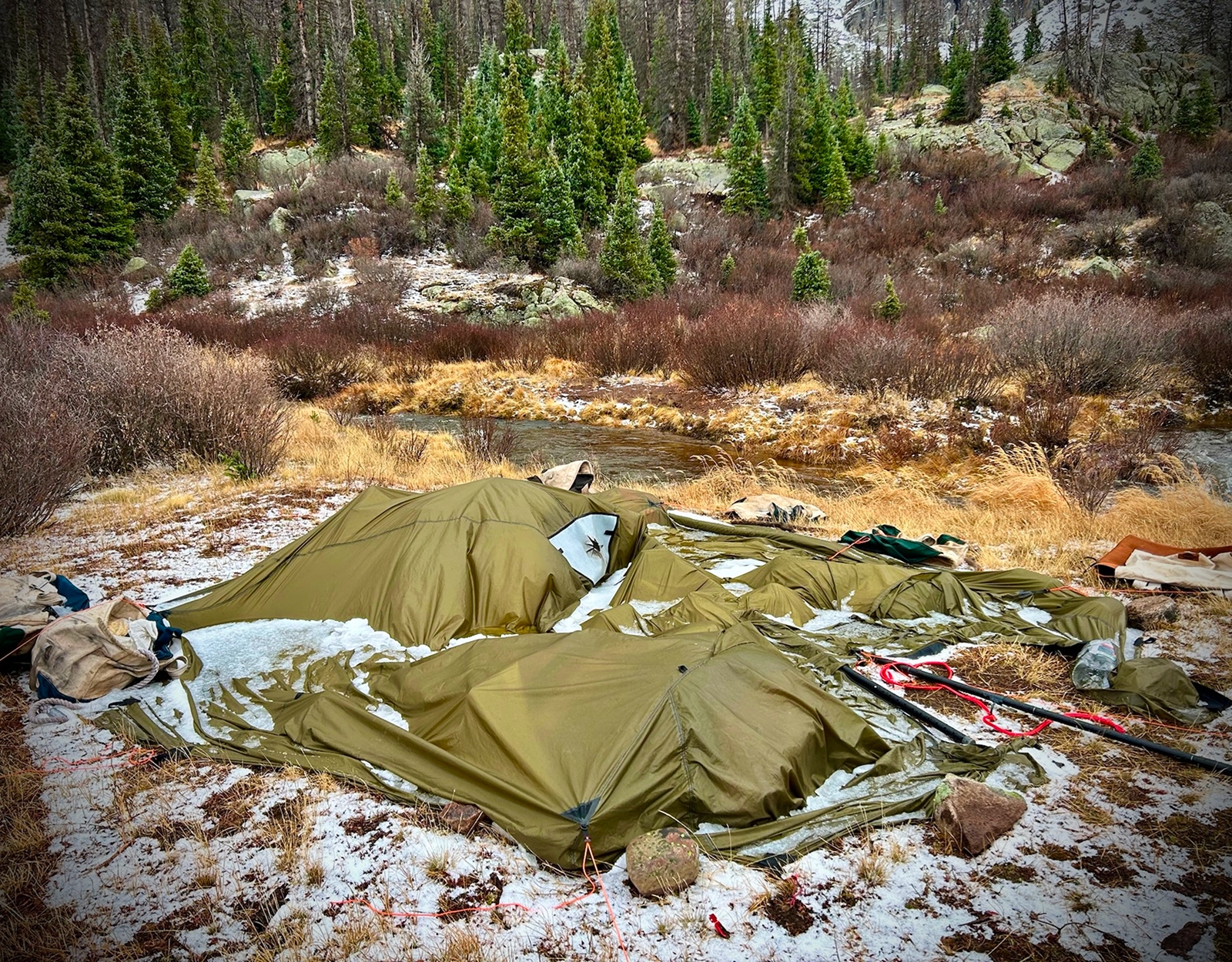
Southern Colorado had just experienced historic rainfall, flooding towns and evacuating residents. The rain didn’t stop when we showed up. We started our 12-mile hike to camp in rain gear and underwear, because staying dry was already off the table.
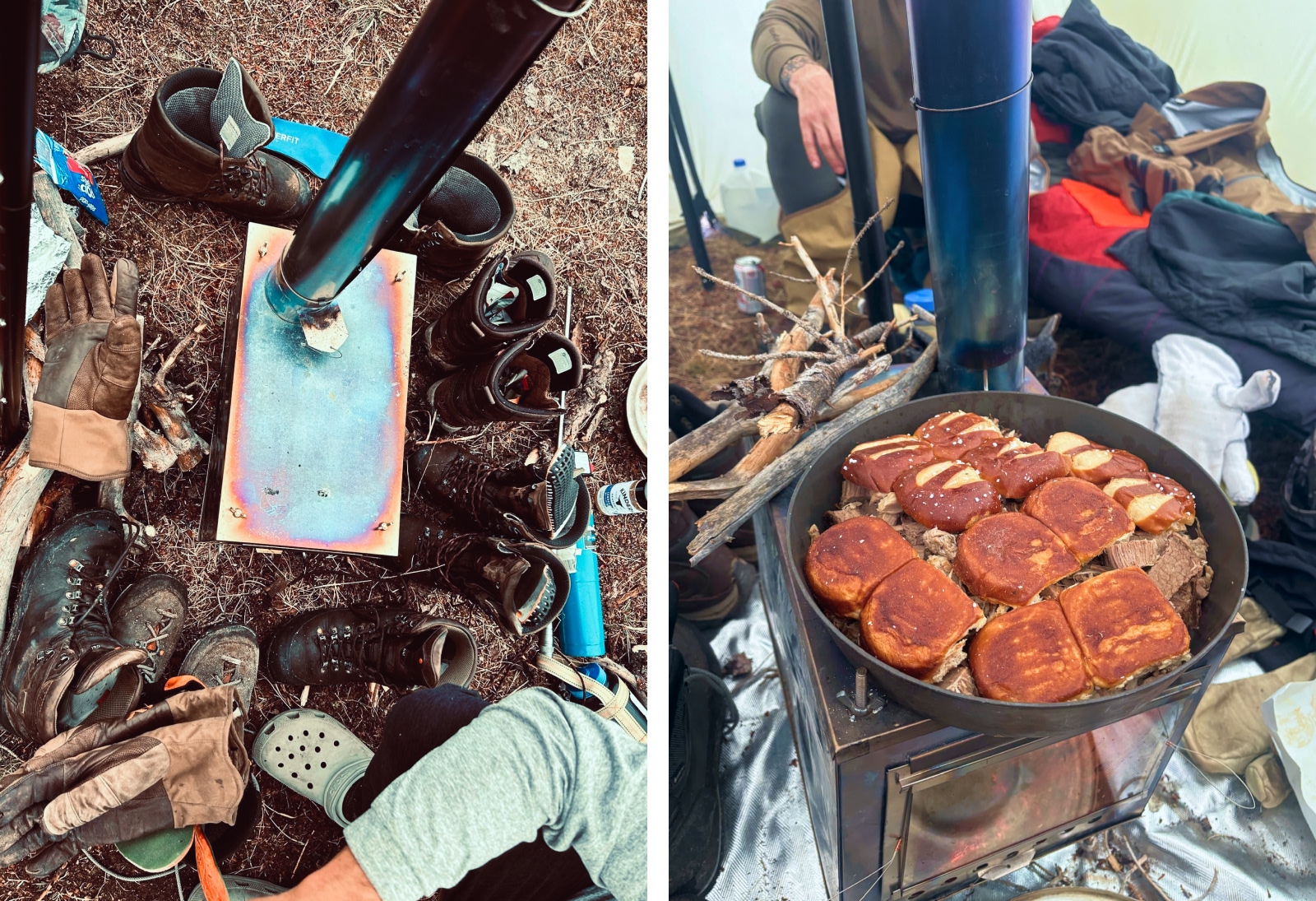
The path became what we affectionately called “Trail Creek,” with four to six inches of flowing water for miles. By the time we reached camp, everyone was soaked, hands were frozen, the llamas were musty, and fires were next to impossible to light.
The next two days brought more rain, snow, wind, and cold. Our scouting plans dissolved into cutting wet wood and waiting it out.
The path became what we affectionately called “Trail Creek,” with four to six inches of flowing water for miles.
Opening Morning Breakthrough
Opening morning arrived with fresh snow on the ground, broken tents, and finally, visibility.
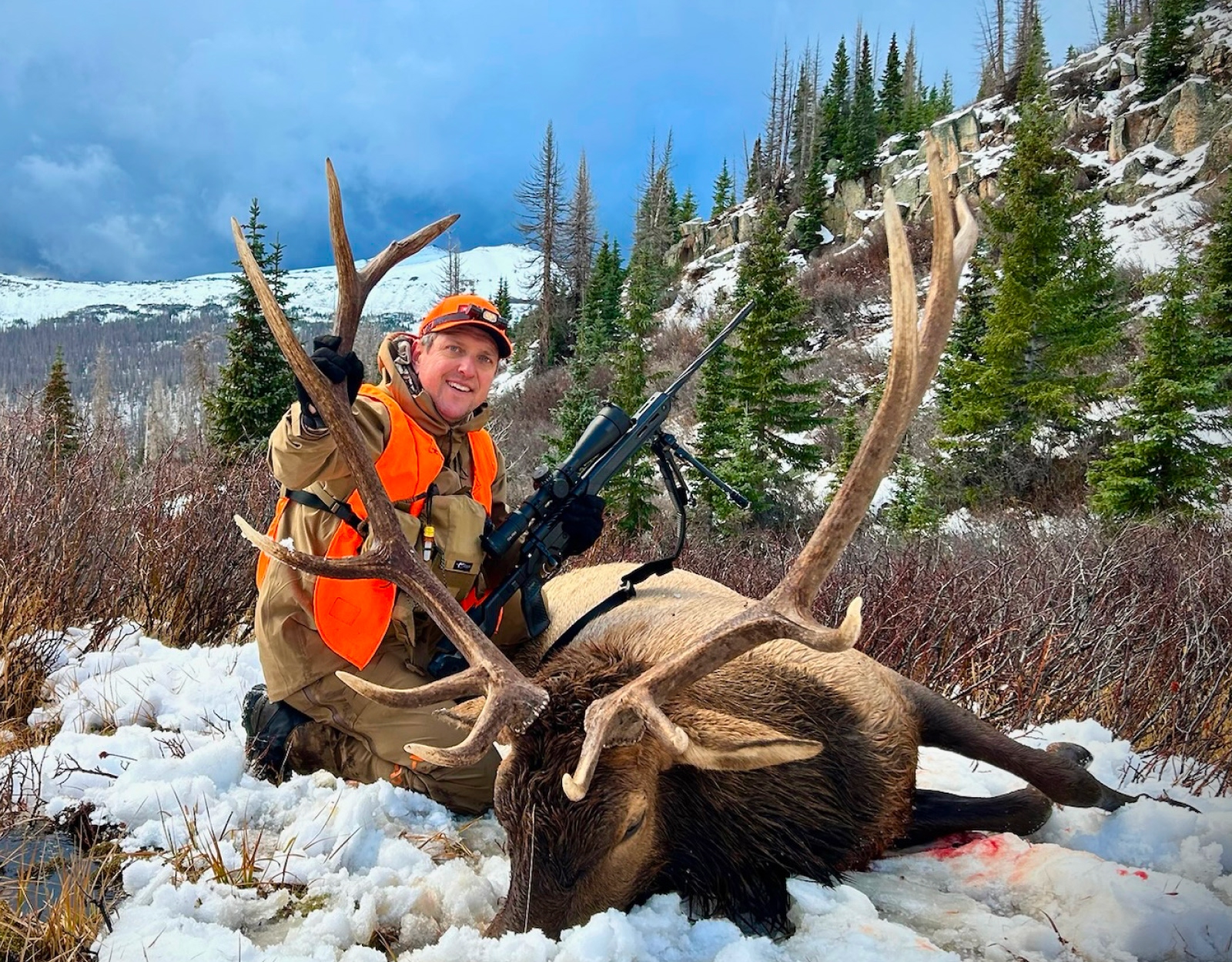
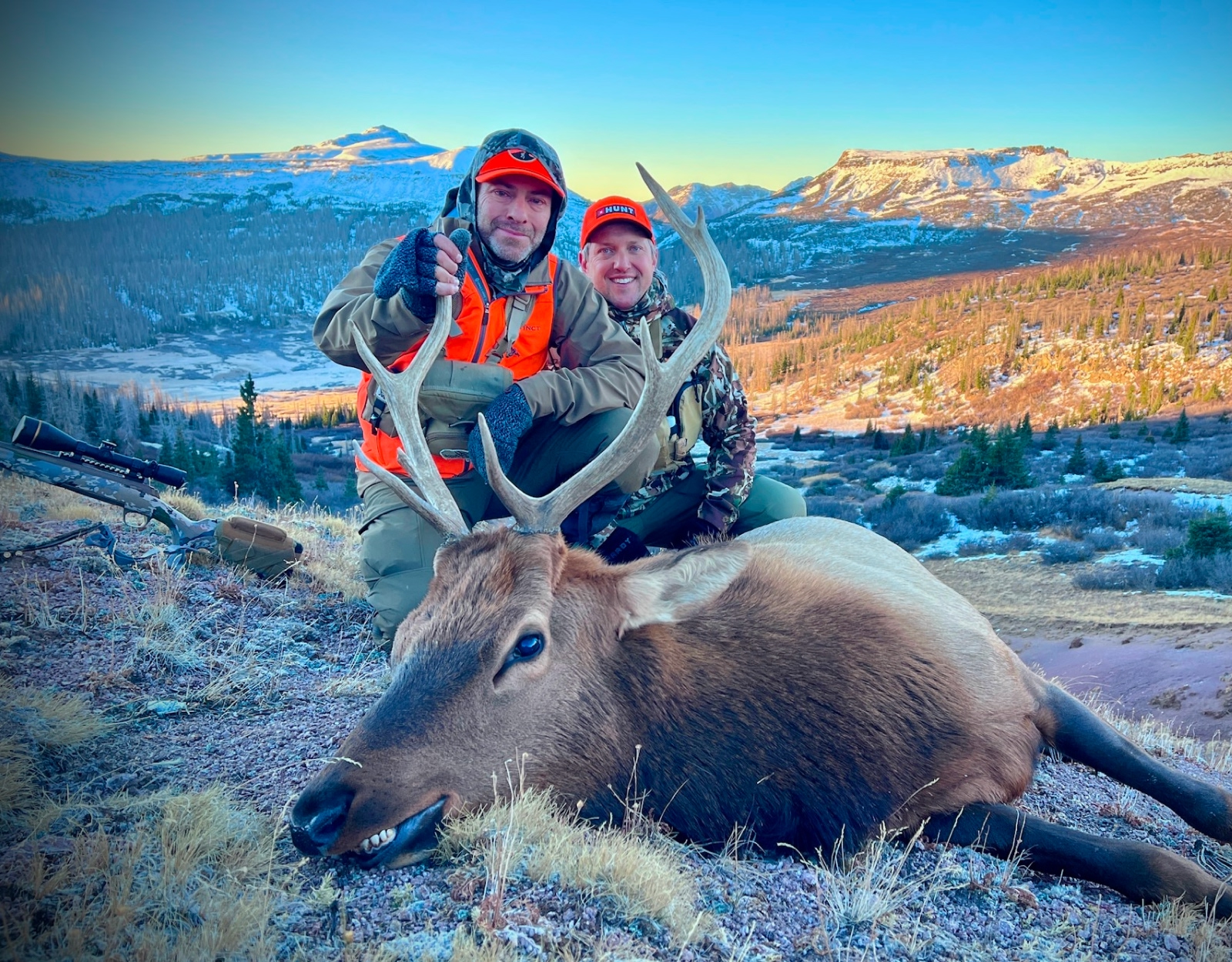
We moved out before first light, and by 7:00 a.m., we ran into our first bull: a mature elk tucked into eight-foot-tall willows. I moved to higher ground and settled in for a 320-yard shot.
By 7:30 a.m. on opening morning, we had our first bull down, and a big one. Likely my best in 20 years.
Then…nothing, for two whole days.
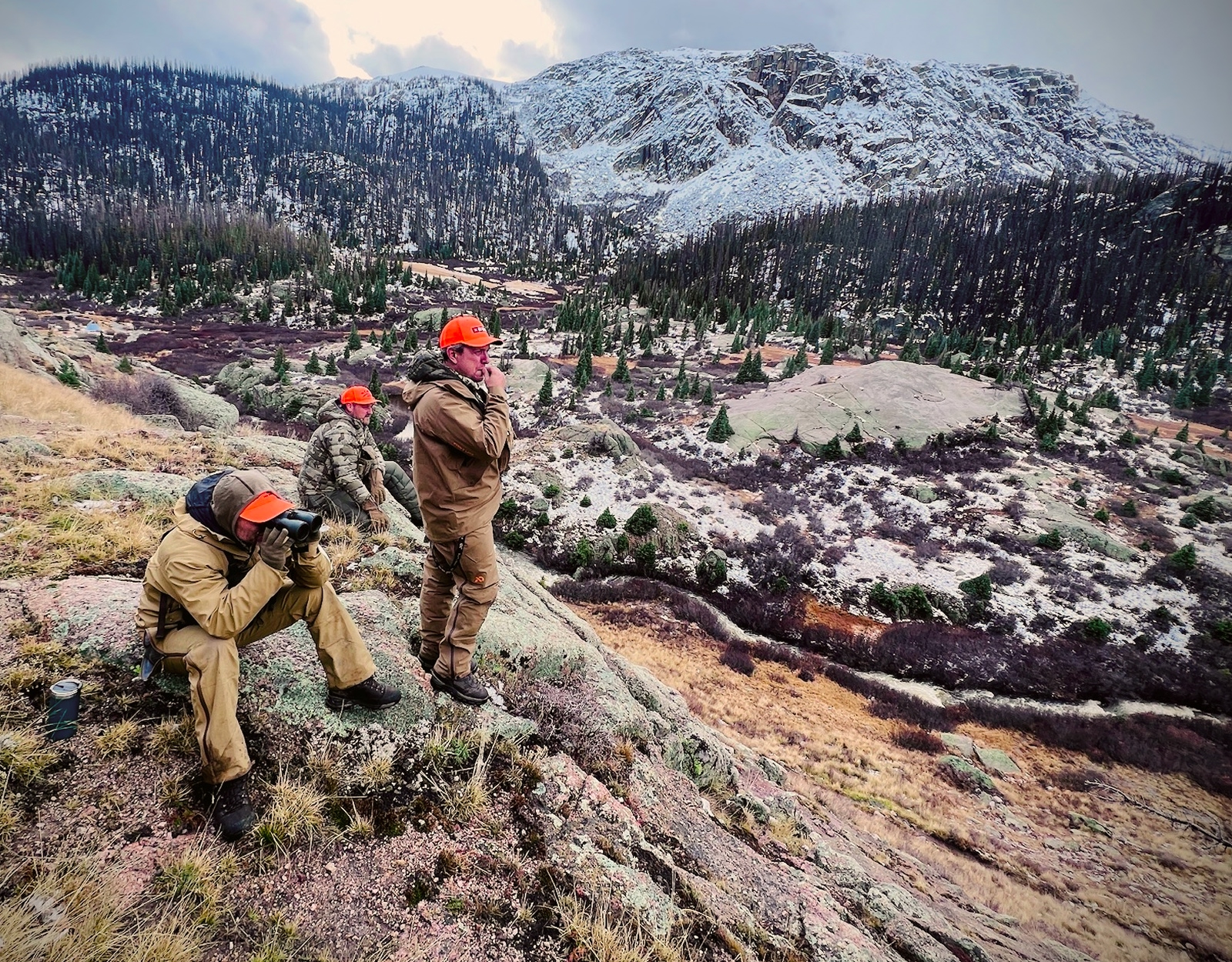
The weather cleared, blue skies returned, and the elk seemed more mythical than real. Two long days followed, climbing to 12,000 feet, navigating insanely sketchy snow field crossings, glassing in cold winds, and seeing little to no elk at all.
Momentum Builds
Day three changed everything.
All four of us hunted together and stumbled into a small 4×4 bull. Brandon, the first-time elk hunter in the group, stepped forward, took a knee, and dropped his first big game animal at 164 yards. Two bulls down.
Day four broke warm and clear. At first light, we spotted a small herd: five or six cows and a young bull. Matt got set behind his rifle while I judged legality.
“455 yards…wait…wait.”
Finally, the bull turned. “Legal!” Matt fired, and the bull tipped backward instantly. Three down.
As we celebrated and climbed toward the bull, llamas in tow, over 20 elk ran over the ridge above us. Six bulls included.
Sean wasn’t even holding a rifle at this point, content with the two bulls the group had secured in the past few days. That changed quickly.
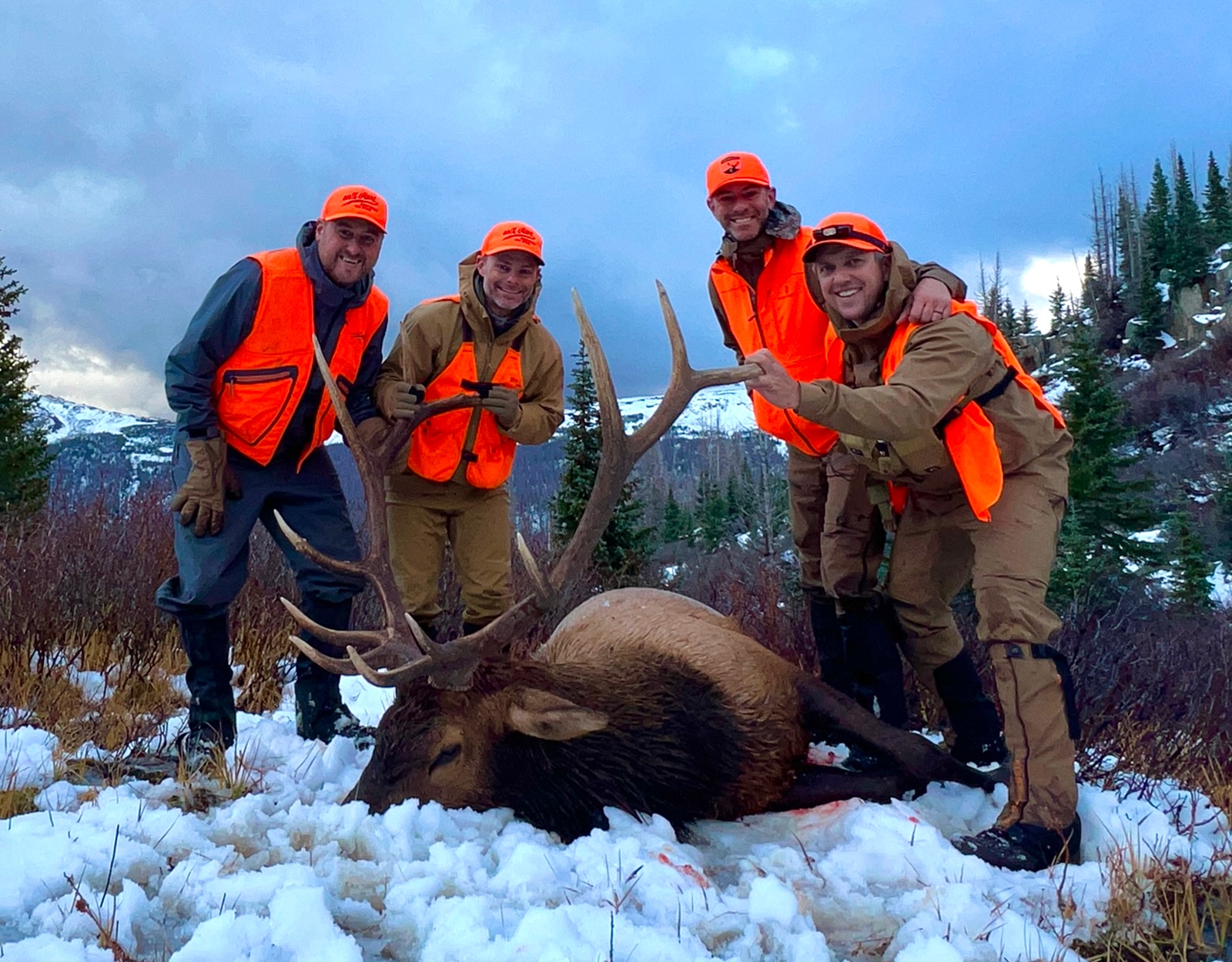
He grabbed a rifle and dropped the largest bull in the group.
Four bulls down.
The Work (and the Reward)
Then came the real test.
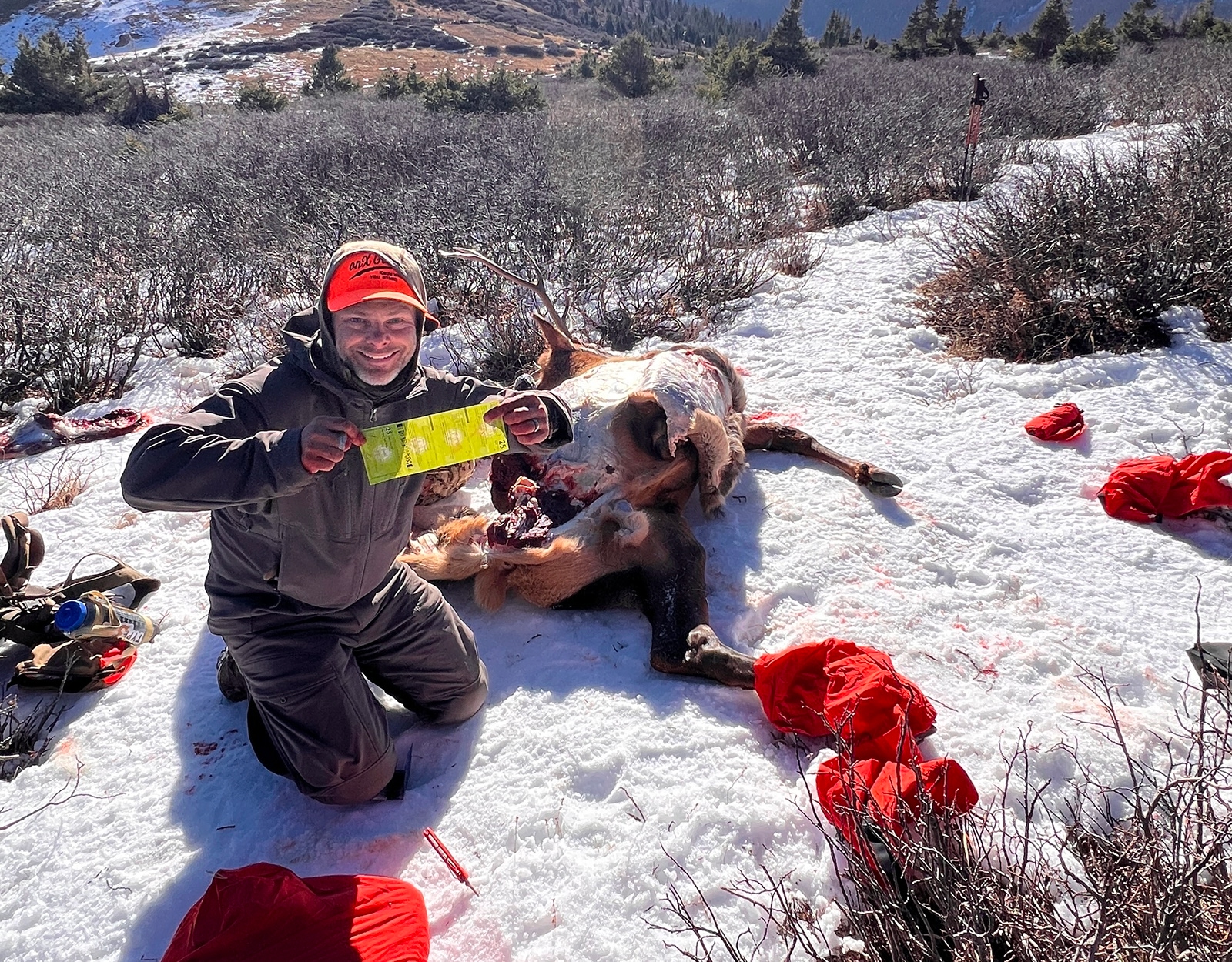
Four elk on the ground, 15 miles from the trucks, eight llamas, and one long pack-out ahead of us.
We spent the day butchering, organizing loads, eating extra food to lighten packs, and finishing cold beers in camp. The system worked. The llamas worked. The plan worked.
On the hike out, we crossed paths with local outfitters who had canceled their hunts due to the flooding and weather we endured early on. That misery kept everyone else out.
Other than the first and last day, we didn’t see another hunter.
Why This Hunt Worked
This wasn’t luck.
It was preparation.
It was research.
It was choosing a better plan over an easier one.
Using Hunt Research Tools to find the right opportunity and onX Hunt to understand terrain, access, and elk habitat, allowed us to experience a Colorado wilderness elk hunt that most hunters only talk about.
We could have hunted over-the-counter.
We could have driven roads.
We could have seen orange everywhere.
Instead, four hunters, new and experienced, shared a true backcountry adventure, 100% success, and memories that will last forever.
That’s what the right tools make possible.
Ready to start building toward your own dream hunt? Get onX Hunt Elite for full access to all the application tools you need to put yourself where you want to go on the map. You’ll get draw odds with Hunt Research Tools, expert insights from Huntin’ Fool, and deadline alerts from HuntReminder.