Watch the latest installment of our Anyone’s Hunt series as we explore a great over-the-counter waterfowl opportunity in North Dakota.
With waterfowl seasons that start in August and go all the way into January, North Dakota is a great place to hunt waterfowl. The state has liberal access laws for private lands where birds may reside, and thousands of migrating birds. Hunting opportunities are rich and available to anyone. On this installment of “Anyone’s Hunt,” Steven Drake, Matt McCormick, Brady Davis, and onX Hunt Product Manager Matt Seidel head to North Dakota for a late-season waterfowl hunt. What follows is an in-depth breakdown of that opportunity.
North Dakota Waterfowl Hunting
The Missouri River is the main artery for birds migrating south. While most other bodies of water will freeze up and cause birds to head south, the Missouri doesn’t. This provides roosting ground for thousands of birds in the cold, late-season weather, and is why there are so many birds, especially geese, in North Dakota.

North Dakota Waterfowl Season
Waterfowl season starts in August and ends in early January in North Dakota. To catch the peak of the southerly migration, the Anyone’s Hunt team went in the first week of December.
North Dakota has a time-of-day restriction for the late season. The regulations read:
Legal Shooting Hours for 11/27 – End of Season
- Mon/Tues/Thurs/Fri: 30 minutes before sunrise until 2 p.m.
- Wed/Sat/Sun: 30 minutes before sunrise until sunset.
Always refer to hunting regulations, as they are subject to frequent change
The challenge the time-of-day restriction creates is that when temperatures are brutally cold, birds often not fly to their feeding grounds until after 2 p.m. This made for difficult hunting for the Anyone’s Hunt team as they scheduled their hunt mid-week. However, on Wednesday, they were able to hunt past 2 p.m. and filled their limit.
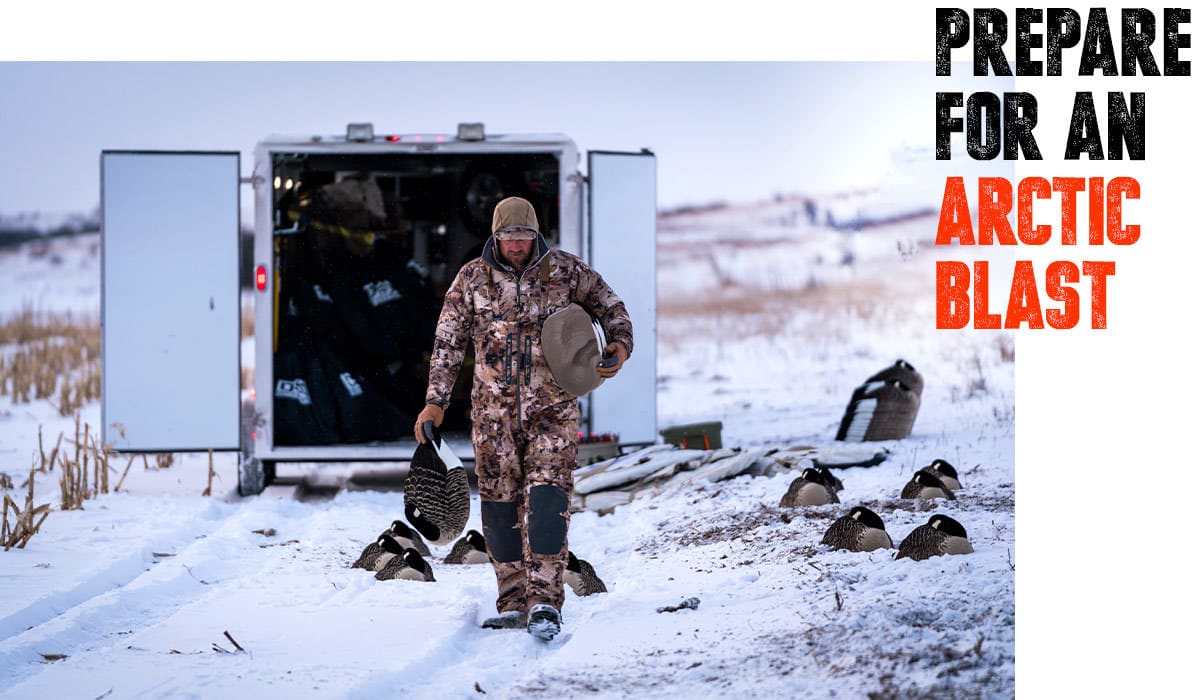
If you’re planning to do this late-season hunt, we’d advise you to schedule your first day of hunting for Thursday or Friday. Use those days to scout after 2 p.m. On Saturday and Sunday, you can hunt past 2 p.m., which is when most of the birds fly, then start your travel home on Sunday night. Lastly, prepare for an arctic blast and bring all the hand warmers and warm clothes you own.
General Hunt Cost Estimate
This non-resident ND waterfowl hunt is an affordable option, especially when sharing costs between four hunters. Below is a cost breakdown of doing a four-day hunt with two days of travel.
- Fishing, Hunting, Furbearer Certificate – $5
- General Game and Habitat License – $20
- Seven-day ND waterfowl license (zone-specific) – $153
- Federal migratory bird stamp – $25
- Gasoline (1,500 miles @12 mpg @ $2.20/gallon) – $97 per person
- AirBNB for (four nights – $1,000) – $250/per person
- Food – $250
- Misc – $100
The total cost per person for this hunt is roughly $900.
For a full breakdown of all the gear the team brought and logistics for this hunt, watch Episode 1 above.
North Dakota Waterfowl Zones
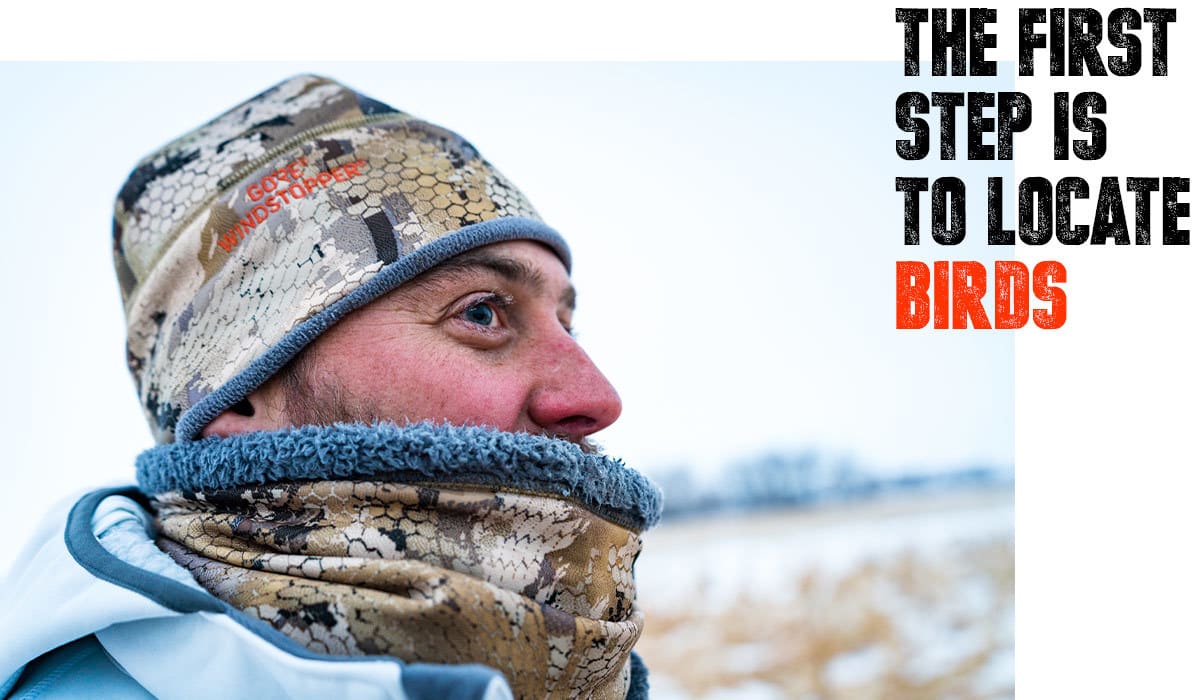
So, you’ve made it to North Dakota, have your licenses, and are ready to hunt—now what? The first step is to locate birds and spend an afternoon scouting waterfowl to learn where the birds are roosting on the river and where they’re feeding.
Note, in 2025, North Dakota created six geographic zones for nonresident waterfowl hunters. Nonresidents can still hunt waterfowl for a maximum of 14 days, but are now limited to a seven-day period in any single zone. To view the zones in the Hunt App, ensure you have your North Dakota Map Layers turned on, then:
- Tap into the North Dakota Map Layer collection.
- Tap View Options under ND GMUs
- Scroll down to Non-Residential Waterfowl Hunt Units and toggle the Map Layer on.
You’ll now see the six waterfowl zones outlined in green.
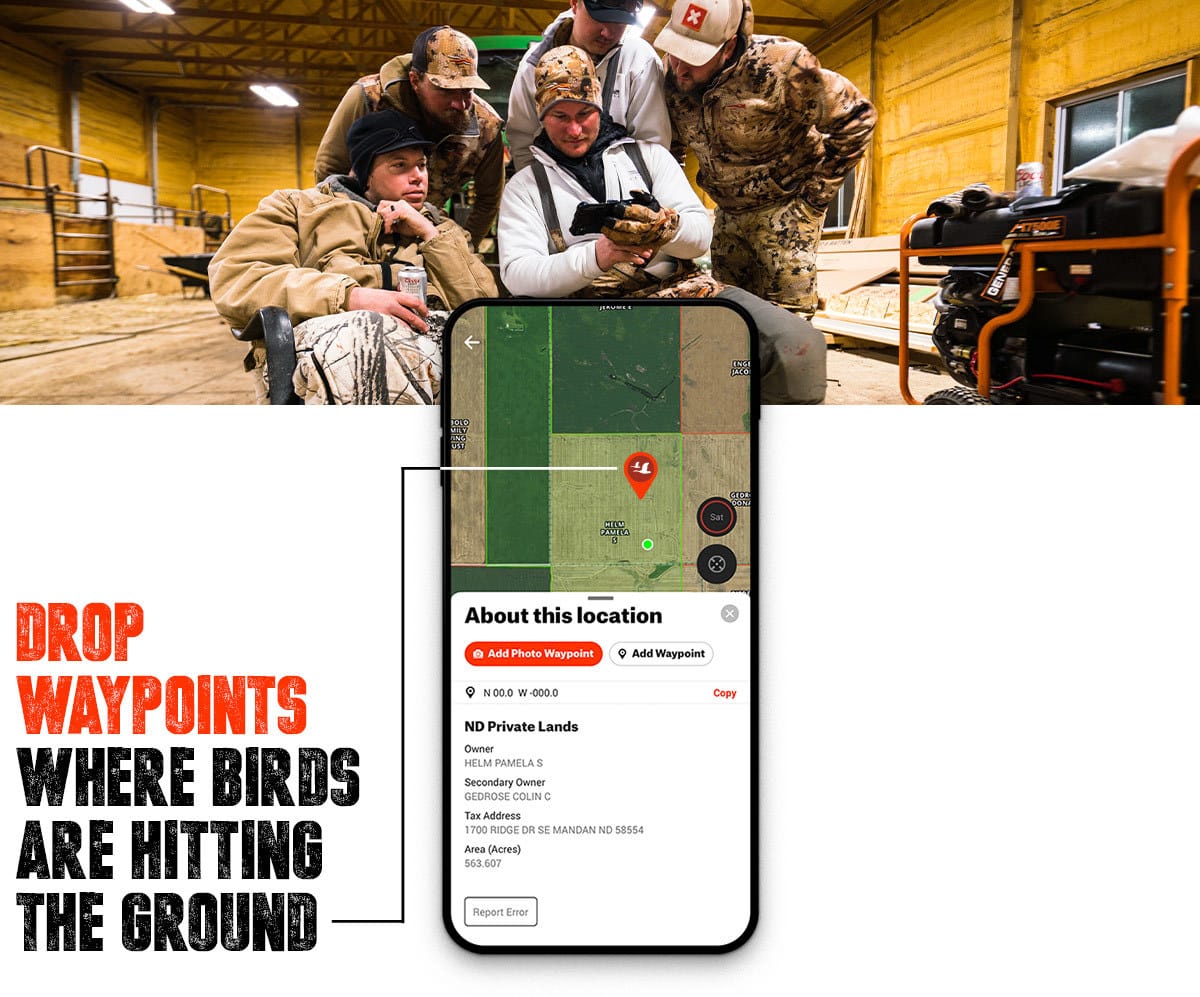
Another beneficial feature of the onX Hunt App is that, as you’re driving around scouting fields, you can actively mark the locations of where birds are hitting the ground. When you click on private lands within the App, you’ll get the name and address of the landowner. This makes it incredibly simple to track down the landowner and potentially gain landowner permission to hunt fields where birds are feeding for the next day.
Video Transcript
Welcome back to Anyone’s Hunt. I’m Steven Drake, and the goal of this video series is simple: to get more people out hunting by sharing real, accessible opportunities available to anyone. We’ll walk you through the logistics, share helpful insights, and show just how rewarding these hunts can be.
In the third installment of the series, I teamed up with Matt Seidel, Matt McCormick, Brady Davis, and Brady’s black lab, Lead, for a late-season waterfowl hunt in North Dakota. Here’s how we made it happen — and how you can too.
Why North Dakota?
North Dakota sits right in the heart of the Central Flyway, making it a major funnel point for migrating birds. As Matt McCormick explained, the state offers incredible opportunities for both ducks and geese — especially late-season Canada geese.
Even better, North Dakota’s access laws are very non-resident-friendly. If a harvested field is not posted at the entrance, it’s legal to hunt. That opens up huge opportunities for freelance hunters.
We focused our efforts on the Missouri River Zone, around Bismarck. It’s a prime area where geese stage thanks to a mix of open water and abundant food. Plus, it’s relatively accessible — just an eight-hour drive from Bozeman, Montana, where our crew was based.
Logistics: Planning the Trip
This was a December hunt, and conditions were brutal: highs in the low single digits and overnight lows down to -10°F or lower.
We hit the road early Sunday morning to reach Bismarck by early afternoon. That gave us time to scout, find birds, and seek access for the following day.
Matt Seidel flew in on Monday to meet the team, and we all stayed together in an Airbnb. Splitting the cost among four hunters made it very affordable—under $1,000 per person for a full week of hunting.
Hunting Regulations & Strategy
North Dakota regulations only allow hunting until 2:00 PM daily, except on Wednesdays. While that might seem limiting, it actually helped us maximize our time for scouting, which is absolutely critical in waterfowl hunting.
In frigid temps, birds often don’t fly until late morning. We typically wouldn’t set up until 8–9 AM, with shooting action picking up between 11 AM and 2 PM. After the hunt, we’d break down, regroup, and head back out to scout new feeds.
Scouting with onX Hunt
Scouting is the #1 key to success in waterfowl hunting. And today, there’s no better tool than the onX Hunt App.
Years ago, Brady spent nearly $2,000 compiling massive printed county plat maps for landowner info. Now, that same information is available instantly on your phone — and GPS-accurate in real time.
With onX, we could see a feed from the road, pull up the parcel, and instantly know who owns it and how to contact them. That ability to gain permission on the spot completely changes the game for DIY hunters.
Decoy Setup & Trailer Organization
For this trip, we brought everything — literally the kitchen sink. Here’s how we organized our 22-foot enclosed trailer for maximum efficiency:
Rear of the Trailer:
8 dozen full-body goose decoys, plus 5 dozen more for larger spreads
10 dozen sleeper shell decoys (great for cold conditions when geese lay down quickly)
Layout blinds with snow covers
Dog blind for Lead
Middle:
A-frame blinds with snow covers
Water decoy rigs, in case we found ducks on open water
E-track system for fully modular storage — decoy hooks, gear bins, bucket brackets, etc.
Front:
Shelving for blind bags, flags, and gear
Individual hangers for each hunter’s clothing
Trash can for empty shells and packaging
“Go box” for quick access to shotgun shells
Additional Gear:
Workbench for repairs (spinners, blinds, etc.)
Lock storage and roadside kit (tires, jacks, chains)
Cold weather gear, especially Sitka’s Boreal Series (GORE-TEX + down insulation)
Plenty of white camo for snowy field hides
Next Up: The Hunt Begins
With gear packed and plans in place, we hit the road at 5:00 AM.