When cooking wild game, there’s a fine line between perfection and overdone. Elk backstraps deserve care; a sous vide setup is one of the most foolproof ways to lock in that tender, rosy center every time.
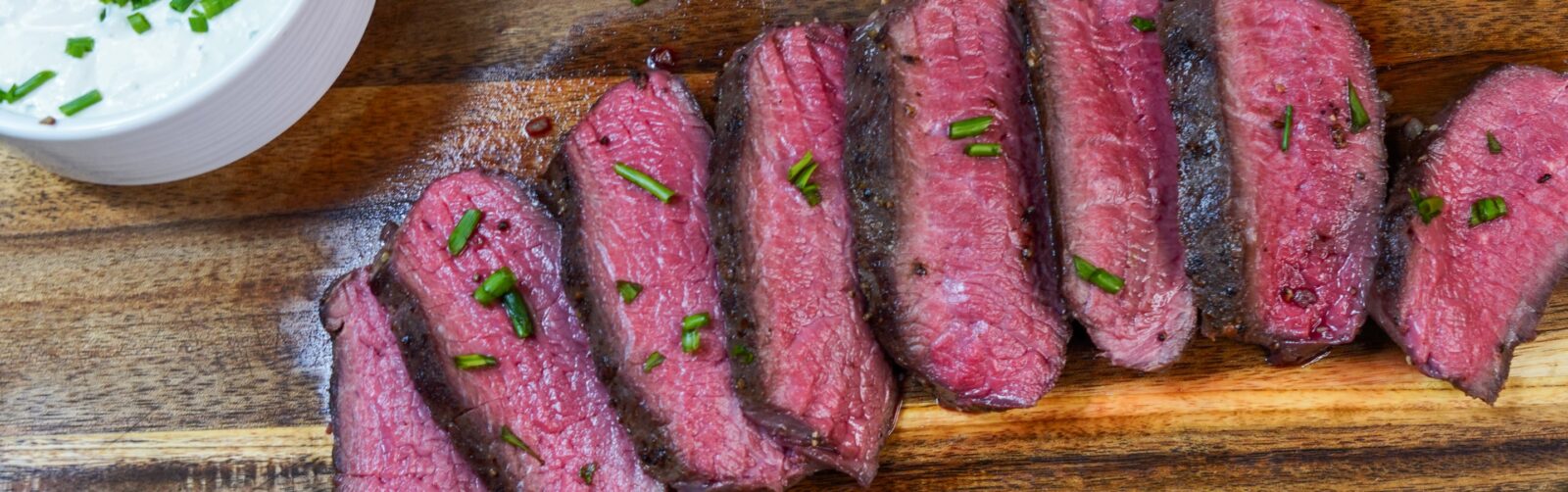
onX Hunt Ambassador Jenn Homa brings her field-to-table finesse to this recipe for sous vide venison Backstrap with Horseradish Cream Sauce, adapted here with elk for a rich, clean flavor that highlights the hunt. Slow-cooked in butter and garlic, then finished with a cast iron sear, it’s a camp-to-kitchen favorite you’ll want on repeat.
“We’re using the sous vide method because it gets perfect results every time.”
Jenn Homa, onX Hunt Ambassador
- 2-pound backstrap (here, we’re using elk)
- 1 clove of garlic, minced
-
2 tablespoons of butter, cut into slices, plus more for searing
- ½ cup sour cream
- 2 tablespoons mayonnaise
- 2 tablespoons prepared horseradish, drained
- 1 tablespoon lemon juice
- 1 teaspoon Dijon mustard
- ½ teaspoon salt
- ½ teaspoon black pepper
- 1 tablespoon finely chopped chives, to garnish (optional)
- Set sous vide to 130°F and let it heat up as you prep your steaks.
- Trim elk steaks of any silverskin, then pat dry using paper towels. Season with salt and pepper.
- Place into your sous vide bag, avoiding overlapping.
- Add garlic and sliced butter. Seal the steaks, removing the air.
- Submerge the bag into the sous vide bath and allow to cook for 1 hour.
- While the elk is in the sous vide, prepare the horseradish cream sauce by combining all of the ingredients in a bowl and mix well. Place it in the fridge in a covered container. (Use for up to 2 weeks)
- Get a cast iron skillet smoking hot—this is important to achieve a good sear. The point is to get the pan as hot as possible so you get a really good sear on the elk steaks.
- Add a little butter to the pan to help prevent the elk steaks from sticking. Add the elk steaks and cook on one side for 2 minutes undisturbed, flip, and cook on the other side for 1 minute.
- Remove the seared steak to a cutting board or plate and tent with foil. Allow to rest for 5 minutes before cutting.
- Serve with horseradish cream sauce on the side or drizzled over top.
FAQs
Sous vide (pronounced soo-veed) is a precision cooking method that involves sealing food in an airtight bag and submerging it in a temperature-controlled water bath. The result? Perfectly even cooking from edge to edge. For wild game like venison, where tenderness and doneness matters, sous vide eliminates the guesswork, locking in natural flavor and moisture before a quick sear for that golden crust.
Timing depends on thickness, but for most backstrap or tenderloin cuts, one hour at 130°F gives you a tender, medium-rare finish. You can safely leave the meat in the bath for up to two hours if needed—just don’t go much longer, or the texture can get too soft. After the sous vide cook, sear the meat quickly in a hot cast iron pan to add color and flavor.