Morels are one of spring’s most prized wild mushrooms, with a honeycomb-shaped cap, hollow interior, and rich, earthy flavour. No matter how you cook them, they lend an unexpected twist to a meal. Here, we’re serving them up fried.
Remember: Cook your morels before consuming, and avoid alcohol if eating the black variety. Also, always positively identify morels before eating. True morels are completely hollow top to bottom, whereas Gyromitra (false morels), which can be toxic, are wrinkled, chambered, or cottony inside.
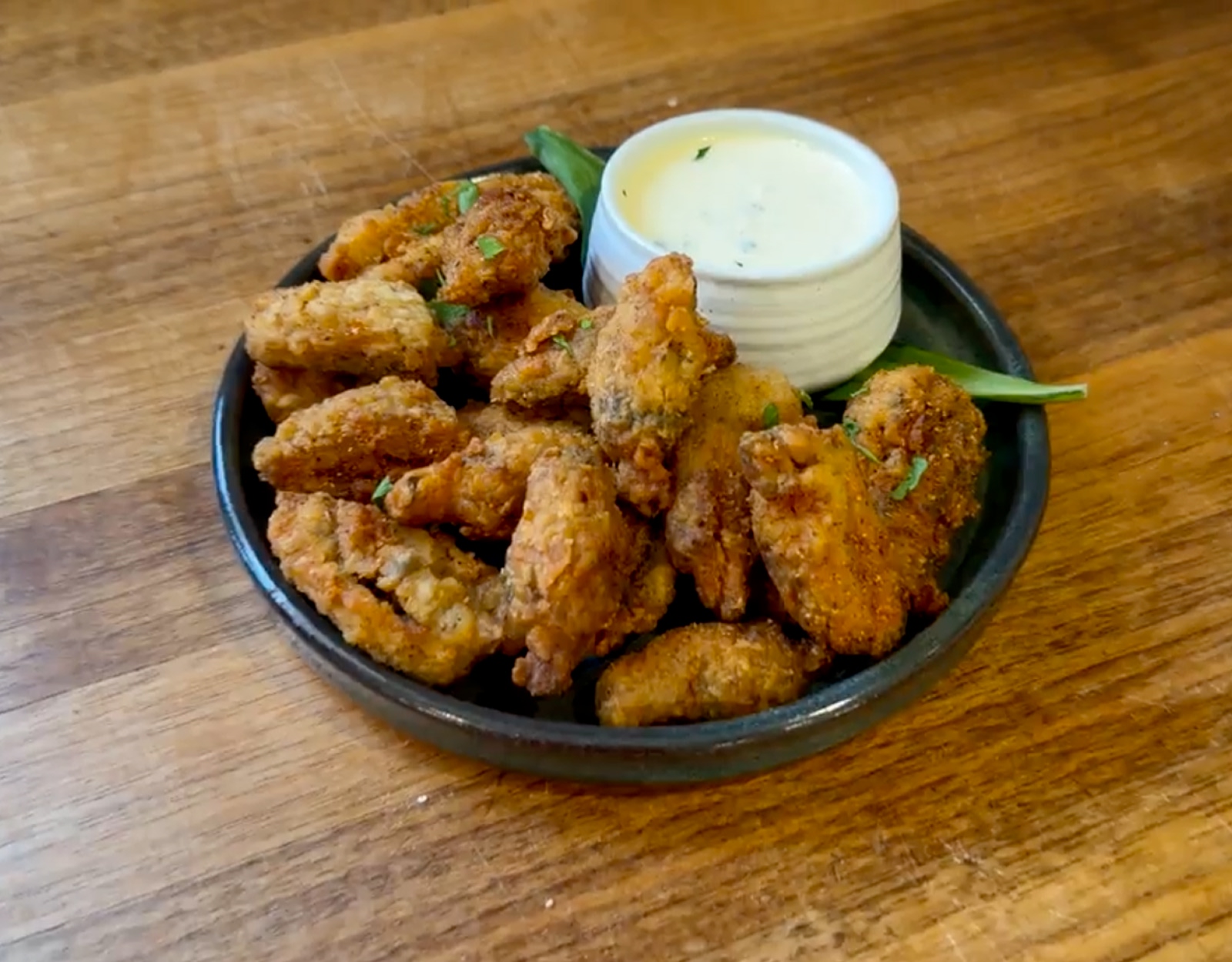
- ½ pound morel mushrooms
- 1 cup buttermilk
- 1 tablespoon hot sauce
- Pinch of salt
- 1 cup all-purpose flour
- 2 tablespoons BBQ dry rub
- Peanut oil for frying
- Ranch dressing for dipping
- Clean the morels by slicing them in half lengthwise to check they are hollow.
- Soak in water for 2-3 minutes, agitating to loosen any sand or dirt. Remove the mushrooms and strain to drip dry.
- Soak in the buttermilk with the hot sauce and salt, toss or stir to combine.
- In a bowl, mix the flour and dry rub, add the morels, and toss to coat.
- Heat the oil to 375°F, add the morels, and fry until golden brown, about 3-4 minutes.
- Remove and add to a plate or tray lined with a paper towel to absorb excess grease.
- Season with salt or more dry rub.
- Serve with ranch dipping sauce.
Learn How To Find More Morels
Morel mushrooms usually appear when the soil temperature reaches 50-55°F, often after rain.
There are a few varieties of morels, including black, grey, and blonde. Black morels tend to show up first, usually in cooler temperatures. Look for black morels around cedar and conifer forests, burned areas, disturbed ground, and south-facing slopes in mossy soil. Blonde, white, or grey morels usually come when it’s a little warmer, later in the spring. They’re often found near dead or dying elm trees, old apple trees, ash, poplar, field edges, river bottoms, and semi-shaded hardwood forests with rich, moist soil.
Head to our morel mushroom hunting guide to learn the ins and outs of one of nature’s most fun scavenger hunts. Included: elevations and terrain to focus on, plus how the Hunt App simplifies your search.
FAQs
Morels can be prepared in a variety of ways, but some of the best ways to enjoy them are methods that allow this earthy spring treasure to shine: saute them in butter or fry them. Either way, cooked morels are great alone as an appetizer or as an unexpected topper on pasta or pizza.
Store fresh morel mushrooms in breathable paper bags or cardboard boxes. Do not seal in plastic, as they sweat and will spoil faster. You can also dehydrate morels to preserve them; in a dehydrator, set the temperature low (around 100-125°F) and dehydrate until completely dry. Once dehydrated, the morels will keep about three months in an air-tight container (or longer if frozen).
It’s not recommended to freeze fresh morels as it may affect the taste. Either dehydrate or cook the morels first, then freeze in a vacuum-sealed bag or other air-tight container.
Soak cleaned morel mushrooms in buttermilk, toss in flour, and fry in 375°F peanut oil for 3-4 minutes.