In the dog days of August, when the sultry Texas heat can easily climb into the three figures, wild game chef, hunter, and author Jesse Griffiths begins playing a game he calls “dove or no dove.”
When he’s sitting at a red light or driving by a field, a sudden flutter of wings overhead occasions a quick study or a pop quiz if his wife is nearby.
Was that the sustained, arrow-straight flight path of a dove? Or the more labored flapping of a robin? Had he glimpsed the boomerang arc of dove feathers—or the flash of white on a mockingbird’s tail feathers?
The dove hunt is the overture to it all—a farewell to sticky heat and a kick-off party for autumn, greeting September sunrises with a volley of shotgun blasts.
“You’re locking in that wing beat and that body shape, so it becomes second nature again,” he says.
It’s part visual imprinting, part anticipatory tic in the lead-up to one of the most exciting days on the hunting calendar: the dove opener. For the roughly 1 million dove hunters in the U.S., September 1 or 5 comes as a longed-for thing and cause for collective celebration—the first taste of hunting after summer’s exile from the sport.
Like a certain frequency that only some ears can catch, the approach of dove sends a thrilling pulse out into the universe of outdoorsmen and women. Fall is coming. Epic big game expeditions, frosty pheasant fields at dawn, the morning’s harvest simmering in a crock pot, football on the TV, bull sessions around the fire at deer camp, dirty boots by the door.
The dove hunt is the overture to it all—a farewell to sticky heat and a kick-off party for autumn, greeting September sunrises with a volley of shotgun blasts.
“Opening day is the largest single outdoor event in Texas,” says Griffiths. “Something like 350,000 people participate.”
For the uninitiated in Texas, he says, it’s something to behold. When the first flight breaks out on opening morning, the booming cacophony of shots is enough to send an unwitting Austin jogger jumping for cover, thinking he has stumbled into a war zone. In seasons like this one, when late-spring rains provide abundant moisture, bird population levels in Texas can create Argentina-like opportunities.
Not every state has Texas’s gigantic scale—but from the grassy pasturelands of North Dakota to the marshy ponds of Florida, dove hunters of all geographies share that unmistakable itch for fields and guns and dogs as beach days wind down.
Dove isn’t like that. You’re going to mow through shots and you’re going to miss more than you think you should. You’re not going to sweat your noise or scent.
The dove opener has come to occupy the place in my head once filled by the first day of school. It’s a marker of transition and tradition accompanied by a jumble of nerves and excitement. It’s when I register the first subtle seasonal shifts in the environment—cooler mornings, faint aromas of forest floor in the air.
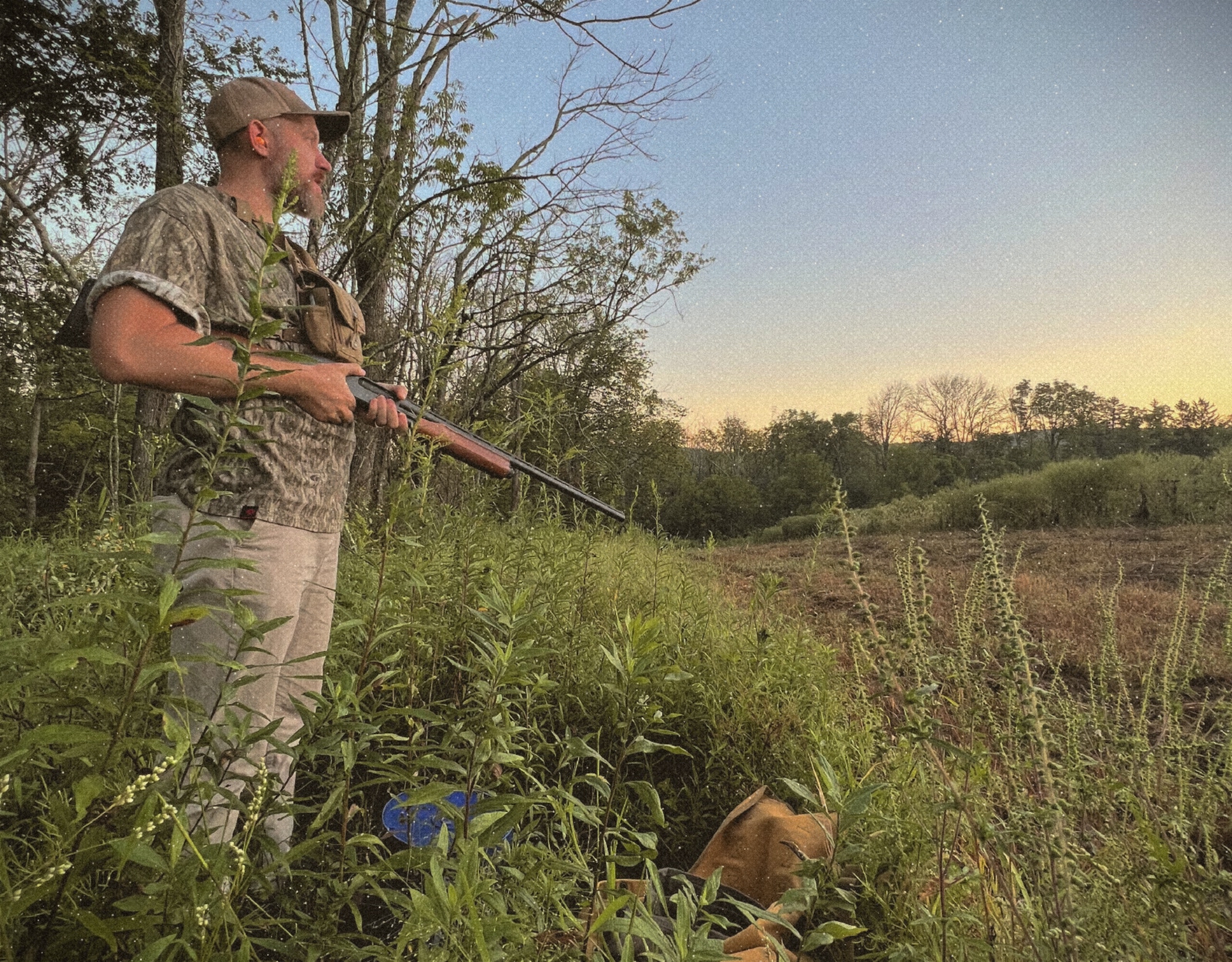
Routine behaviors—cleaning a shotgun, packing a bag, emptying a box of shells into a pouch—are suddenly reenergizing. The failures of past seasons are forgotten, the slate is wiped clean.
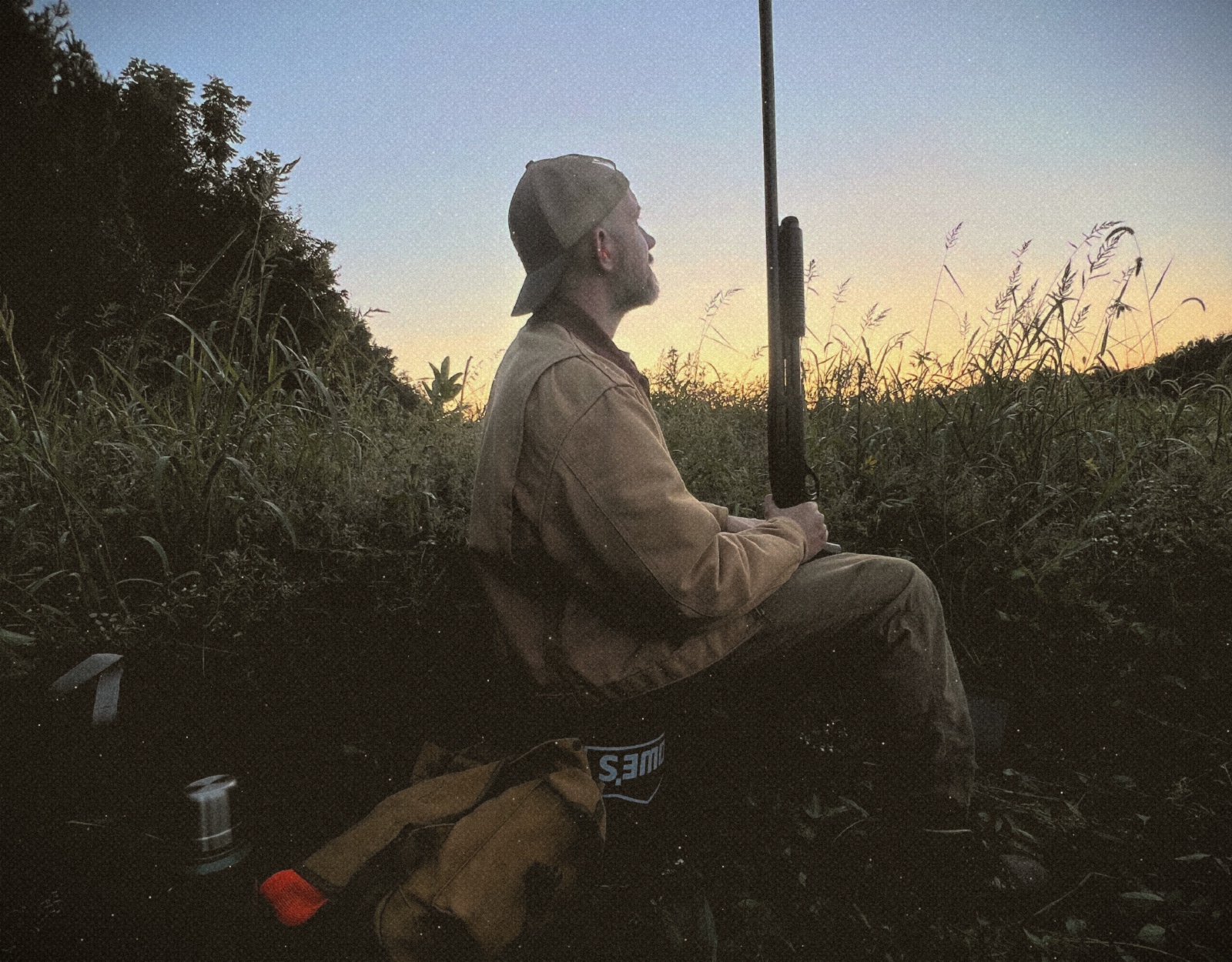
I know well the grooves and beats of opening day: the 4 a.m. wake-up to a chorus of cicada, a race through the misty dark to try to beat the onslaught of trucks to the public field. I’ll sit on an upside-down Lowe’s bucket with my friend John, eat cold oatmeal and drink thermos coffee, and watch the horizon for that first light to peek over the sunflower fields. By midday I’ll be roasted, my shirt sticking to my back. I’ll shoot and usually miss while trying to track what looks like a speeding comma in the sky.
All of this can be considered merely incidental to the main thing: the harvest. But that’s not how Griffiths sees it.
“It’s something I’ve been talking I’ve been talking about lately—the linear enjoyment of a hunt.” For Griffiths, that encompasses everything from scouting fields on onX months in advance to “traveling for the hunt, the actual hunt, killing the animal, walking up, putting hands on it, gutting it, butchering it, and packaging and eating it through the last cut. If you can convince yourself to enjoy every step of that process, you’re going to get so much more out of it.”
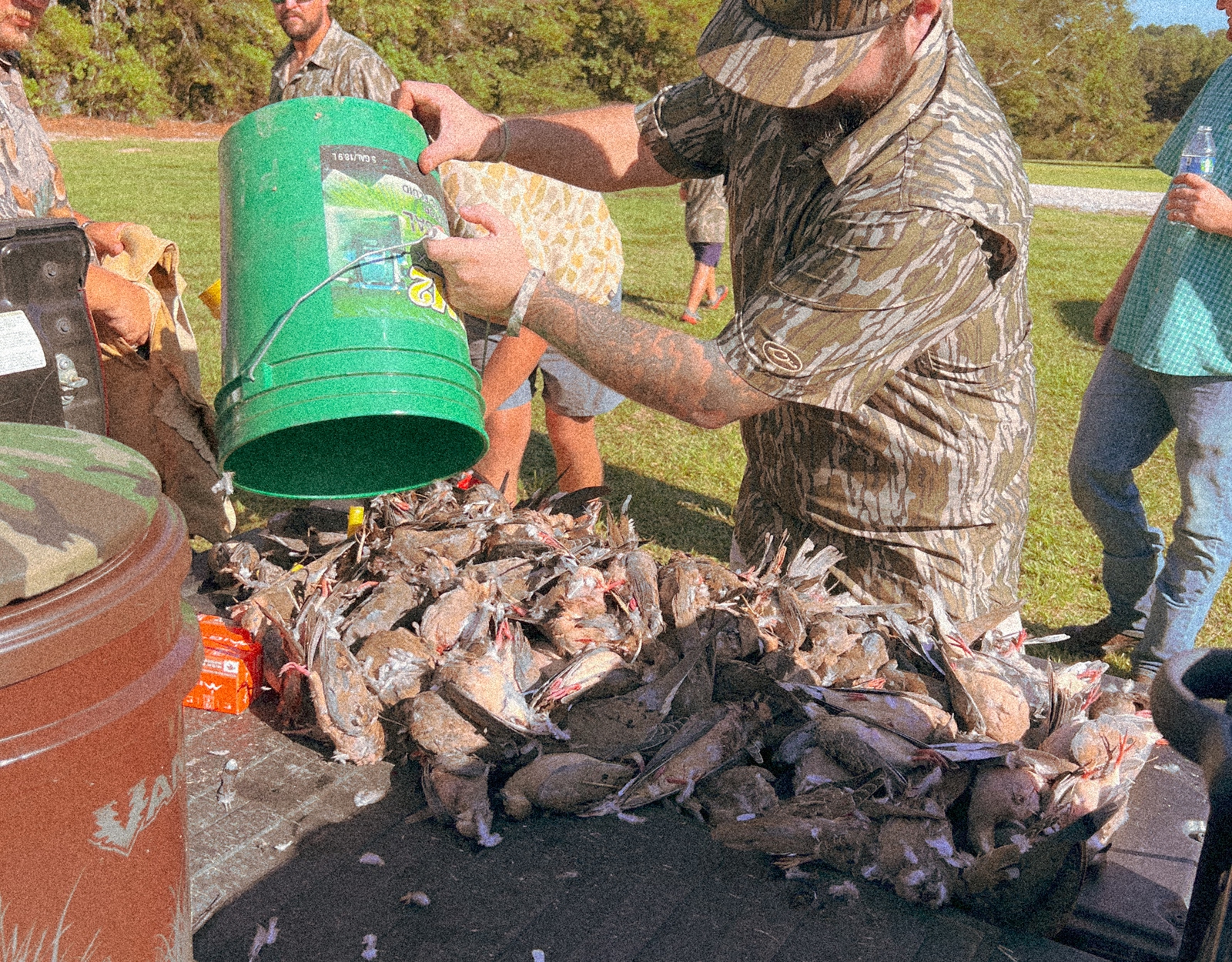
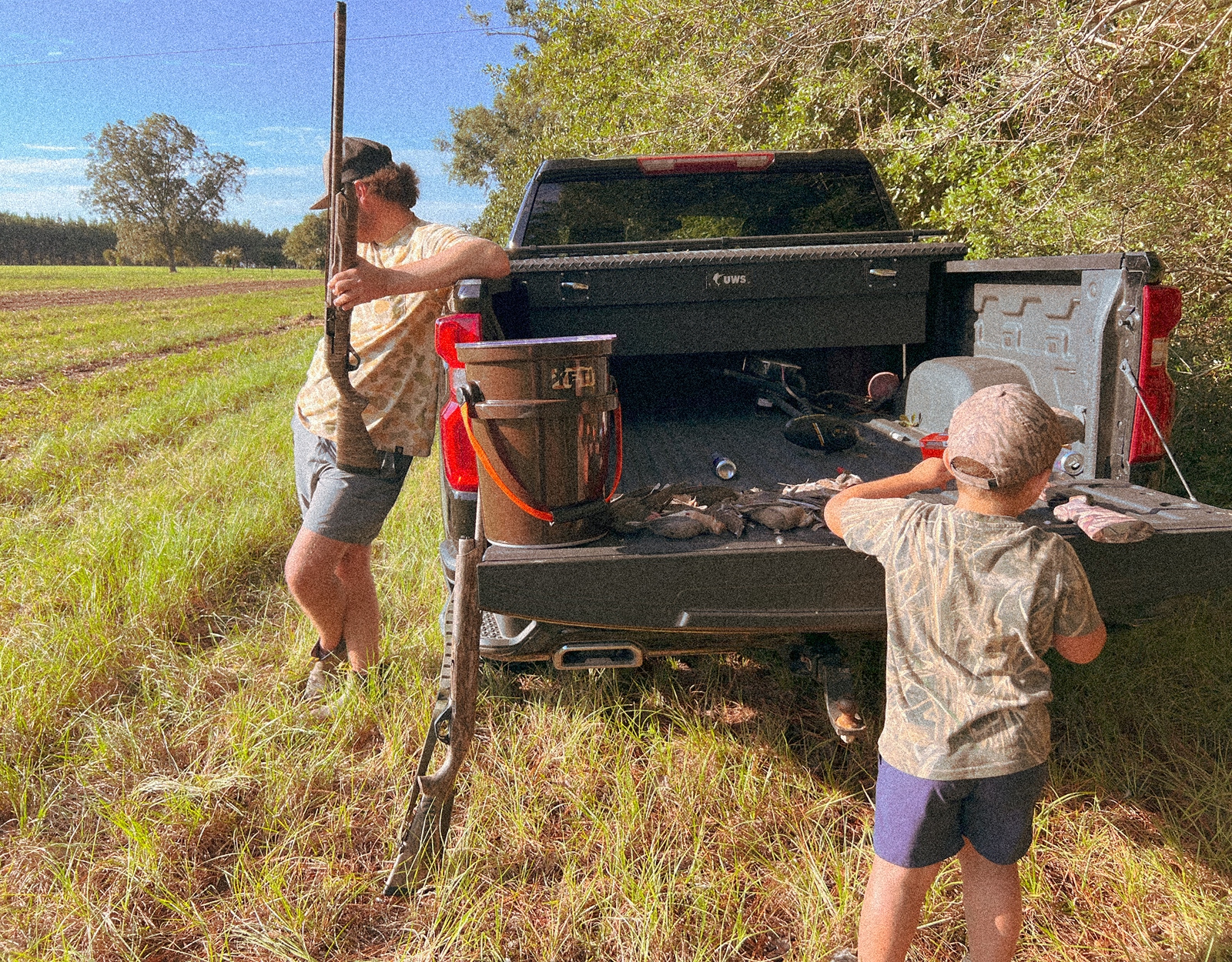
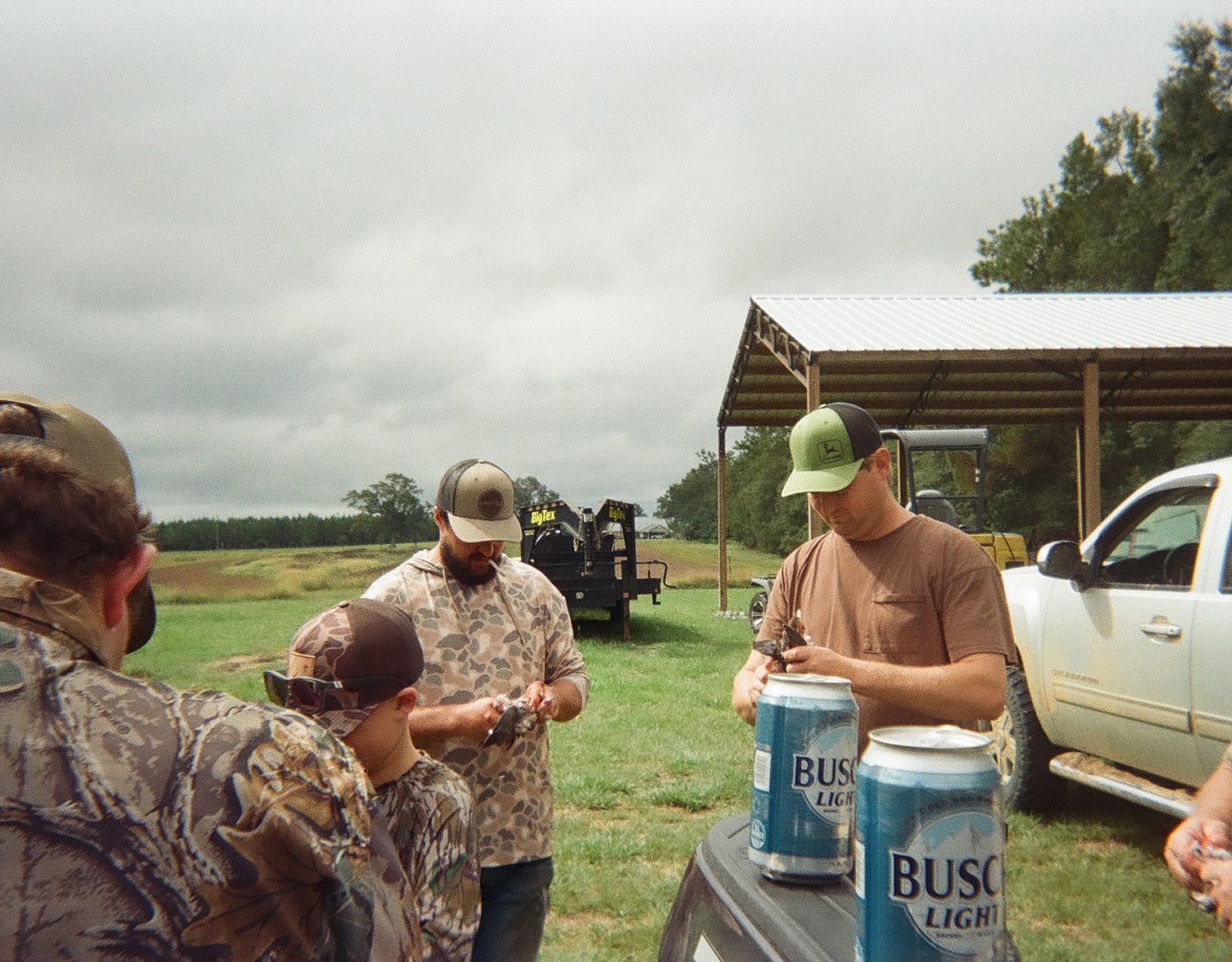
Hunts later in the season will feel serious. Elk, deer, bear, and other big game can require weeks or months of preparation. A single rifle shot is freighted with meaning—both the stakes of missing and the stakes of hitting, with recovery, butchering, and care for meat that follows.
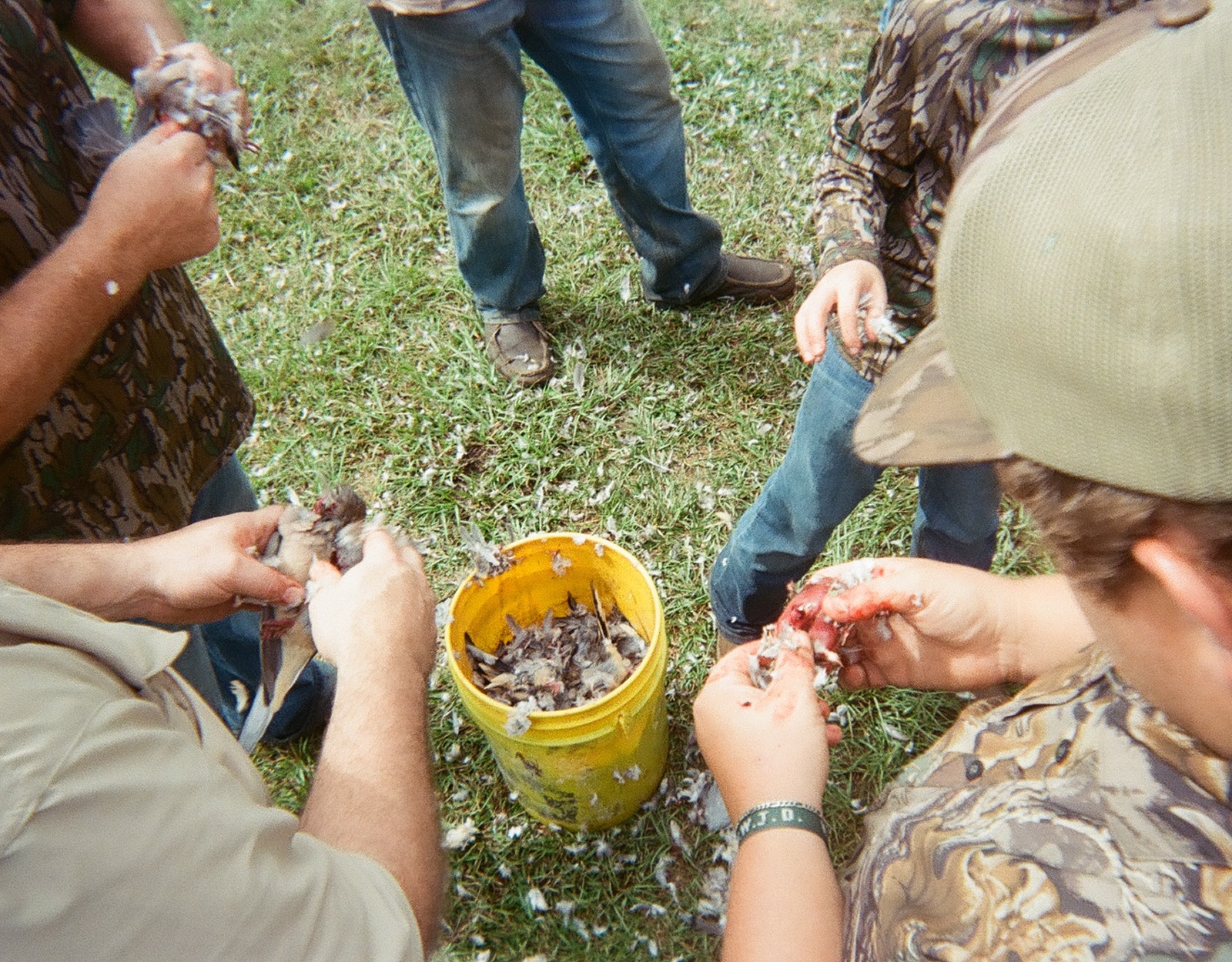
Dove isn’t like that. You’re going to mow through shots and you’re going to miss more than you think you should. You’re not going to sweat your noise or scent. There’ll be windows of quiet, when you can meditatively pluck a bird, and there’ll be sudden bursts of action that leave your heart jackhammering. You might mutter under your breath when that guy downfield takes the corner spot you wanted—and then shake his hand when his Boykin spaniel finds your dove in the middle of a cornfield.
The simplicity of a dove hunt reflects what Griffiths looks for these days: “the more basic it can get, the more I like it.” He doesn’t pack much in, eschewing decoys and dogs (too many rattlesnakes that time of year in Texas).
He uses the same semi-automatic he uses for duck, shoots steel #7s, and takes the time to pluck his birds and pack them carefully, keeping them cool. For him, every step of the process is something to savor—and he’s got nothing but bemused pity for those who want to rush through some of the best hunting days of the year.
“You’re at the end of your hunt and you’re standing out there with your friends and the sun’s setting and it’s beautiful and some guys are like, ‘well, we gotta go,’” Griffiths laughs. “Like, where? What’s better than this?”