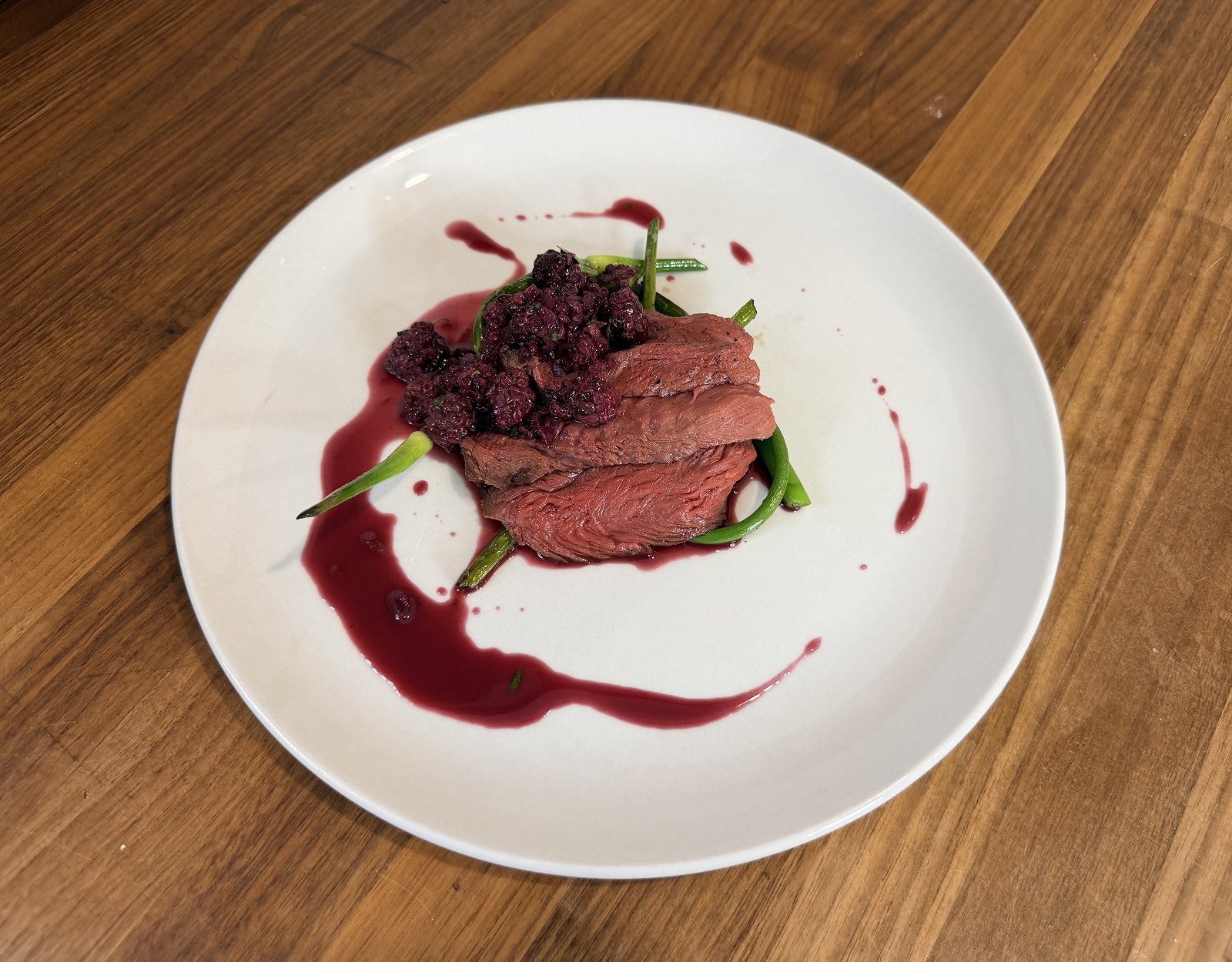
- 2 cups blackberries, washed
- 1 small shallot, minced
- ½ cup sugar
- ¼ cup rice wine vinegar
- ½ cup red wine
- 1 cup turkey or chicken stock
- 1 sprig rosemary
- 2 bay leaves
- Olive oil for sauteing
- 1 moose shoulder roast (1 ½ lbs) sous vide for 4-5 hours at 127°F
- 4 tablespoons butter
- 2 garlic cloves
- 2 bay leaves
- Garlic scapes
- Preheat a small pot, add a tablespoon of olive oil, sauté the shallots until translucent and soft.
- Add the blackberries, rosemary, and bay leaves. Cook for 2-3 minutes.
- Add the sugar, stir, and add the red wine and vinegar. Cook for another 2-3 minutes to cook off the alcohol.
- Add the turkey stock and reduce to concentrate the flavours and thicken the sauce.
- Remove the roast from the sous vide and season the roast with salt and pepper.
- Sear in a hot pan with the butter, garlic, and bay leaves until browned and caramelized. Rest for 5 minutes, adding the garlic scapes to the pan and sauté while the roast is resting.
- Slice the roast serve with the scapes and spoon the blackberry sauce over the meat and serve.
FAQs
Yes, wild blackberries are safe to eat. Remember, never eat a berry you can’t personally identify. Blackberries, along with raspberries and elderberry, are listed by the Farmer’s Almanac as one of the safest wild edibles—reason being, wild blackberries don’t have a toxic lookalike. The wild version of blackberries looks just like the version you buy in the store, so it’s easy to know what you’re looking for. Note, blackberries do have lookalikes, such as the Marionberry and the dewberry, that are also safe to eat.
Wild blackberries are commonly found at the edges of woody areas or in the brush alongside roadsides (if you’re in an area that sprays pesticides, be mindful of what you pick along roadsides). The onX Hunt App helps you find logging roads, meadows, and clearcuts likely to hold wild blackberries.
If your blackberry sauce is too runny for your preference, you have two options: reduce over heat for longer or use cornstarch. Reducing the sauce is the best option to retain flavor: simply continue to simmer the sauce in an uncovered pan and give it a gentle stir every so often to prevent scorching. If you’re in a hurry, you can use a cornstarch slurry to thicken berry sauce: mix equal parts cornstarch and water (a little goes a long way; one tablespoon of cornstarch mixed with one tablespoon of water per one cup of sauce) and slowly whisk into the sauce.