From record-high mature buck harvests to warning signs around herd balance, disease, and hunter participation, the 2026 National Deer Association (NDA) report offers a snapshot of where deer hunting stands after the 2024-25 hunting season. Hunters are more selective than ever, deer management is more intentional, and in many places, the woods are holding older bucks than we’ve seen in decades. At the same time, fewer people are picking up a tag, diseases are threatening to outwit us all, and some herds are pushing the limits of what the land can sustain.
TL;DR: The 2026 National Deer Association report shows deer hunters harvesting more mature bucks than ever before, as well as a rise in doe harvests, signaling more selective hunting and intentional herd management. At the same time, deer populations in some areas are approaching or exceeding habitat limits, communicable diseases like chronic wasting disease and hemorrhagic disease continue to expand, and hunter participation is declining, threatening a main artery of wildlife management funding. The data points to meaningful progress, but also highlights growing challenges for the future of deer hunting.
The full report is worth your time. Here are our core takeaways to get you started.
We’re Hunting Smarter Bucks
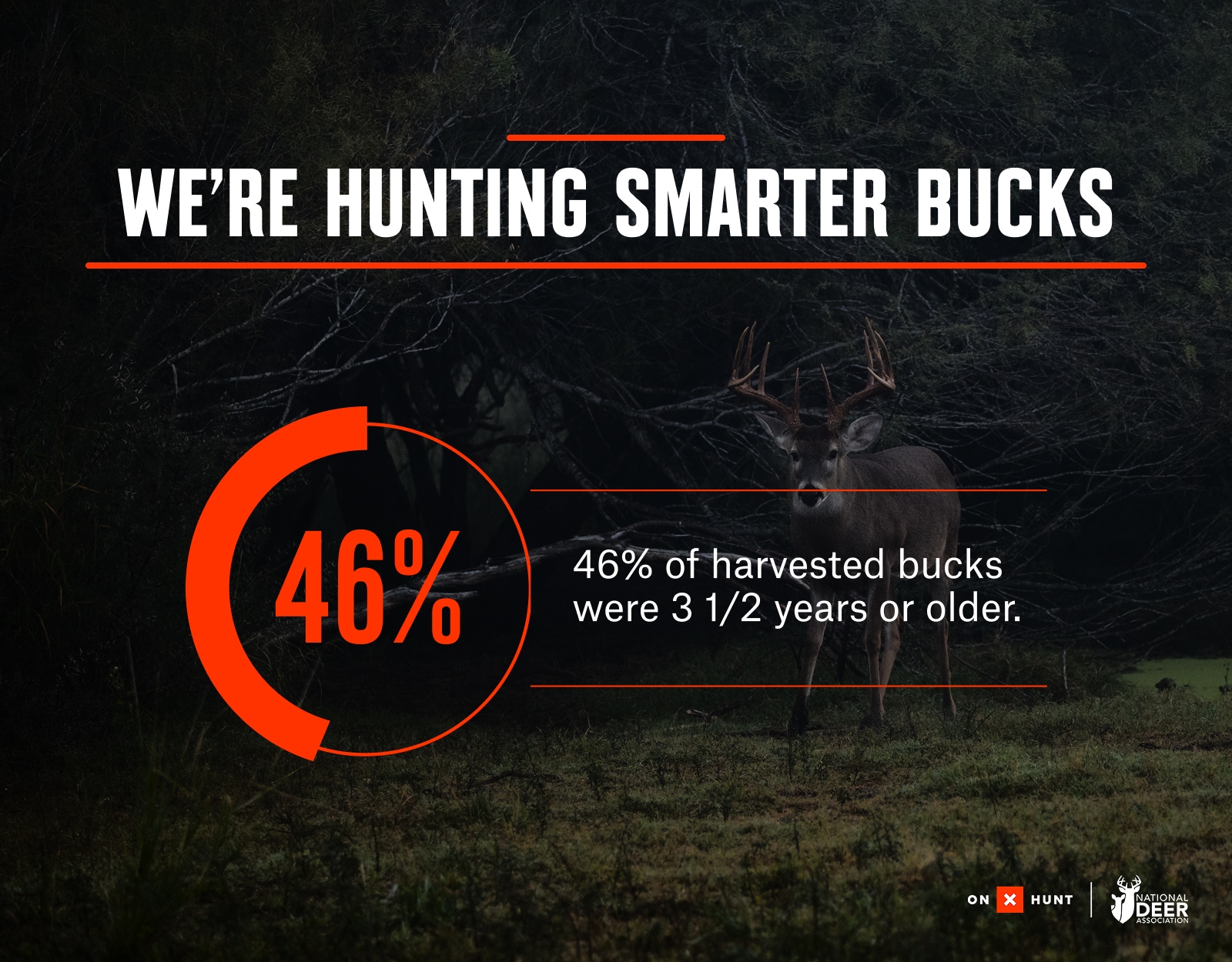
Hunters tagged more mature bucks than ever before: 46% of harvested bucks are now 3½ years or older (Oklahoma took the top rung, reporting 81% of its antlered harvest at or over this age class). At the same time, the yearling buck harvest rate dropped to its lowest point in recorded history at 23%. For comparison’s sake, this figure was 62% in 1989. Hunters are killing two mature bucks for every young buck.
South Carolina led the country in antlered buck harvest per 100 deer hunters (at 70), and Florida experienced the biggest increase in antlered buck harvest versus their five-year average (up 35%, from 54k to 73k). Of the 37 states with available data, 21 states—or 57%—shot more bucks in 2024 than their prior five-year average.

NDA’s latest report reflects the 2024-25 season, as 2025-26 deer seasons were still underway at the time of publication. Where early 2025-26 data was available, results were less encouraging: five of six reporting states showed year-over-year declines in harvest. It will be interesting to see if data for the rest of the country follows this pattern.
Herd Balance Starts With Does
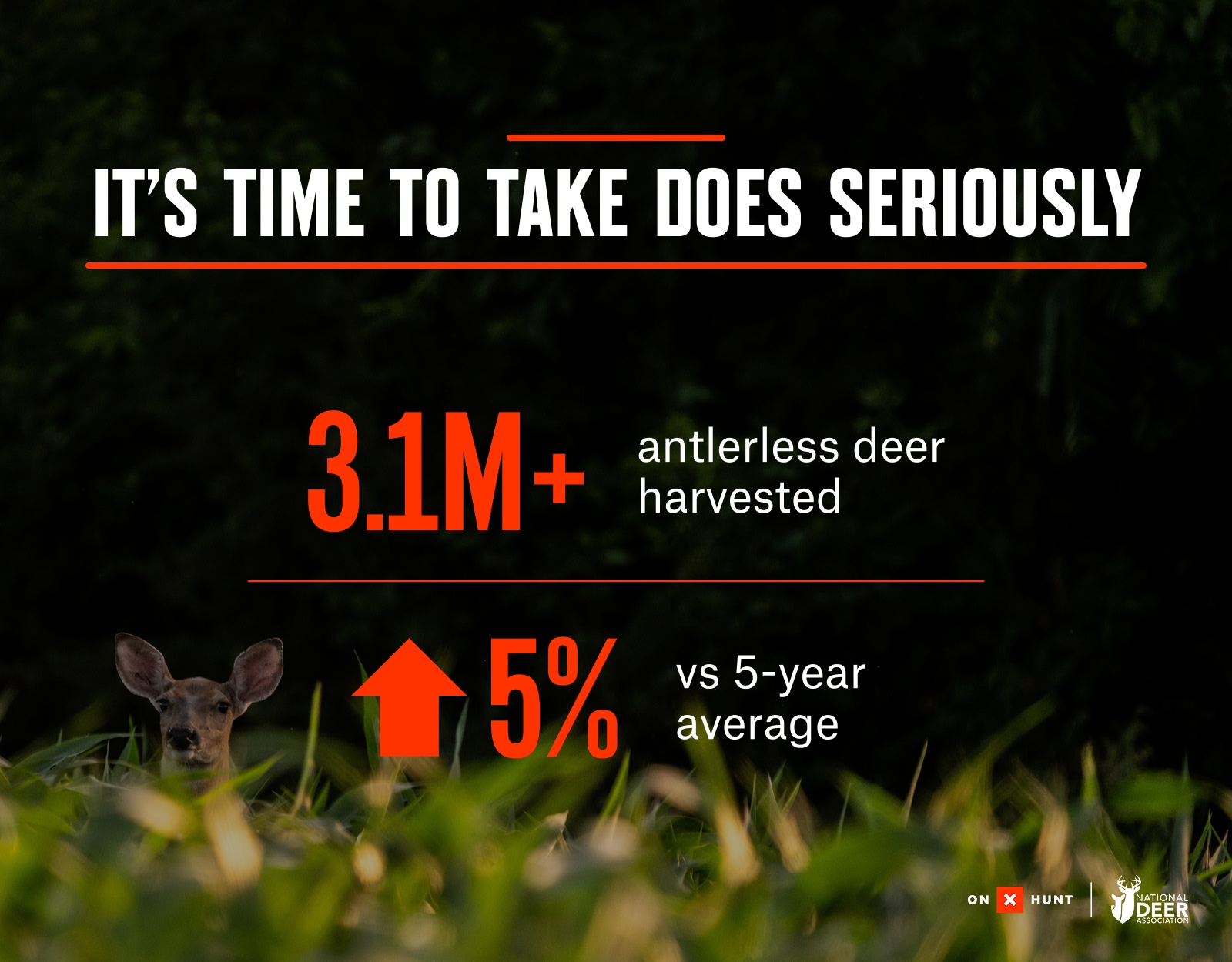
While bucks grab the headlines, the antlerless harvest remains the best lever for balancing deer populations with available habitat. In the 2024-25 season, the antlerless harvest exceeded 3.1 million animals, marking a 5% increase over the previous five-year average. The increase in hunters choosing to take does is welcome news as deer densities start to flirt with the upper bounds of the land’s carrying capacity in many areas.
Another bit of good news regarding doe management is the age structure of the antlerless harvest: 42% were 3½ years or older. Mature does are typically more productive than younger does, so in areas experiencing overpopulation, harvesting older does can help bring population numbers back in line.
Delaware took the top spot for most antlerless deer taken per 100 deer hunters at 87, and the top spot for most antlerless deer per antlered buck harvest, with 2.7 does killed for every buck.
Why does this matter? Unbalanced herds can be a ticking time bomb. Which leads us to…
The ABCs of Disease
When herds get unbalanced and overpopulated, disease can move through them faster and hit harder.
The largest threat to the future of deer hunting remains the spread of communicable diseases, primarily chronic wasting disease (CWD). As of 2026, CWD has been identified in 36 states and six Canadian provinces.
CWD research saw several breakthroughs this past year, with highlights such as:
- A Colorado State University study demonstrated that CWD-positive does can pass the disease to their fawns in utero.
- Research demonstrated that prions can persist in soil and that mineral licks can serve as long-term disease reservoirs.
- Studies showed that turkey vultures, coyotes, and feral pigs play roles in spreading prions across the landscape.
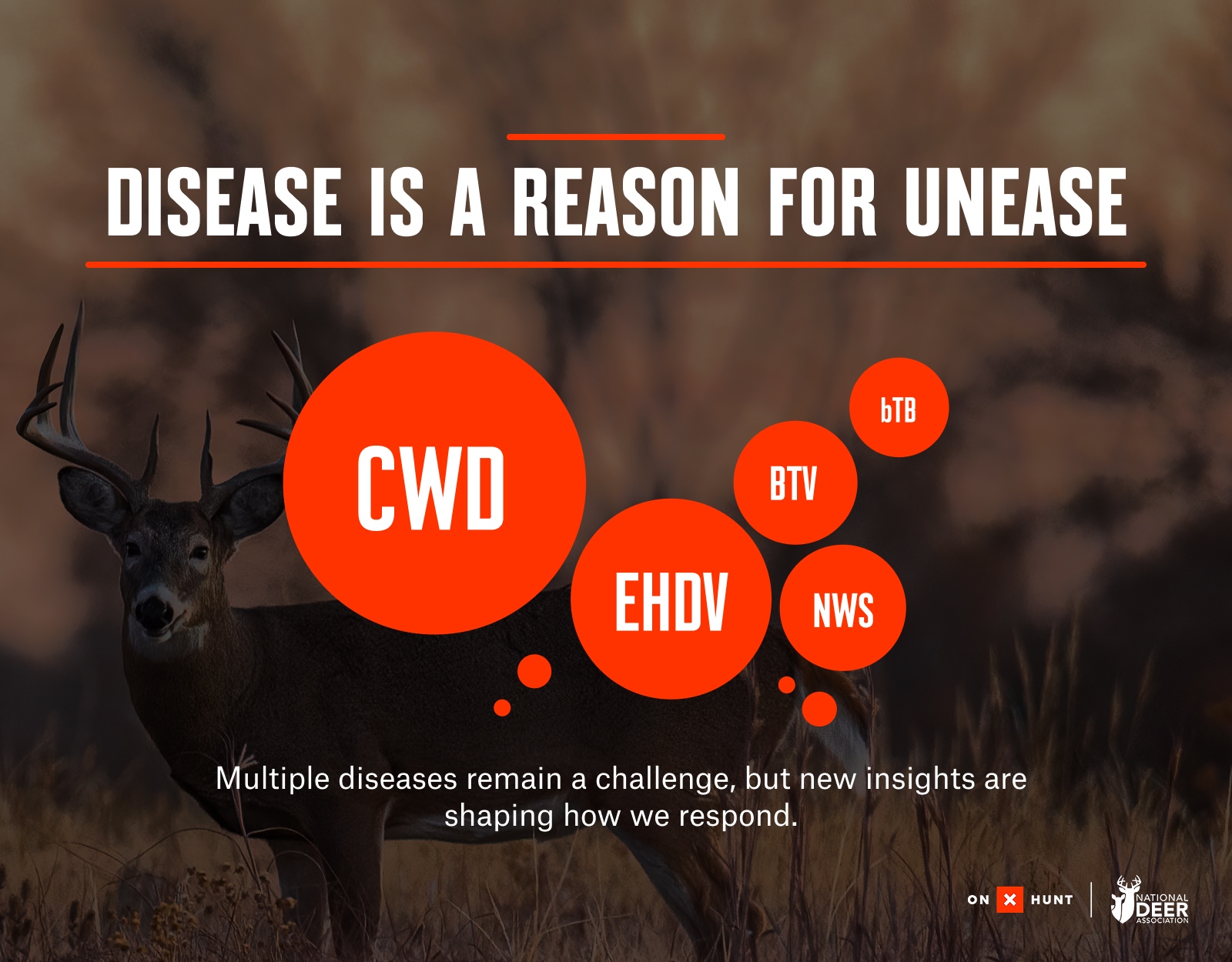
Beyond CWD, hemorrhagic disease (HD) was confirmed in 27 states in 2025, with severe outbreaks in the Ohio River Valley, river bottoms throughout Montana, and southern Indiana. HD is caused by one of two viruses: epizootic hemorrhagic disease virus (EHDV) or bluetongue virus (BTV), and is transmitted by midges. In response, Ohio, Montana, and Indiana reduced antlerless bag limits to help local populations recover (and North Dakota offered hunters refunds for tags in affected southwestern counties).
Deer also face threats associated with bovine tuberculosis (bTB), rabies, and New World screwworms (NWS).
Where Did All The Hunters Go?
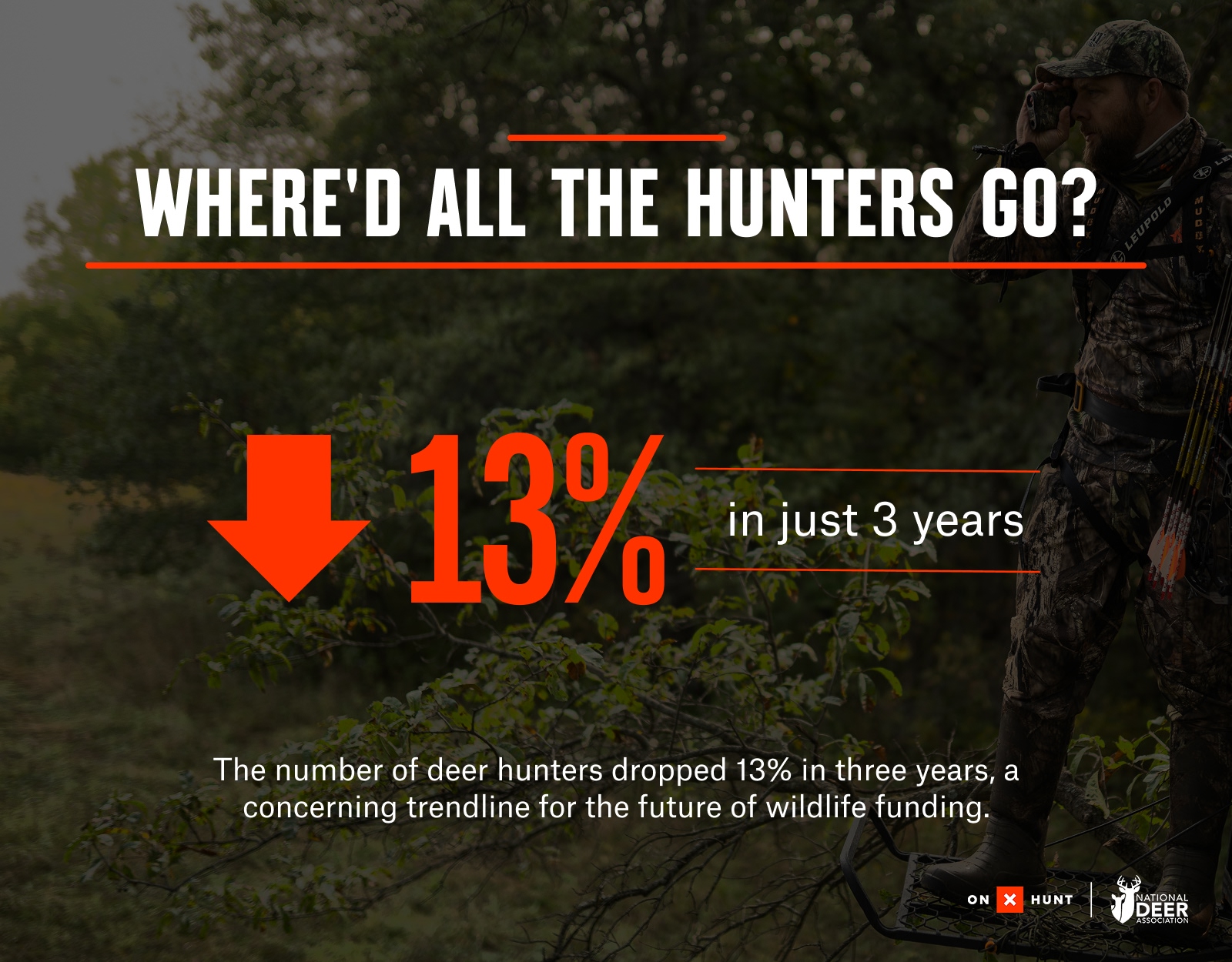
In 2024, deer hunters made up 65% of all hunters in states that reported total hunter participation, down from 78% in 2021. That’s a 13% drop in three years. The survey tracked 42 states with over 8 million deer hunters total (Pennsylvania took the top spot for most deer hunters per square mile, at 13.9). Even with deer hunting remaining the most popular form of hunting, the trend line is moving in the wrong direction.
The decline threatens the North American Model of Wildlife Conservation, which relies on hunter-generated funds to support wildlife. The math goes like this: fewer hunters means less funding, which means fewer biologists, which means worse management, which means worse hunting.
What Now?
Does are looking better than ever. If your state added antlerless tags or has antlerless-only seasons, use them. A balanced herd is a resilient herd. Mark doe bedding on your maps with the same enthusiasm you mark scrape lines.
Get your deer tested. If you hunt in a CWD state, submit samples. The data helps biologists track prevalence and make informed decisions. It also gives you information you can use to decide whether you want to eat the meat or not.
Make this the year you bring someone new. Forty-two states have mentored hunting programs. Take advantage of them. Every new hunter helps offset declining participation and strengthens the political constituency that protects hunting access and science-based management.
Track what’s happening at the commission level. Legislation matters. A Texas lawmaker tried to abolish the state’s wildlife agency in 2025. Alabama exempted captive deer from disease regulations. Missouri just got rid of its post-season targeted CWD control program. Know what bills are moving in your state.
FAQs
Texas leads the nation with 765,180 deer hunters, followed by Pennsylvania with 621,600.
Pennsylvania has the most deer hunters per square mile at 13.9, followed by New York at 11.4.
It depends on the state. Eleven states reported more deer today than in 2019 (Louisiana saw a 100% increase), while five states, including Wyoming and Arkansas, reported fewer deer. While we all love to know population estimates, NDA reminds us they’re not actually needed for deer management. Instead, factors like body weights by age class, age distribution of the harvest, fawn recruitment rates, and forest regeneration rates are what matter.
December is the most popular month for antlerless-only hunting seasons, with 17 states providing specific opportunities to harvest does during this time.
CWD has been confirmed in 36 states and six Canadian provinces.