
Chapter 4 – Setup Tactics
Overview
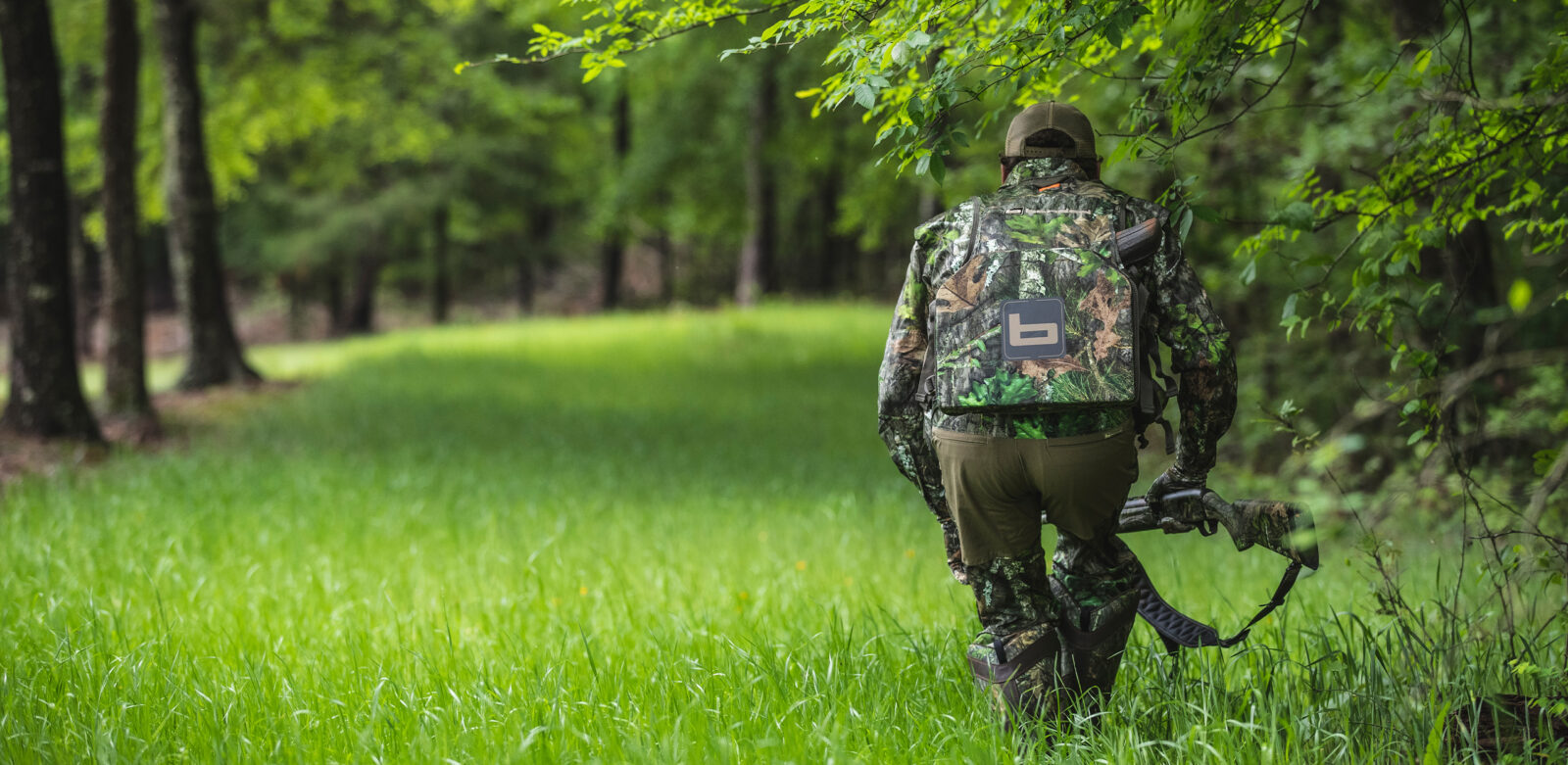
So often in the turkey woods, your setup will make or break your hunt. We share our insights and offer a few tried-and-true tips to help you turn more close encounters into turkey on the table.
The Mossy Oak crew digs into details that can be overlooked when you’re working a hot gobbler in the heat of the moment. You’ll learn how to better predict a turkey’s path toward you, how to use natural elements like shade to your advantage, and partner-calling tactics to get more birds in gun range.
Course
The way you set up on a turkey can be the deciding factor in whether you get a shot opportunity. The in-depth knowledge shared in this chapter will help you make the right setup selections on your hunts. We discuss:
- Cover, Noise, and Camo.
- High Ground, Getting Comfortable, and the Call-Through Method.
Get Access to More Courses
We’re gifting turkey hunters with Turkey Academy so they can prep for the season. For full access to other Elite Expert Resources covering topics ranging from shed hunting to marksmanship, become an onX Hunt Elite Member.
Chapter 4 – Setup Tactics
Chapter 4 – Setup Tactics
Skill Level: Beginner to Intermediate
4.1: Cover, Noise, and Camo
What You’ll Learn:
• How to strategically use foliage for protection and ideal shooting lanes.
• Considerations for back cover.
4.2: High Ground, Getting Comfortable, and the Call-Through Method
What You’ll Learn:
• The importance of high ground.
• Gear recommendations to help you sit stiller and longer.
• How the call-through method works.
Go back to revisit scouting or move ahead to dive into turkey sounds.
Video Transcript
Source: YouTube transcript; please forgive typos.
4.1: Cover, Noise, and Camo
Setting up on a turkey is absolutely crucial and can mean the difference between success and failure. Anytime I’m working a turkey or hear one gobbling, the first thing I do is imagine where that turkey is going to come from. A wild turkey gobbler in the spring wants to be on a stage where hens can see him, usually in an open spot. That might be a logging road, a trail, or an open pasture. I like to identify an open area where I believe the turkey will come through and where I have an effective shooting range.
Next, I focus on cover. I spend a lot of time picking the right tree to sit against. I want a tree wider than my shoulders to provide camouflage and safety. I use natural foliage to cover both my front and my back, and I carry clippers to trim vegetation so I can hide movement and blend into the woods. I also use those clippers to create a clear shooting lane. Any obstruction between you and the turkey can cause you to miss or cause pellets to deflect, so having a clean shooting lane is critical.
Anytime you set up, take extra time to find the right tree, rock, or piece of topography. The goal is to be somewhere the turkey can’t see you and where you have the best possible shot. That extra effort is what makes you more effective.
Another key part of setting up properly is managing noise. If you can hear the turkey, he can hear you. You need to get in quietly and think ahead about your options. If you hear a turkey gobble, he may be several hundred yards away, but you should already be thinking about where you want to sit. Ideally, you want the sun at your back, a tree wider than you to sit against, and a clear idea of the direction the turkey is coming from.
Comfort and stillness matter. Once you’re set up, get comfortable and stay very still. Always try to sit in the shade. Camouflage works best when you’re in shadow, breaking up your outline and becoming less visible. Pay close attention to what’s behind you as well. If you sit against a tree with open ground behind you, a turkey approaching from the front can see straight past you and may notice something doesn’t look right. Try to sit where there’s a hill, thick cover, or something behind you that limits his view.
Think about a few key things every time you set up: be quiet, get comfortable, stay in the shade, and make sure you have good cover behind you. Those details make all the difference when it’s time to call a turkey in.
4.2: High Ground and the Call-Through Method
Setup is one of the most important aspects of wild turkey hunting and, in many ways, it can dictate success or failure. When I choose a setup, I want a place that allows a turkey to come within 40 yards while still looking for what he believes is the hen. I prefer to be on the highest possible elevation so the turkey has to come uphill to me, rather than getting above me and looking down into my position. The goal is to have the high ground, stay concealed, and put the turkey in a position where you can take a clean, killing shot.
One piece of equipment I use that’s becoming more popular is a turkey hunting chair. I carry it in the back of my turkey vest, and it allows me to sit comfortably for as long as I need while waiting on a turkey. As I’ve gotten older, I’ve found that I can’t always find the perfect tree and cushion. With a chair, you don’t need the perfect tree—you just need cover. If you can still use a tree for safety and to break up your silhouette, that’s great, but if a longbeard is coming and you’re forced to set up in grass or an open spot, a chair works extremely well.
Turkey chairs also allow more flexibility in setup. A small folding chair lets you back into brush, cover your sides and overhead, and stay comfortable. Comfort matters because once you determine the direction a turkey is coming from, you have to remain very still. Even the smallest movement can give you away, which is why staying comfortable is so important.
One of the most effective tactics when hunting with a partner is calling through. If you can get the turkey’s attention focused on the caller instead of the shooter, your odds increase significantly. The shooter sets up front, and the caller moves back 70 or 80 yards, positioning himself directly behind the turkey’s line of approach so there’s no risk of shooting left or right. Once the shooter is set, the caller does the calling.
The key to calling through is discipline. When the turkey gobbles, the shooter must stay quiet. If the shooter calls or clucks even once, the entire advantage is lost because a turkey can pinpoint sound incredibly accurately. The goal is for the turkey to focus on the caller while the shooter stays silent. If you’re the gunner, keep your mouth shut. That separation between caller and shooter is what makes calling through such a deadly tactic.
Learn more about the onX Elite Membership.
Don't have an account?