
Chapter 1 – Turkey Terminology
Overview
The foundation of turkey hunting starts by learning and understanding the terminology you’ll hear within the turkey community. From descriptions of turkey behaviors like roosting and strutting to exploring how turkeys use different parts of the natural landscape, Chapter 1 lays the groundwork for the rest of the course.
Course
Learn to talk the talk as we cover the most common phrases and behaviors you’ll hear and encounter in the spring woods, including:
- Roost, Strut, and Drumming.
- All Things Gobbles.
- Dusting, Scratching, and Bugging.
Get Access to More Courses
We’re gifting turkey hunters with Turkey Academy so they can prep for the season. For full access to other Elite Expert Resources covering topics ranging from shed hunting to marksmanship, become an onX Hunt Elite Member.
Chapter 1 – Turkey Terminology
Chapter 1 – Turkey Terminology
Skill Level: Beginner
1.1: Roost, Strut, and Drumming
What You’ll Learn:
• Types of roosts.
• Why turkeys strut and what strut marks look like.
• What drumming sounds like.
1.2: All Things Gobbles
What You’ll Learn:
• Why and when turkeys gobble.
• What a shock gobble is.
• What “hot turkey” really means.
1.3: Dusting, Scratching, and Bugging
What You’ll Learn:
• Why you want to be where turkeys are bugging.
• When you’re likely to see dust bowls.
• What scratching means.
Head to Chapter 2 for shotgun basics and safety considerations.
Video Transcript
Source: YouTube transcript; please forgive typos.
1.1: Roost, Strut, and Drumming
Roost
We’re going to talk some turkey terminology. First one is roost. Most birds sleep in a tree—that’s their roost. Now that can vary a lot from the East Coast of the country to the West Coast.
You know, if you get out in places where there’s not a lot of trees, like in Nebraska and the big rolling hills, there’ll be two or three cottonwoods together, and that is a roost, and they’re there all the time, so you’ve got to be careful not to approach that roost too close. Don’t get too close to an afternoon. Down in, say, Florida, there’s a lot of trees, but there’s water everywhere, and a lot of times those turkeys are like a tree that’s like right on the edge of the water, like the flop in that tree, so that anything is messing around in there, they can hear it
Roost isn’t that big of a deal right here where we’re at right now, Mississippi, they got lots of options, so just because one roosted here yesterday doesn’t mean they’re going to roost there again today.
Because I don’t like to fool with them too close to the roosts, I think if they beat you all day and you couldn’t call them in when they get to the roost, it’s like when you used to play hide and go seek: I’m at base, that’s what a roost is—it’s home base.
Strutting
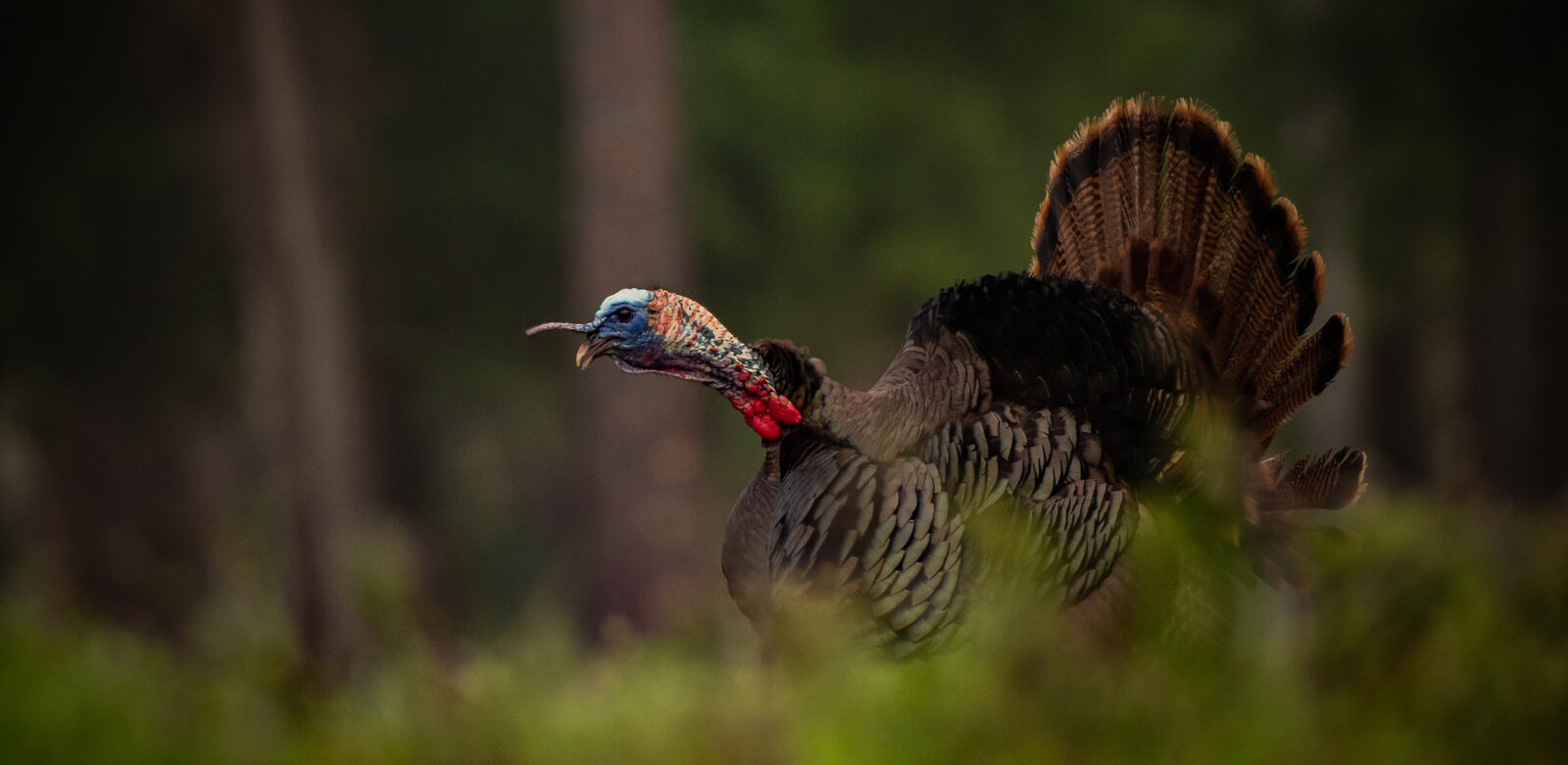
Strutting is simply what a male turkey, a gobbler, mainly a long beard—Jake’s strut, too, but they show off to show dominance, you know, arrogance…cockiness type. When a gobbler does strut, you know they just basically pop all their feathers out, their fan out.
If the soil is sandy and clean ground, you can find where a gobbler’s been strutting by strut marks where they drag their wings on the ground. When you’re scouting for turkeys, you know if a turkey’s been strutting in an area if you see where the tips of their wings dragged the sand. So that’s kind of a scouting technique where you can kind of look for strut marks, basically just looks like two or three or four lines drawn, dragging in the sand.
Typically road beds and stuff like that, you can find rtrut marks in the dirt, and that’s kind of something you look for where, you know, like a gobblers been hanging out strutting, so strut zone is just an area where a gobbler stretched around wants to be seen—typically an area further away…hens and other turkeys can see them from further away and you know it might be an area they hang out for a while, it’s kind of put their flag in the ground this is my spot, this is my territory.
Drumming
Drumming is the most unique sound in nature. It’s what I wanted my girls to hear way more than a gobble. I think it’s a vibration, it may be coming from their throat, but it’s when he’s in full strut, he may not be gobbling
but if you see that fan shake like that, he’s drumming, and he’s making that sound to attract the hens.
Now, if you ever see one strutting and he’s got three or four hens out there, he’s always got that fan pointing at them, showing them how pretty he is—same way with drumming: he’s drumming to get their attention, and he wants to show him that fan. But drumming is something you have to be listening for. Some people call it a snap thump or whatever, but drumming when you hear that, not only are you in the game, he’s very close, so we’re listening for drumming.
1.2: All Things Gobbles
A gobble is a sound a male turkey uses, primarily as a mating call. Turkeys gobble to communicate with each other. Sometimes they gobble at other gobblers. Late in the season, when breeding is mostly finished, they may gobble to meet back up with other male turkeys. Sometimes turkeys gobble at random noises like a car door slamming, an owl hooting, or a crow calling. Turkeys gobble for many different reasons, but the most common reason is gobbling at a hen.
A shot gobble happens when a gobbler reacts to a loud sound, such as an owl, crow, hawk, car door shutting, or a train whistle blowing. It’s a loud, quick, knee-jerk reaction to noise. It doesn’t really mean anything, and the turkey isn’t coming in. That’s why locator calls are used—to make a turkey shot gobble.
You’ll hear people say all the time that they got on a hot turkey, but I’d venture to guess that about 90 percent of the time, they didn’t kill it. Most people mean a turkey that just keeps gobbling. That’s fun and makes for an awesome morning because you can hardly make a mistake calling, but it doesn’t necessarily mean he’s coming in. A turkey that gobbles 100 times isn’t necessarily hot. A hot turkey is one that gobbles once or twice, and the next time you hear him, he’s busting leaves coming to you, with that big white fluorescent head shining at you. Now that is a hot turkey.
1.3: Dusting, Scratching, and Bugging
We’re still on turkey terminology, and we’re going to talk about bugging. I’m not talking about the kind of bugging your little brother did to you when you were eight years old, messing your room up and stuff like that. I’m talking about eating. This changes everywhere across the country, but turkeys are no different than chickens. If you see chickens around a barnyard, they scratch with one foot, then the other, looking for bugs, insects, rodents, and things like that. That’s why in the spring, you see so many turkeys in fields eating grasshoppers and similar food sources. When you find a place where they’re bugging, and there are lots of bugs, that’s a good place to start from scratch the next day, because they’re going to be back in that area at some point. Bugging is a big deal.
Another type of sign we look for is dust bowls. Typically, you’re going to find these later in the season when it’s hot. Turkeys do this to preen themselves. They create little shallow bowls where they’ve gotten down and dusted themselves off to remove parasites and bugs that have gotten on them during the hot months. You’ll usually see these in the later part of the season and into the summer months.
Another thing we look for, especially in the woods or areas with mast crops, is scratching. This is where gobblers and hens move through the woods, scratching up leaves to find acorns buried underneath. You’ll see raked-up areas with bare ground and leaves pushed together. These are some of the key things I’m looking for.
Learn more about the onX Elite Membership.
Don't have an account?