
The temps are cool, the leaves are crunchy, and love is in the air. As bucks separate from their summer bachelor groups, their focus shifts from feeding to breeding. It’s the start of the rut, and lusty bucks are chasing does, marking territory, and fighting other bucks. In unison with this rut biology, hunters are taking vacation days like they’re going out of style. Here, we discuss tips for hunting different phases of the rut so you can make the most of your rutcation.
When Does the Rut Start?
Mississippi State University Deer Ecology and Management Lab (MSU Deer Lab) explains that “the timing of the rut is controlled by the presence of females willing and able to breed.” In other words, the rut starts when does enter estrus. And when is that? We know a whitetail deer’s gestation period is about 200 days. Talk to your local wildlife specialist and find out when most fawns are dropping in the spring, then count backward from there to know when does are bred in your area.
According to the MSU Deer Lab, “The window of time in which we as hunters might observe an individual doe in ‘estrus’ or in ‘heat,’ from start to finish, can range from 24 to 48 hours. While that sounds like a tight window, not all does enter estrus at the same time. The timing is staggered slightly across the population, and the cumulative effect gives us the rut.
How Buck Behavior Changes During the Rut, And What It Means for You
Rut Behavior Change #1
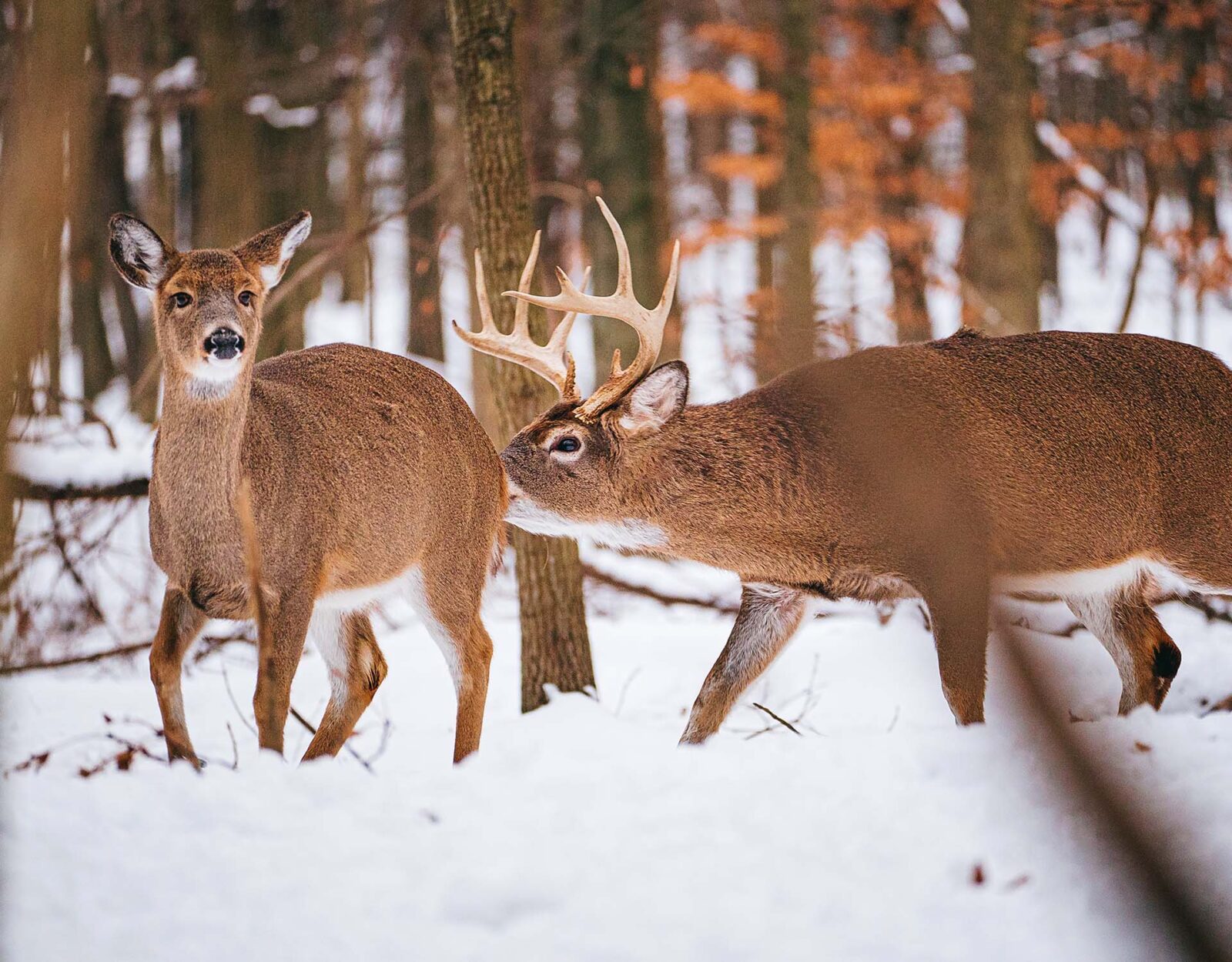
During the rut, bucks drop their guard and are more apt to show themselves during daylight. As their instinct to breed takes over, bucks will search miles and miles for does in heat. This makes them a more mobile animal overall. Big bucks, ones that you never saw beforehand, will come out of the woodwork.
- What It Means for You: The routine of hunting in the morning and evening flies out the window. Morning and evening are still good hunting times, but with increased deer movement from rut activity, bucks can be spotted any time of the day. This means more time in the tree is time well spent. Put yourself between two doe bedding areas and see what happens: Bucks will act like pinballs between the two.
Rut Behavior Change #2
Aggression runs thick during the deer rut, from bucks fighting to defend territory and breeding rights, to breeding itself.
- What It Means for You: Rattling, calling, and decoys can all be used effectively during the rut. Motivated bucks will come running to the sounds of antlers crashing together because bucks are often fighting over breeding rights. Grunting can attract bucks passing by, while decoys can either mimic does or bucks, drawing a curious buck into range.
Rut Behavior Change #3
During the rut, bucks frequently appear completely oblivious to their surroundings. A time when this is especially true is when a hot doe is in front of him. Sometimes bucks will stand motionless in the same spot just staring at a doe.
- What It Means for You: If a buck’s full attention is focused on does, that means he’s not paying attention to you. There’s more room for error, and you might be able to get away with things you can’t during other parts of the season.
How Long Does the Deer Rut Last?
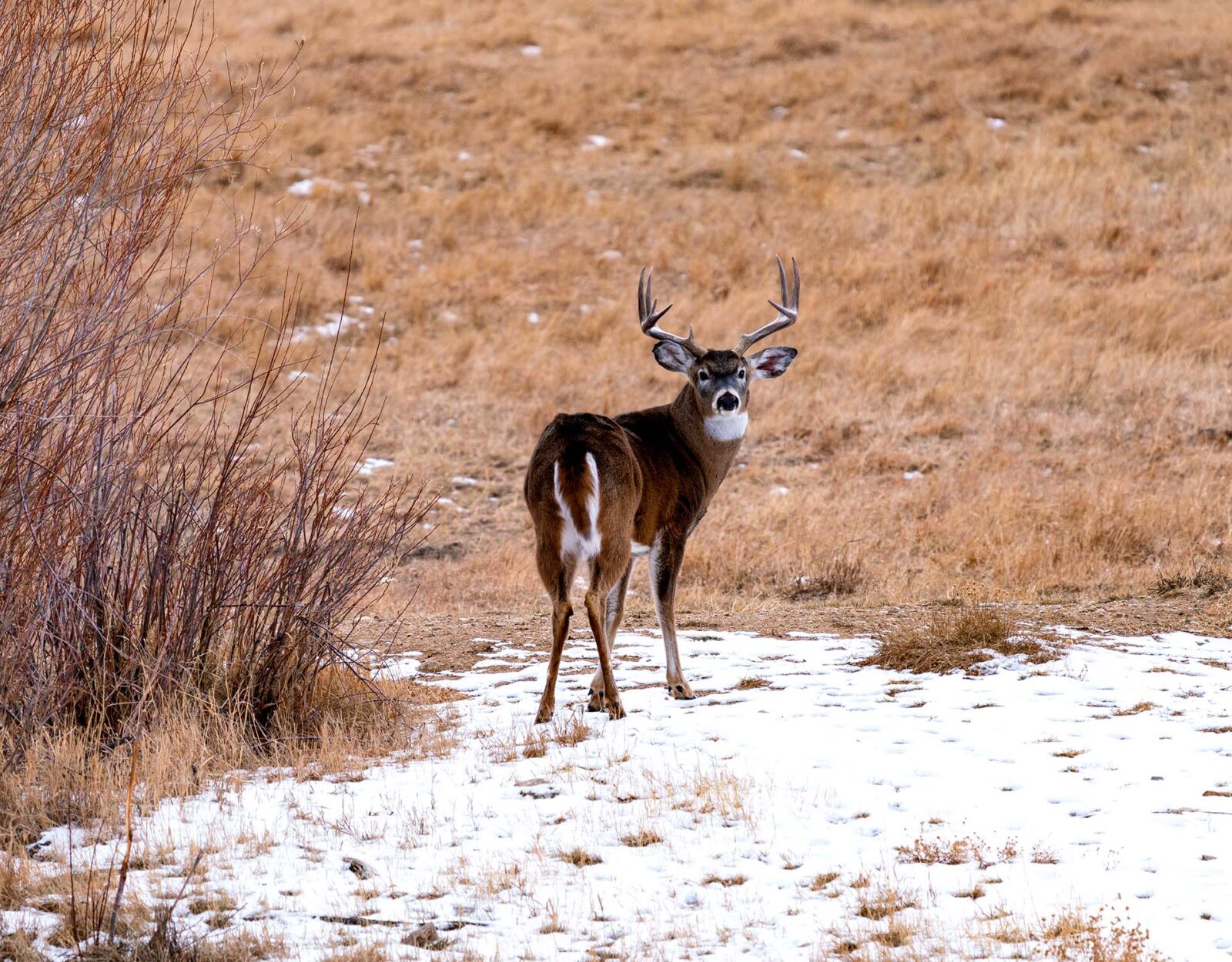
The deer rut lasts about a month and happens in phases. Does have a 28-day estrous cycle. Higher doe numbers can yield a longer rut period.
The phases of the deer rut kick off with the pre-rut, when younger bucks start cruising and mature bucks begin moving in daylight. From there, the first does will start to come into estrus, and bucks will start showing up at the doe feeding areas. Following that is what we deem the peak rut: Bucks run rampant, and it’s the best time to see a mature buck. After that, the intensity wanes, leaving many deer tied to thick bedding areas. The rut ends with the last wave of estrus. Though, big bucks will often still scent check doe bedding areas, trying to scrounge up the last remaining breeding opportunities.
The Five Phases of the Rut
Pre-Rut
General Timing: Last Week of October
Like anything with whitetails, the start of the rut is not something you can easily put your finger on, but you know it when you see it. Young bucks are often cruising, does are a bit more on edge, and mature bucks will start to move in daylight.
Scrapes are hit often. Don’t hesitate to hunt them or hang cameras on them. Bucks travel outside their home range, so any chance to get photos of different bucks is a win—not only for this year but for obtaining data for years to come.
Your grunt tube and rattling antlers quickly become relevant tools: start making noise in the woods. During this window, you’re often still experiencing calm mornings and evenings, so sound travels well. Use soft and slow calls and focus on deer you can see. Also, think food: Where you find does, you will find what you are looking for.
Early Rut
General Timing: Early November
The first does are entering estrus. Get situated early—well before shooting time—and sit all day if you can. If you’re sitting on an edge or food source and it slows dramatically, think about sneaking into or hanging a tree stand on the downwind side of a doe bedding area. Now is the time to get aggressive; a common mistake hunters make this time of year is playing it too cautious.
Scrapes are still active, and it’s worth staying on the grunt tube and antlers, or even a doe bleat, but do not call too much, especially on public land. If relevant, check cameras on each walk in or out, as this intel is extremely valuable right now. Bucks are traveling further during this timeframe than any other time of year. A Penn State study found bucks expanded their home range by three times on average—you never know who might show up.
Peak Rut
General Timing: Second Week of November
Midday movement begins to increase, especially among mature bucks. Statistically, November 13 has been found to be the most common day does are bred around most parts of the country. Get to your favorite tree stand, bring extra layers and snacks, and sit all day.
Hunt based on the data your trail cameras have produced in the last week. Pinch points, fence lines, field edges and other funneling spots are great places to intercept cruising bucks.
Late Rut
General Timing: Mid-November
Mid-November includes the true rut “lockdown,” when bucks have found willing does in estrus to breed. Does tend to bed down when ready to breed, often in obscure locations. Bucks will sit on or tend a doe for hours until the time has come to breed. You might see “orphaned” fawns wandering around with no mature doe, which can signify the doe is being tended by a buck and in lockdown. Movement is often sporadic and you never know when the light switch can flip back on. Stay at it; good things will happen.
Consider hunting a water source if you can; mature bucks that have been frantically seeking does will need to find water. A shift in focus to midday also becomes a great strategy; 9AM to 4PM is a great time to be in tree stands. Get back into those bedding areas; get in quiet and make sure the wind is right, as these areas will be scent-checked by mature bucks. You might even consider spot and stalk around mid-November.
Post-Rut
General Timing: Late November
Late November hunts can be long, cold and downright tough. But bucks will still be in search of the last estrus does. Though, we’re on the backside of the bell curve, and movement tapers quickly. Morning to midday can be productive, as can sitting downwind of doe bedding areas.
Look back into your trail camera archives and see where you had pictures of bucks last year at this time, then compare what you’ve gathered the last couple weeks. Deer are creatures of habit and will likely be on a similar pattern as in years past, so use this data to your advantage. This is a true test of your grit and how badly you want to tag out. You won’t have that “Christmas morning feeling” the rut brings for another 340 or so days—so soak it up and get to a tree.
How Much Do the Phases of the Rut Shift Geographically?
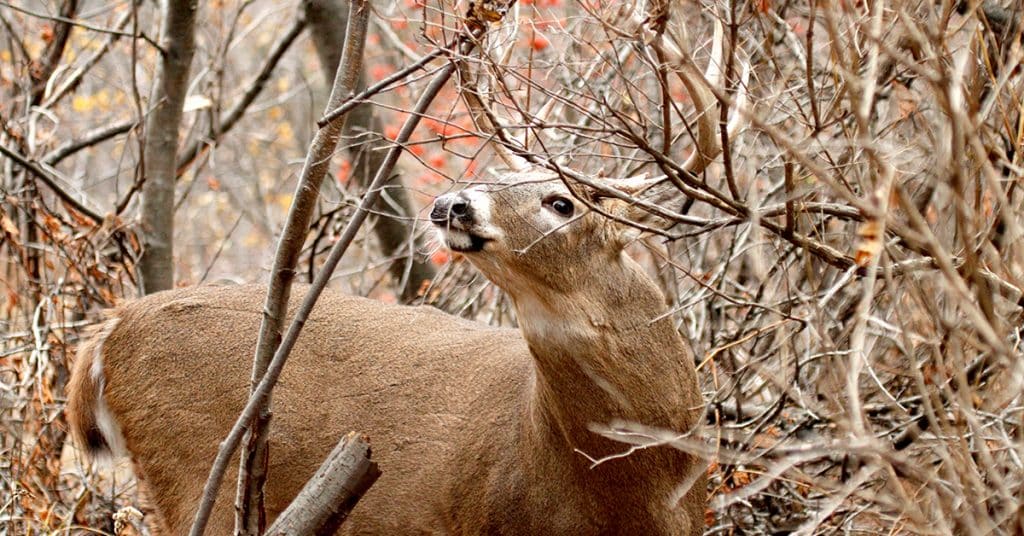
With variance of the average or peak breeding date across deer populations and individuals, the MSU Deer Lab notes that the greatest variation in peak breeding dates occurs in a whitetail’s range as it moves latitudinally, north to south. The farther south you go, the longer the rut can last, due to the warmer climate. In Mississippi, for example, the deer rut can range from early December to early February.

Whitetail Insights
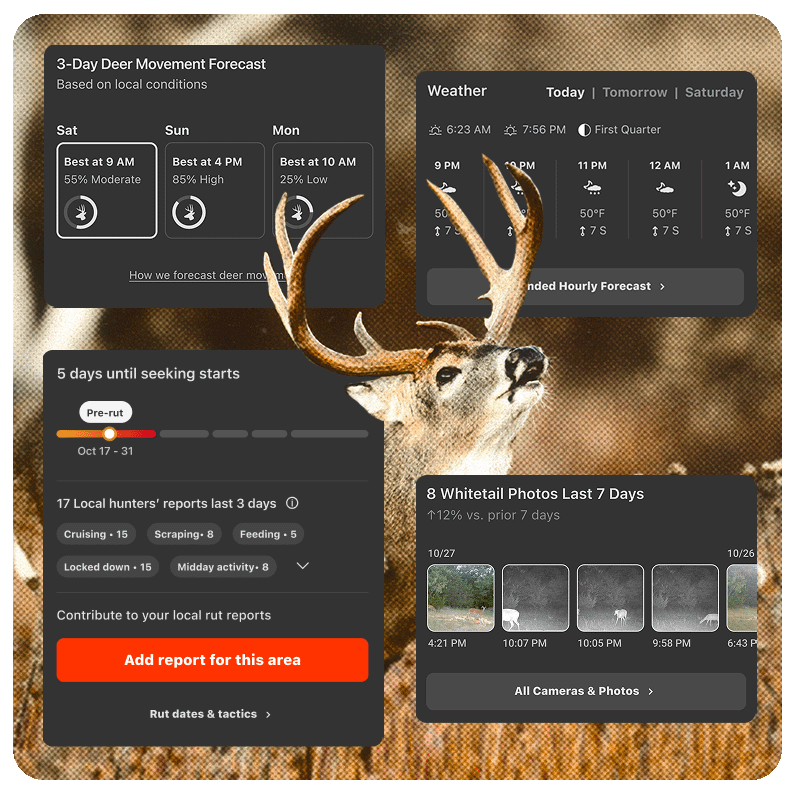
See your Trail Cameras, Deer Movement Forecast, Rut Calendar, and Wind & Weather in one place for the land you hunt. Make a faster, better-informed call on when to hunt.
- Rut Calendar: Know how and when the rut is unfolding.
- Deer Movement Forecast: Predict the odds of increased deer activity on your hunt.
- Trail Cameras: Pattern deer with Trail Camera Analysis.
- Wind & Weather: Get hyper-local conditions and forecasts.