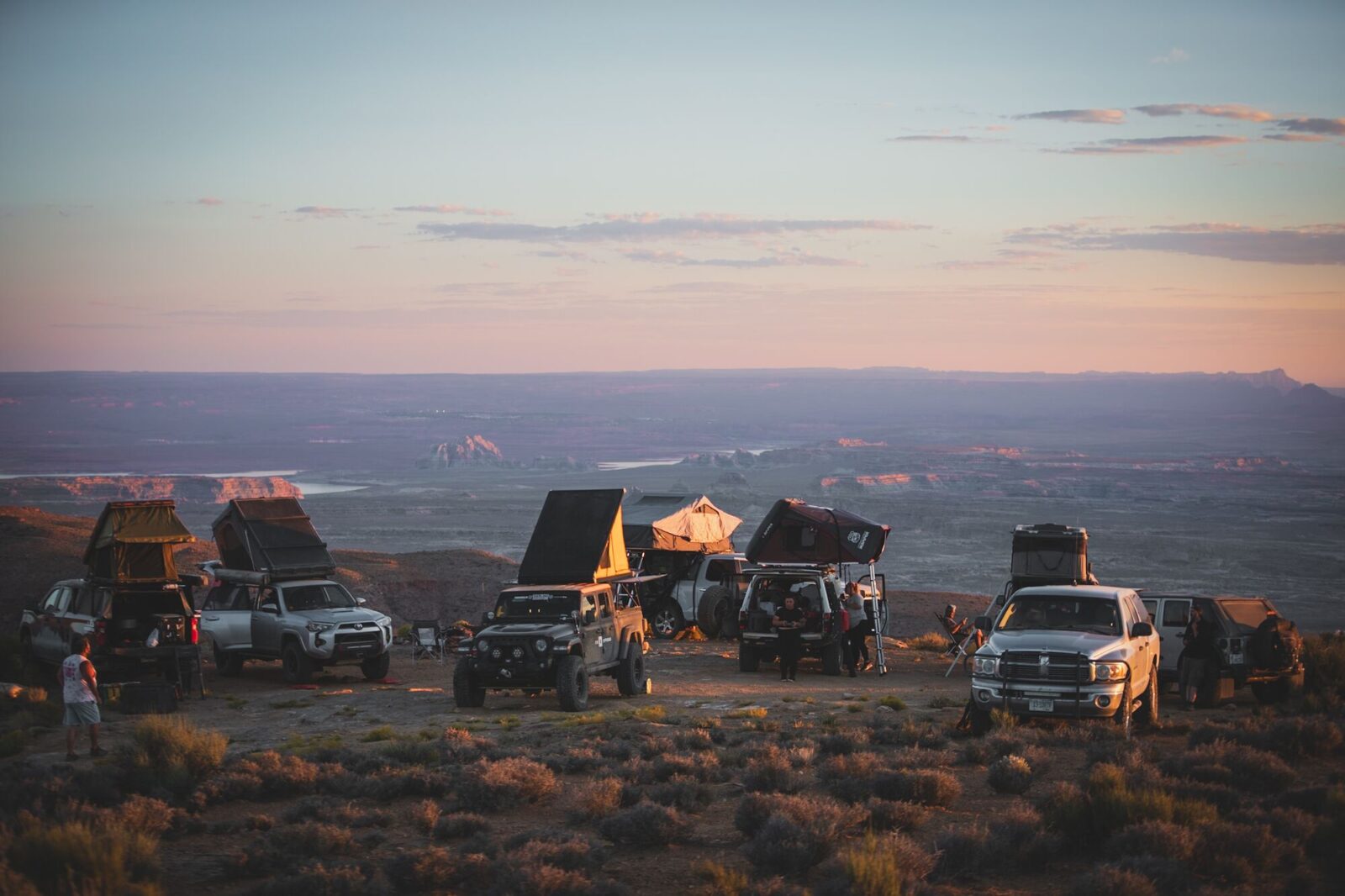
Dispersed Camping Maps
With BLM + National Forest Data
Find legal free camping on public land with confidence. See where off-grid camping is allowed, designated, or restricted on BLM land, and near motorized trails on National Forest land, with onX Offroad’s exclusive Dispersed Camping map layer.
A Map Full of Possibilities
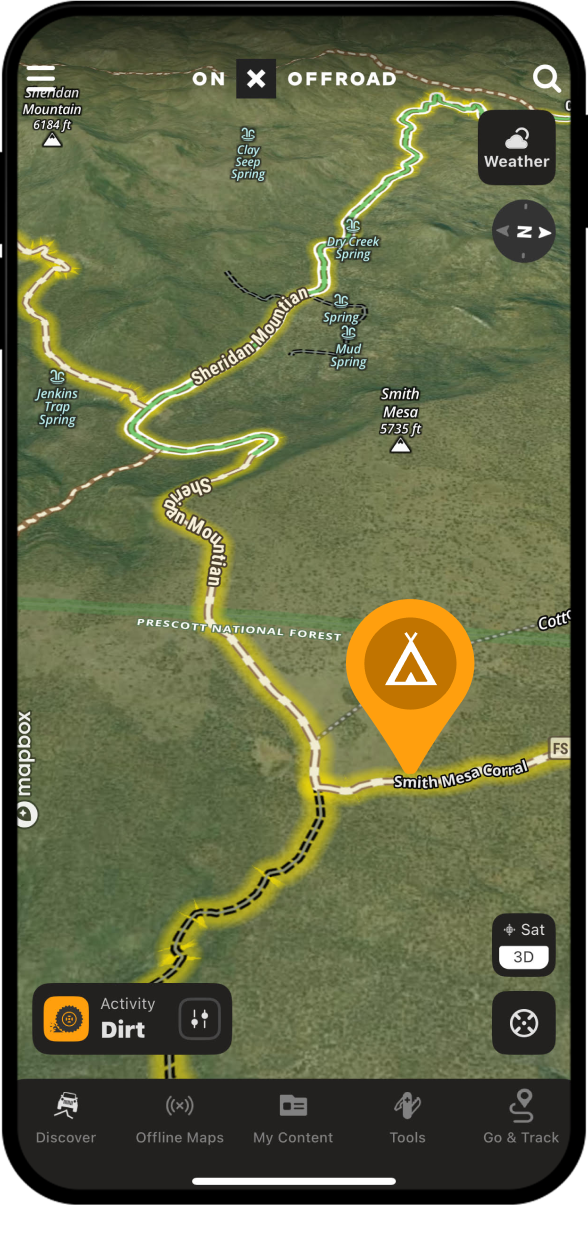
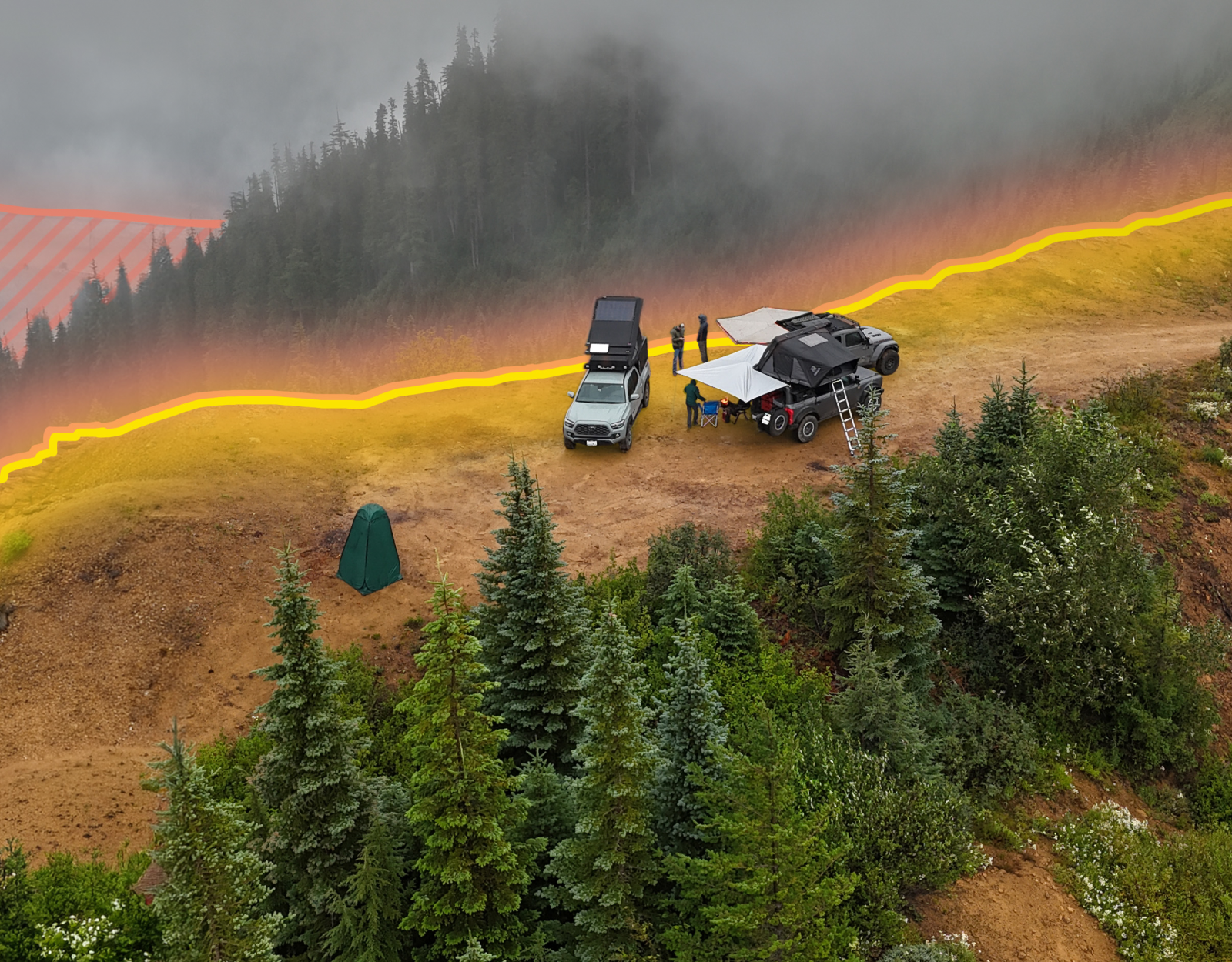
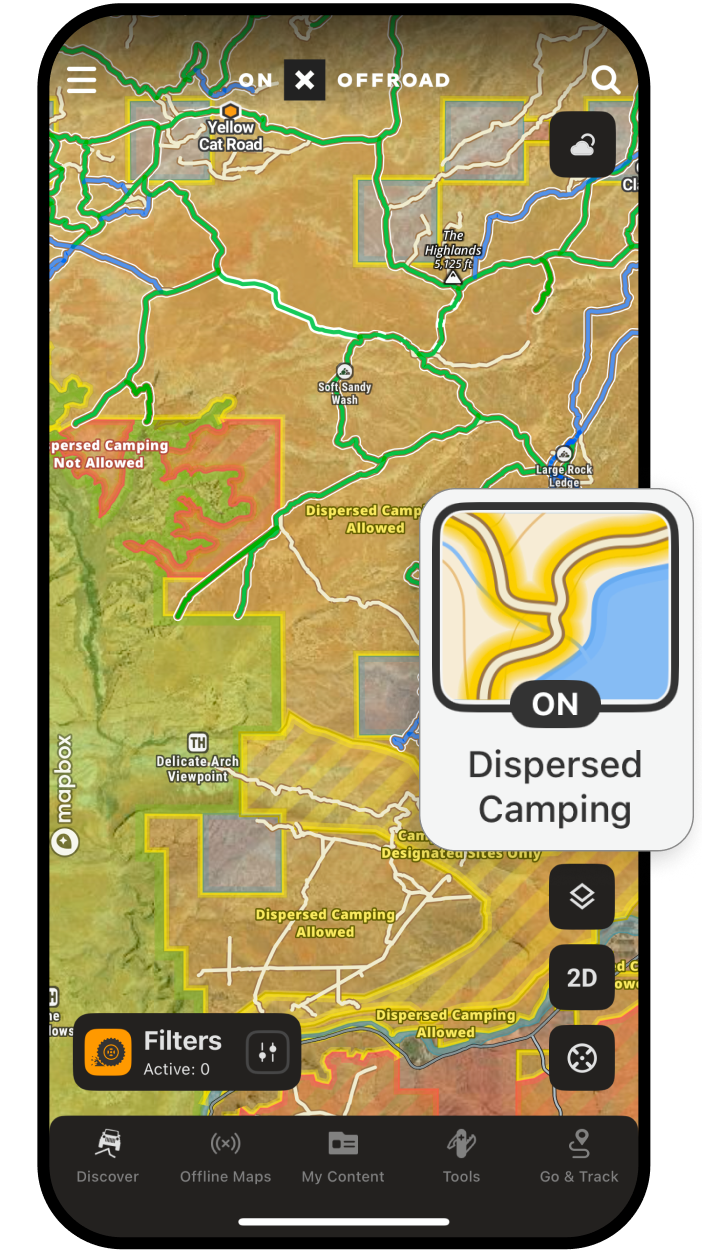
onX Offroad’s exclusive Dispersed Camping Maps just got an upgrade—now with enhanced BLM data. Activate the map layer to highlight motorized trails with legal free camping in National Forests, and see where dispersed camping is allowed, permitted only on designated sites, or restricted on BLM land. Find your own space away from the crowds, the noise, and the reservations.
How to Use It for Your Next Trip

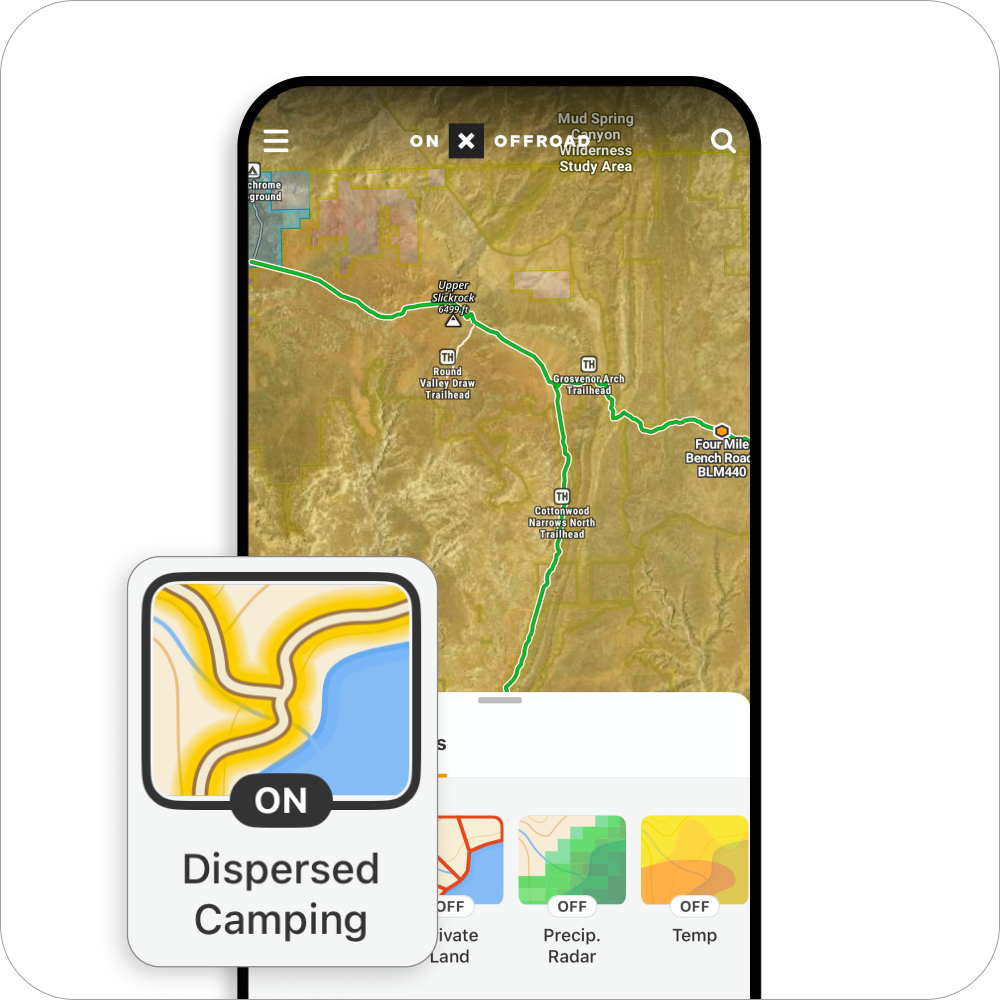
Turn On the Dispersed Camping Layer
Tap the Basemap icon on the bottom right of your map to see all the map layers, then tap to enable the Dispersed Camping Layer.
Pro Tip: Off-roaders should always do their due diligence to ensure they have any necessary permits and check for location-specific requirements and restrictions, including those regarding fire, avoiding wildlife or landscapes, and selecting a dispersed campsite.

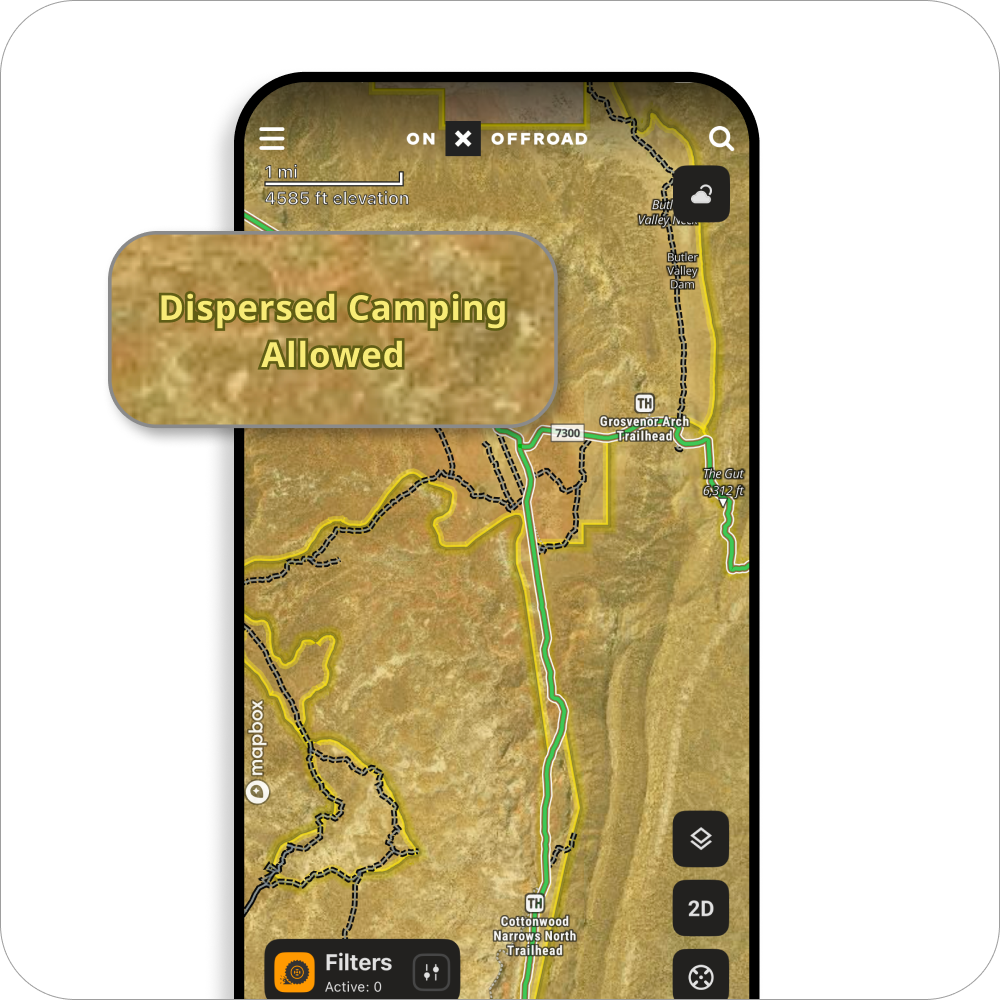
Look for ‘Dispersed Camping Allowed’
“Dispersed Camping Allowed” shows areas where off-grid camping is permitted on both BLM and National Forest land. Plus, see seasonal closure dates at a glance or tap for more detail.
Pro Tip: Toggle your maps to 3D to scope the terrain and find a great view. Then, drop a Waypoint, and share an incredible remote campsite with your group (or keep it all to yourself—that’s up to you).

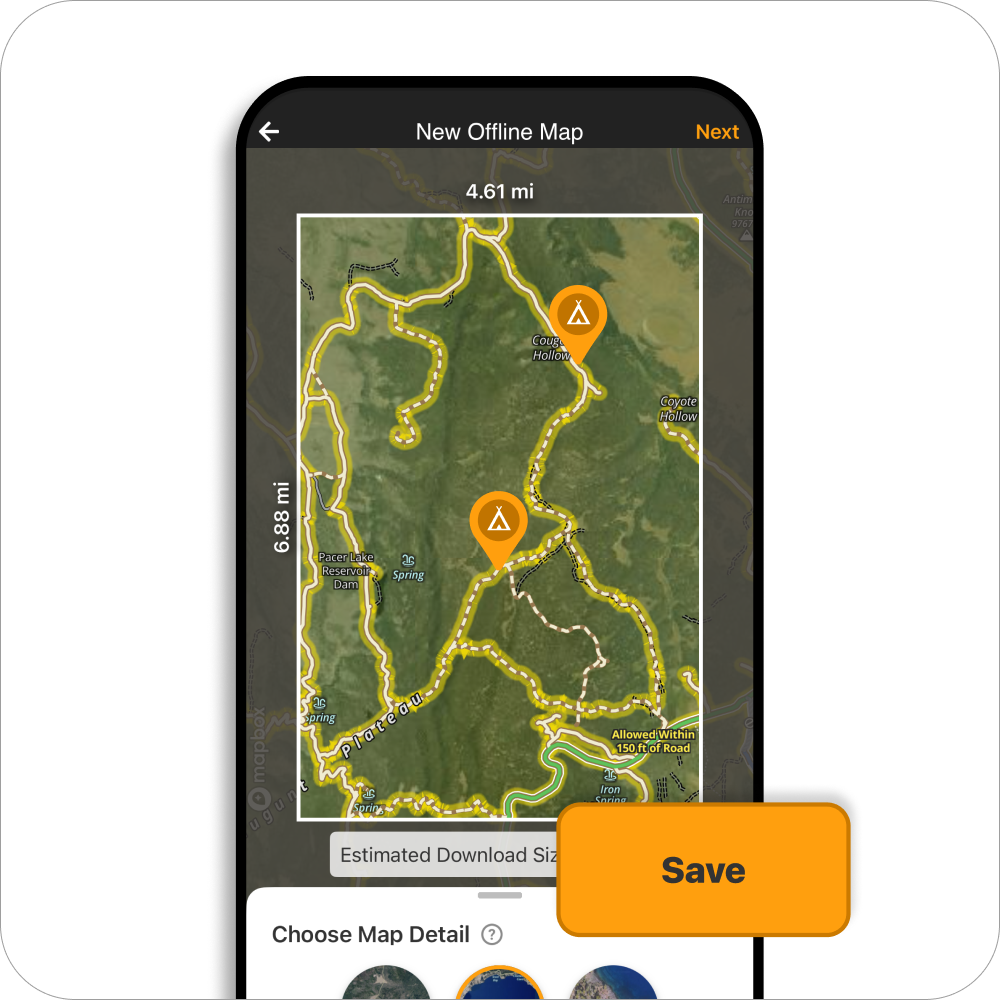
Download Offline Maps + Check for Cell Coverage
Save your maps before leaving cell service so you can navigate trails, locate campsites, and access land data offline.
Pro Tip: Activate the Cell Coverage Layer to see where you’ll have signal, or to make sure you’re fully unplugged.
Look for These Camping Map Details
BLM land and National Forests are both public lands, but they’re managed by different federal agencies and often have different camping rules. onX Offroad helps simplify those regulations by building them into the map with camping icons and color-coded zones.
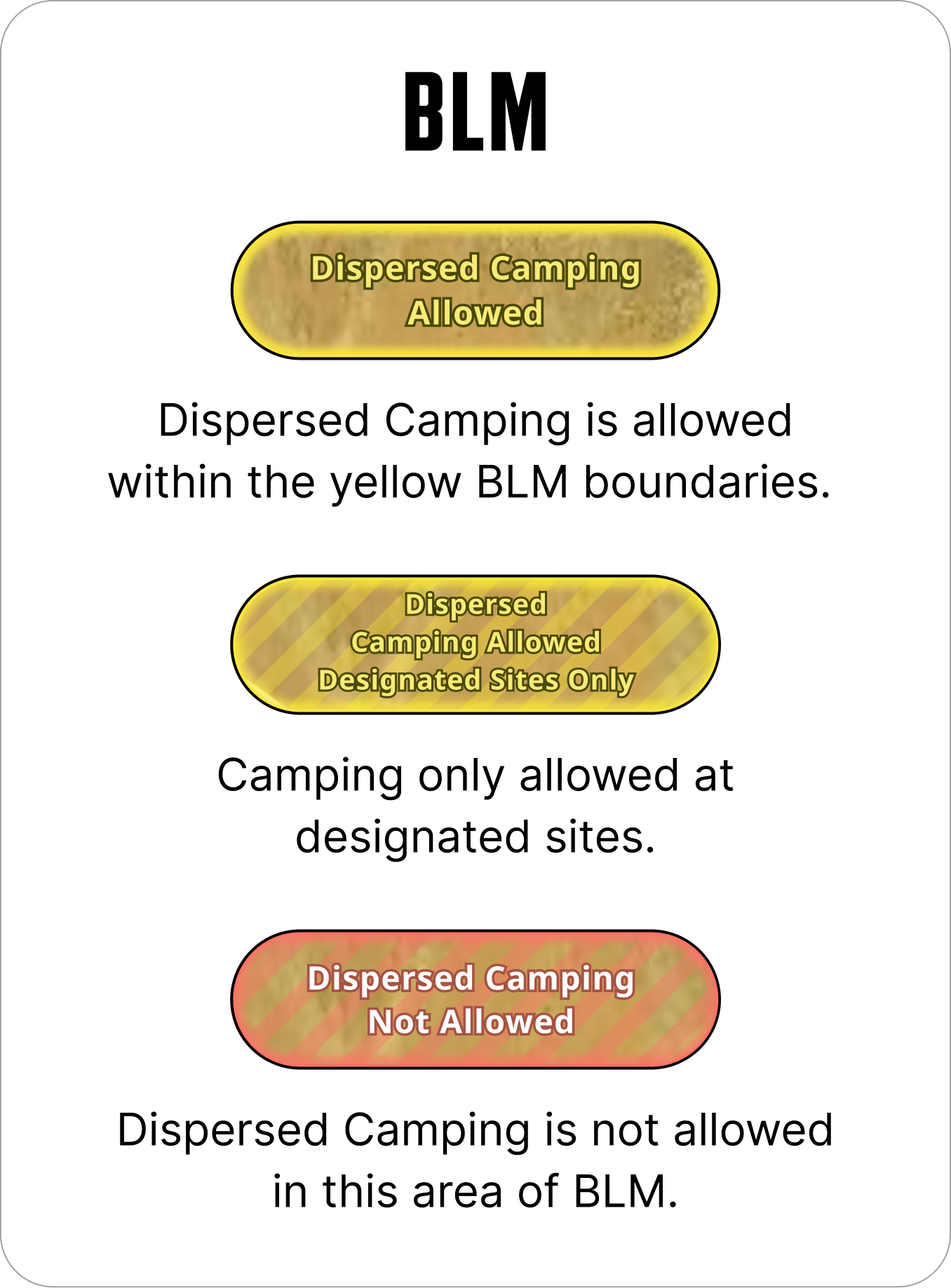
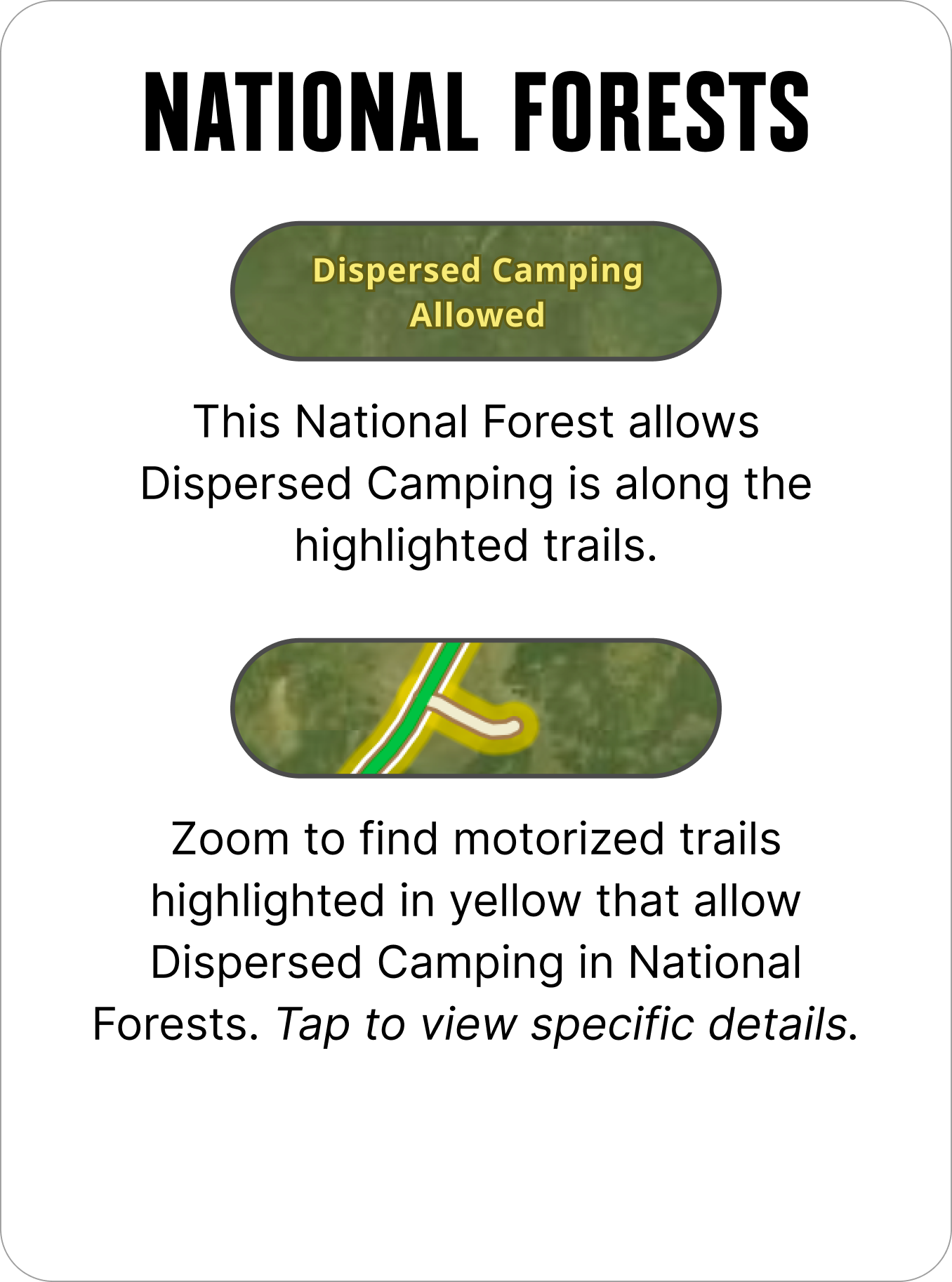
How to Use Dispersed Camping Maps
The only off-road app in the industry with BLM and USFS-verified dispersed camping data integrated right into the map. No more guessing, tracking down individual ranger stations, and deciphering confusing print maps. Our new layer makes it easy and intuitive to find your next off-grid campsite.
What is Dispersed Camping?
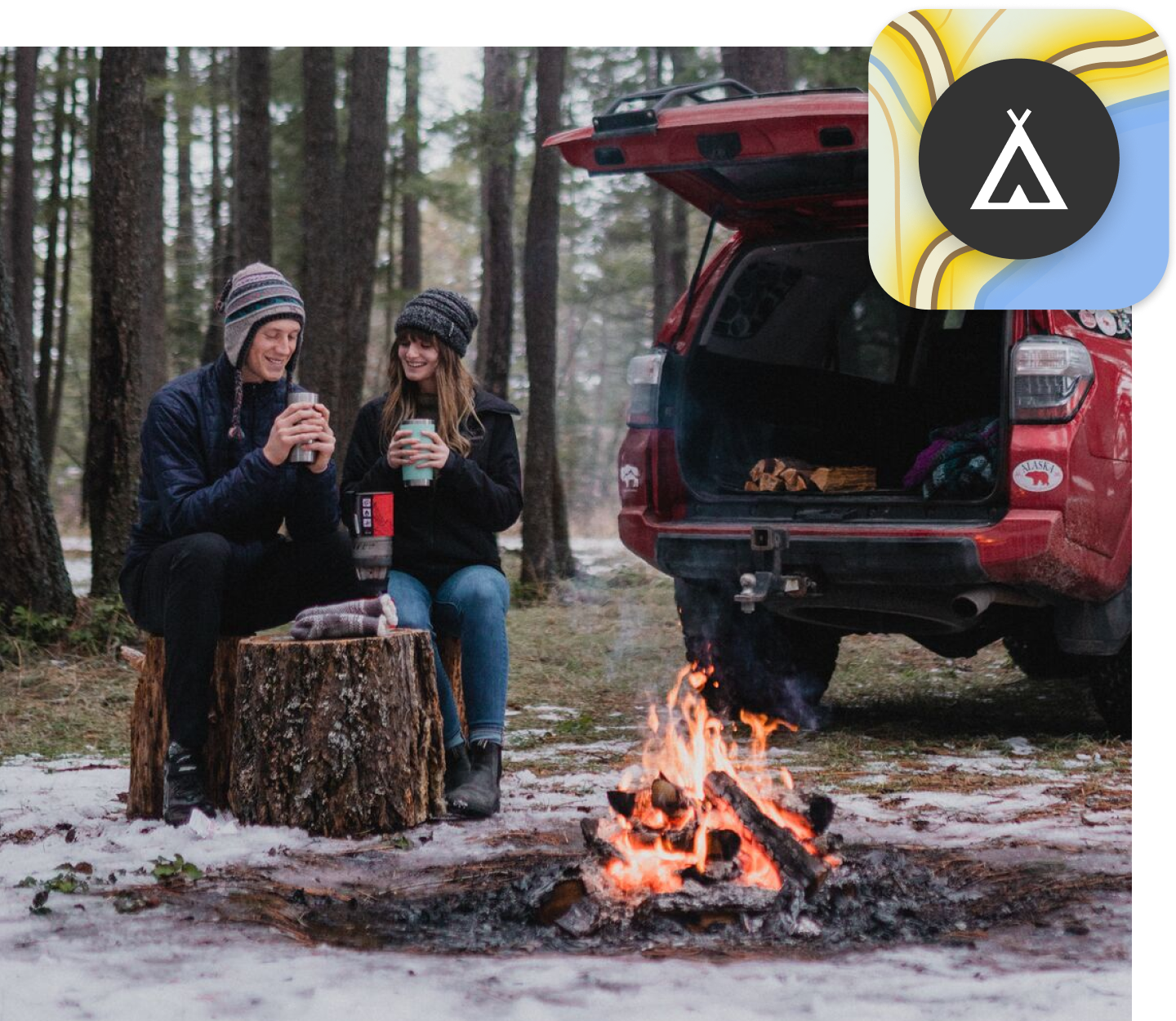
You made it this far, but maybe you’re still not sure what dispersed camping actually is. We get it. Why are there so many different names for it?!
Dispersed camping—aka boondocking, dry camping, remote camping, off-grid camping, etc.—is any camping outside of designated campgrounds or reserved sites, primarily on public land like National Forests or Bureau of Land Management (BLM) areas. Generally, this means no fees and no amenities, including restrooms, drinking water, and trash services, which is why it’s also referred to as primitive camping. It is on a first-found, first-camped basis, and requires campers to follow Leave No Trace principles.
Frequently Asked Questions
Dispersed camping is generally allowed on public land such as National Forests and portions of Bureau of Land Management (BLM) areas. Some states allow additional dispersed camping opportunities (with the correct licensing) on State Trust land, and, though less common, some National Parks have designated areas where dispersed camping is allowed.
Yes, dispersed camping is free in that there are no camping-specific reservation fees. Some parks may have entrance fees that help maintain, manage, and improve their facilities and services. Similarly, some parks require a recreational permit for OHV and motorized use areas. Be sure to double-check with the specific National Forest or BLM area you plan to camp in to ensure you can cover any necessary permits or fees, and abide by location-specific guidelines.
First, remember that dispersed camping means that there are no provided amenities offered like restrooms, fire rings, or trash service, so you must be capable of being self-contained when primitive camping. Here are some general guidelines you should follow:
- Stay Within the Limits: For most areas, dispersed camping is limited to a maximum of 14 days within a 28-day period.
- Leave No Trace: Always practice Leave-No-Trace principles, including packing out all trash and personal items, and minimizing your environmental impact.
- Abide by Regional Regulations: Follow the area’s current requirements and restrictions, including what distance from roads, water sources, and considerations for selecting a campsite; avoid disturbing the natural landscape and wildlife; and practice proper waste and fire management.
When you used to have to track down the specific ranger station for the specific area in a National Forest, and decipher where you can dispersed camp on BLM from a clunky website, PDF, or paper map, now you can use onX Offroad’s Dispersed Camping Layer to see highlighted motorized trails that allow dispersed camping in National Forests and color-coded designated and restricted camping zones on BLM land.
Rather than using publically sourced word-of-mouth resources, now you can avoid the spots where everyone crowds and instead distribute land use responsibly by finding your own space using BLM and USFS-verified data that’s integrated into the onX Offroad App.
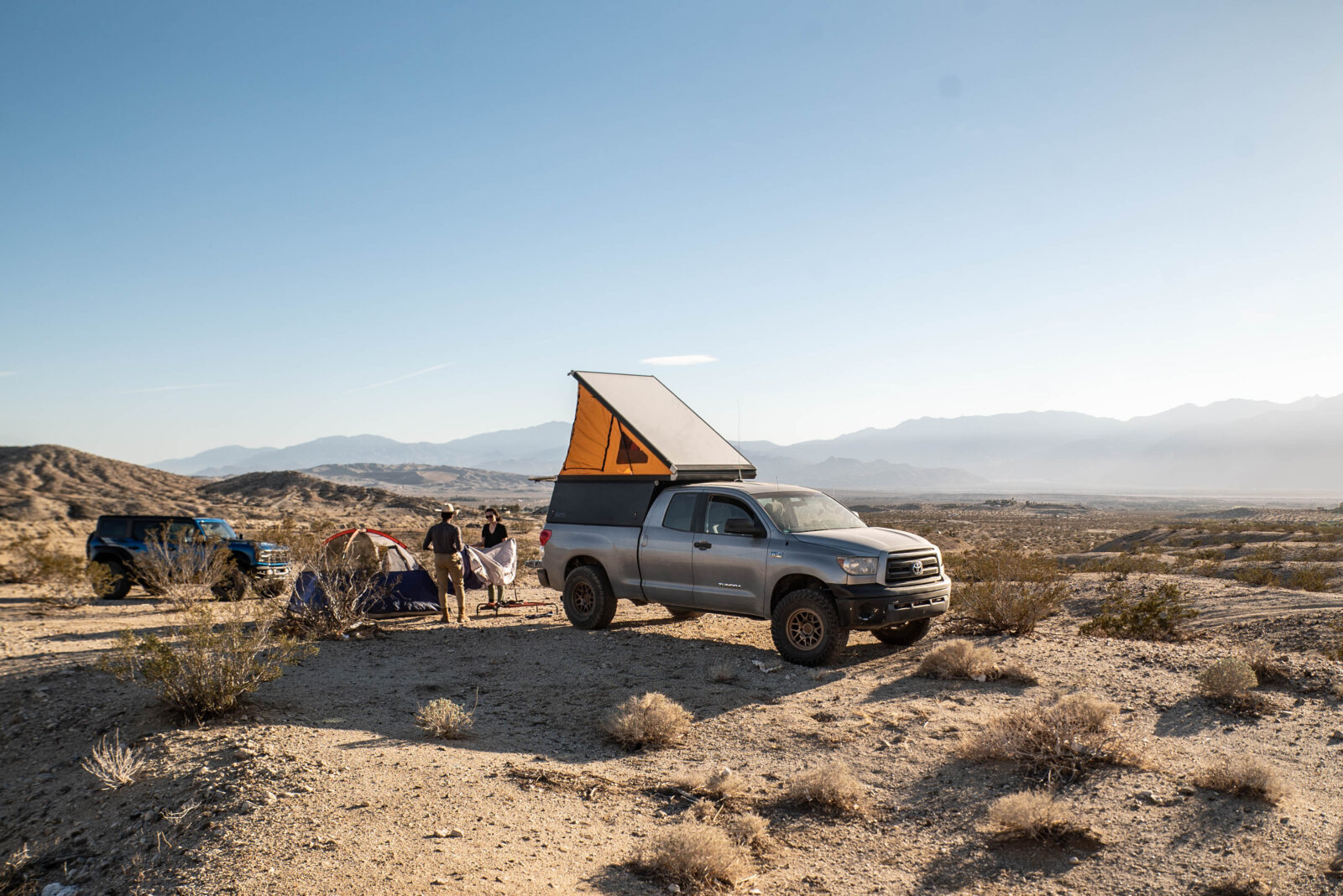
A Map Full of Possibilities
Try the Dispersed Camping Layer—onX Offroad Exclusive