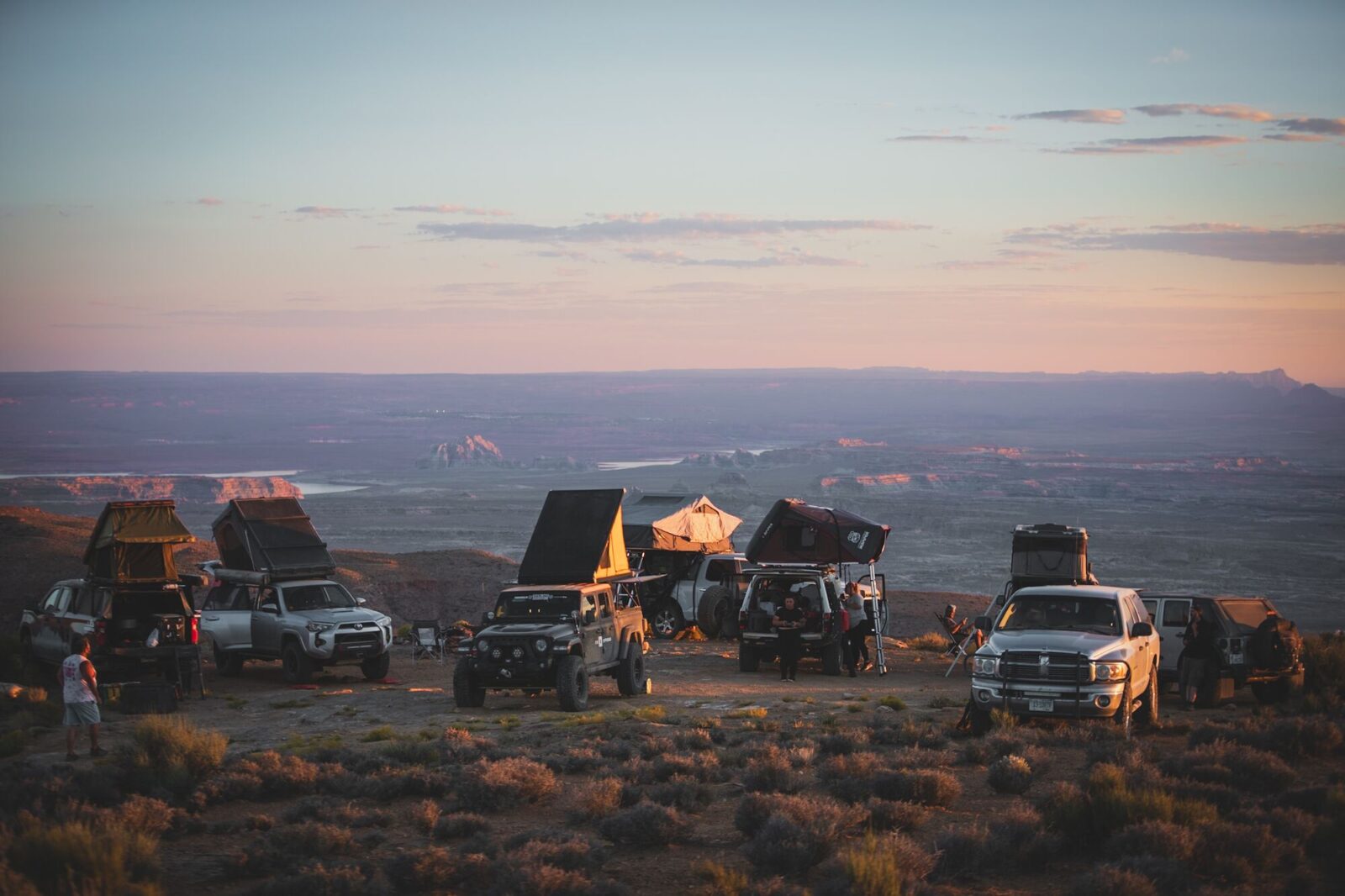
Dispersed Camping Maps: New onX Offroad Layer
Find legal dispersed camping near motorized trails on National Forest land with this exclusive new map layer.
A Map Full of Possibilities
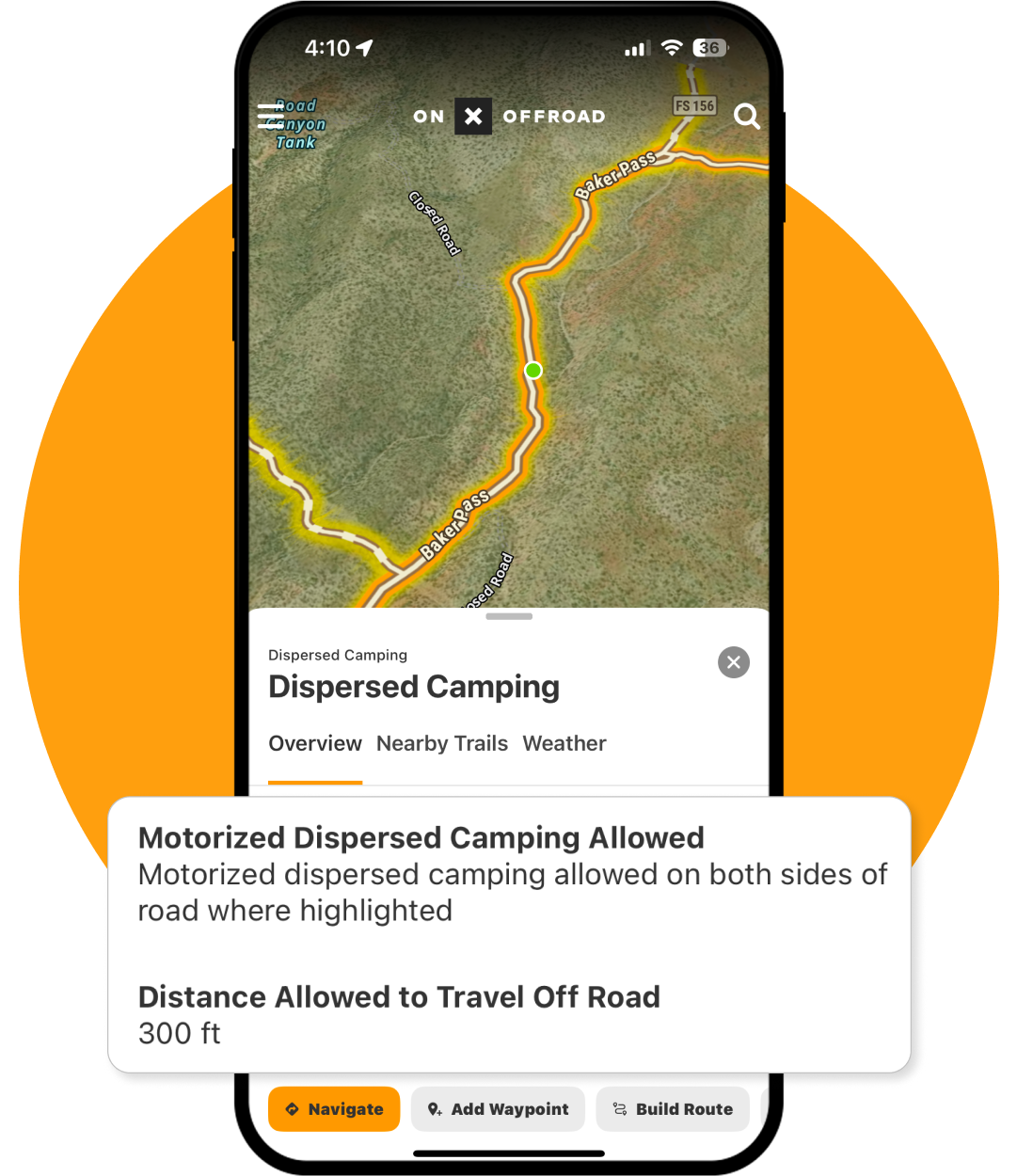
onX Offroad’s new Dispersed Camping Layer lets you locate dispersed camp sites on public land where primitive camping is permitted. Activate the map layer to highlight motorized trails with legal free camping in National Forests, and find your own space away from the crowds, the noise, and the reservations.
How to Use Dispersed Camping Maps
The only off-road app in the industry with USFS-verified dispersed camping data integrated right into the map. No more tracking down individual ranger stations and deciphering confusing print maps, our new layer makes it easy and intuitive to find your next off-grid campsite.
Find Where to Camp for Free:
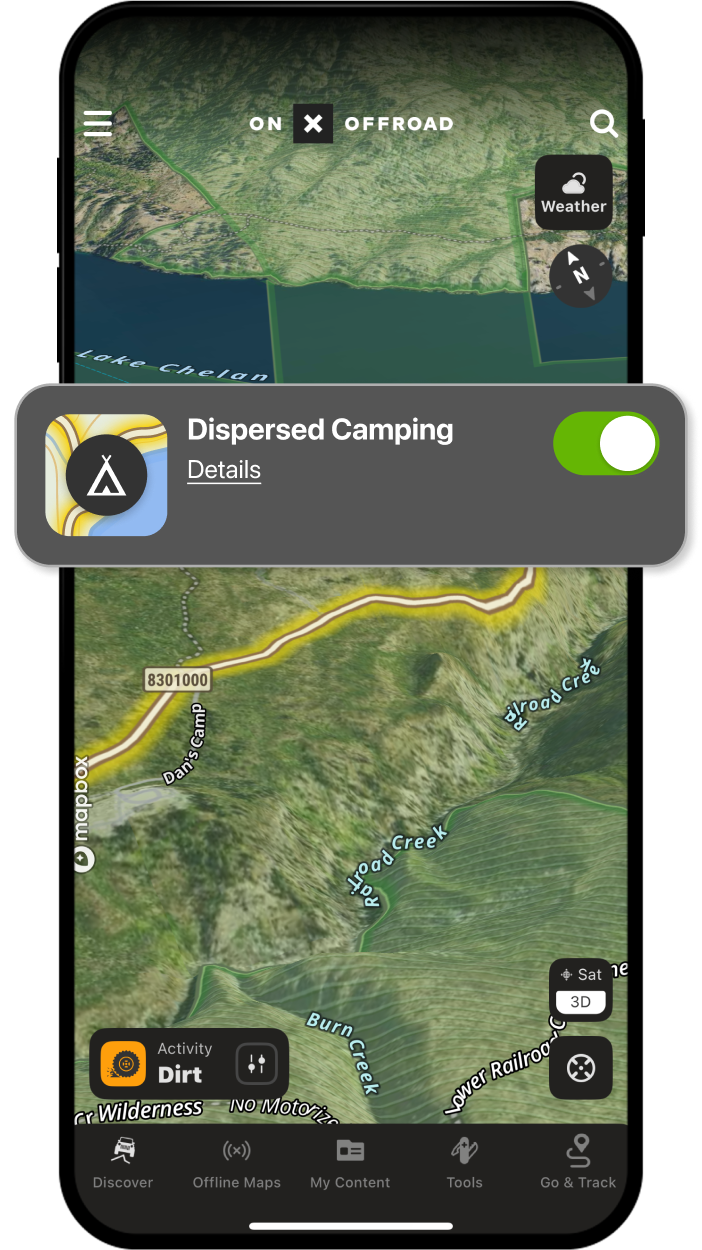
- Tap “Activity” on the bottom left of your map, scroll to map layers, and toggle on “Dispersed Camping” to activate.
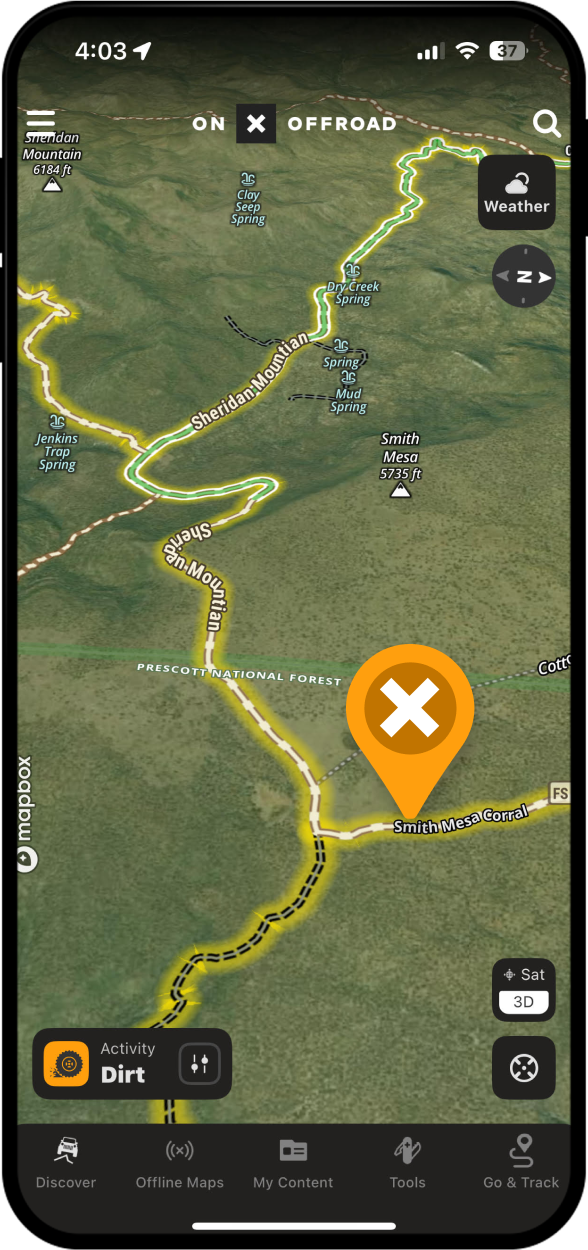
- Explore a National Forest and look for trails highlighted in yellow—this indicates that dispersed camping is allowed there.
- Tap any yellow trail to find location-specific details regarding where and how far off the trail camping is permitted, as well as any other guidelines for the area.
- Scope a spot in 3D to find a view, drop a Waypoint, and share an incredible remote campsite with your group (or keep it all to yourself, that’s up to you).
Pro Tips: Off-roaders should always do their due diligence to ensure they have any necessary permits and check for location-specific requirements and restrictions, including those regarding fire, avoiding wildlife or landscapes, and selecting a dispersed campsite.
Be sure to download Offline Maps of where you’re exploring to access full map + trail data, your trip content, and GPS navigation when you’re outside cell coverage.
What is Dispersed Camping?
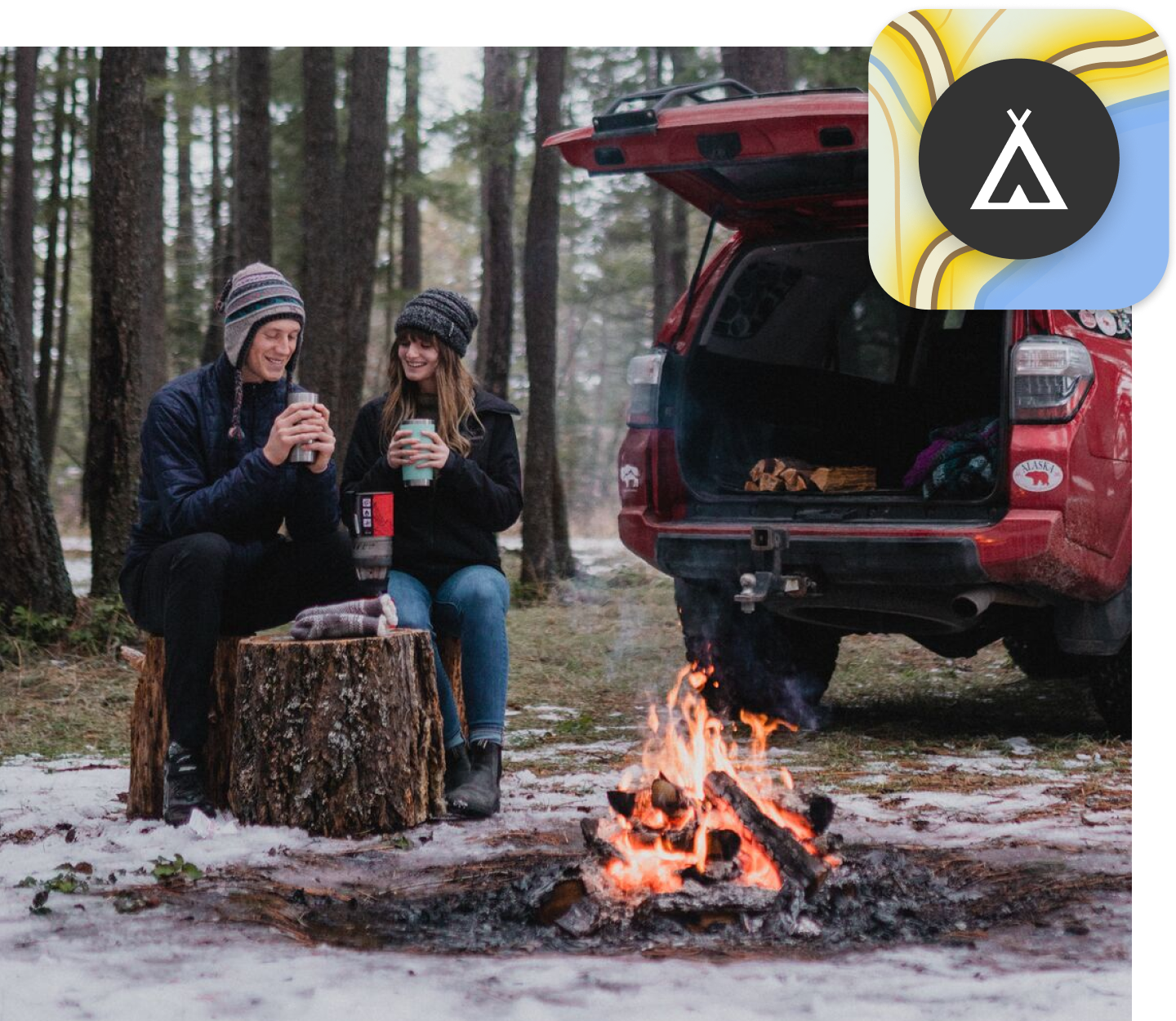
You made it this far, but maybe you’re still not sure what dispersed camping actually is. We get it. Why are there so many different names for it?!
Dispersed camping—aka boondocking, dry camping, remote camping, off-grid camping, etc.—is any camping outside of designated campgrounds or reserved sites, primarily on public land like National Forests or Bureau of Land Management (BLM) areas. Generally, this means no fees and no amenities including restrooms, drinking water, and trash services, which is why it’s also referred to as primitive camping. It is on a first-found, first-camped basis, and requires campers to follow Leave No Trace principles.
Frequently Asked Questions
Dispersed camping is any camping outside of designated campgrounds or reserved sites, primarily on public land like National Forests or Bureau of Land Management (BLM) areas. It goes by many names, including boondocking, dry camping, remote camping, and primitive camping.
Yes, dispersed camping has no camping-specific reservation fees, though some parks may charge entrance fees or require recreational permits for OHV and motorized use areas. Always check with the specific National Forest you plan to visit to confirm any necessary permits or fees.
Dispersed camping is generally allowed on public lands such as National Forests and BLM areas. Some states also permit dispersed camping on State Trust land with the correct licensing, and certain National Parks have designated dispersed camping areas as well.
Activate the Dispersed Camping Layer in the app by tapping “Activity,” scrolling to map layers, and toggling on “Dispersed Camping.” Trails highlighted in yellow indicate that dispersed camping is allowed, and tapping any yellow trail reveals location-specific details and guidelines.
onX Offroad is the only off-road app in the industry with USFS-verified dispersed camping data integrated directly into the map. This eliminates the need to track down individual ranger stations or decipher confusing print maps.
Yes, BLM areas appear shaded in tan with a BLM designation on the map. Tapping those areas reveals location-specific details for camping.
Yes, dispersed camping requires following Leave No Trace principles, staying within the 14-day limit per 28-day period in most areas, and abiding by regional regulations around distance from roads and water sources, fire management, and wildlife protection.
No, you can download Offline Maps ahead of your trip to access full map and trail data, trip content, and GPS navigation even when outside cell coverage.
A Map Full of Possibilities
Try the Dispersed Camping Layer—onX Offroad Exclusive