The Best Lures for Largemouth, Smallmouth, and More Success This Fall
Each year, fall brings anglers a change in weather, water temperatures, and bass behavior. Some lakes “turn over” with strata of different water temps mixing equally throughout the lake meaning bass can literally be anywhere from shallow to deep. Because of this, it can be a super time to fish, with lots of different locations producing fish—typically those teeming with baitfish or young-of-the-year bluegills and other forage.
A very general rule holds especially true in fall: Find the food, find the fish. With colder weather approaching, bass will go into hyper-feeding behavior, knowing their metabolism will slow down as winter arrives. And bass that were once spread out over a lake often school up again and hunt in roving packs. Yes, the action can get really good with multiple catches in the same areas.
TL;DR:
Fall bass fishing is one of the best times of year to catch both largemouth and smallmouth bass. As lakes turn over and water temperatures cool, bass go into heavy feeding mode, often schooling together and chasing baitfish, bluegill, and other forage. Success comes from finding the food first, then choosing lures that match the hatch, fit the water clarity, temperature, and depth. Top baits for fall bass include ChatterBaits, spinnerbaits, crankbaits, soft plastics, jerkbaits, and frogs. Use power baits to cover water quickly, then slow down with finesse rigs like Ned or Drop Shot once you locate fish. Whether you’re fishing shallow pads, mid-depth weedlines, or deeper schools with sonar, fall offers epic opportunities to land more bass.
So, what are the best baits to catch largemouth and smallmouth bass in fall? We’ll get into that!
Picking the Right Lure—Why the Right Lure Matters
In fall, as with the rest of the seasons, fishing with the right lure is the key to success—after determining a high probability, fish-holding location with onX Fish. Many factors influence choosing the right lure.
Match the Hatch
Find out what the bass are feeding on and mimic that. If they’re schooled up over deep water and busting shad, use a topwater that resembles a wounded minnow. If they’re eating migrating frogs in shallow pads, throw a soft-bodied topwater at them. If they’re in mid-depths (or deeper) chasing schools of baitfish around, consider throwing a soft plastic minnow—fishing it via a moping, Damiki, or strolling rig—or a crankbait. If they’re chasing young-of-the-year or larger bluegills around areas of still-green weeds, break out a ChatterBait (aka vibrating jig) or a swim jig. These are all common fall scenarios.
Water Clarity
From the turbid waters of the South and many rivers, to gin-clear waters in the north, water clarity is something to keep in mind whenever you’re fishing bass. Even on the same body of water you might have vastly different levels of water clarity. Typically, largemouth bass will thrive whatever the situation, and smallmouth are often pulled from dark river systems and iron-stained waters. But for the most part, bass like some visibility to visually locate their food. That also goes for sunlight penetration and areas of shade. There are many different schools on matching your lure color to the water clarity. For example, many anglers believe “bright colors on bright days, dark colors on dark days”. That can also hold true with the water. Black and blue jig or worm combinations often excel in muddy waters when common sense would tell you that chartreuses or oranges might be a better pick. The main thing is to experiment: Start with natural forage-matching colors or patterns and deviate from that. Also remember that black baits cast a pronounced silhouette in the water, resemble forage like bullheads and salamanders, and are often overlooked. If the water is stained, another good idea is to start with a search bait that vibrates like a spinnerbait or ChatterBait.
Water Temperature
No matter what lure you choose, in colder waters employ a slower retrieve and in warmer waters you can speed up your retrieve. Largemouth bass can be caught in all temperatures of water (including through the ice in winter) but they prefer water temperatures in the 60s and 70s. Smallmouth bass are a little more tolerant of cold water and will feed more often in cold water, but find their most tolerable range between 65 and 75 degrees.
Water Depth
As stated, fall bass can be found anywhere from shallow to deep. If equipped, use your electronics to find fish and rely on your onX Fish App to find drop offs, points, sunken islands, in-flowing water, etc. With water temperature and oxygen often stabilized throughout all depths of the lake during autumn, you can move shallow again now that fish aren’t spending time in deeper, colder, more oxygenated water during the heat of summer. Docks, lifts, platforms, as well as still-green inside weedlines and lily pad fields often yield fall bass. Of course, that’s not to say there won’t be fish out in “no man’s land” over deeper water chasing bait schools. That’s where FF Sonar comes in if you have that technology on your boat, with anglers making precise casts to marks on their screen, typically with soft plastic minnow imitators.
Find More Fall Bass with onX Fish
With the onX Fish App, you’ll unlock detailed maps of lakes near you, mark proven hotspots, and plan your day with confidence.
Best Bass Lures
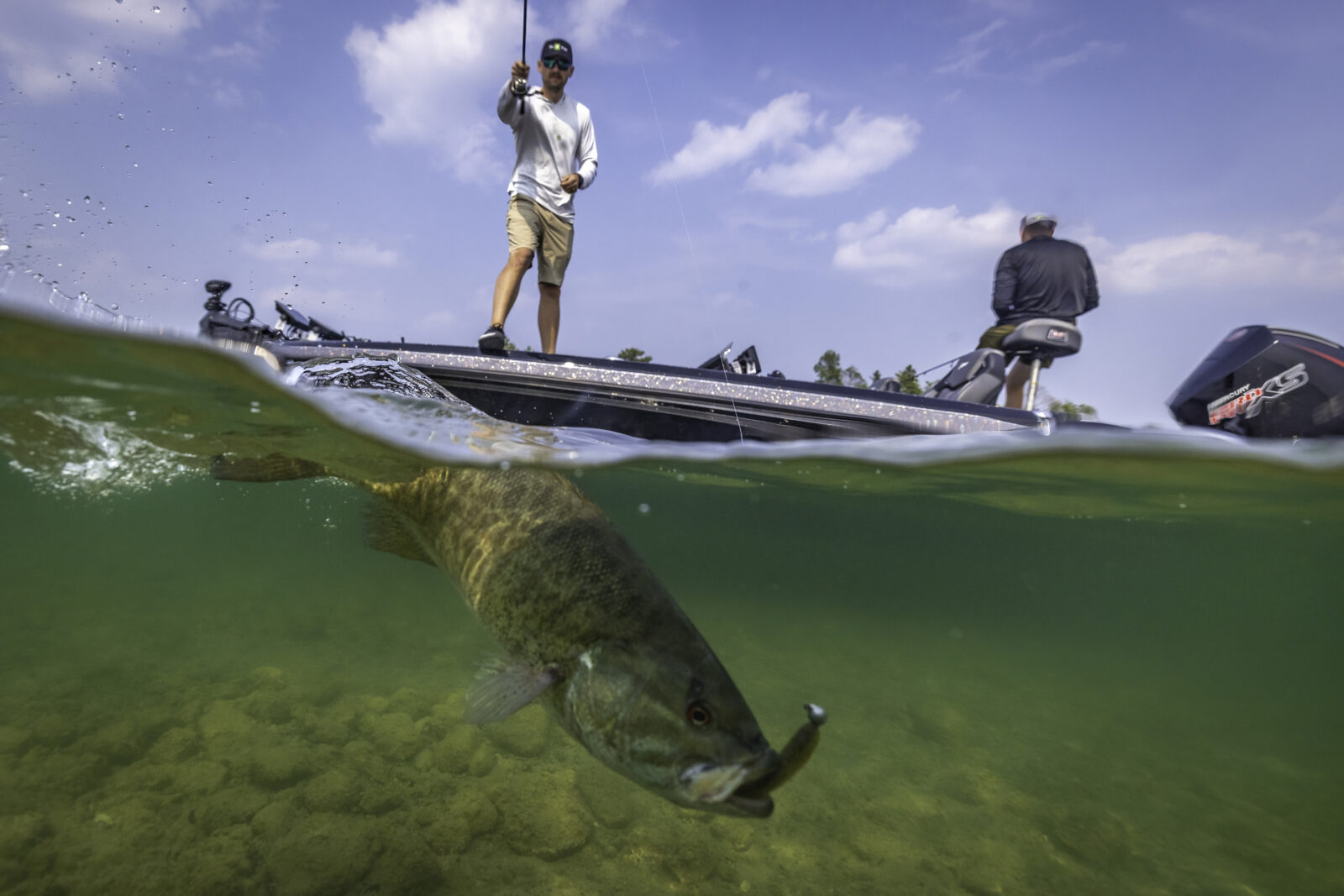
There are more baits in existence than you could ever think of casting in a lifetime. But in terms of general categories, an aspiring angler should have one or two of each within the following categories besides other essentials mentioned in our fishing gear guide:
- Buzzbaits
- Bladed Jigs (ChatterBaits, Slobber Knockers, etc.)
- Crankbaits (shallow-, mid-, and deep-diving models)
- Jerkbaits (hard bait variety)
- Jigs (grass, swim, flipping, and football head)
- Soft plastics (craws, creatures, paddletail minnows, Fluke-style minnows, Ned-style baits)
- Spinnerbaits (Colorado-, Indiana-, or Willowleaf-bladed)
- Topwaters (hardbait Zara Spook-style baits, prop baits, poppers, etc.)
- Worms (Texas-, Carolina-, Wacky-, Damiki-rigged or on a jig head)
Best Largemouth Bass Lures
The best largemouth and smallmouth lures come down to two basic categories: power and finesse. Power baits allow you to cover wide swaths of water fast looking for reaction bites. Finesse baits like Ned rigged or Drop Shot rigged soft plastics encourage the angler to work slow and draw fish response based on subtlety.
That said, I always take three rods fall bass fishing. My first rod is rigged with a ChatterBait to cover water and find fish. My second rod is rigged with a Wacky Worm to dial in on spots where I get bit and think there may be more fish. And lastly, I carry a frog rod for working near-shore areas and pads. If I know there will be bass out deeper chasing bait, I will also have a spinning rod with Smeltinator minnow profile jig head and Keitech minnow body for dialing in deeper with FF Sonar.
Best Smallmouth Bass Lures
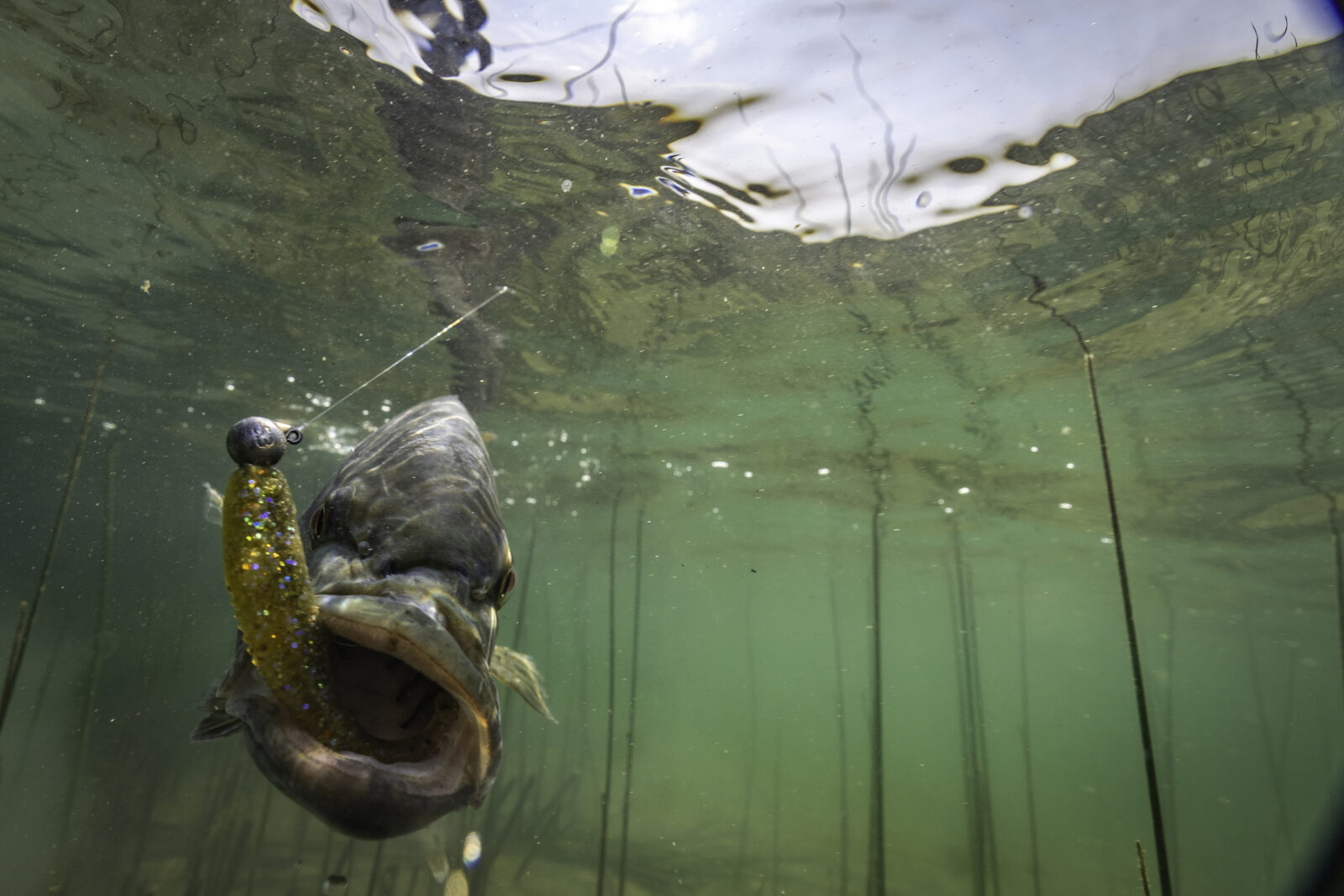
When it comes to fall smallmouth bass, I like to have a jerkbait rod, Ned Rig Rod, Drop Shot rig, and soft plastic minnow on Smeltinator head all rigged and at the ready. While you can physically dial in on smallmouths by looking for rocky bottoms and bottom transitions that hold bait, as well as reefs, points, and areas of current, fall smallmouths also roam deeper open water in search of minnows. FF Sonar is definitely your friend for finding and catching fall smallmouth bass, but if you don’t have it, no worries, your onX Fish App will give you fishery details and it’s much easier to look for rocky areas than it was in the old days of using paper maps.
Again, speaking to power vs. finesse techniques, I will start fishing any area with a hard jerkbait with a Megabass 110, working the bait quickly to cover water and find fish. You can do the same thing with a paddletail soft plastic minnow. Once I catch a fish, I try to determine if there are more and will set a Waypoint and work the area with a Ned Rig, Drop Shot, or mope a minnow with FF Sonar and fish to specific marks I see on my screen.
Final Thoughts
Fall bass fishing can be epic. Our advice? Use the power of onX Fish to find lakes with high population density and trophy potential, mark promising Waypoints before you even get there, and start by covering water with a power fishing technique until you stumble into a bite or two. Then slow down, work areas thoroughly, and see what happens. With both largemouth and smallmouth feeding heavily in fall, you might just catch a lot of fish. Fall isn’t all hunting and football, it offers some of the best fishing of the entire year.
In fall, bass can be anywhere from shallow lily pads and weedlines to deep open water. Look for areas holding baitfish, rocky points, drop-offs, and still-green vegetation. Tools like the onX Fish App can help you find high-potential lakes and mark productive spots before you even hit the water.
For largemouth bass, versatile fall lures include ChatterBaits, spinnerbaits, frogs, Wacky-rigged worms, and crankbaits. Start with power baits to locate fish quickly, then switch to finesse lures like soft plastics to maximize bites in a productive area.
Smallmouth bass respond well to jerkbaits, Ned Rigs, Drop Shots, and soft plastic minnows on jig heads. Look for rocky bottoms, reefs, and points, or use forward-facing sonar to target roaming schools in deeper water.
Clear water often calls for natural colors and subtle presentations, while stained or muddy water favors vibrating lures (like spinnerbaits and ChatterBaits) and darker colors such as black and blue. Always experiment to see what triggers the most bites on your specific lake.
Both. After summer heat breaks, oxygen levels stabilize across the lake, so bass roam shallow docks, weedlines, and pads as well as deep water chasing baitfish. Electronics and mapping apps are key to covering both zones efficiently.