Trail Overview
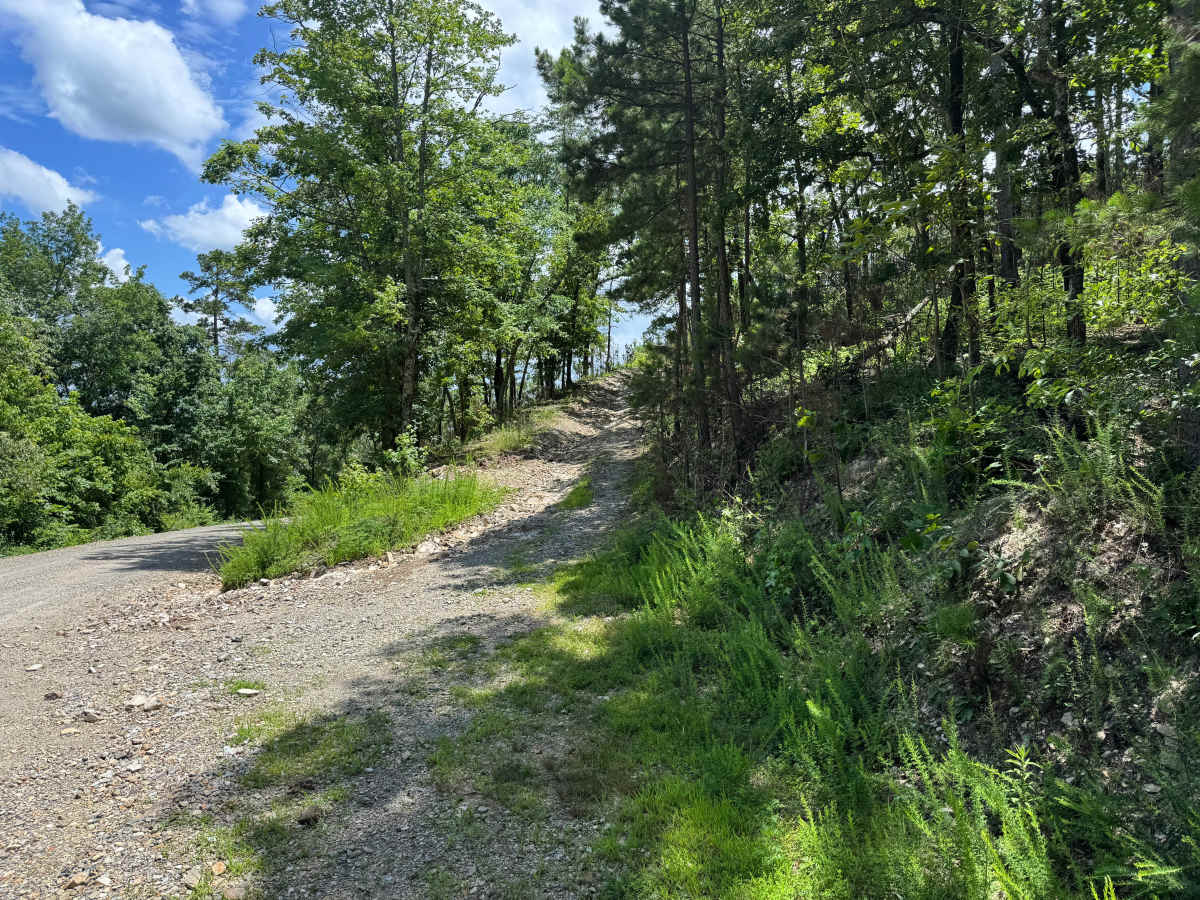
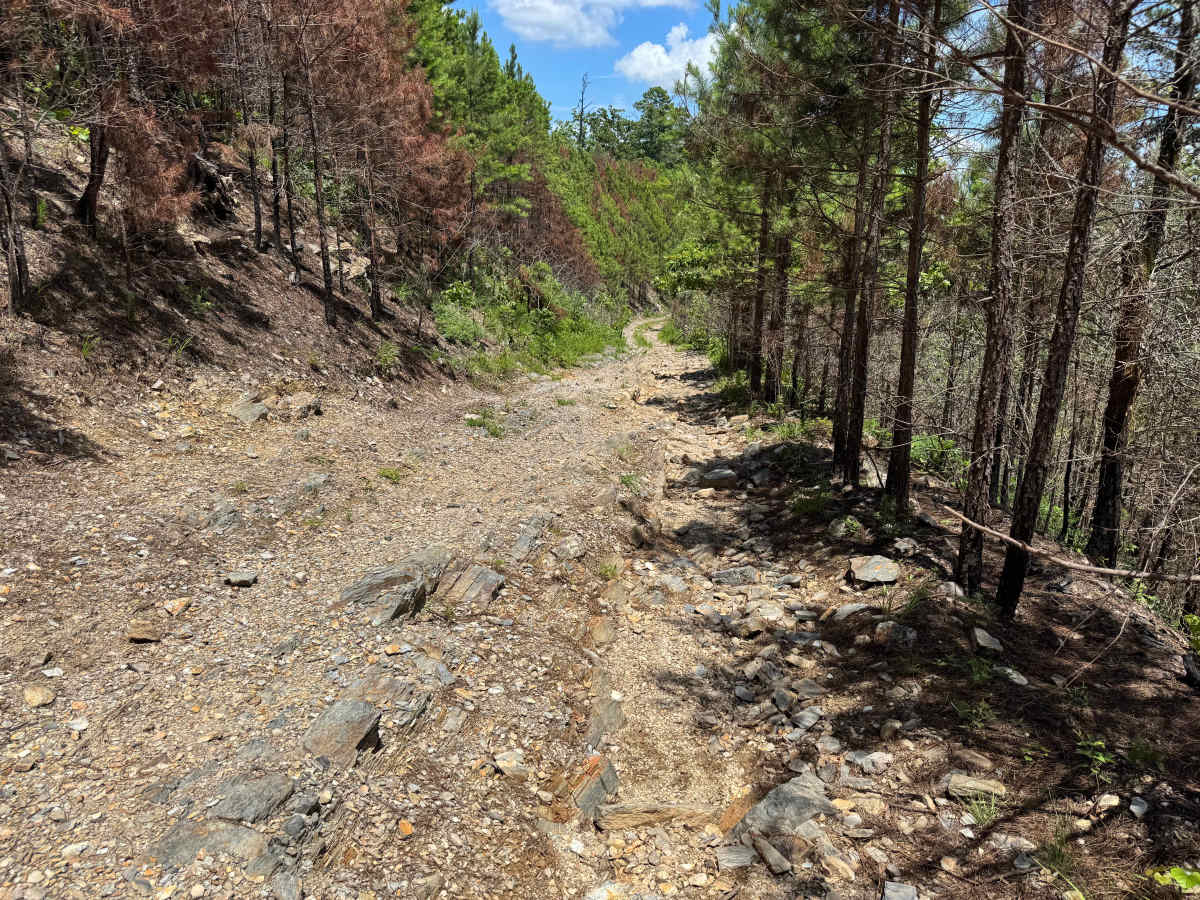
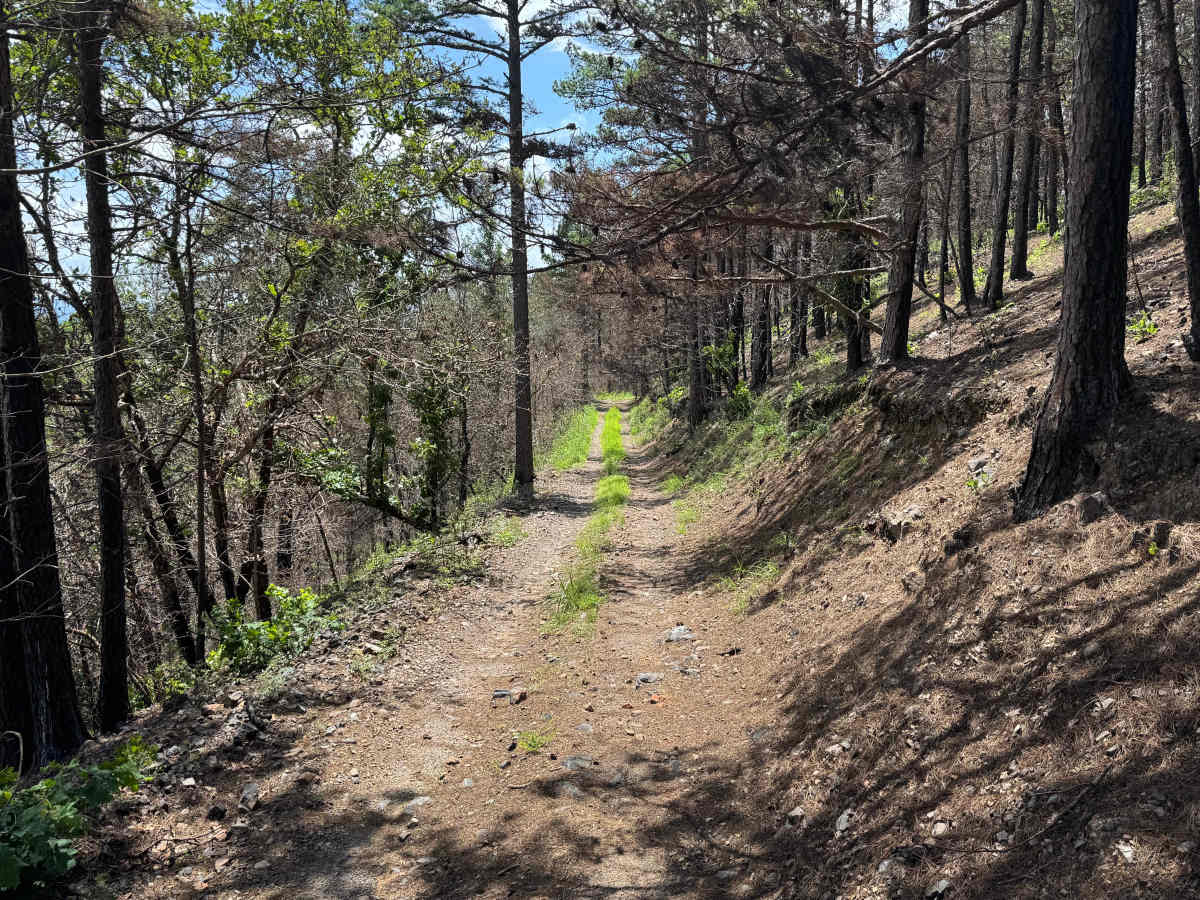
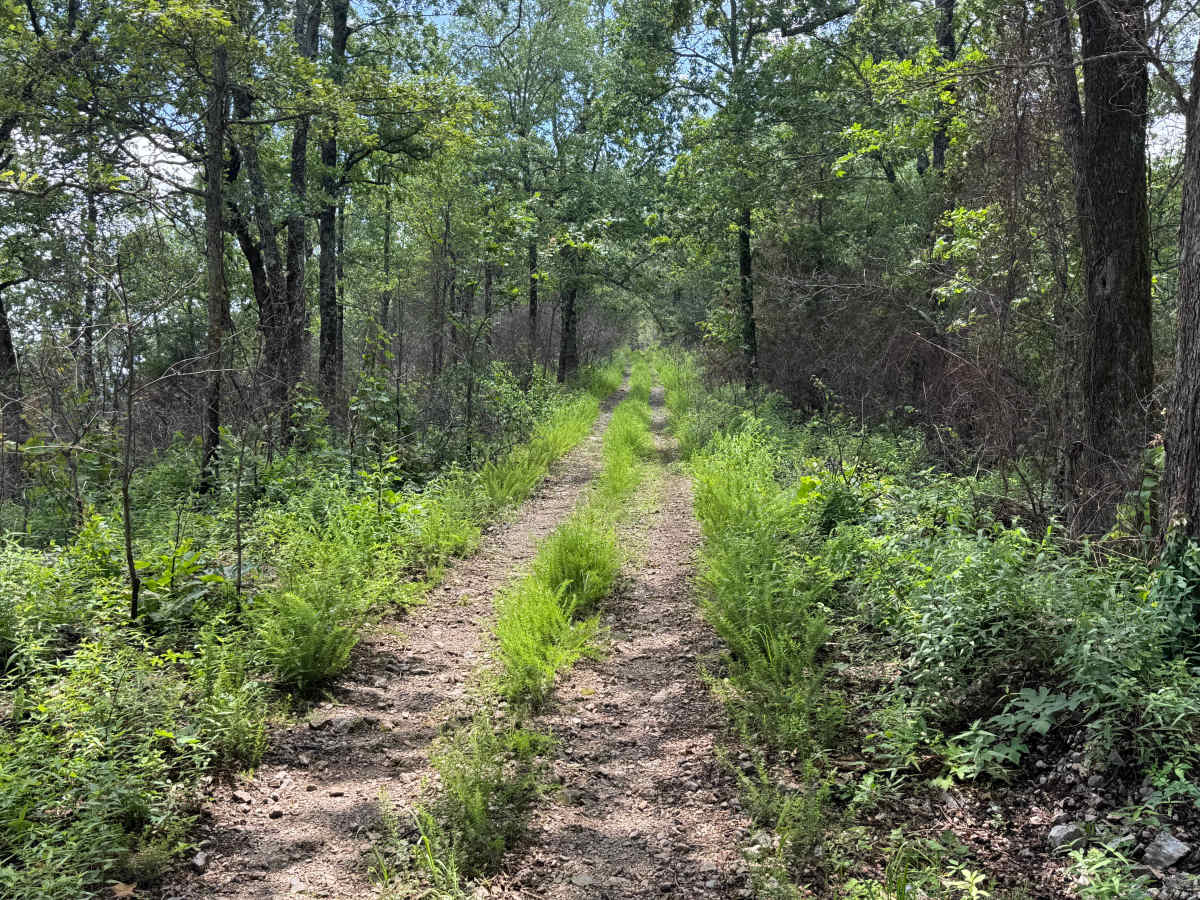
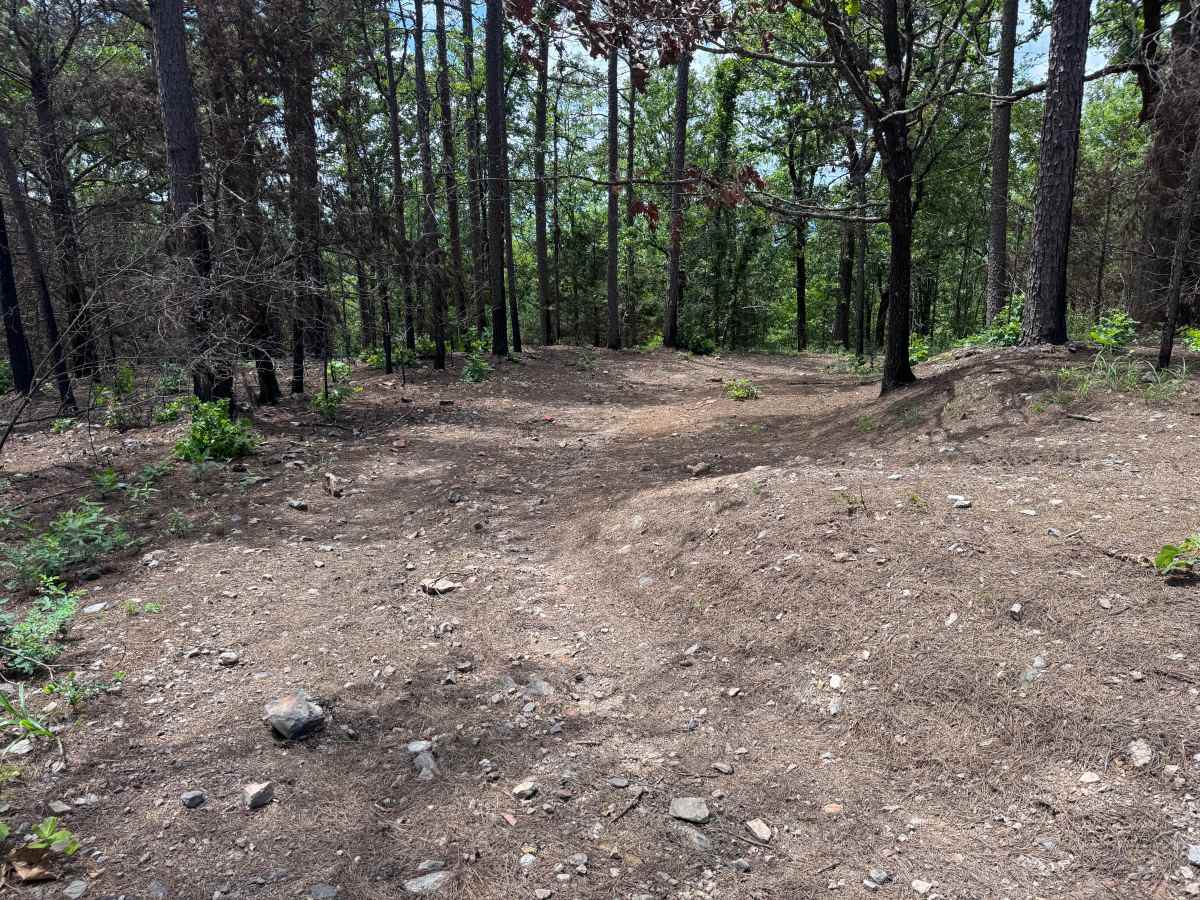
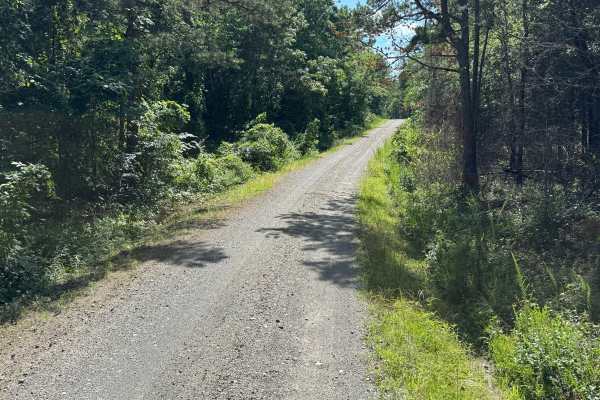
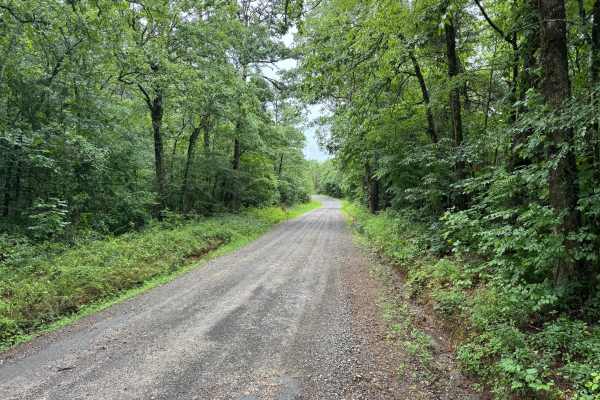
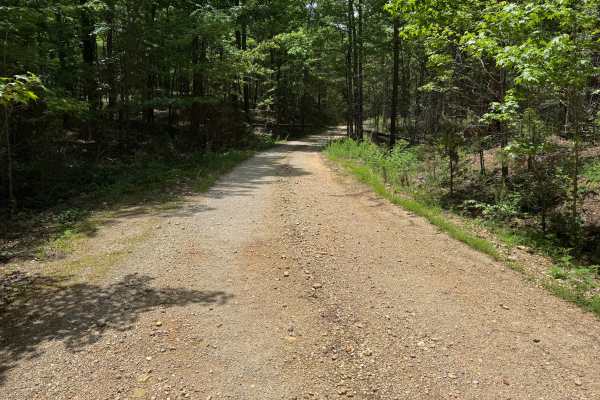
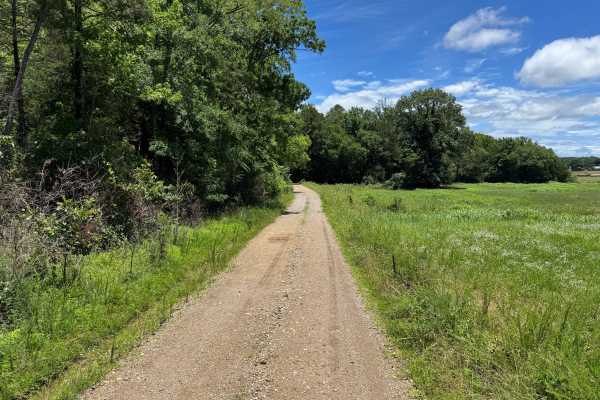
This narrow mountain trail climbs through a remote section of the Ouachita National Forest, gaining approximately 569 feet in elevation as it winds along the side of a forested ridgeline. The route begins on a maintained gravel road before transitioning to a one-vehicle-wide trail consisting of native dirt, loose rock, and exposed shale. Several sections traverse the mountainside with mild off-camber conditions and limited opportunities to pass oncoming traffic. Vegetation grows close to the trail in many areas, making pinstriping and minor paint scratches likely. Portions of the route pass through areas showing evidence of past wildfire or forest management activity, creating occasional views through the surrounding timber. The trail ultimately reaches a small clearing containing several concrete foundations believed to be associated with a former fire lookout site. This route is an out-and-back trail, requiring travelers to turn around at the clearing and return via the same route. While not particularly difficult, the narrow trail, sidehill exposure, and rocky surface make it best suited for high-clearance vehicles.
Difficulty
This route contains no major ledges, deep ruts, water crossings, or technical obstacles. Difficulty comes primarily from the narrow one-lane trail, vegetation encroachment, off-camber sections, and loose, rocky surface. High-clearance 4x4 is recommended, although experienced drivers in stock vehicles should have little difficulty in dry conditions.
History
The Ouachita National Forest was established in 1907 and is recognized as the oldest national forest in the southern United States. Many roads found throughout the forest today originated as logging, timber management, fire access, or resource extraction routes before becoming part of the modern Forest Service road network. Forest management remains an important part of the landscape, and travelers may encounter evidence of prescribed burns, timber thinning, and habitat restoration efforts. The Ouachita Mountains themselves are among the oldest mountain ranges in North America and are notable for their unique east-west orientation.