Trail Overview
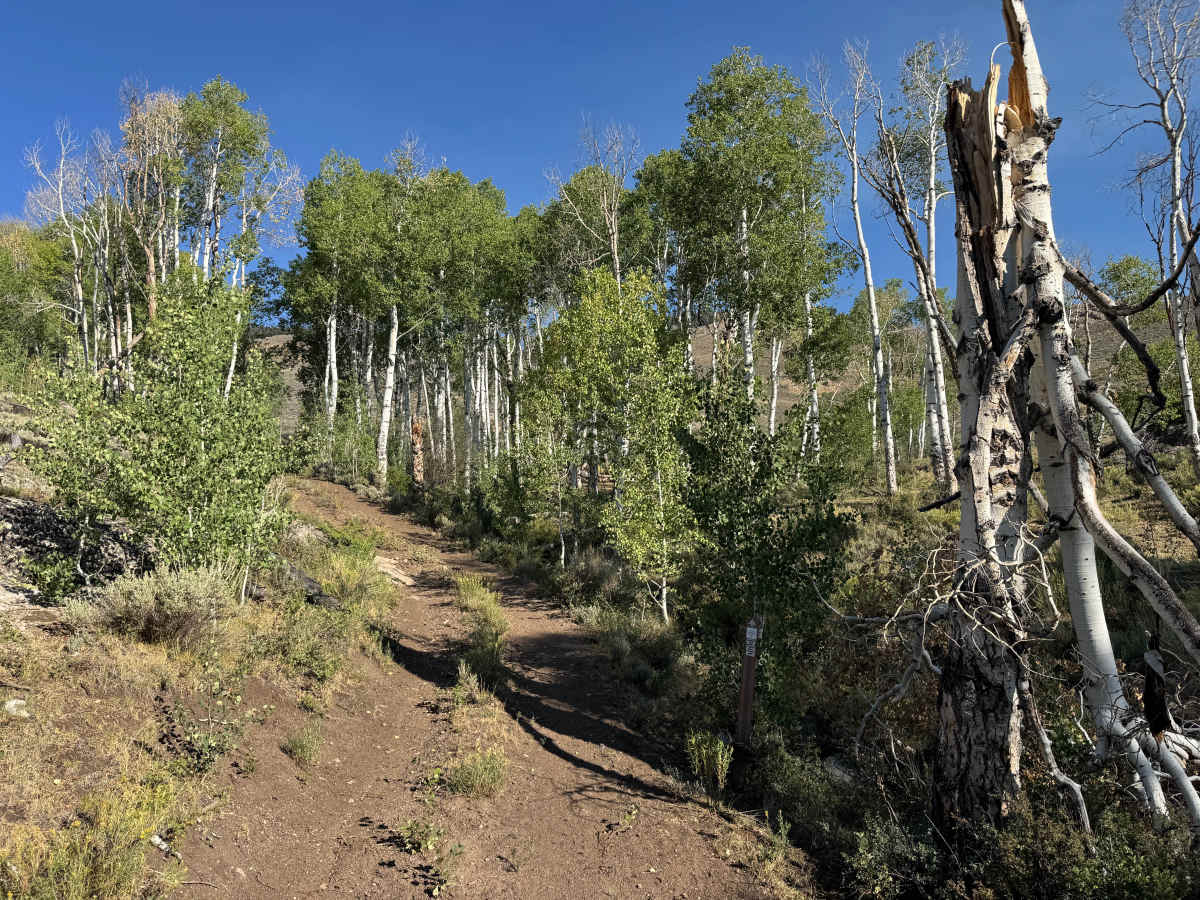
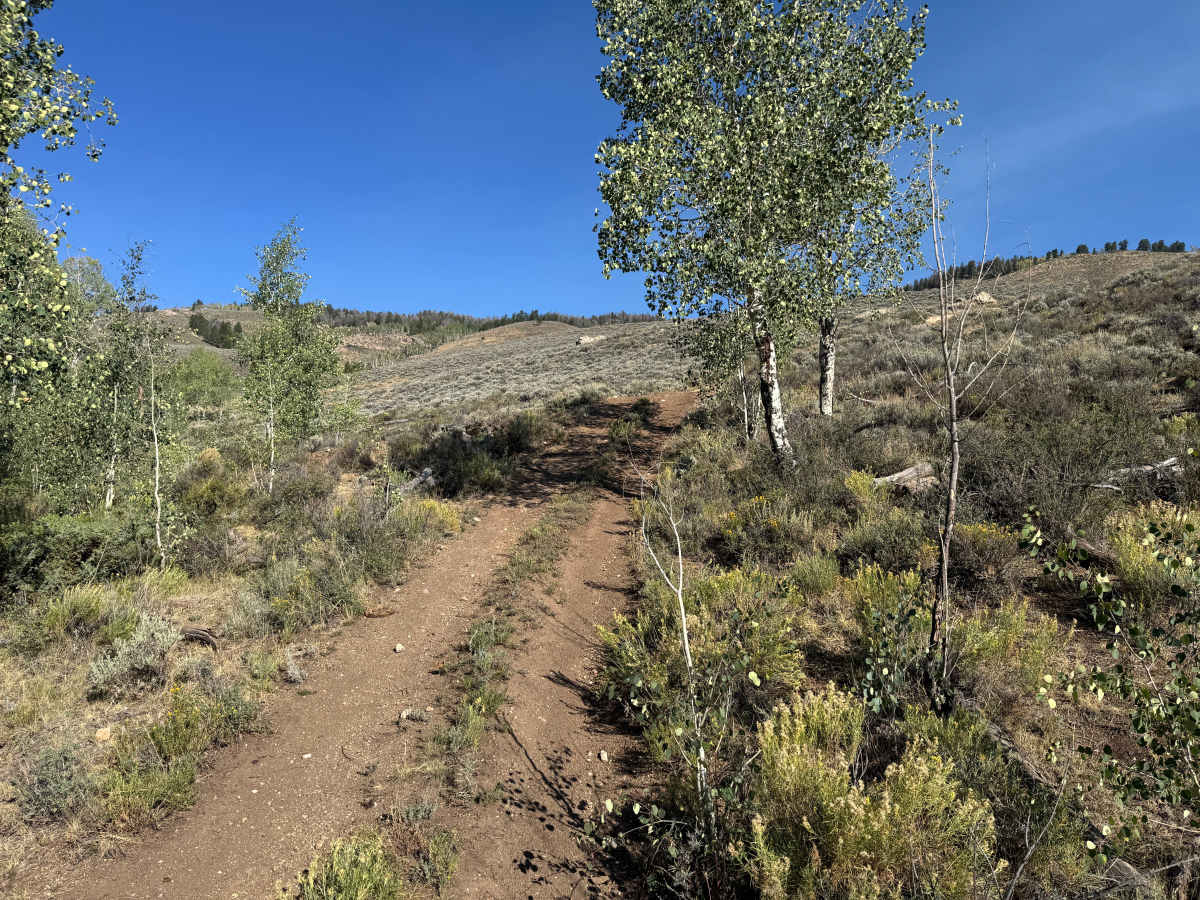
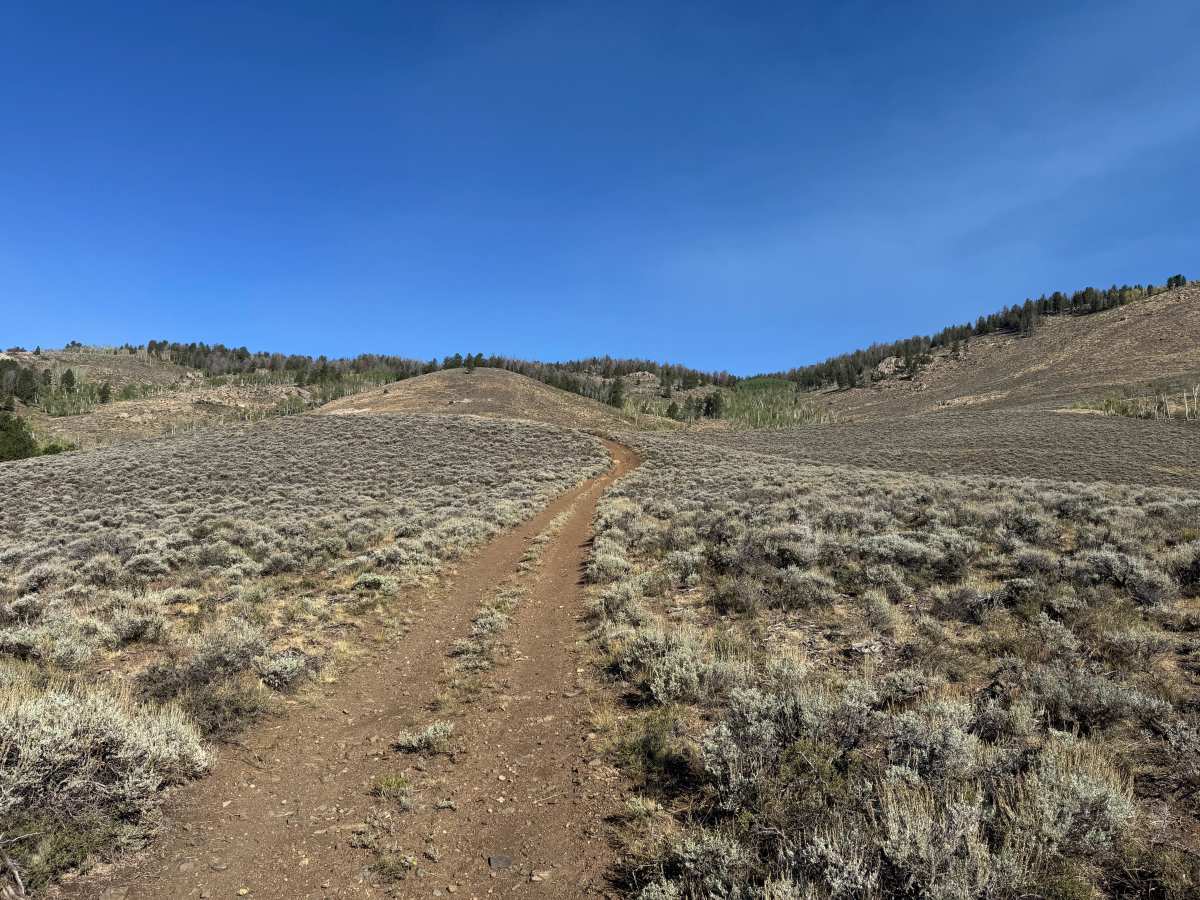
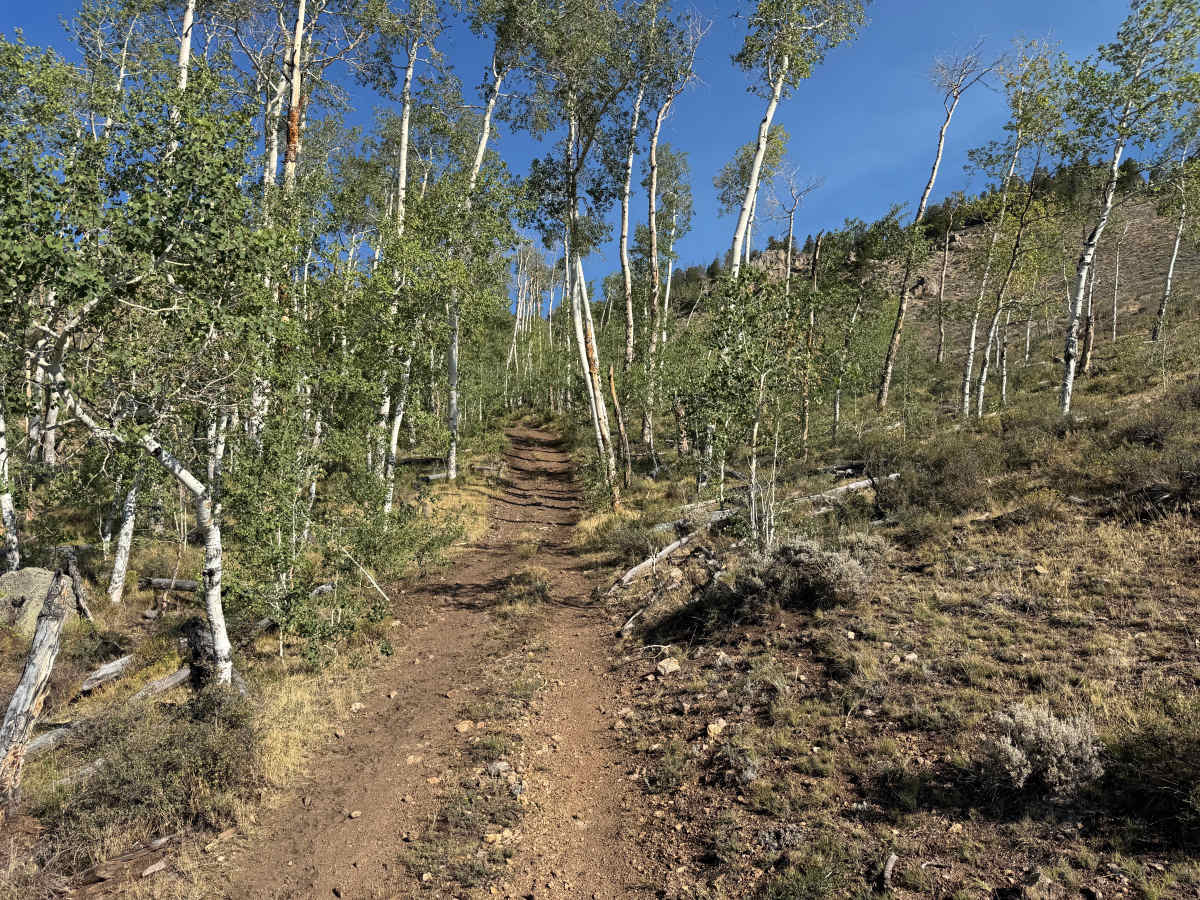
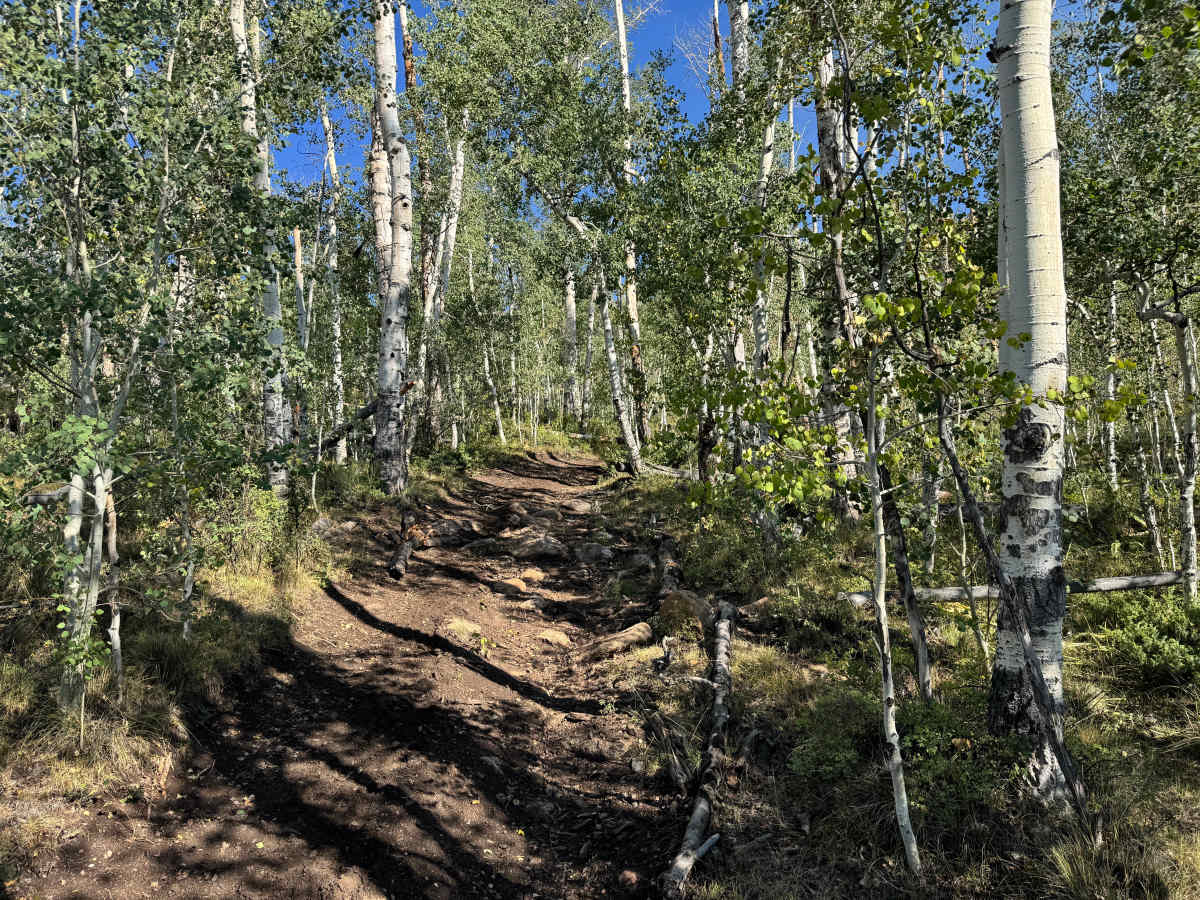
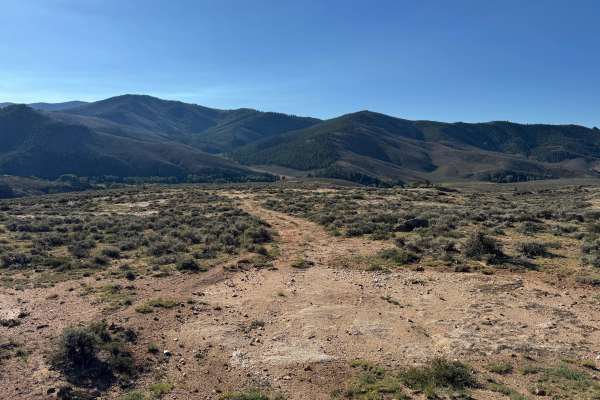
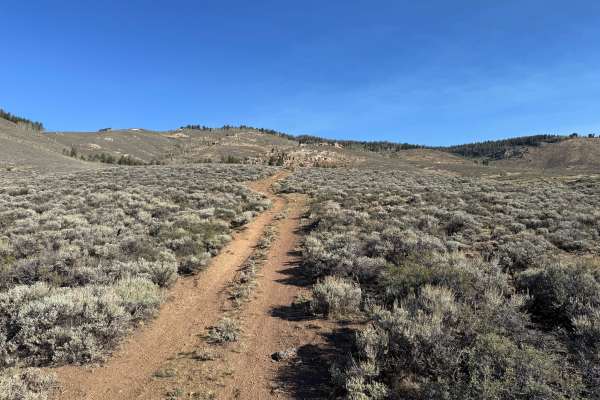
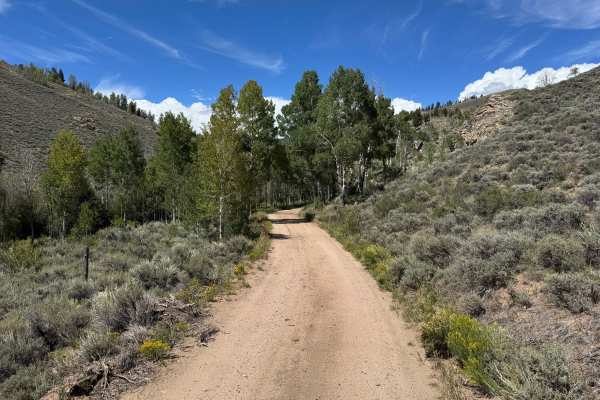
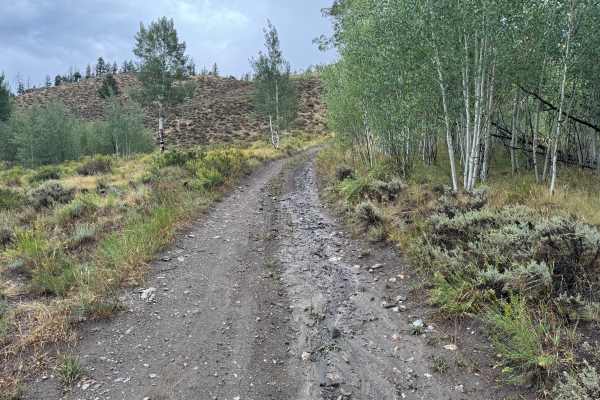
This narrow, one-vehicle-wide route travels through a mix of dense aspen groves and open sagebrush-covered hillsides, with very few opportunities to pull over or allow oncoming vehicles to pass. The trail surface consists primarily of packed dirt with scattered loose gravel and embedded rocks, becoming rougher in the wooded sections where larger rocks, exposed roots, and erosion create an increasingly uneven surface. Several steep climbs wind through the aspens before the route opens into broad mountain meadows and rolling hills covered in sagebrush and low vegetation. Fallen and dead trees are also scattered throughout the forested sections. A high-clearance 4x4 is recommended for this route, with four-wheel-drive low range beneficial for maintaining controlled speeds and traction on the steeper, rougher climbs.
Difficulty
The trail is narrow and primarily packed dirt with loose gravel, embedded rocks, exposed roots, and larger protruding rocks requiring careful tire placement. Steep climbs and uneven, eroded sections increase the difficulty, particularly where traction is limited. Four-wheel drive with low range and good ground clearance is recommended.
History
The Ohio City and Gold Creek area developed around mining during Colorado's late-19th-century mining era. Gold discoveries in the region date to the 1860s, but development accelerated after silver discoveries around 1879–1880. The surrounding Gold Brick Mining District contained numerous mines and prospects, including gold and silver workings extending into the mountains surrounding Ohio City. Mining declined around the turn of the century but experienced another period of production during the 1930s and early 1940s. Today, old roads, mine sites, and other remnants scattered throughout the surrounding mountains reflect this historic period of mineral exploration and development.