Trail Overview
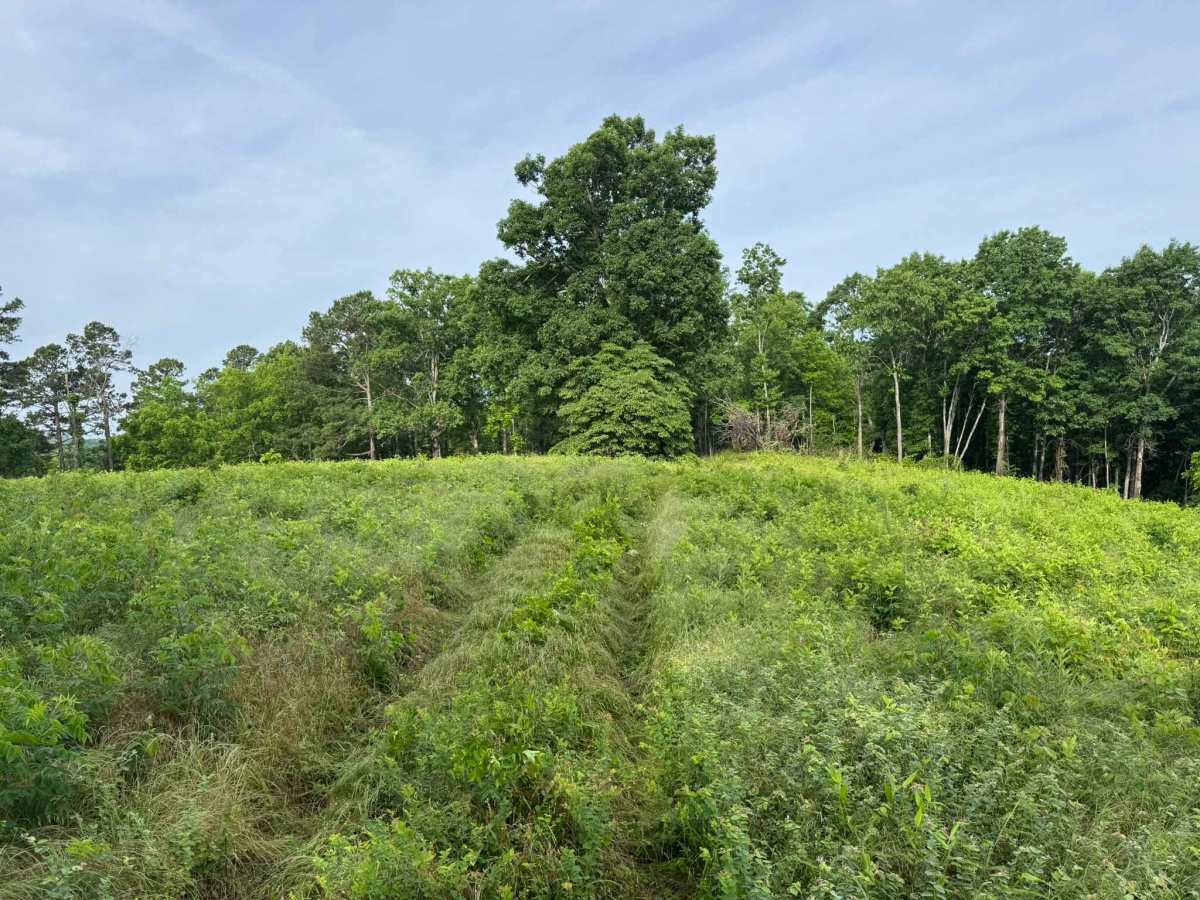
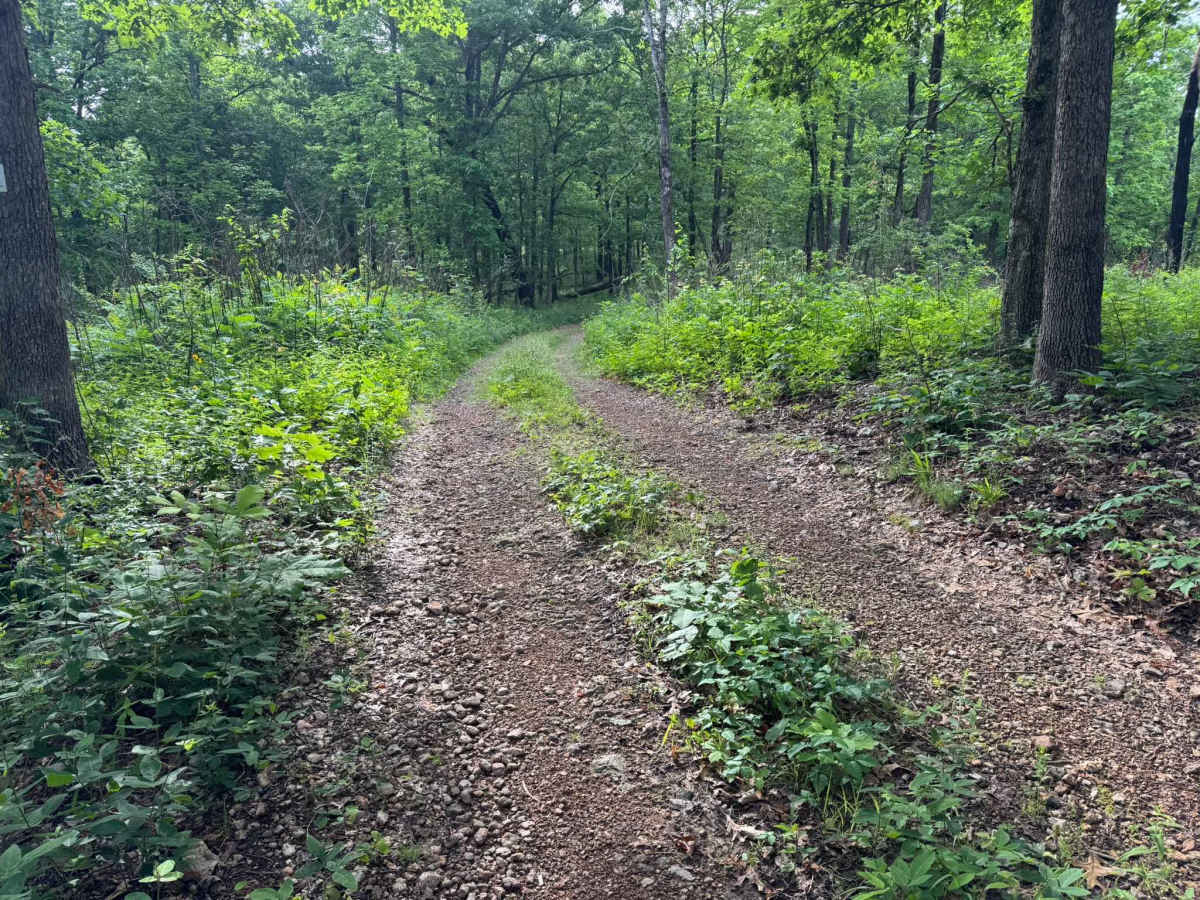
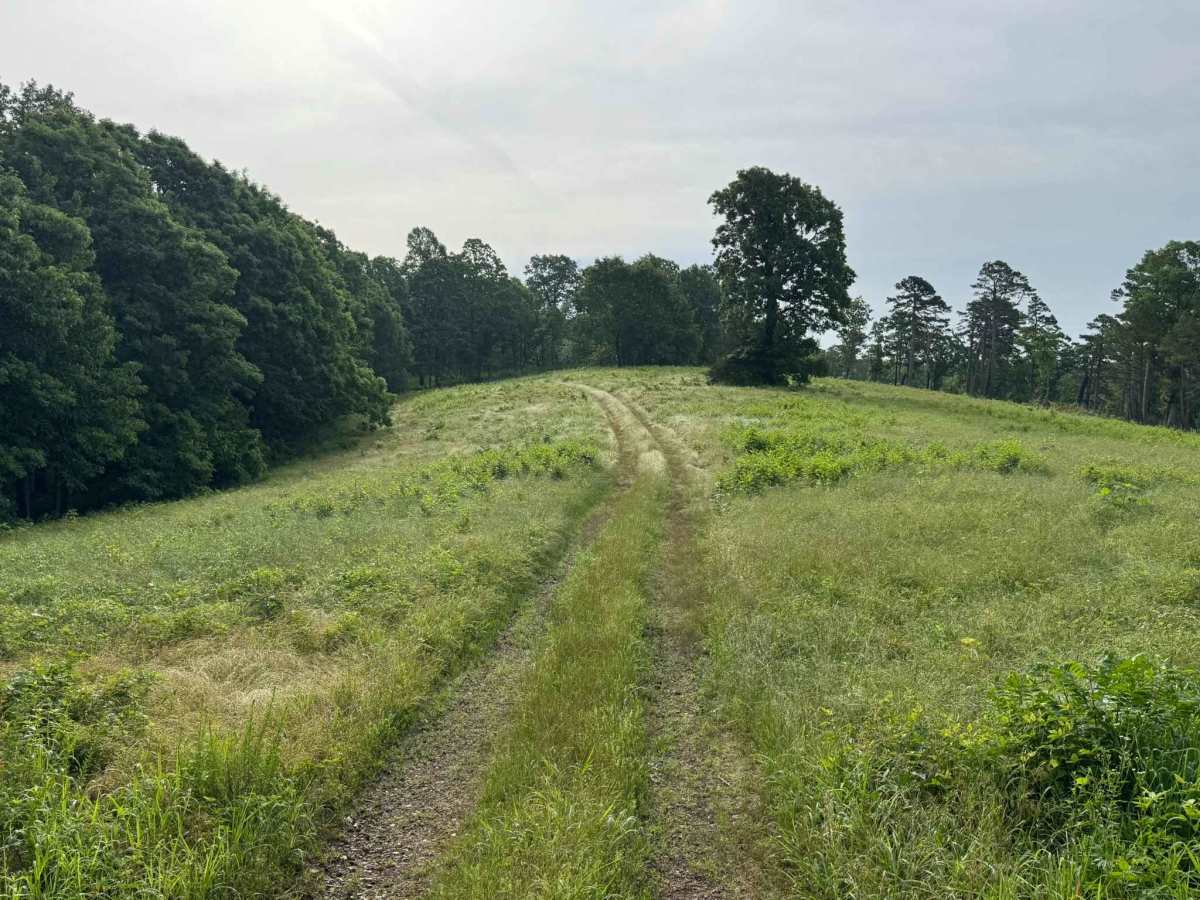
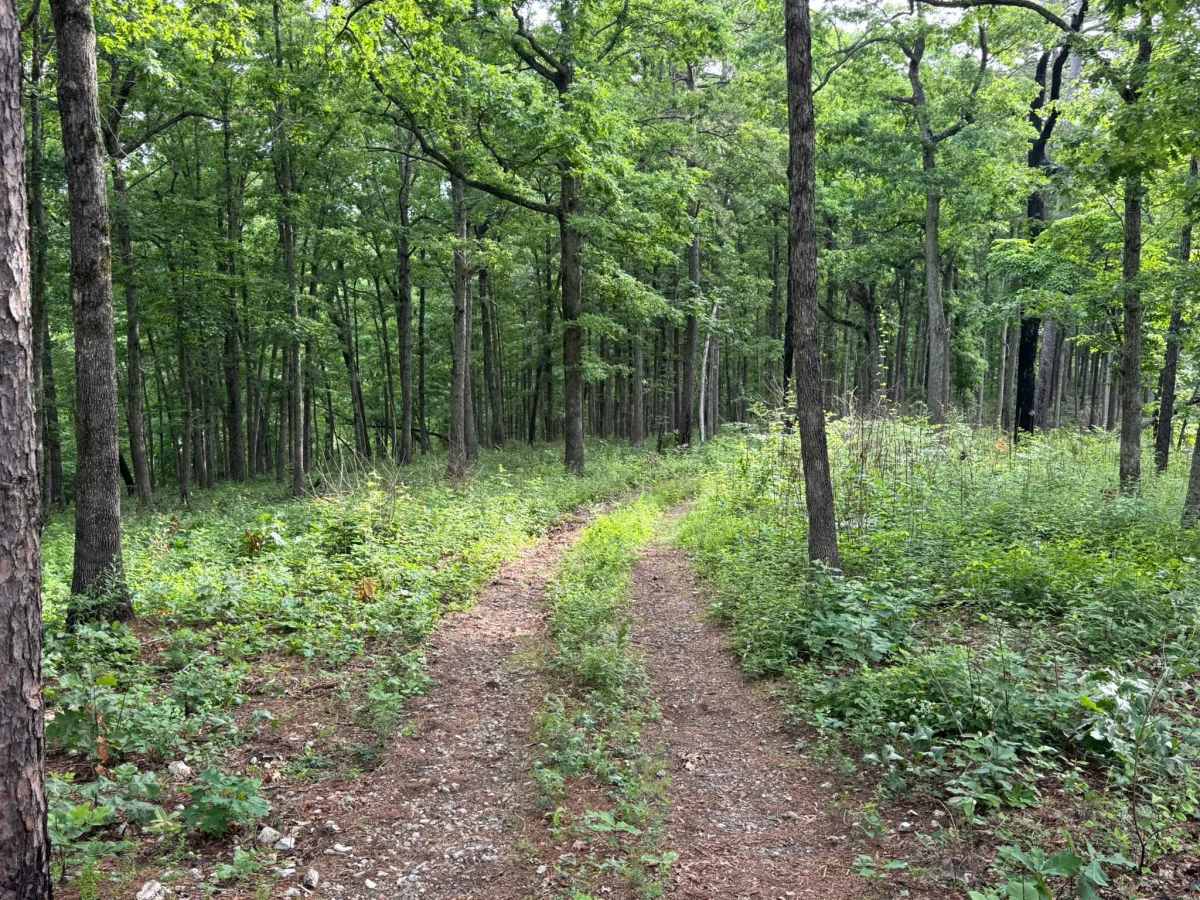
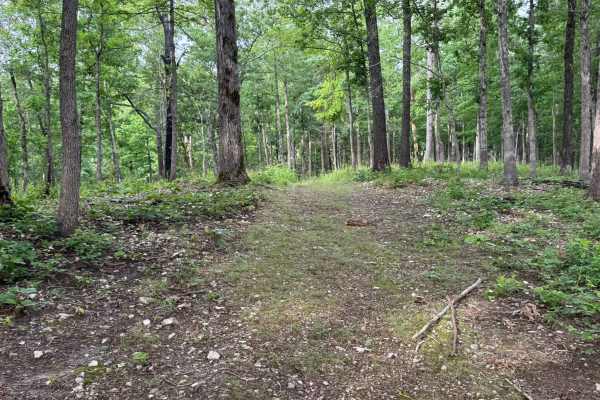
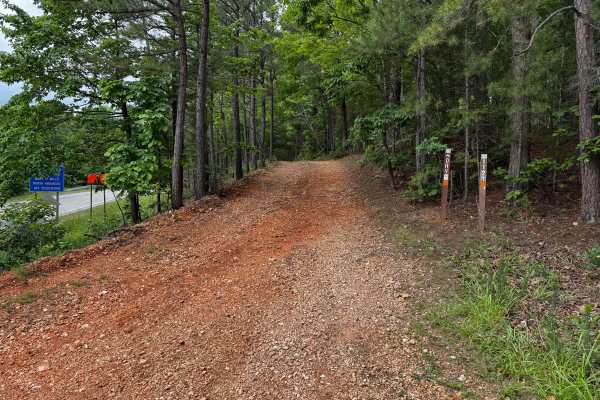
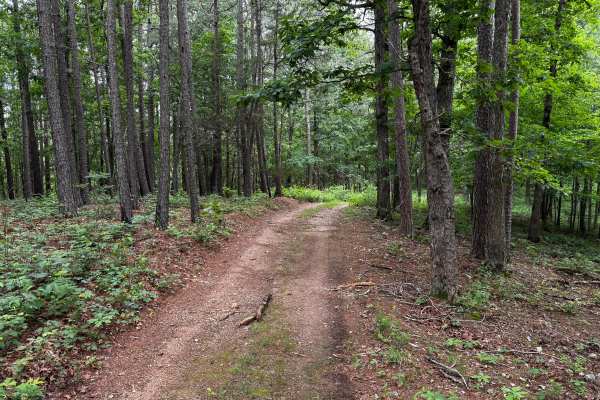
This is an easy out-and-back forest route that can also be used to access sections of the Ozark Highlands Hiking Trail. The trail winds through dense hardwood forest, narrow tree-lined corridors, and a few open grassy clearings that provide brief views before the route disappears back into the timber. The trail is only one vehicle wide for most of its length, so passing another vehicle could be difficult in tighter sections. The surface is mainly dirt, loose rock, and scattered roots with no major technical obstacles. However, drivers should remain cautious of downed trees along the route. Several have already been cut enough to squeeze past, but exposed trunks and branches could still catch a tire or wheel if not carefully navigated. Low hanging branches and overgrowth may also cause light pinstriping or scratches to vehicle paint, especially on wider vehicles.
Difficulty
This is an easy one-vehicle-wide forest trail with no major obstacles or technical sections. Most stock high-clearance SUVs and 4WD vehicles can complete it without issue. Drivers should remain cautious of low hanging branches, tight wooded sections, and downed trees that have only been partially cleared, as exposed trunks or branches could contact tires or wheels. Passing other vehicles may be difficult due to the narrow trail width.
History
The roads throughout this region were originally established for logging, mining, homestead access, and fire management long before recreational off-roading became popular. Portions of the surrounding Buffalo National River area contain deep ties to Ozark pioneer history, including old settlements, abandoned homesites, family cemeteries, and former mining operations dating back to the late 1800s and early 1900s. The nearby Rush Historic District was once one of the largest zinc mining communities in Arkansas during the early 20th century. Many of the ridge roads and hollows drivers travel today follow paths historically used by miners, loggers, ranchers, and local residents navigating the rugged Ozark terrain long before modern highways existed.



 Offroad