Trail Overview
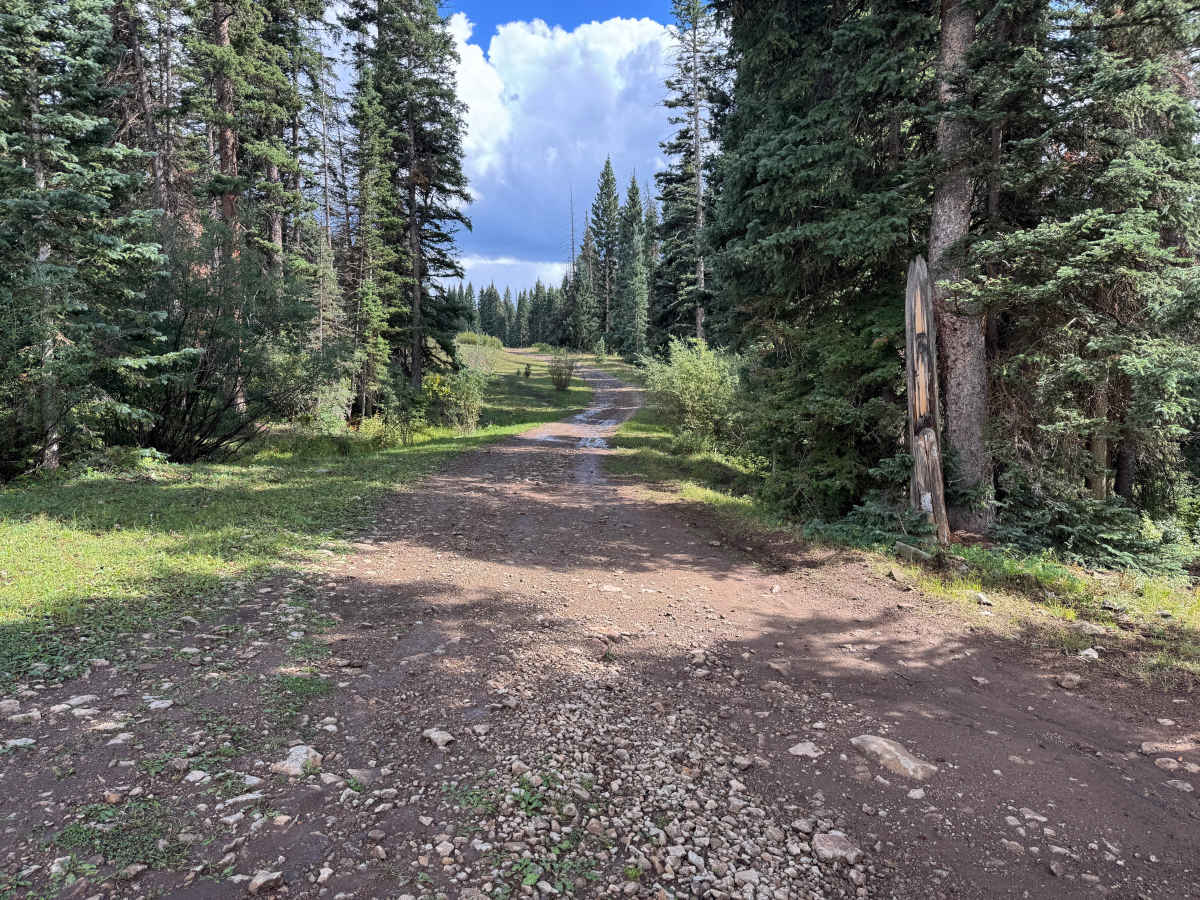
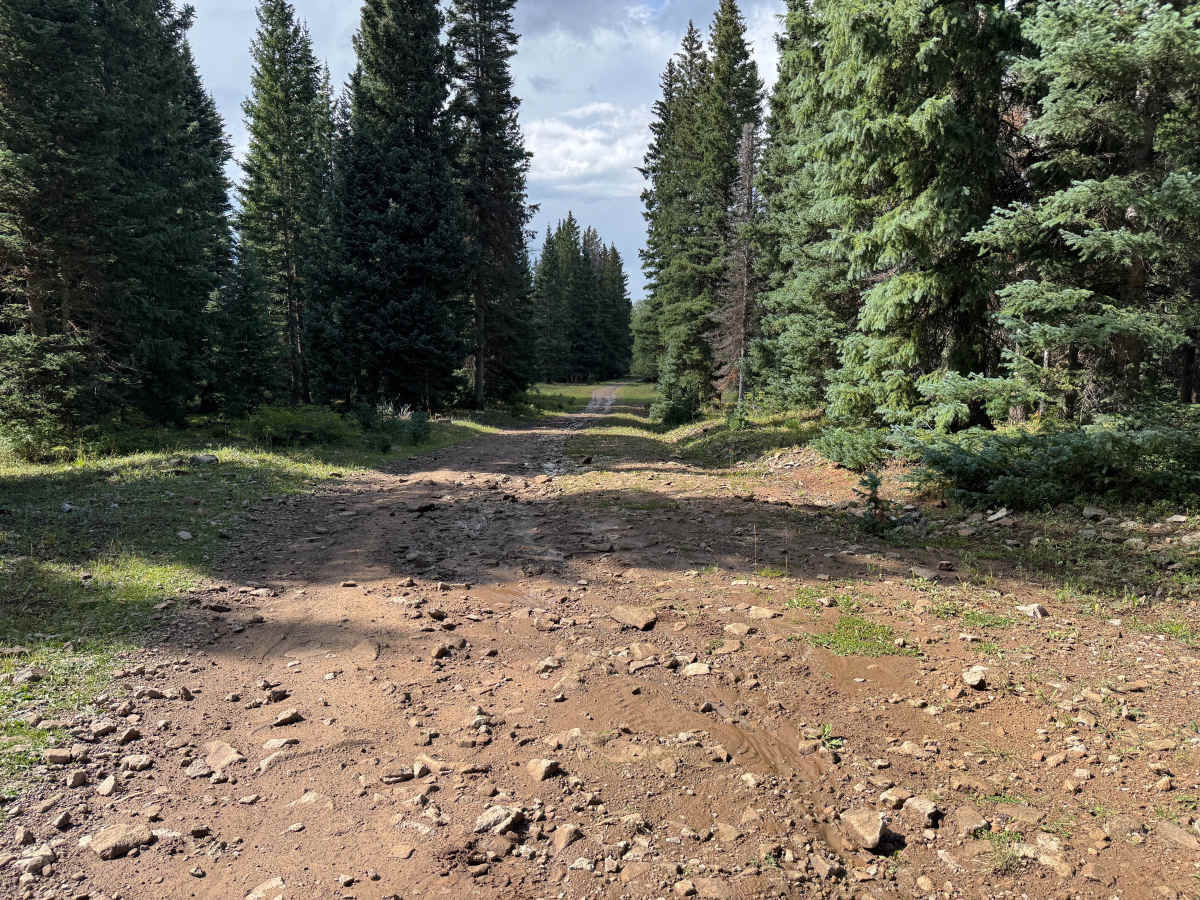
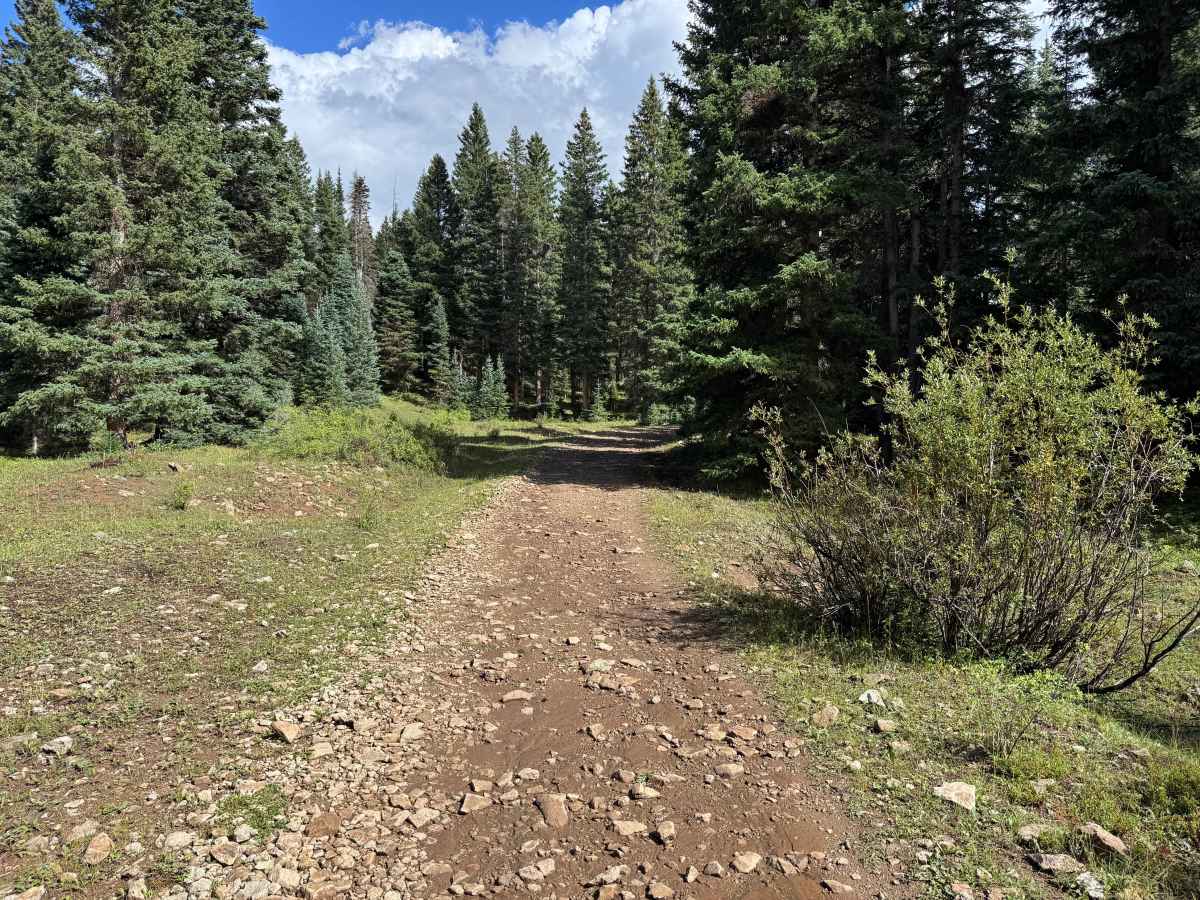
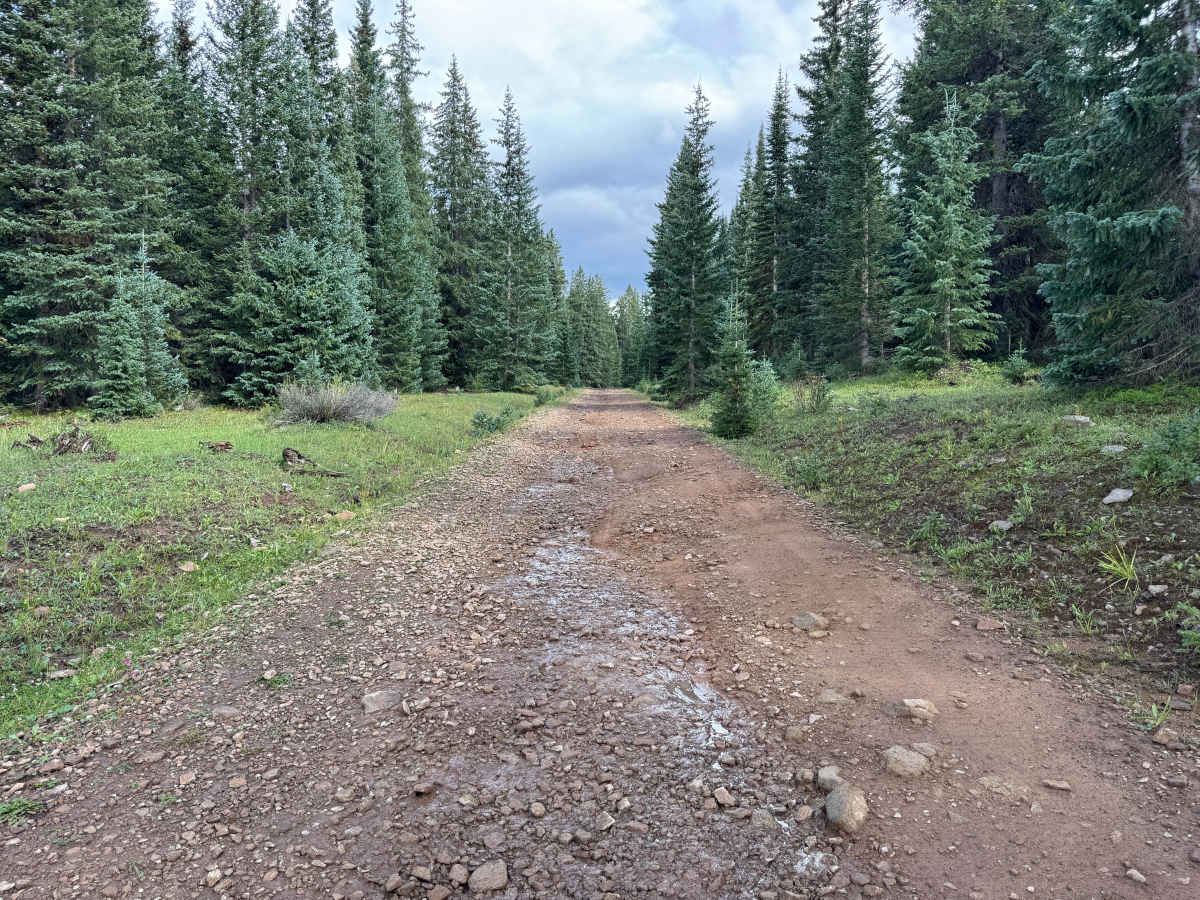
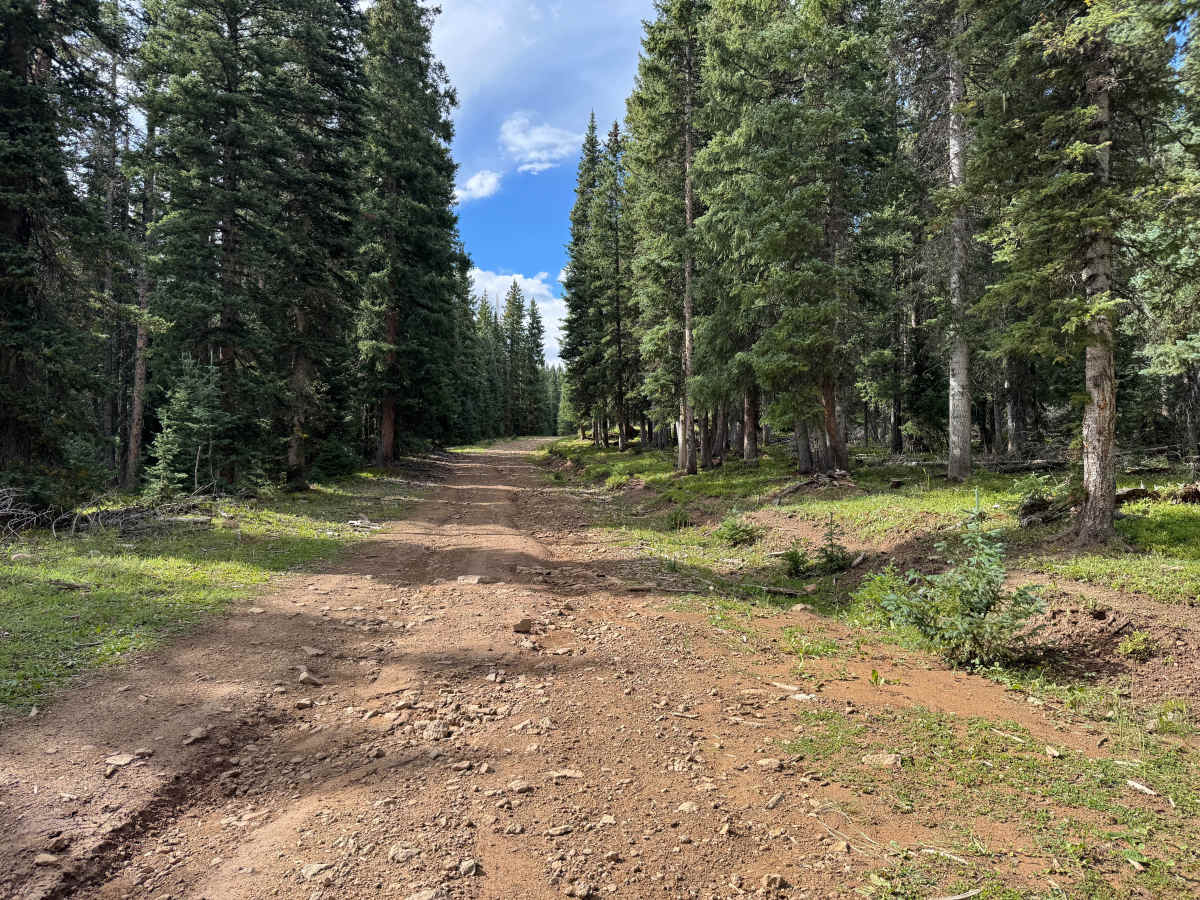
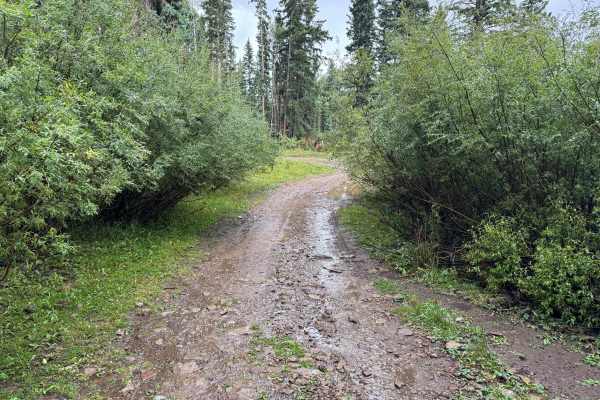
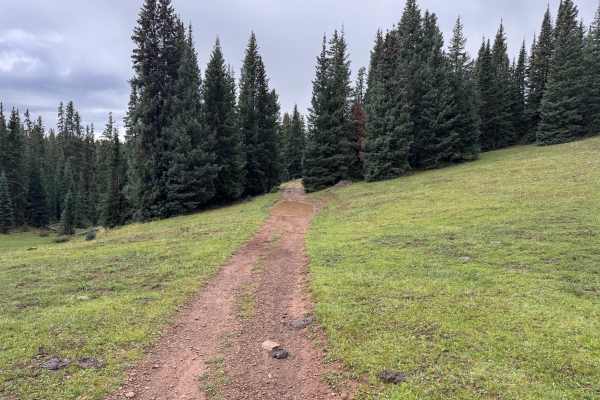
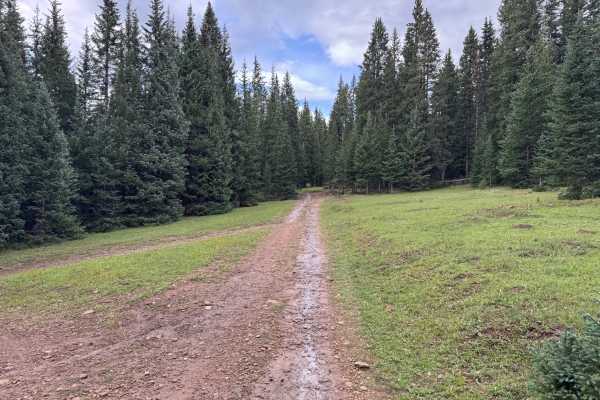
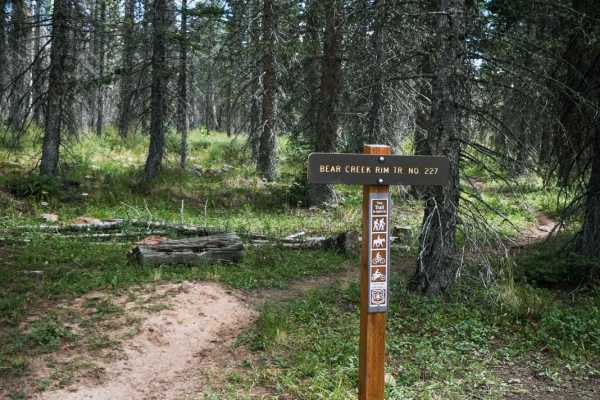
This route travels through a dense high-elevation forest filled with mature evergreens, scattered aspens, low shrubs, and grassy openings. The corridor is generally narrow, with trees growing close to the route in many areas and occasional wider locations that can be used when meeting other vehicles. This route is noticeably rougher than many of the surrounding forest roads, and airing down is a good idea for a more comfortable ride. The forest floor is covered with grasses, small plants, fallen branches, and exposed soil, while several sections pass through small meadows that break up the heavier tree cover. This is an open ranching area, so livestock may be encountered along or directly on the route. The surrounding forest provides a secluded backcountry setting with impressive views through the tall evergreens and across the occasional open meadow.
Difficulty
A consistently rough and rocky surface with frequent loose and embedded rocks creates a bumpy ride throughout much of the route. Mud holes can develop after rain, with some having soft bottoms that may reduce traction or cause vehicles to become stuck. Airing down is recommended for improved comfort and traction. The route is generally one vehicle wide, with occasional areas available for passing. No major technical obstacles are present.
History
Haycamp Mesa has a long history of ranching, sheepherding, logging, and transportation. Historic stock driveways and early roads crossed the mesa, providing access between ranching areas around Dolores and the higher summer ranges of the San Juan Mountains. The Lost Canyon Stock Driveway served as the primary livestock route across Haycamp Mesa throughout much of the 20th century and was used predominantly by sheep operations. Hispanic and Basque sheepherders also left hundreds of historic carvings, known as arborglyphs, in the area's aspen trees. Historic surveys have documented stock trails, camps, roads, and other remnants associated with generations of livestock use. Logging and forest management also shaped portions of the mesa and contributed to the extensive network of roads that exists throughout the area today.