Trail Overview
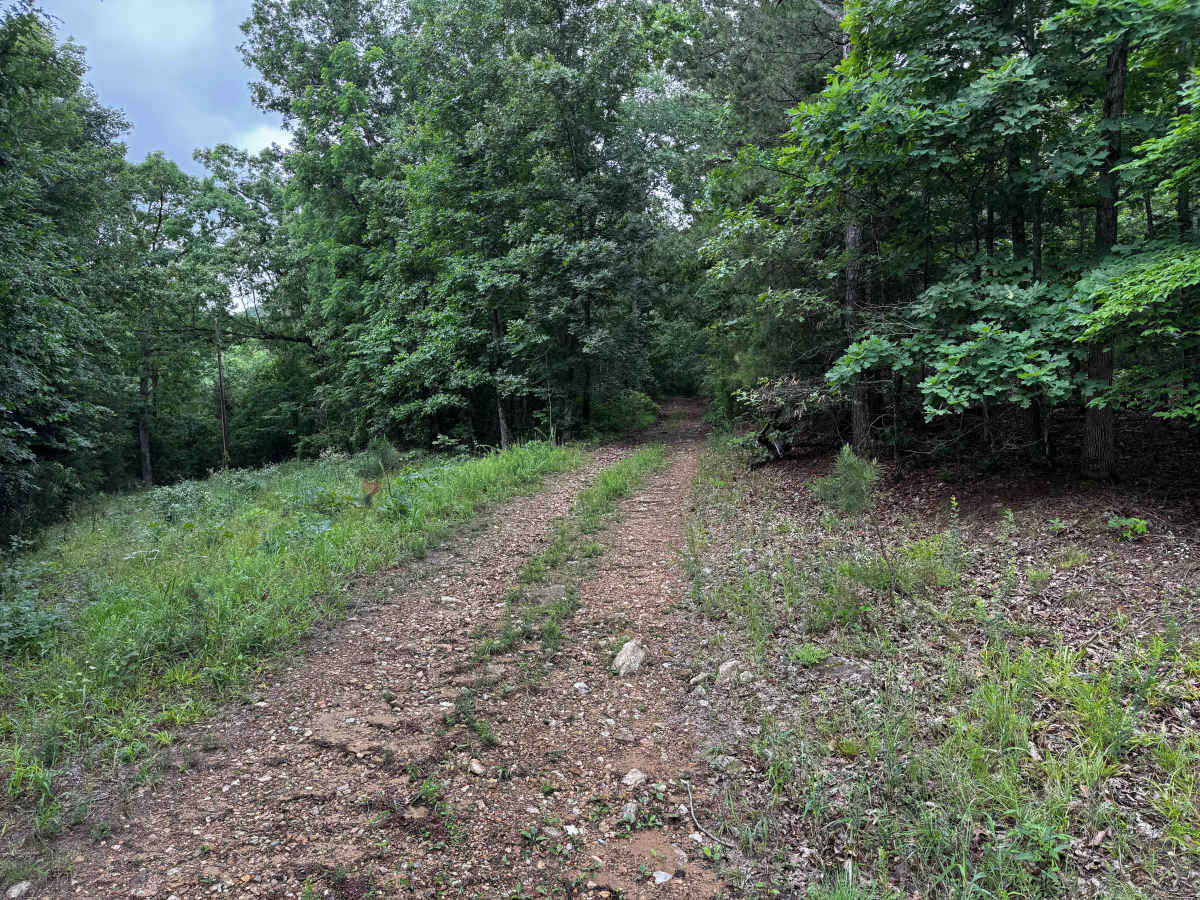
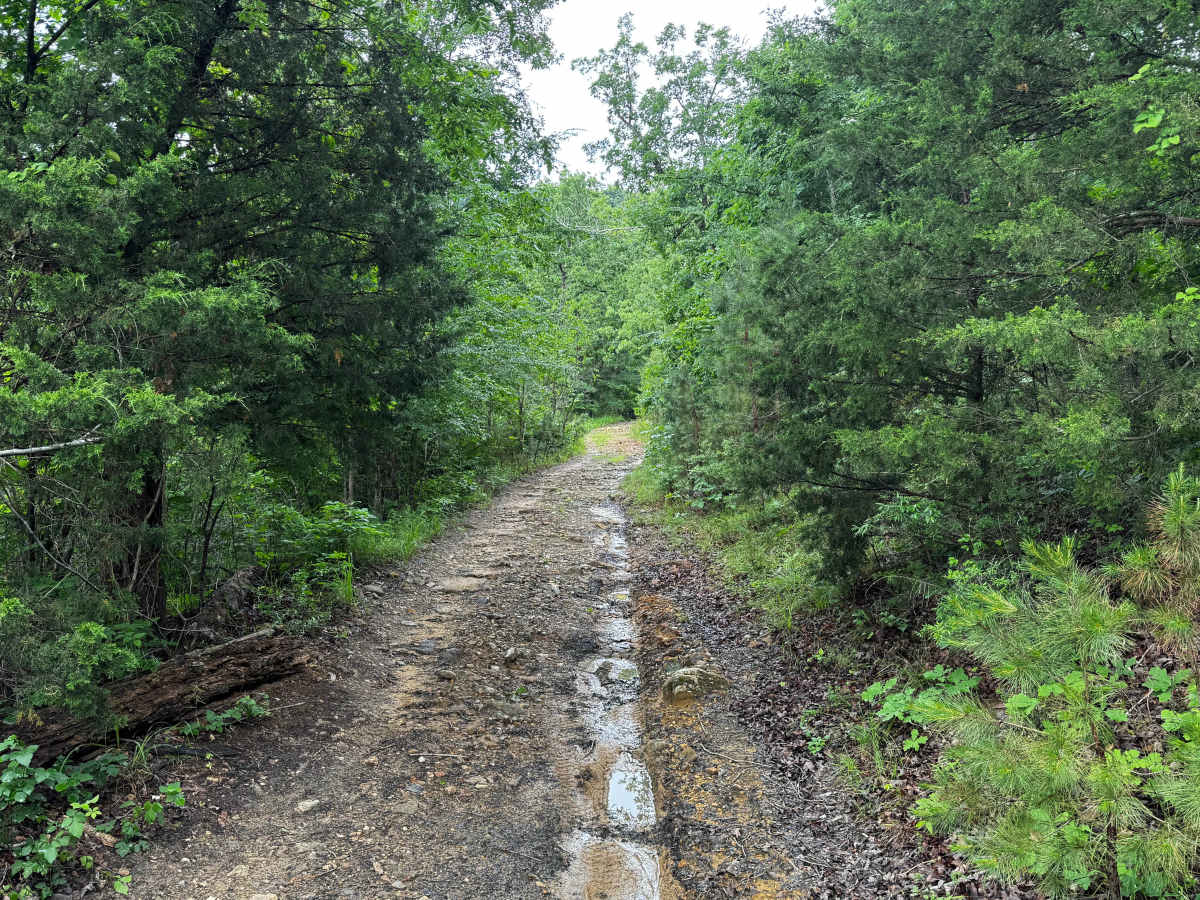
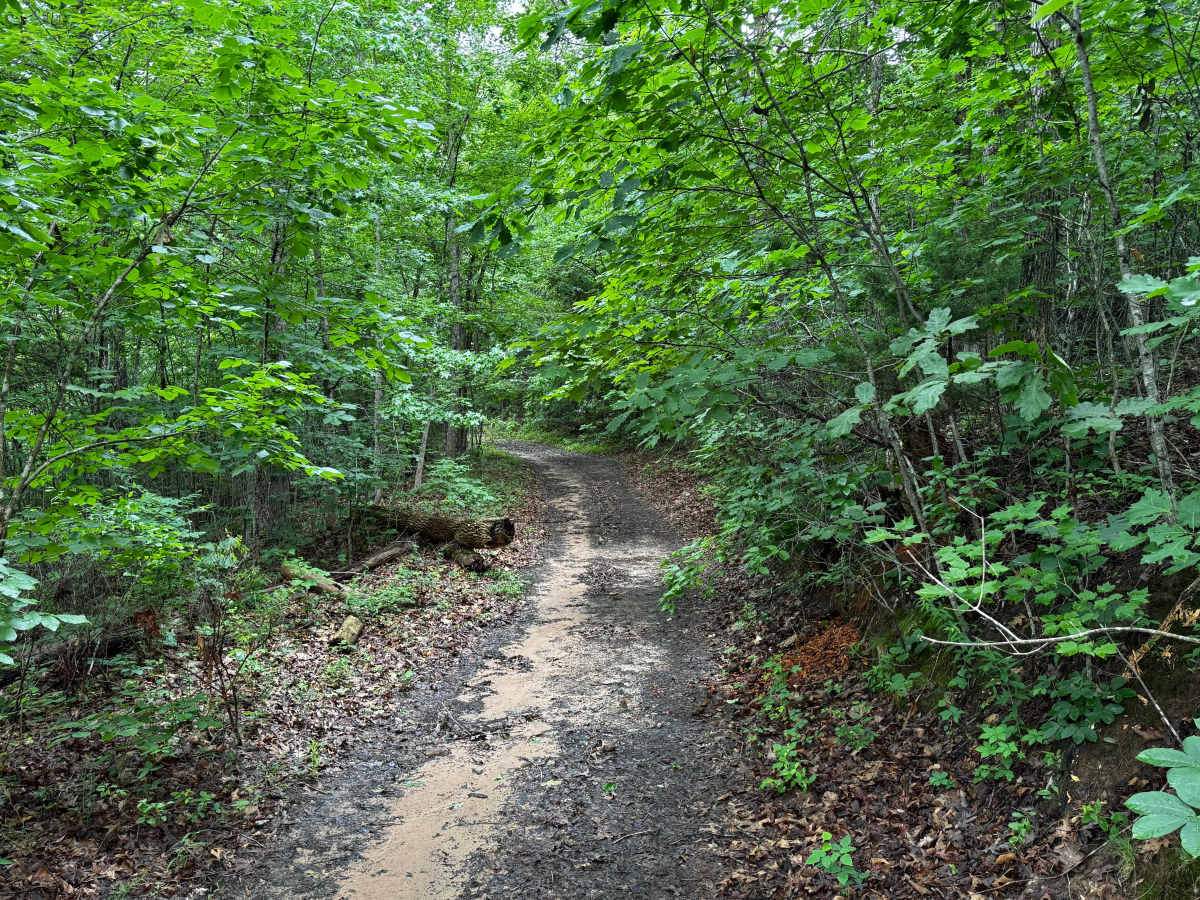
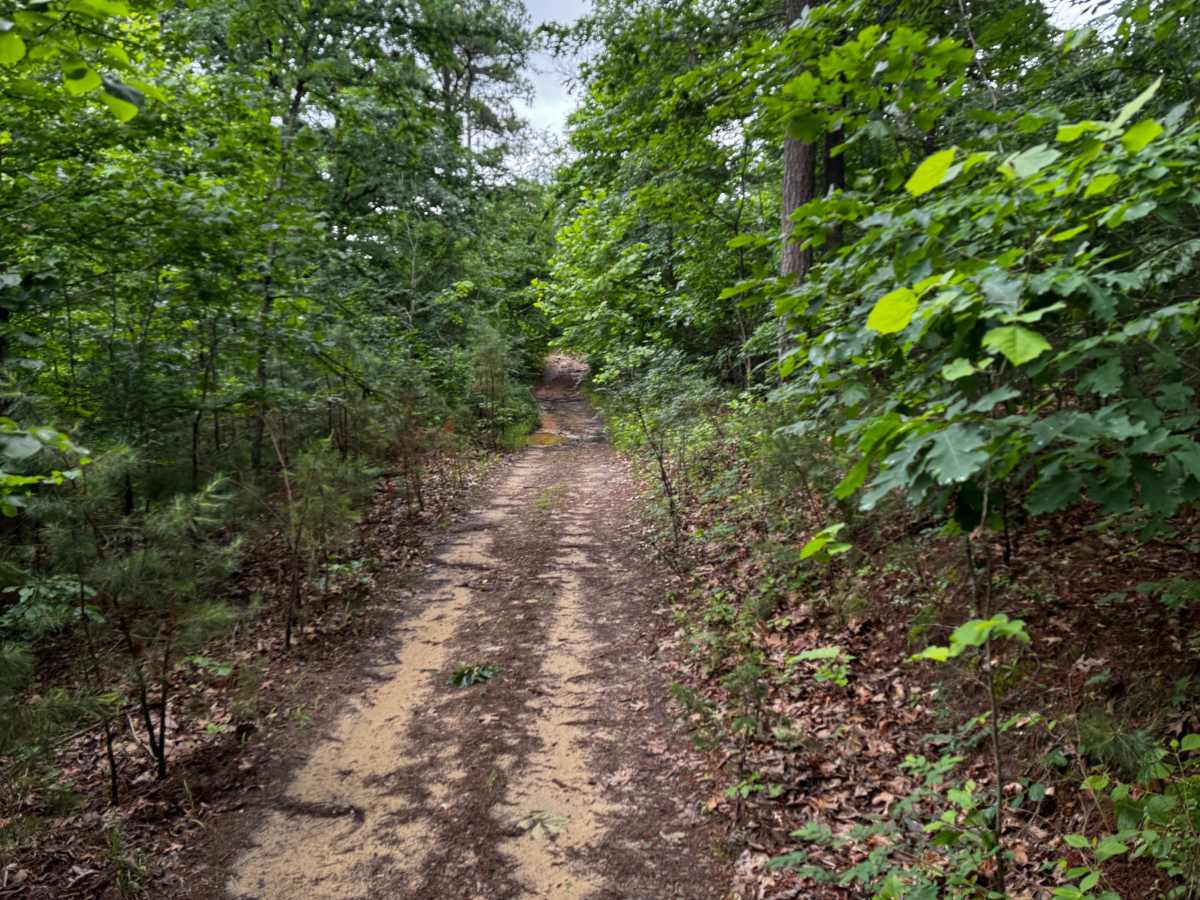
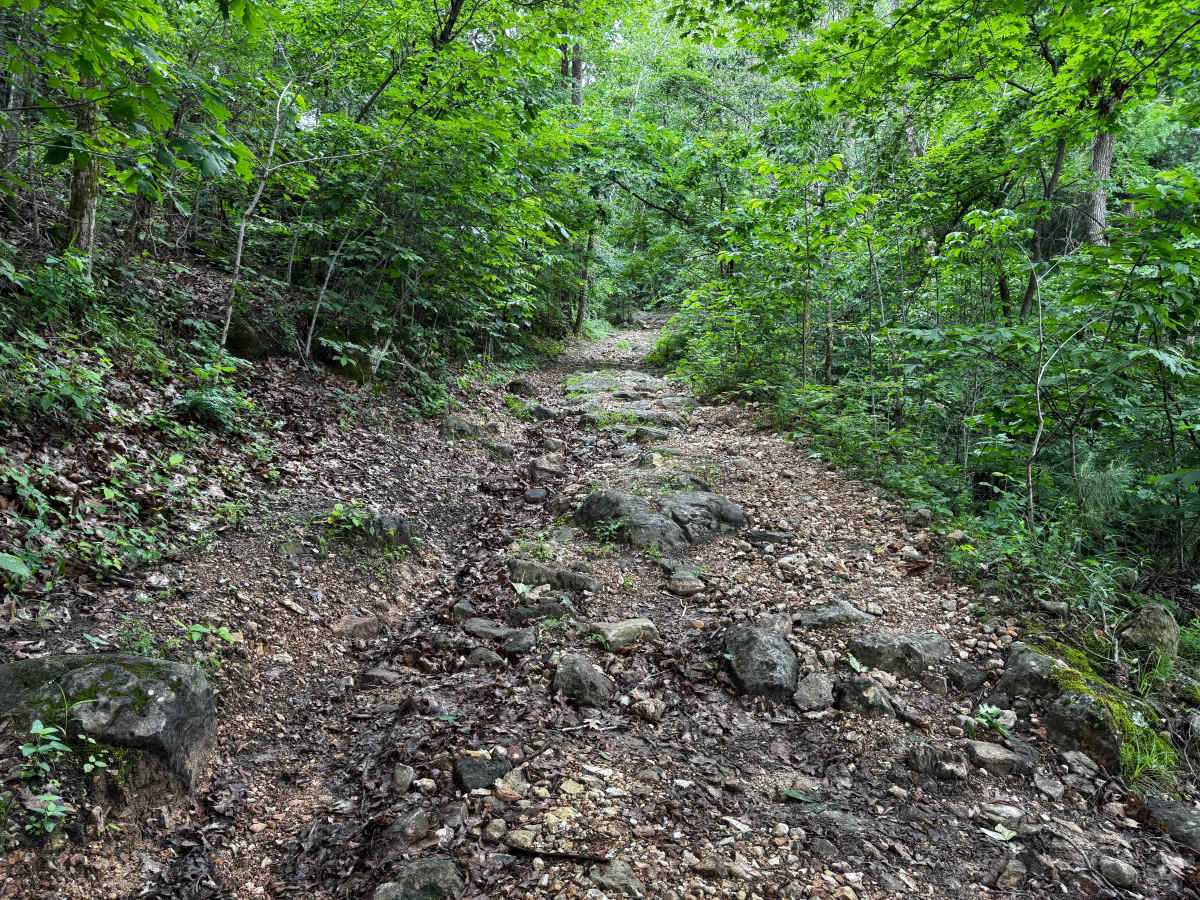
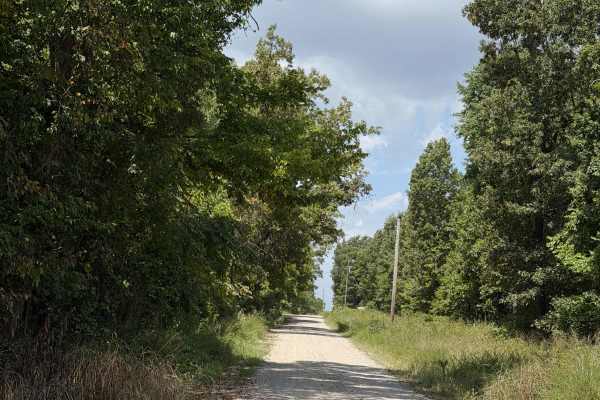
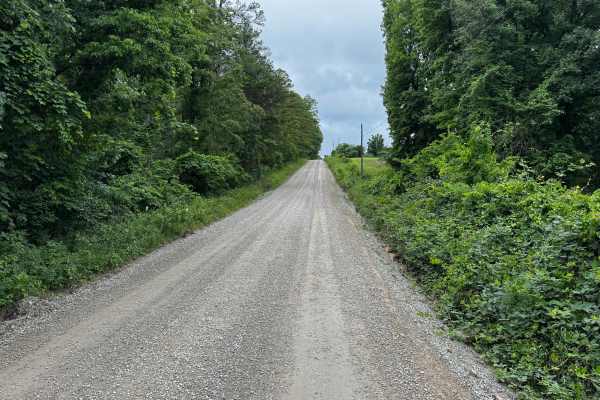
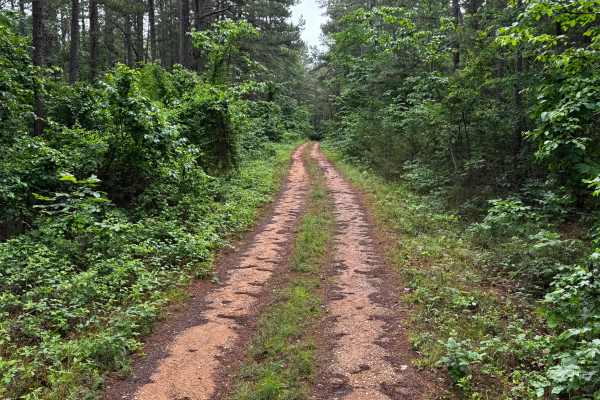
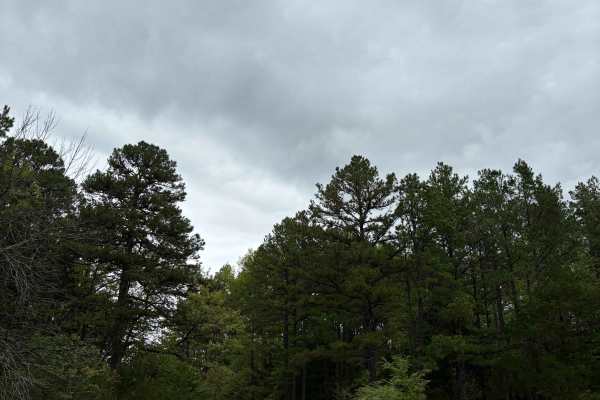
This trail starts out narrow and wooded, with the route staying mostly one vehicle wide as it winds through dense forest lined with pine and hardwood trees. The trail surface constantly changes, giving drivers a little bit of everything from packed dirt and muddy sections to loose rock and exposed stone. Several switchbacks and short, steep grades keep the route engaging while tighter sections can leave little room for error. After rainfall, the trail becomes noticeably slick with mud collecting in low spots and water running down portions of the trail.
The main obstacle is the large rock garden near the upper section of the route. While this section widens enough for two vehicles depending on line choice, the terrain becomes significantly more technical with rocks reaching up to 2 feet tall in places. Careful tire placement and good ground clearance are strongly recommended. Skid plates, minimum 2.5" lift, and 35" tires are highly advised for navigating the rockier sections without vehicle damage.
Difficulty
This trail becomes progressively more technical as you climb through the wooded terrain. Narrow sections, switchbacks, short steep grades, mud after rainfall, and the large rock garden all increase the challenge level. The rock garden contains rocks up to 2 feet tall with multiple line choices that require careful tire placement and good clearance. High clearance 4x4s with low range are strongly recommended, along with skid plates, 2.5" lift, and 35" off-road tires. Wet conditions can significantly increase the difficulty due to slick mud and wet rock surfaces.
History
The roads throughout this region were originally established for logging, mining, homestead access, and fire management long before recreational off-roading became popular. Portions of the surrounding Buffalo National River area contain deep ties to Ozark pioneer history, including old settlements, abandoned homesites, family cemeteries, and former mining operations dating back to the late 1800s and early 1900s. The nearby Rush Historic District was once one of the largest zinc mining communities in Arkansas during the early 20th century. Many of the ridge roads and hollows drivers travel today follow paths historically used by miners, loggers, ranchers, and local residents navigating the rugged Ozark terrain long before modern highways existed.