Deer Tracking
Deer tracking transforms the mundane walk in the woods into a real-time mission. We sat down with renowned Maine Master Guide and author of several books on tracking whitetails, Hal Blood, who has spent 40+ years deciphering the language written in the snow by mature whitetails.
Here are fundamental lessons from Blood on how to begin tracking deer.
Buck vs. Doe Tracks: 3 Tells
1. Size and Geography
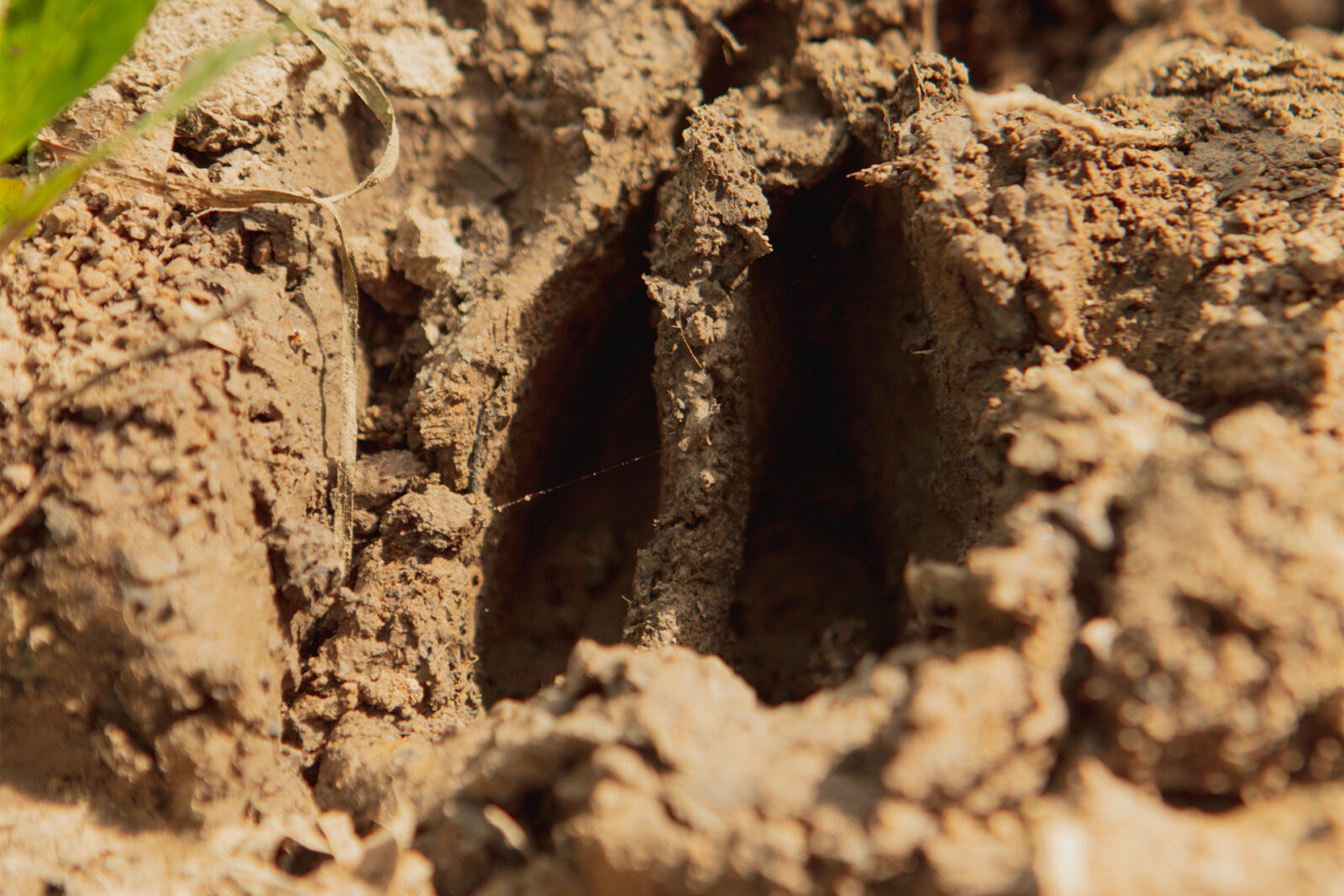
One clue for deciphering buck vs doe tracks is size, but track size can be highly dependent on the area you are hunting. For example, the northern borealis whitetail subspecies, found in Maine and surrounding boreal regions, has the largest bodies and the biggest tracks of any whitetail deer.
When Blood is on the trail of a North Woods buck, he’s looking for a track that’s at least three inches long by three inches wide. However, monster old buck tracks can measure four inches long or better.
Of course, most hunters won’t be coming across tracks that size outside of Maine, so it’s important to start paying attention to the tracks in your own hunting areas to know what’s big for a big deer.
Using the notes and/or photo feature when dropping a Waypoint (as well as the “Tracks” icon) is a quick way to document the track sizes you come across in the woods.
2. The Dew Claw Tells All
Another trick for deciphering a buck from a doe? The dew claws are the most definitive feature distinguishing a mature buck from a doe.
- Doe Dew Claws: If a doe’s dew claws show, they will almost always be inside or the same width as the main toe print.
- Buck Dew Claws: As bucks mature (typically over four-and-a-half years old), their dew claws will appear wider than their toes and often be set outside the print. Critically, the buck’s dew claw prints are often perpendicular (90 degrees) to the direction of the main hooves. The older the buck, the further back the dew claw prints will be set, sometimes as far as two-and-a-half inches behind the main print.
3. Stance and Gait
Another sign of a mature buck is its wide stance.
A doe walks “more one foot in front of the other because their bodies aren’t wide,” says Blood. This results in prints that are, at most, only a few inches side-to-side. Bucks, however, grow heavier chested and are inherently “thicker through them,” says Blood, causing their chest to widen out sideways. This widening means their prints are going to be further apart, a distance referred to as the “stance of the buck.” A wide stance, often eight to 12 inches between the prints, is indicative of a good buck.
Also, Blood emphasizes that mature bucks are “toe draggahs.” The real old bucks will drag their feet all the time, even in just an inch or two of snow. Blood calls them “cross-country skiers” because the track often looks like two slide marks in the snow.
Aging Deer Tracks: Hunting the Clock
For most, determining the age of a track is the most difficult part of deer tracking. Many assume a track is old if it wasn’t made within the last hour. Blood operates on a different timetable: “I call any track made the previous night a fresh track. Most likely, I’m going to catch up to that buck that day.”
Reading the Water and Ice
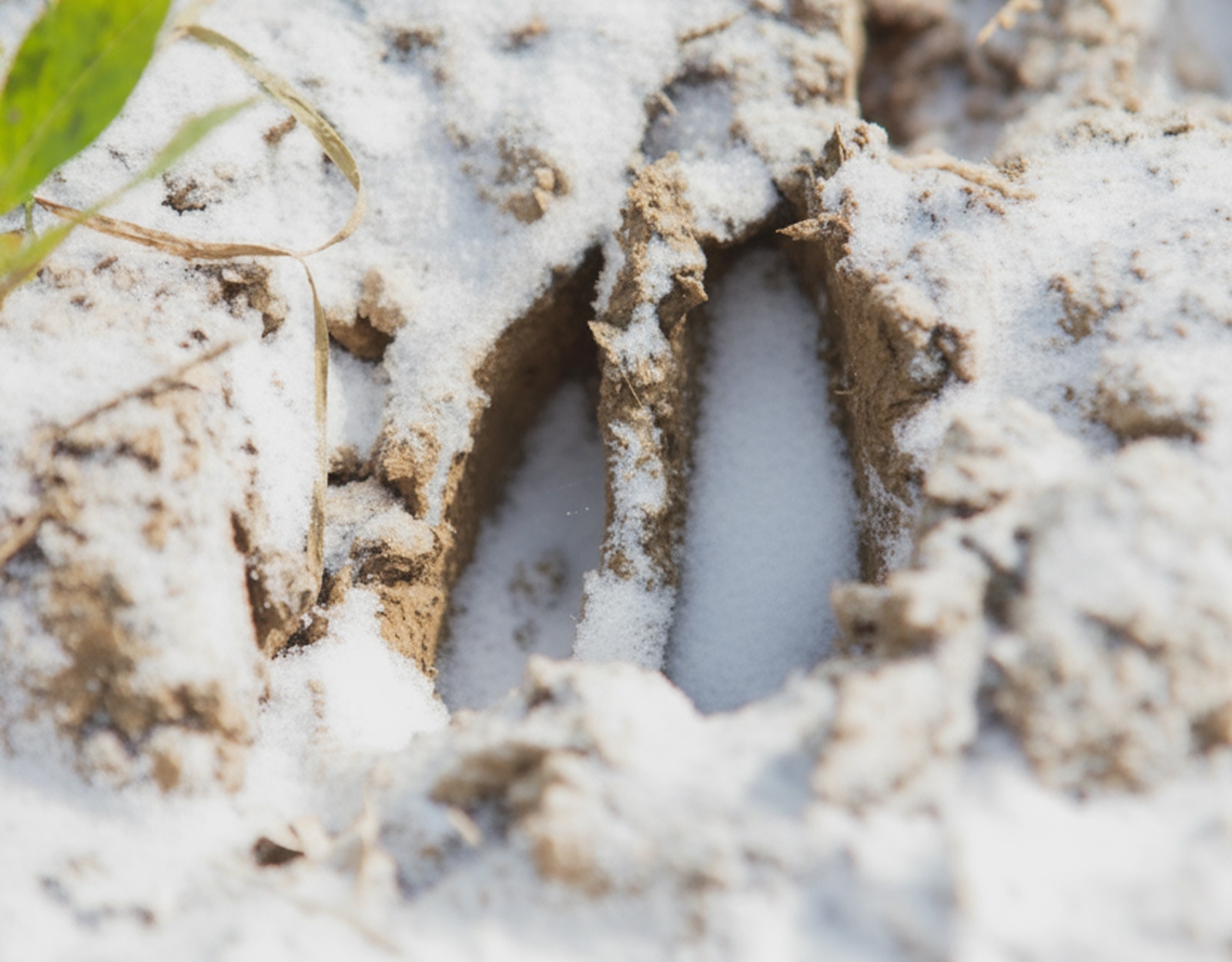
When a deer steps into wet ground, water seeps up into the print. Blood uses the resulting ice formation as a guideline:
- Frost Crystals and Deep Freeze: If the water is “really froze up” and contains frost crystals, the track was likely made earlier in the night, meaning the buck could be a long distance ahead.
- Minimal Ice: If there is only “a little bit of ice in it,” he says, and the temperature isn’t extremely cold, you may have a fresh track, perhaps only a half hour to an hour old.
Checking the Snow’s Condition
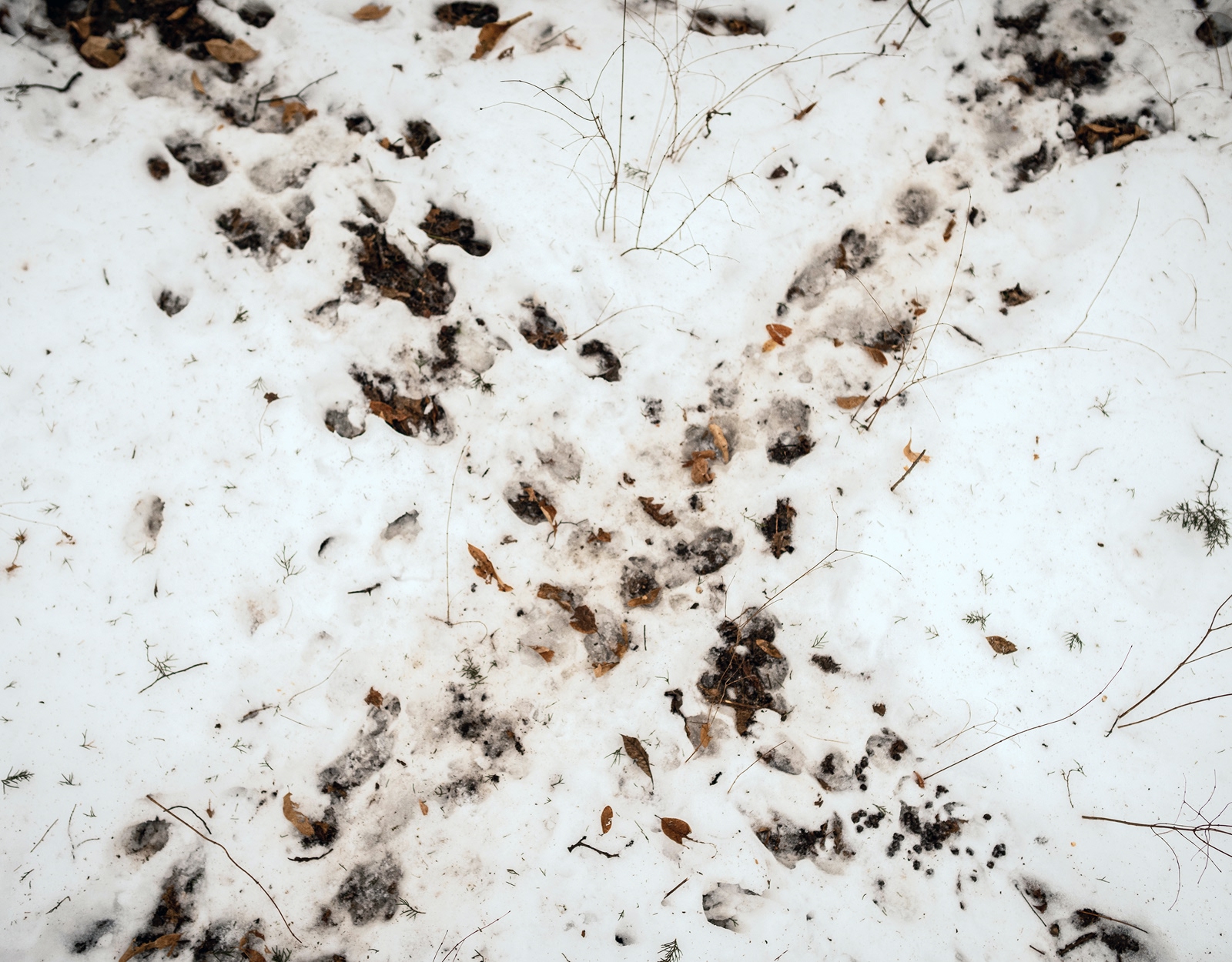
When tracking in snow, you need to feel the firmness of the track.
- The Loose Track: A truly fresh track—perhaps made only minutes or an hour prior—will feel all loose with “no resistance in the side of it” when you quickly tap the edges with your fingertips. This is essential if you bump a buck and his fresh print gets confused with older tracks in the area.
- The Set-Up Track: If the track was made during the night or is at least an hour old and the weather is cold, the sides of the track will be firm to the touch, or “set up,” as Blood notes.
- The Crispy Track: A track with “clearly defined edges and trailing puffs or clumps of tossed snow” is what Blood calls a “crispy track,” a sign the deer passed through likely within the last 12 hours or so.
Assessing a Buck’s Speed: Stride Length
The stride length immediately tells the tracker what the deer is doing. When a buck is traveling, “his stride is going to be longer and he’s more deliberate,” says Blood. The same deer could have a stride ranging from a foot and a half to three feet.
If you encounter a three-foot stride and the buck is “stepping out,” Blood advises: “You better put your head down and start stepping out or you’ll never catch him.” Blood emphasizes the need for continuous movement because “I don’t care how fast you can walk or even jog, you ain’t moving as fast as a buck just walking along.” When a buck is puttering or feeding, his stride shortens up. Deer rarely run full pelt as they are not going to burn up extra energy if they don’t have to.