Deer Shot Placement
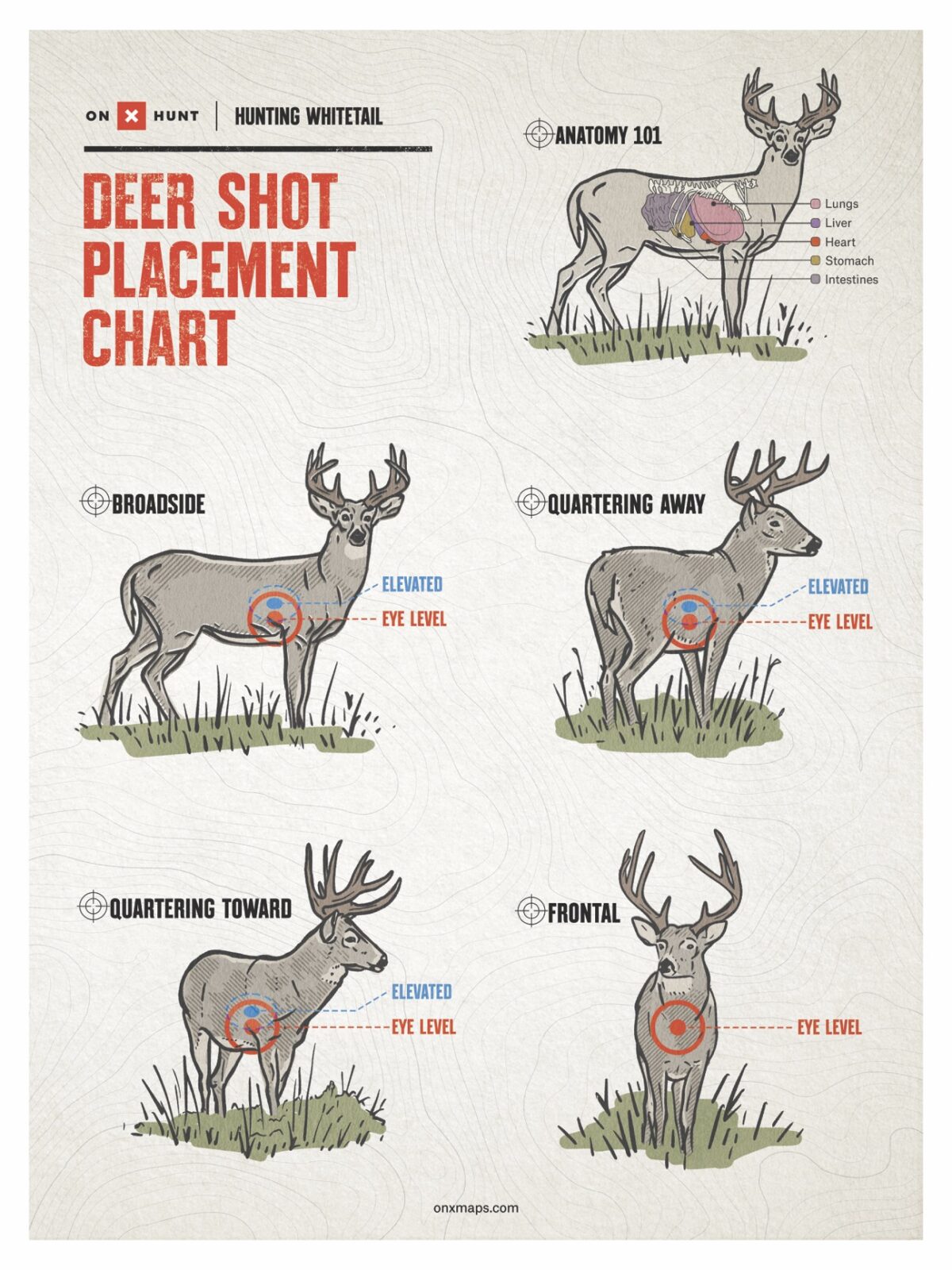
This guide will help you determine the best shot placement on a deer in nearly every situation you might ethically shoot while hunting with a rifle or a bow, including shooting from a treestand and compensating for angles.
Deer Anatomy 101
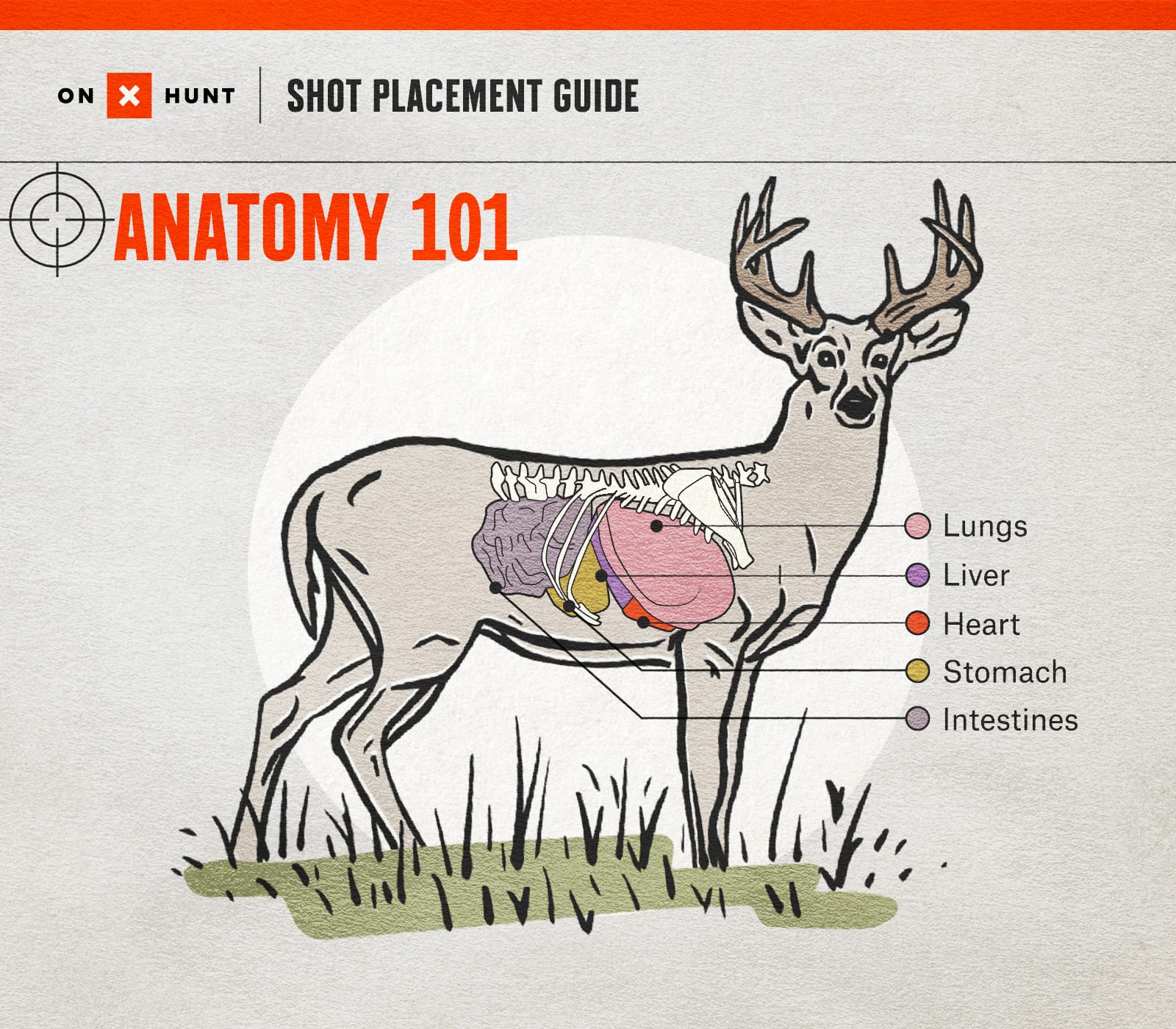
A deer’s four-inch tall heart is directly in line with the middle of its front leg, with the top of the heart sitting at the midpoint between its back and belly.
A heart shot will kill the deer the quickest because the animal bleeds out rapidly when either the atria (upper chambers) or the ventricles (lower chambers) are hit.
Most of a deer’s two lungs sit slightly behind the heart and behind its front shoulders. The lungs fill most of the chest cavity, giving you a larger target than just the heart.
The liver is further back, between the lungs and stomach, and right behind the deer’s diaphragm. A liver shot is fatal but takes longer for the deer to expire (usually about two hours) because blood loss is slower from the liver than from a heart or lung shot. Liver shots produce dark red or maroon blood with a watery consistency.
Broadside
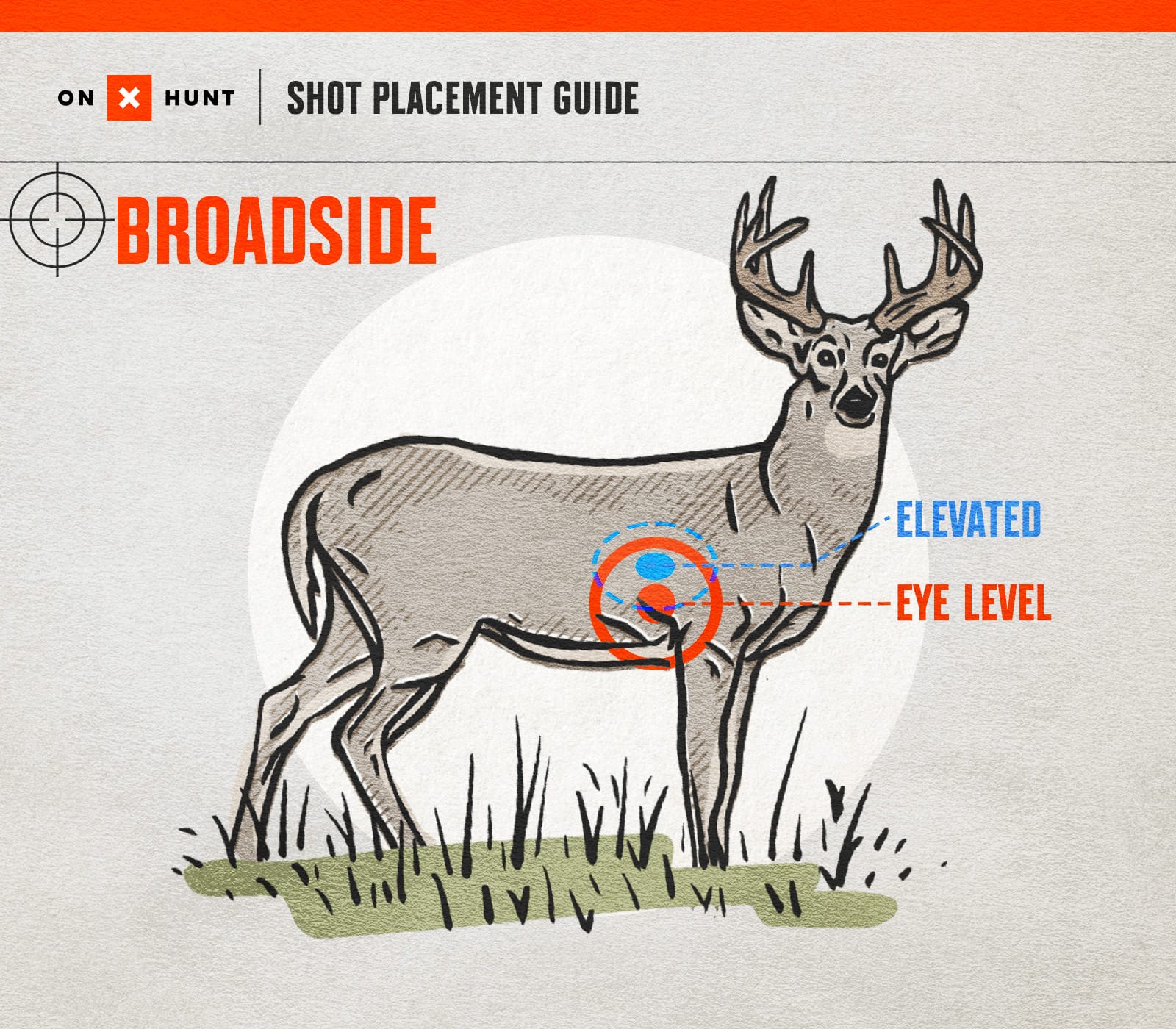
Having a deer broadside at eye level is as good as it gets.
Having a deer broadside at eye level gives you an unobstructed path to the heart and both lungs. It’s possible to make a broadside shot that hits both lungs and clips the top of the heart.
Aim directly in line with the front leg and between the halfway and lower one-third mark between the bottom of the chest and the top of the back, keeping in mind a deer’s heart is situated at a 45-degree angle. Dropping your aiming point just below the middle line of the deer puts the shot in the meat of the heart.
The broadside shot gives you the widest margin of error. If you miss an inch or so high, you get the top of the heart and two lungs. If you miss slightly to the left or right, you still hit two lungs.
Quartering Away
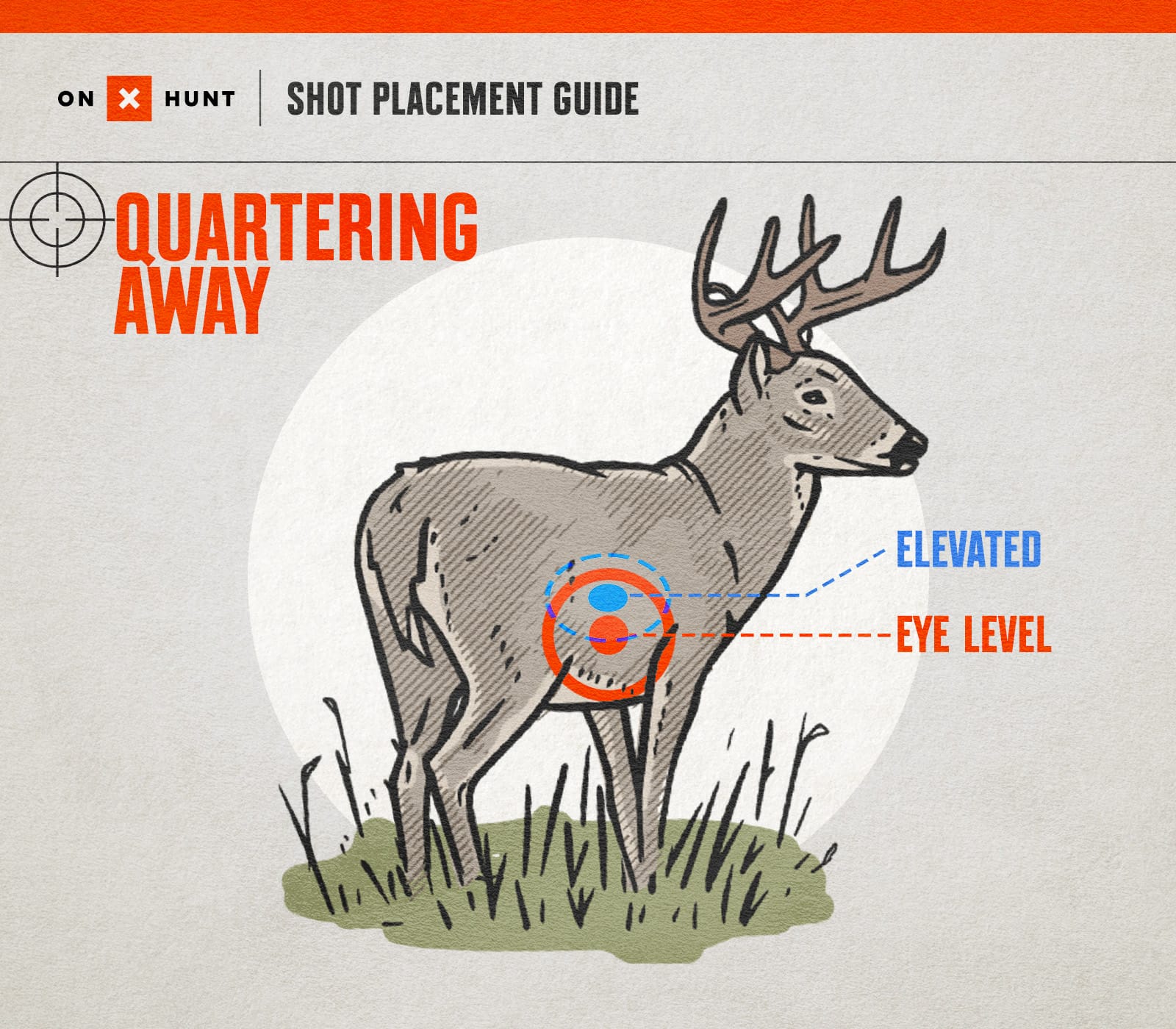
Some hunters prefer this shot because the deer is less likely to detect you as you draw your bow or shoulder your firearm.
Taking a shot when the deer is quartering away from you is the second-best shot you’ll have to broadside. When the deer is in this position, you have excellent access to its vitals on entry with a high likelihood of hitting at least one lung and/or the heart.
Aim further back than its front shoulder. A good rule of thumb is to aim for the exit: that is, aim at the opposite-side shoulder.
For bowhunters, it’s critical that the arrow pass through the animal entirely: You don’t want the entry wound plugged, or a situation where there’s no exit wound because your arrow got stopped by bone. In those scenarios, there will be little-to-no blood trail, and if you only hit one lung, a deer can run quite a ways before expiring.
If you aim too far forward on a quartering-away shot, you risk missing the heart and lungs entirely and only damaging its front limb. Deer can live with only three limbs. If you aim too far back, you’ll still likely hit the liver and clip one lung, which is a kill shot but not as quick of one as a heart or double-lung shot.
Quartering Toward
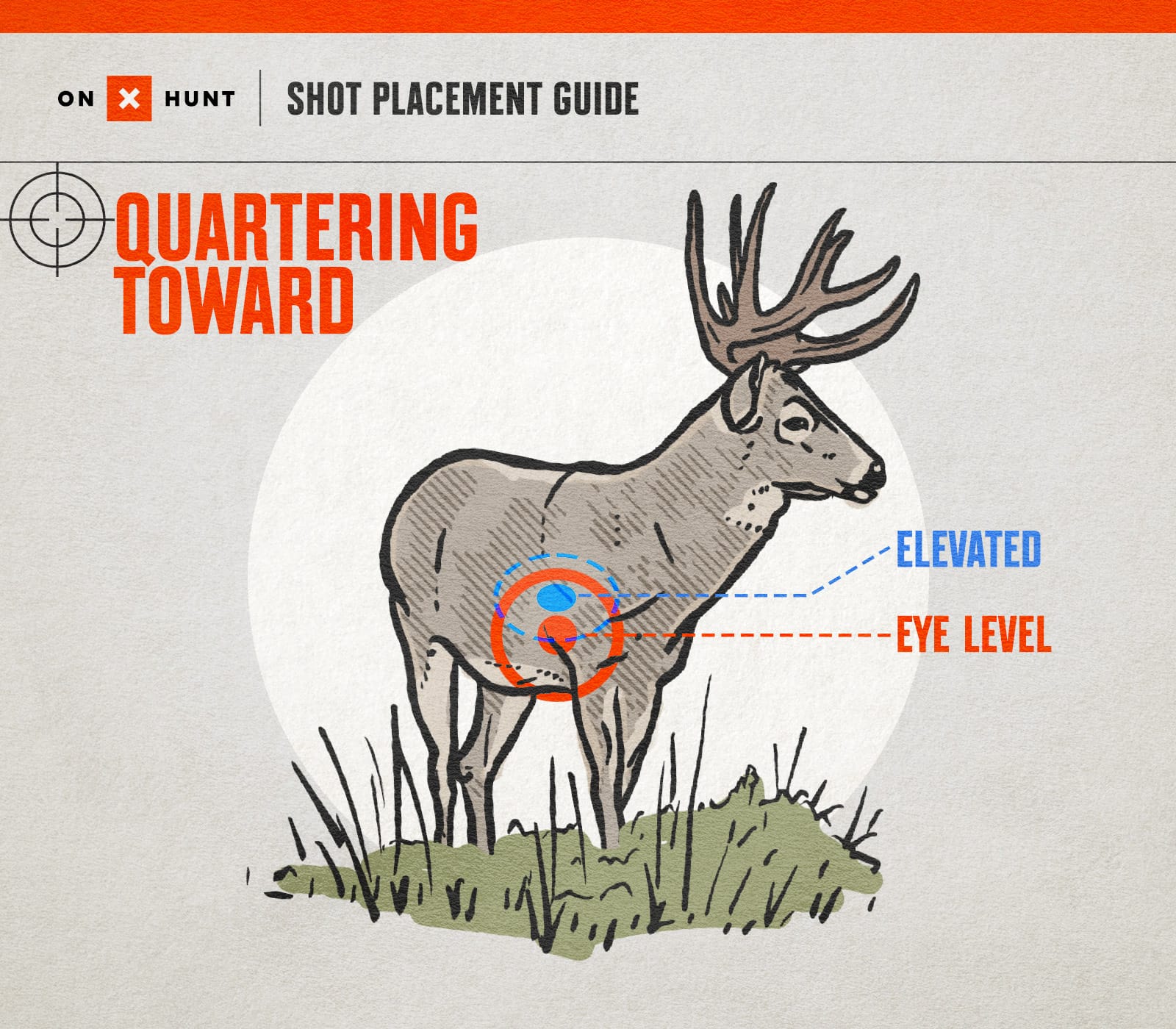
Aim at the front side of the near shoulder, envisioning your shot exiting at the middle or back of the opposite ribcage.
The quartering-toward shot may look appealing, but this shot comes with greater risk than the two we’ve covered so far. Quartering-toward shots come with two drawbacks:
1. For bowhunters, you almost certainly need to shoot through the on-side scapula or humerus to avoid a gutshot. With lighter arrows or lower draw-weight bows, this is a considerable risk.
2. For rifle hunters, you are most certainly going to damage the front shoulder meat plus do substantial damage to the guts, risking spoiling additional meat.
If this is the only shot with which you are presented, aim at the front side of the near shoulder, envisioning your shot exiting at the middle or back of the opposite ribcage. The height of the shot on the deer is the same at eye level as the broadside shot, just between the halfway and lower one-third of the body.
Frontal Shot
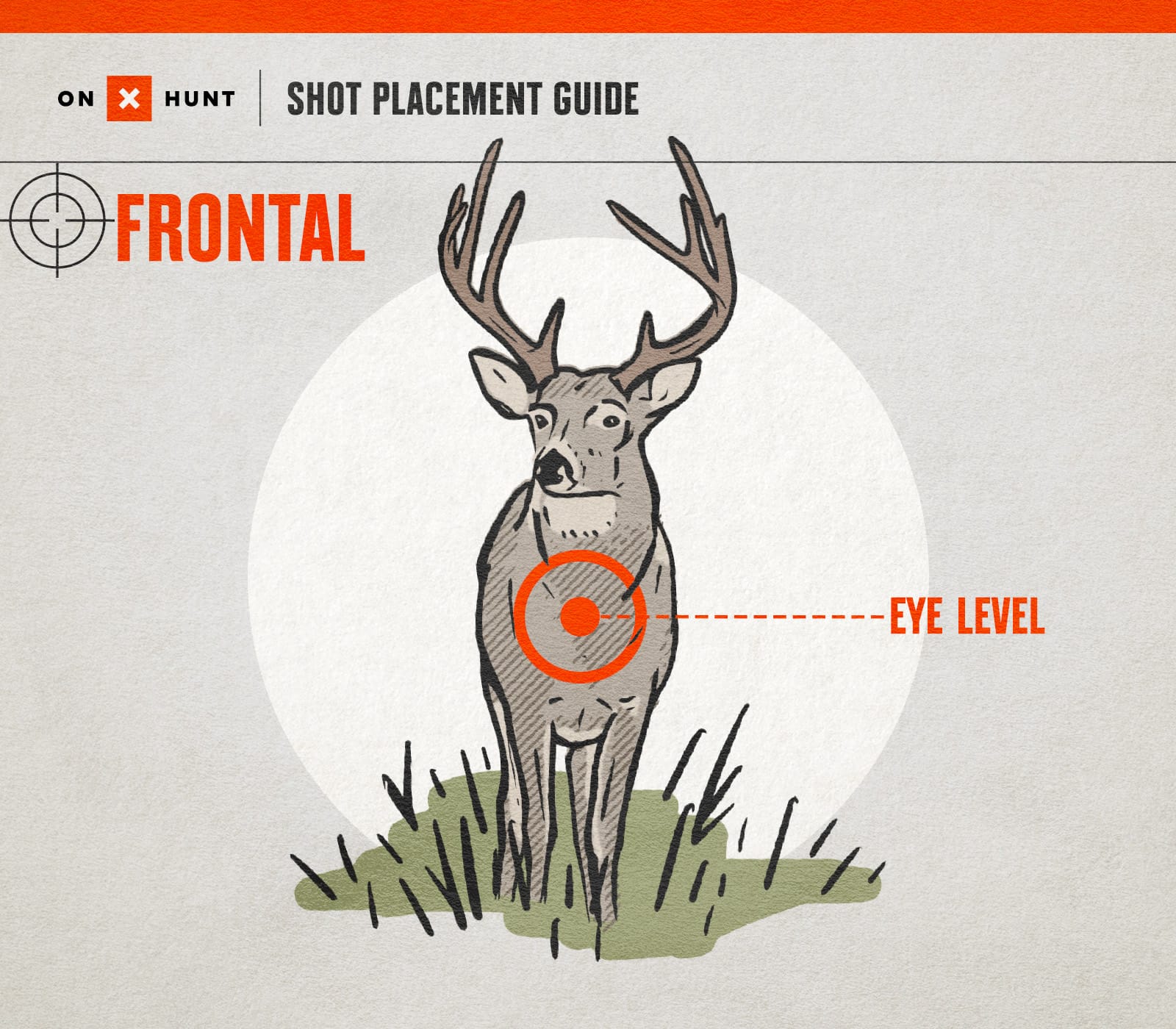
If you decide to take a frontal shot, don’t aim low.
Taking a frontal shot is ill-advised in most circumstances, and that’s true for bow and rifle hunters. Bone and fatty tissue impede arrows from reaching vitals, while also preventing a pass-through shot, and a bullet will likely enter the guts and risk spoiling meat.
The most limiting factor is how small the target is from this angle. Viewed from directly overhead, a deer’s ribcage width is only about 12 to 14 inches, and the heart as a target viewed from the front is less than three inches, given that a typical deer’s heart has a six- to seven-inch circumference.
If you decide to take a frontal shot, don’t aim low. The deer’s sternum will only block or deflect the brunt of the impact. Additionally, don’t aim to the left or right side of the chest cavity, imagining the heart is more to one side. Square the shot high and in the middle to avoid as much bone as possible and to give yourself the widest margin of error on a small target area.
Shots To Avoid
There are many other angles and shots you will encounter in the field, but those not yet covered are not recommended. The two most common of these are the head/neck shot and the straight-away (also dubbed the “Texas heart shot”), in which the animal is standing, walking, or running away from you.
Shot Angles From a Treestand
The higher your treestand the tougher shots will be due the deer’s backbone shielding its vitals and having to deal with more foliage.
When shooting from a treestand, aim for the exit point for your shot, which will change depending on the height of your stand. The goal is for your arrow or bullet to travel through as much of the chest cavity as possible at any given angle. That likely means aiming further back on those quartering-away shots and aiming more in front of the near shoulder on quartering-toward shots.
The only way to master shots from a treestand, however, is to practice them regularly. Having a reliable rangefinder that has angle compensation will help you judge the correct shooting distance (hint: the straight line distance between a hunter in a treestand and the animal on the ground is not the actual shooting distance). See the chart below for elevated shot angle examples.