What To Do After Shooting a Deer
Understand exactly what to do after shooting a deer to help ensure a successful recovery.
Immediately After the Shot
As soon as the arrow or bullet hits the deer, ask yourself the three “w’s”:
- Where did I hit the deer?
- What did the deer do?
- Where did the deer go?
Answering these questions immediately after the shot gives you clues that up your odds of a straightforward recovery. Let’s review.
Where Did I Hit the Deer?
It can be hard to push aside the adrenaline and focus on details, but try to focus on the deer’s body as it takes off, looking for clues like blood spots on the body, a hole from the bullet or broadhead, or possibly the arrow sticking out of the deer.
Pay attention to the sound you hear on impact, especially if archery hunting. If you hear a distinct pop, you likely have a lethal hit in the chest cavity, and that deer will expire quickly. If you hear a deflated thump sound, you likely hit the liver, guts, or intestines. These are still lethal shots but you should give that deer ample time to expire.
Tap play to hear the difference between a chest cavity pop and a paunch hit.
Having a good idea of where you hit the deer helps you determine how long to wait before tracking the deer (more on that below). Things like lighted nocks on the arrow, using your binoculars to look at the animal immediately after the shot, or filming your shot can make understanding where you hit the deer easier.
What Did the Deer Do?
Directly after the shot, listen closely for two to three minutes. Especially in hardwoods with leaf litter, you can gain great understanding by listening to a hit deer’s gait—did it bulldoze off trail through thick cover? Did you hear it slow to walk after getting out of sight? Sometimes, you can even hear them stop, tip over, and trash about. Picking up these details will save you a lot of post-shot uncertainty and inform how you handle picking up the blood trail.
Where Did the Deer Go?
Unless your deer dropped immediately, this is the most important question to answer as it gives you a starting point for your track job. Adrenaline will be pumping, so take a moment to mark two locations using Waypoints so you don’t forget the details:
- Where the deer was standing when you shot it.
- Where you last saw the deer (and the direction it was headed).
Look for landmarks to help mark the deer’s direction after it takes off. In the excitement, it’s easy for things to blur later on. Make note of specifics, like a big tree nearby, or that the deer crossed a logging road, or it went through a fenceline opening.
How Long To Wait After Shooting a Deer?
How long you wait to track a deer after the shot depends on where you shot it:
- Heart shot: The deer may expire in as little as five to 10 seconds. It may have even dropped on the spot, or you never lost sight of it. If you do need to track it, you can follow the blood trail within 10 to 15 minutes.
- Lung shot: If it was a double-lung shot, the deer may expire in as little as 30 seconds and you can start tracking in 10 to 15 minutes. However, if it was a single-lung shot, the deer could live for hours. Wait at least eight to 10 hours before tracking.
- Liver shot: Liver shots are lethal but highly variable in the time it takes for a deer to die, err on the side of caution with these hits when weather permits. Wait six to eight hours before taking up the trail.
- Gut shot: The deer may live for five or more hours. Wait 10 to 12 hours to be safe. A gut shot might not have any blood trail, and jumping the deer could spell disaster. If you made a gut shot, look for water as these hits make a deer extremely sick and thirsty.
- Intestines shot: If you hit way far back, waiting 12 to 24 hours is common. Jumping this deer before it’s dead will likely lead to disaster as there is no blood trail. Again, search out nearby water.
How Far Will a Shot Deer Run?
How far a deer runs after being shot is also dependent on shot placement:
- Heart shot: With a heart shot, you may see the deer “mule kick” upon impact. Then, if the deer doesn’t immediately drop, it will typically run at full speed until it falls over. On its death run, the deer may cover two to 300 yards.
- Lung shot: A double-lung shot is also likely to result in a death run of about two to 300 yards. If the deer runs and you lose sight of it, you can help confirm it was a lung shot if you see bright red blood with foamy bubbles. Though, remember, a single lung hit deer could live for hours or even days, and sometimes, survive the hit entirely. Most of the time this is a result of a high-lung hit.
Tooltip
If you lose sight of a deer on a death run, apply a radius of about 300 yards to the Waypoint you created showing where the deer was when you shot it (tap into the Waypoint and scroll to Waypoint Tools to set the radius).
That way, you have a visual perimeter of the area most likely to hold your downed deer.
- Liver shot: The deer could travel for miles after being shot, especially if pursued or pushed. When blood trailing, you can help confirm it was a liver shot if you see dark red, almost black, blood.
- Gut shot: The deer will likely run a short way immediately after the shot and be hunched up (you might say it appears “sick.”). The deer can travel an impressive distance despite injury. A gut shot will come with an awful smell and you may see liquid with a greenish tint and bits of blood.
- Intestine shot: The deer can live for a day or two and may be able to travel great distances. If there’s any blood trail at all, it’s likely to be somewhat bright red, but watered down.
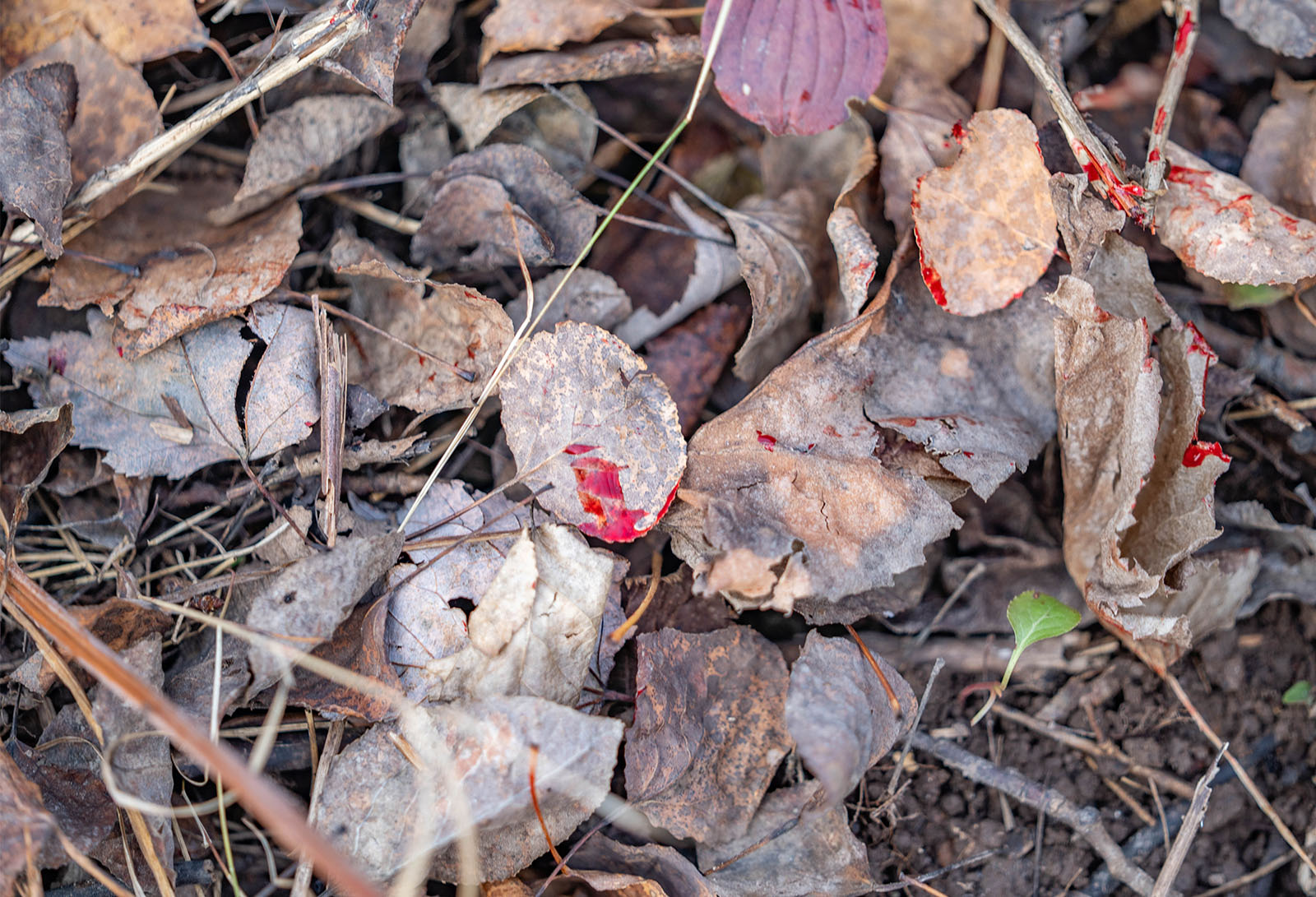
Blood Trailing Deer
Before you blood trail a deer, open the Hunt App and turn the “Tracker” on. This records every move you make in case you lose the blood trail or need to backtrack. The visual record of the blood trail also helps you recognize potential patterns. You may realize, for example, that the deer is following a creek or consistently pushing downhill.
How Should a Downed Deer Be Approached?
For safety, a downed deer should always be approached carefully from above and behind the head. Immediately examine the eyes from a safe distance. A dead deer will have open, unmoving eyes. It is common practice to use the tip of your gun or bow to poke the open eyeball to confirm the deer has expired. Also, watch the deer’s chest for rising and falling. If you detect zero movement, you can proceed.
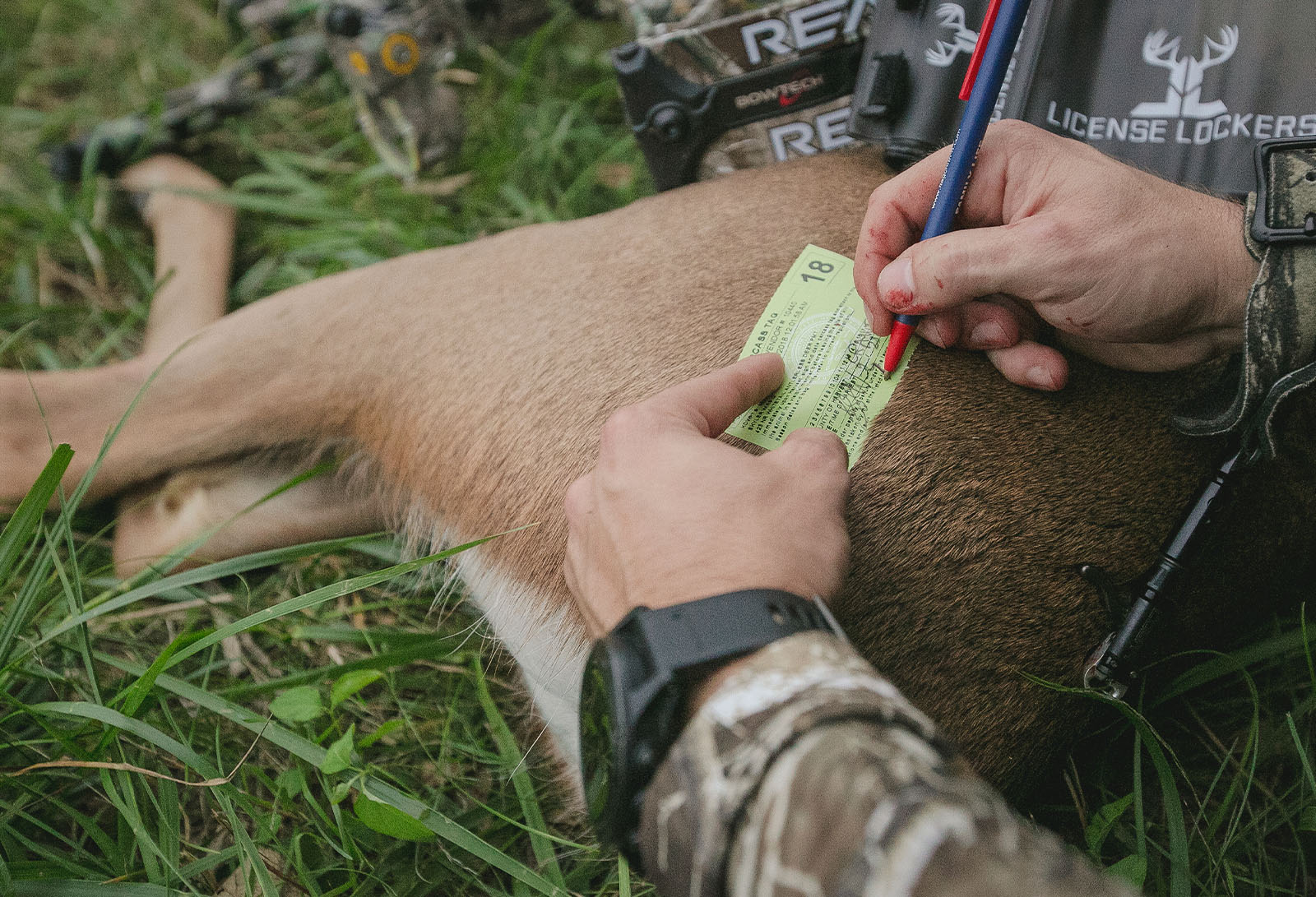
Tagging the Deer
Once the deer is dead, follow all state regulations and guidelines on tagging the animal. Some states allow e-tagging (electronically) while others require a physical tag. Understand these laws before entering the field.
For a physical tag, you may need to write or fill out your tag and then attach it to the carcass. Or, you may have to punch or cut out your date and info on the tag. Again, all states are different so make sure you know the ins and outs of tagging your downed deer.
Can’t Find a Deer After the Shot? Potential Options
Not being able to find a deer is the most gutting experience in hunting. But, unfortunately, this is sometimes the reality.
It’s important to exhaust all options to recover the deer and then some. If your blood trailing and tracking efforts have left you high and dry, there are a couple of external support options you may be able to take advantage of to help recover your deer.
Deer Tracking With Dogs
Check your state’s hunting regulations on the ability to use tracking dogs. Some allow it. Some don’t. Some allow it on public lands, some don’t. If allowed, many state agencies maintain lists of reputable dog handlers to use in tracking your deer.
Get in touch with the dog tracker as soon as possible. Additionally, the sooner you realize you want to bring in dogs, the better. If you spend hours disturbing tracks and leaving your scent everywhere, the dog(s) will have a harder job.
So, if you know it was a gut or intestinal shot, and you know you have the option of dog tracking at your disposal, you should consider backing out after the shot so that you don’t push the deer or interfere with scent trails. In these scenarios, the tracker should start working the dogs about 12 hours after the shot.
Also, if private land is nearby, be sure you contact landowners (use the Hunt App’s Private Lands Map Layer for their contact info).
Pros:
- An effective recovery option if scent is present.
- Great learning opportunity for future scenarios.
- Significantly improved odds of recovery on single-lung, gut, or intestines-shot deer.
Cons:
- High impact on the ground or land.
- Can be expensive.
- Precipitation can be detrimental to the scent trail.
- The elapsed time between the deer being hit and getting the dog in there can be a factor in success.
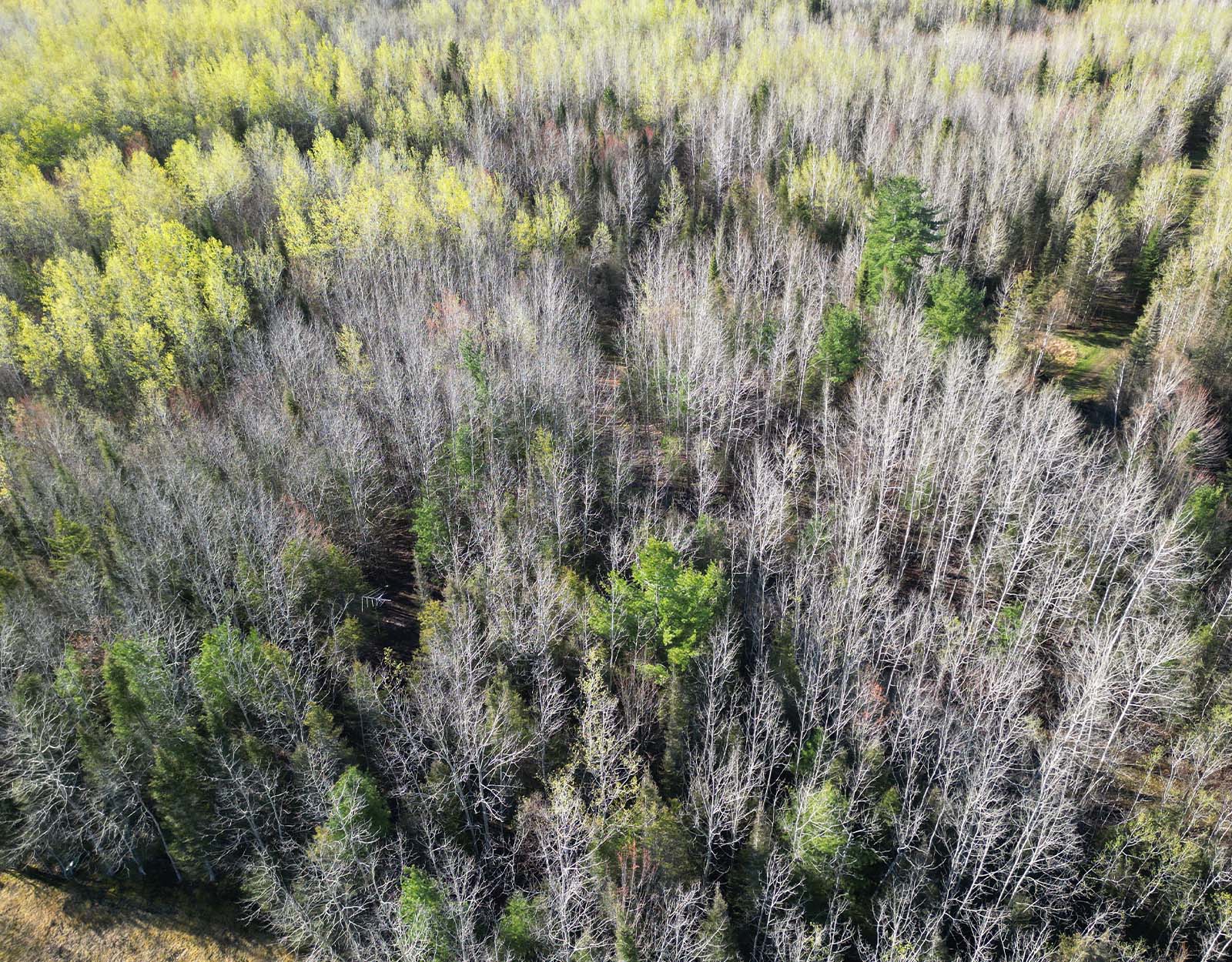
Deer Recovery Drones
The first question here is can I legally use a drone? State game laws and regulations will tell you the game laws for drone usage. Be careful with the literature on the use of drones and if and where they can be used for recovery. Where legal, most state agencies will have web pages dedicated to drone deer operators who can assist you.
Pros:
- Can locate deer carcasses up to 400 feet away using thermal imaging or just plain sight view from above.
- Doesn’t disturb the local wildlife or people around.
- High success rates of finding your deer, dead or alive.
- Doesn’t rely on scent being present (which can fade).
Cons
- Location-dependent: It might be illegal in the state you’re in.
- Can be expensive.
- Runs off batteries/electronics which can fail from time to time.
- Tree canopy in early season can make thermal usage almost impossible.
When To Call It: How Long Before Deer Meat Spoils?
How fast meat spoils depends mainly on temperature. If it’s below 40 degrees, it’s safe to leave a deer overnight if need be.
If over 40 degrees, you need to track as fast as you can, within reason. If temps are in the 60s or higher, you may have a problem with the meat in just a few hours.
Learning From Experience
If you made the shot and recovered your deer successfully, congratulations on creating a memorable experience and filling the freezer. That’s what it’s all about.
If you had a harder time, you can learn from the experience. Take a step back and assess what you could have done differently. It’s a chance for growth as a deer hunter.
Adapted from an article by Clint Casper.