Understanding Deer Movement
Whitetail deer are crepuscular, meaning they’re most active in the twilight hours. However, this doesn’t mean they’re only active at dawn or dusk. Gain insight into the best times to be in the field by understanding factors that affect deer movement.
Several factors can affect deer movement patterns, such as:
Food
A deer’s feeding habits define most of their daytime activity and help us pinpoint the best times to find them. A few aspects to understand about deer feeding habits:
- Deer feed about five times in 24 hours.
- They are selective foragers, meaning they don’t generally stand in one place eating plants down to the ground, and instead move from food source to food source nibbling off the most palatable, nutritious parts of plants.
- Deer, especially big bucks in pressured areas, often prefer eating in staging areas instead of big food plots. Staging areas are small pockets of land with ample food, usually between their bedding areas and major food sources.
- Mature deer will wait until nightfall to venture out to major food plots. Does and young bucks will tend to take the most direct route, while mature bucks will meander there.
Food plots are a common habitat management practice to help influence deer movement. But not all food plots are created equal. For the best chance at influencing daylight deer movement, use the National Deer Association’s two tips:
- Create food plots and bedding areas near one another—typically, no more than 200 yards apart. A bedding area or two can be installed near food plots by clear-cutting an area within a timber stand. South and west-facing slopes are preferred, as they receive more sunlight. This sunlight results in a robust stand of grasses and forbs, as well as providing warm rays of sun for deer to absorb on a cold winter day.
- Add screening cover around food plots by edge feathering or planting screens.
- Edge feathering is completed by cutting several trees along an edge. The downed treetops serve as a visual barrier for a couple of years. Birds will perch within the downed trees, depositing seeds in their droppings. Some of these seeds sprout various shrubs, and eventually, the feathered edge becomes dominated by shrubby growth that provide a permanent visual barrier for any buck trying to spy on deer feeding within the food plot.
- Permanent grass screens or annual screens also work to obscure a buck’s view into the food plot, which forces him to enter the field to see what deer are out feeding. Grass screens should be planted using native grasses like switchgrass. Annual screens planted with forage sorghum and Egyptian wheat
The best time to hunt deer around their feeding schedule is one hour before dark. This feeding typically occurs at a food source between a deer’s daytime and nighttime bedding spots. You can try to be in position as they move to the food source, find them at the source, or as they move along their preferred route to their night spots.
Water
Whitetail bucks are known to have at least one bed near water. Since deer drink roughly three to five quarts of water a day (or 1 ½ quarts per 100 pounds they weigh), they generally need to be near a water source several times a day (deer can go longer without water because they get a lot of their water needs met from the foods they eat).
While many think hunting near water sources on hot days is a sure bet, keep in mind that deer often move less in the heat to conserve energy. When it’s hot, look for smaller water sources closer to known bedding areas.
Cover
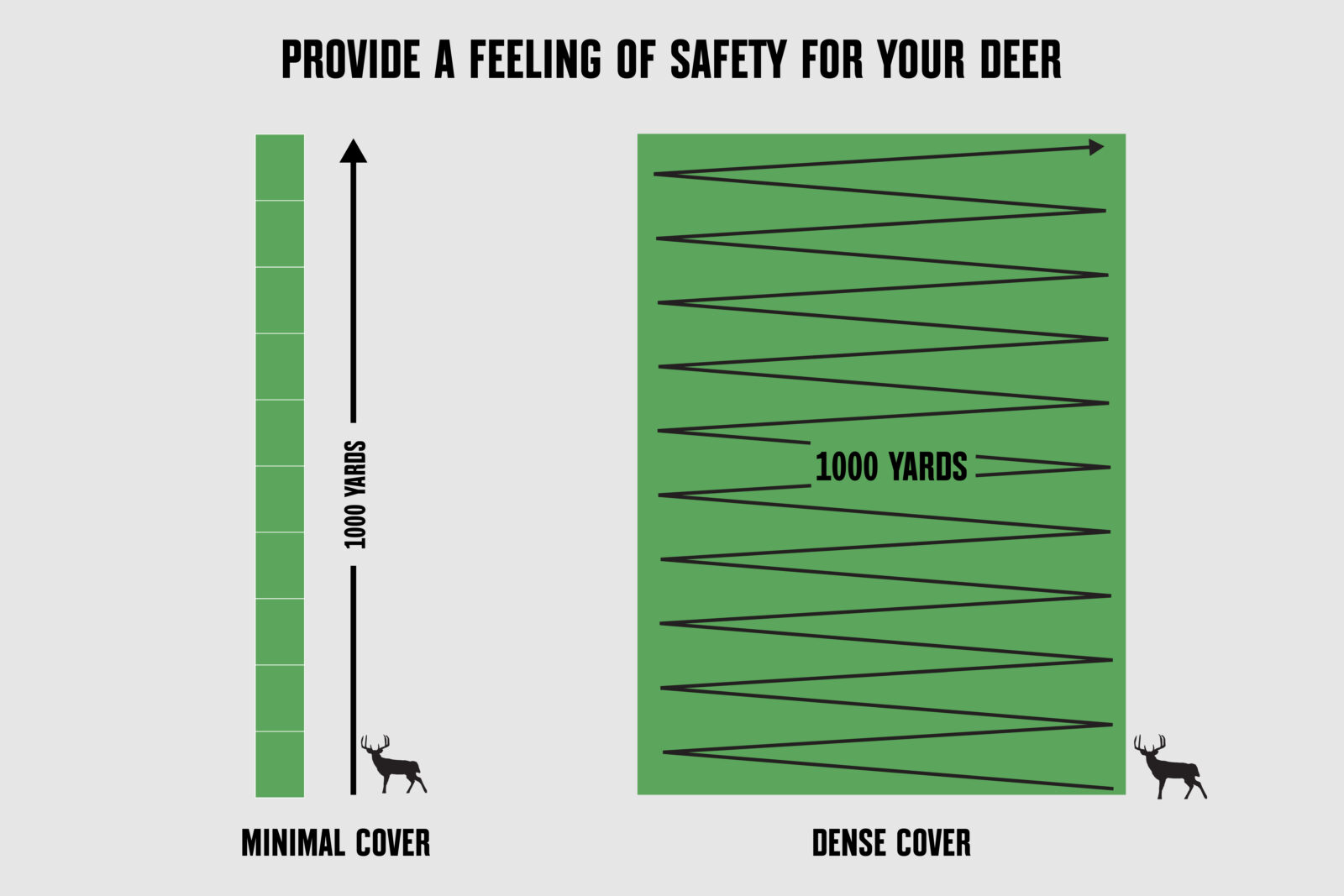
Deer use cover for bedding and to feel safe from predators, both animal and human. As creatures of habit, when deer find good bedding areas they’ll stick with them until they get pressured out or it’s the rut. Understanding a few bedding aspects can provide insights into the best hunting times:
- In the daytime, deer prefer thick cover to keep hidden.
- At night, deer bed in places that allow them to take advantage of prevailing winds and thermals.
- Deer don’t lay down and sleep all night; they get up and feed. The common pattern for deer sleep is dozing off for 30 seconds to several minutes (rarely more than 10 minutes), followed by brief periods of alertness, and then standing and stretching every 30 minutes or so.
- Bucks, particularly, will have three to five different preferred beds over the course of a year.
- Does tend to bed closer to water.
- In the fall, bucks tend to bed on high ground that’s easy to move in and out of.
The best time to hunt deer around bedding areas is generally dependent on two things: weather and food sources. Wait for a warm morning forecast that follows a cold night. Deer will stay bedded longer if it’s cold; if you know the day will warm up quickly, you can count on deer moving out toward sunnier, warmer spots sooner. Also, a deer’s priority after sleeping or bedding is food (before water), so getting near their travel route between cover and a quality food source will put you in the right place at the right time.
Travel Routes
If you have control over land management practices, create travel routes between bedding areas and feeding areas to encourage daylight movement. Thinning timber as much as 50% along a corridor connecting bedding and feeding locations can produce results. Deer are most comfortable in cover where their horizontal body (vitals) is hidden by vegetation and where their heads and senses can be used to detect any danger. Vegetation growing from four feet and lower is the key for daylight movement.
The increased sunlight will also stimulate a flush of growth, producing excellent browse. When deer have something to browse as they work toward their next destination, they will often slow down, spending many hours during daylight feeding along such routes. Adding periodic prescribed fire will ensure thinned areas stay productive for decades.
The Rut
While most deer won’t move midday if it’s hot, bucks certainly will during the rut. In fact, most experts agree that a hunt can turn successful nearly any hour of the day in rutting season. Bucks are looking for does and they will travel to great lengths to find them. They will even eat and drink less during these days or weeks.
You’ll have a lot of flexibility for the best time to hunt bucks during the rut. One tip: fall back on your pre-season scouting and get out when you know does frequent the area.
Temperature
For the first several weeks of the season, when it’s generally hotter, the best time to hunt is the last two hours of the evening. Warm mornings and hot days cause deer to spend more time feeding at night, so by dawn, they are bedded down and will be less active during the day. As the evening cools, they’ll move around for food and water.
By mid-season, or before the rut is in full swing, the best hunting time is the first 45 minutes of morning light, where you might catch bucks moving back to bedding after night feeding or getting up from their nighttime bedding. Remember, if the night is cold and the morning will be warm, deer will get up and get active.
Moon Phase
The moon’s effect on deer movement is the source of much debate. One study by Marcus Lashley of North Carolina State University, which compiled over 22,000 GPS fixes on live deer, found that deer move mostly at dawn or dusk regardless of the moon phase. However, in the same study, he noted a slight uptick in midday movement during full moons. To even more minor degrees, Lashley found deer movements were greatest during the late afternoon in the last-quarter moon and were greatest at dawn during new moons.