The Whitetail Rut
Understand the biology of the rut, plus get predictions for the season.
When Does the Rut Start?
The rut starts when does enter estrus. Not all does enter estrus at the same time. The timing is staggered slightly across the population, and the cumulative effect gives us the rut.
We know a whitetail deer’s gestation period is about 200 days. Talk to your local wildlife specialist to find out when most fawns are dropping in the spring (or use your trail cameras to watch for the first fawns), then count backward to know when does are bred in your area.
Midwest Rut Timing
Peak breeding clusters in the first two weeks of November, and the datasets barely argue about it.
Across the Corn Belt—Illinois, Indiana, Iowa, Michigan, Ohio, and Wisconsin—the deer rut is about as predictable as it gets. Peak breeding clusters in the first two weeks of November, and the datasets barely argue about it. Fetal-aging records from northern Illinois land squarely in mid-November. Collision-based estimates out of Indiana point to the same stretch. Region-wide, the long-cited scientific median for breeding falls around November 13.
If you want a window to circle, target November 5-15. The seeking and chasing hunters love (i.e., bucks on their feet in daylight and cruising for the first receptive does) tends to fire up in the days just before that: roughly November 1 to 10.
Interestingly, there is one useful wrinkle from recent GPS-collar work: mid-aged bucks that are 2.5-year-olds often move more during the rut than the oldest bucks on the property, so don’t write off a morning just because the giant you’re after stays put.
Southern Rut Timing
Why so much variation? Milder Southern winters ease the pressure to breed in a tight, survival-driven window, so estrus is less synchronized than it is up north.
The South is where rut predictions get slippery, and where a regional visual like the Southern Rut Heat Map earns its keep. Instead of one tidy November peak, Southern breeding dates spread out and shift hard from one area to the next.
Look at the range. In Arkansas, state herd-health data centers the peak around mid-November, with a mean conception date near November 14 and the middle 80% of breeding falling between roughly November 1 and December 6. Move to Louisiana and the picture fractures: parish-level breeding dates run from late October in some areas all the way into January in others, one of the widest spreads in the country. Parts of South Texas famously don’t peak until December. Even Kentucky, straddling the line between Midwest and South, shows a three-week swing across its regions, from around November 9 in the Inner Bluegrass to late November in the southeastern mountains.
Why so much variation? Milder Southern winters ease the pressure to breed in a tight, survival-driven window, so estrus is less synchronized than it is up north. Local herd genetics and nutrition matter, too.
University research has documented neighboring populations less than 30 miles apart peaking weeks apart, and habitat improvements that moved a herd’s breeding date by more than a month in a single season. For the Southern hunter, that means your county’s timing is the only timing that counts, and the state next door tells you very little.
Northeast Rut Timing
For most Northeastern hunters, November 11-25 is the window to protect on the calendar.
The Northeast tracks close to the Midwest but leans a touch later, and it gets later as you move north. Across Pennsylvania and New York, peak breeding settles into mid-November. Maryland fetal data puts the peak in the November 12-19 range. In Connecticut, agency fawning studies back-calculate a peak rut around November 11-15. Push into northern New England, and it slides later still, with Vermont’s conception data peaking around November 21-25.
For most Northeastern hunters, November 11-25 is the window to protect on the calendar, with the seeking and chasing ramping up through the first week or two of November. If you hunt the northern edge, Vermont, New Hampshire, and Maine, give the back half of that window your best sits.

Whitetail Insights
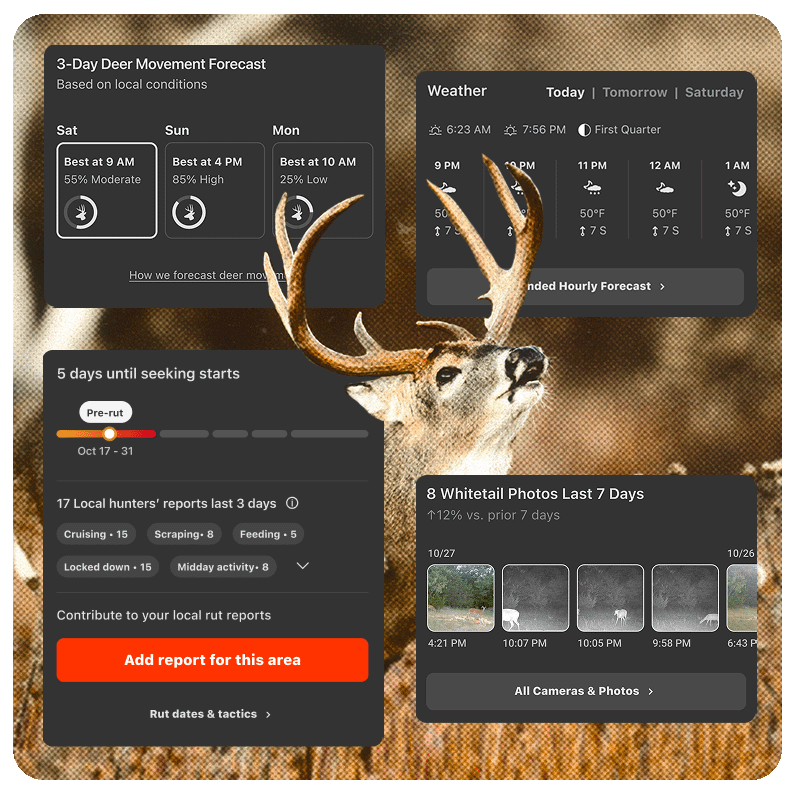
See your Trail Cameras, Deer Movement Forecast, Rut Calendar, and Wind & Weather in one place for the land you hunt. Make a faster, better-informed call on when to hunt.
- Rut Calendar: Know how and when the rut is unfolding.
- Deer Movement Forecast: Predict the odds of increased deer activity on your hunt.
- Trail Cameras: Pattern deer with Trail Camera Analysis.
- Wind & Weather: Get hyper-local conditions and forecasts.
Rut Phases and What They Mean for Hunting
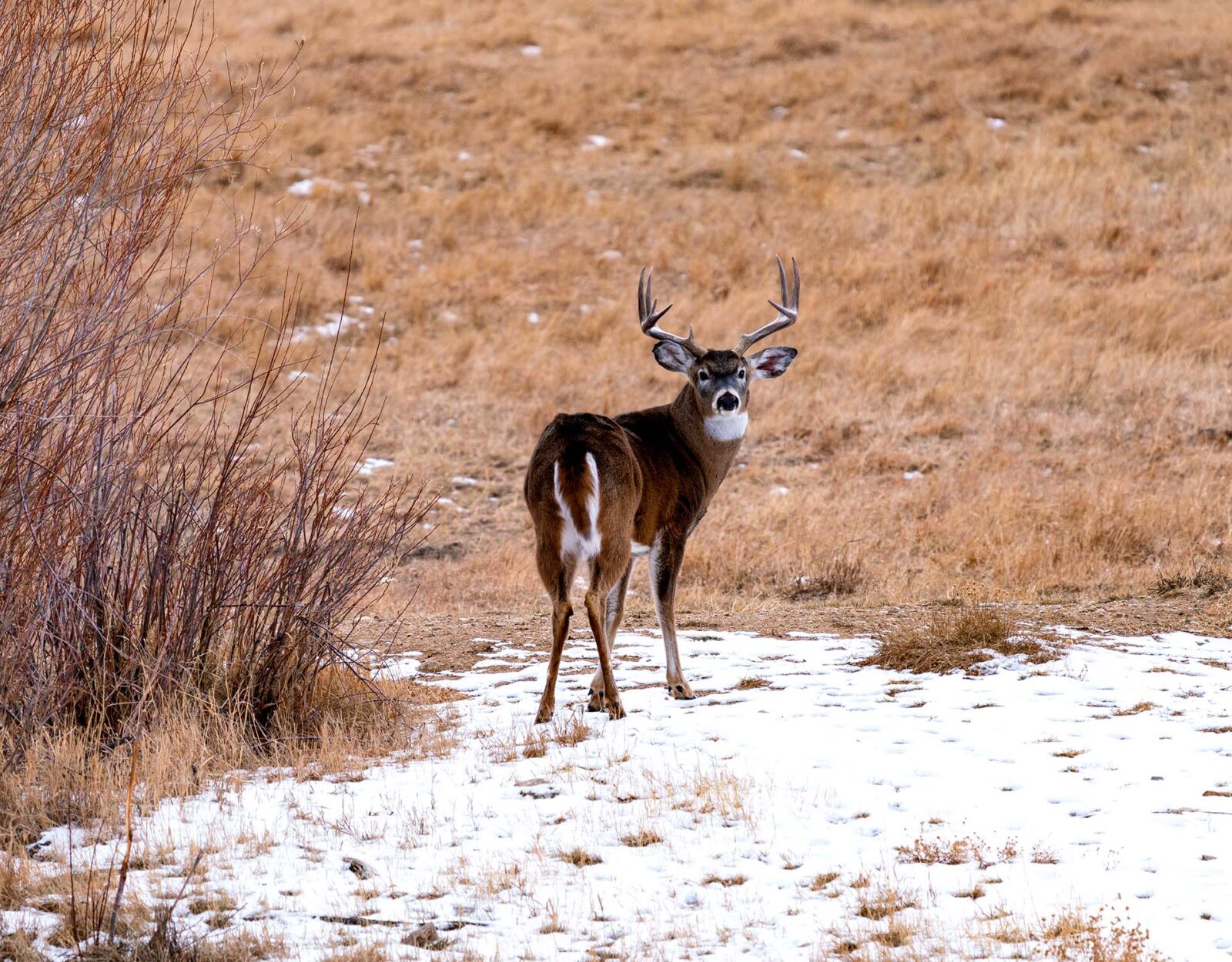
In general, phases of the rut include:
Pre-Rut
General Timing: Last Week of October
The start of the rut is not something you can easily put your finger on, but you know it when you see it. Young bucks are often cruising, does are more on edge, and mature bucks start to move in daylight.
Scrapes are hit often. Don’t hesitate to hunt them or hang cameras on them. Bucks travel outside their home range, so any chance to get photos of different bucks is a win, not only for this year but for obtaining data for years to come.
Your grunt tube and rattling antlers quickly become relevant tools: Start making noise in the woods. During this window, you’re often still experiencing calm mornings and evenings, so sound travels well. Use soft and slow calls and focus on deer you can see. Also, think food: Where you find does, you will find what you are looking for.
Early Rut
General Timing: Early November
The first does are entering estrus. Get situated well before shooting time and sit all day if you can. If you’re sitting on an edge or food source and it slows dramatically, think about sneaking into or hanging a tree stand on the downwind side of a doe bedding area. Now is the time to get aggressive; a common mistake hunters make this time of year is being too cautious.
Scrapes are still active, and it’s worth staying on the grunt tube and antlers, or even a doe bleat, but don’t call too much, especially on public land. Bucks are traveling further during this timeframe than at any other time of year. A Penn State study found bucks expanded their home range by three times on average—you never know who might show up.
Peak Rut
General Timing: Second Week of November
Midday movement begins to increase, especially among mature bucks. Get to your favorite tree stand, bring extra layers and snacks, and sit all day.
Hunt based on the data your trail cameras have produced in the last week. Pinch points, fence lines, field edges, and other funneling spots are great places to intercept cruising bucks. Setting up between two doe bedding areas can put you in the middle of bucks pinballing between them.
Late Rut
General Timing: Mid-November
Mid-November includes the true rut “lockdown,” when bucks have found willing does in estrus to breed. Does tend to bed down when ready to breed, often in obscure locations. Bucks will sit on or tend a doe for hours until the time has come to breed. You might see “orphaned” fawns wandering around with no mature doe, which can signify the doe is being tended by a buck and is in lockdown. Movement is often sporadic, and you never know when the light switch can flip back on. Stay at it; good things will happen.
Consider hunting a water source if you can; mature bucks that have been frantically seeking does will need to find water. A shift in focus to midday also becomes a great strategy; 9 a.m. to 4 p.m. is a great time to be in tree stands. Get back into those bedding areas; get in quiet and make sure the wind is right, as these areas will be scent-checked by mature bucks. You might even consider spot and stalk around mid-November.
Post-Rut
General Timing: Late November
While bucks will still be searching for the last estrus does, we’re now on the backside of the bell curve, and movement will taper quickly. Morning to midday can be productive, as can sitting downwind of doe bedding areas.
Look back into your trail camera archives and see where you had pictures of bucks last year at this time, then compare what you’ve gathered the last couple of weeks. Deer are creatures of habit and will likely be on a similar pattern as in years past, so use this data to your advantage.
Hot Spots for Hunting the Rut
Every hunter has their favorite method, stand, or spot to hunt the deer rut. A few Ambassadors were kind enough to share their favorite features to hunt when the heat is on in the fall.
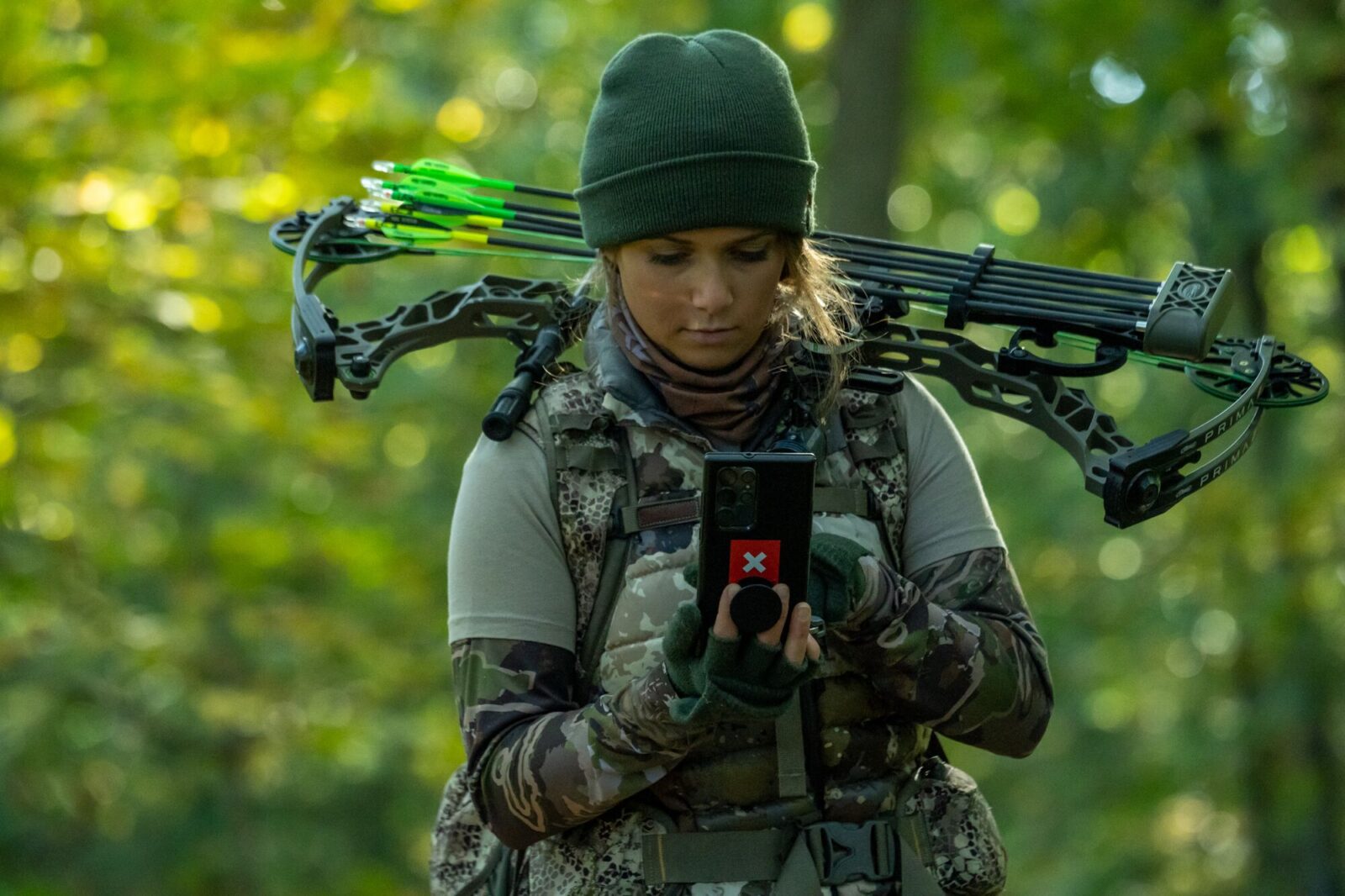
“A pinch near doe bedding. I do my best to pay attention to what the does are doing leading up to the rut. Or, if I don’t get to scout ahead of time, any doe sightings are marked on the map as I hunt.
I’ve had good luck with a south-facing slope with thick cover. There’s a pinch where the hill is super steep up top on the north side, and it slopes down to a trail that runs west-east, then turns up almost north-south along the side of it. At the bottom, there’s a creek ditch. There’s a scrape right on that corner, and with any kind of south or west wind, it’s dynamite.” Bucks are constantly going along that trail to check for bedded does, but because they are forced to that pinch of a trail, any shooter buck will most likely stop on that scrape for a shot.” – Kaitlyn Maus, Kaitlyn Maus Outdoors
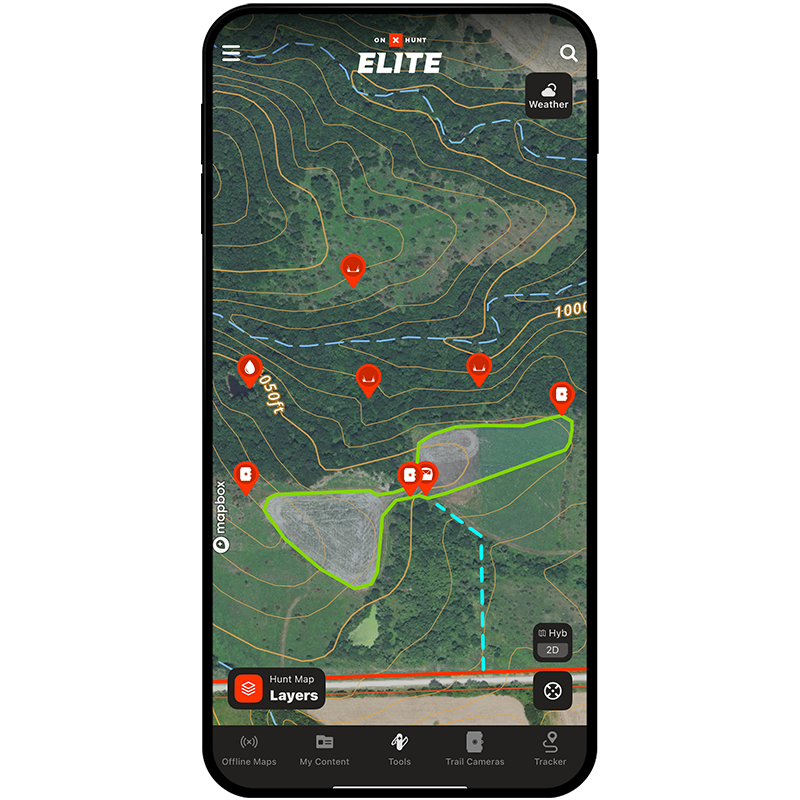
HuntWorx’s Setup
“I prefer to be downwind of a couple bedding areas that we have created that are next to an hourglass food plot [as shown]. This creates early deer movement to our food sources because they are so close to the bedding thickets.
As the deer come out to the hourglass layout, the layout encourages the deer movement through our bottleneck with two different food sources on each side of the hourglass.
Deer are grazers, so they move through the bottleneck, and we just happen to be set up in the bottleneck that is 32 yards wide.” – Greg Glesinger, HuntWorx
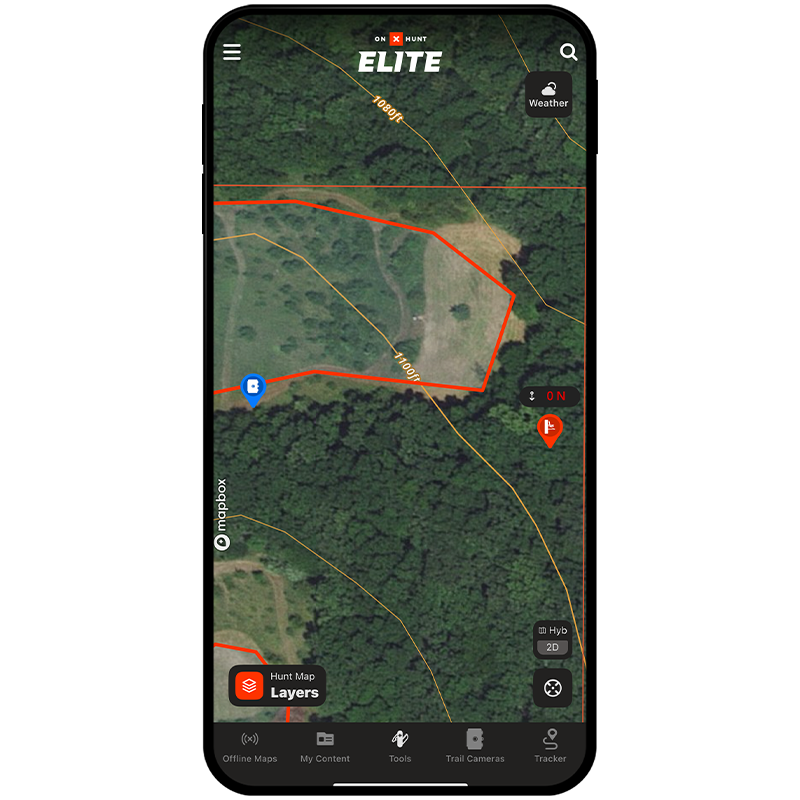
Raised Hunting’s Setup
“My favorite spot to hunt during the rut is just off of a food plot or a well-used agriculture field. Sitting 80 to 100 yards off of a food source might mean I see fewer deer than sitting on a food source, but I’ve found that I see better and bigger deer.
Also, by not sitting on the food source, I don’t have to contend with trying to get out of my stand with several deer in close proximity. Instead, I let the deer work their way past me and into the feeding area. If the right deer doesn’t show up, I simply slip down and sneak out, leaving a location I can come back to and hunt again.” – David Holder, Raised Hunting
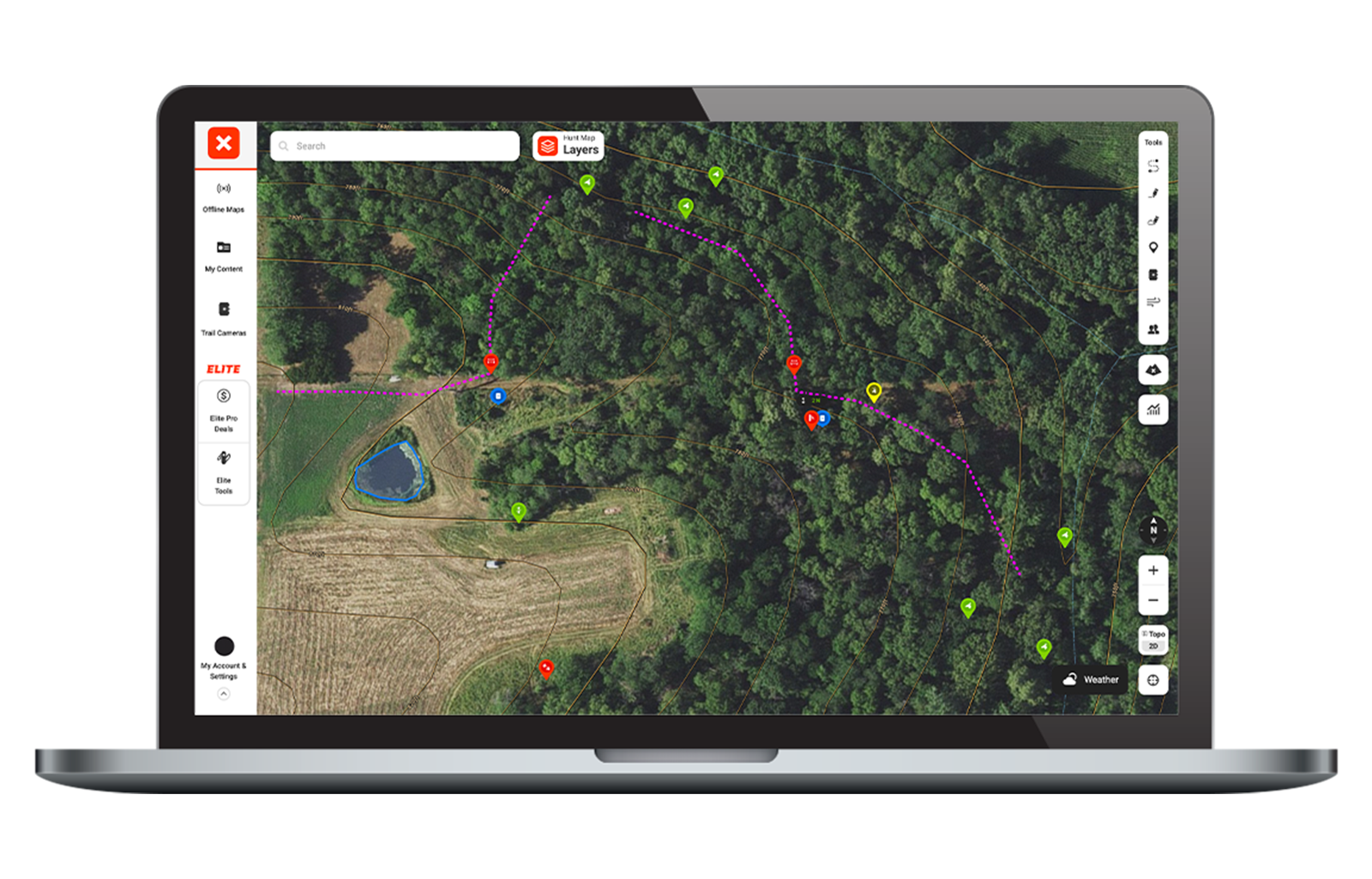
“If I had to pick one spot to sit every day during the rut, I would choose a pinch in between doe bedding areas.
In this case, it’s a fence crossing on the south side of a bedding area along the creek. With access from the west on a mowed trail, and positioning my stand to the west of this movement, I can thread the needle scent profile-wise on days when northerly winds grace the woods.
Bucks work from south to north, eventually pinching down at the fence crossing, coming by within 15 yards. By identifying this feature that pinches down deer movement, I’m able to enter and exit without ever crossing into a sensitive area, like the doe bedding, all while sitting in wait where they will cross.” – Josh Sparks, Midwest Whitetail
Rut Myths Debunked
Busting a few of the most common “Rut Myths” our Ambassadors have heard.
The rut will save you from poor effort.
Pressured deer don’t lose their minds during the rut the way we think they do. You still have to put in the effort to scout, play the wind, and get in and out with minimal impact. You still have to work the deer like it’s not the rut. -Tony Peterson
It’s too hot—the deer only rut at night.
Heat will slow the amount of daylight activity you see, but I have killed deer in mid-November when it was a low of 50-60 at night, and highs in the 70s. You may need to be closer to bedding areas, and the normal plan of sitting a travel route won’t work, but deer are still acting like deer somewhere. Get closer to wherever that is. You might bump deer, but I’d rather bump a deer and have a chance than spend a week watching the leaves blow around. -Sam Soholt
It’s going to be constant action.
Sometimes the rut is the most difficult time of year for seeing deer. -Clay Newcomb
Scrapes start to ‘dry up’ during the rut.
Over the years of running more trail cameras than I care to admit, the scrape activity of mature bucks stays strong throughout the rut. Although there are short periods of decreased activity, I’ve seen some of the biggest bucks I’ve had the privilege to hunt hitting scrapes November 9th-12th. -Jake Hofer
The rut is too chaotic for those targeting a specific buck, with bed-to-food patterns behind us.
If you’ve created dense cover, you can condense and hold doe groups in your target buck’s core area. During the pre-rut, that buck has one thing on his mind: find a receptive doe. He will search dense cover pockets to find her, and will walk with the wind in his face or a cutting wind. Play the wind and put yourself close to or in between the pockets of cover where the does are. -Matt Dye
You’re out of cards when a buck goes into lockdown.
It’s still within reason to find a way to kill that buck. Every property is different but here’s two examples of how to adjust:
1. Get near a food source where the does are feeding. That locked down buck will follow the doe and feed near her. If you’re close enough, you’ll have a shot.
2. Sometimes, the locked down buck will take a doe into the thickest, most remote part of the property. Study your properties on onX and with boots on the ground in the offseason and get on the edge of where they may be. –Jeff Althoff