Early, Peak, and Late Season Tips
Clint Casper breaks down deer hunting tips to help you make the most of early, peak, and late season hunts. He also describes how to adjust your tactics for morning vs. evening hunts.
Early Season Deer Hunting Tips
Learning as much as you can about a buck over the summer gives you the best chance at tagging him the first week of the season when his summer pattern is still somewhat present.
Here are a few early season deer hunting tips, first by month, then by time of day.
August: Early Insights
- Get Eyes On ‘Em: Let trail cameras and glassing tell you a buck’s story. Pay attention to what wind a buck favors, as well as which direction he comes from in the evening (to understand where he’s feeding) and where he heads in the morning (to understand where he’s bedding).
- Identify Water Sources: Pretty much anywhere you go, August is a hot one. Note where you find water as deer will be looking to quench their thirst.
- Be Mindful of Scent Control: Especially in muggy areas, odors can linger and break your cover. Consider scent control tactics.
September: Shifting Deer Patterns
- Watch for Behavior Changes: Buck behavior and patterning begin to shift. Velvet has come off and a pecking order of dominance is being established.
- Expect Movement: Some bucks will relocate. If your buck has disappeared, chances are he found an area with better food, water, or bedding areas to call home.
- Locate Hot Sign: Trail cameras, glassing, and on-foot scouting will be your best friends. Find thick cover near high-quality forage for a good starting point to relocate a buck.
- Capitalize on Predictability: If your buck is still on a pattern, capitalize immediately. Let his preferred wind tell you where to set up.
- Look for Food Sources: With food sources abundant, a buck’s patterns will likely shift from week to week. Apples, oaks dropping, and combined agriculture fields should all be on your radar.
Early Season Mornings
Your goal when morning hunting in the early season is to beat a buck back to his bed, slipping into his bedroom undetected while he’s still out feeding in the morning darkness. With the correct wind direction, this approach can be quite effective as deer are still following consistent patterns. By knowing where a buck likes to feed and bed, as well as what wind direction works best for him, you can predict deer movement and set yourself up for a shot opportunity as he walks past you heading back to bed down for the day.
It’s critical to plan a good entry and exit strategy. Bumping deer while making your way to or from your treestand can shift a buck’s patterns. Use the Hunt App’s Tracker to plan covert routes you can reference in the dark and share with hunting buddies.
Early Season Evenings
Typically, in the early season, I am strictly an evening hunter because it’s often hard to slip into a spot and catch a buck headed back to bed in the morning without alarming him and other local deer.
Whether glassing or analyzing trail camera photos, pay attention to the wind direction a buck prefers to show up in during daylight and his direction of travel to and from your camera or glassing spot. By learning where he likes to bed and feed, as well as what wind he prefers, you can put together a good plan for that first week of the season.
In the early season, food is changing constantly, so take note of the best available food sources. Look for water sources and north-facing slopes for bedding. The early season tends to be hot and the north slopes, which receive the least amount of sunlight, will be the coolest.

On any Waypoint, scroll to Waypoint Tools to show the current wind direction or set up wind direction preferences.
Peak Season Deer Hunting Tips
During the rut, the main focus is to be in the woods as much as possible. Below are a few tips to capitalize on your October and November hunts.
October: Keep an Eye On the Does
- Find Fresh Sign and Food Sources: Come October, key in on the freshest deer sign and hottest food sources. At no time will there be more food available for a buck than right now. Look for apples dropping, oak trees producing, and corn and bean fields coming off. These spots will only be hot for a short time before something else takes its place.
- Track Does: Track where does are bedding, feeding, and frequenting, especially later in the month. Bucks will be changing feeding and bedding locations to keep in lock-step with the does and to maintain access to the best feed available.
- Spot Buck Sign: Continue to keep your eye peeled for scrapes and rub lines, as they’re a sure sign you’re on the right track.
November: Funnels, Thickets, and Food
November is all about the ladies. Break the month into three parts:
- Early November: Bucks are covering a lot of country searching for that first girlfriend of the year. You never know what buck might turn up. Natural terrain funnels, like a saddle or creek drainage as well as pinch points such as a gap in a fence or shallow crossing in a creek, are great bottlenecks that funnel movement and are awesome spots to hunt.
- Mid-November: The most does will be bred in this timeframe, so look for doe bedding areas and thickets that a buck would lock down a doe in. Mid-month can be a challenging time for a hunter, as a lot of bucks are locked in on a doe until she’s bred, and only then will he start searching again. Your best bet is to put as many hours in the stand or blind as possible, as your opportunity can happen any time.
- Late November: Bucks are actively searching for those last few does to breed. They know their time to breed is winding down, so they’ll start covering a lot of country again. Food is also starting to be important for the deer herds, as bucks have lost a lot of weight during breeding season. The best available food sources will have the most deer activity during this time. Locate these feeding zones and the bucks will be there.
Peak Season Mornings
Come late October, get serious about morning hunting. Buck activity is nearing its peak as doe breeding cycles become closer and closer. Bucks are moving more in the daylight trying to find that first estrous doe, and are generally covering more ground. This is also the time of year to hunt scrapes, which generally start to show up in mid-October. By the end of the month, hunting over a scrape is a viable option if that scrape is being checked daily.
In peak season, mornings can provide an opportunity to cash in on rutting activity that has spilled over from the previous night. Focus on doe bedding areas, as bucks will be cruising the downwind edges of these areas looking for an estrous doe. Stay in your tree as long as you can—10 AM to noon can be a fantastic time to catch a buck scent-checking from doe bedding area to bedding area.
Peak Season Evenings
Once October rolls around, especially the end of the month and into November, switch gears when hunting evening bucks. Where before you were focused on food and water, shift your focus to where doe groups are feeding and bedding. For bucks, the urge to breed has taken over and they’re waiting on the first hot doe to come into estrus. If you want to find the bucks, find the does.
Crops are also coming off and acorns are dropping. Use the Hunt App to locate mast trees and local farm fields to see where the hottest and most readily available food sources will be now. This is where the does will be and where bucks will be spending a lot of time.
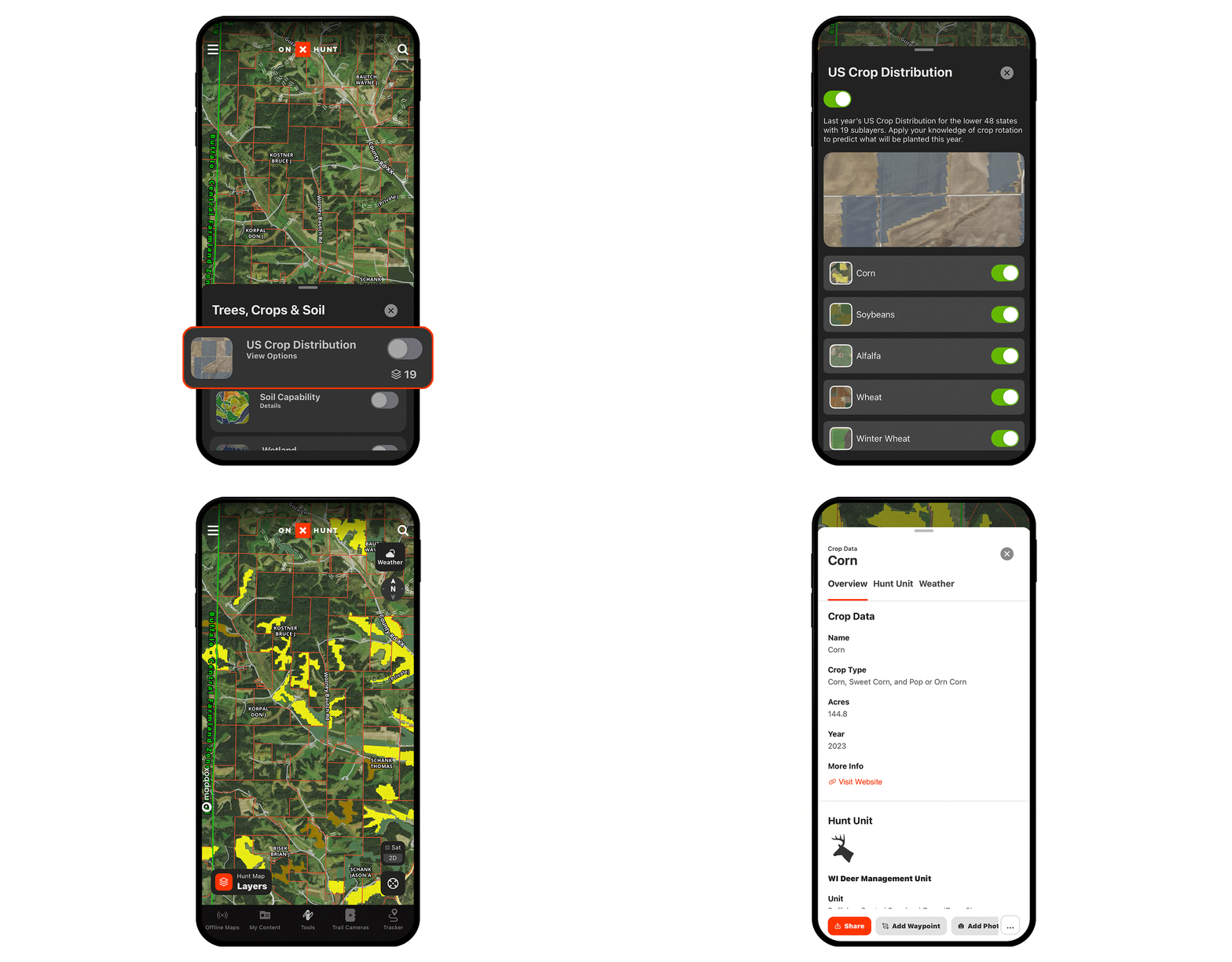
Use the US Crop Distribution Map Layer to help you find food sources.
Rubs and scrapes should be a dead giveaway that bucks are frequenting the area and you should hunt the hot sign immediately. During peak season, things can change fast. A cornfield can get combined and become the hottest ticket around for feed, or a group of does could come into heat. Both of these scenarios would make an area extremely hot and you want to hunt these spots before they go cold again.
If the action is slow and the sign isn’t fresh, move. Don’t be afraid to be aggressive this time of the year, as bucks are on the move and patterns are hard to come by.
Late Season Deer Hunting Tips
In the late season months, a buck is at his most vulnerable, with some losing up to 30% of their fat reserves and body weight from chasing does during the rut. He is now in full survival mode. If you’re going to wrap your tag around this warrior, you better have your ducks in a row.
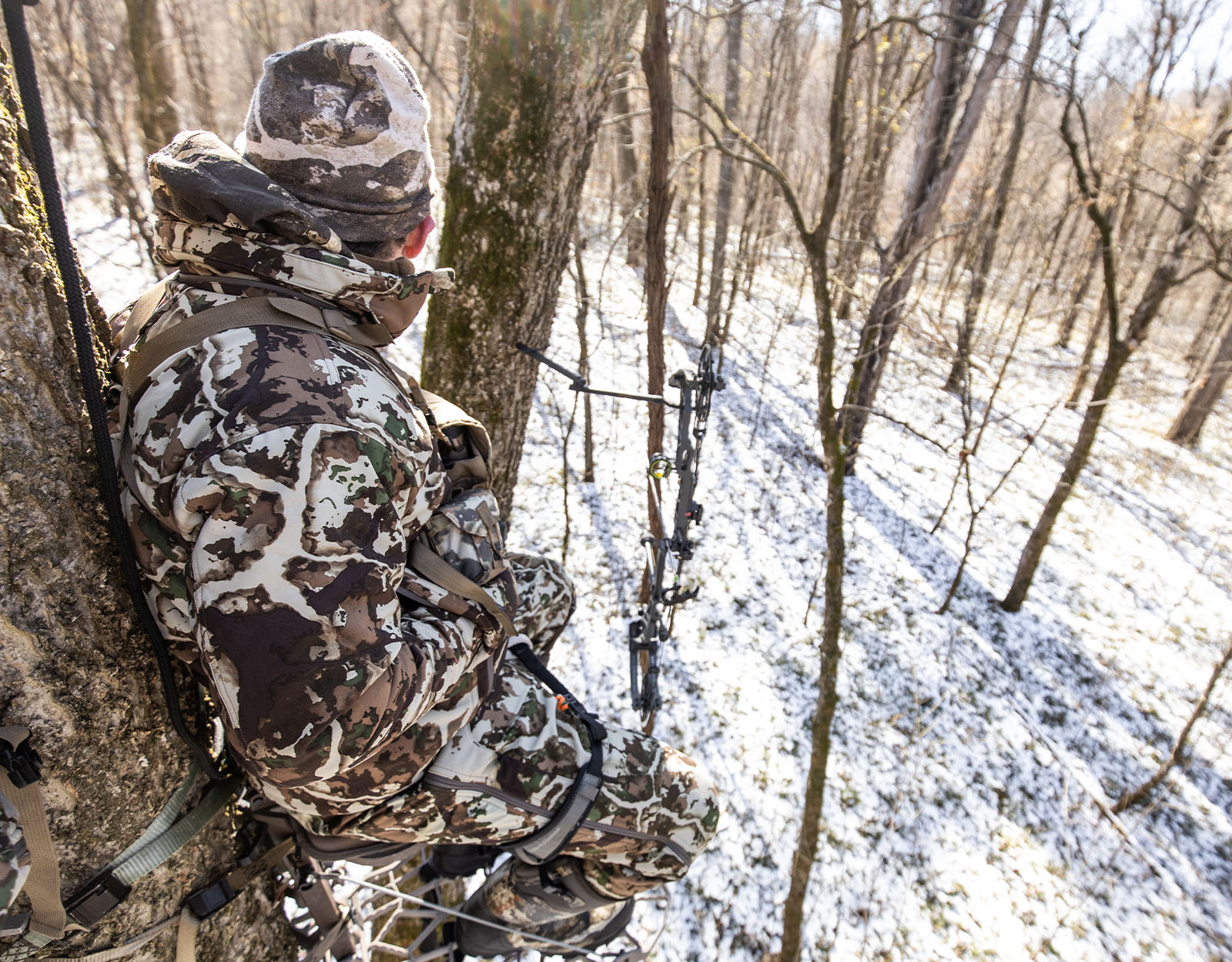
December and January: Pressured Bucks
Toward the end of the season, bucks have grown wise to hunters’ strategies. For months, these animals have been pressured by gun, bow, youth, and muzzleloader hunters on top of their day-to-day predators like coyotes. Here are a few tips to get past a deer’s keen senses.
- Switch Back To Trail Cameras: To replenish lost calories and fat reserves, a buck switches gears from breeding back to feeding and bedding. Decrease your on-foot scouting and let trail cameras do the work. Place trail cameras on the best food sources available and close to the best bedding areas.
- Analyze Intel: Once you locate a buck, variables like the direction of travel, weather patterns, wind direction, and barometric pressure can help tip the odds in your favor.
- Evaluate Your Gear: Do a gear check. Shoot your bow with winter clothes on. Make sure your bow hangers and stands don’t creak. Nothing can be left to chance during this time when deer are on high alert.
Late Season Mornings
Every hunt is different, but some hunters choose to deprioritize late season morning hunts because the risk versus reward is high.
Late Season Evenings
During the late season, evenings are your best bet to get into an area undetected. Due to bucks losing weight and body fat during the rut, food sources are key now, as well as good bedding areas to protect them from the elements. Focus on standing crops, late dropping mast trees, thermal cover, and south-facing slopes.
Prepare a plan that allows entry and exit with the wind to your advantage. Bucks will be patternable this time of the year, with a strict bed-to-feed and feed-to-bed pattern.
Adapted from an article by Clint Casper.